Thinking About Thinking: A Designer's Guide to Fallacies and Biases
We like to believe design is rational: research in, decisions out. In reality, critiques are won by the loudest voice, data is read through what we already believe, and users choose based on defaults, frames and fears they never notice. This is a field guide to those invisible forces, written for anyone who makes things for other people.
Every post here starts as my own thinking. AI just helps me tidy the edges.
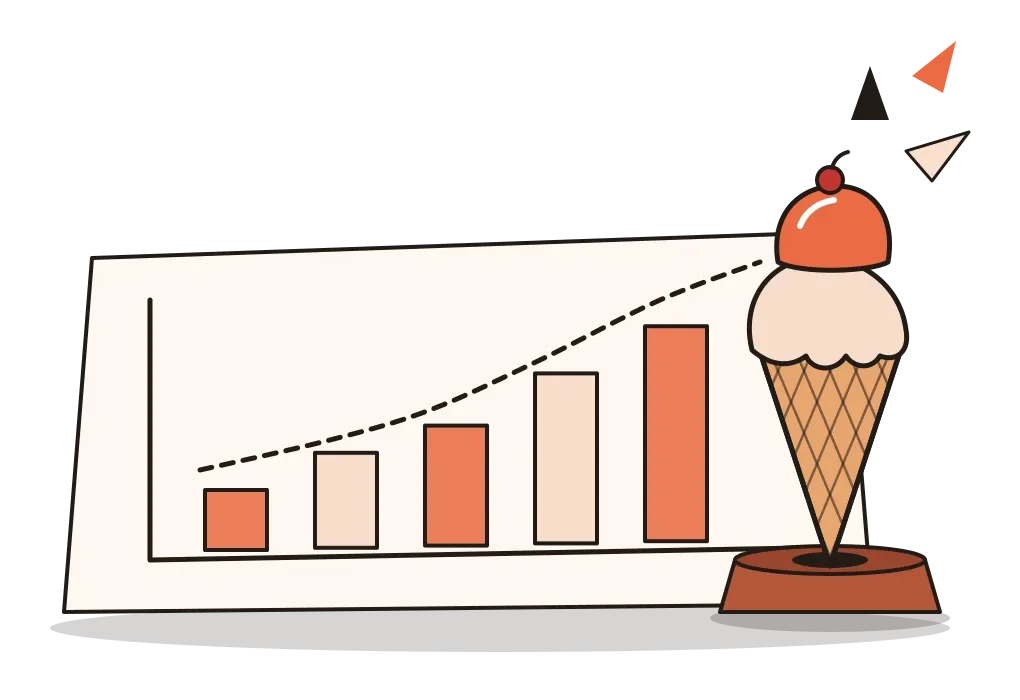
False Cause
Two lines on a chart go up together, and the whole room decides one pushed the other.
correlation and causation
The Bandwagon Fallacy
Why "everyone is doing it" feels like a reason, and what to ask before you climb aboard.
appeal to popularity
Cherry Picking
How choosing only the evidence that agrees with us can make a weak case look like a certain one.
selective evidence
Equivocation
How a single word can quietly change its meaning halfway through an argument, and carry us along with it.
ambiguous words
The Nirvana Fallacy
Why a working answer so often loses an argument to a perfect one that doesn't exist.
perfect solution fallacy
Moving the Goalposts
What happens when the bar for success keeps shifting until the answer we wanted is the only one left.
shifting success criteria
The Texas Sharpshooter
How we fire first, draw the target afterwards, and then admire how well we aimed.
patterns in noise
Appeal to Novelty
Why "new" feels like a reason on its own, and how to ask what the new thing actually does better.
new for its own sake
Special Pleading
Why the rules we apply so firmly to everyone else always seem to have an exception for us.
double standards
The Loaded Question
How a question can slip in a claim nobody has agreed to, and make every answer confirm it.
loaded questions
The Composition Fallacy
Why a collection of excellent parts doesn't promise an excellent whole, in teams, economies or apps.
parts and wholes
The Division Fallacy
Why what is true of a group, an average or a whole system isn't automatically true of each part.
wholes and parts
Appeal to Authority
When a famous name ends the argument instead of the evidence, and how to tell trust from deference.
appeal to authority
The Slippery Slope
Why one small step so easily gets painted as the first of many, and how to find the brakes.
slippery slope
Hasty Generalisation
How a few cases, or the wrong ones, turn into a confident rule about everyone.
hasty generalisation
The Straw Man
Why it's so tempting to argue with a flimsier version of someone, and how to argue with the real one.
straw man argument
Circular Reasoning
When the reason offered for a claim quietly depends on the claim itself, and why the loop is so hard to see from inside.
begging the question
Anecdotal Evidence
Why one vivid story can outweigh a whole spreadsheet, and how to listen to stories without being ruled by them.
anecdotal evidence
The False Dilemma
How an argument shrinks a wide range of choices down to two, and makes the one it wants look inevitable.
false dichotomy
False Equivalence
When two things that share one feature are treated as if they were equal in every way that matters.
false balance
False Analogy
When two things are alike in one way, and we assume they must be alike in the way that matters.
weak analogy
Appeal to Emotion
When a feeling is offered in place of a reason, and the room is too moved to notice the swap.
emotional manipulation
Appeal to Ignorance
Why "nobody has proved it false" isn't proof it's true, and when silence really does tell us something.
burden of proof
The False Consensus Effect
Why the people who make things tend to assume everyone else thinks, wants and behaves the way they do.
projection bias
Confirmation Bias
We go looking for proof and, to nobody's surprise, we find it.
confirmation bias
Optimism Bias
Why we expect the bad things to happen to other people, and our own plans to go well.
unrealistic optimism
The Endowment Effect
Why the moment something becomes ours, it starts to seem worth more than it did a minute ago.
ownership and value
Hindsight Bias
Once we know how a story ends, it starts to feel as if we knew all along.
knew it all along
The Fundamental Attribution Error
Why we blame people's character for what their situation made almost inevitable.
person versus situation
The Mere Exposure Effect
How seeing something again and again makes us like it, and why designers are its easiest targets.
familiarity and liking
Survivorship Bias
We study the products that made it and forget the ones that taught the real lesson.
missing evidence
The Bias Blind Spot
Why we spot bias in everyone else so easily, and almost never catch it in ourselves.
seeing our own bias
The Overconfidence Effect
Why we feel far surer than we are right, and why the cleverest people in the room aren't exempt.
confidence and calibration
Sunk Cost Bias
Why the money and months we've already spent keep voting on decisions they have no right to.
sunk costs
The Planning Fallacy
Why our plans keep promising less time and money than every similar plan before them actually took.
time and cost estimates
Belief Perseverance
Why a belief can outlive the very evidence it was built on, and what it takes to let it go.
discredited beliefs
Stereotyping Bias
Why our minds fill in a person from the group they seem to belong to, and how to look again.
stereotypes and judgement
The Availability Heuristic
How we judge what's common by what comes to mind first, and why the loudest example isn't the usual one.
ease of recall
Recency Bias
Why the last thing we saw, heard or measured tends to outweigh everything that came before it.
weighting the latest
Omission Bias
Why harm we cause by acting feels worse than harm we allow by standing still, even when it's smaller.
action and inaction
Zero-Risk Bias
Why taking one small risk all the way to zero can feel better than preventing more harm overall.
zero-risk bias
Status Quo Bias
Why the option that's already selected wins so often, and what designers owe people because of it.
defaults and inertia
Anchoring Bias
The first number in the room quietly decides every number after it.
anchoring effect
The Framing Effect
How the same fact, described two different ways, can lead the same people to opposite decisions.
framing effect
The Decoy Effect
How an option that almost nobody wants can quietly decide what almost everybody buys.
decoy pricing
Loss Aversion
Why a loss stings more than an equal gain pleases, and what that does to the choices people make on our screens.
loss aversion
Present Bias
Why the person who buys the gym membership and the person who has to go are so rarely the same person.
present bias
The Halo Effect
How one good quality, a beautiful screen or a healthy-sounding label, quietly lights up everything around it.
halo effect
Negativity Bias
Why one bad moment can outweigh a dozen good ones, and how to design for people who remember it.
negativity bias
Automation Bias
Why we stop checking once a machine starts answering, and how to design tools that earn the right amount of trust.
automation bias
The Illusion of Control
Why pressing a button feels like making a difference, even when the button is connected to nothing.
illusion of control
The Representativeness Heuristic
Why we judge how likely something is by how well it fits a picture, and forget how common it is.
representativeness heuristic