Loss Aversion
Why a loss stings more than an equal gain pleases, and what that does to the choices people make on our screens.
Loss Aversion
A bonus paid before the work was done
In the autumn of 2010, the teachers of Chicago Heights, a small, largely low-income school district just south of Chicago, were offered an unusual experiment. A team of economists, Roland Fryer, Steven Levitt, John List and Sally Sadoff, wanted to know whether the way a bonus was paid could change how much it achieved. Around 150 teachers volunteered and were randomly sorted into groups.
One group was offered a conventional deal: if their students' test scores improved enough by the end of the year, they would receive a bonus. A second group was offered the same targets and the same possible money, but with one twist. They were paid a lump sum at the start of the year, a cheque worth thousands of dollars, and told they would have to hand back part or all of it in the summer if their students fell short.
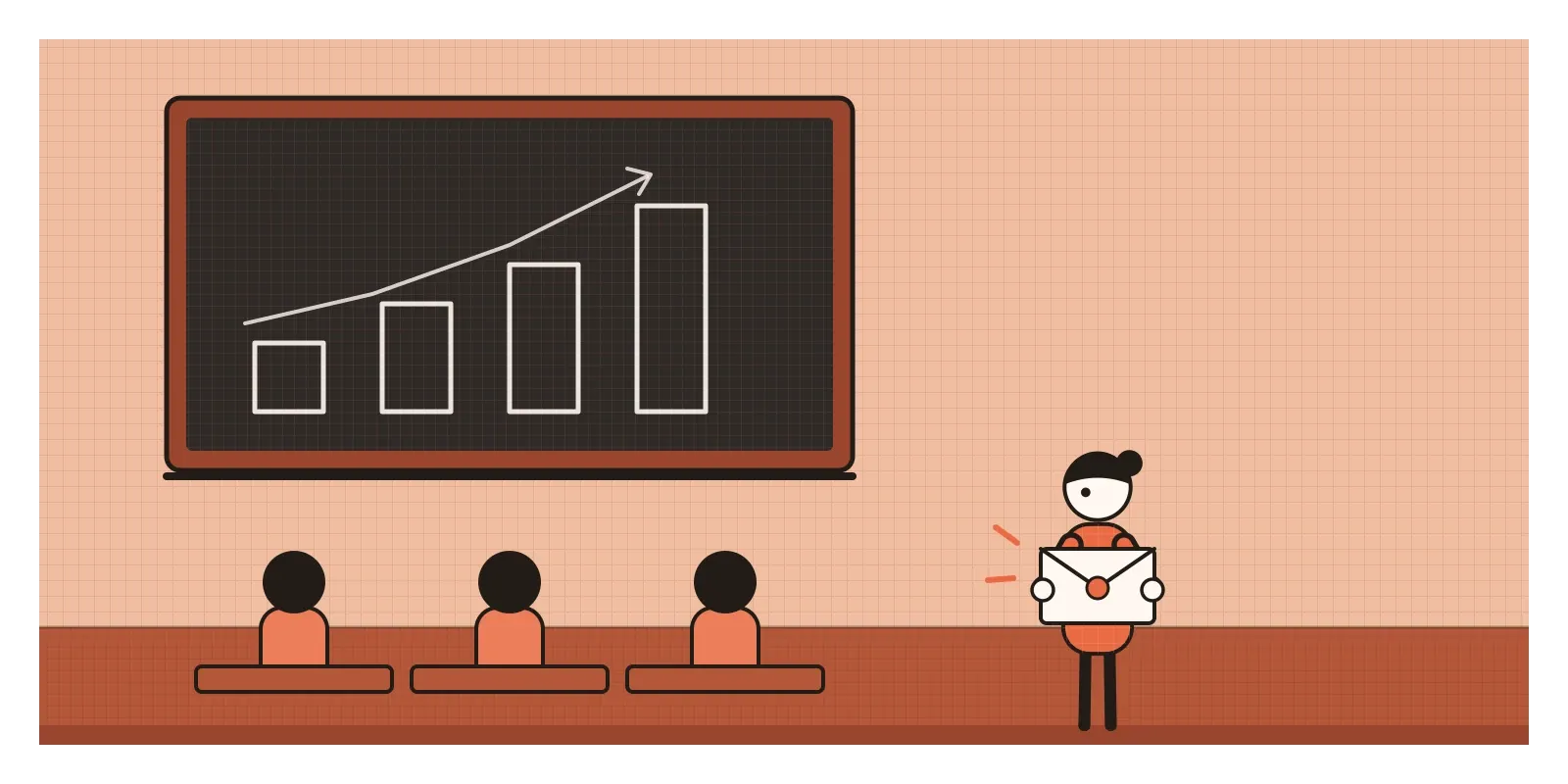
In money terms, the two deals were the same. Psychologically, they weren't. For the first group, the bonus was a gain they might earn. For the second, it was money already in their bank account that they might lose. In that first year, the students of teachers in the second group made clearly larger gains in maths than students in the control group. The conventional bonus made no reliable difference.
There's an honest coda, which I'll come back to. But the first year's result is a vivid picture of loss aversion: the tendency for losses to feel larger than gains of the same size. Losing ₹500 hurts more than finding ₹500 pleases. We'll often work harder, take bigger risks or pay more to avoid a loss than we would to secure an equal gain.
This post continues the part of the series about the user's mind. In the post on framing I looked at how the same facts described as gains or as losses lead to different choices. Loss aversion is a large part of why framing works, but it's broader than wording: it's about how much a loss weighs, however it's described.
Losses loom larger
The idea took its modern form in 1979, when Daniel Kahneman and Amos Tversky published "Prospect Theory" in the economics journal Econometrica. Economists had long modelled people as caring about their total wealth. Kahneman and Tversky argued that people actually judge outcomes as changes from a reference point, usually where they stand now, and that the pain of moving below that point is steeper than the pleasure of moving above it. Their paper put it in a phrase that has stuck: losses loom larger than gains.
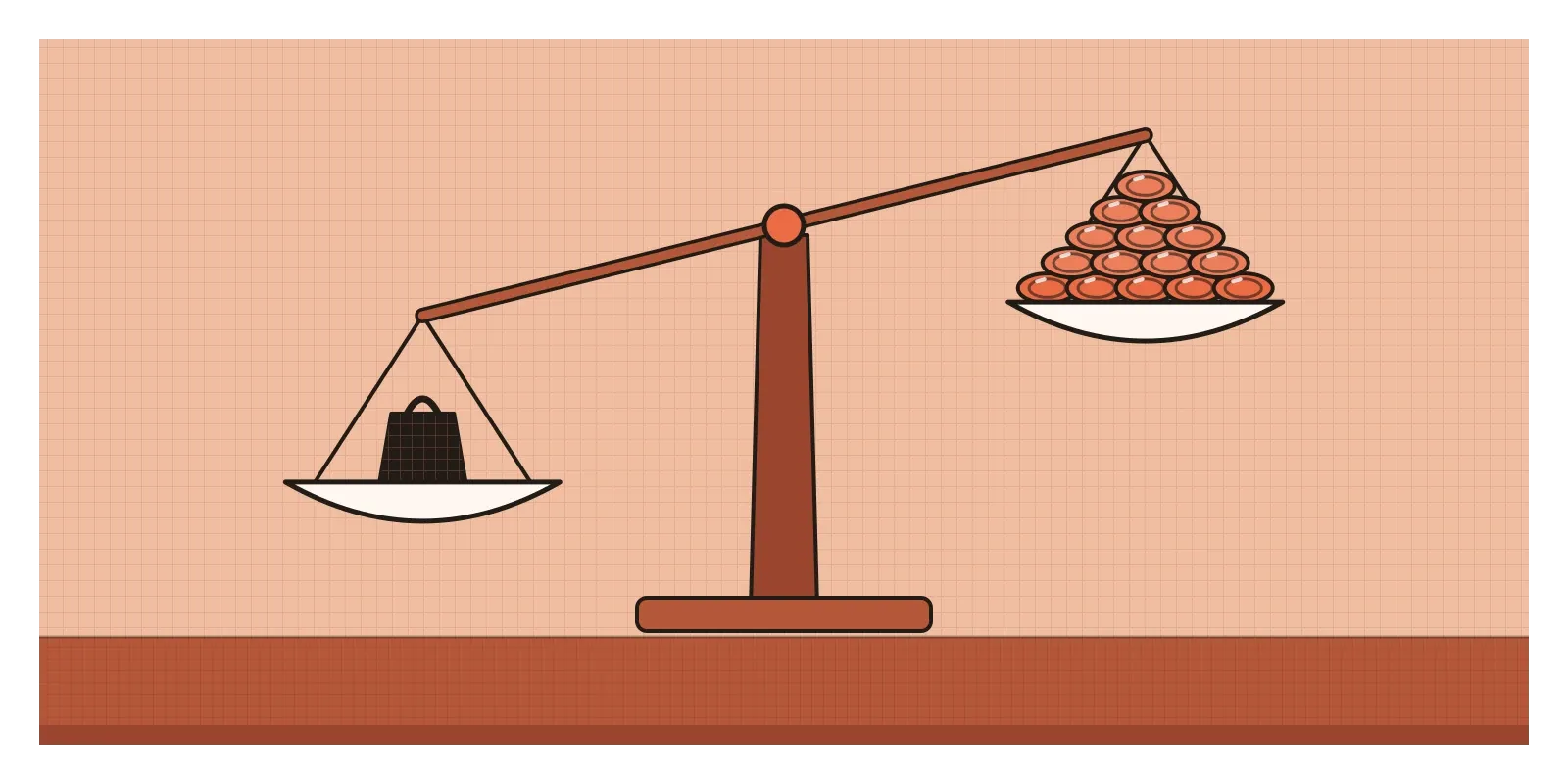
The simplest demonstration is a coin toss. Heads, you win ₹1,500. Tails, you lose ₹1,000. On average the bet pays well, and yet most people turn it down. Kahneman described in Thinking, Fast and Slow that people typically need the possible win to be about twice the possible loss before they'll take a fair-looking bet. In 1992, Tversky and Kahneman put a number on it, estimating that losses weigh about 2.25 times as much as gains. That figure has been quoted ever since, often too confidently.
So how solid is it? In 2018, the marketing researchers David Gal and Derek Rucker published a sharp critique, "The Loss of Loss Aversion", arguing that many results put down to loss aversion have other explanations, such as people simply preferring to stick with what they have, and that with small, everyday stakes the effect is often weak or absent. Others pushed back. A large set of studies by Mrkva, Johnson, Gächter and Herrmann in 2020 found loss aversion to be real but variable, differing with the person and the situation. In 2024, a meta-analysis by Alexander Brown, Taisuke Imai, Ferdinand Vieider and Colin Camerer, combining more than six hundred estimates from 150 papers, put the average at just under 2. Losses do seem to count for more than gains, on average about twice as much. But the ratio isn't a constant of nature, and it can shrink to nothing for small sums or for people who make such trades every day.
It's worth keeping loss aversion apart from its neighbours in this series. The endowment effect, valuing something more because it's ours, is one of its consequences. Status quo bias, sticking with the default, often borrows from it. Loss aversion is the underlying asymmetry, the extra weight of "less than now".
Why a loss feels heavier
One common explanation, and it's a speculative one, is evolutionary. For a creature living close to the edge, losing the food it already has could mean starving, while finding a little extra food is merely nice. Guarding what you have would matter more than chasing more.
A more everyday explanation is about reference points. We notice change more than absolute levels, and "below where I was" carries a sense of failure and regret that "above where I was" doesn't mirror. A gain feels like luck. A loss feels like something taken from us, or a mistake we made.
Most of the time the shortcut is sensible. Protecting what works, being careful with savings, reading the warning before deleting a file: these are good habits, and a mind that weighs losses heavily is cautious in ways that usually pay. It misleads us when caution turns into refusal: when a small, certain loss stops us taking a much larger likely gain, or when the fear of losing makes us take wild risks to get back to where we were.
Five cents at the checkout
My favourite real-world example is wonderfully small. In January 2012, Montgomery County in Maryland, just outside Washington, D.C., began charging shoppers five cents for each disposable paper or plastic bag at the checkout. Some shops in the area were already offering the reverse: a five-cent discount for every reusable bag a customer brought. Economically, those are the same incentive. Either way, using your own bag leaves you five cents better off.
The economist Tatiana Homonoff collected observations of more than sixteen thousand shoppers in grocery stores in Montgomery County and in comparison areas before and after the charge. She published the results in 2018. The five-cent charge cut the share of shoppers using disposable bags by more than 40 percentage points. The five-cent bonus did almost nothing: shoppers in stores offering it used disposable bags about as often as shoppers in stores that offered nothing. Homonoff pointed to loss aversion as the most likely explanation. Paying for something that used to be free is a loss. Getting a few cents off is a small gain, easily ignored.
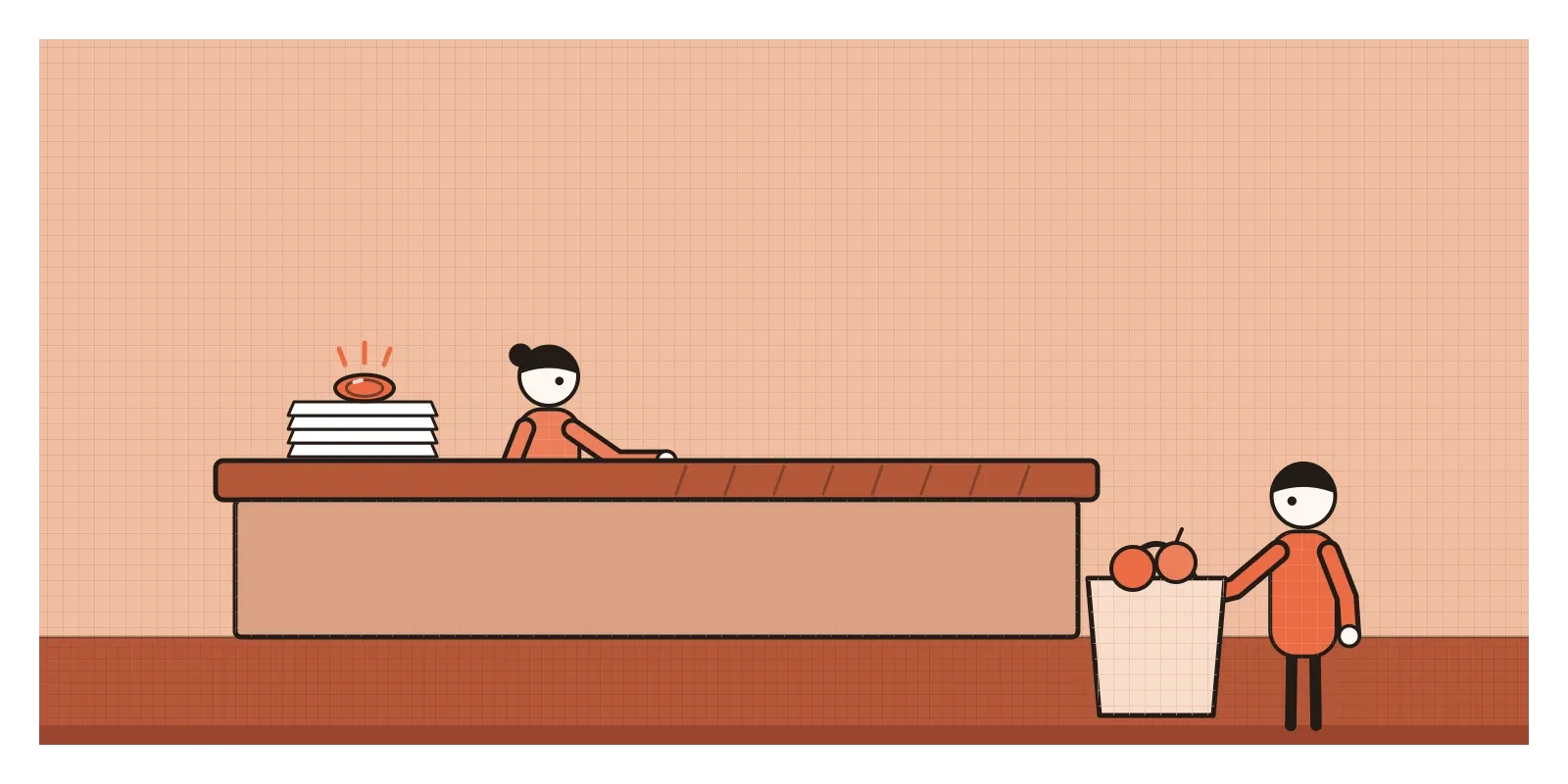
Plenty of Indian shoppers will recognise the same quiet effect at shop counters that now charge a few rupees for a carry bag. A bag that used to come free now feels like a small loss. It's a reminder that the direction of an incentive can matter as much as its size.
Picture a streak that's about to break
Picture a team designing a habit app for learning a language, used largely by working adults in Indian cities. Daily practice matters, and the app shows a streak: the number of days in a row someone has practised, with a little flame that grows. The team notices what many apps have noticed: once people have a long streak, they protect it fiercely. The streak has become something they own and can lose.
In the growth review, someone proposes leaning in. At 9 p.m., anyone who hasn't practised gets a push notification: "Your 47-day streak is about to disappear!" If they miss a day, the streak resets to zero with a sad animation, and they're offered a paid "streak repair". The test numbers look good. Daily practice goes up.
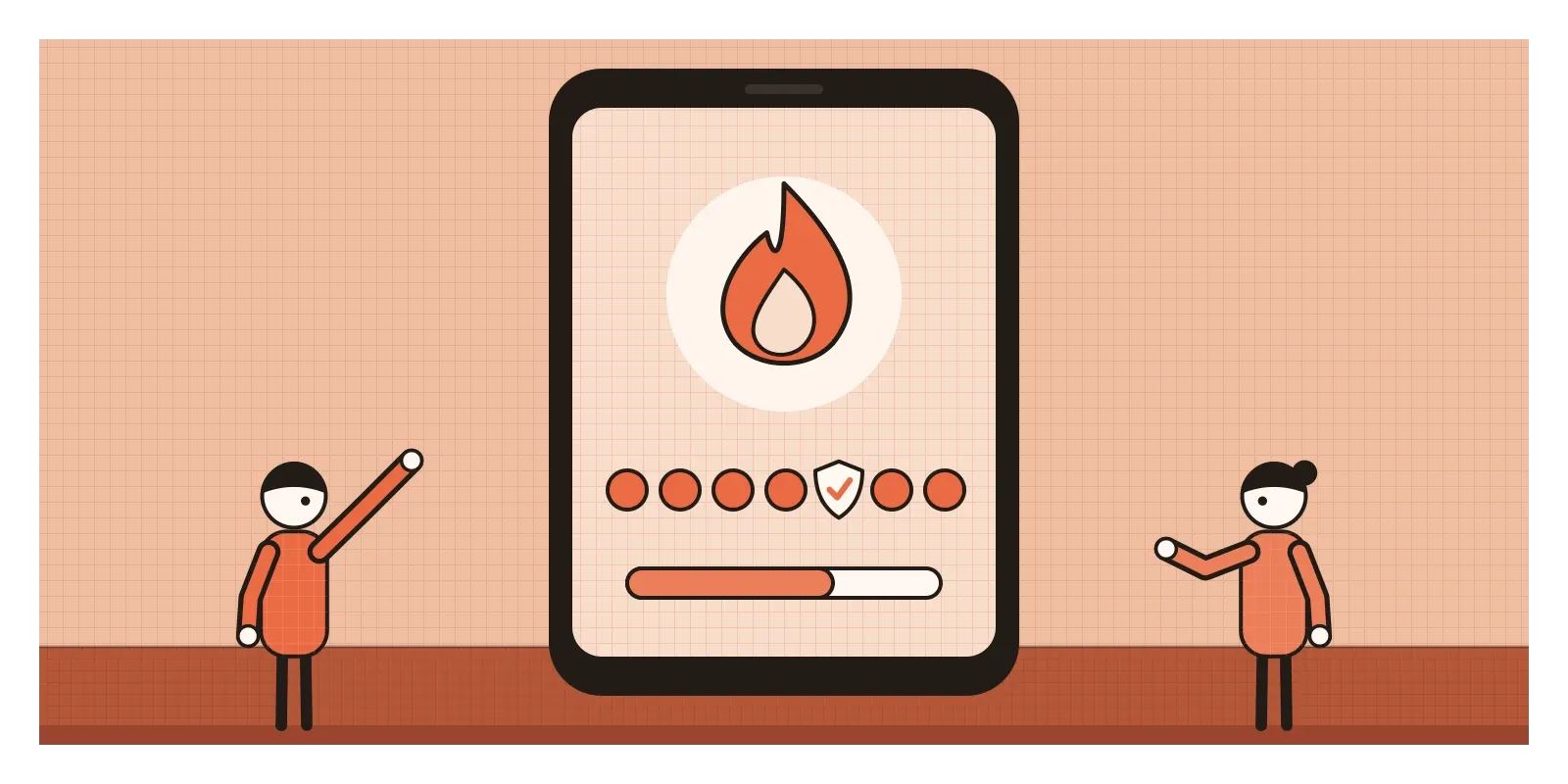
Look closer, though, and the practice that goes up is mostly one-minute sessions done in a hurry before midnight to save the number. Some users with long streaks who miss a day, because of a fever or a wedding or a night shift, don't come back at all. The reset turned a year of progress into a loss so large that quitting felt easier than starting from zero. The team has designed for loss aversion, but against the person.
The better version starts from the same insight and points it at the learner's real goal. The streak counts weeks in which someone met a goal they chose, say four days out of seven, so one missed day isn't a loss. A free "rest day" can be planned in advance. The evening reminder talks about the lesson, not the number. When a streak does break, the app shows what was gained, two hundred words and forty lessons, which no reset can take away. People still feel a gentle pull not to lose their progress. They no longer feel punished for being human.
Using it honestly, and where it becomes manipulation
Some losses deserve to loom large, and good design says so. "You have unsaved changes" before closing a document. A clear warning before a payment to a new account. A pension screen that points out that by not joining the employer's scheme, you're leaving the employer's contribution on the table. In each case the loss is real, the person would want to know, and naming it as a loss helps them act in their own interest.
Manipulation begins when the loss is invented, exaggerated or used against the person's interest. A countdown timer that resets every time you reload the page. "Only two rooms left!" when there are plenty. A decline button that reads "No thanks, I don't like saving money", which designers call confirmshaming, using the small loss of self-respect to push a yes. A cancellation screen that lists everything you'll lose, in large type, while the option to actually cancel sits small and grey at the bottom.
Regulators have named several of these. The European Union's Unfair Commercial Practices Directive bans, in all circumstances, falsely claiming that a product will be available only for a very limited time in order to rush a decision. In 2022, the US Federal Trade Commission published a staff report, Bringing Dark Patterns to Light, which described fake countdown timers, false scarcity claims and confirmshaming among the tricks it was watching. India's Central Consumer Protection Authority listed "false urgency" and "confirm shaming" among the dark patterns in its 2023 guidelines.
The test I use is simple. Is the loss true, is it as big as we're making it feel, and would the user thank us for pointing it out? A warning about unsaved work passes all three. A fake timer fails all three.
How I try to catch it
When I'm deciding something myself, I try describing it both ways. If "keep the old vendor" and "lose the migration effort" sound different from "pay more every month" and "gain a better tool", I ask which description I'm reacting to. Then I try to put both sides in the same units, rupees or hours, and compare them as gains and losses of the same kind.
The second habit is to watch for the opposite failure. After a loss, the urge to get back to where I was can make me reckless. If I notice myself thinking "just one more try to make it back", I stop and treat the loss as already gone.
When I'm designing, I list every loss a screen mentions and check that each one is real, accurately sized and in the user's interest to know about.
I said there was a coda to the Chicago Heights story. The experiment ran again the following year, and this time the loss-framed bonus made little difference. When the researchers pooled both years in their published paper in 2022, the overall effect was much smaller than the first year had suggested, though still larger than the conventional bonus. I find that reassuring rather than disappointing. Loss aversion is real, but it's a tendency, not a lever. In the next post I'll turn to a bias about time rather than size: present bias, the pull of now over later.
Further reading: Daniel Kahneman and Amos Tversky, "Prospect Theory: An Analysis of Decision under Risk" (1979) · Daniel Kahneman, Thinking, Fast and Slow (2011) · David Gal and Derek Rucker, "The Loss of Loss Aversion: Will It Loom Larger Than Its Gain?" (2018) · Tatiana Homonoff, "Can Small Incentives Have Large Effects? The Impact of Taxes versus Bonuses on Disposable Bag Use" (2018) · Roland Fryer, Steven Levitt, John List and Sally Sadoff, "Enhancing the Efficacy of Teacher Incentives through Framing" (2022)
The question to askIs this loss really bigger, or does it just feel bigger?