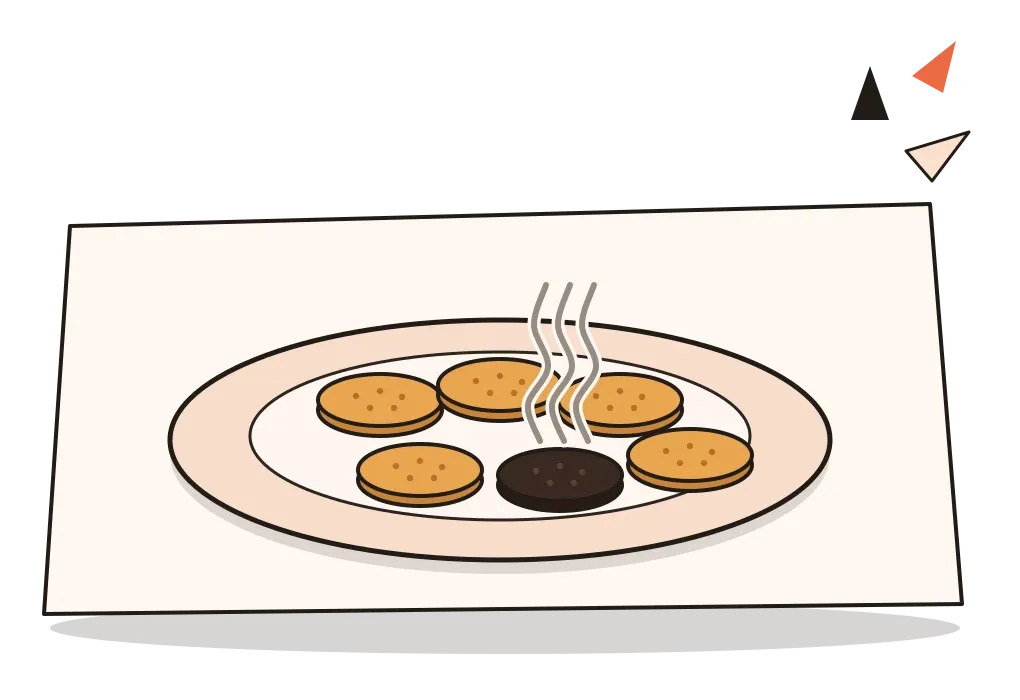
Negativity Bias
Why one bad moment can outweigh a dozen good ones, and how to design for people who remember it.
Negativity Bias
Five good moments for every bad one
In the late 1980s and through the 1990s, the psychologist John Gottman and his colleague Robert Levenson invited hundreds of married couples into their laboratories and asked them to do something most of us avoid. Sit down together and talk about the thing you argue about most. At the University of Washington in Seattle, part of the research space was furnished like a small flat, which journalists soon nicknamed the "Love Lab". Cameras recorded every exchange, and the researchers coded each one: a smile, a nod, a joke, a bit of affection, or a criticism, a sigh of contempt, an eye roll, a defensive reply. Sensors tracked heart rate and sweating. Then, over the following years, the team kept checking which couples were still together.
The finding that became famous was a ratio. In couples whose marriages lasted, positive moments outnumbered negative ones by roughly five to one, even while they were arguing. In couples heading for separation, the two were much closer to even. Gottman described this in his 1994 book Why Marriages Succeed or Fail. The point wasn't that stable couples never fought. It was that one cutting remark seemed to need about five warm ones to balance it.
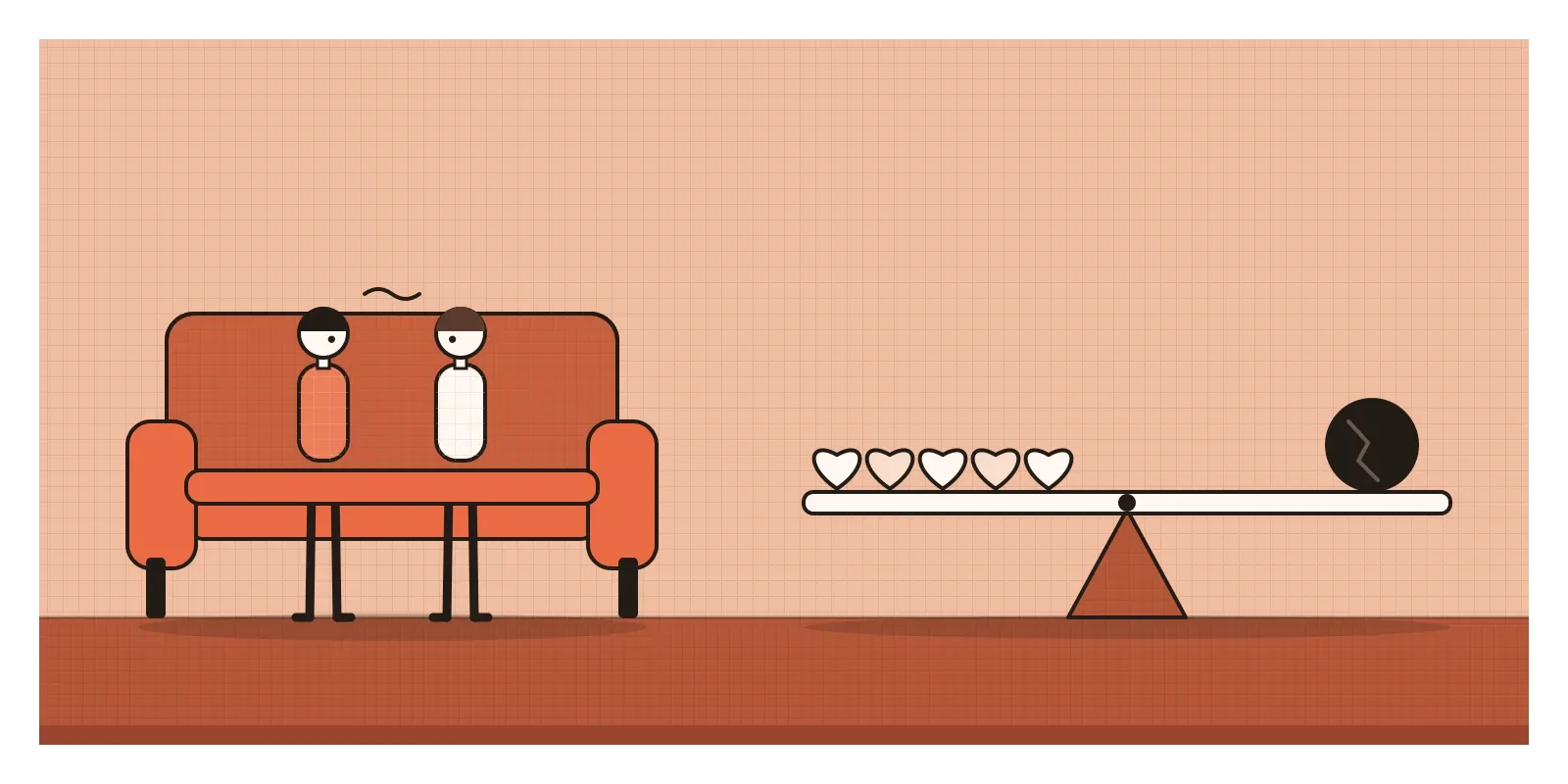
I find that ratio useful as a picture, but I hold the number loosely. It's an average from observed couples, not a law of nature, and critics have pointed out that some of the most quoted claims about how accurately the lab could predict divorce came from fitting models to couples whose outcomes were already known. The pattern underneath it, though, turns up almost everywhere psychologists have looked.
That pattern is negativity bias: the tendency for bad things, such as criticism, losses, threats, unpleasant experiences and bad news, to have a bigger effect on our attention, feelings, memory and decisions than good things of the same size. For the people we design for, it means a single broken moment can outweigh a long run of smooth ones.
Bad is stronger than good
In 2001, two papers pulled the evidence together, almost at the same moment. Roy Baumeister, Ellen Bratslavsky, Catrin Finkenauer and Kathleen Vohs published a long review with the blunt title "Bad Is Stronger Than Good". Across relationships, emotions, learning, feedback, health and first impressions, they found the same asymmetry again and again. Bad feedback is taken to heart more than good feedback. A bad first impression is harder to undo than a good one is to spoil. They struggled to find areas where good reliably beat bad.
The same year, Paul Rozin and Edward Royzman described what they called negativity dominance. When good and bad things are combined, the whole tends to be judged as worse than the sum of its parts would suggest. They quoted an old Russian proverb to make the point: a spoonful of tar can spoil a barrel of honey, but a spoonful of honey does nothing for a barrel of tar. Contamination works one way.
There's evidence at the level of the brain, too. In a 1998 study, Tiffany Ito, John Cacioppo and colleagues showed people positive, negative and neutral pictures while recording electrical activity from the scalp. Negative pictures produced a larger response than positive pictures that people had rated as similarly intense, and the response came within a fraction of a second.
How solid is all this? The broad pattern is one of the better established findings in psychology, but it has limits. Cacioppo also described a "positivity offset": when nothing much is happening, people lean slightly positive, which is why we explore at all. Laura Carstensen and her colleagues have found that older adults often pay more attention to positive information than younger people do. And one famous attempt to turn the ratio idea into precise maths collapsed. In 2005, Barbara Fredrickson and Marcial Losada claimed that people flourish above a positivity ratio of 2.9013. In 2013, Nicholas Brown, Alan Sokal and Harris Friedman showed that the mathematics behind the number didn't hold up, and the journal later published a correction withdrawing that part of the paper. Bad is stronger than good, on average, in many settings. It doesn't come with a magic number.
A smoke alarm that goes off for toast
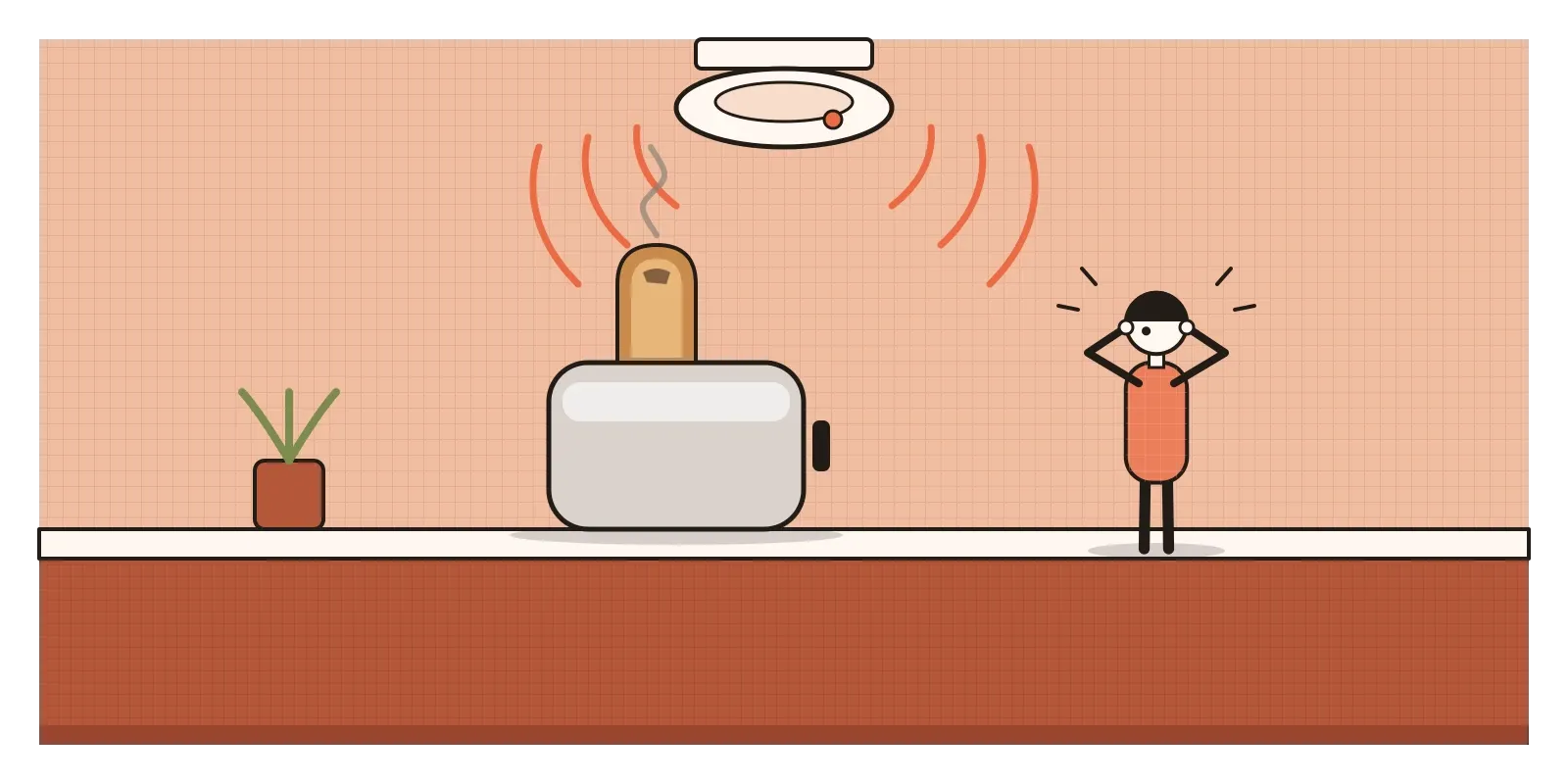
The psychiatrist Randolph Nesse has offered a helpful way to think about why we're built like this, which he calls the smoke detector principle. A smoke alarm that goes off every time you burn toast is annoying. A smoke alarm that stays silent during a real fire is a disaster. So sensible alarms are tuned to give plenty of false alarms. Our ancestors faced the same arithmetic. Missing a meal was a bad day. Missing a snake, a rival or a poisonous berry could be the last day. A mind that noticed threats faster, felt them harder and remembered them longer was more likely to pass on its genes than one that weighed everything evenly.
Most of the time this shortcut still serves us well. Bad things often need action now, while good things can usually wait. A warning light, a strange smell, an unusual charge on a bank statement: these deserve more attention than a pleasant surprise. Noticing them is the system working.
It's a neighbour of loss aversion, from an earlier post, but broader: not just losses in a choice, but bad feedback, impressions, news and experiences. And where the availability heuristic is about how easily examples come to mind, negativity bias helps explain why the bad ones come so easily.
Sad words in the headline
Between 2013 and 2015, the website Upworthy ran thousands of experiments on its own headlines. For a single story, editors would write several versions and show them at random to different visitors, then keep whichever one got the most clicks. Years later, those tests were released for researchers as the Upworthy Research Archive. In 2023, Claire Robertson, Stefan Feuerriegel and their colleagues analysed around 105,000 headline variations from more than 22,000 of these tests, seen in more than 370 million impressions, and published the results in Nature Human Behaviour under a plain title: "Negativity drives online news consumption".
Because the stories behind each test were identical, only the wording changed. On average, each additional negative word in a headline raised the click-through rate by about 2.3%, while positive words slightly reduced it. Words associated with sadness had the strongest effect. Upworthy was known for upbeat stories, which makes the result more striking.
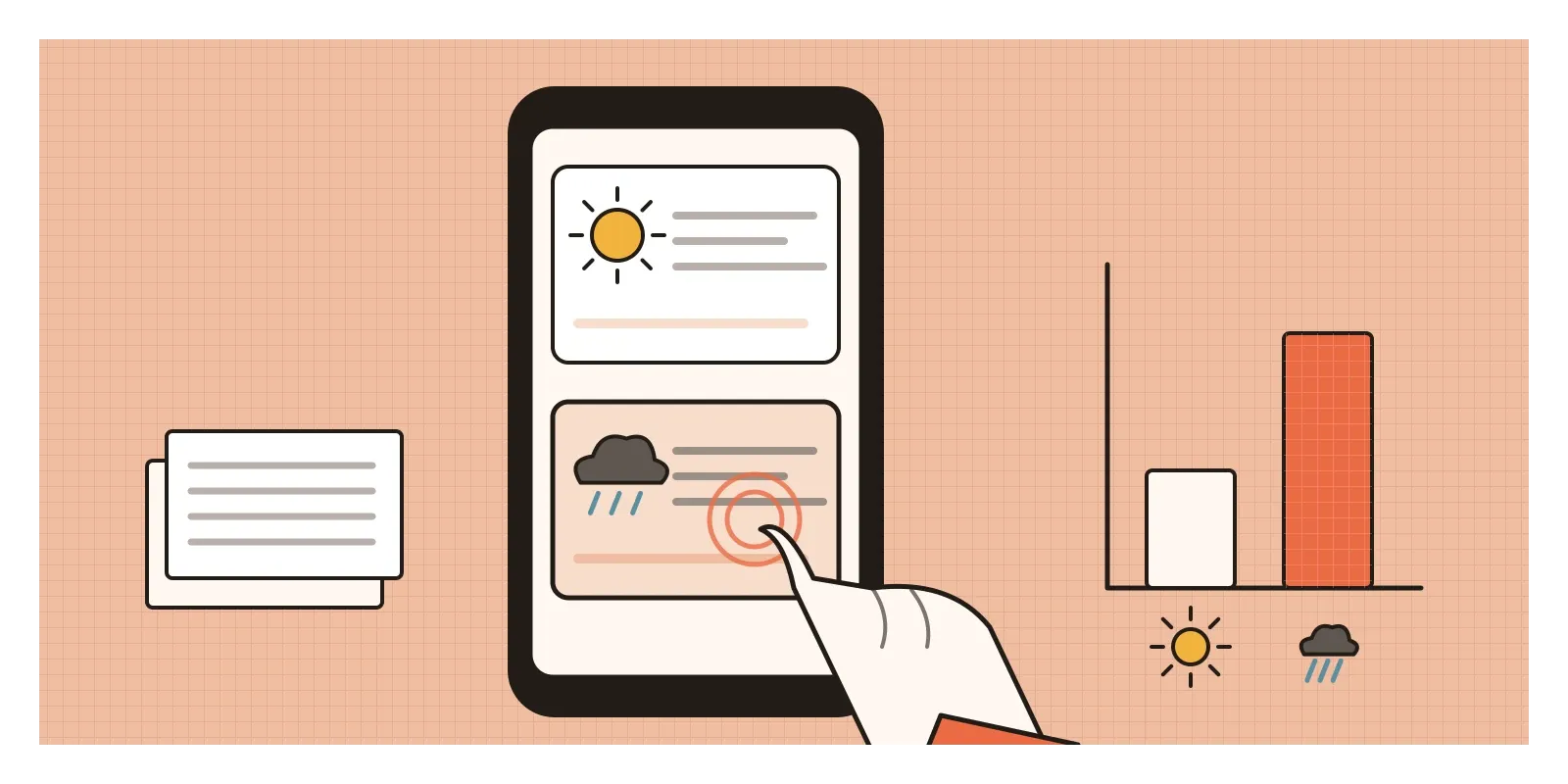
For designers, I think the lesson is less about news and more about metrics. A 2.3% lift per word sounds small. But any system that optimises for clicks, opens or time spent, and that tests at scale, will drift towards whatever pulls attention hardest, and negativity pulls hard. Nobody has to decide to make a feed gloomier. The optimisation does it unless someone decides otherwise.
One late plumber and ten good visits
Picture a team designing an app for booking home services in Bengaluru: plumbers, electricians, cleaners, appliance repairs. The numbers look healthy. The average rating is 4.7 stars, and most visits go smoothly. But the research team notices something in the churn data. Customers who have one bad visit, a technician who arrives two hours late or a bill that's higher than the quote, often never book again, even if their previous ten visits were fine.
The first instinct in the room is to point at the average. Someone suggests a cheerful discount coupon in the follow-up message after any visit rated below three stars. Someone else wants to show only the best reviews on each technician's profile, because "negative reviews scare people off".
Now walk through it as the customer feels it. The late arrival isn't one event in ten. It's the one they tell their family about, the one they think of the next time the tap leaks. A cheerful coupon after a bad experience can feel like being ignored with a smile. And a profile showing only glowing reviews stops being believable the moment the customer has a bad visit of their own.
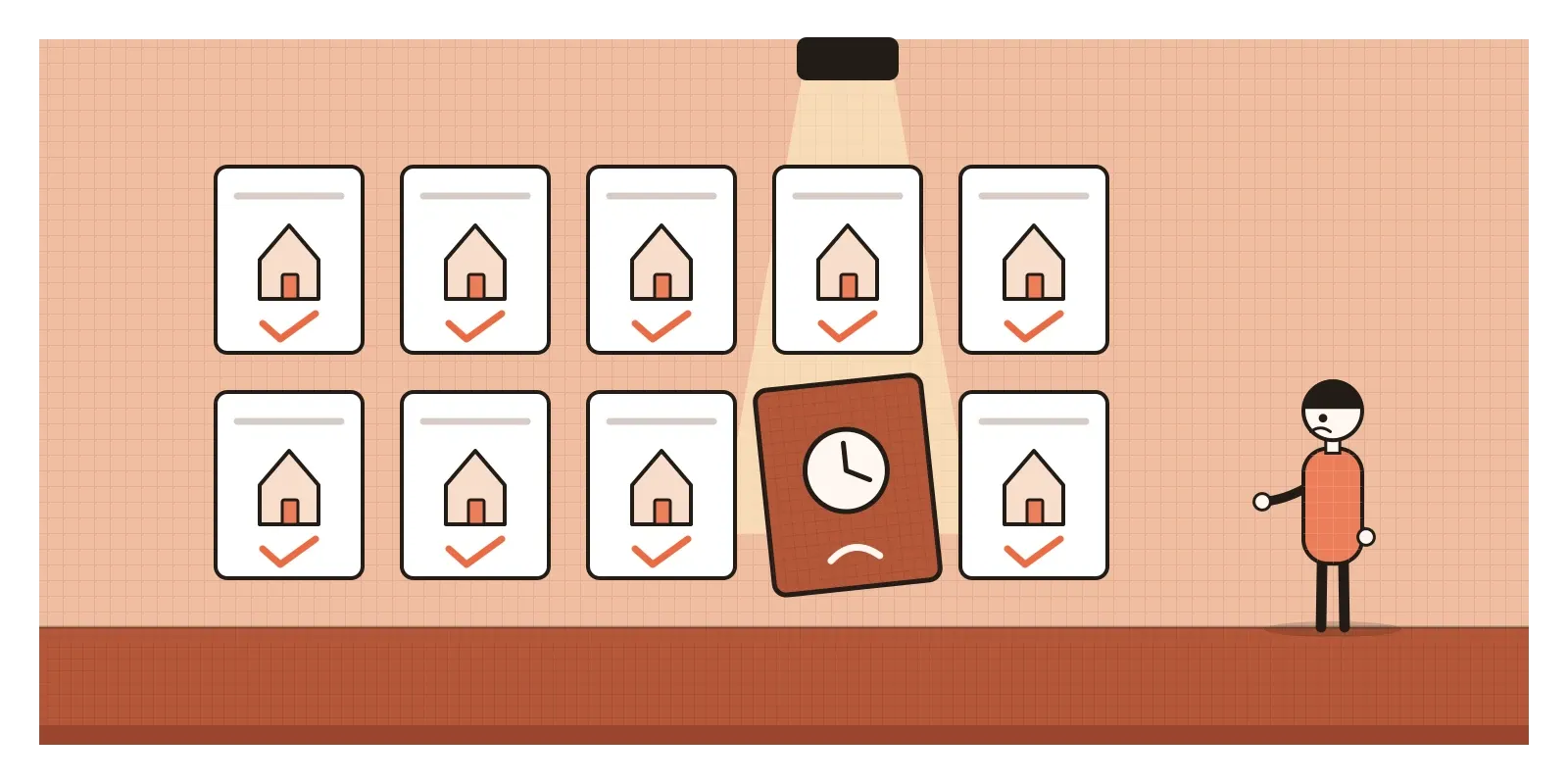
The better version designs for the bad moment first. The team lists the few things most likely to go wrong, late arrivals and surprise charges, and works on those before polishing anything else. If a technician is running late, the app says so early, gives an honest new time and offers to reschedule without a fee. The price is agreed in the app before work starts, so a surprise can't happen quietly. When something does go wrong, the follow-up message names the specific problem, says what will be done about it and puts a person within reach. Reviews show the full spread of ratings, with the company's replies to the bad ones.
None of this makes the bad visits disappear. It shrinks them, and it gives the customer a reason to weigh the next good visit a little more.
Using it honestly, and where it turns into manipulation
Designing for negativity bias can be entirely honest. A low-balance warning, a reminder that a card is about to expire, a clear alert when a login comes from an unfamiliar device: these use our sensitivity to bad news for the user's own benefit. Calm, proportionate error messages, quick recovery from failure and honest delay notices all work with the bias rather than against the person.
It turns into manipulation when the fear is manufactured or the bad news is hidden. Scareware is the crude version. In 2019, Office Depot and the software company Support.com agreed to pay a combined $35 million to settle charges from the US Federal Trade Commission that a free "PC Health Check" scan had told customers their computers showed signs of malware, which helped sell them repair services, whatever the scan actually found.
The quieter version exploits the bias by hiding negatives, precisely because people weigh them so heavily. In 2022, the fashion retailer Fashion Nova agreed to pay $4.2 million to settle FTC charges that, for several years, reviews below four stars had been held back from its website while higher ratings were posted automatically. In India, the Bureau of Indian Standards published IS 19000:2022 in November 2022, a standard for how online platforms collect, moderate and publish consumer reviews. Among its principles is that reviews should be moderated consistently, whatever their sentiment, rather than negative ones being quietly dropped. Compliance is voluntary for now, with the government saying it could become mandatory if fake and selective reviews persist. Both point to the same idea. Customers need the bad news to make good decisions, and removing it is a way of using their own sensitivity against them.
How I try to catch it
The first habit is to ask, for every journey I work on, which single moment is most likely to go wrong, and whether we've designed that moment as carefully as the happy path. Usually we haven't. The happy path gets the attention because it's the one we demo.
The second is to remember that I have the bias too. In research synthesis, one angry participant can dominate a whole afternoon of notes. So I count as well as listen: how many people said this, and how many said the opposite? The angry quote may be right, but its weight should come from evidence, not volume.
The third is about tone. Before shipping an error message or a warning, I ask whether the alarm matches the size of the problem. A missing postcode isn't a fire.
I keep coming back to Gottman's couples, arguing on a sofa while the cameras rolled. The ones who stayed together still fought. They just made sure the bad moments were outnumbered, and that the bad moments were repaired. Products are relationships too. In the next post, on automation bias, I'll look at the opposite problem: what happens when people trust a machine so much that they stop noticing when it's wrong.
Further reading: Roy Baumeister, Ellen Bratslavsky, Catrin Finkenauer and Kathleen Vohs, "Bad Is Stronger Than Good" (2001) · Paul Rozin and Edward Royzman, "Negativity Bias, Negativity Dominance, and Contagion" (2001) · John Gottman, Why Marriages Succeed or Fail (1994) · Claire Robertson and colleagues, "Negativity drives online news consumption" (2023) · Randolph Nesse, "Natural selection and the regulation of defenses: a signal detection analysis of the smoke detector principle" (2005)
The question to askWhich single bad moment will they remember?