
Appeal to Novelty
Why "new" feels like a reason on its own, and how to ask what the new thing actually does better.
Appeal to Novelty
A four-hundred-dollar squeeze
In 2016, a San Francisco start-up called Juicero began selling a juice press that looked like it belonged in a design museum. It was a sleek white box with a door on the front, connected to Wi-Fi. You bought sealed packs of chopped fruit and vegetables from the company by subscription, slotted one into the machine, and it pressed the pack with tremendous force, sending fresh juice into your glass. Each pack had a code that the machine checked online, so it would refuse to press anything past its date. The press launched at $699, later dropped to $399, and the company raised roughly $120 million from well-known investors.
In April 2017, two reporters at Bloomberg tried something simple. They took a pack, skipped the machine, and squeezed it with their bare hands over a glass. In a minute or two, they got almost as much juice as the press produced, and a little faster. The video spread everywhere. Within months the company had offered refunds to buyers, and by September 2017 Juicero had shut down.
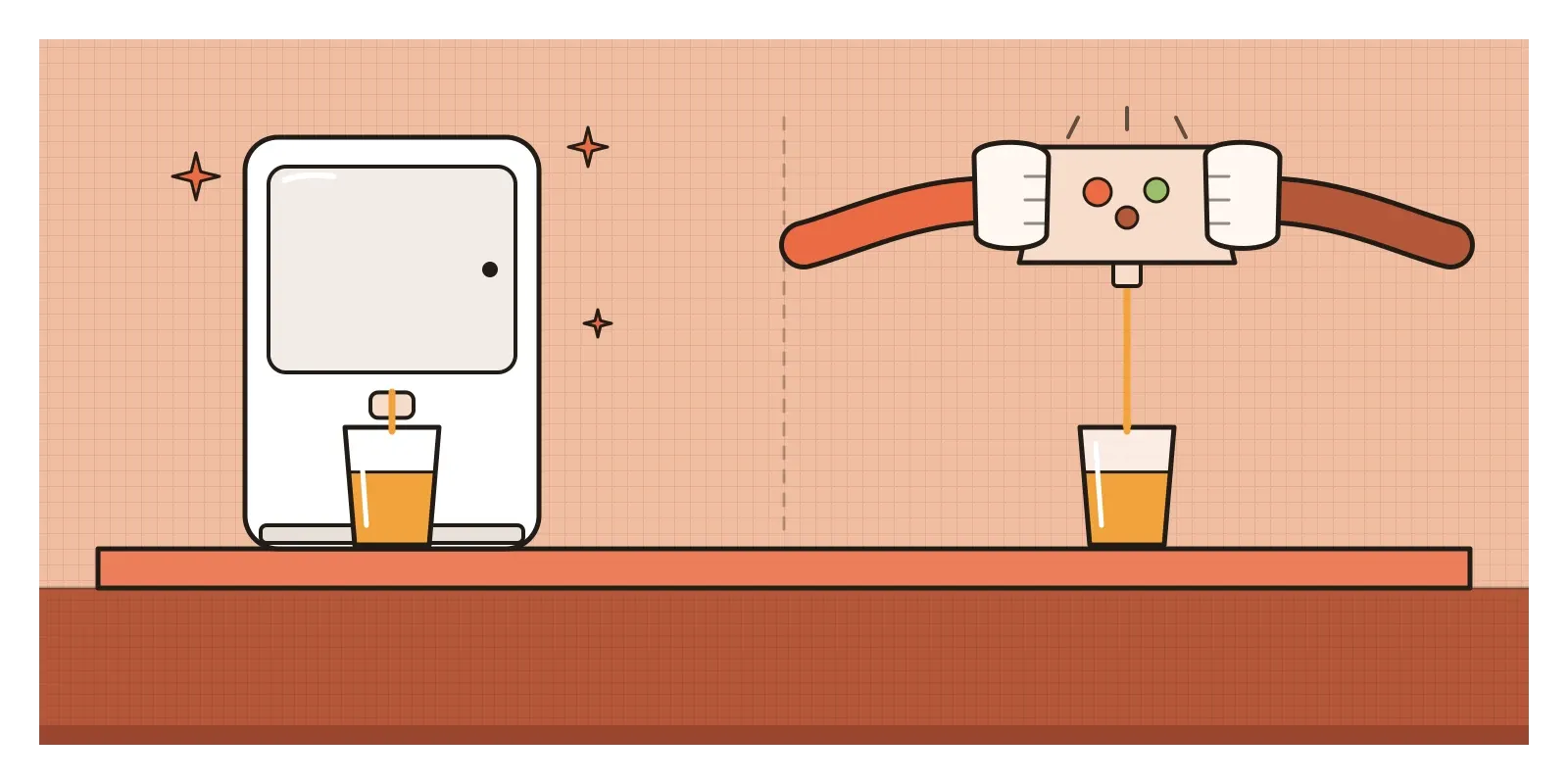
It's easy to laugh at Juicero now, but the people who funded it were experienced and intelligent, and many customers loved the idea. What carried it so far was partly the feeling that a new, connected, beautifully engineered way of doing something ordinary must be an improvement on the old way, even when the old way was a pair of hands. That feeling has a name. The appeal to novelty is the assumption that something is better, truer or more valuable simply because it is new. Its Latin name is argumentum ad novitatem. Its mirror image, the appeal to tradition, assumes something is better because it is old, and both make the same mistake: they let age stand in for evidence.
Two opposite mistakes with one root
The appeal to tradition got most of the attention from early writers on fallacies, because for centuries it was the more common problem. In The Book of Fallacies, published in English in 1824, the philosopher Jeremy Bentham catalogued the tricks he saw used in Parliament to block reform. One was what he called the wisdom of our ancestors. Another he called the hobgoblin argument, the cry of "No innovation!", which treated any change as a frightening monster without saying what exactly was wrong with it. Bentham was a reformer, and he wanted proposals judged on their consequences, not on their age.
The appeal to novelty is the same error running the other way. A century after Bentham, the writer C. S. Lewis described a habit he had caught in himself as a young man and called chronological snobbery: assuming that ideas from an earlier age are discredited simply because they are old, without asking whether anyone ever actually showed them to be wrong. Most of us today live in cultures that have flipped Bentham's problem. In technology and design especially, "new" often wins an argument before anyone has asked what the new thing does.
The fallacy has a few common shapes. There's the upgrade assumption, that the latest version of a product, a framework or a design trend must be better than the last. There's the relabel, where something familiar is presented as new to borrow the glow of newness. And there's the fear of being left behind, which sounds like "everyone is moving to this", and quietly turns the appeal to novelty into the bandwagon I wrote about earlier in this series.
Why new feels like a reason
Novelty grabs our attention at a very basic level. In a 2006 brain imaging study, Nico Bunzeck and Emrah Düzel found that a region of the midbrain involved in motivation and reward responded more strongly to completely new images than to familiar ones, even when the familiar ones were unusual or emotionally charged. Novelty, it seems, is rewarding in itself. For animals exploring an uncertain world, that makes sense: new things might be food or danger.
There's also a cultural story underneath. In Diffusion of Innovations, first published in 1962, the sociologist Everett Rogers described what he called the pro-innovation bias: a tendency among researchers and promoters to assume that an innovation should be adopted by everyone, quickly, and without being changed, and to treat people who resist as laggards rather than as people who might have good reasons. Technology analysts later gave the pattern of excitement a shape. Gartner's hype cycle, introduced in the mid-1990s, describes how a new technology climbs to a peak of inflated expectations, falls into a trough of disillusionment, and only later settles into steady, realistic use.
Incentives finish the job. A launch is easier to celebrate than maintenance. A redesign makes a better case study than a quiet fix. Saying "this is new" in a pitch suggests momentum and ambition, while defending what exists can sound timid. Nobody gets promoted for leaving a good thing alone.
The day an iced tea company became a blockchain company
My favourite real case is almost too neat. In December 2017, during the boom in cryptocurrency, a small American drinks company called Long Island Iced Tea Corp announced that it was changing its name to Long Blockchain Corp and shifting its focus towards blockchain technology. It had no blockchain business to speak of. Its shares more than doubled in value in a single day. A plan to buy equipment for mining Bitcoin later fell apart, the stock was removed from the Nasdaq exchange in 2018, and in 2021 US regulators charged several people with insider trading connected to the announcement.
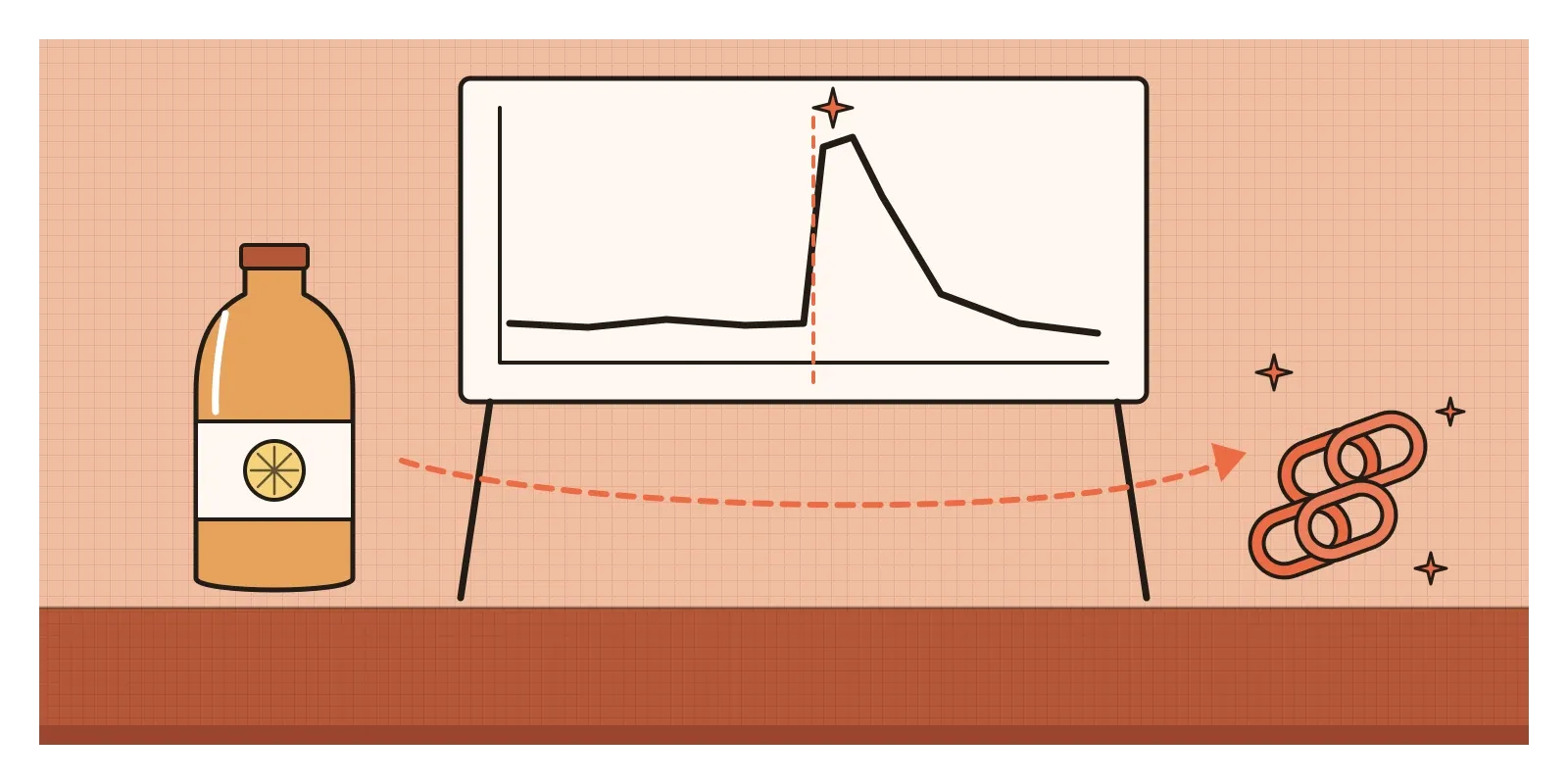
It wasn't the first time. In 2001, the finance researchers Michael Cooper, Orlin Dimitrov and P. Raghavendra Rau published a study of companies that had added ".com" to their names during the dot-com boom of the late 1990s. They found that those companies' share prices jumped sharply around the announcement, and the effect appeared even for firms whose actual business had little to do with the internet. Nothing about the companies had changed except a word that sounded like the future.
Design has its own milder versions. In the post on form, I mentioned neumorphism, the soft, pressed-in look that spread quickly around 2019 and 2020 and faded when people noticed how hard its low-contrast buttons were to see. Each new visual style arrives with a wave of enthusiasm that has more to do with its freshness than with whether it helps anyone use a product. Some of those styles turn out to be genuine improvements. The newness itself tells you nothing about which.
A chat box where a form used to be
Picture a team at a bus-ticket booking app. The search screen is simple and battle-tested: a "from" field, a "to" field, a date, and a big button. It autocompletes city names, remembers your last route, and works on a weak connection. In the roadmap meeting, the head of product proposes replacing it with a chat box. "Every app is going conversational," he says. "Users expect AI now. Our competitor launched a chat assistant last month. If we keep the old form, we'll look dated."
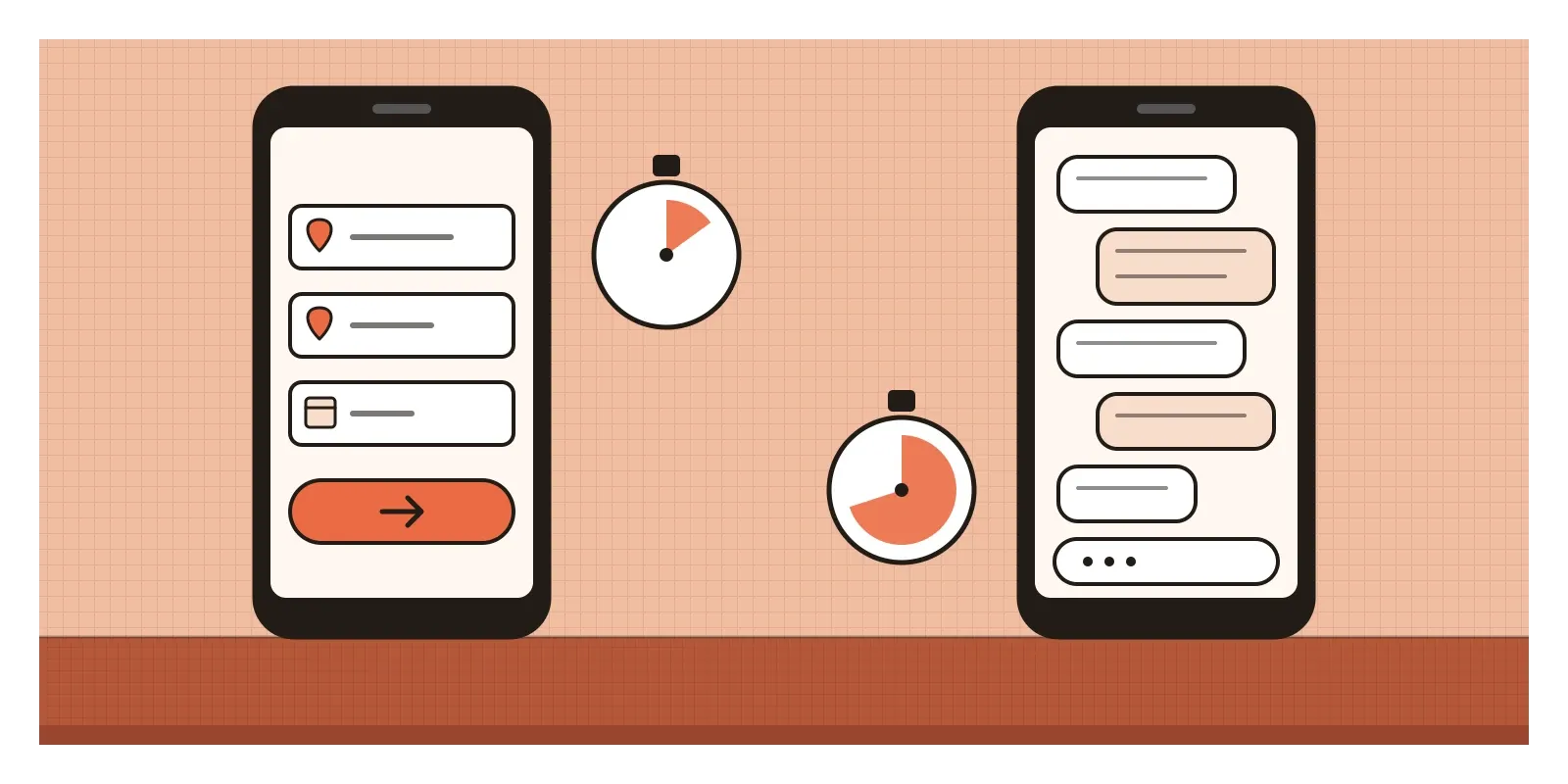
Listen to the reasons offered. Everyone is doing it. Users expect it. We'll look dated. None of them says what the chat box will do better for a person trying to book a bus from Bengaluru to Goa. The demo is impressive, and that matters too, because a demo is the most flattering possible moment for something new. Nobody in the room is standing at a crowded bus stop with patchy data, typing a date into a chat window.
The honest version starts by asking what job the search screen does and how well it does it. The team looks at the numbers: most people complete the form in under twenty seconds. Then they ask where chat might genuinely help. It turns out there's a real gap. Some people have complicated needs, "a sleeper bus, under ₹1,500, leaving after nine on Friday night, with a window seat", and those people currently spend minutes juggling filters. So the team prototypes chat as an option for complex searches, keeps the form, and tests both against the measure that matters, time from opening the app to holding a ticket. If chat wins for complex searches, it earns its place there. If it loses on simple ones, the form stays. The new thing gets judged on what it does, not on when it was invented.
When newer really is better
Plenty of new things are better than what came before, and in some fields that's the normal state of affairs. Security patches fix holes that attackers know about. Newer versions of accessibility guidelines, such as WCAG 2.2, published in 2023, reflect years of learning about what people with disabilities need. Medicines, car safety features and construction standards improve because each generation builds on evidence from the last. In those cases, choosing the newer option is often right, but notice why: because there is evidence that it works better, and a clear account of what problem it solves. The newness is a side effect of the progress, not the reason for it.
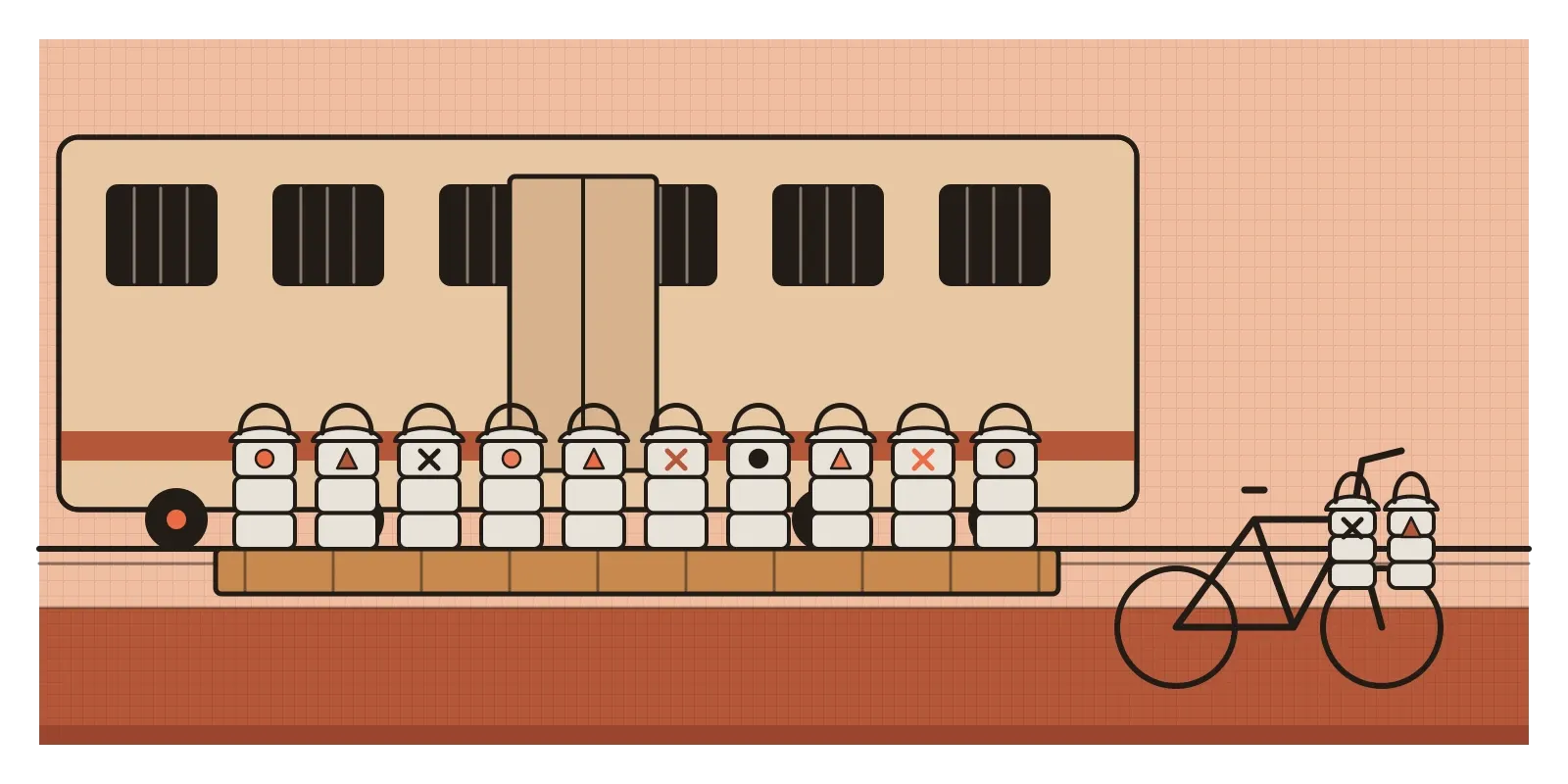
The opposite trap is just as real, and Mumbai's dabbawalas are my favourite reminder of it. Since 1890, when the service is usually said to have begun, they have collected home-cooked lunches in tiffin boxes from homes across the city and delivered them to offices, using local trains, bicycles, handcarts and a coding system of colours and symbols painted on the lids. Before the pandemic, around five thousand dabbawalas were said to move roughly two hundred thousand lunches a day. The famous claim that they make only one mistake in millions of deliveries is repeated everywhere, but as far as I know it has never come from a rigorous audit, so I'd treat it as a legend rather than a statistic. Even so, the system is reliable enough to have become a Harvard Business School case study. A consultant obsessed with novelty might want to replace it with an app and a fleet of scooters. A wiser one would first ask why a system this old still works so well, and borrow from it. Over the years, the dabbawalas have themselves added phone and online booking, adopting new tools where they help without throwing out what works.
Two old ideas help here. The writer G. K. Chesterton, in his 1929 book The Thing, described a fence across a road. A reformer wants to tear it down because he can't see what it's for. Chesterton's advice was to go and find out why it was put there first, and only then decide. And the Lindy effect, a name popularised by Nassim Nicholas Taleb in Antifragile (2012), suggests that for things that don't wear out, like ideas, books or techniques, the longer something has already survived, the longer it's likely to survive. Neither idea says old is always right. They say that survival is a kind of evidence, and newness isn't.
How I try to catch it
The first question I ask is: if this were ten years old, would we still want it? It strips away the glow and leaves only what the thing does. If the answer is "no, it's only interesting because it's new", that's worth knowing before we spend a quarter on it.
The second is: what exactly does it do better, and how will we know? I try to name one specific improvement, faster, clearer, cheaper, more accessible, and a way to measure it against the existing version. If nobody can name the improvement, the proposal is a mood, not a plan.
The third is Chesterton's question: what does the old thing do that we'd lose? Before replacing a pattern, a component or a process, I try to find out why it exists. Sometimes the answer is "no reason any more", and we can let it go with a clear conscience. Often it's a quiet job nobody had noticed until it stopped being done.
Juicero's press was new, connected and beautifully made, and the thing it was competing with was a pair of hands. Almost every time I'm tempted by something because it's new, I try to picture those two reporters squeezing a pack over a glass. In the next post, on special pleading, I'll look at what happens when we judge our own ideas by gentler rules than everyone else's, which is often how the shiny new thing gets waved through.
Further reading: Jeremy Bentham, The Book of Fallacies (1824) · Everett Rogers, Diffusion of Innovations (1962) · Michael Cooper, Orlin Dimitrov and P. Raghavendra Rau, "A Rose.com by Any Other Name" (2001) · G. K. Chesterton, The Thing (1929) · Nassim Nicholas Taleb, Antifragile (2012)
The question to askIf this were ten years old, would we still want it?