Special Pleading
Why the rules we apply so firmly to everyone else always seem to have an exception for us.
Special Pleading
Spoons that wouldn't bend on live television
In 1973, Uri Geller was probably the most famous psychic in the world. The young Israeli performer claimed he could bend spoons and stop watches with his mind, and audiences in Europe had been amazed. That summer he was booked on The Tonight Show in the United States, the biggest stage American television had to offer. What Geller may not have known was that the host, Johnny Carson, had performed as an amateur magician since he was a boy, and he was sceptical. Before the show, his team asked for advice from James Randi, a professional magician who had made a second career out of investigating psychics.
Randi's advice was simple. Use the show's own props, and don't let Geller or anyone working with him touch them before the cameras roll. That was all. Geller walked on, sat beside a tray of spoons, cans and other objects he hadn't handled beforehand, and for an excruciating stretch of live television, nothing happened. No spoon bent. Nothing moved. Eventually he explained that he wasn't feeling strong that evening, and that the pressure was getting in the way of his powers.
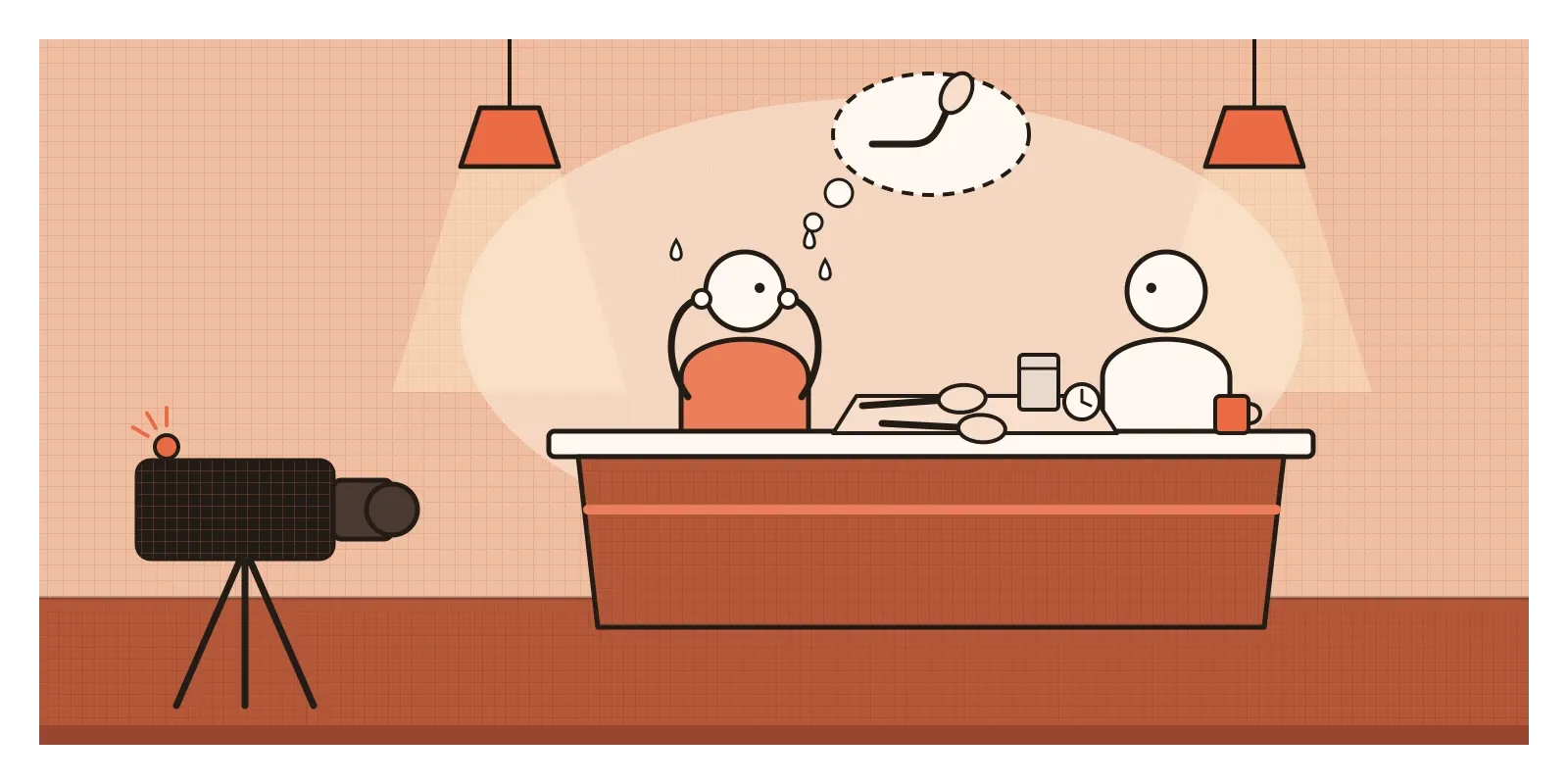
Look closely at the shape of that explanation. Geller's claim was that his abilities were real and could be shown. The ordinary rule for any such claim is that it should hold up when someone else checks it. His answer amounted to this: the rule applies in general, but not here, not to me, not under these conditions. The conditions that made his powers fail happened to be exactly the conditions that would have shown whether they existed.
That move has a name. Special pleading is applying a rule, standard or principle to others while exempting yourself, or your favourite case, without giving a relevant reason for the difference. It's also called the double standard, and when the exemption is invented after the evidence goes against you, it's sometimes called an ad hoc rescue. It's the fallacy I find hardest to see in myself, because from the inside, my exceptions never look like exceptions. They look like common sense.
A plea for an exception
The name comes from the law. In the old English courts, a defendant could answer a charge in two broad ways. They could simply deny it, or they could enter what was called a special plea, which admitted the facts but brought in some new circumstance to escape the consequences: yes, I did it, but in this case it doesn't count. Over time the phrase drifted out of the courtroom and into everyday English, where "special pleading" came to mean arguing for your own side while ignoring the standards you'd hold the other side to.
Philosophers had been circling the same problem for much longer. The idea that justice means treating like cases alike, and different cases differently, is usually traced back to Aristotle. Immanuel Kant turned it into a test in 1785, in his Groundwork of the Metaphysics of Morals. He suggested that you should only act on a principle you could accept as a rule for everyone. If I think it's fine for me to skip the queue because I'm in a hurry, I have to accept a world where everyone in a hurry skips the queue, and that world has no queue at all. John Rawls later asked readers to imagine choosing a society's rules from behind a "veil of ignorance", not knowing where they'd stand in it. Special pleading is choosing rules while knowing exactly where we stand.
The fallacy has a few familiar shapes. The plainest is the double standard: my evidence is good enough, yours never is. Another shields a claim from testing the moment testing gets close, as with Geller's pressure. It's a close cousin of moving the goalposts, which I wrote about earlier, except that the goalposts stay put for everyone else. A third was named by the philosopher Antony Flew in his 1975 book Thinking About Thinking, which gives this section its title. He called it "No true Scotsman": someone claims that no Scotsman would do a certain terrible thing, is shown a Scotsman who did, and replies that no true Scotsman would. The counterexample isn't answered. It's simply ruled out.
Why my exceptions always feel fair
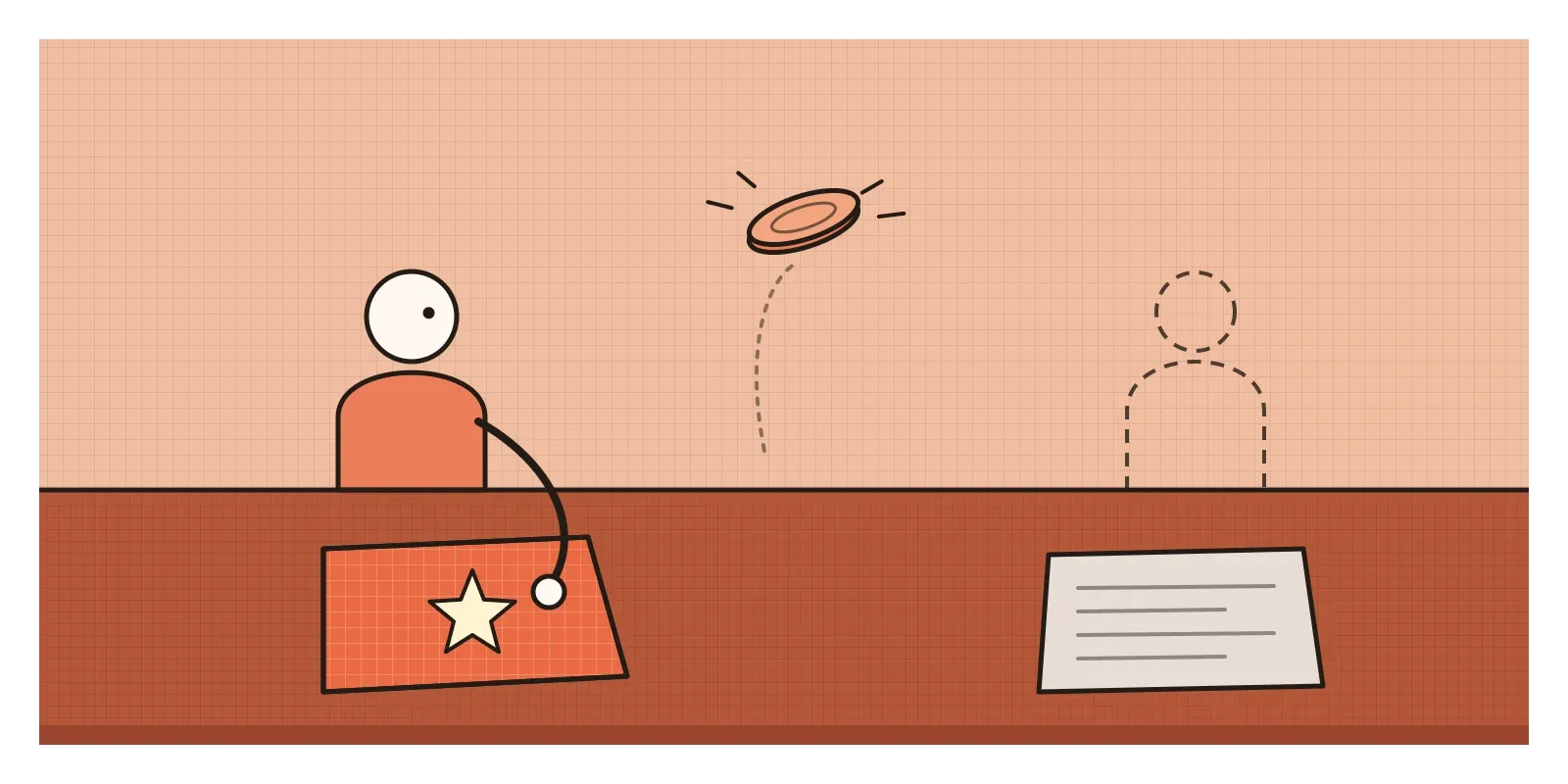
The psychologist Daniel Batson and his colleagues ran an elegant experiment in 1997. Participants were told they had to assign two tasks, one to themselves and one to another participant they would never meet. One task came with a chance to win a prize. The other was dull and offered nothing. Most people said that the fair thing would be to flip a coin, and the researchers left a coin in the room. About half the participants did flip it. But among those who flipped, roughly nine in ten still ended up giving themselves the good task, far more than a fair coin could ever produce. They had performed fairness, and then quietly made an exception when the coin disagreed.
Other studies show how sincere this feels. In 2007, Piercarlo Valdesolo and David DeSteno had people either assign themselves the easy task in a similar setup, or watch someone else do it. People judged the very same act as much fairer when they had done it themselves. And in 2002, Emily Pronin, Daniel Lin and Lee Ross described what they called the bias blind spot: people readily see biases in the judgements of others while rating themselves as less affected by the same biases. We aren't lying on purpose. We simply have access to our own reasons and circumstances in a way we never have for anyone else, and those private reasons make our exceptions feel justified.
Organisations amplify this. Rules are often written by senior people for work they don't do themselves, and when a rule finally lands on their own project, the deadline is real and the reasons are vivid. This time always seems different.
The rule-makers who exempted themselves
Some of the clearest special pleading has happened in the places where rules are made. For decades, the United States Congress passed workplace laws that applied to private employers but not to Congress itself, including laws on civil rights at work, minimum wages, workplace safety and disability. Its own staff couldn't use them. The usual justification was the separation of powers: letting government agencies enforce laws against Congress would hand one branch power over another. That was a real concern, but it didn't explain why staff should go without the protections altogether. In January 1995, the first law passed by the new Congress was the Congressional Accountability Act, which applied a dozen of those workplace laws to Congress and set up an independent office inside the legislative branch to enforce them. The honest fix didn't deny that Congress was different. It found a way to apply the same rule that respected the real difference.
India has its own long-running version. For years, the red beacon on top of a car, the lal batti, marked the vehicles of ministers, officials and an ever-growing list of the important. It meant the traffic rules everyone else waited for would bend for you. The Supreme Court had already moved to restrict them in 2013, and in 2017 the central government removed red beacons from all vehicles, with flashing lights kept only for emergency services such as ambulances and fire engines. That last detail matters, and I'll come back to it. The problem was never that some vehicles were allowed through. It was that the reason for being allowed through had become who you were, rather than what you were doing.
The feature that skipped the queue
Picture a product team with a sensible rule. Any change that affects how users complete their main task must be tested before it reaches everyone, either in a usability session or in an A/B test with a small share of users. The rule exists because ideas that looked obviously right in meetings have confused people before.
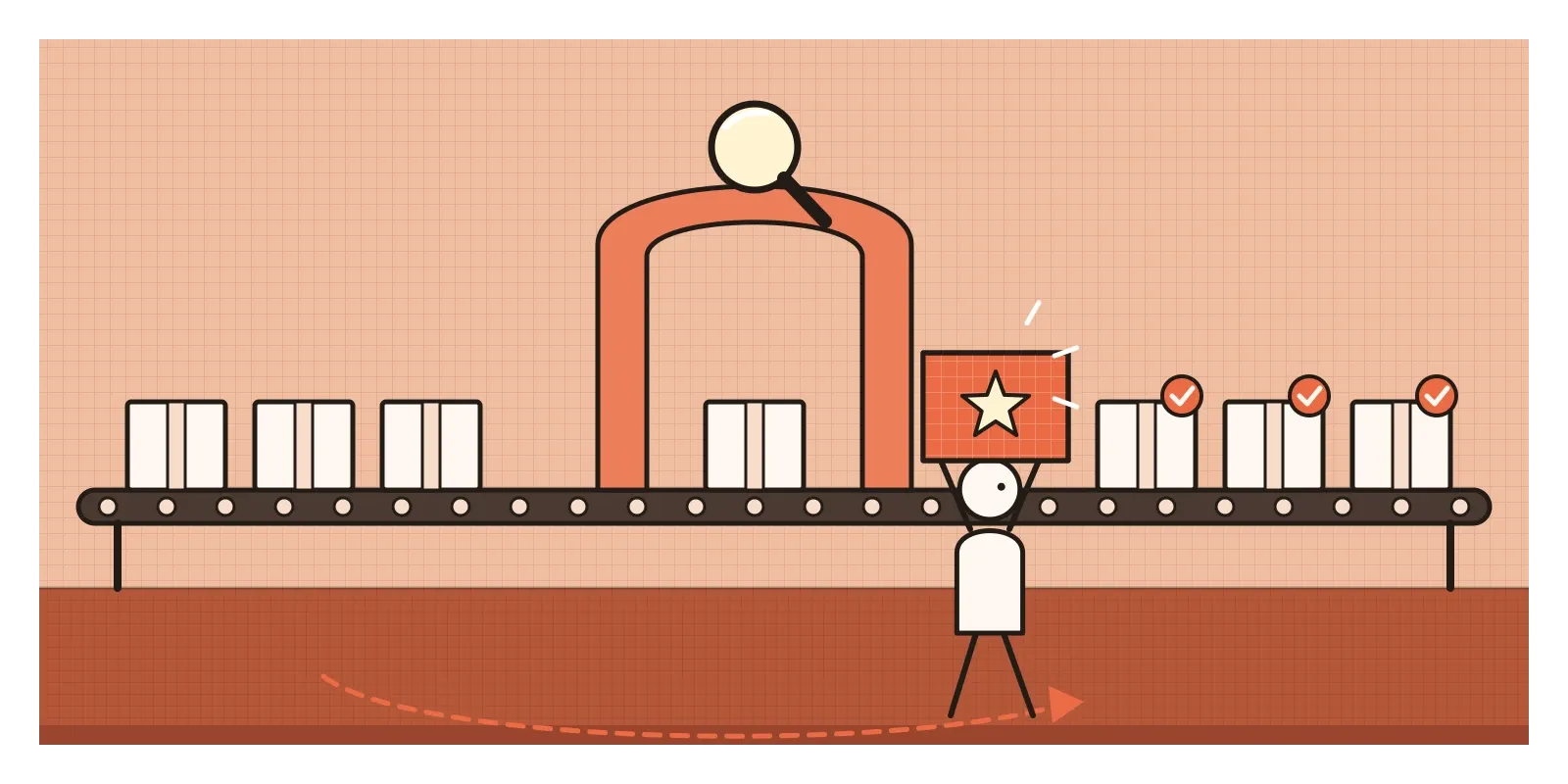
In a roadmap meeting, a junior designer proposes moving the search bar to the bottom of the screen. The product lead says it sounds interesting, but it needs a test first. Rules are rules. Twenty minutes later, the same lead presents a new AI assistant that will replace the first screen of the app. It's going straight to all users at launch. Someone asks about testing. The answer comes quickly: this one is strategic, the board is expecting it, it's too new to measure properly, and anyway it's not really a change to the core task, it's a new layer on top.
Each reason may feel true to the person saying it. But walk through them. Strategic importance doesn't reduce the risk to users, it raises the cost of getting it wrong. "Too new to measure" would excuse any untested idea. And a feature that replaces the first screen of the app is about as close to the core task as it gets. None of the reasons connects to why the rule exists, which is to protect people from confident guesses.
The honest version doesn't have to mean a slow version. The lead could say: "This is the kind of change our rule was written for. We can't run a long test before the launch, so let's release it to five per cent of users for the first week, watch task completion closely, and keep a way back to the old screen." That respects the real difference, the deadline, without pretending the rule doesn't apply. And the junior designer's search bar gets exactly the same treatment.
When different cases really are different
Not every exception is special pleading. Aristotle's principle has two halves, and the second half matters as much as the first. Treating different cases differently is not a fallacy, it's fairness. An ambulance running a red light isn't special pleading. Neither is extra time in an exam for a student with dyslexia, or a separate onboarding path for someone who has never used a smartphone.
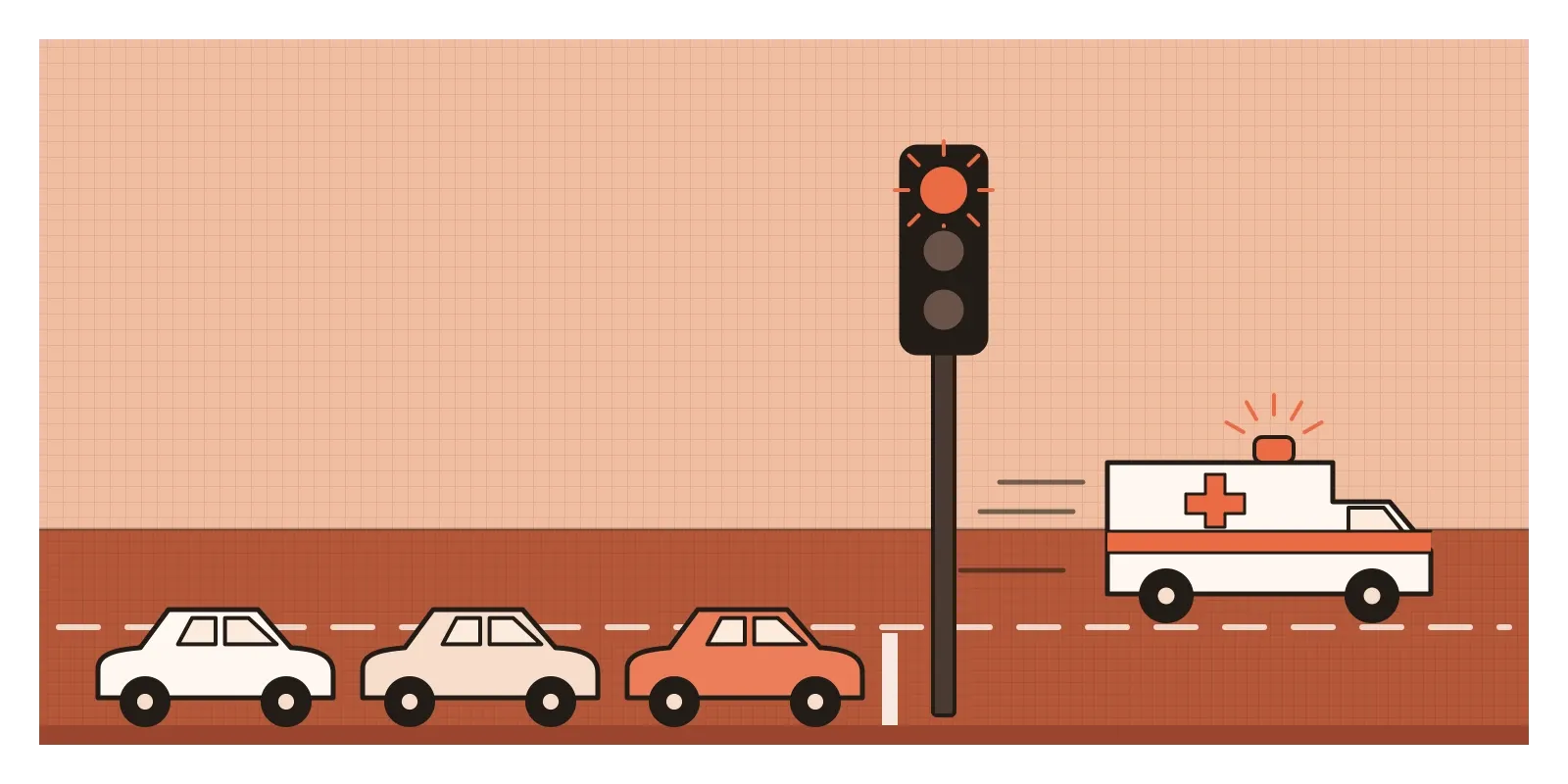
What separates these from Geller's pressure or the product lead's strategy is the kind of reason. A legitimate exception names a difference that is relevant to the purpose of the rule. Traffic lights exist to keep people safe, and the ambulance is going through to keep someone safe. Exams exist to measure understanding, and extra time for a reading difficulty measures understanding more accurately, not less. The exception serves the rule's own goal.
There's a second test. A legitimate exception would apply to anyone in the same situation. Any ambulance carrying a patient gets through, not only the one carrying a minister. Any student with the same diagnosis gets the same extra time. Special pleading, on the other hand, tends to fit exactly one case, and that case almost always belongs to the person making the argument. When the exemption is shaped precisely like the arguer, I get suspicious.
Design guidelines are a softer case. Good designers break their own grids and patterns, and sometimes they should. The question isn't whether the rule was broken. It's whether the person breaking it can say why, in terms someone else could also use.
How I try to catch it
My first habit is a swap. When I'm arguing that my case deserves an exception, I imagine a colleague, a competitor or someone I disagree with making exactly the same argument for their case. If I'd roll my eyes at them, I should roll my eyes at me. It takes away the private reasons that make my own exceptions feel so obviously fair.
The second is to name the difference out loud and connect it to the purpose of the rule. "This is different because it's important" is not a difference. "This is different because the rule exists to prevent X, and here X can't happen" is. If I can't finish that sentence, I probably don't have an exception. I have a preference.
The third is about timing. Where I can, I like teams to agree on exceptions before anyone knows who'll need them: what counts as an emergency fix that can skip review, which experiments can launch without a test. Rules written behind a little veil of ignorance are much harder to bend later.
Randi's advice to The Tonight Show didn't require any special knowledge. It only asked that the conditions be the same for Geller as they would be for anyone else making a claim. That's still the best guard against special pleading I know. In the next post, on the loaded question, I'll look at a different way of tilting the ground, one that's hidden inside the question rather than the rule.
Further reading: Antony Flew, Thinking About Thinking (1975) · C. Daniel Batson and colleagues, "In a very different voice: unmasking moral hypocrisy" (1997) · Emily Pronin, Daniel Lin and Lee Ross, "The bias blind spot: perceptions of bias in self versus others" (2002) · James Randi, The Magic of Uri Geller (1975) · John Rawls, A Theory of Justice (1971)
The question to askWould I accept this exception from someone else?