
Appeal to Emotion
When a feeling is offered in place of a reason, and the room is too moved to notice the swap.
Appeal to Emotion
A daisy in a meadow
On the evening of 7 September 1964, Americans watching a film on NBC saw an advertisement that lasted about a minute. A little girl stands in a meadow, pulling petals off a daisy and counting them, getting the numbers slightly wrong the way small children do. Then a man's voice begins a countdown. The camera moves closer and closer to her face until her eye fills the screen, and at zero the screen fills with a nuclear explosion. Over the mushroom cloud, President Lyndon Johnson's voice says that these are the stakes, and that we must love one another or die. An announcer asks viewers to vote for Johnson in November.
The advertisement never named his opponent, Barry Goldwater. It didn't need to. Goldwater had made loose remarks about nuclear weapons, and viewers filled in the rest. Republicans protested, the campaign pulled the ad after a single paid broadcast, and news programmes promptly showed it again for free. Johnson won in November by one of the largest margins in American history. The "Daisy" ad is still taught in film and politics courses as one of the most powerful pieces of political advertising ever made.
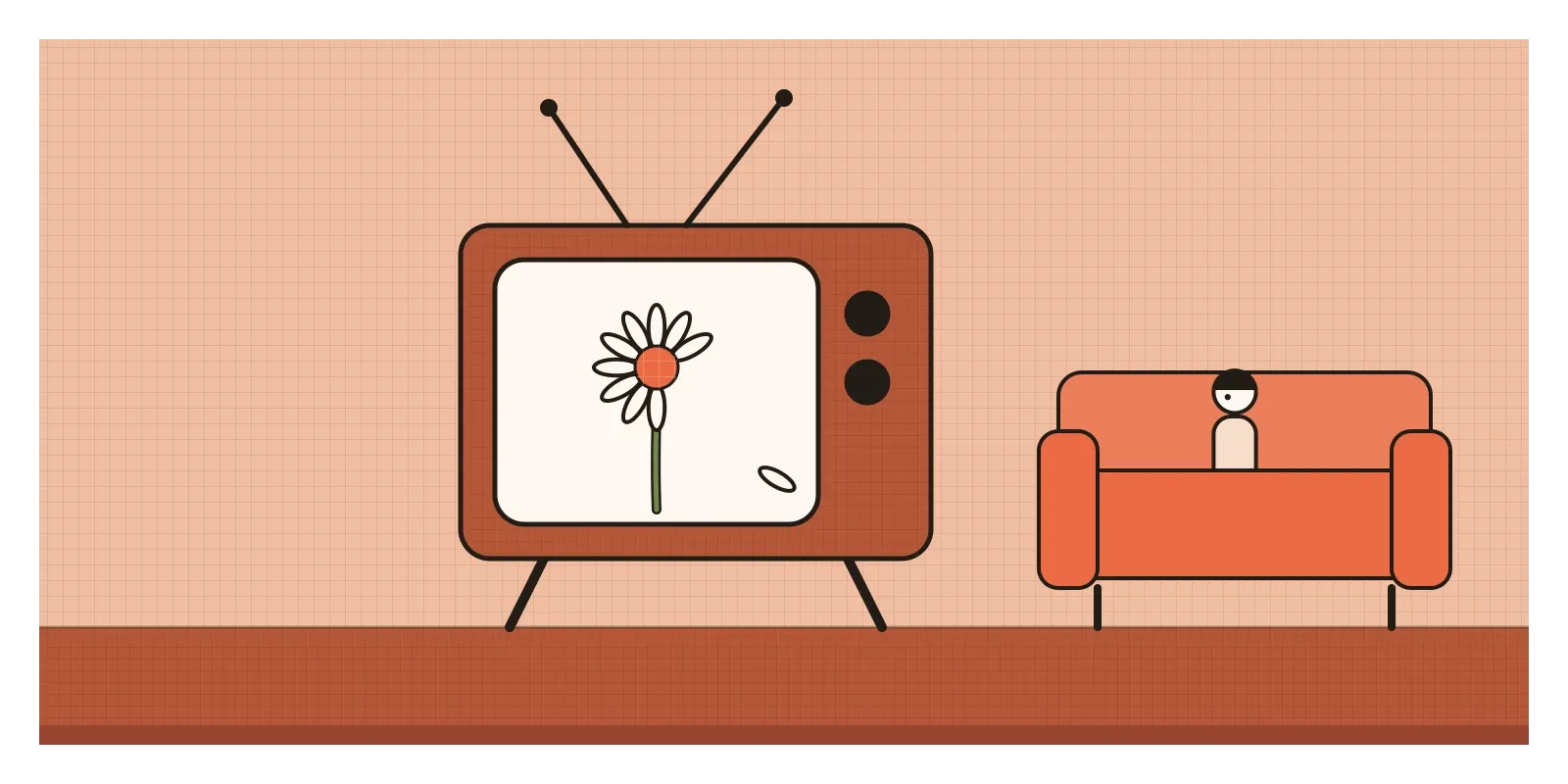
Notice what it doesn't contain. There's no claim about Goldwater's policies, no evidence about what he would do, no argument at all. There's a child, a countdown and a fear. I find the ad hard to judge, and I'll come back to why, because the danger it pointed to was real. But it shows the shape of this fallacy perfectly.
The appeal to emotion is the mistake of offering a feeling in place of a reason. Instead of showing that a conclusion is true, the argument makes you feel something strongly enough that the question of truth fades into the background. Logic books give it the Latin name argumentum ad passiones, and it has many familiar forms: the appeal to pity (ad misericordiam), the appeal to fear (ad metum), and appeals to guilt, pride, flattery or spite.
Warping the carpenter's rule
Aristotle didn't think emotion had no place in persuasion. In his Rhetoric he named three ways a speaker persuades: through character, through the emotions of the audience, and through the argument itself. He treated stirring emotion as a legitimate part of the art, as long as the emotion fitted the facts. What he objected to were the speech-writing manuals of his day, which, he complained, taught almost nothing about argument and a great deal about stirring up anger, pity and prejudice in the judges. Doing that, he wrote, is like warping a carpenter's rule before using it to measure. The instrument you need for judging has been bent before the measuring begins.
Athenian courts were full of such tactics. In Plato's Apology, Socrates, on trial for his life in 399 BCE, mentions the custom of defendants bringing their weeping children into court to beg for mercy. He has three sons, he tells the jury, and he won't bring them. He wants to be judged on whether he's guilty, not on how sorry the jury feels for his family. He was convicted anyway.
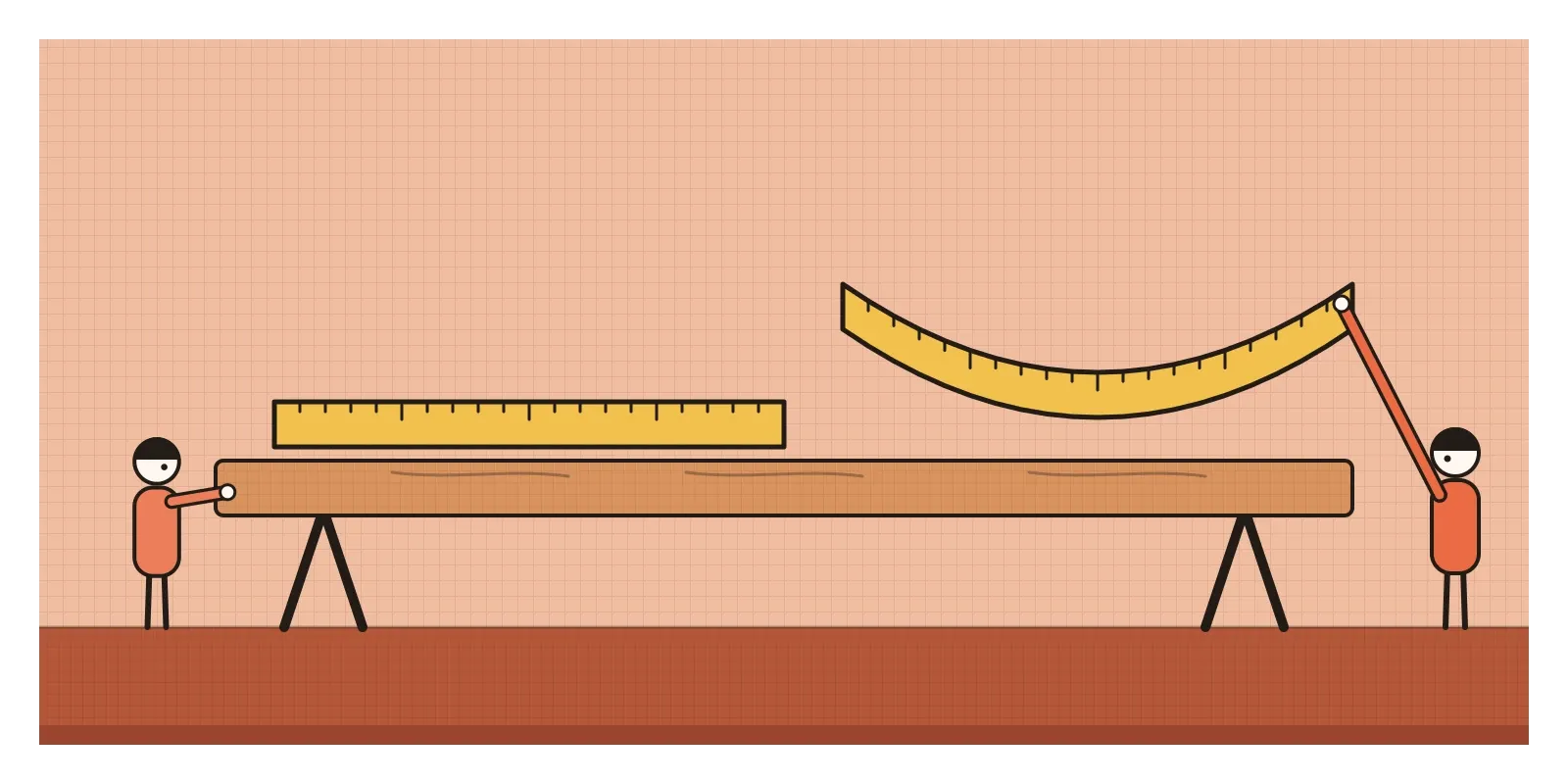
That image of the bent ruler is still the clearest way I know to think about this fallacy. The problem isn't that feelings are present. People have feelings about everything that matters. The problem is when a feeling is used to bend the instrument we'd otherwise use to judge, so that how strongly we feel about a claim stands in for whether it's true.
Why one child moves us more than millions
In 2007, the psychologists Deborah Small, George Loewenstein and Paul Slovic published a study that I find quietly devastating. People who had just earned five dollars for filling in an unrelated survey were given the chance to donate some of it to the charity Save the Children. Some read a description of a single child: Rokia, a seven-year-old girl from Mali, desperately poor and facing hunger, with her photograph. Others read statistics about food shortages affecting millions of people across several African countries. People who read about Rokia gave more than twice as much as those who read the statistics. And people who were shown Rokia together with the statistics gave less than those who saw Rokia alone. The numbers didn't add to the feeling. They seemed to dampen it.
Slovic has spent much of his career on what he calls the affect heuristic, the way a quick feeling of good or bad steers judgements that look as if they should be calculations. In one study with colleagues, published in 2000, people who were told that a technology had large benefits went on to judge its risks as lower, and people told it was risky judged its benefits as smaller, even though nothing logically connects the two. A single feeling about the technology was answering both questions. Under time pressure, the effect grew stronger.

That's why emotional appeals work so well: feelings arrive first and fast, and they feel like knowledge. A vivid face, a weeping witness or a frightening image gives us an answer before we've finished asking the question. Meetings add their own pressure. Strong feeling is contagious, and questioning it can look cold or disloyal. If someone in a review says "this will break our users' hearts", asking "how many users?" can feel like a heartless thing to say, even when it's exactly the right question.
The testimony nobody checked
On 10 October 1990, two months after Iraq invaded Kuwait, a fifteen-year-old girl identified only by her first name, Nayirah, spoke to the Congressional Human Rights Caucus in Washington, an informal group of members of the United States Congress. Through tears, she said that while volunteering at a hospital in Kuwait she had seen Iraqi soldiers take babies out of incubators and leave them on the floor to die. Her surname was withheld, the audience was told, to protect her family.
The story spread around the world. President George H. W. Bush repeated it in speeches, and senators mentioned it in the debate in January 1991 that narrowly authorised the use of force against Iraq. In January 1992, the journalist John MacArthur revealed in The New York Times that Nayirah was the daughter of Kuwait's ambassador to the United States, and that her appearance had been arranged with the help of Hill & Knowlton, a public relations firm hired by a group called Citizens for a Free Kuwait, which was funded largely by the Kuwaiti government. Investigators and human rights groups that had looked into the incubator story, some of whom had earlier repeated it, said they couldn't confirm it.
Iraq's occupation of Kuwait involved real, documented abuses, and the decision to go to war rested on far more than one testimony. But this one story did a particular kind of work. It arrived at the right moment with overwhelming emotional force, and the force itself seemed to make checking unnecessary. Who would cross-examine a crying girl about dead babies? That's exactly the question an appeal to emotion makes us afraid to ask.
The launch that the team deserved
Picture a team that has spent three months building a new onboarding flow for a savings app. The last few weeks have been hard: late nights, a weekend or two, a lot of goodwill spent. At the go or no-go meeting, the quality lead reports that the flow fails for some users whose bank verification takes longer than a minute, and that the fix needs another two weeks.
The engineering manager responds with feeling. "This team has given everything. If we tell them it's not shipping, it will crush them." The product manager adds that the founder announced the launch at a company all-hands and would be embarrassed. People look at the tired faces around the table, and the meeting decides to ship.
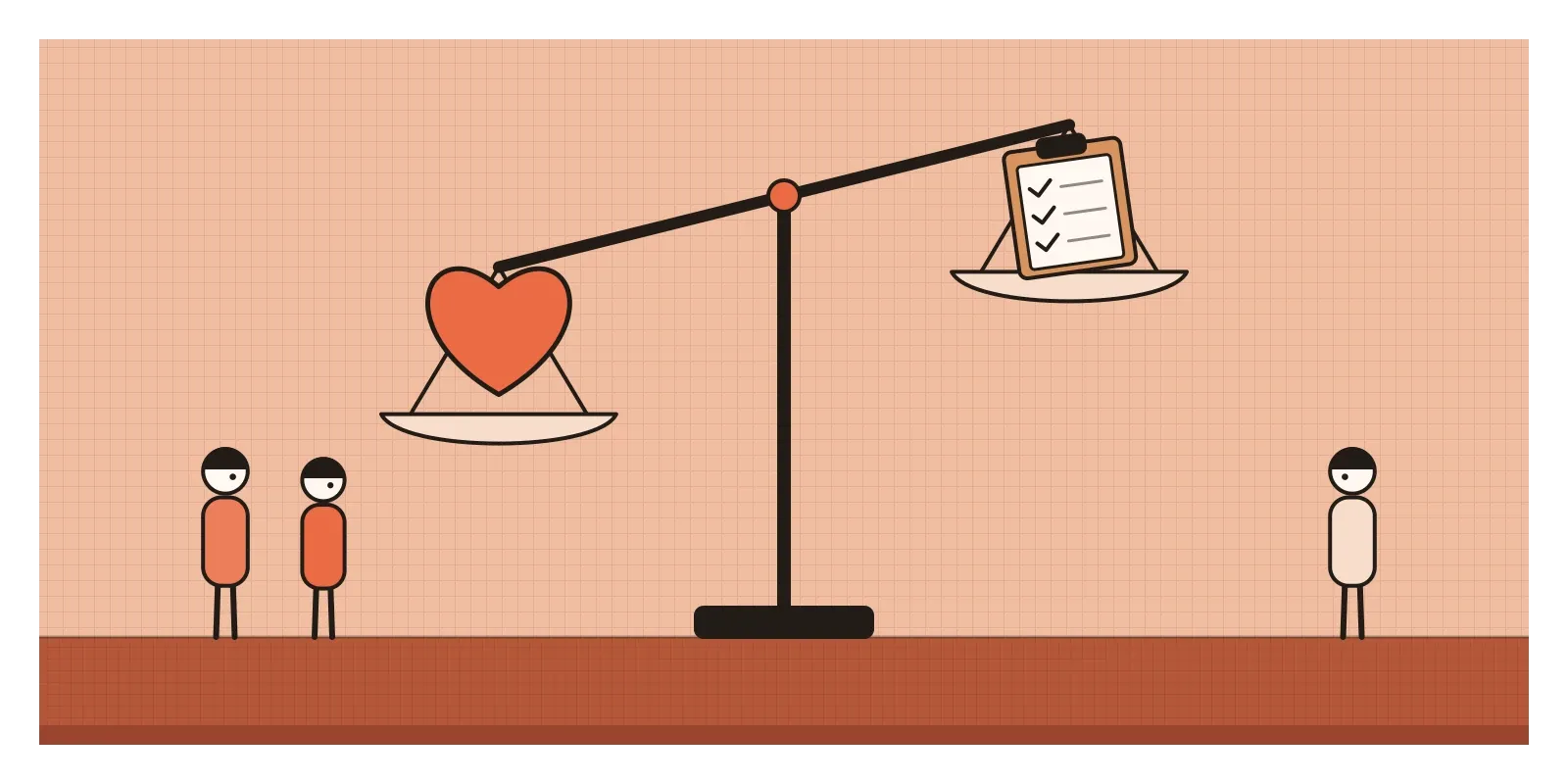
Every feeling in that room was real and decent. But none of them answered the question on the table, which was whether the flow was ready for the people who would use it. The team's effort and the founder's announcement were reasons to feel something about the decision. They weren't evidence that the bank verification problem had gone away. The users who get stuck at verification won't know or care how many weekends were spent building the screen they're stuck on.
The honest version separates the two conversations. First, the effort deserves to be recognised properly, out loud and specifically, whatever the decision is. Then the decision gets made against the launch criteria the team agreed before anyone was tired: how many users hit the problem, what happens to them, and whether there's a safe middle path, such as releasing to the users whose banks verify quickly while the fix is finished. The team may still ship. But they'll be shipping for a reason.
When the feeling fits the facts
Emotion isn't the enemy of good judgement. The neuroscientist Antonio Damasio, in Descartes' Error (1994), described patients with damage to parts of the brain involved in emotion who could still reason perfectly well on tests, yet struggled to make ordinary decisions, such as choosing between two dates for an appointment. Feelings help us weigh what matters. A decision made with no feeling at all isn't more rational. It's often stuck.
An emotional appeal is also perfectly fair when the feeling matches something true and relevant. In 2012, India began requiring films that show smoking or tobacco use to be screened with anti-tobacco messages, and one of the first was the story of Mukesh Harane, a young man from Maharashtra who chewed gutka and died of mouth cancer at twenty-four. The film was made with him at Tata Memorial Hospital in Mumbai, where he was being treated, and recorded before he died. It was frightening on purpose. But every bit of the fear was attached to a true claim: chewing tobacco causes cancer, and the cancer is brutal. The feeling carried the fact; it didn't replace it. Its later fate is a lesson too. Shown before every film for years, it became something audiences joked about. Even an honest emotional appeal wears out.
This is where the Daisy ad is hard to judge. The risk of nuclear war in 1964 was real, and a candidate's attitude to nuclear weapons was a fair subject. The trouble is that the ad offered no evidence about what Goldwater would actually do. It borrowed a true fear and attached it to an unstated claim. The philosopher Douglas Walton spent a whole book arguing that emotional appeals can be reasonable. The test I take from that is simple: an appeal to emotion is fair when the feeling is relevant to the decision and in proportion to the evidence, and fallacious when it is used to distract from the evidence.
How I try to catch it
When I notice a strong feeling during a decision, mine or the room's, I try to name it and then ask what fact it's responding to. "I feel anxious about this launch" is useful if the anxiety points at something real, like a failure we've seen in testing. If I can't find the fact, the feeling may be doing the work an argument should be doing.
The second habit is to restate the argument without the emotional language and see what's left. "It will crush the team" becomes "the team has worked hard". True, and worth saying, but it's not about whether the product is ready. Sometimes the stripped-down version is still strong. Often it's thin.
The third is to let a decision made in a heated room cool overnight, when that's possible. Feelings are fast and decisions don't usually have to be. If the reason still stands the next morning, it was probably a reason.
The little girl in the meadow never knew what her daisy was being used for. More than sixty years later, the advertisement still works on me: I feel the fear before I've had a chance to think. That's precisely why I want to know what reason is left once the feeling settles. In the next post I'll look at an argument that persuades not with a feeling but with a silence: the appeal to ignorance.
Further reading: Aristotle, Rhetoric, Book I · Douglas Walton, The Place of Emotion in Argument (1992) · Deborah Small, George Loewenstein and Paul Slovic, "Sympathy and Callousness" (2007) · Antonio Damasio, Descartes' Error (1994) · John R. MacArthur, Second Front: Censorship and Propaganda in the Gulf War (1992)
The question to askWhat reason is left once the feeling settles?