Appeal to Ignorance
Why "nobody has proved it false" isn't proof it's true, and when silence really does tell us something.
Appeal to Ignorance
Nothing in the files
On 9 February 1950, Joseph McCarthy, a little-known Republican senator from Wisconsin, gave a speech to a women's club in Wheeling, West Virginia, and claimed to have a list of people in the State Department who were members of the Communist Party. Nobody is quite sure what number he gave that night, because he gave different numbers over the following days. Eleven days later, on the floor of the Senate, he went through some eighty cases one by one, in a speech that ran late into the night.
The journalist Richard Rovere, in his 1959 biography of McCarthy, picked out one of those cases because it showed the senator's method so plainly. Of one man, McCarthy admitted that he didn't have much information. What he had, he said, was the agency's statement that there was "nothing in the files to disprove his Communist connections".
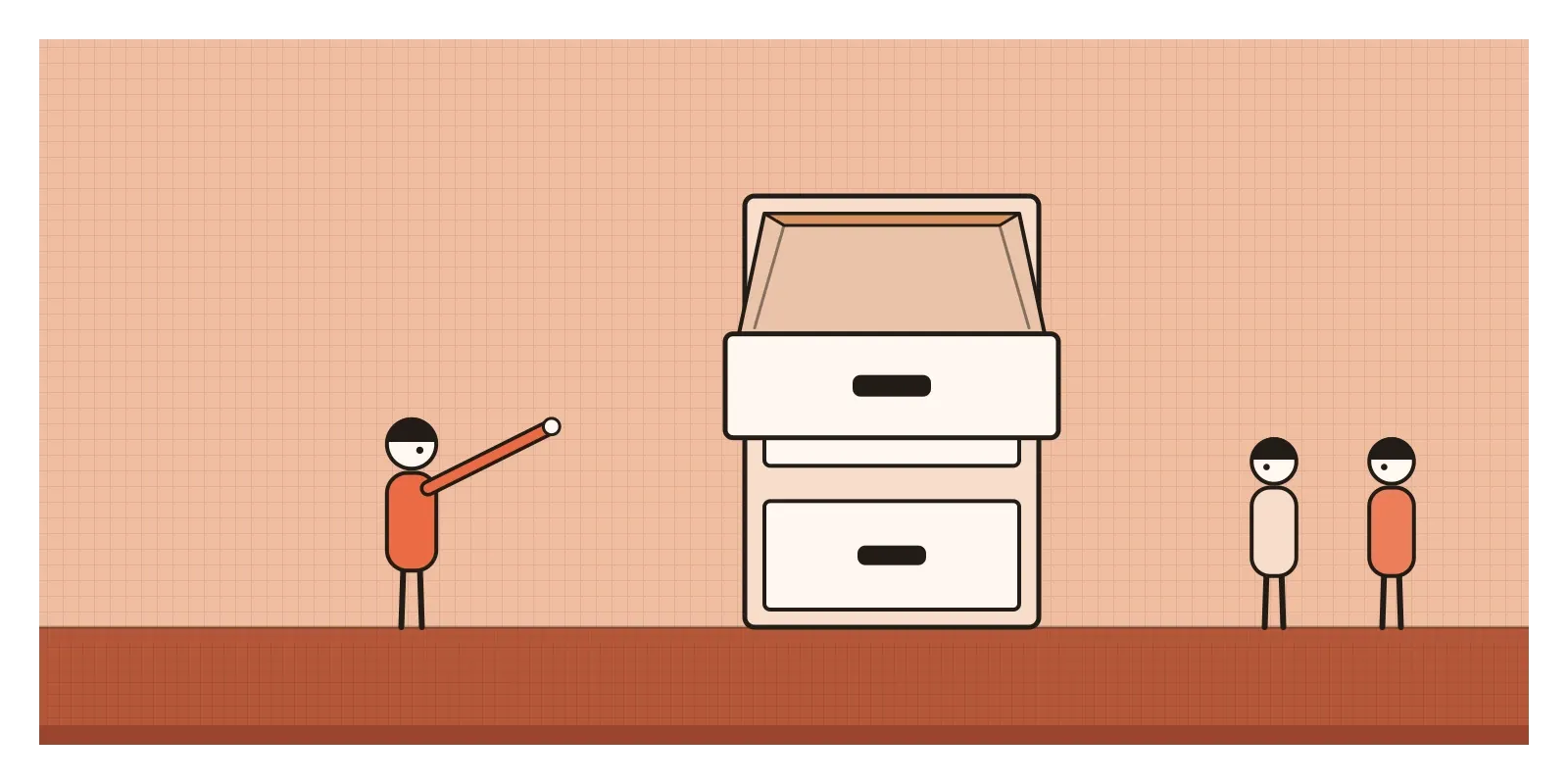
Read that sentence slowly. The files contained nothing showing the man was a Communist. They also contained nothing showing he wasn't, which is true of almost everyone who has ever lived. McCarthy turned an empty drawer into an accusation. A Senate subcommittee chaired by Millard Tydings investigated the charges and in July 1950 called them a fraud and a hoax, but McCarthy's influence kept growing for four more years, until the Senate censured him in December 1954. Careers were ruined along the way, many of them on evidence no better than an empty file.
This is the appeal to ignorance, or argumentum ad ignorantiam: arguing that a claim is true because nobody has proved it false, or false because nobody has proved it true. It treats the absence of evidence as if it were evidence. It's the last of the arguing mistakes in this part of the series, and in some ways it's the sneakiest, because it doesn't need any evidence at all. All it needs is for the other side to be unable to produce some.
No proof either way
The Latin name comes from John Locke. In An Essay Concerning Human Understanding (1690), the book I mentioned in the post on appeal to authority, he listed a few ways people try to win arguments without giving reasons, including demanding that an opponent accept a claim or offer a better one. Locke called it an argument from ignorance, and pointed out that it may silence an opponent without bringing anyone any closer to the truth.
The fallacy comes in two mirror-image forms. One says: you can't prove it isn't so, therefore it is. Ghosts, miracle cures and conspiracy theories often lean on this one. The other says: you can't prove it is so, therefore it isn't. That form sounds more sceptical and scientific, but it's the same mistake facing the other way. "There's no evidence this drug is harmful" can mean it was tested carefully and found safe, or that nobody has looked.
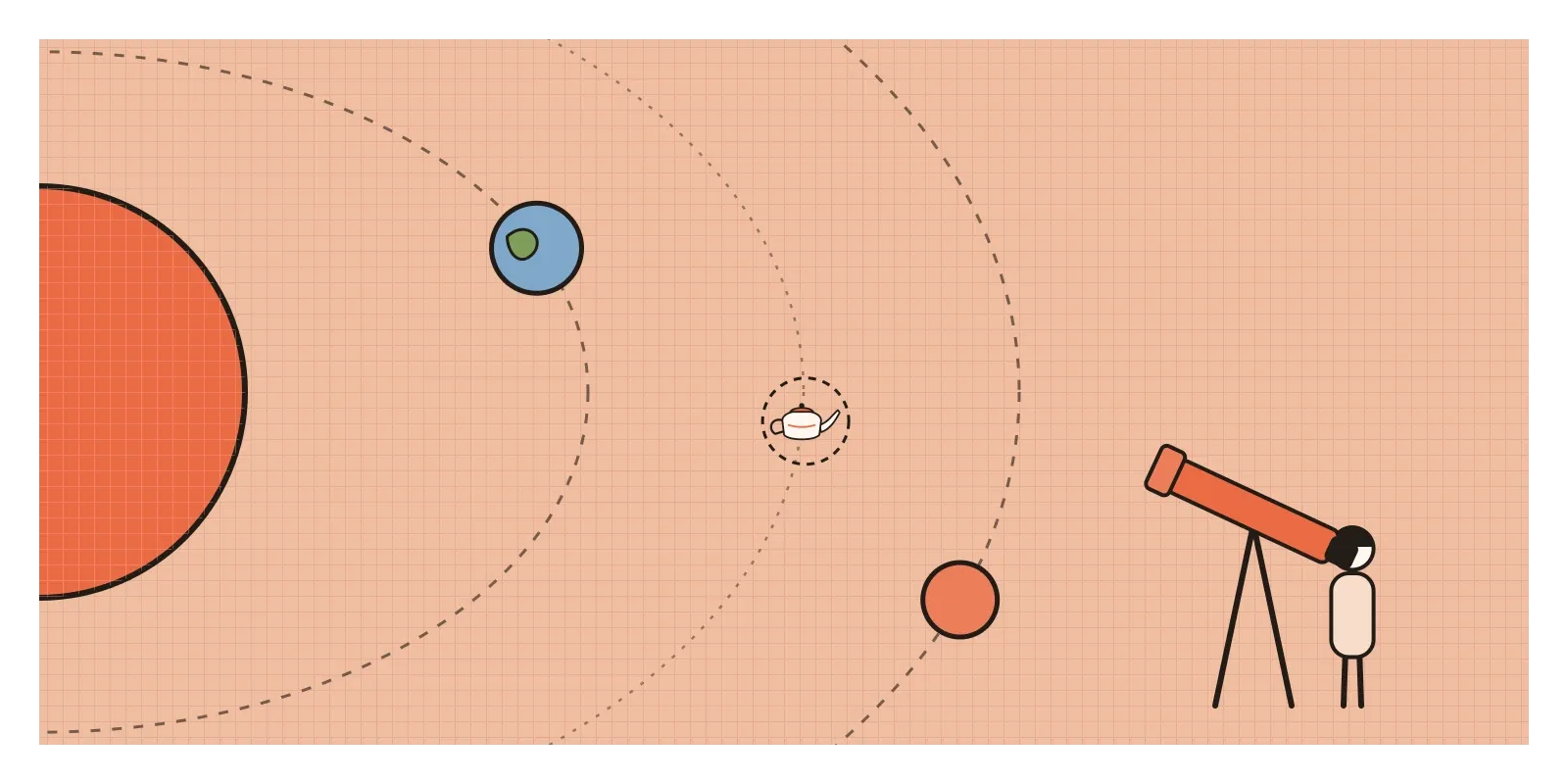
The most famous illustration comes from Bertrand Russell. In an essay written in 1952 for a magazine that never ran it, he imagined claiming that a small china teapot was orbiting the Sun somewhere between Earth and Mars, too small to be seen by even the most powerful telescope. Nobody could disprove it. But it would be absurd, Russell said, to expect people to believe it on that basis. The duty of proving belongs to the person making the claim. Carl Sagan made the same point in The Demon-Haunted World (1995) with a fire-breathing dragon in his garage, one that is invisible, floats in the air and breathes a fire that gives off no heat. Each time a test is proposed, the dragon turns out to have a reason it can't be detected. A claim that no possible observation could count against isn't strong. It just isn't saying anything.
That idea, the burden of proof, sits at the centre of this fallacy. Whoever makes a claim is responsible for supporting it. An appeal to ignorance tries to shift that burden: instead of showing why I'm right, I demand that you show I'm wrong, and treat your silence as my win.
Why silence sounds like an answer
Part of the reason is that our minds are poor at learning from things that don't happen. In 1980, the psychologists Joseph Newman, William Wolff and Eliot Hearst published experiments on what is called the feature-positive effect. People were shown sets of items and had to work out the rule that made some of them special. When the special items were marked by something being present, such as a particular symbol, people learned the rule fairly quickly. When they were marked by something being absent, many people never worked it out at all. A missing thing simply doesn't grab attention the way a present one does.
So when nothing happens, we tend not to ask why. No complaints feels like satisfaction. No reported side effects feels like safety. No crash in testing feels like a stable release. The computer scientist Edsger Dijkstra put the software version memorably: testing can show the presence of bugs, but never their absence.
Meetings make it worse, because the burden of proof quietly settles on whoever wants to change the plan. If I propose a launch and you're worried, it's easy for the room to ask you for evidence of a problem and to treat a lack of it as a green light. Nobody says "the risk has been shown to be small". They say "nobody has shown it's a problem", which sounds the same in a hurry and means something completely different.
The pill that had never been tested
In 1957, the German company Chemie Grünenthal began selling a sedative called thalidomide. In tests on rodents it had been almost impossible to give a fatal dose, and it was promoted as remarkably safe. It was soon being used by pregnant women for morning sickness in many countries. But nobody had studied what it did to a developing baby. The lack of evidence of harm in pregnancy wasn't the result of looking. It was the result of not looking.
In September 1960, an application to sell the drug in the United States landed on the desk of Frances Kelsey, a doctor and pharmacologist who had joined the Food and Drug Administration only a month earlier. She found the safety data thin, and she kept asking for more. The American company licensing the drug pressed her repeatedly, and in effect asked what evidence she had that it was dangerous. Kelsey's position was that the burden lay the other way: the company had to show the drug was safe. When reports appeared of nerve damage in some long-term users, she asked harder questions, including what the drug might do to a foetus.
In late 1961, doctors in Germany and Australia linked thalidomide to severe birth defects, and the drug was withdrawn. Thousands of children were affected around the world, many of them born with shortened or missing limbs, and many did not survive. The United States was largely spared because the drug was never approved there, although samples given to doctors for trials did reach some patients. In 1962, President Kennedy gave Kelsey the country's highest award for a civilian federal employee, and Congress passed amendments that required drug makers to prove their medicines were effective and to meet stricter rules on safety testing. The law moved the burden of proof to where Kelsey had insisted it belonged.
Nobody has complained
Picture a team reviewing the accessibility of a banking app before a big release. Someone asks whether the app works with screen readers, the software that reads a screen aloud for people who are blind or have low vision. The product manager checks the support dashboard. In two years there hasn't been a single complaint about screen readers. "If it were a problem, we'd have heard by now." The room moves on.
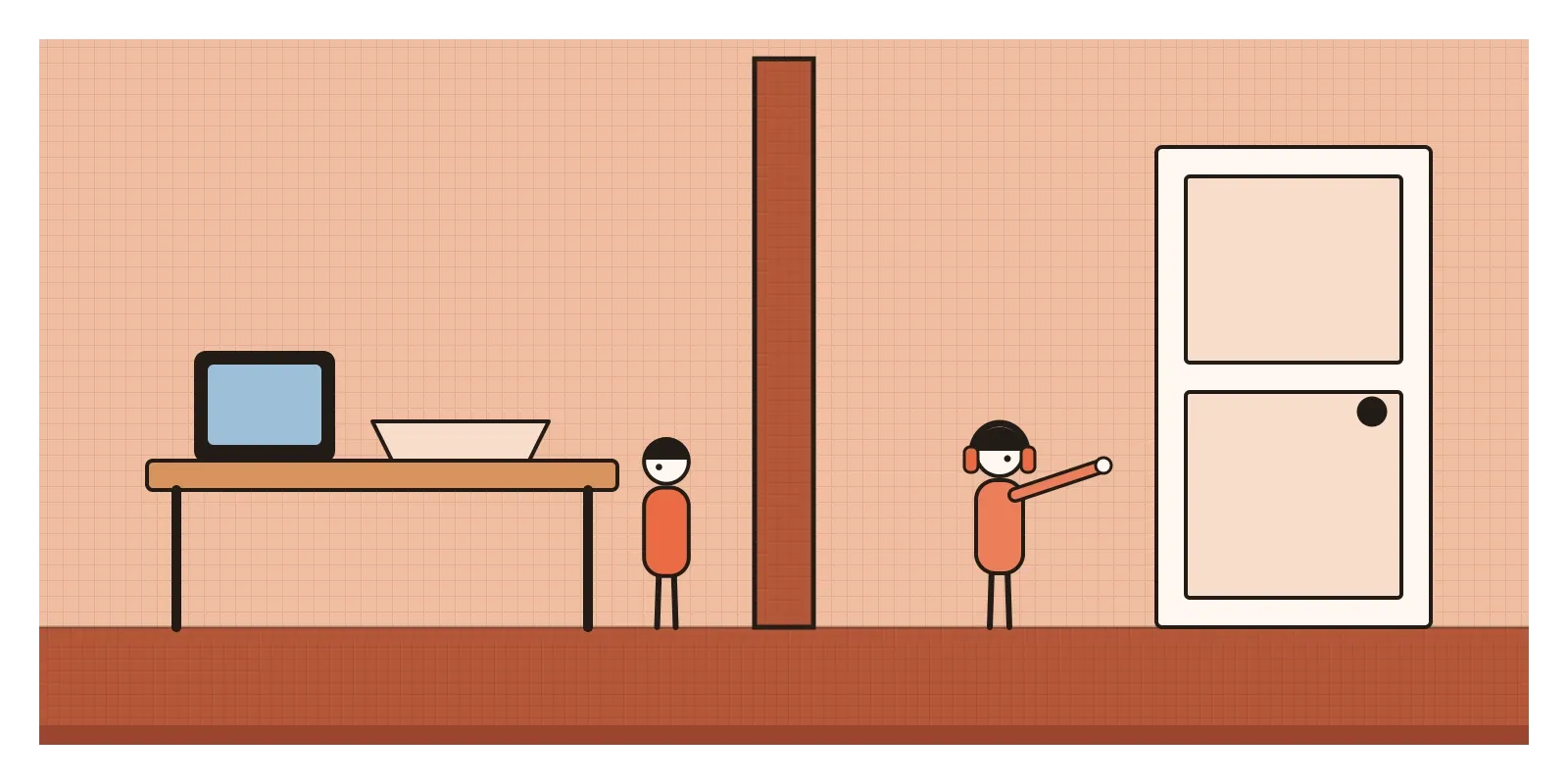
Now ask the question that matters. If the app didn't work with screen readers, would the team have heard? A user who can't get past the login screen can't reach the in-app help form. If that form isn't accessible either, there's no way for them to complain through it at all. Most people in that position don't write to the company. They ask a family member for help, go to a branch, or switch banks. The analytics don't record which visitors use screen readers, so they can't show the drop-off. Every channel that might have carried the complaint passes through the very thing being questioned. The silence was guaranteed whether the app worked or not.
The honest version turns silence into evidence by making it possible to hear something. The team runs an audit against the Web Content Accessibility Guidelines, the international standard for accessible web content. They test the main flows with a screen reader themselves, then with a handful of people who use one every day. They make sure there's an accessible way to report problems. If, after all that, the complaints stay at zero, the silence finally means something.
When silence really is evidence
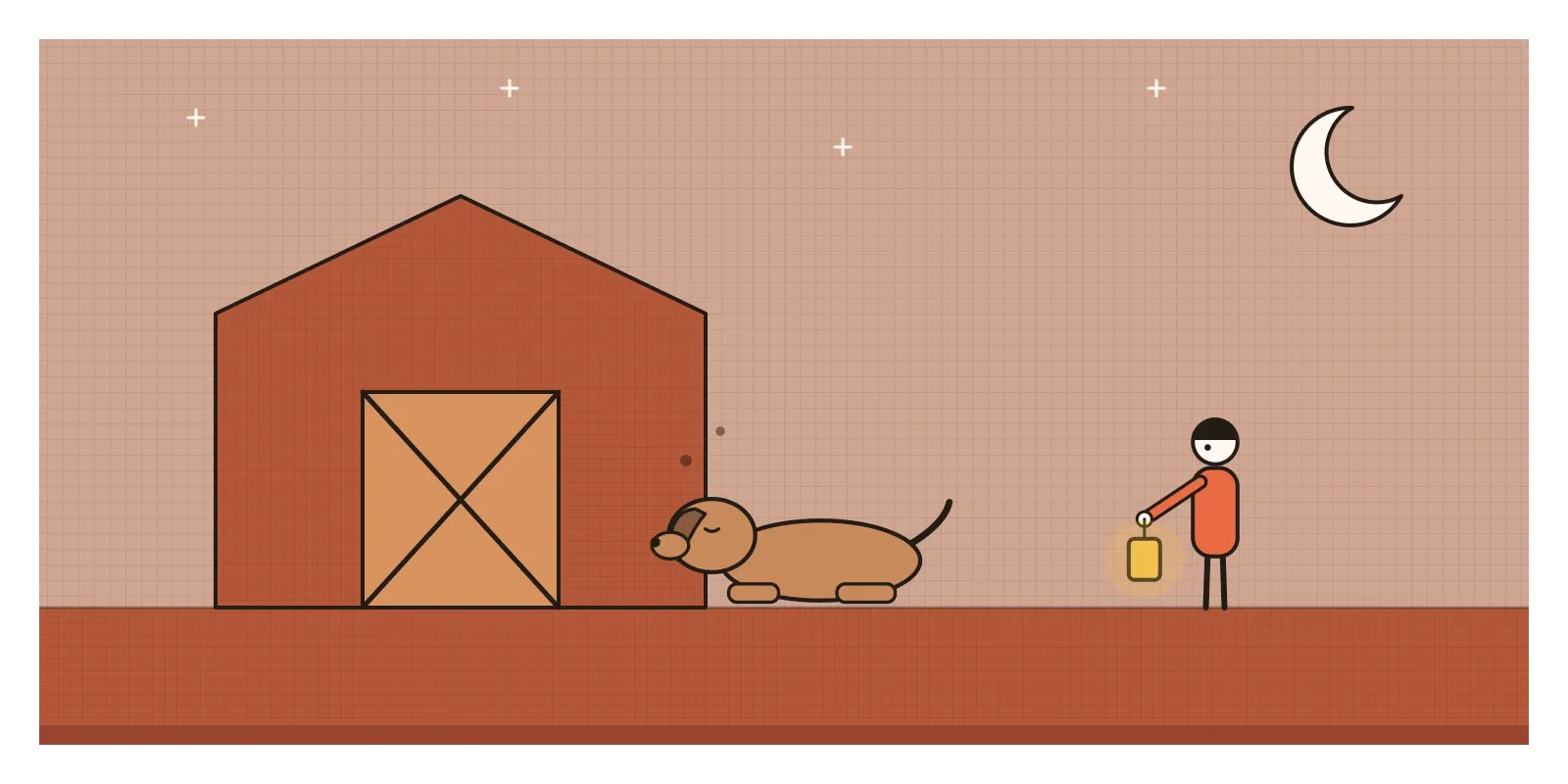
Absence of evidence isn't always worthless. In Arthur Conan Doyle's story "Silver Blaze" (1892), Sherlock Holmes points out the curious incident of the dog in the night-time. The dog did nothing, and that was the clue. A watchdog that didn't bark at a night-time visitor was a watchdog that knew him. The silence was informative because, if a stranger had come, barking was exactly what you'd have expected.
That's the general rule. Absence of evidence is evidence of absence in proportion to how likely you were to find evidence if the thing were there. If I search my bag for my keys and don't find them, that's good evidence they're not in my bag. If I glance at a field from a moving train and don't see them, it tells me almost nothing about whether they're in the field.
India's victory over polio is one of the best examples I know of silence earned properly. The last case caused by wild poliovirus in India was in a young girl in Howrah, West Bengal, in January 2011. That alone proved little, since cases can hide. What made the silence meaningful was the search behind it. Every case of sudden paralysis in a child under fifteen was meant to be reported and tested, and sewage in several cities was sampled regularly for traces of the virus. Only after three years of finding nothing with a system built to find something did the World Health Organization certify its South-East Asia region, India included, as polio-free in March 2014.
The law uses silence deliberately too. A court that can't find enough evidence of guilt acquits, but that doesn't declare the accused innocent. It's a rule about who must prove what, chosen because convicting the innocent is considered worse than acquitting the guilty. That's not a fallacy. It's a burden of proof set openly, for a stated reason.
How I try to catch it
When I hear "there's no evidence that", I ask whether anyone has looked, and how. "No evidence because we tested carefully" and "no evidence because we never checked" are completely different statements wearing the same words.
The second question is Holmes's: if the thing were there, would we have seen it? I try to picture the world where the problem exists and ask what would be different in our data. If the answer is "nothing", our silence isn't evidence of anything.
The third habit is to notice where the burden of proof has landed and whether it belongs there. In design reviews it tends to fall on whoever is worried. Sometimes that's right. When the possible harm is serious and hard to undo, I'd rather it fell on whoever wants to ship.
McCarthy's empty file never proved anything about the man it described. It only proved that nobody had found anything, which is true of most of us. That's the last of the fallacies in this series. From here, the series turns from flawed arguments to the biases in our own heads, the habits of mind that shape what we make before anyone argues about it, starting with the false consensus effect.
Further reading: John Locke, An Essay Concerning Human Understanding (1690) · Richard Rovere, Senator Joe McCarthy (1959) · Carl Sagan, The Demon-Haunted World (1995) · Douglas Walton, Arguments from Ignorance (1996) · Joseph Newman, William Wolff and Eliot Hearst, "The feature-positive effect in adult human subjects" (1980)
The question to askIf it were there, would we have seen it?