Omission Bias
Why harm we cause by acting feels worse than harm we allow by standing still, even when it's smaller.
Omission Bias
Two months without a vaccine
In the winter of 1974 to 1975, two infants in Japan died within a day of receiving the combined vaccine against diphtheria, tetanus and whooping cough. The whooping cough part of that vaccine was made from whole killed bacteria, and it was already the subject of worried debate in several countries. The Japanese government suspended its use. Two months later, vaccination resumed, but with the minimum age raised from three months to two years, and many parents and local authorities simply stopped. By one account, coverage among infants fell from around 80 per cent to around 10.
Whooping cough, or pertussis, is a disease that is especially dangerous for babies, who can cough until they can't breathe. Japan had reported no deaths from it in 1974. In 1979 it recorded 13,105 cases and 41 deaths. The country introduced a new, purified vaccine in 1981, and over the following years the disease fell back to its earlier levels.
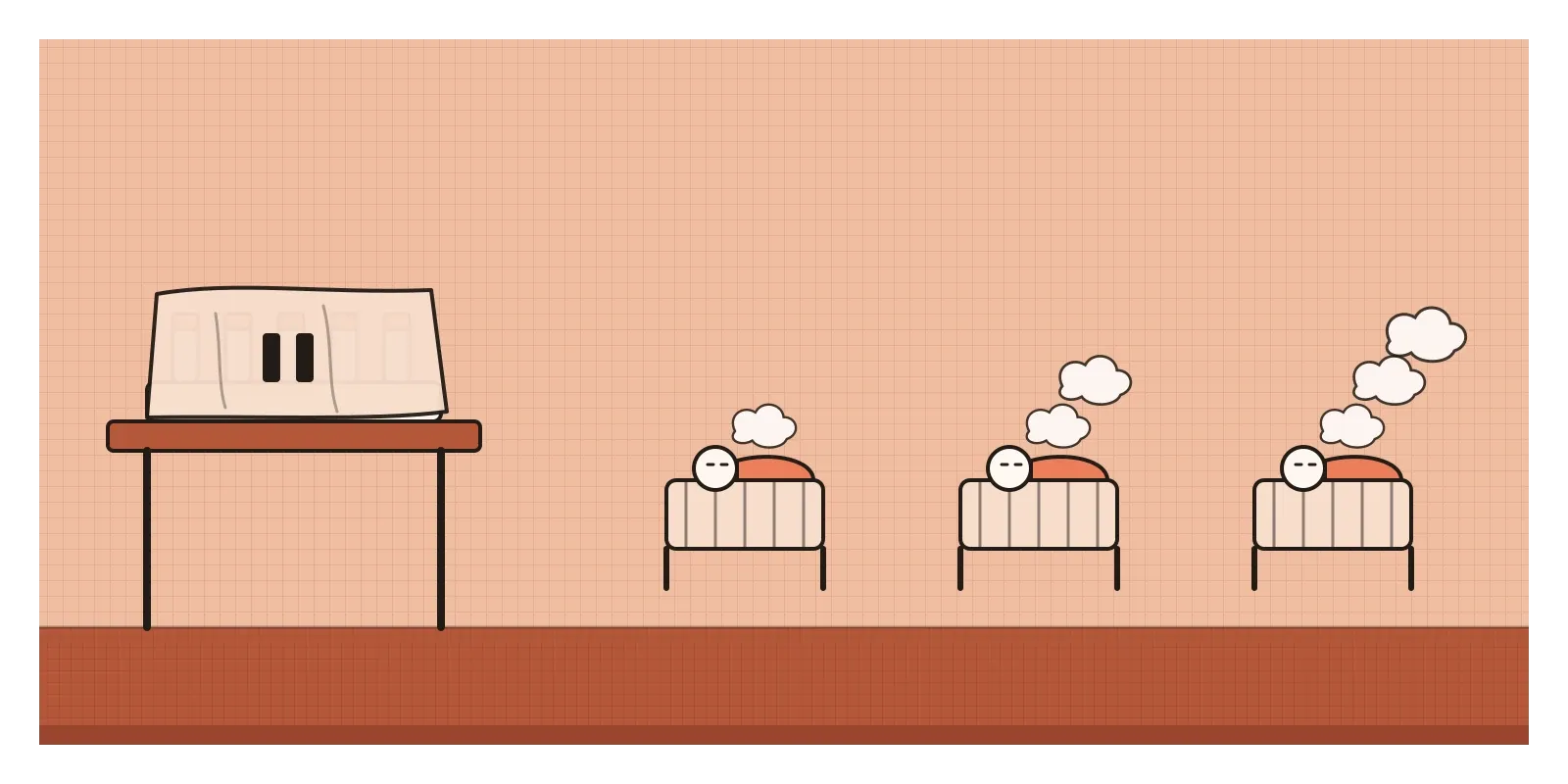
I don't think the people who made those decisions were careless. Each choice not to vaccinate felt cautious, even responsible. If a child had been harmed after an injection, someone would have given that injection. When children fell ill from a disease they could have been protected against, the harm seemed to come from the disease, not from anyone's decision.
That's omission bias: judging harm caused by an action as worse than the same harm, or even greater harm, caused by failing to act. Doing nothing feels safer and less blameworthy than doing something, even when it isn't. It's different from preferring things as they are, which is status quo bias and gets its own post later, and from wanting to remove every last bit of risk, which is the subject of the next post. Omission bias is about the line we draw between harm we cause and harm we allow.
Allergies, investors and the regret of doing
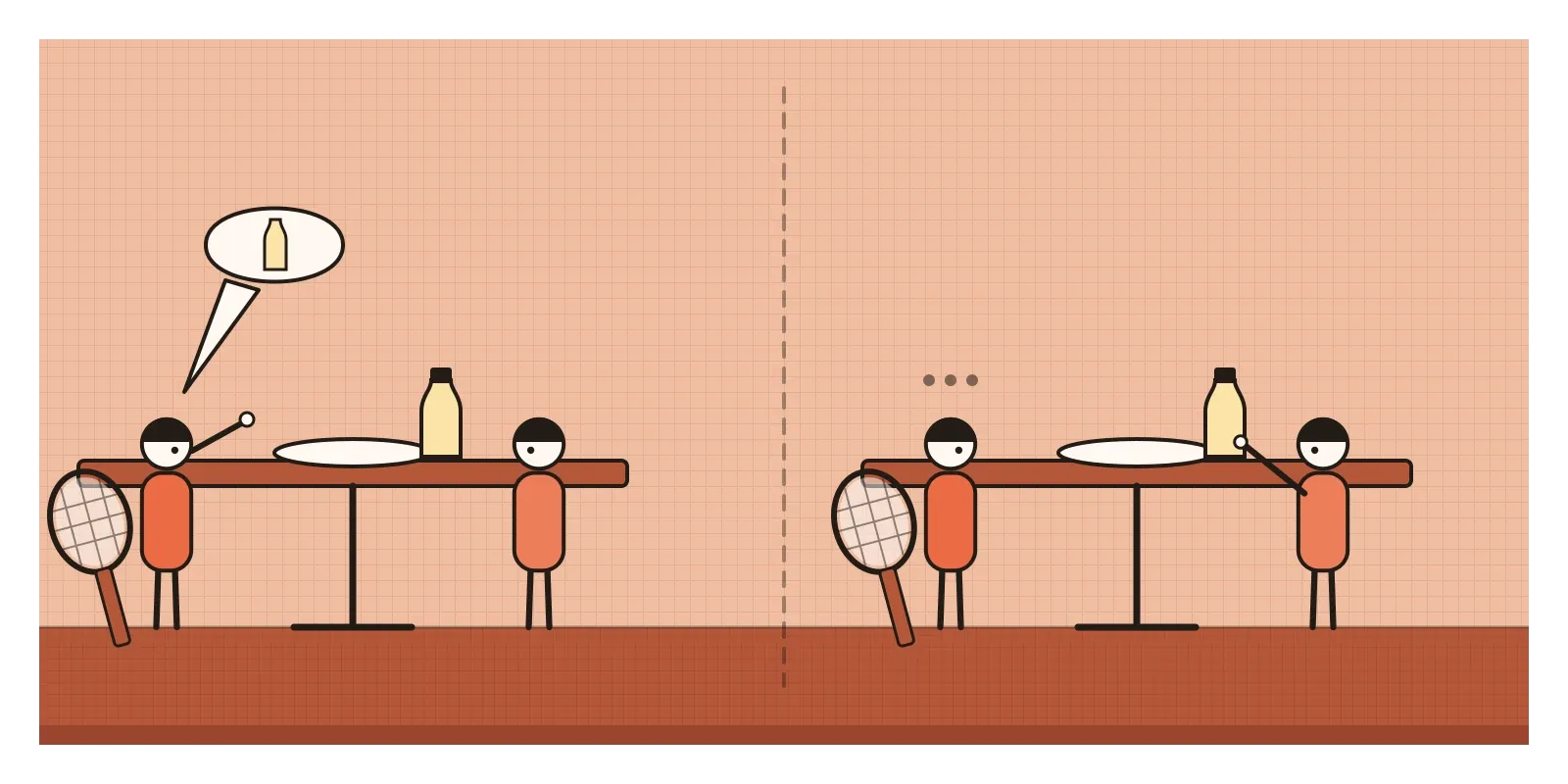
In the post on the nirvana fallacy I mentioned Ilana Ritov and Jonathan Baron's 1990 study, in which many people said they wouldn't vaccinate a child even when the vaccine's risk was clearly lower than the disease's. Baron and his colleagues went on to show how general the pattern is. In a 1991 study with Mark Spranca and Elisa Minsk, people read about a tennis player who knows that his opponent is allergic to an ingredient in the house salad dressing, on the evening before a match. In one version, he recommends the dressing. In another, the opponent orders it himself and the player stays silent. The outcome and the motive are the same, yet many people judged the player who spoke up more harshly than the one who kept quiet.
Daniel Kahneman and Amos Tversky had found something similar about regret. In a short article in 1982, they described two investors. Paul owns shares in one company and thinks about switching to another, but doesn't, and later learns he'd have been $1,200 better off if he had. George owned shares in the second company, switched into the first, and also ended up $1,200 worse off. Who feels worse? Almost everyone they asked said George. Kahneman and Dale Miller later offered an explanation they called norm theory: it's easier to imagine undoing an action than undoing an inaction, so outcomes that follow actions produce sharper "if only" thoughts.
The bias isn't only on paper. In 1994, David Asch, Baron and their colleagues surveyed parents about pertussis vaccination and found that parents who hadn't vaccinated their children were more likely than others to show omission bias on a hypothetical question. A 2022 meta-analysis by Siu Kit Yeung, Tijen Yay and Gilad Feldman found a large average effect across the studies they pooled, though it varied a great deal from one study to another. The direction is reliable. How strong it is depends on the situation.
Why standing still feels safe
Part of it is about causation. When I act, I'm clearly part of the chain that led to the harm. When I don't, the chain seems to run through something else, a disease, a market, a scammer, the weather. Our moral instincts, and much of our law, follow that line. In many legal systems you can be punished for pushing someone into a river but not for failing to pull them out.
Part of it is about blame. Other people judge harmful actions more harshly than harmful inactions, and we know it. A doctor who prescribes a drug that causes a rare reaction may face questions. A doctor who doesn't prescribe a drug that would have helped rarely does. So inaction is often the safer choice for the decision-maker, even when it isn't for anyone else.
And part of it is genuine wisdom. Acting changes things, and changes have consequences nobody predicted. Medicine's old principle, "first, do no harm", exists for good reasons. The trouble begins when a sensible caution about acting turns into a habit of not counting the harm of not acting at all.
How safe is safe enough?
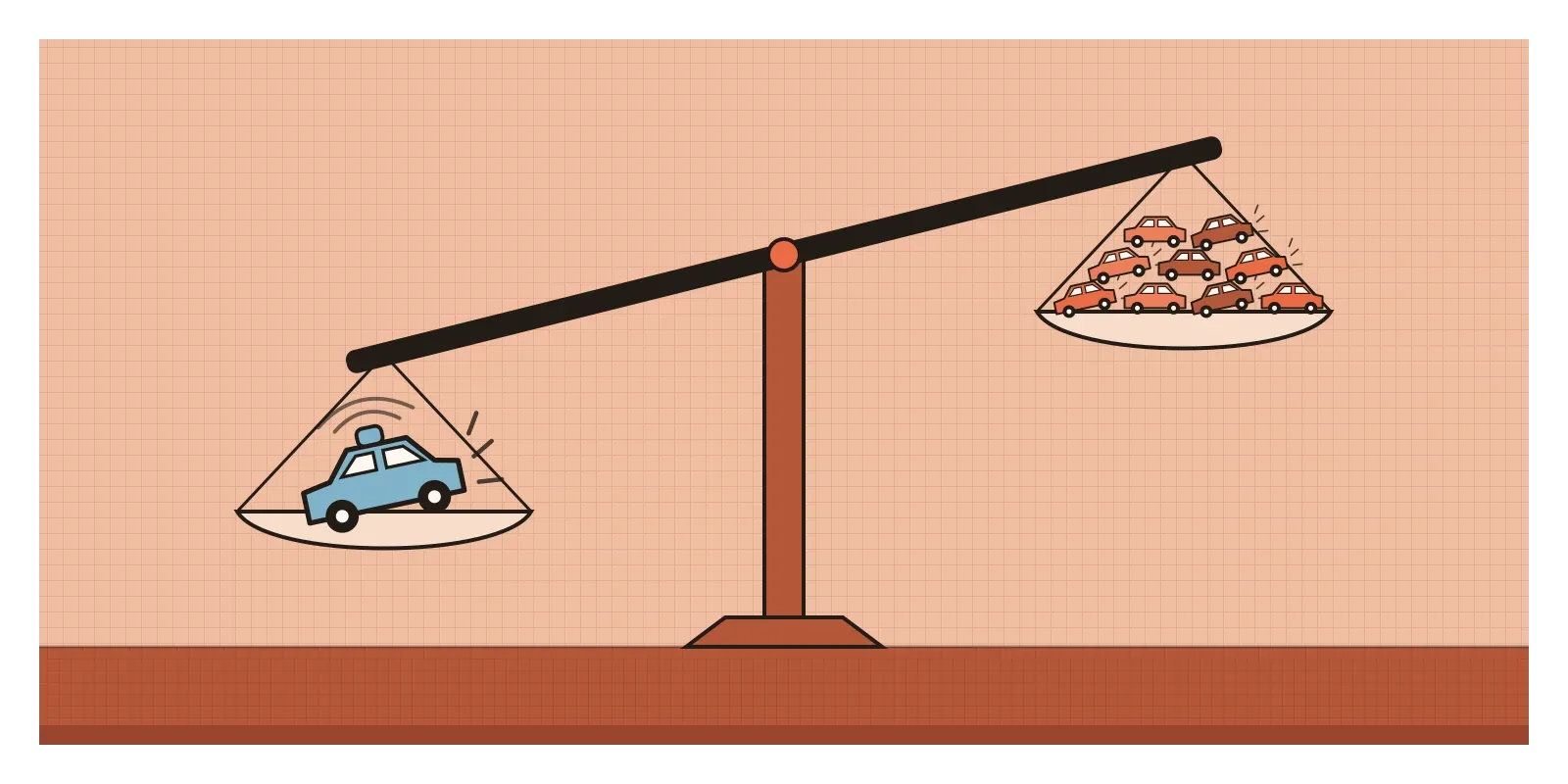
Self-driving cars bring this into sharp focus. Human error plays a part in most road crashes, and one of the main promises of automated driving is fewer deaths. But in a 2019 study published in Risk Analysis, Peng Liu, Run Yang and Zhigang Xu surveyed around five hundred people in China and asked how safe a self-driving car would have to be before they'd accept it. Their answer, on average, was that it should be four to five times as safe as a human driver. Being merely as safe, or even somewhat safer, wasn't enough. A death caused by a machine someone chose to put on the road feels like an act. Deaths that continue because we held back feel like an omission, spread thinly across thousands of ordinary crashes.
I don't think that demand is simply a bias. People have good reasons to want strong evidence before trusting a new technology, and accountability for a machine's mistakes is still unsettled. But it's worth noticing that "wait until it's perfect" also has a death toll, even if it never appears in a headline.
Sometimes a whole system builds the bias into its rules. India loses well over a lakh and a half people a year in road crashes, and for years people who stopped to help an injured stranger risked repeated police questioning, court appearances and demands from hospitals. A 2013 study by the SaveLIFE Foundation found that about three-quarters of bystanders said they were unlikely to help a road-accident victim, and most of them cited fear of legal hassles. The system punished helping more than it punished walking past. In March 2016, acting on a petition from SaveLIFE, the Supreme Court gave the force of law to guidelines protecting Good Samaritans from harassment, and in 2019 Parliament wrote that protection into the Motor Vehicles Act. Later surveys found that many people still didn't know the law existed, which shows how long the old asymmetry lingers.
Picture a marketplace and a list of flagged products
Picture a team at an online marketplace that has trained a model to spot listings for counterfeit phone chargers, the kind that can overheat. In testing, it catches most of them. It also wrongly flags about one honest listing in fifty. The team has to decide whether flagged listings should be hidden automatically, or merely sent to a review queue that takes about a week to clear.
The discussion goes one way quickly. If the model hides an honest seller's listing, the seller will complain, the support team will hear about it, and someone might write a post about the marketplace killing small businesses. That harm would be the team's doing. The fake chargers that stay up for a week while waiting for review feel different. If one of them catches fire, the fault seems to belong to the counterfeiter. The team chooses the review queue.
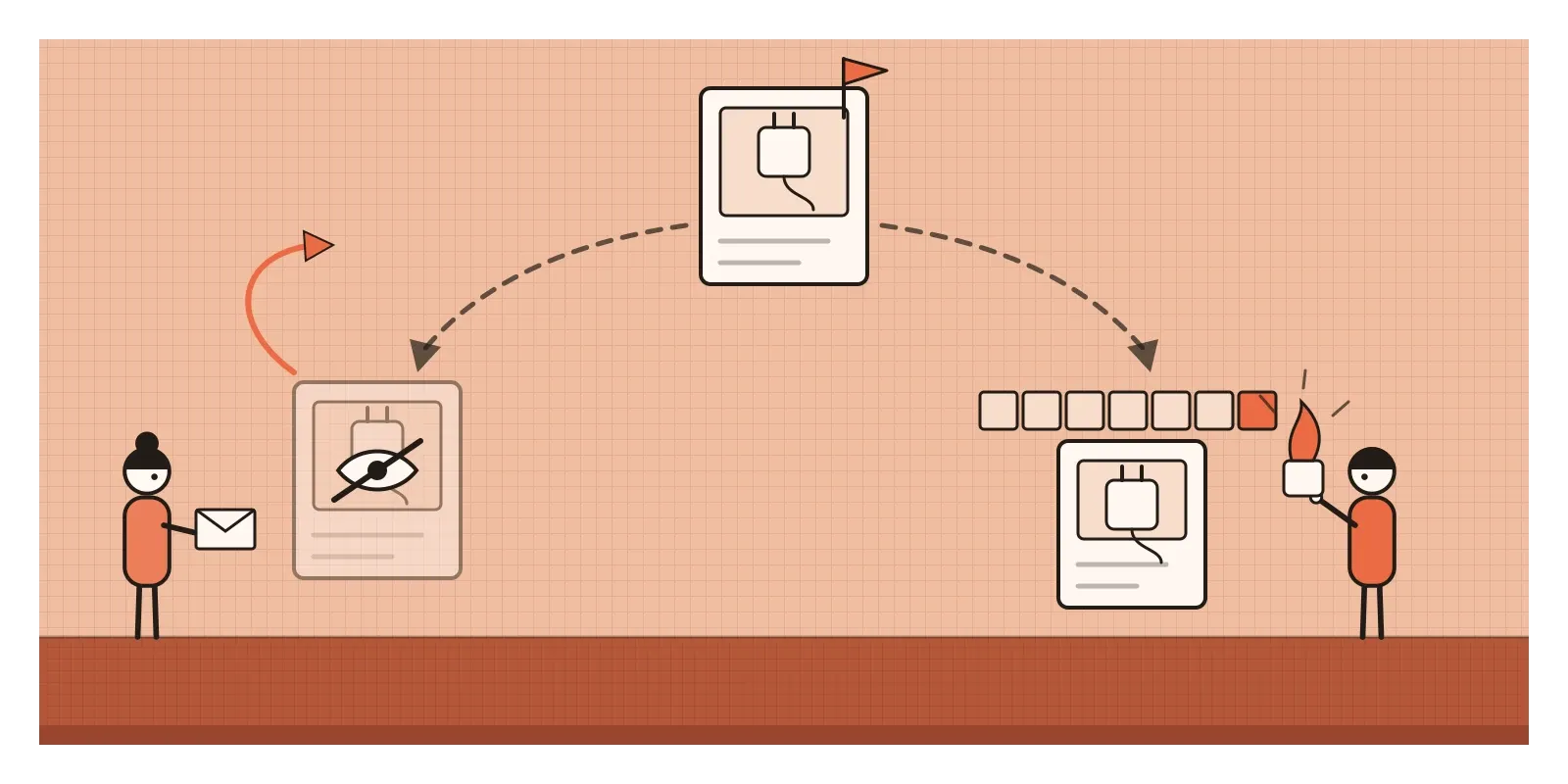
Notice what the meeting never did: put both harms in the same table. The better version starts there. How many honest sellers would be wrongly hidden each week, for how long, and what would it cost them? How many unsafe chargers would be bought during the week of review, by how many people, and what's the worst outcome? One harm is reversible within hours, with an apology and a quick appeal. The other may not be reversible at all.
Then the team works on making action less costly, rather than avoiding it. Flagged listings are hidden, but the seller gets an immediate message and a one-click appeal that a person answers within a day. The team tracks both kinds of mistake every week, not just the one that generates complaints. Doing nothing is still on the table. It just has to show its costs like every other option.
When doing nothing is the wise choice
There are times when not acting really is better. When the effects of a change are uncertain and hard to reverse, waiting for more evidence can be the responsible choice. In the post on appeal to novelty I mentioned Chesterton's fence, the idea that you shouldn't remove something until you know why it was put there. And people who do act and get it wrong usually face consequences that people who wait don't, which isn't always unfair.
It also helps to know that the opposite bias exists. In 2007, Michael Bar-Eli, Ofer Azar, Ilana Ritov and their colleagues studied 286 penalty kicks in top football leagues. Given where kicks tended to go, goalkeepers would have saved the most by staying in the centre. Yet they dived left or right almost every time. Their explanation was that for a goalkeeper, diving is the norm, so letting in a goal while standing still feels worse than letting it in mid-dive. When action is expected, inaction is what gets blamed. Thomas Gilovich and Victoria Medvec found something related about time: in the short run, people regret their actions more, but looking back over their lives, they regret the things they didn't do.
So the aim isn't to favour action. It's to count both sides honestly.
How I try to catch it
The first habit is to write "do nothing" into every decision document as an option of its own, with its own list of costs. If it has no costs listed, I haven't thought about it enough. Usually someone, somewhere, is paying for the way things are.
The second is a reversal. I imagine that the harm from not acting had been caused by something we shipped. Would we accept a feature that let a week's worth of dangerous chargers through? If not, waiting isn't neutral.
The third is to make action cheaper to undo. Gradual rollouts, quick appeals, undo buttons and clear ways to switch things off all reduce the fear of causing harm, and that fear is often what keeps a team frozen.
I think about those two months in Japan, and the years of illness that followed a decision that felt like caution. Nobody chose to let children catch whooping cough. That's exactly why it was so easy to let it happen. In the next post I'll look at a related pull: the wish to drive one small risk all the way to zero, even when a bigger one is left untouched. It's called zero-risk bias.
Further reading: Ilana Ritov and Jonathan Baron, "Reluctance to Vaccinate: Omission Bias and Ambiguity" (1990) · Mark Spranca, Elisa Minsk and Jonathan Baron, "Omission and Commission in Judgment and Choice" (1991) · Daniel Kahneman and Amos Tversky, "The Psychology of Preferences" (1982) · Eugene Gangarosa and colleagues, "Impact of anti-vaccine movements on pertussis control: the untold story" (1998) · Michael Bar-Eli and colleagues, "Action bias among elite soccer goalkeepers: The case of penalty kicks" (2007)
The question to askWho gets hurt if we do nothing?