The Nirvana Fallacy
Why a working answer so often loses an argument to a perfect one that doesn't exist.
The Nirvana Fallacy
A radar built from the third best
On the morning of 26 February 1935, a Handley Page Heyford bomber flew back and forth over the fields near Daventry in Northamptonshire. Parked below it was a van containing a radio receiver and a small cathode ray tube. The physicist Arnold Wilkins had set it up, and Robert Watson-Watt, the Scottish scientist who led the government's radio research station, had come to watch. Nearby, a powerful BBC shortwave transmitter was broadcasting as usual. As the bomber crossed the beam, a little spot on the screen grew and shrank. The radio waves were bouncing off the aircraft and coming back. For the first time in Britain, a plane had been detected by radio echoes.
Within a few years, a line of stations called Chain Home stood along the east and south coasts of England, with tall steel masts. By the standards of what engineers could already imagine, the system was crude. It used long wavelengths, gave rough readings of height and direction, struggled to see aircraft flying low over the sea, and depended on operators, many of them young women of the Women's Auxiliary Air Force, reading flickering blips by eye. Better designs were possible on paper. Watson-Watt pushed to build what would work now. He later described his approach as a "cult of the imperfect", and is often quoted as saying that the second best comes too late and the best never comes.
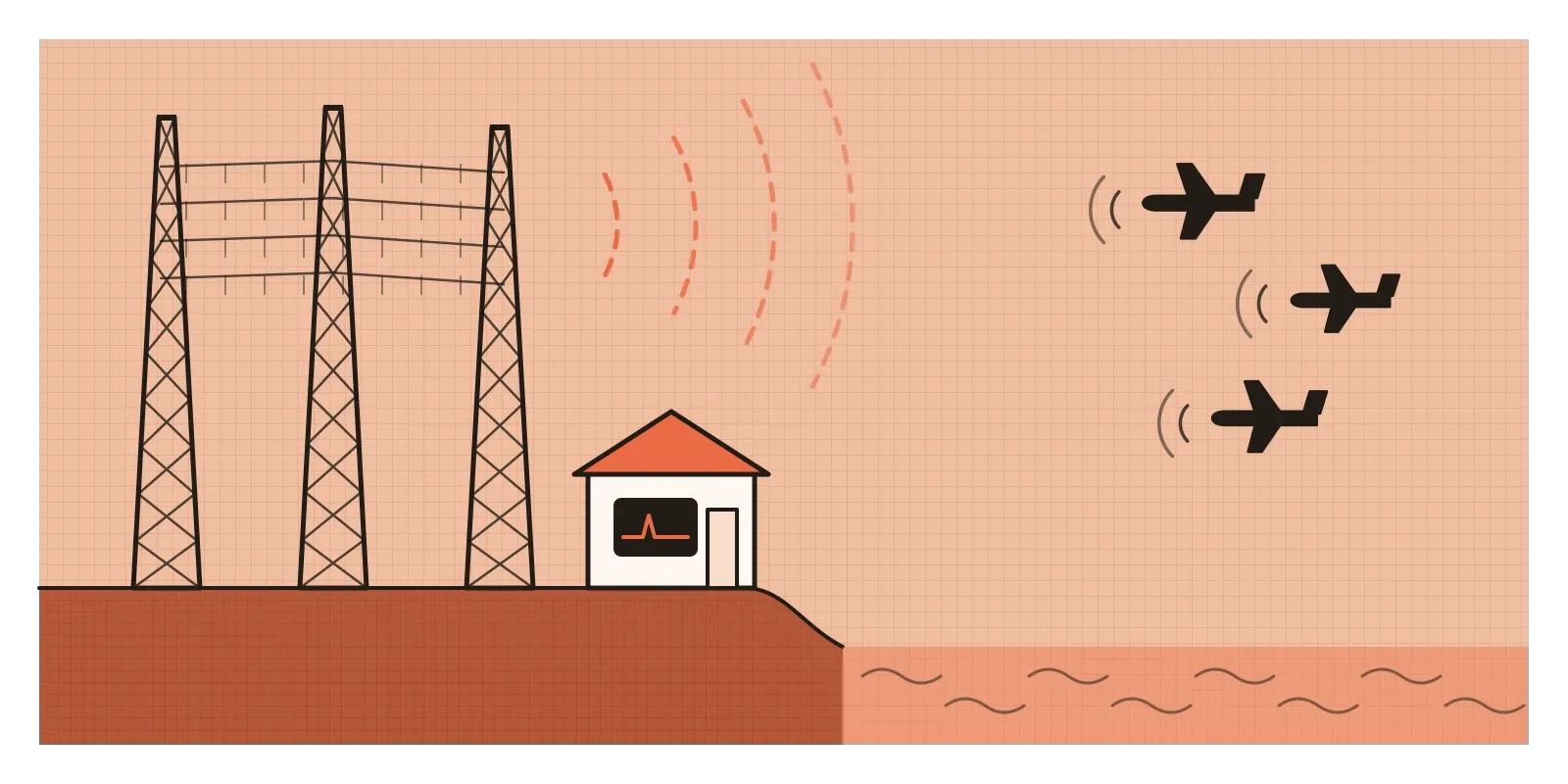
By the summer of 1940, during the Battle of Britain, those imperfect stations were feeding warnings into a reporting system run from Fighter Command's headquarters at Bentley Priory. Instead of flying exhausting standing patrols and hoping to meet the enemy, fighters could be sent up when and where they were needed. Historians still argue about how much credit radar deserves next to the pilots, the aircraft and German mistakes. But few would argue that waiting five more years for a perfect radar would have been the better choice.
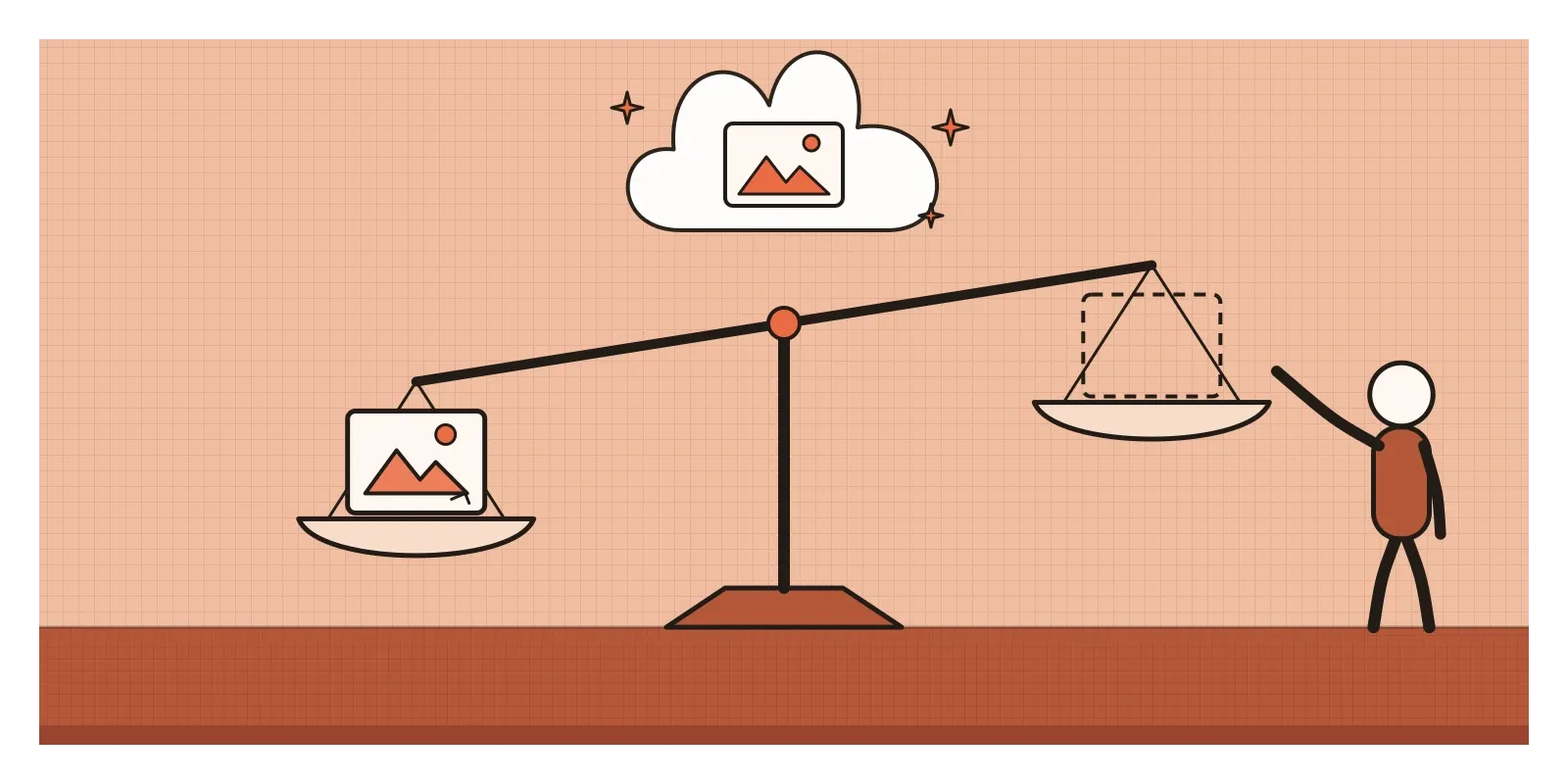
Watson-Watt was resisting a mistake so common that it has a name. The nirvana fallacy is rejecting a real, workable option because it falls short of an ideal one, when the ideal isn't actually available. It's sometimes called the perfect solution fallacy, and it lives inside the old saying that the perfect is the enemy of the good. The trick is in the comparison. The real option is measured against a dream, instead of against the other real options, which usually means the way things are today.
Comparing a real thing with a dream
The name comes from economics. In 1969 the economist Harold Demsetz published a paper called "Information and Efficiency: Another Viewpoint", partly in reply to Kenneth Arrow. Demsetz complained that many arguments for government intervention followed what he called the nirvana approach. They described the flaws of a real market in detail, then compared it with an ideal arrangement that worked perfectly, and concluded that the real market should be replaced. He argued that this was the wrong comparison. The honest choice is always between real arrangements, each with its own flaws, and an imagined institution that never has to cope with real people, real budgets and real mistakes will win every time.
The idea is much older than the name. In a poem published in 1772, Voltaire repeated an Italian proverb that has come down to us as "the best is the enemy of the good." Shakespeare has the Duke of Albany warn in King Lear that "striving to better, oft we mar what's well." Demsetz added a clear description of the pattern.
It usually turns up in one of three forms. The first is the imaginary rival, where an option is rejected because some better solution could exist, though nobody has built it or can say how. The second is all or nothing, where something is dismissed because it doesn't solve the whole problem. Seat belts don't prevent every death on the road, so why bother? The third is the receding horizon, where everyone agrees to act "once it's ready", and it never quite is. All three share a single move: the option on the table is judged against perfection, and the status quo quietly escapes judgement altogether.
Why the dream always wins the meeting
Part of the pull is how we weigh harm. In 1990, the psychologists Ilana Ritov and Jonathan Baron asked people to imagine deciding whether to vaccinate a child against a disease that could kill. The vaccine itself carried a small risk of death. Many people said they would not vaccinate even when the vaccine's risk was clearly lower than the disease's, because a death caused by acting felt worse than a death caused by doing nothing. Ritov and Baron called this omission bias. It explains a lot about the nirvana fallacy. Every flaw in a new option is something we would be choosing. The flaws of the status quo are just the weather.
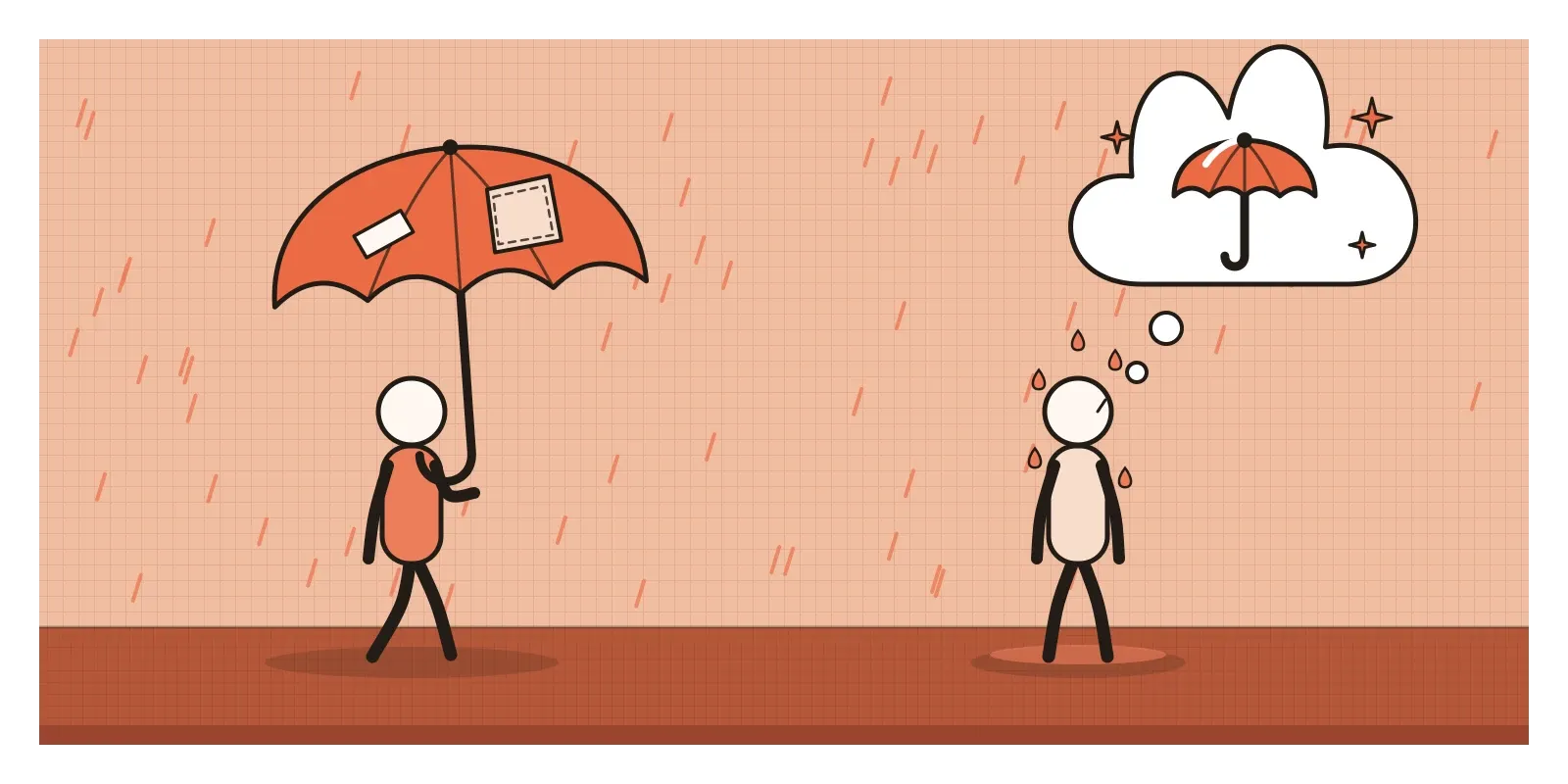
Imagined solutions also have an unfair advantage. They have never met reality, so they have no bugs, no costs and no awkward edge cases. A real proposal arrives with all of its problems visible, because someone has actually tried to make it work. Put the two side by side and the imaginary one looks wiser.
Then there's the social side. In a review, pointing out what a proposal fails to do is cheap and sounds rigorous. The critic doesn't have to build the perfect version, or even describe it in detail. "This doesn't handle every case" is almost always true, which is exactly why it's such a comfortable thing to say. Designers know the inward version too: the screen we keep polishing in private, because the version in our heads is always better than the one we could ship this week.
Salt, sugar and water in Bangaon
My favourite real case comes from West Bengal. In 1971, during the Bangladesh Liberation War, millions of refugees crossed into India and crowded into camps along the border. Cholera broke out. The standard treatment was intravenous fluid, which replaces the water and salts that the disease drains from the body, and it works very well in a hospital. But in the camps near Bangaon there were nowhere near enough drips, sterile fluids or trained staff, and people were dying in large numbers.
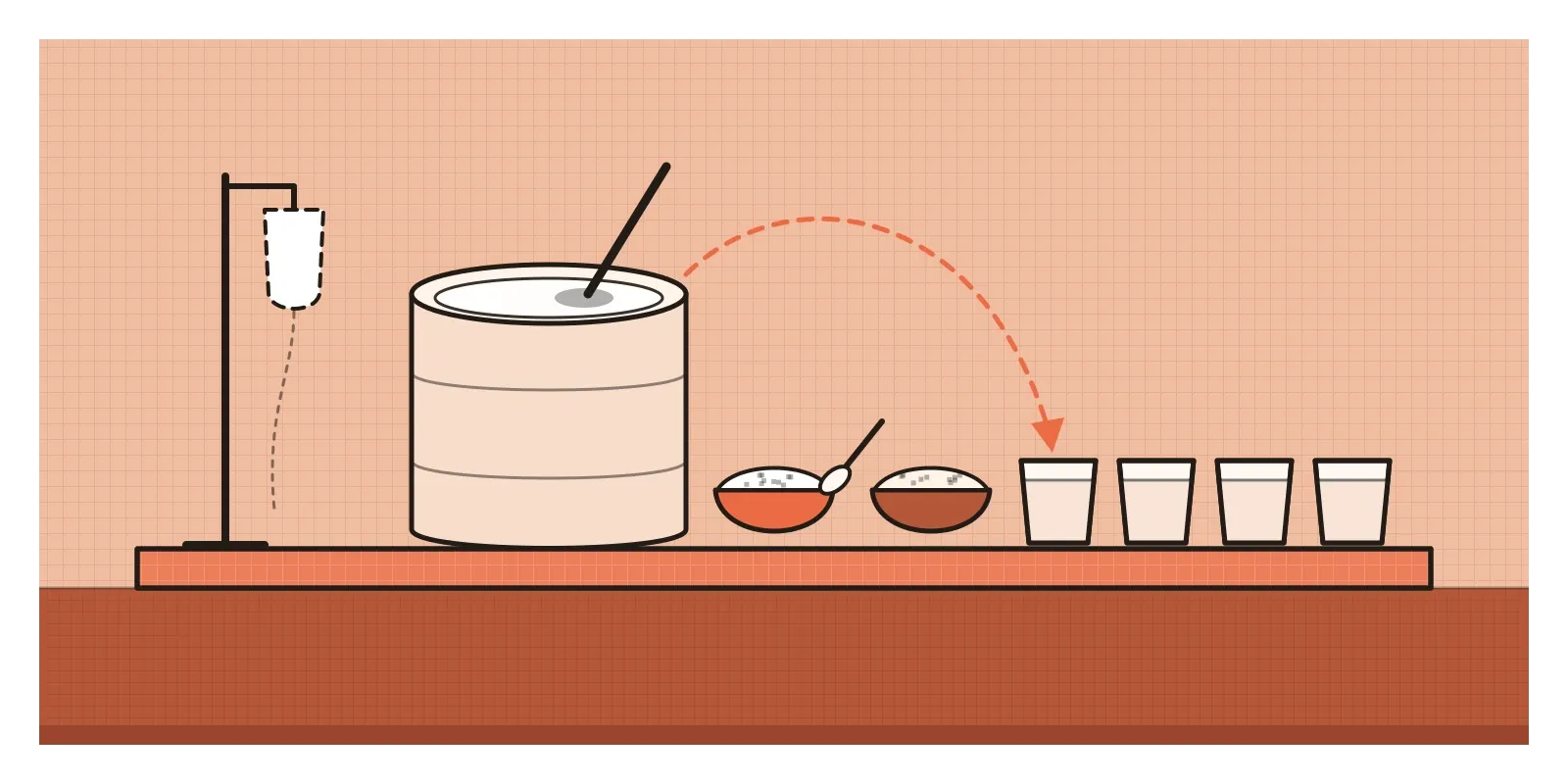
Dilip Mahalanabis, an Indian paediatrician working with the Johns Hopkins research centre in Calcutta, made a decision that many doctors at the time considered second rate. Researchers in Dhaka and Calcutta had already shown that a simple solution of glucose and salt in water, taken by mouth, could rehydrate cholera patients. Medical opinion still treated it as an inferior substitute for a proper drip. Mahalanabis had the solution mixed in large drums and handed out in cups, and family members and volunteers gave it to patients themselves. In the camps where his team worked, deaths among cholera patients fell to around three or four per cent, against figures commonly reported at twenty to thirty per cent in camps without effective treatment.
Oral rehydration wasn't as good as an intravenous drip in a well-run hospital. That was never the real choice. The real choice was between oral rehydration and too few drips, and in that comparison it saved thousands of lives. It went on to save millions more, and in 1978 The Lancet described it as potentially the most important medical advance of the century. Mahalanabis was awarded the Padma Vibhushan after his death in 2022. It came close to being dismissed for not being the best treatment, when the best treatment wasn't in the room.
The alt text that was never good enough
Picture a team at an online marketplace where sellers upload their own product photos. Most sellers never write alt text, the short description a screen reader reads aloud for people who can't see an image. An audit shows that around seven in ten product images have none, so blind and low-vision shoppers mostly hear "image, image, image" as they browse. A designer proposes using an AI model to draft alt text for every new upload, which sellers can then review and edit.
In the review, a senior colleague pulls up ten examples. The model calls a maroon kurta "red". It describes a phone case but misses the brand. It says "a person holding a bag" when the bag is the product. "We can't ship this," she says. "Accessibility deserves descriptions that are accurate and complete. We should do it properly." Everyone nods, because nobody wants to argue against doing accessibility properly. The proposal is parked until the model is better, or until there's budget for a team to write descriptions by hand. Six months later, neither has happened, and seven in ten images still say nothing.
Notice the comparison that was made. The AI drafts were measured against perfect, hand-written alt text for every product, which wasn't on offer. The comparison that mattered was between the drafts and what screen reader users actually get today, which is nothing at all.
The honest version of the meeting looks different. It starts by putting today on the table: seven in ten images undescribed. It then asks what kinds of mistakes the drafts make, and how bad each is. Calling maroon "red" is a small loss. Describing the wrong object as the product is a bigger one, because it could lead someone to buy the wrong thing. So the team sets a bar it can test, something like "fewer serious errors than a sample of seller-written descriptions", labels the drafts as automatically generated, nudges sellers to check them, and ships to one category first. The colleague's concern doesn't disappear. It becomes a requirement instead of a veto.
When holding out for better is right
None of this means every imperfect option should be shipped. Sometimes the critic is right. The first case is when mistakes are severe and hard to undo. Jeff Bezos, in his 2015 letter to Amazon shareholders, separated decisions into one-way doors, which are consequential and nearly irreversible, and two-way doors, which you can walk back through if you're wrong. A rough feature behind a toggle is a two-way door. A medical device or a credit model that decides who gets a loan is closer to a one-way door, and deserves a much higher bar. The second case is when the imperfect option makes some people worse off than the status quo, even while it helps the average. A description that confidently names the wrong product can be worse than no description at all, and the people harmed are rarely the ones in the meeting. The third case is lock-in. A good-enough solution can become the permanent one, absorbing the budget and urgency that would have produced something much better.
The difference between these objections and the fallacy is that each of them compares real things. "This would hurt these users more than what they have now" is a real comparison. "This could be better" is not, because everything could be better. A useful test is whether the critic can describe the better option in enough detail that someone could start building it, and say when it might arrive.
How I try to catch it
The first question I ask is: compared with what? When an idea is being shot down, I try to write the real alternatives side by side, and the first one is always "what users have today". Written down plainly, the status quo is often far worse than the flawed proposal everyone is picking apart.
The second habit is turning objections into requirements. If someone says a feature isn't accurate enough, I ask what accurate enough would mean, as a number or an example we could test. Sometimes that reveals a real bar we should meet. Sometimes it reveals that no answer would ever satisfy the objection, which is close to the subject of the next post, on moving the goalposts.
The third is separating "not yet" from "never". If we decide to wait, I try to write down what would make the thing ready, who is working on that, and when we'll look again. A delay with no conditions attached is usually a quiet decision to keep the status quo.
Watson-Watt's masts were ugly, imprecise and easy to criticise, and engineers knew how to describe a much better system long before they could build one. He chose the radar that existed over the radar that didn't. My choices are much smaller, but the comparison is the same.
Further reading: Harold Demsetz, "Information and Efficiency: Another Viewpoint" (1969) · Ilana Ritov and Jonathan Baron, "Reluctance to Vaccinate: Omission Bias and Ambiguity" (1990) · Dilip Mahalanabis and colleagues, "Oral Fluid Therapy of Cholera among Bangladesh Refugees" (1973) · Robert Buderi, The Invention That Changed the World (1996)
The question to askIs it better than what we have now?