Zero-Risk Bias
Why taking one small risk all the way to zero can feel better than preventing more harm overall.
Zero-Risk Bias
A sweetener on trial in 1977
On 9 March 1977, the US Food and Drug Administration announced that it planned to ban saccharin. It was then the only artificial sweetener allowed in the country. The trigger was a Canadian study in which rats were fed huge amounts of saccharin, about 5 per cent of their diet, and some of them developed bladder tumours. Critics calculated that a person would need to drink about 800 cans of diet soda a day to match it.
What tied the agency's hands was one sentence in the law. Since 1958, the Food Additives Amendment had carried a provision named after James Delaney, a congressman from New York: no additive could be considered safe if it was found to cause cancer in people or in animals. Any cancer, at any dose, meant out.
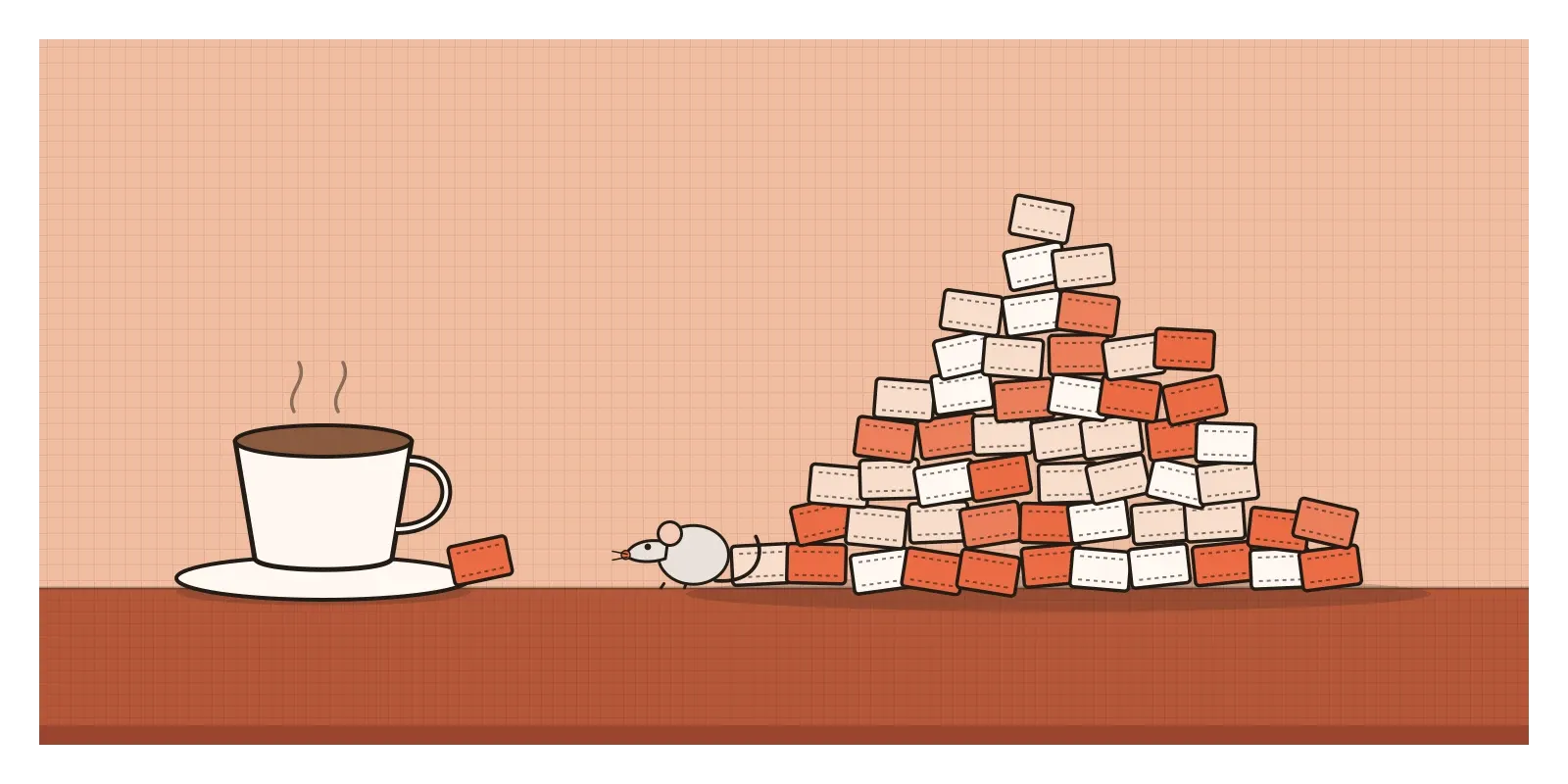
The public reaction was fierce, not least from people with diabetes. By November, Congress had passed the Saccharin Study and Labeling Act, which put the ban on hold and required a warning on saccharin products saying it had been found to cause cancer in laboratory animals. The hold was renewed again and again, while researchers worked out that the rat tumours depended on the unusual chemistry of rat urine, which humans don't share. In 2000, saccharin came off the US government's list of suspected carcinogens, and the warning labels came off the packets.
What interests me isn't whether saccharin was safe. It's the shape of the rule. The Delaney clause asked only one question about a risk: is it zero? It couldn't ask how big the risk was, or what people would use instead.
That's zero-risk bias: preferring to eliminate a small risk completely over reducing a larger risk by more, even when the second choice would prevent more harm in total. It's a close relative of omission bias, but the pull here isn't towards doing nothing. It's towards a particular number. And it may be the most respectable bias in this part of the series: nobody gets told off for wanting zero.
Four cases to none, or six fewer?
The name comes mainly from a 1993 study by Jonathan Baron, Rajeev Gowda and Howard Kunreuther at the University of Pennsylvania. They sent questionnaires about cleaning up hazardous waste to people who make or argue about such decisions: legislators, judges, executives at oil and chemical companies, environmentalists and economists. One scenario described two waste sites. One was expected to cause eight cases of cancer, the other four. One cleanup plan reduced the total by six cases. Another reduced it by only five, but those five included all four cases at the smaller site, taking it to zero. That plan was worse for the people who would get ill, and still 42 per cent of respondents ranked it above at least one of the better options, with similar answers across the professional groups.
In 1987, the economists Kip Viscusi, Wesley Magat and Joel Huber found the same pull in shoppers. They asked more than 1,500 consumers how much extra they would pay for an insecticide and a toilet bowl cleaner with lower risks of injury. People paid more for bigger reductions, as you'd expect, but they also paid a premium for wiping a risk out entirely.
Both findings fit a bigger pattern. In their 1979 paper on prospect theory, Daniel Kahneman and Amos Tversky described the certainty effect: we give outcomes that are certain much more weight than outcomes that are merely very likely. They quoted a thought experiment from the economist Richard Zeckhauser: you're forced to play Russian roulette, and can pay to remove one bullet. Would you pay more to go from four bullets to three, or from one bullet to none? Most people say one to none, though both remove one chance in six of dying.
The certainty effect is one of the sturdier findings in decision research: a 2020 project led by Kai Ruggeri repeated the original prospect theory questions with more than four thousand people in nineteen countries, and most of the classic patterns held. Zero-risk bias in its narrower form rests on fewer studies, many of them hypothetical questionnaires rather than real choices, so I hold the exact percentages loosely. The direction, though, matches what we know about certainty.
Why zero feels like a different number
Zero isn't experienced as a quantity at all. It's a category. A risk of one in ten thousand and a risk of one in a hundred thousand both sit in the same mental drawer marked "risky". Zero sits in a different drawer, marked "safe", and moving something between drawers feels far bigger than moving it around inside one.
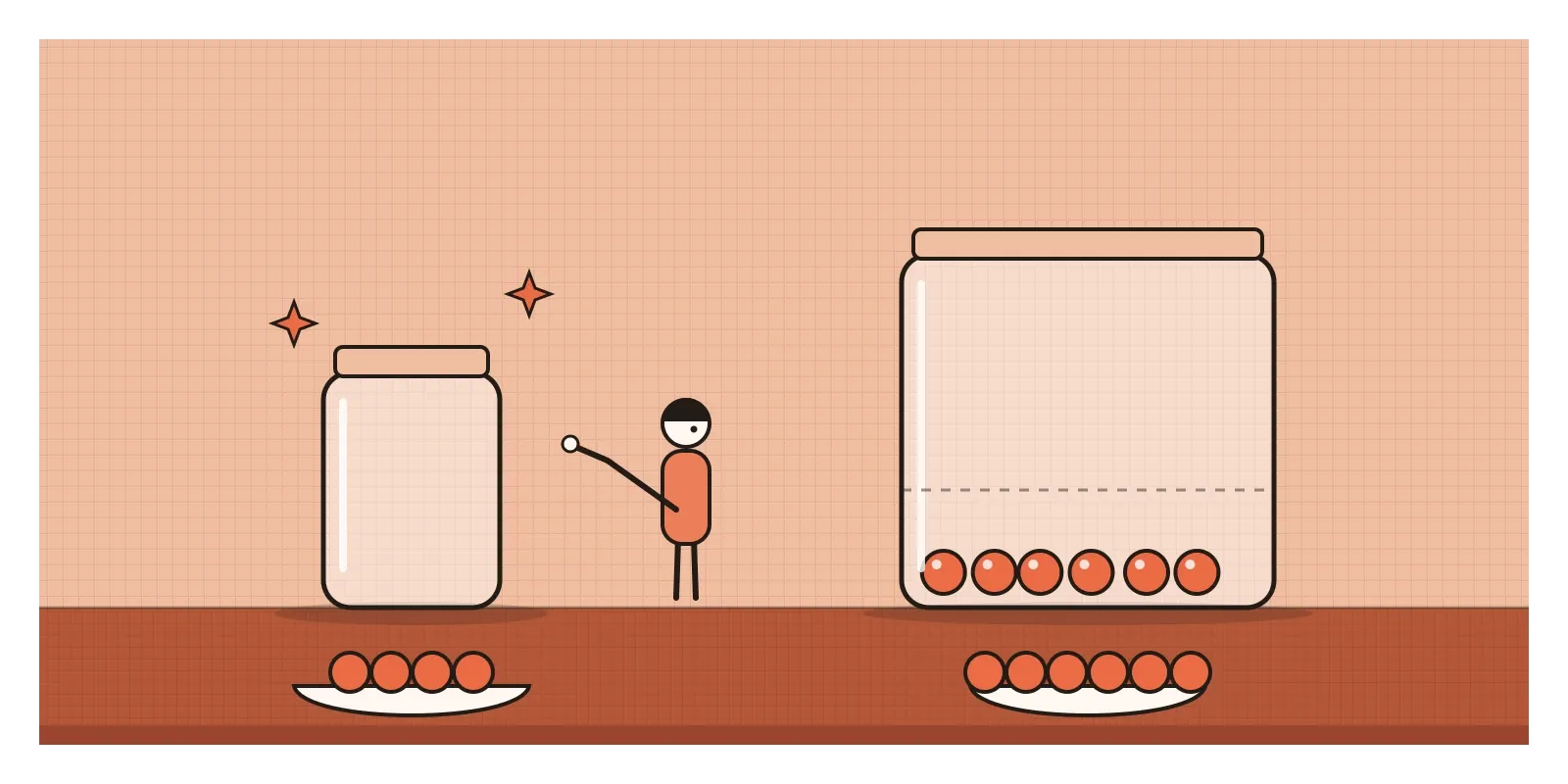
We also judge risk reductions as proportions rather than counts. In 1997, David Fetherstonhaugh, Paul Slovic and colleagues found that people valued saving a fixed number of lives more when those lives were a large share of the people at risk. Removing all four cases at the small site is a 100 per cent reduction. Removing six of twelve is only 50 per cent.
Then there is peace of mind. An eliminated risk needs no more watching, and it's easy to account for. "We eliminated the risk" is a sentence that survives any review, while "we reduced the larger risk by a third" invites the question of why we didn't do more.
Most of the time this shortcut serves us well. Removing a hazard completely is often the cheapest way to deal with it. Fixing the loose step is better than remembering to avoid it for ten years. The trouble starts when the last stretch to zero costs far more than the stretches before it, and the money or attention comes out of a bigger risk next door.
The last 10 per cent
Before joining the US Supreme Court, Stephen Breyer was an appeals court judge with a long interest in risk regulation. In 1993 he published a short book, Breaking the Vicious Circle, built around what he called the problem of the last 10 per cent. Cleaning up most of a risk is often affordable. Removing the final traces can cost far more, while protecting almost no one.
His best-known example came from a toxic waste case in New Hampshire that he had heard as a judge. Most of the cleanup was done; the dispute was over roughly another $9.3 million to clean the soil further, to a standard that would let children eat small amounts of the dirt regularly without significant harm. As Breyer told it, the site was largely swampland, and there were no dirt-eating children there. The extra money bought a safety margin for people who did not exist.
The Delaney clause caused a quieter version of the same problem with pesticides. Critics argued that, because of how unevenly the zero standard applied, it could keep older, more dangerous pesticides in use while blocking newer, safer ones that showed any trace of cancer risk in animal tests. In 1996, the Food Quality Protection Act replaced the zero rule for pesticide residues with a standard of "reasonable certainty of no harm". It sounds weaker. Many experts thought it protected people better.
Picture a payments team choosing its trophy
Picture a team that runs security for a UPI payments app in India. At quarterly planning, they have room for one big project, and two are on the table. The first closes a rare attack path completely. It involves a particular way of taking over an account after a SIM swap, and the team traced around thirty cases to it last year. A fix takes that count to zero, permanently. The second targets scams where fraudsters send a "collect request" and talk people into approving it as if they were receiving money. These caused around two thousand cases last year. A redesign of the approval screen, with a plain warning and a short pause before large approvals to unknown people, might cut them by a third. Nobody can promise more.
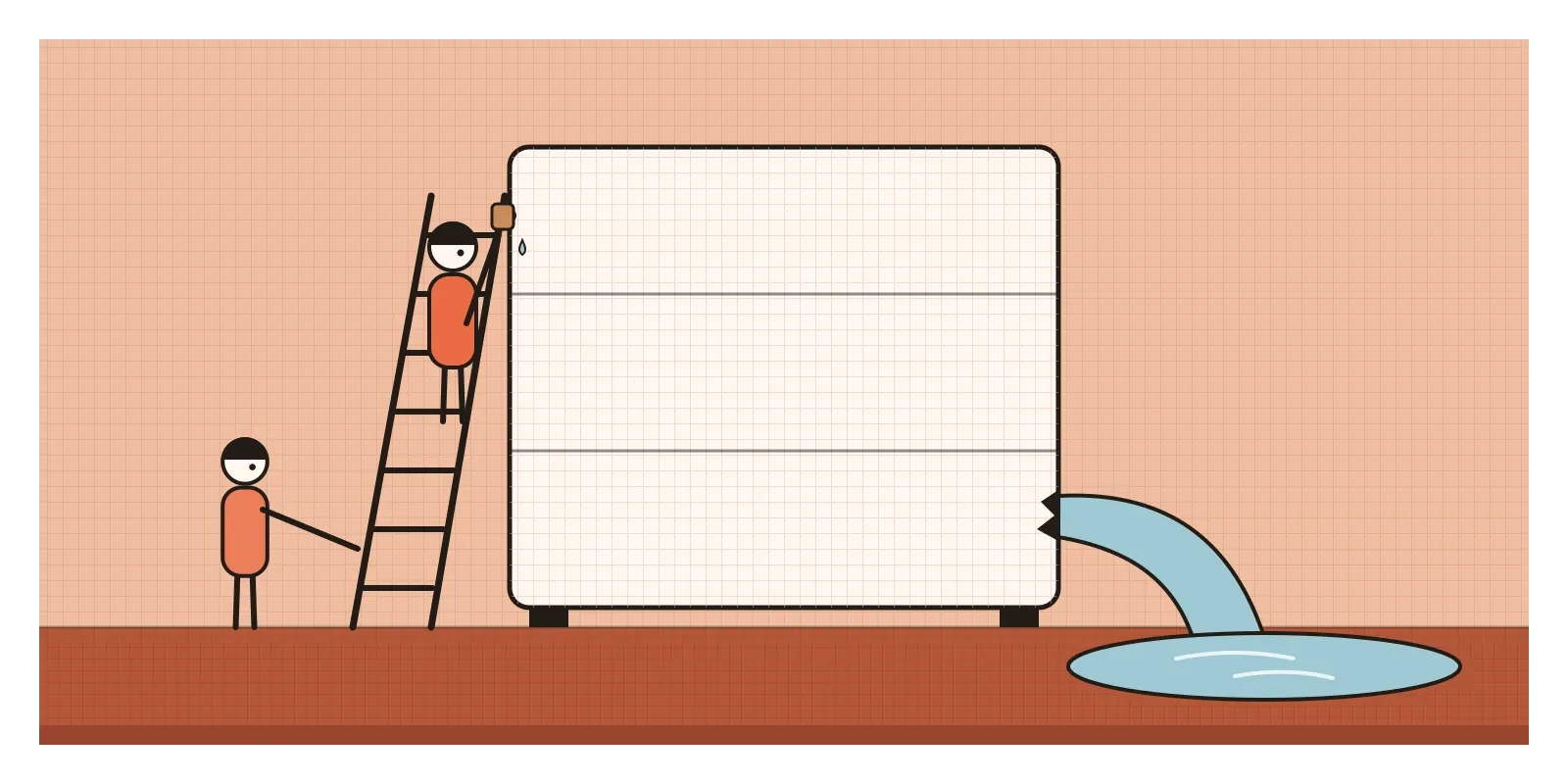
The first project has a clean story: "We eliminated SIM-swap takeovers." It fits on one slide. The second is messy: research with real users, copy that may need several rounds, and an outcome that might turn out smaller than hoped. Someone calls the scams "really a user education problem". The team picks zero.
Now compare. Project one prevents about thirty cases a year. Project two, if it works as hoped, prevents more than six hundred, and even a disappointing version would beat thirty easily. The responsible-feeling choice prevented far less harm.
The better version starts with a simple table: for each risk, how many people it affects in a year, how badly, and how much each option would change that. It treats "to zero" as one possible size of reduction, not a different kind of achievement. The team might still close the SIM-swap path next quarter. But they'd be choosing it because of what it prevents, not because of the shape of the number.
When zero really is worth paying for
Sometimes zero is worth far more than its share of the arithmetic. India's fight against smallpox is the example I think of first. In 1974 the country went through one of its worst smallpox epidemics in decades. Instead of settling for fewer cases, health workers searched house after house for every remaining one, isolated it and vaccinated everyone around it. The last Indian case was found in late May 1975: a woman named Saiban Bibi, in Karimganj, Assam. In 1977 an international commission certified India free of smallpox, and in 1980 the disease was declared eradicated worldwide. Zero mattered because a disease that is merely rare keeps needing vaccination campaigns forever, while one that is gone stays gone.
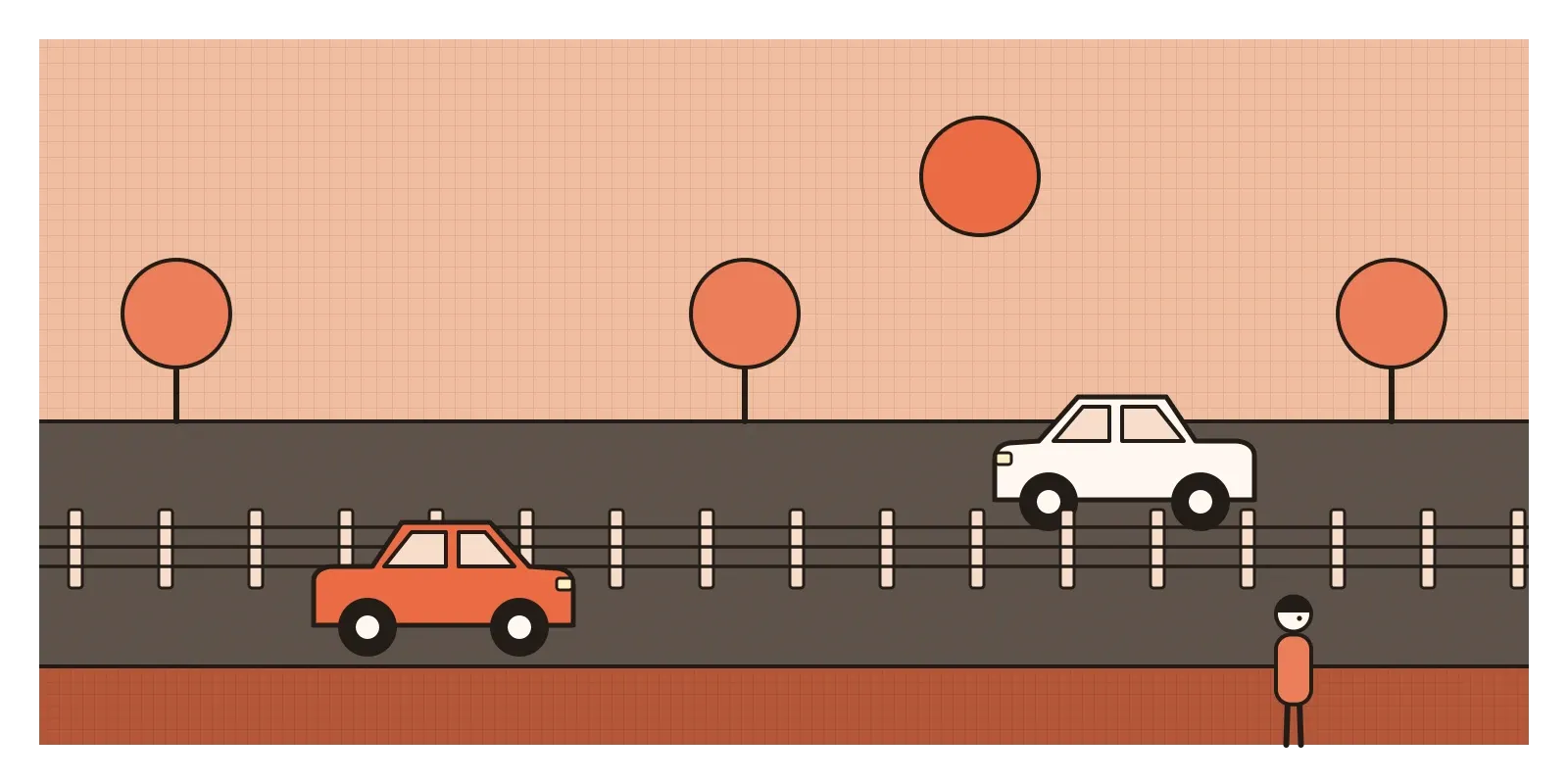
Zero can also work as a direction rather than a promise. In 1997, the Swedish parliament adopted Vision Zero, the goal that nobody should be killed or seriously injured on the country's roads. It pushed planners the opposite way from the bias: because zero deaths was the aim, they had to go after the biggest killers first, with barriers between opposing lanes, roundabouts in place of crossroads and lower speeds where people walk. Road deaths in Sweden have fallen by more than half since then.
There are other good reasons to pay for zero. Bright lines are easier to follow and check than fine judgements, which is why "we never store your card number" is a better promise than "we rarely do". Some risks are catastrophic or irreversible, and a small chance of ruin deserves more weight than its average cost suggests. Peace of mind has real value too, as long as we admit we're buying it. The bias isn't in valuing zero. It's in valuing it without ever asking what else the same effort could have prevented.
How I try to catch it
The first habit is to count before I rank. When a list of risks lands in front of me, whether security issues, accessibility bugs or ways an AI feature can fail, I write down roughly how many people each one touches and how badly. I rank the options by harm prevented, not by whether they reach zero.
The second is to ask what the last stretch costs. If the first 90 per cent of a fix takes two weeks and the last 10 per cent takes two months, I want to know what else two months could buy.
The third is to ask what kind of zero I'm looking at. Is it a bright line users can rely on, or a catastrophe ruled out? Or is it a trophy that will look good in a review? The first kind is worth fighting for. The second is where the bias lives.
Saccharin's warning labels lasted twenty-three years. I don't think the people who wrote the Delaney clause were foolish. They wanted the public to be completely safe, and that's a decent thing to want. But a rule that can only see zero can't see the size of anything else.
That ends this part of the series, on the minds of the people who make things. In the next post, on status quo bias, I turn to the people we make things for.
Further reading: Stephen Breyer, Breaking the Vicious Circle: Toward Effective Risk Regulation (1993) · Jonathan Baron, Rajeev Gowda and Howard Kunreuther, "Attitudes toward Managing Hazardous Waste" (1993) · W. Kip Viscusi, Wesley Magat and Joel Huber, "An Investigation of the Rationality of Consumer Valuations of Multiple Health Risks" (1987) · Daniel Kahneman and Amos Tversky, "Prospect Theory: An Analysis of Decision under Risk" (1979) · Cass Sunstein, Risk and Reason (2002)
The question to askHow much harm does this prevent in total?