The Slippery Slope
Why one small step so easily gets painted as the first of many, and how to find the brakes.
The Slippery Slope
A row of dominoes in 1954
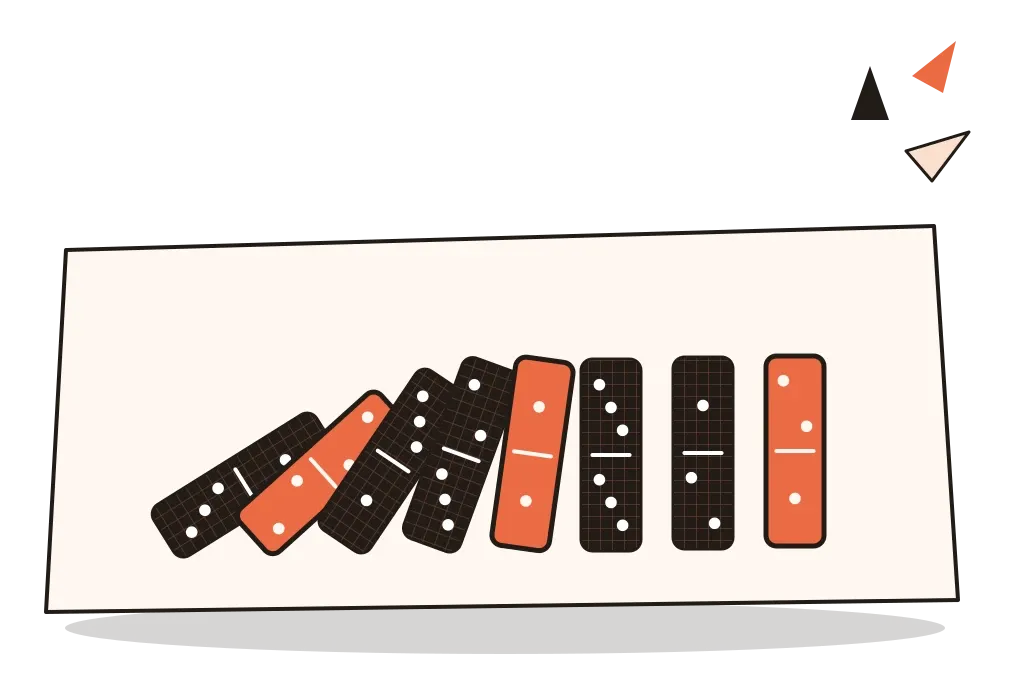
On 7 April 1954, President Dwight Eisenhower held a press conference in Washington while, on the other side of the world, a French army was surrounded at Dien Bien Phu in northern Vietnam. A reporter asked him why Indochina mattered so much to the United States. Eisenhower reached for an image anyone could picture. He described what he called the "falling domino" principle. Set up a row of dominoes, knock over the first one, and the last one will go over very quickly. If Indochina fell to communism, he suggested, its neighbours would follow, one after another, through Southeast Asia and beyond.
The domino theory, as it came to be known, became one of the main justifications for two decades of deepening American involvement in Vietnam. When South Vietnam finally fell in 1975, some neighbours did change too: Laos and Cambodia came under communist governments the same year. But Thailand, Malaysia, Indonesia and the Philippines didn't, and the communist states that were supposed to topple together soon turned on each other. Vietnam invaded Cambodia in 1978, and China fought a short war with Vietnam in 1979.
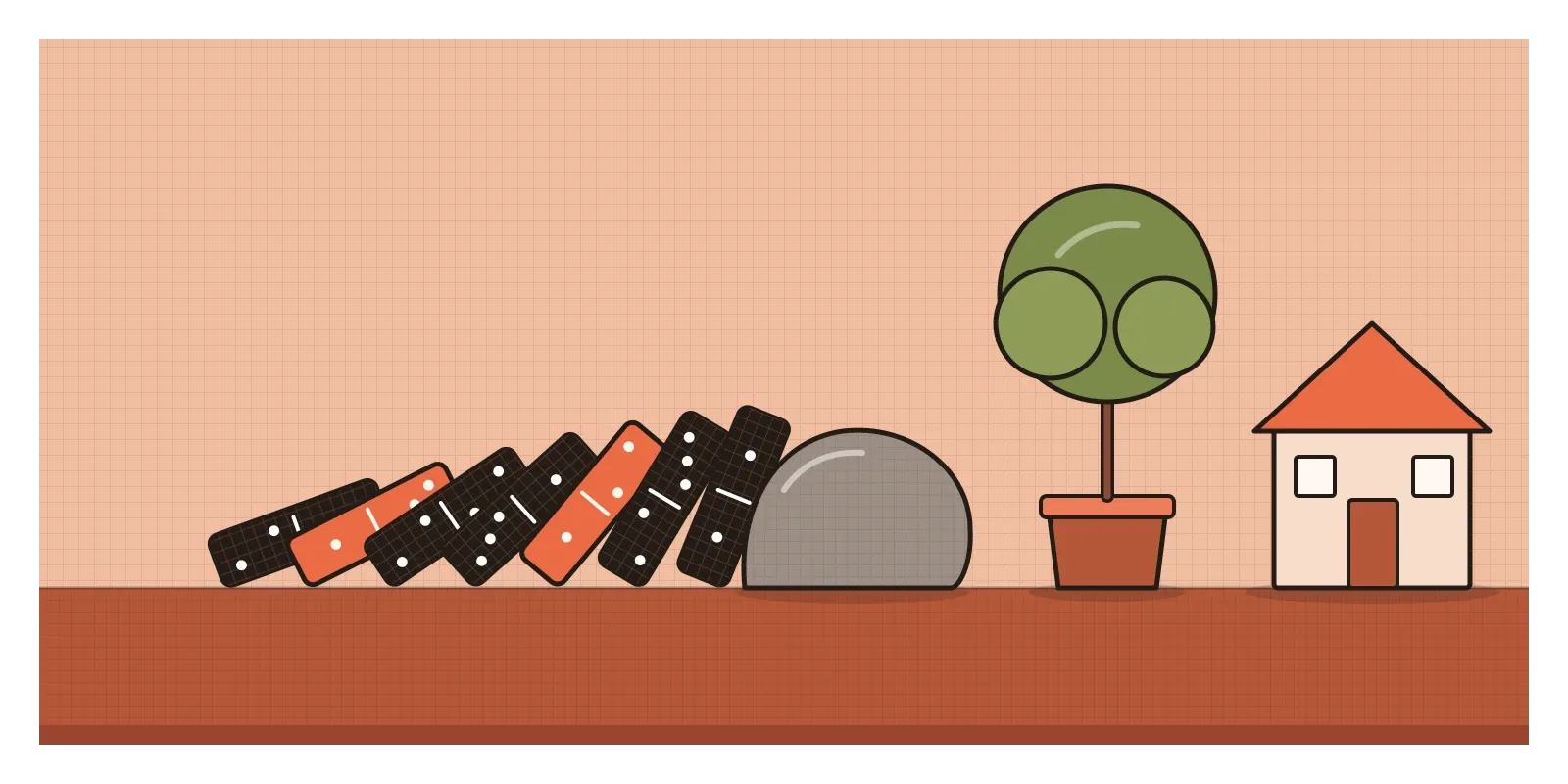
Countries, it turned out, aren't dominoes. Each one had its own history, politics and reasons. The picture of an automatic chain hid every one of those differences, and that's exactly what made it so persuasive.
This is the slippery slope: arguing that a first step will lead, through a chain of further steps, to some extreme outcome, usually a bad one, without good reason to think each step will actually follow. It has no ancient Latin name, but plenty of everyday ones: the thin end of the wedge, the camel's nose under the tent, give them an inch and they'll take a mile. The fallacy isn't in worrying about consequences. It's in treating a chain of possibilities as if it were a chain of certainties.
The thin end of the wedge
The philosopher Douglas Walton, who wrote a whole book on the subject, Slippery Slope Arguments, in 1992, pointed out that the label covers several different kinds of argument. The first is causal: this action will cause that one, which will cause another, until we reach disaster. Eisenhower's dominoes are causal. The second is about precedent: if we allow this case, we'll have no principled way to refuse the next, slightly different one. The legal scholar Frederick Schauer wrote about this kind in a 1985 paper called "Slippery Slopes", noting that judges and lawmakers often worry less about the case in front of them than about the cases it will be cited to justify.
The third kind is conceptual, and it's the oldest. The Greek philosopher Eubulides of Miletus, in the fourth century BCE, is credited with the paradox of the heap. One grain of sand isn't a heap. Adding one grain to something that isn't a heap can't turn it into one. So, by that reasoning, no number of grains ever makes a heap. Because there's no sharp line, the argument says, there's no real difference between the ends.
In a 2003 article in the Harvard Law Review, "The Mechanisms of the Slippery Slope", the law professor Eugene Volokh took a different approach. Instead of asking whether slippery slope arguments are fallacies, he asked how slopes actually work when they do. A first step can change people's attitudes, so the next step seems less radical. It can make the next step cheaper, because the systems and staff are already in place. It can shift a political balance, so that people who opposed the next step now find themselves outvoted. It's a useful lens, because it replaces a vague fear with mechanisms you can look for.
Why the bottom of the hill feels so close
Part of the appeal is simple arithmetic that our minds are bad at. Suppose a slippery slope has five steps, and each one is fairly likely, say an eighty per cent chance of following the one before. The chance of reaching the bottom is not eighty per cent. It's 0.8 multiplied by itself five times, which is about a third. With seven steps, it's about one in five. Yet when we hear a chain of plausible steps, each link borrows confidence from the one before. Research going back to Maya Bar-Hillel's work on compound events in 1973 found that people tend to overestimate the chance of a whole chain of events all happening, because each event looks likely on its own.
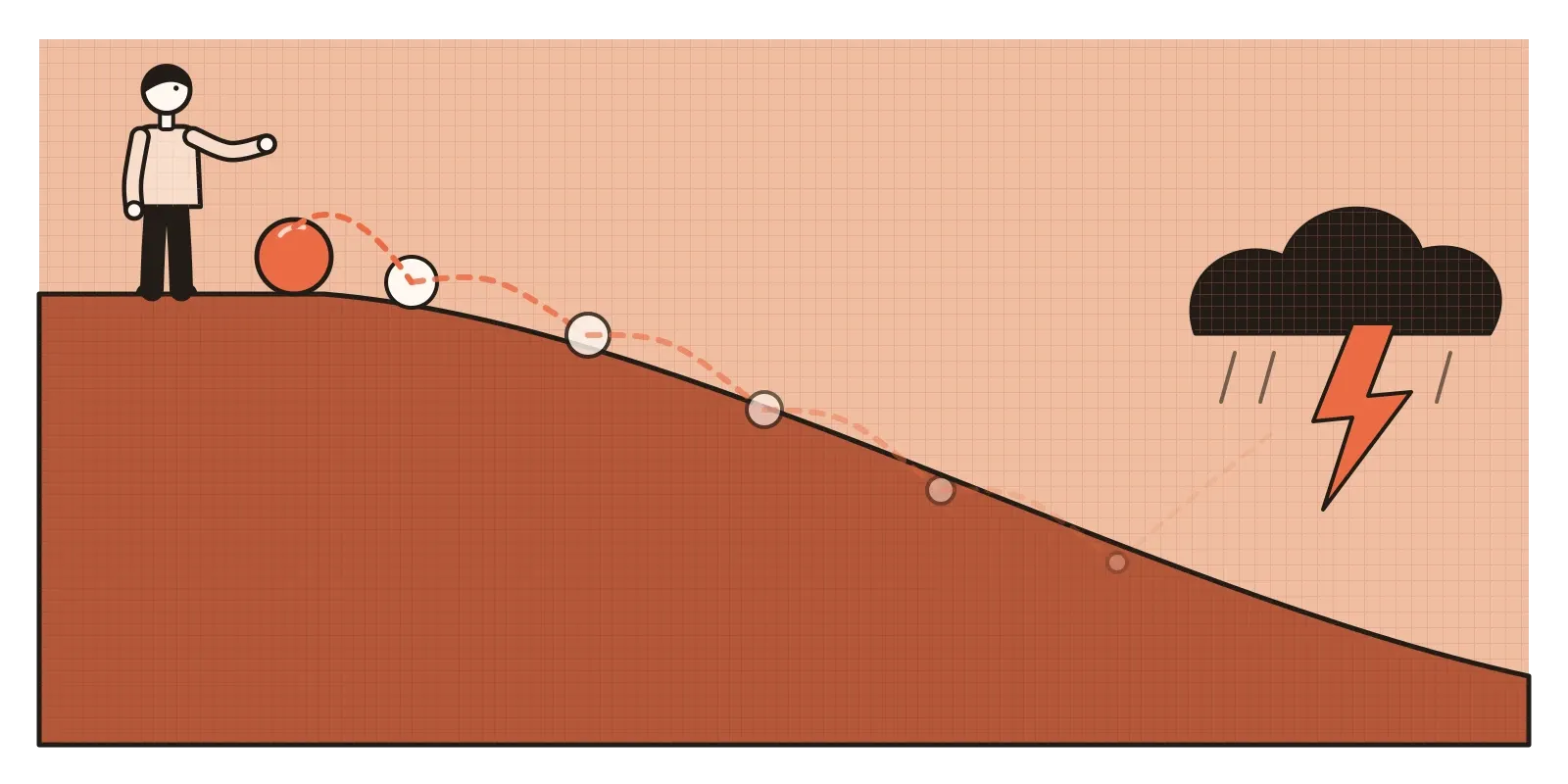
The second reason is vividness. The disaster at the bottom of the slope is usually described in much more detail than the steps leading to it. A concrete, frightening ending is easy to imagine, and things that are easy to imagine feel likely.
The third reason is that we feel losses more sharply than gains, as Daniel Kahneman and Amos Tversky showed in their work on prospect theory. A slippery slope argument puts a large, imagined loss on one side of the scale and a small, real benefit on the other. The real benefit rarely stands a chance.
There's also a more interesting finding. In a 2011 study, the psychologists Adam Corner, Ulrike Hahn and Mike Oaksford tested how persuasive people found slippery slope arguments, and found that their judgements weren't random. People were more convinced when the first step and the feared outcome seemed similar, as if they belonged to the same category. That suggests the argument isn't always irrational. It often rests on a real intuition that similar cases tend to get treated alike. The trouble is that we rarely check whether the intuition holds in the case at hand.
And in meetings, there's a practical reason it's so common. A slippery slope is the cheapest way to say no. You don't need to show that the proposal is bad. You only need to show that something bad could come after it.
The VCR and the Boston strangler
In April 1982, Jack Valenti, the head of the Motion Picture Association of America, testified before a committee of the United States Congress about a new machine that was starting to appear in American homes. The videocassette recorder let people record films and television programmes and watch them later. Valenti argued that this would devastate the film industry. In one of the most quoted lines in the history of lobbying, he said the VCR was to the American film producer "as the Boston strangler is to the woman home alone".
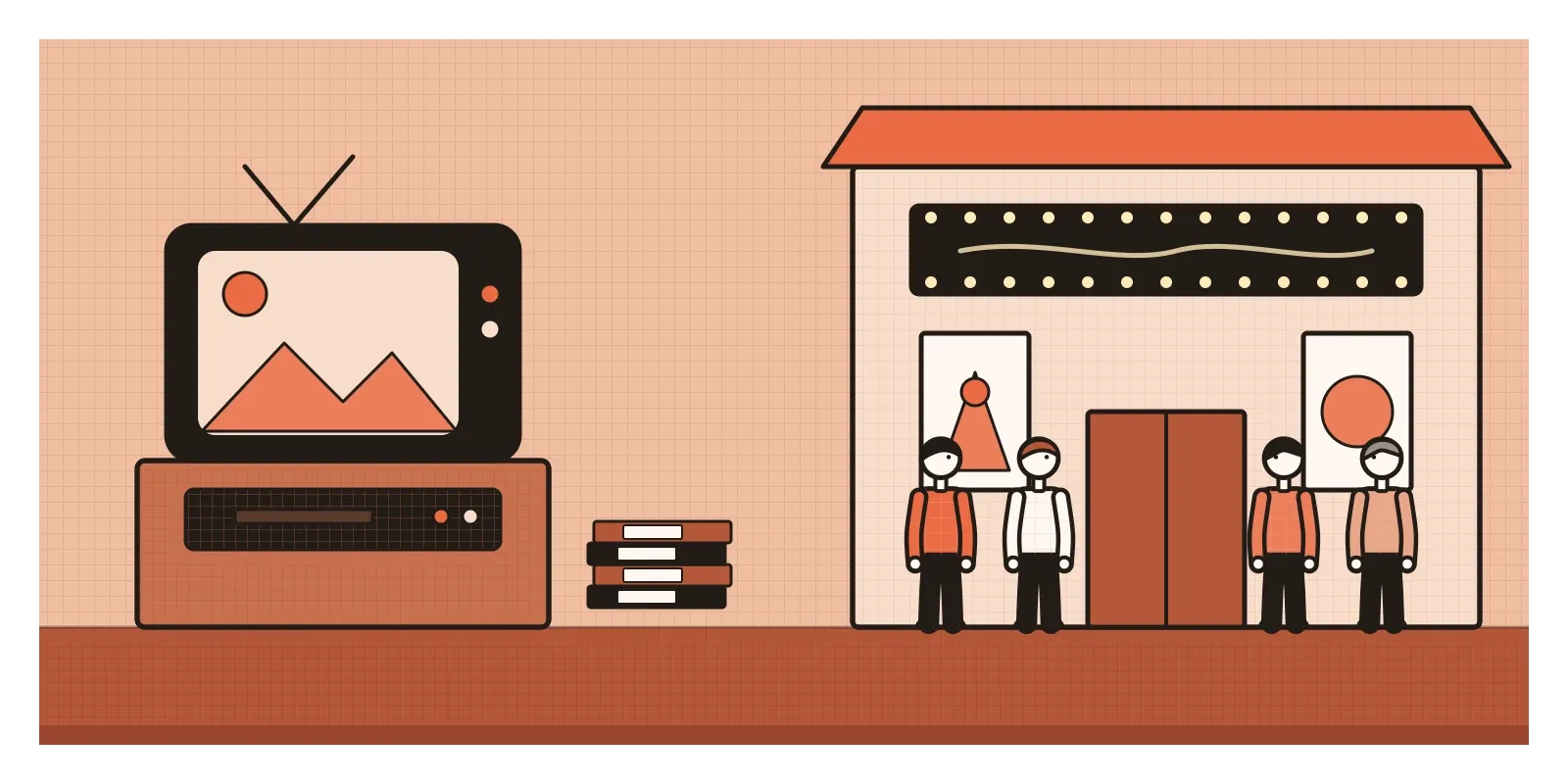
The argument was a slope. People would record films at home, then stop going to cinemas, then stop paying for films at all, and the studios that made them would collapse. Universal and Disney had already sued Sony, the maker of the Betamax recorder, and in January 1984 the case reached the Supreme Court. By a five to four vote, the court ruled that recording a broadcast to watch at a more convenient time was fair use.
The slope didn't slip. Instead, the VCR created an enormous new market for selling and renting films on tape, and by the late 1980s home video was earning the studios more than cinema tickets did. Each step in Valenti's chain was imaginable. What he missed was that the people at each step had choices, and that the industry could make new ones too. The same argument has been made about almost every new medium since, from recordable CDs to streaming, and each time the industry it was meant to protect adapted rather than fell.
The button that would end the design system
Picture a team that maintains the design system for a large banking app. A product team asks for an exception. For a festival campaign, they want a bigger primary button with an illustration beside the label, used on one screen for six weeks.
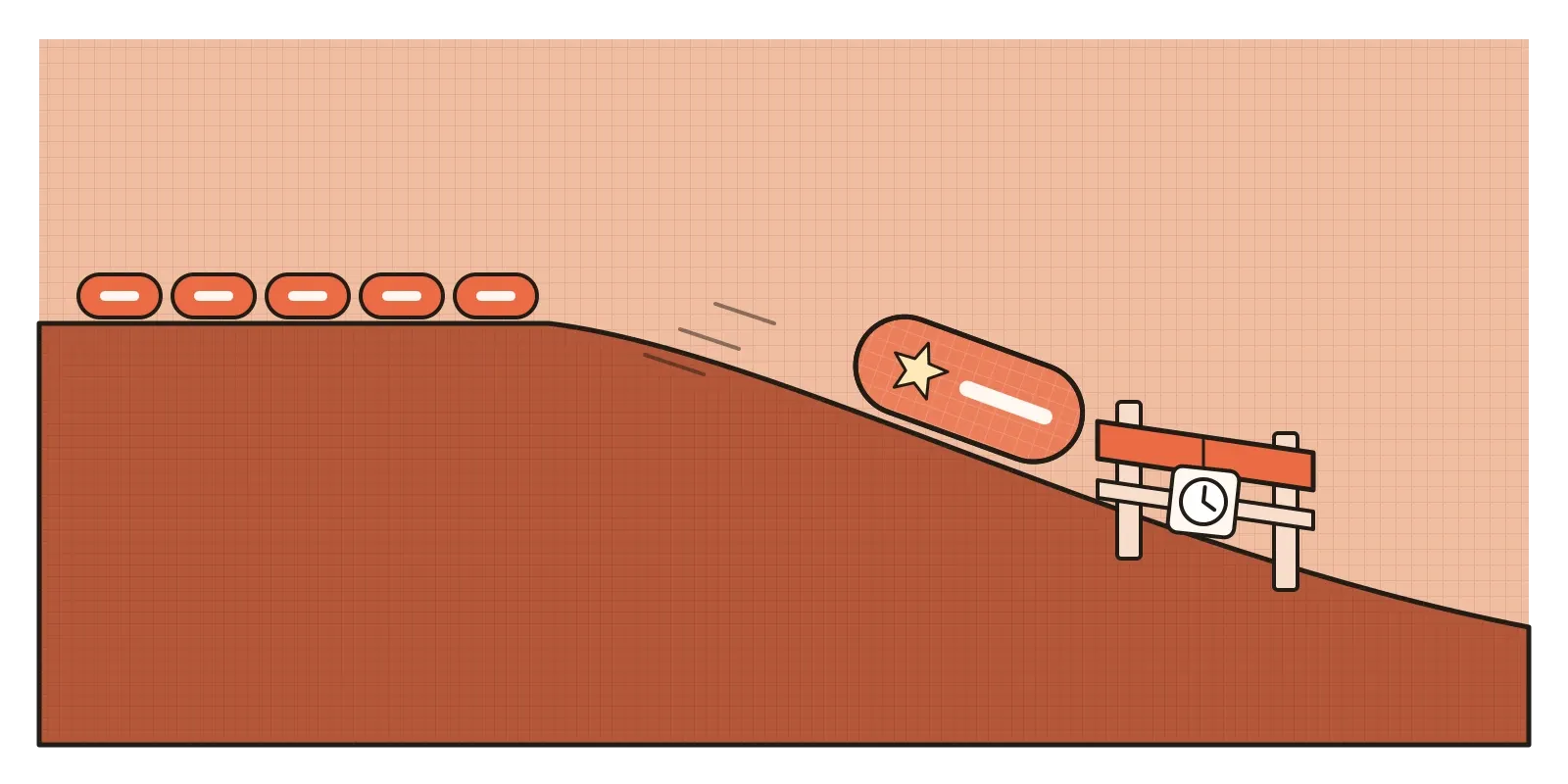
The design system lead says no. "If we allow this, every team will want their own button. In six months we'll have forty variants, nothing will be consistent, and the whole system will be meaningless." Heads nod around the table. Nobody wants to be responsible for the end of the design system.
Now write the chain out. Step one: this team gets an exception. Step two: other teams hear about it and ask for their own. Step three: the design system team agrees to all of them. Step four: the variants spread until consistency collapses. Step one is certain. Step two is likely. But step three isn't something that happens to the design system team. It's something they decide. The slope only exists if they stop making decisions at the very point where they have the most control.
The honest version of the meeting names the real risk, which is precedent, and builds a brake. Exceptions are allowed, but each one has an owner, a reason and an expiry date, and they're logged in one place where everyone can see them. If three teams ask for the same kind of exception, that's a sign the system is missing something, and the variant gets designed properly as a component. The festival button ships, the slope gets a guardrail, and the design system learns something about what its users actually need.
When the slope really is slippery
Some slopes are real, and pretending otherwise is its own mistake. Volokh's mechanisms describe things that genuinely happen. India's Aadhaar programme is a case many people point to. When the identity scheme began issuing numbers in 2010, it was presented as voluntary, a way to help people prove who they were when claiming benefits. Over the following years, Aadhaar was linked to more and more services, from ration cards to tax filing, and by 2017 banks and mobile operators were asking customers to link their accounts and numbers to it. Critics called this function creep: each step was small, and each made the next easier, because the infrastructure was already in place. In 2017 the Supreme Court recognised privacy as a fundamental right, and in its 2018 Aadhaar judgement it upheld the scheme for welfare and tax purposes but ruled that it couldn't be made compulsory for bank accounts, mobile connections or school admissions.
The story shows both halves of the idea. Slopes can slip when each step lowers the cost of the next and nobody is assigned to stop it. And they can be stopped, when there's a brake, in this case a court, with the power to draw a line.
Technology companies make serious slope arguments too. In 2016, when the FBI asked a court to order Apple to write software to unlock an iPhone used by one of the attackers in the San Bernardino shooting, Apple's chief executive Tim Cook published an open letter arguing that such a tool, once it existed, could be used on any iPhone, and that the request would set a precedent for many more. That's a precedent argument with a clear mechanism, and people could debate it on its merits. The test is whether an argument names the mechanism that would carry us from one step to the next, and whether anything stands in the way.
How I try to catch it
The first thing I do is write the chain down, one step per line. A slope that sounds convincing in a sentence often looks thin on paper. Then I put a rough probability beside each step and multiply. I don't trust the numbers, but the exercise always shows that the end of the chain is less likely than it felt.
The second is to ask who decides each step. If the next step depends on a choice that we, or someone else, will make, it isn't a slope. It's a decision we haven't made yet.
The third is to look for the brake. What would stop this at step two or step three? A review, an expiry date, a limit, a rule that's written down? If there's no brake, the person warning about the slope may be right, and the useful response is to build one rather than to dismiss them.
Eisenhower's image worked because dominoes have no choice about whether to fall. Countries did, and so do teams, companies and courts. When someone shows me a row of dominoes, I try to remember that real people are standing at each one, and to ask what they'd do. In the next post, on hasty generalisation, I'll look at a different kind of leap, from a handful of cases to a confident rule about everyone.
Further reading: Douglas Walton, Slippery Slope Arguments (1992) · Eugene Volokh, "The Mechanisms of the Slippery Slope" (2003) · Frederick Schauer, "Slippery Slopes" (1985) · Adam Corner, Ulrike Hahn and Mike Oaksford, "The psychological mechanism of the slippery slope argument" (2011) · Reetika Khera (ed.), Dissent on Aadhaar (2019)
The question to askWhat would stop it at the next step?