The Composition Fallacy
Why a collection of excellent parts doesn't promise an excellent whole, in teams, economies or apps.
The Composition Fallacy
A team of stars that lost to Puerto Rico
In August 2004, the United States men's basketball team walked onto the court in Athens for their first game of the Olympics. Since professional NBA players had been allowed into the Olympics, the American teams had been almost untouchable. The 1992 "Dream Team" won gold so comfortably that opponents asked for photographs with them, and the teams of 1996 and 2000 won gold too. The 2004 squad had been put together from some of the best players in the world, including Tim Duncan, Allen Iverson and three young players who would go on to become legends of the game, LeBron James, Dwyane Wade and Carmelo Anthony.
They lost their opening game to Puerto Rico by nineteen points. Later in the tournament they lost to Lithuania, and then, in the semi-final, to Argentina. They went home with bronze. Commentators pointed to the reasons. The team had been assembled only weeks before the Games, after several stars declined to play. The players hadn't learned to play together, and the international game, with its different rules and its emphasis on passing and outside shooting, punished a group built around individual brilliance.
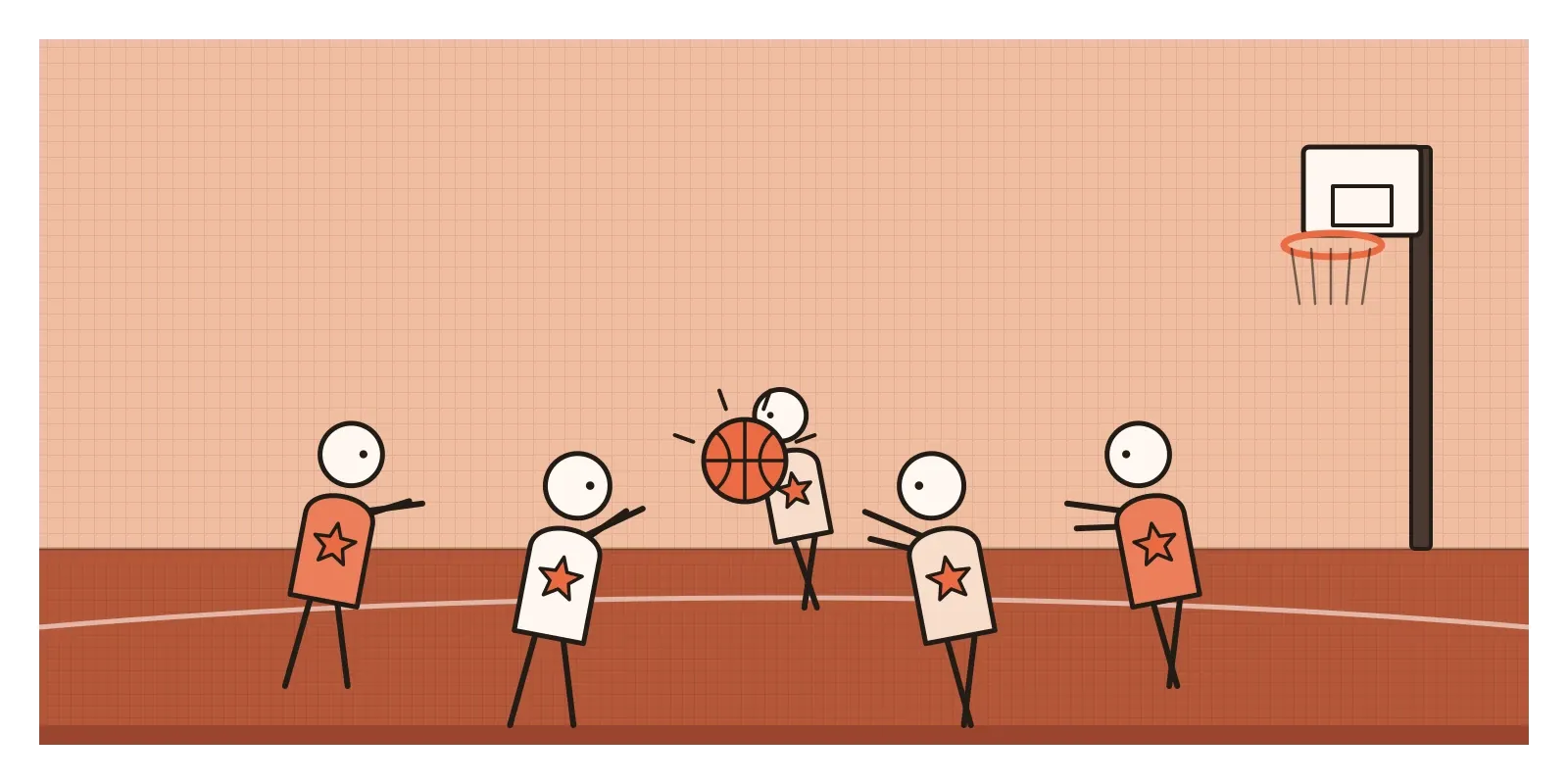
The lesson was absorbed. USA Basketball asked players to commit to the national team for several years, appointed Mike Krzyzewski as coach, and built a squad that practised and played together over three summers. In Beijing in 2008, it won gold. Nobody suddenly discovered better players. They built a better team.
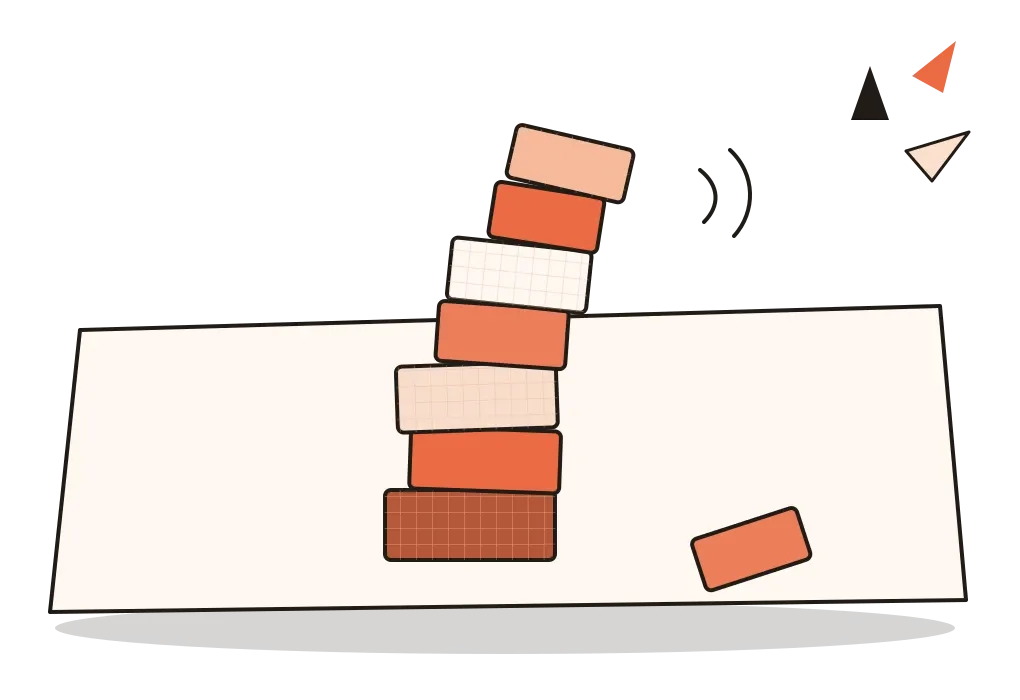
The assumption that sank the 2004 team has a name. The composition fallacy is the belief that because every part of something has a property, the whole must have it too. Every player is excellent, so the team will be excellent. Every brick is light, so the wall will be light. Sometimes that works. Often it doesn't, and the mistake lies in assuming it without checking.
From Aristotle's words to the economist's farmer
The names go back to Aristotle, who listed "combination" and "division" among the fallacies in On Sophistical Refutations. His examples were about words. Combining words in the wrong way could change a sentence's meaning: "a man can walk while sitting" is true if it means a seated man is able to walk, and false if it means he can walk and sit at the same moment. Medieval logicians turned these into the fallacia compositionis and the fallacia divisionis, and over the centuries the ideas shifted towards the version we use today, which is about parts and wholes rather than words. Its mirror image, the division fallacy, is the subject of the next post.
Economists made the part-to-whole version famous. In 1714, Bernard Mandeville's poem The Fable of the Bees described a prosperous hive full of vain, spendthrift bees. When the bees reform and become frugal and honest, the hive's trade collapses. Mandeville was being provocative, but John Maynard Keynes later took the idea seriously. In a slump, he argued, saving is sensible for any one household, but if every household saves at once, spending falls, incomes fall, and people may end up unable to save more at all. This came to be called the paradox of thrift.
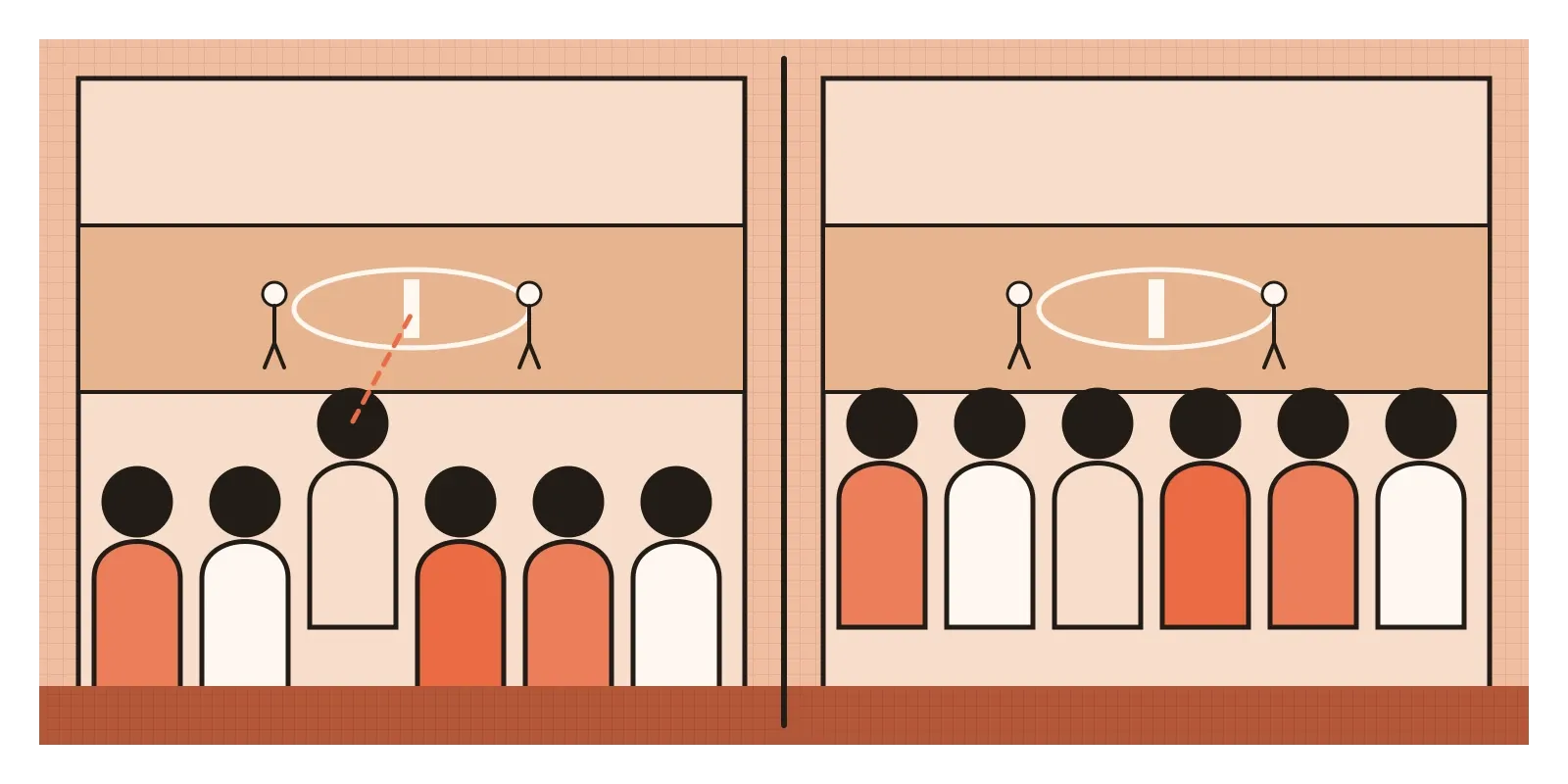
Paul Samuelson's hugely influential textbook Economics, first published in 1948, listed the fallacy of composition among the most common errors in economic thinking. The examples that textbooks still use are easy to picture. If one person stands up at a cricket match, they see better. If everyone stands up, nobody sees better, and everyone's legs hurt. If one farmer has a bumper harvest, they earn more. If every farmer has a bumper harvest, prices may fall so far that farmers as a group earn less.
What all these examples share is that the parts aren't independent. They compete for the same view, the same buyers, the same money. Once the parts interact, the behaviour of the whole has to be worked out, not assumed.
Why the whole feels like a simple sum
The main reason we fall for composition is that breaking things into parts is how we cope with complexity. Organisations split goals across departments, products split into features, and features split into components. Each part gets an owner and a metric, and it's natural to believe that if every part hits its number, the whole will hit its number too.
Eliyahu Goldratt built a whole business novel around this mistake. In The Goal (1984), a plant manager discovers that his factory is in trouble precisely because every machine is being run at maximum efficiency. The machines upstream of a bottleneck pile up unfinished work that the slowest machine can't process, so inventory grows, costs rise and orders still ship late. Making each part as good as possible, measured locally, made the whole worse. Goldratt called the alternative the theory of constraints: find the part that limits the system, and organise everything else around it.
Research on teams points the same way. In 2014, Roderick Swaab, Adam Galinsky and colleagues published a study called "The too-much-talent effect". Looking at international football and NBA basketball, they found that adding top talent helped a team up to a point, and then began to hurt it. In baseball, where players depend less on each other from moment to moment, the downturn didn't appear. Their explanation was coordination. Stars need others to pass, defend and do the unglamorous work, and a team full of stars has fewer people willing to.
There's also a simple arithmetic trap. Imagine a process made of ten steps, each of which works 95 per cent of the time. Each step looks reliable. Chained together, the whole succeeds only about 60 per cent of the time. Anyone who has worked on an agentic AI system, as I did at Rocketium, meets this arithmetic quickly, because an agent that plans, calls tools and checks its work is exactly that kind of chain.
When every farmer plants tomatoes
India offers a painful, recurring version of Samuelson's farmer. Tomatoes and onions are grown by millions of small farmers, are hard to store for long, and swing wildly in price. In the summer of 2023, tomato prices in many Indian cities climbed past a hundred rupees a kilo, and the government stepped in to sell tomatoes at subsidised prices. High prices send a clear signal to every grower who sees them: plant more of this.
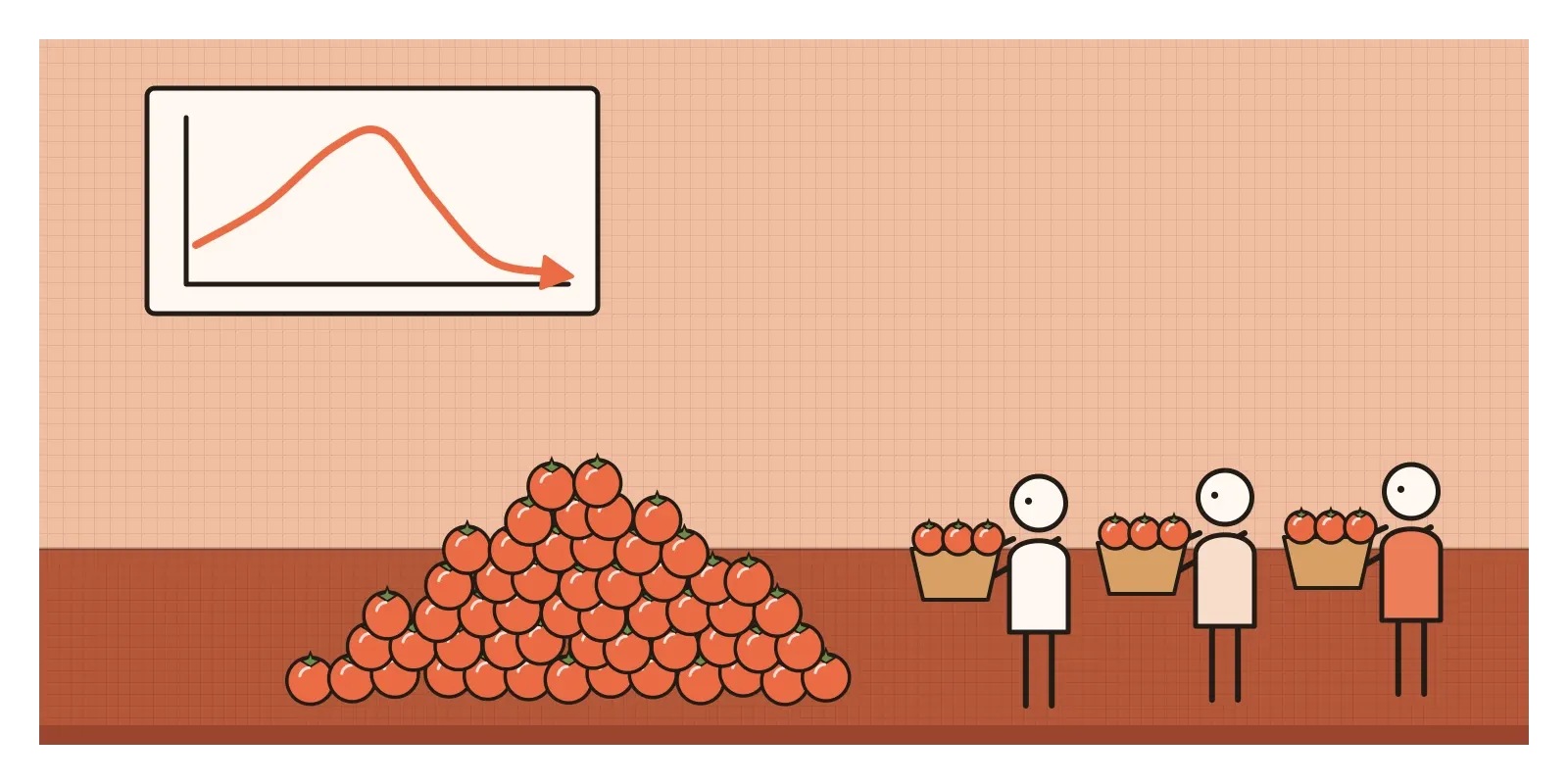
For any one farmer, following that signal is sensible. But when a great many farmers follow it at once, a few months later the markets are flooded and prices collapse. Over the years there have been repeated reports from Maharashtra, Karnataka, Andhra Pradesh and elsewhere of farmers dumping tomatoes or onions by the roadside, because the price on offer didn't cover the cost of picking them and carting them to market. Economists have a name for this boom-and-bust rhythm, the cobweb cycle, and it's driven by exactly the composition problem. What is wise for each grower, judged alone, is not wise for growers as a whole.
It would be wrong to blame the farmers. They are making reasonable choices with the information they have. The fallacy belongs to anyone, a planner, a trader, an advisor, who reasons that because the choice is good for each farmer, the outcome will be good for all of them. That's why the remedies people propose for this problem, such as better storage, processing, price information that shows what others are planting, and steadier procurement, all work at the level of the whole rather than the part.
Five good notifications, one bad app
Picture a fitness app with five product teams. Each team owns a goal. One wants more workouts logged, one wants more people reading articles, one wants more referrals, one wants more people opening the weekly report, and one wants more purchases in the shop. Over a quarter, each team adds a push notification and tests it properly, against a control group that doesn't get it. All five tests win. Each notification lifts its own metric.
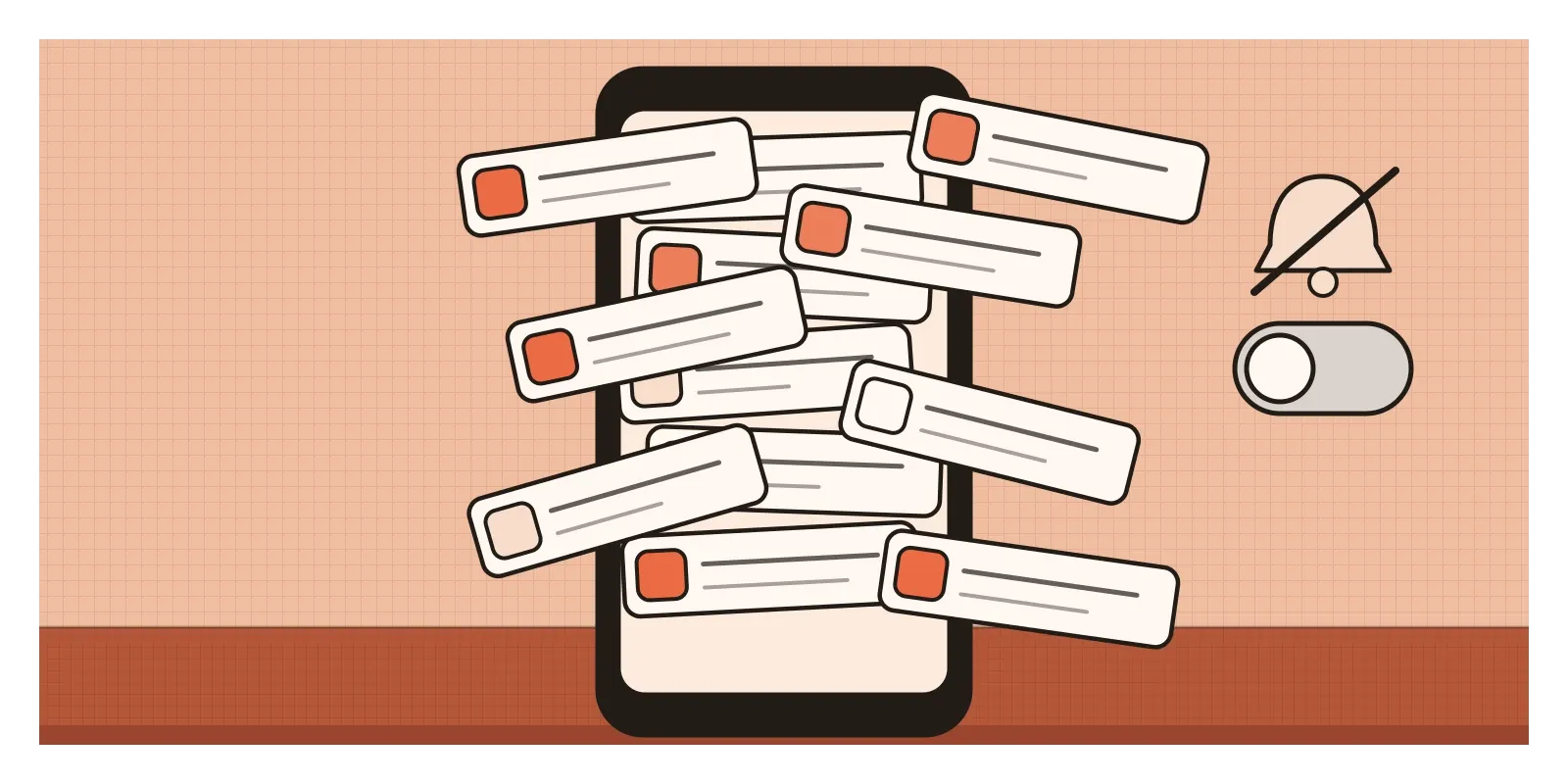
At the quarterly review, the conclusion seems obvious. Every notification works, so the notification strategy works. All five ship to everyone. Two months later, the number of people turning off notifications entirely has jumped, uninstalls are up, and the whole app's long-term retention has dipped.
Nothing was wrong with any single test. Each one measured its notification in isolation, while the other four were absent or held constant. Real users don't experience notifications in isolation. They experience a phone that buzzes five times a day from one app, and the thing they judge isn't each message but the app as a whole. The parts were competing for one shared, limited resource: the user's patience.
The honest version starts by treating the whole as something that needs its own test. Keep a holdout group that receives none of the new notifications, and compare it with the group that gets all of them, on the measures that belong to the whole app: opt-outs, uninstalls, retention after months rather than days. Set a shared notification budget so that teams have to compete for space instead of each assuming it's free. The same thinking applies to design systems. Every component can pass its accessibility checks and the page built from them can still fail, with five competing primary buttons or a focus order that jumps around the screen.
When the parts really do add up
Not every move from parts to whole is a fallacy. Some properties really do compose. If every part of a table is made of teak, the table is made of teak. If every brick weighs two kilos, a wall of a thousand bricks weighs about two tonnes. If every link in a chain can hold a hundred kilos, the chain can hold a hundred kilos. Weight, cost, material and the strength of things connected in a line behave this way, because they're properties of the parts that simply add up or carry through.
The trouble starts with properties that depend on how the parts are arranged and how they affect each other. Beauty, usability, teamwork, safety, profitability and the health of an economy are all like this. A beautiful typeface, a beautiful photograph and a beautiful colour can still make an ugly poster together, which is really what the posts on unity and variety and on hierarchy were about. The test I use is simple: does this property belong to each piece on its own, or does it come from the relationships between the pieces? If it's the second, the whole has to be judged as a whole.
How I try to catch it
The first question I ask is whether the property adds up or interacts. Cost adds up. Attention, screen space, user patience and trust interact. When the property interacts, I stop treating the parts' results as evidence about the whole.
The second habit is to look for the shared thing the parts are competing for. In the farmers' case it's buyers. In the app it's attention. In the 2004 team it was the ball, since only one person can shoot at a time. Once I can name the shared resource, I can usually see why the parts' successes might not combine.
The third is to test the whole on purpose. A usability session that walks through the entire journey, not just the new screen. A holdout group for a bundle of features, not just for each one. A critique where the team looks at the full flow printed on a wall, the way the post on critique described.
The 2004 team was made of brilliant parts. What it didn't have was time to become a whole, and the team that won in 2008 was built by people who had learned that the difference matters. In the next post, I'll turn the mistake around: the division fallacy, which assumes that what's true of the whole must be true of every part.
Further reading: Paul Samuelson, Economics (1948) · Eliyahu Goldratt and Jeff Cox, The Goal (1984) · Roderick Swaab and colleagues, "The too-much-talent effect" (2014) · Bernard Mandeville, The Fable of the Bees (1714) · John Maynard Keynes, The General Theory of Employment, Interest and Money (1936)
The question to askHave we tested the whole, or only the parts?