Belief Perseverance
Why a belief can outlive the very evidence it was built on, and what it takes to let it go.
Belief Perseverance
A paper that was withdrawn, and a fear that wasn't
On 28 February 1998, The Lancet published a short paper by the doctor Andrew Wakefield and twelve colleagues at the Royal Free Hospital in London. It described twelve children with developmental problems, most of them diagnosed with autism, who also had bowel symptoms. In eight of them, the paper said, parents linked the start of their child's problems to the MMR vaccine, which protects against measles, mumps and rubella. The paper itself said it had not proved any link. But at a press conference to launch it, Wakefield suggested that parents use separate single vaccines instead of the combined one until more was known.
MMR uptake in Britain fell from over 90 per cent to around 80 per cent by the early 2000s. Meanwhile, the evidence collapsed. Large studies, including one following more than half a million children in Denmark, found no link between the vaccine and autism. The journalist Brian Deer revealed that Wakefield had been paid through lawyers preparing a case against vaccine makers, and that details of the children's histories had been misrepresented. Ten of his co-authors withdrew the paper's interpretation in 2004. In 2010, The Lancet fully retracted the paper, and Britain's General Medical Council struck Wakefield off the medical register.
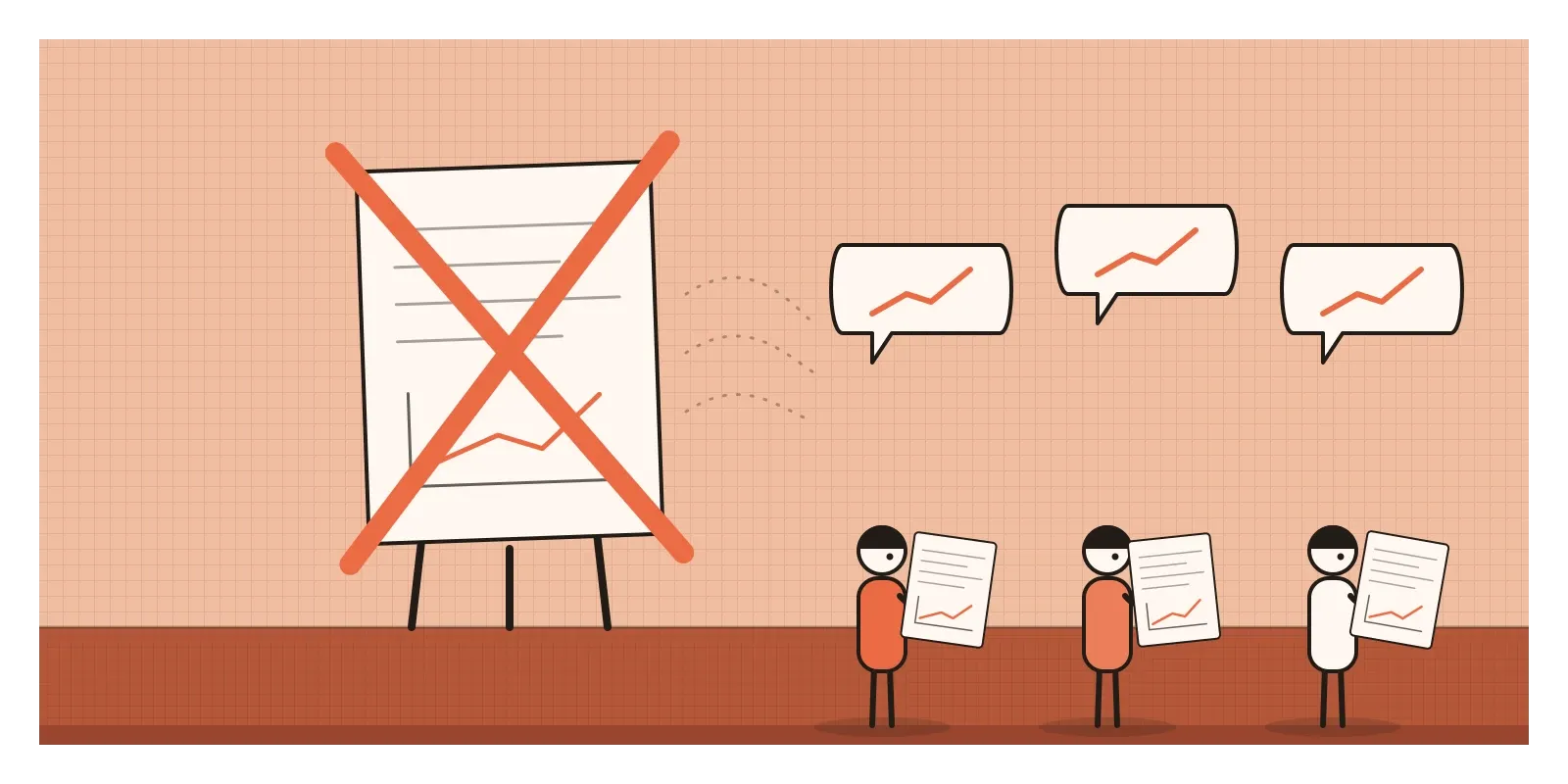
The fear didn't leave with the paper. Years after the retraction, surveys in several countries still found many parents worried that vaccines might cause autism. In 2008, partly because so many children had missed their jabs, health officials declared measles endemic again in England and Wales, fourteen years after its spread had been halted. The original evidence had been withdrawn, discredited and shown to be dishonest. The belief it created stood on its own.
This is belief perseverance: the tendency to keep a belief after the evidence that produced it has been discredited. It's related to confirmation bias, which I wrote about earlier in this series, but it isn't the same. Confirmation bias is about how we look for and read new evidence. Belief perseverance is about what's left standing when the old evidence is taken away. It's what happens to a mind after the correction.
Told it was fake, believed it anyway
In a 1975 study at Stanford, Lee Ross, Mark Lepper and Michael Hubbard showed students pairs of suicide notes and asked them to pick which were real and which had been invented. After each guess they were told whether they were right. The feedback was fake. Some students were told they'd done brilliantly, about 24 out of 25, and others that they'd done poorly, about 10, against a supposed average of 16. Then came a thorough debriefing: the experimenters explained that the scores had been made up in advance.
It made surprisingly little difference. Asked afterwards how good they really were, students who had been told they were brilliant still rated themselves higher than those told they were poor. Even observers who had watched, and heard the debriefing, kept the false impression.
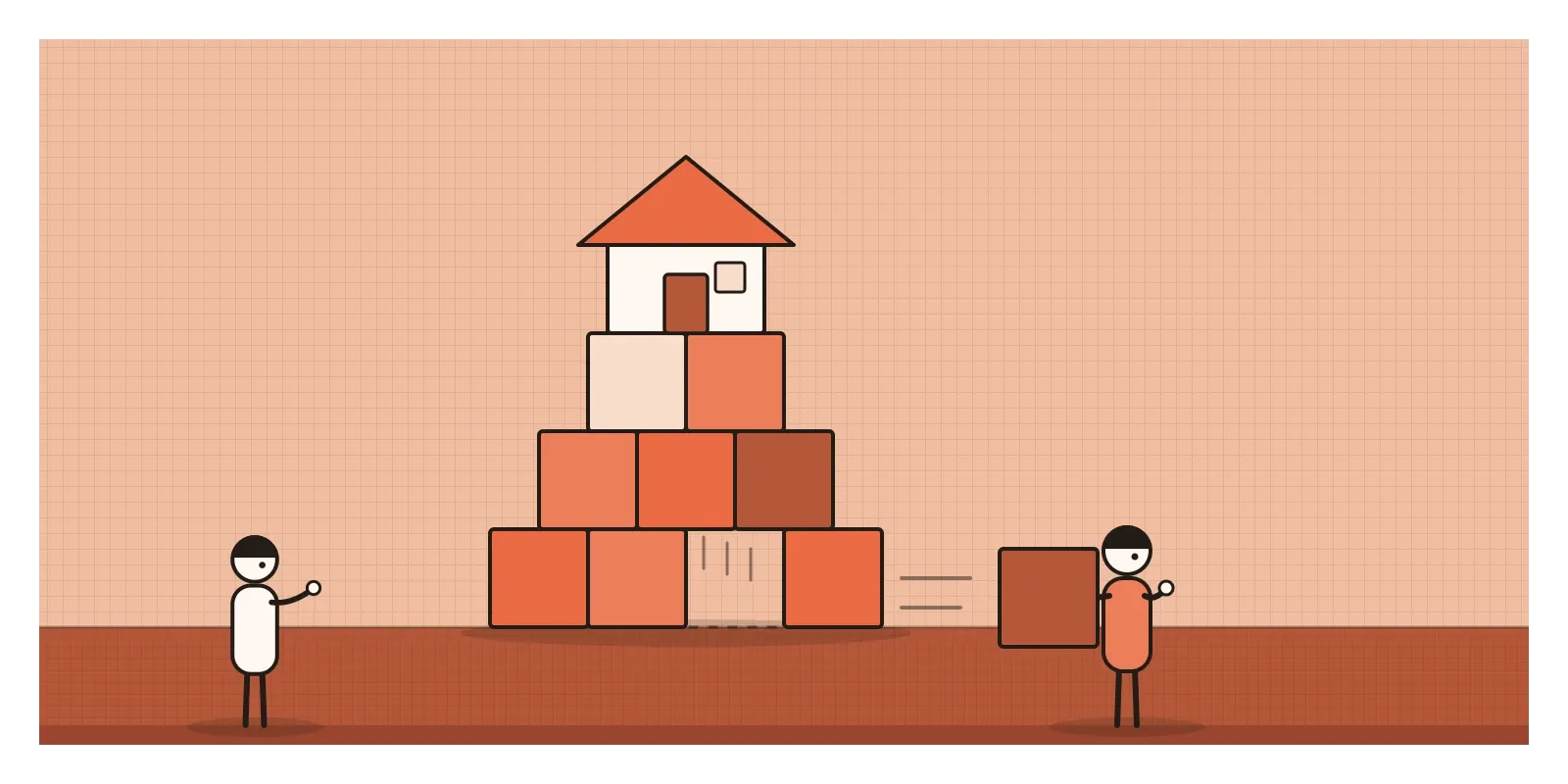
In 1980, Craig Anderson, Lepper and Ross showed how it works. Participants read two case studies suggesting that firefighters who liked taking risks made either better firefighters or worse ones. Some were asked to write a short explanation of why the relationship might be true. Then everyone was told the case studies were invented. The belief survived the debriefing, and it survived best in people who had written an explanation. Once you've built a reason for something, the reason no longer needs the evidence. Later studies found the reverse works too: asking people to explain why the opposite might be true weakened the effect.
In 1994, Hollyn Johnson and Colleen Seifert found something similar with news. People read a series of reports about a warehouse fire. An early report said that oil paint and pressurised gas cylinders had been stored in a cupboard where the fire began. A later one corrected this: the cupboard had been empty. People remembered and accepted the correction, but when asked about the thick smoke and explosions, many still explained them with the paint and gas. Removing a cause left a gap in the story, and the old cause flowed back in. Only when the correction offered another explanation, such as signs of arson, did the old one lose its grip.
This broad finding, that corrections reduce false beliefs but rarely erase them, has held up well. One dramatic version hasn't. In 2010, Brendan Nyhan and Jason Reifler reported a backfire effect, where correcting people on politically charged claims sometimes made them believe the false claim more. But when Thomas Wood and Ethan Porter tested corrections on more than ten thousand people across fifty-two issues, they found almost no backfire at all, and Nyhan has since described it as rare. Corrections work. They just never work completely.
Why a story outlives its evidence
Our beliefs aren't stored as a list of facts with sources attached. They're stored as explanations, little models of how things work. When a piece of evidence arrives, we build it into a model. When it's withdrawn later, the model doesn't automatically fall down. Often we can't even remember where a belief came from, only that it makes sense.
India had a lighter version in November 2016, after the old ₹500 and ₹1,000 notes were withdrawn. Messages claimed that the new ₹2,000 note carried a tiny GPS chip to track hoarded cash. The Reserve Bank of India said there was no such chip, but the story was satisfying, because it explained how hoarders would be caught, and it kept circulating long after it had been denied.
There are good reasons for the mind to work this way. A belief that flipped every time one fact was challenged would be useless to act on. Most beliefs rest on many strands of evidence, and losing one strand shouldn't topple them. The shortcut, keep the model unless there's a strong reason to drop it, is usually right. Its weakness is that it can't tell a belief resting on many strands from one that rested on a single strand, the one that's just been cut.
An operation that outlived its trial
Doctors call it a medical reversal when a common treatment, properly tested, turns out not to work. One of the clearest involves the knee. For years, many people with osteoarthritis of the knee had keyhole surgery to wash out and tidy the joint. Patients reported feeling better, and the reasoning seemed obvious: clear out the debris and the pain should ease. In 2002, Bruce Moseley and colleagues at a veterans' hospital in Houston published a trial in which 180 patients were randomly assigned to one of two real versions of the operation or to a sham, in which the surgeon only made small cuts in the skin. Over two years, the patients who had the sham surgery did as well as those who had the real thing.
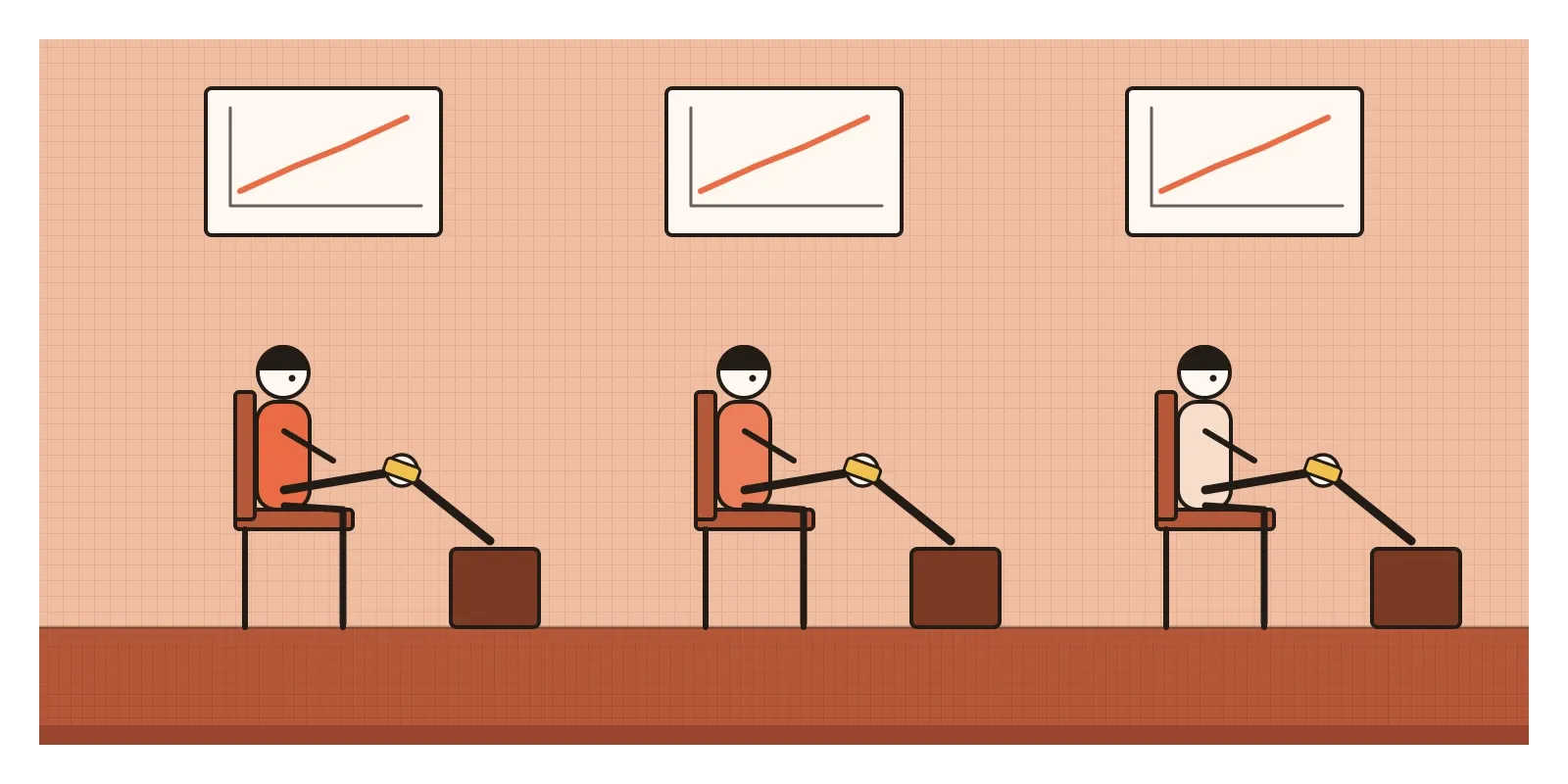
Later trials in Canada and Finland found much the same, and in 2017 an international panel writing in The BMJ strongly recommended against keyhole surgery for nearly everyone with degenerative knee disease. The operation did become less common, but slowly, and it stayed routine in many places long after the first trial. Surgeons gave reasons: the trial patients weren't like their own patients, their own technique was better, they had seen people improve. Those reasons weren't foolish. But the improvement they had seen was exactly what the sham group showed, and the explanation that had made the operation feel right, cleaning the joint, was still standing after the evidence for it had gone.
That's why I think of belief perseverance as a maker's bias as much as a public one. Experts build richer explanations than anyone else, and if Anderson's finding holds, the richer the explanation, the longer a belief survives its evidence.
Picture a persona built on a counting error
Picture a team building a presentation app. Early in the year, the analytics dashboard shows that 60 per cent of active users export a PDF every week. That number shapes a lot. The researcher builds a persona around it, an agency designer who sends polished decks to clients. The roadmap fills with export features. A few interviews seem to fit, and in planning meetings the team explains the number to each other. Of course people export. Decks are made to be sent.
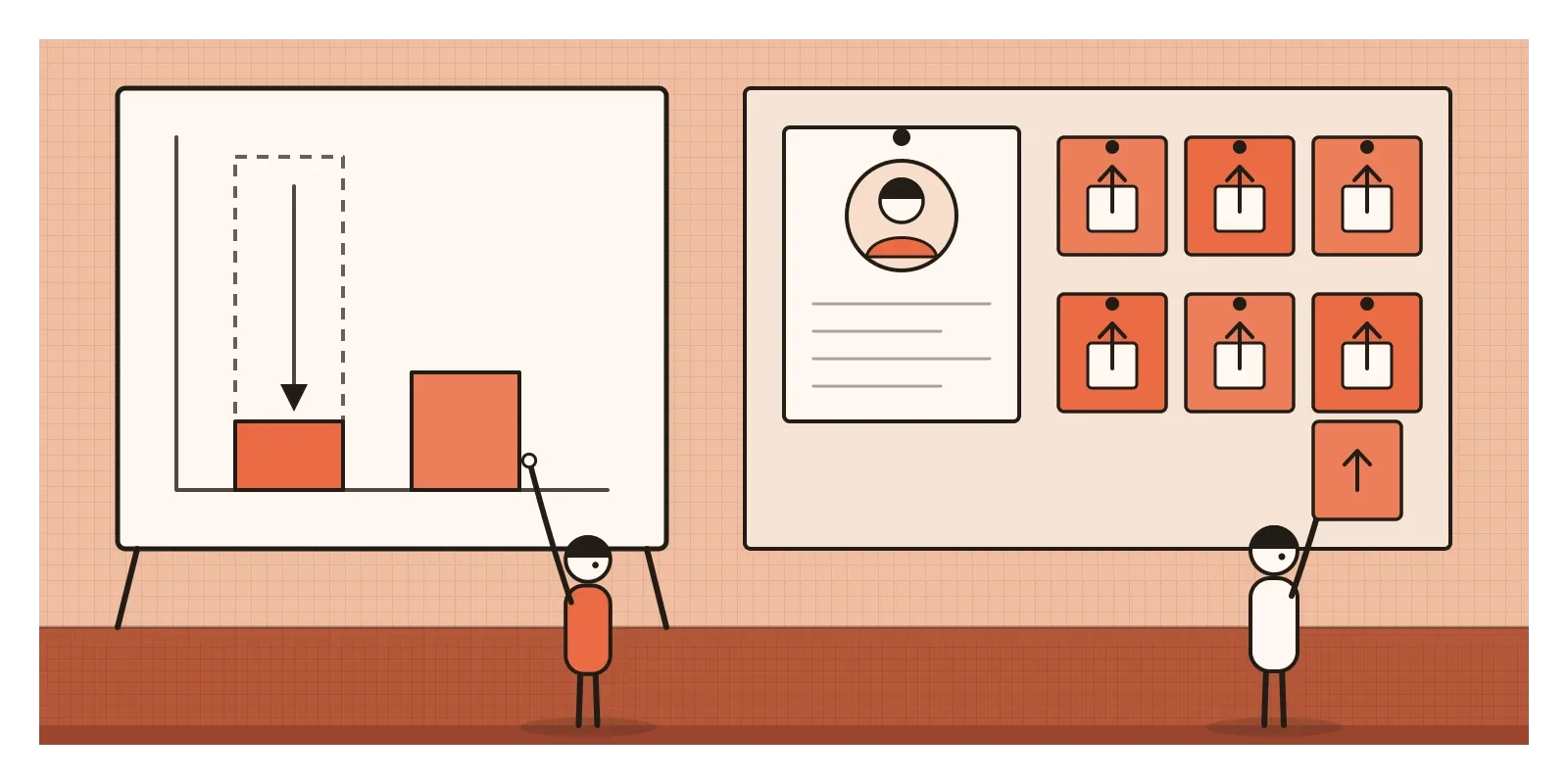
In June, a data engineer finds a bug. The export event was also firing whenever someone opened the preview screen. The real figure is closer to 12 per cent. Everyone accepts the correction, the dashboard is fixed, and a note goes round. Then remarkably little changes. In the next planning meeting, someone says the number was wrong but the insight still holds. The persona stays on the wall. The export features stay on the roadmap, now justified by those few interviews, though nobody had chosen them to test the idea. The team's explanation, decks are made to be sent, has outlived the number that started it.
The better version treats a correction as a reason to retrace, not just to update a figure. The team lists every decision that rested on the 60 per cent and asks of each one: if we'd seen 12 per cent in January, would we have made this? Then they look for what the corrected data does explain. If most active users don't export, what are they doing? Perhaps presenting live, or sharing a link. That new explanation matters, because, as Johnson and Seifert showed, a gap in the story pulls the old belief back in unless something fills it. Some export features may survive on new evidence of their own. The persona probably needs rewriting.
When holding on is the right thing to do
Not every belief that survives a challenge is a bias. In the 1840s, astronomers found that Uranus wasn't moving quite as Newton's laws predicted. They could have concluded that Newton was wrong. Instead, Urbain Le Verrier held on to the theory and calculated where an unseen planet would have to be to explain the wobble. In 1846, Johann Galle pointed a telescope at that spot and found Neptune. Holding on was exactly right.
Le Verrier tried the same move with an anomaly in Mercury's orbit and predicted another hidden planet, Vulcan. It was never found, and in 1915 Einstein's general relativity explained the anomaly instead. This time, Newton really did need replacing. The same tenacity was right once and wrong once.
So the useful question isn't whether a belief survives contrary evidence. It's what the belief is resting on. Newton's laws rested on an enormous body of successful predictions. The fear of a link between MMR and autism rested on one small, compromised paper. When the only support is removed, the belief should go with it.
How I try to catch it
The first habit is to remember where my beliefs came from. For anything that drives a design decision, I note the source: this interview, that dashboard, this study. When a source turns out to be wrong, it's the only way to know which beliefs were standing on it.
The second is to argue the other side. Since explaining a belief makes it stickier, and explaining the opposite loosens it, I try to write a short, honest case for the opposite whenever a key piece of evidence is corrected. If a plausible story for the opposite comes easily, I know how much my belief was resting on the evidence that just fell away.
The third is about how I correct others. When I need to tell a team that a finding was wrong, I don't just remove it. I try to offer what the corrected evidence does suggest, so there's something to fill the gap.
It took one small paper to start the fear about MMR, and more than a decade of retraction and evidence hasn't fully ended it. In the next post I'll turn to a shortcut that judges people by the groups they belong to: stereotyping bias.
Further reading: Lee Ross, Mark Lepper and Michael Hubbard, "Perseverance in Self-Perception and Social Perception" (1975) · Craig Anderson, Mark Lepper and Lee Ross, "Perseverance of Social Theories" (1980) · Stephan Lewandowsky and colleagues, "Misinformation and Its Correction: Continued Influence and Successful Debiasing" (2012) · Brian Deer, The Doctor Who Fooled the World (2020) · Vinay Prasad and Adam Cifu, Ending Medical Reversal (2015)
The question to askWhat was this belief built on, and is that still standing?