The Bias Blind Spot
Why we spot bias in everyone else so easily, and almost never catch it in ourselves.
The Bias Blind Spot
A duck hunt in Louisiana
In January 2004, Antonin Scalia, a justice of the United States Supreme Court, went duck hunting in southern Louisiana. One of the other guests was the Vice President, Dick Cheney, and Scalia flew down with him on his government plane. A few weeks earlier, the Supreme Court had agreed to hear a case in which Cheney was a party, about whether he had to reveal records from an energy task force he had led. When the trip became public, newspapers across the country and the Sierra Club, one of the groups in the case, asked Scalia to step aside from it.
He refused. In March 2004 he published a memorandum of about twenty pages explaining why. He argued that friendships between judges and senior officials were nothing new, that the case concerned Cheney's official role rather than a personal matter, and that the trip raised no reasonable question about his impartiality. If anyone thought a Supreme Court justice could be bought that cheaply, he wrote, the country had bigger problems than his hunting trip. He sat on the case, and the court's ruling that June went in Cheney's favour, sending it back to a lower court.
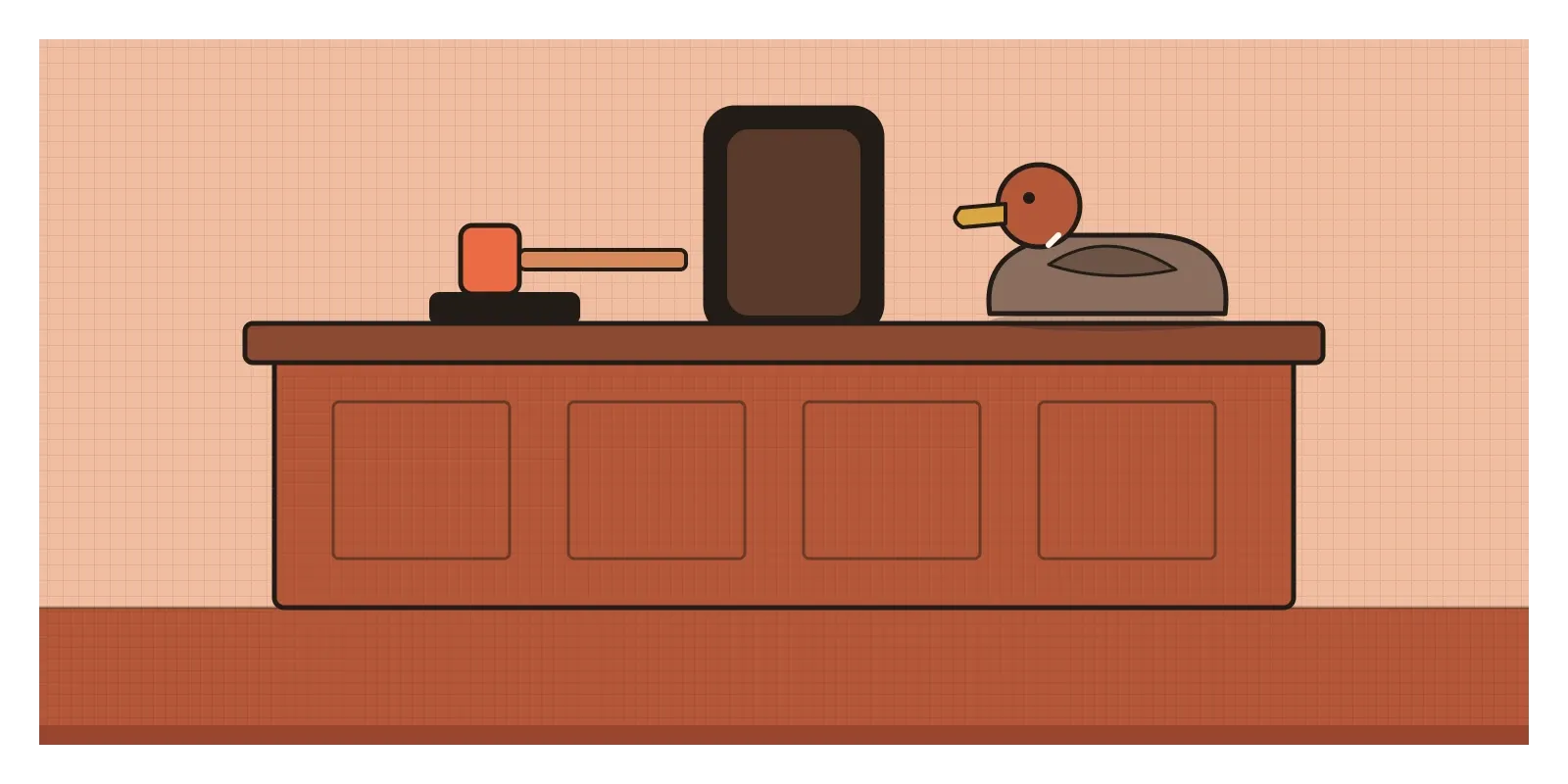
I have no way of knowing whether the trip influenced him, and I suspect it didn't change his vote. That isn't the interesting part. The interesting part is who decided. American law asks a judge to step aside whenever their impartiality "might reasonably be questioned", which is a test about how things look to a fair outsider, not about how the judge feels inside. The rule exists because the one person whose sense of their own fairness can't settle the question is the judge. Scalia's confidence in his own impartiality was probably sincere. Sincerity is exactly what the rule doesn't trust.
That's the bias blind spot: the tendency to see the influence of bias in other people's judgements while seeing ourselves as less affected, or not affected at all. As I mentioned in the post on special pleading, the psychologists Emily Pronin, Daniel Lin and Lee Ross named it in 2002. Here I want to look at why it happens, and why being clever or well-informed doesn't seem to protect us from it.
Everyone's biased except me
The roots go back to a famous paper from 1977 by Richard Nisbett and Timothy Wilson called "Telling more than we can know". In one demonstration, shoppers in a store were asked to choose the best of four pairs of nylon stockings laid out in a row. The pairs were identical. People chose the one on the right far more often than the one on the left. When asked why, they talked about the knit, the sheerness and the elasticity. Almost nobody mentioned position, and when the researchers asked directly whether the order might have mattered, people denied it, sometimes looking at the interviewer as if he were a little odd. The real cause of their choice was invisible to them, and they filled the gap with reasons that sounded right.
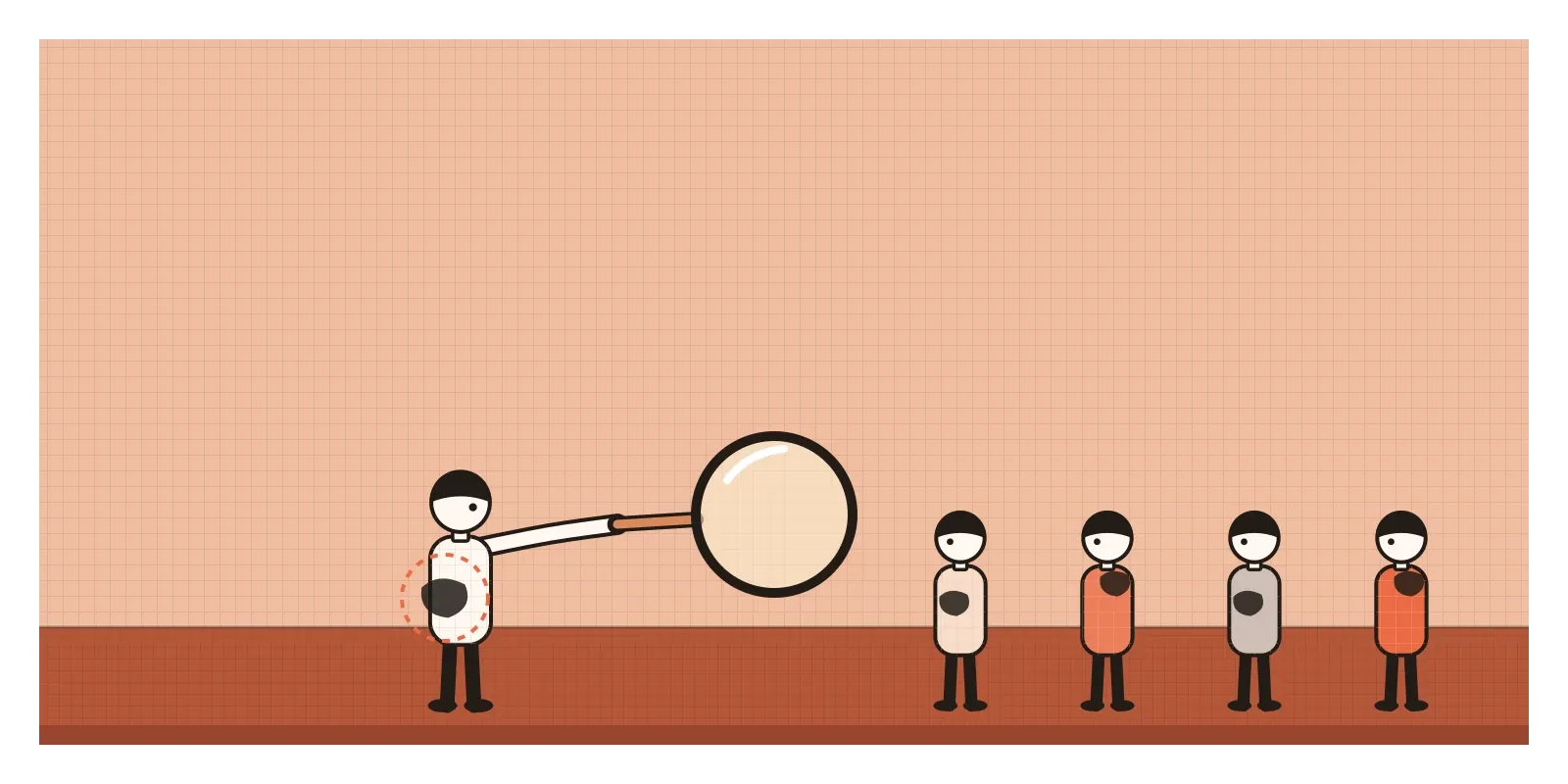
In 2004, Pronin, Thomas Gilovich and Ross brought this together into a theory of why we judge bias differently in ourselves and others. When we assess ourselves, we look inward, at our thoughts, feelings and intentions, and since bias mostly works below awareness, we don't find any. When we assess other people, we can't see inside them, so we look at their behaviour and their circumstances, and there bias is often easy to spot. Pronin and Matthew Kugler later called this the introspection illusion. In one of their 2007 studies, people who first read an article about how unreliable introspection can be stopped claiming they were less biased than their peers.
The blind spot doesn't go away with intelligence. In 2012, Richard West, Russell Meserve and Keith Stanovich gave hundreds of students tests of well-known biases along with measures of thinking ability. More cognitively able students were no less biased, and if anything showed a slightly larger blind spot. And in 2015, Irene Scopelliti, Carey Morewedge and their colleagues built a scale to measure the blind spot in individuals. Out of several hundred adults in one of their samples, only one person rated themselves as more biased than the average person. People with a bigger blind spot were also less likely to take advice from others. The finding has been replicated consistently. The one honest caveat is that some people really are less biased than others on some questions. But almost everyone can't be.
Why our own mind looks clean from inside
The shortcut behind the blind spot is a reasonable one most of the time. Our own thoughts are the best evidence we have about ourselves, and usually they're accurate enough. I know why I chose a restaurant or which route I took to work. The trouble is that bias doesn't announce itself in our thoughts. It shows up only in patterns of behaviour that we're rarely in a position to see, such as which options we tend to favour, whose work we praise and whose we question.
There's a second layer, which Ross called naive realism and which I described in the post on the straw man. We tend to assume we see the world as it is. So when someone disagrees, the explanation that comes most easily is that they must be the one who's biased, by self-interest, ideology or loyalty. Their bias feels like a fact about them. Ours feels like a fact about the world.
And there's comfort in it. Believing that we're fair is pleasant, and it lets us act without second-guessing every decision. A little of that confidence is probably necessary to get anything done. It just makes a poor judge of whether we're being fair right now.
Free lunches and a fever tablet
Medicine has studied the blind spot in a very practical setting: the gifts drug companies give doctors. In 2001, Michael Steinman, Michael Shlipak and Stephen McPhee surveyed resident doctors at an American university hospital about pharmaceutical promotion. Most said that gifts and contact with drug representatives didn't affect their own prescribing. Far fewer believed the same was true of other doctors. Other studies had already measured the influence the residents doubted. In 1992, James Orlowski and Leon Wateska tracked prescriptions at a hospital in Cleveland after doctors went on expenses-paid trips to symposia run by two drug companies. Most of the doctors said beforehand that the trips wouldn't affect them. Prescriptions of the sponsors' drugs rose significantly afterwards.
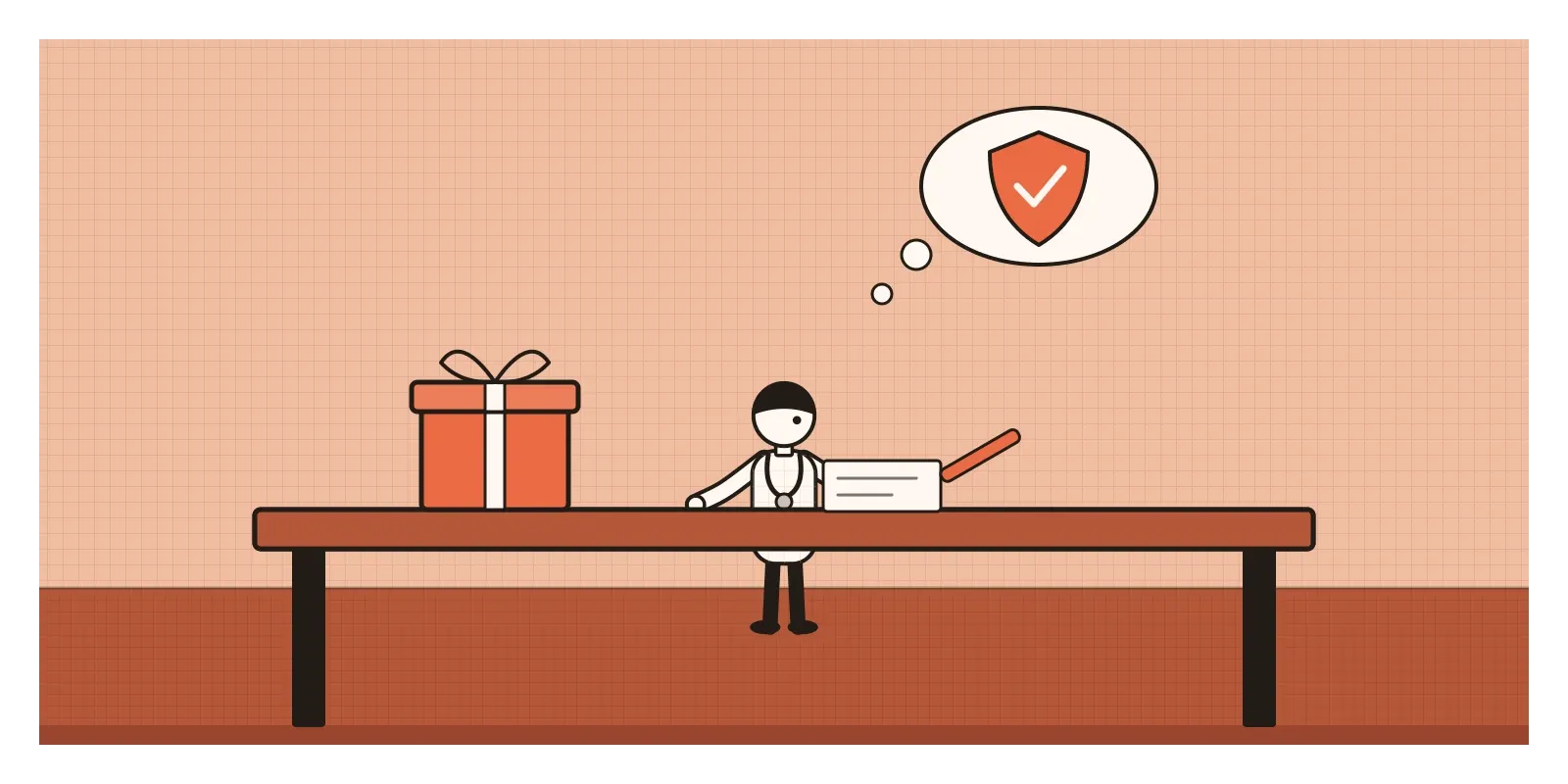
India has had its own version of this debate. In July 2022, the income tax department searched the offices of Micro Labs, the Bengaluru company that makes Dolo-650, a paracetamol tablet that became a household name during the Covid pandemic. The tax authorities said afterwards that the group had given doctors and other professionals freebies worth around ₹1,000 crore. The company denied the claim. A few weeks later, the claim came up in the Supreme Court during a petition by the Federation of Medical and Sales Representatives Associations of India asking for a binding code on drug marketing, and one of the judges remarked that he had been told to take the same tablet when he had Covid. In 2024, the government issued the Uniform Code for Pharmaceutical Marketing Practices, which bars companies from giving doctors gifts, travel and hospitality, though critics have pointed out that it relies on industry associations to enforce it.
What I take from this isn't that doctors are dishonest. Almost all of them, asked directly, would say that a pen, a lunch or a conference trip couldn't change a medical judgement. The evidence suggests that's precisely the belief that lets the influence work. Rules that ban the gifts outright exist because individual good intentions aren't a reliable defence.
Picture a blind test the team didn't run
Picture a team building an AI feature that summarises long customer-support conversations for the agent who picks up the case. They've spent two weeks on a new prompt, and they want to know if it beats the old one. They run fifty conversations through both versions and sit down together to rate the summaries. Everyone can see which column is new. Someone even jokes about confirmation bias, and the room agrees they'll be careful. The new prompt wins clearly, and the team ships it.
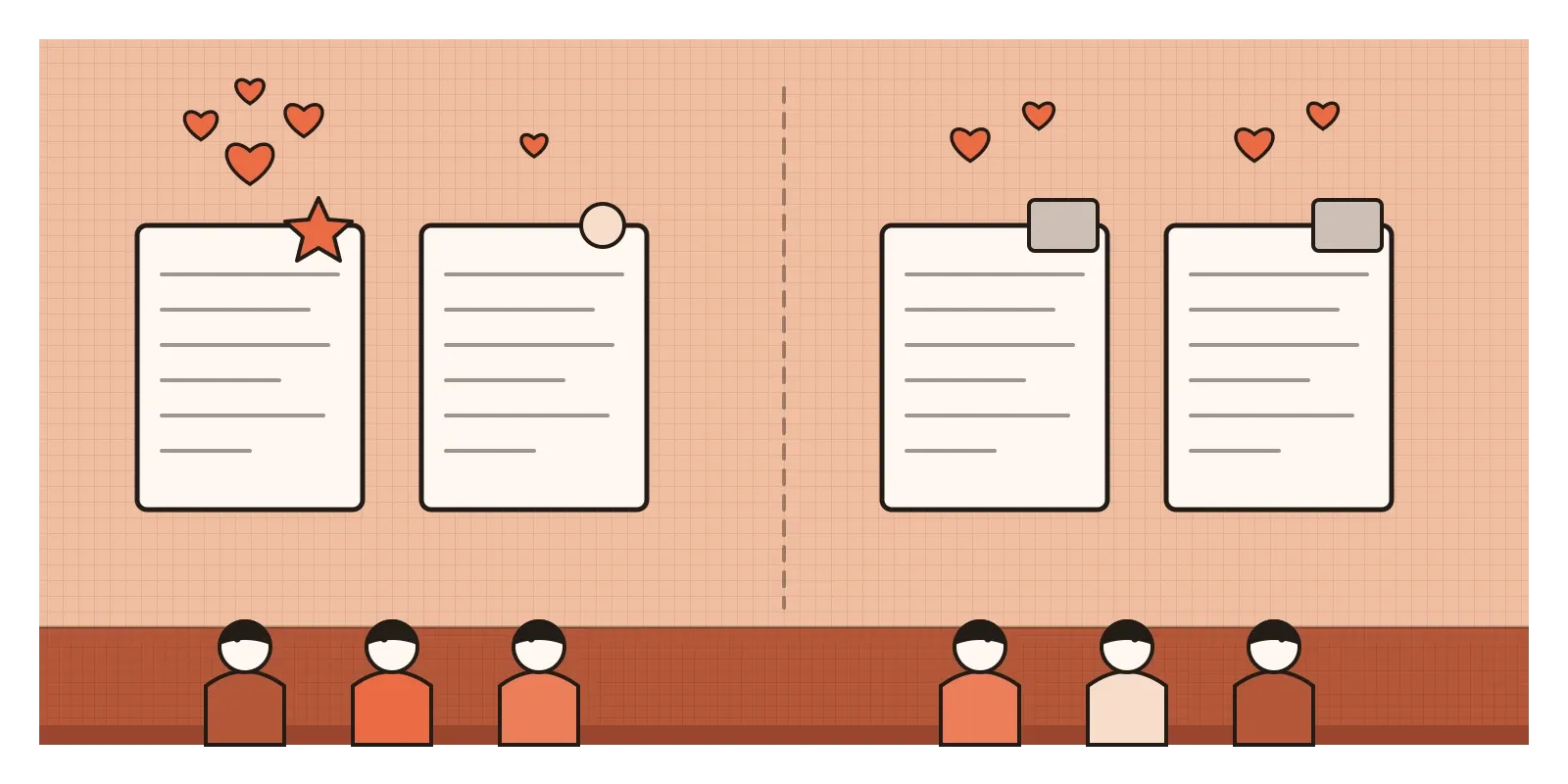
Nobody in that room thought they were biased. They knew about bias, talked about it and had decided to be careful, which is exactly what the research suggests doesn't work on its own. They knew which version they had built, they wanted their two weeks to have been worth it, and every judgement call, whether a summary was "a bit long" or "nicely concise", leaned quietly in one direction.
The honest version uses structure instead of good intentions. The summaries are shuffled and shown without labels, so nobody knows which prompt produced which. The rating criteria are written down before anyone looks, as I described in the post on moving the goalposts. At least some of the raters are people who didn't write either prompt, such as support agents who will actually use the summaries. When the team does this, the new prompt still wins on long conversations, but on short ones the two versions are nearly indistinguishable. That's a smaller result, and a far more useful one.
When seeing others' bias is the useful part
The blind spot has a bright side. If we're bad at seeing our own biases but quite good at seeing other people's, then other people are our best instrument. Peer review, design critique, code review and second opinions all work, partly, because the reviewer stands outside the blind spot of the person whose work it is. The trick is to make that reciprocal and welcome, so that pointing out someone's bias is part of the process rather than an accusation.
It also helps to remember that the blind spot isn't proof that we're always wrong. On some questions we really do know more, or have less at stake, than the people around us. Endless self-doubt is its own trap, and it can paralyse a team as surely as overconfidence. The aim isn't to distrust every judgement. It's to stop treating our own feeling of fairness as evidence of fairness.
How I try to catch it
The first habit is a simple assumption. When a study shows that most people are swayed by something, I assume I am too, unless I have specific evidence otherwise. The question I ask is: how would I know if I were biased here? If the honest answer is "I wouldn't", then my confidence isn't telling me anything.
The second is to trust structure over intention. When I'm judging my own work against someone else's, I try to hide the labels, set the criteria before I look, and bring in someone without a stake. When I can't, I step back from the decision, the way a judge is meant to.
The third is to ask a colleague I trust to tell me where they think my judgement is bent, and to treat the answer as data rather than an attack. It isn't always comfortable. It's almost always useful.
I think of Scalia's memorandum as a careful, intelligent and probably sincere argument about why he was the exception. That's what makes it such a good illustration. The blind spot doesn't feel like a blind spot. It feels like clarity. In the next post, I'll look at a close relative, the overconfidence effect, which is about how sure we are of what we know.
Further reading: Emily Pronin, Thomas Gilovich and Lee Ross, "Objectivity in the eye of the beholder: divergent perceptions of bias in self versus others" (2004) · Richard Nisbett and Timothy Wilson, "Telling more than we can know: verbal reports on mental processes" (1977) · Richard West, Russell Meserve and Keith Stanovich, "Cognitive sophistication does not attenuate the bias blind spot" (2012) · Irene Scopelliti and colleagues, "Bias blind spot: structure, measurement, and consequences" (2015) · Timothy Wilson, Strangers to Ourselves (2002)
The question to askHow would I know if I were biased here?