The Straw Man
Why it's so tempting to argue with a flimsier version of someone, and how to argue with the real one.
The Straw Man
A cup of coffee in Albuquerque
In February 1992, Stella Liebeck, a seventy-nine-year-old woman from Albuquerque, New Mexico, was sitting in the passenger seat of her grandson's car. They had just bought coffee at a McDonald's drive-through, and the car was parked. She put the cup between her knees to take the lid off and add cream and sugar, and the coffee spilled into her lap. Her cotton trousers soaked it up and held it against her skin. She suffered third-degree burns, the kind that destroy the full thickness of the skin, spent eight days in hospital and needed skin grafts.
She asked McDonald's for twenty thousand dollars to cover her medical bills and related costs. The company offered eight hundred. The case went to trial in 1994, where the jury heard that McDonald's served its coffee at around 180 to 190 degrees Fahrenheit, roughly 82 to 88 degrees Celsius, hot enough to cause serious burns in a few seconds, and that it had received around seven hundred reports of burns over the previous decade. The jury found the company mostly responsible and awarded Liebeck damages, including punitive damages of $2.7 million, a figure said to equal about two days of the company's coffee sales. The judge later cut the total to about $640,000, and the two sides then settled privately.
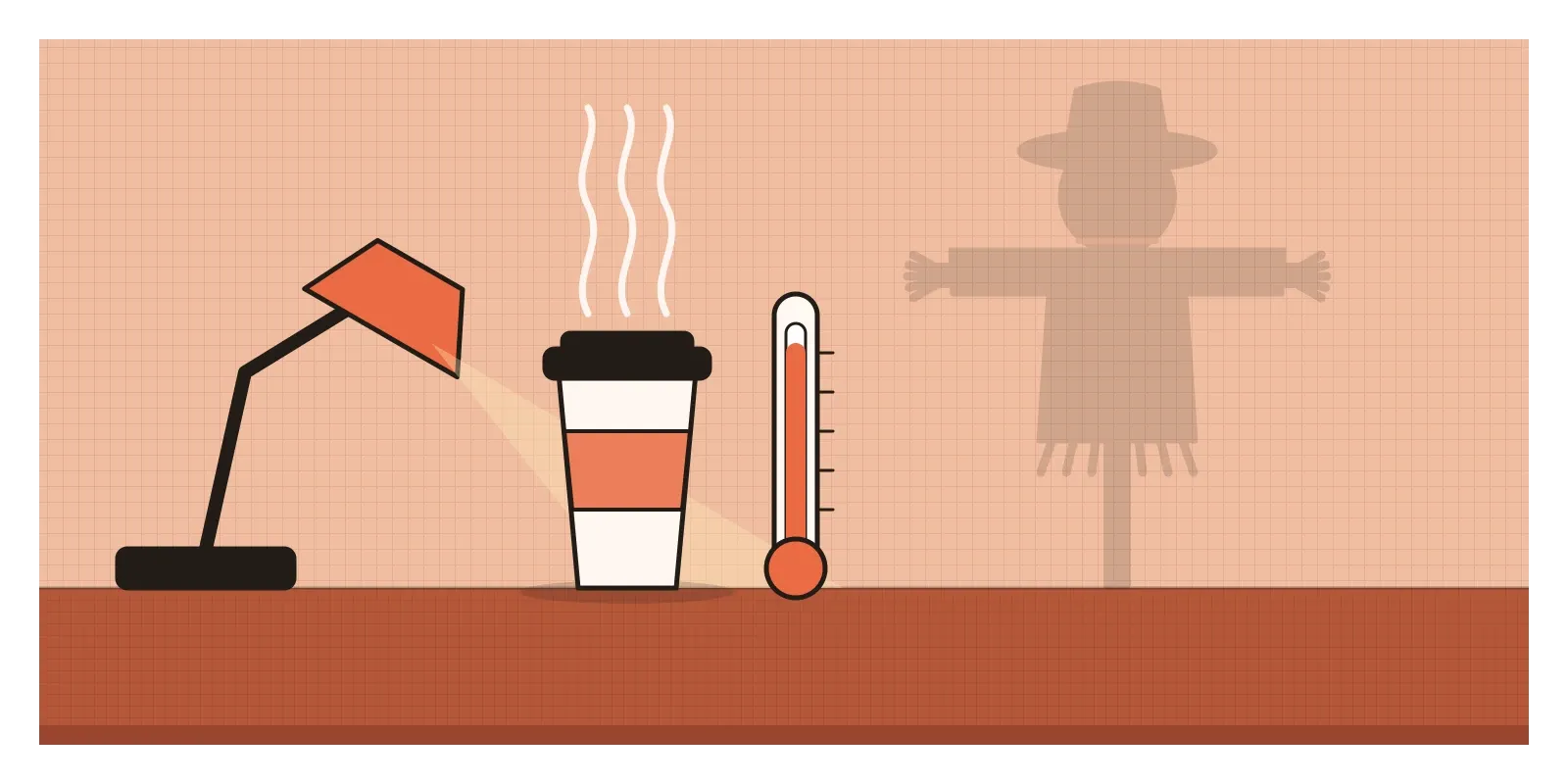
That isn't the story most people heard. The version that spread through talk shows, newspaper columns and late-night jokes went something like this: a woman spilled coffee on herself, sued because it was hot, and won millions. It became a byword for frivolous lawsuits, and it was used for years in arguments for limiting what juries could award. The real case, about a product served hot enough to cause severe injury and a company that knew it, was replaced by a much easier one to mock. The 2011 documentary Hot Coffee, directed by Susan Saladoff, was made largely to tell the story again. Reasonable people still disagree about the verdict. But the case most people argued about wasn't the one the jury heard.
That's the straw man fallacy: misrepresenting someone's position, usually by exaggerating, oversimplifying or distorting it, and then attacking the misrepresentation instead of what they actually said. Knock down the scarecrow, and it looks as if you've beaten the person.
Arguing with a scarecrow
The name probably comes from figures made of straw, used for practice in combat training or burned in effigy, though its exact origin is uncertain. The pattern is much older than the name. Aristotle, in Sophistical Refutations, grouped a family of tricks under the heading of ignoratio elenchi, roughly "missing the point of the refutation": proving something, but not the thing in dispute. Defeating a position your opponent never held is the clearest example.
The sharpest description I know comes from Arthur Schopenhauer. In The Art of Being Right, a short, cynical handbook of debating tricks written around 1831 and published after his death, the very first stratagem is what he called the extension. Take your opponent's claim and stretch it beyond its natural limits, interpret it as generally as possible, and exaggerate it, because the broader a claim is, the more ways there are to attack it. His advice to anyone on the receiving end was to keep pulling the claim back to its original, narrower form.
Logicians have since named some quieter relatives. In a 2006 paper, the philosophers Robert Talisse and Scott Aikin described the weak man: instead of inventing a position, you find the weakest real argument anyone on the other side has made, demolish it, and act as though you've dealt with the whole side. The arguments exist, but they've been picked for their weakness. Later, Aikin and Jeremy Casey added the hollow man, where you attack views attributed vaguely to "some people" who may not exist at all.
Why the scarecrow is easier to hit
The obvious reason is that a weak argument is easier to defeat, and defeating it feels good. But I don't think most straw men are built deliberately. Many are built by memory and retelling.
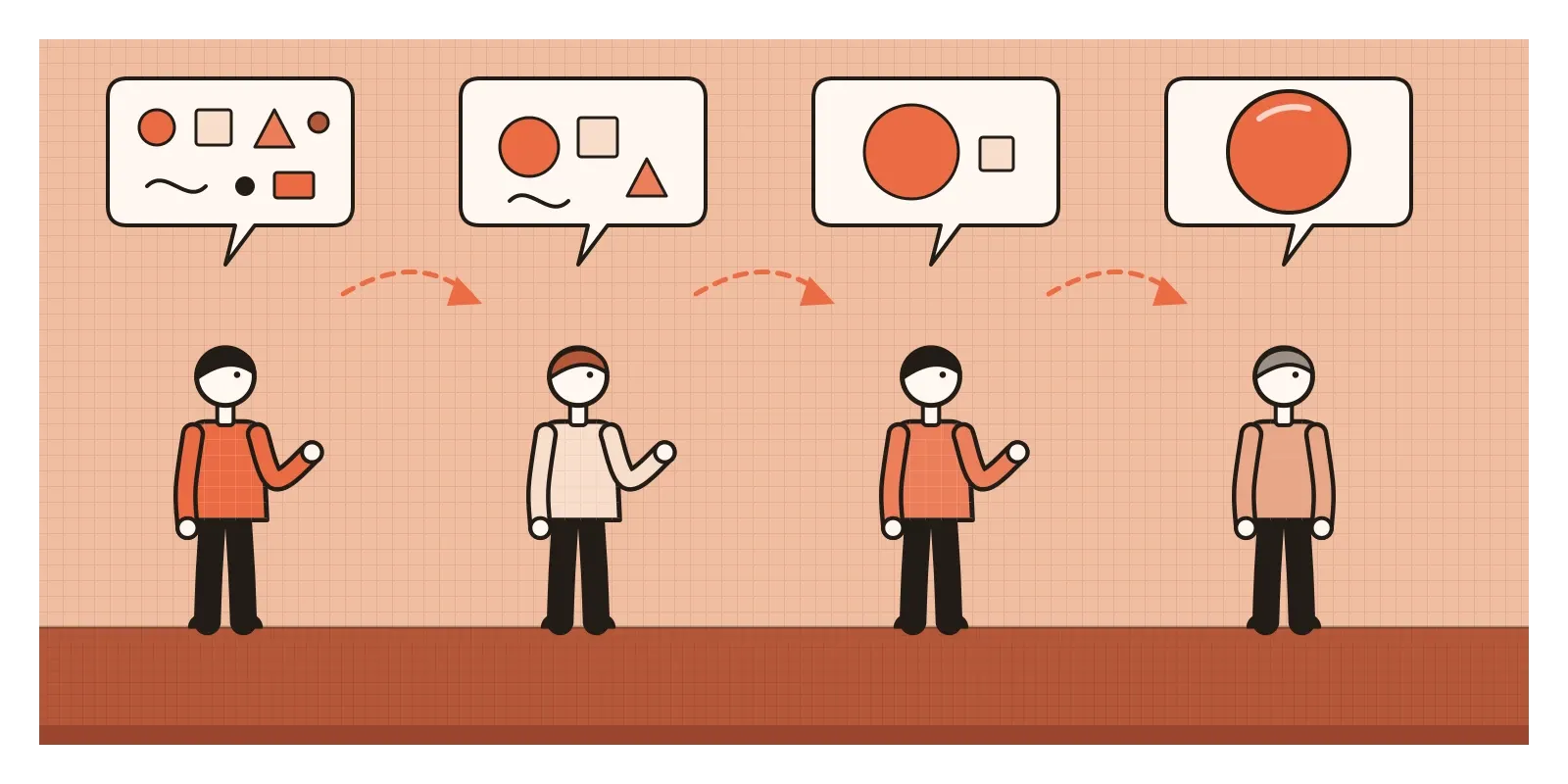
In their 1947 book The Psychology of Rumor, Gordon Allport and Leo Postman described what happens to a story as it passes from person to person. Details get dropped, which they called levelling. A few details get exaggerated, which they called sharpening. And the story is reshaped to fit what the listener already expects, which they called assimilation. Run Stella Liebeck's case through those three steps and you get almost exactly the version that spread. The temperature, the burns and the previous complaints were levelled away. "Millions" was sharpened. And it was assimilated into an existing story about greedy people and silly lawsuits.
Disagreement makes it worse. In a 1995 study, the psychologists Robert Robinson, Dacher Keltner, Andrew Ward and Lee Ross asked people on both sides of the American abortion debate to describe their own views and to predict the views of the other side. Both groups believed the other side's views were more extreme than they really were, and overestimated how far apart the two sides stood. Ross called the deeper idea naive realism: the feeling that we see the world as it is, so anyone who disagrees must be misinformed, unreasonable or biased. If that's what you already believe about your opponents, the straw version of their argument doesn't look like a distortion. It looks like what they really meant.
And audiences reward it. A straw man gives people on your side something satisfying to cheer. It's quicker to say, and it makes the other side look foolish rather than merely mistaken.
Free Basics and the argument nobody was making
In 2015, Facebook launched Internet.org in India, later renamed Free Basics. On participating mobile networks, it offered a selection of websites and services, including Facebook itself, without any data charges. The company presented it as a way to bring the internet to people who couldn't afford it. Critics, many of them involved with the volunteer-run Save the Internet campaign, argued that it broke the principle of net neutrality. Their objection wasn't to free internet. It was to one company deciding which parts of the internet would be free, which would give those services an advantage that newer Indian start-ups could never match. Some suggested alternatives, such as a small free data allowance that could be used on any site.
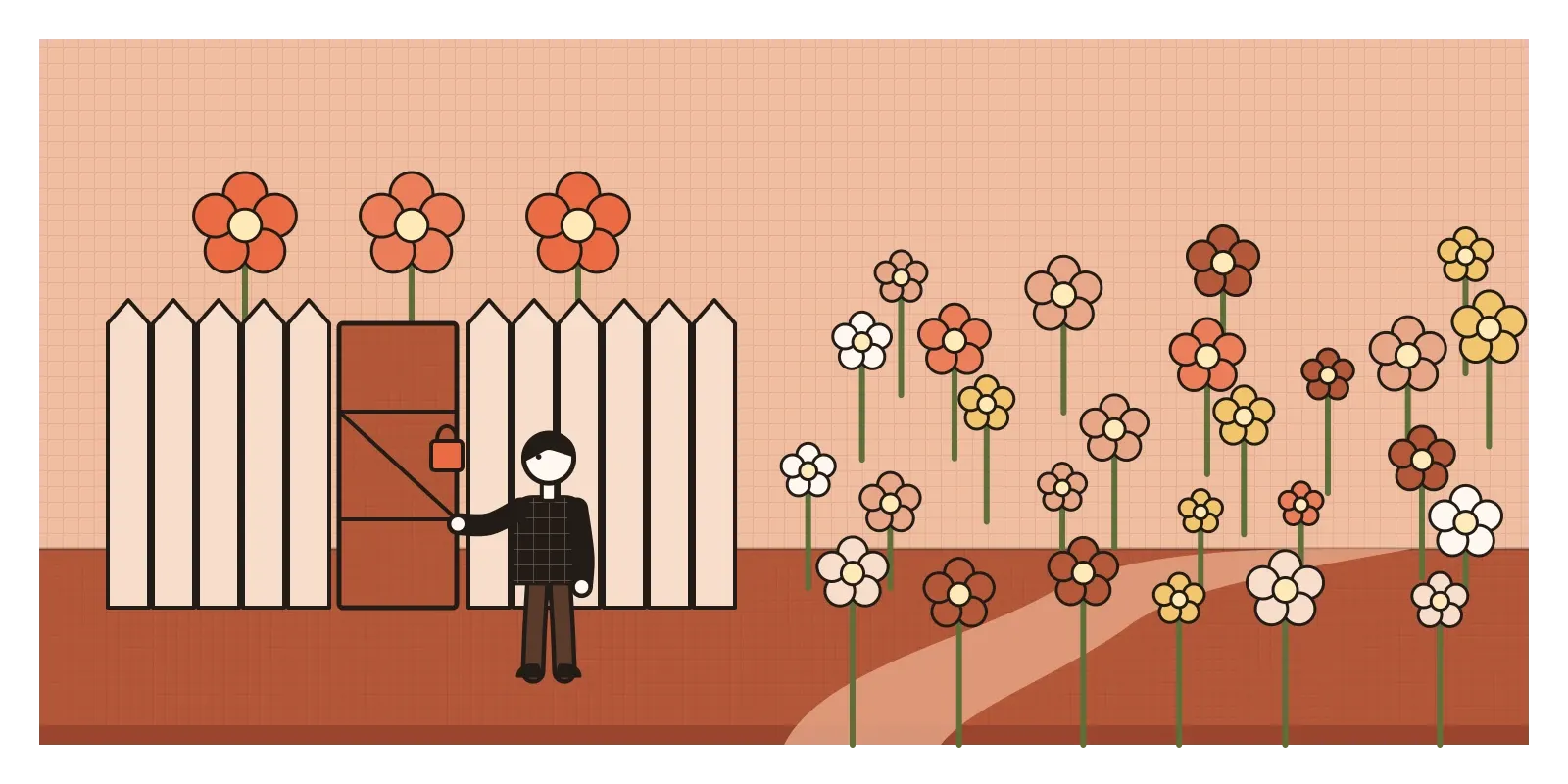
When the Telecom Regulatory Authority of India opened a consultation on differential pricing for data in December 2015, Facebook ran an unusually large campaign, with full-page newspaper advertisements, billboards and prompts asking its Indian users to send a pre-written message to the regulator in support of Free Basics. Mark Zuckerberg wrote an opinion piece in The Times of India that framed the debate as being about whether poor people should have some free access to the internet or none, and questioned how anyone could oppose that. That was a position almost no critic held. The regulator's chairman, in a letter to the company, complained that the template emails didn't answer the questions the consultation had actually asked. In February 2016, TRAI ruled that telecom operators couldn't charge different prices for different data based on content, which in effect ended Free Basics in India.
You can believe Facebook meant well and still see the shape of the argument. Opposing a particular way of offering free access was presented as opposing access itself. The real disagreement, about who should be the gatekeeper, was much harder to win in a newspaper advertisement.
The confirmation step that became a babysitter
Picture a team building an AI assistant that drafts and sends routine email replies for small businesses. In testing, the assistant is good, but not perfect. Occasionally it gets a price wrong or answers a complaint in a tone that doesn't fit. A designer on the team proposes a narrow change: when a reply is going to a customer outside the business, show a preview and require one tap to send it. Internal messages would still go automatically.
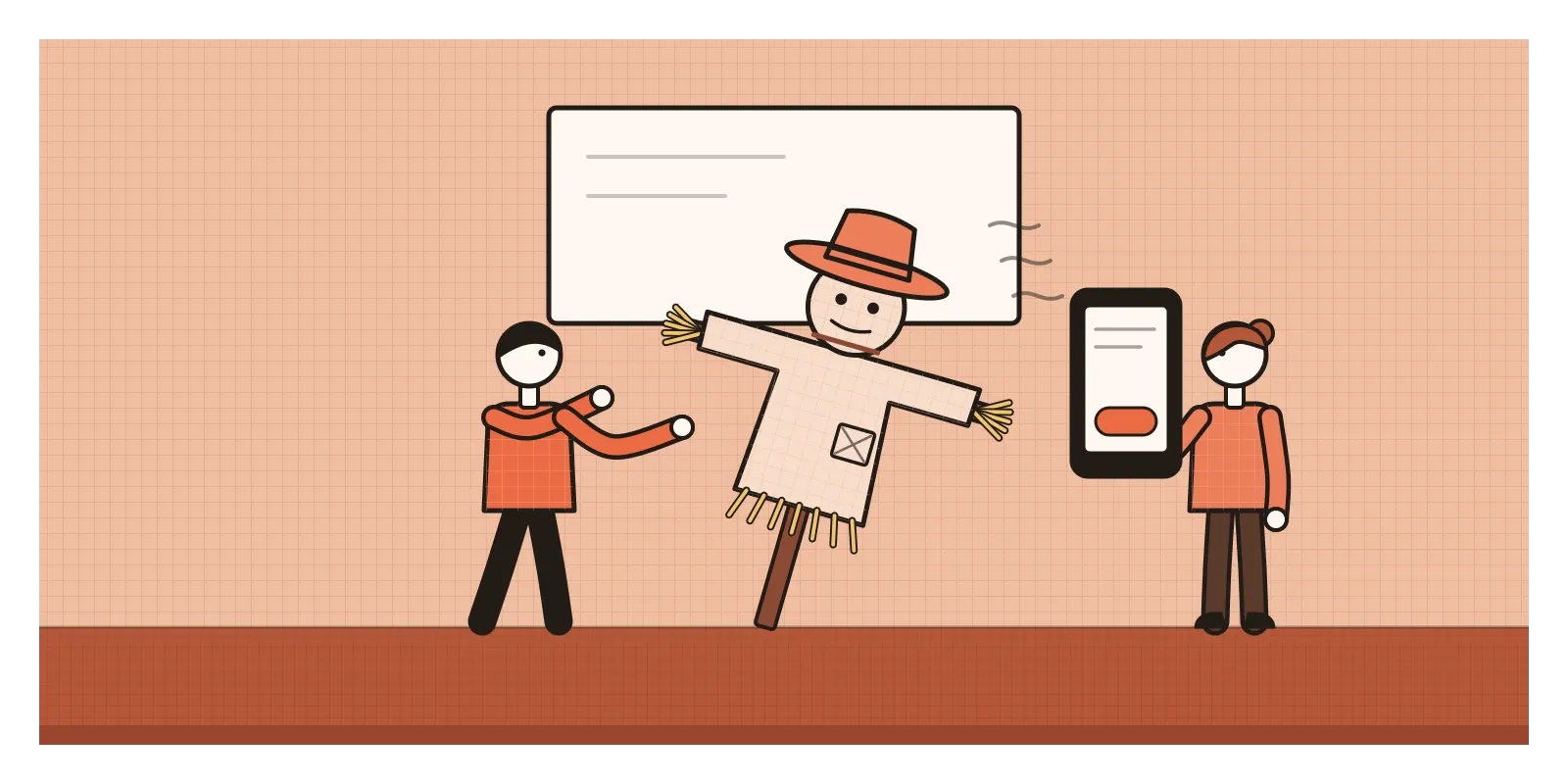
In the review, an engineer responds: "So you want people to approve every word the AI writes? Then why have AI at all?" The product manager adds, "We can't make users babysit the model forever." The room laughs, and the proposal is dropped. Nobody argued against what the designer actually suggested. They argued against a version where every message, internal and external, needs line-by-line approval, permanently. That version deserved to lose. The real one never got discussed.
The honest version starts with a restatement. "You're proposing a single confirmation tap, only for messages to external customers, because a wrong message to a customer costs more than a wrong note to a colleague. Is that right?" Once the designer says yes, the real trade-offs come into view. How often does the assistant make mistakes that matter? Does one tap reduce how much people use the feature? Would an undo window of a few seconds catch the same mistakes with less friction? The team might still decide against the confirmation step. But they'd be deciding about the actual proposal.
When simplifying isn't straw-manning
Every summary of an argument simplifies it, and that's fine. A good summary keeps what the argument depends on and drops what it doesn't. The test is whether the person who made the argument would accept the summary as fair.
A reductio ad absurdum, showing that a position leads to an absurd conclusion, isn't a straw man either, as long as the absurd conclusion really does follow from what the person said. If someone claims we should never ship anything with known bugs, pointing out that almost all software ships with some known bugs is a fair challenge to their actual words. The trouble only starts when the absurdity comes from an exaggeration you added yourself.
And sometimes people really do hold extreme positions. Arguing against an extreme view isn't a fallacy if you're accurate about who holds it. It becomes the weak man when you present the most extreme or careless voices as if they spoke for everyone who disagrees with you.
How I try to catch it
The philosopher Daniel Dennett, in his 2013 book Intuition Pumps and Other Tools for Thinking, passed on a set of rules he credited to the social psychologist Anatol Rapoport. Before criticising someone's view, restate it so clearly and fairly that they wish they'd put it that way themselves. Then mention what you agree with, and anything you've learned from them. Only then are you entitled to rebut. I don't always manage all four steps, but the first one alone changes the tone of a meeting.
The habit I use most is simple. Before I disagree with someone, I say back what I think they mean and ask whether I've got it right. Often I haven't. Sometimes the disagreement disappears. When it doesn't, at least we're now disagreeing about the same thing.
The other habit is to argue with the strongest version of the opposing view, what people now call steelmanning. If I can't think of a good reason why a sensible person would hold the view, it usually means I don't understand it yet, not that they're foolish.
Stella Liebeck died in 2004. For many people, she's still remembered as the woman who sued because her coffee was hot. That scarecrow has outlived the person it replaced. I find it a useful reminder that a straw man isn't just a debating trick. It changes what everyone remembers. In the next post, on circular reasoning, I'll look at an argument that never leaves home at all, because its conclusion is hidden in its starting point.
Further reading: Arthur Schopenhauer, The Art of Being Right (written around 1831) · Daniel Dennett, Intuition Pumps and Other Tools for Thinking (2013) · Robert Talisse and Scott Aikin, "Two Forms of the Straw Man" (2006) · Gordon Allport and Leo Postman, The Psychology of Rumor (1947) · Susan Saladoff (director), Hot Coffee (2011)
The question to askWould they recognise their own argument in my version of it?