The False Dilemma
How an argument shrinks a wide range of choices down to two, and makes the one it wants look inevitable.
The False Dilemma
Nine days after the attacks
On 20 September 2001, nine days after the attacks on New York and Washington, the American president George W. Bush addressed a joint session of Congress. It was a speech watched around the world, and one sentence from it travelled further than all the rest. Every nation, he said, now had a decision to make: "Either you are with us, or you are with the terrorists."
As rhetoric, it was powerful. It was short, it was clear, and it left no comfortable place to stand. But as a description of the choices actually open to governments and citizens, it was strange. Plenty of countries condemned the attacks, shared intelligence and still disagreed with parts of what the United States went on to do. Plenty of people were horrified by terrorism and also worried about wars, surveillance or detention. The sentence had no room for any of them. In two short clauses, a whole spectrum of possible positions had been folded into two.
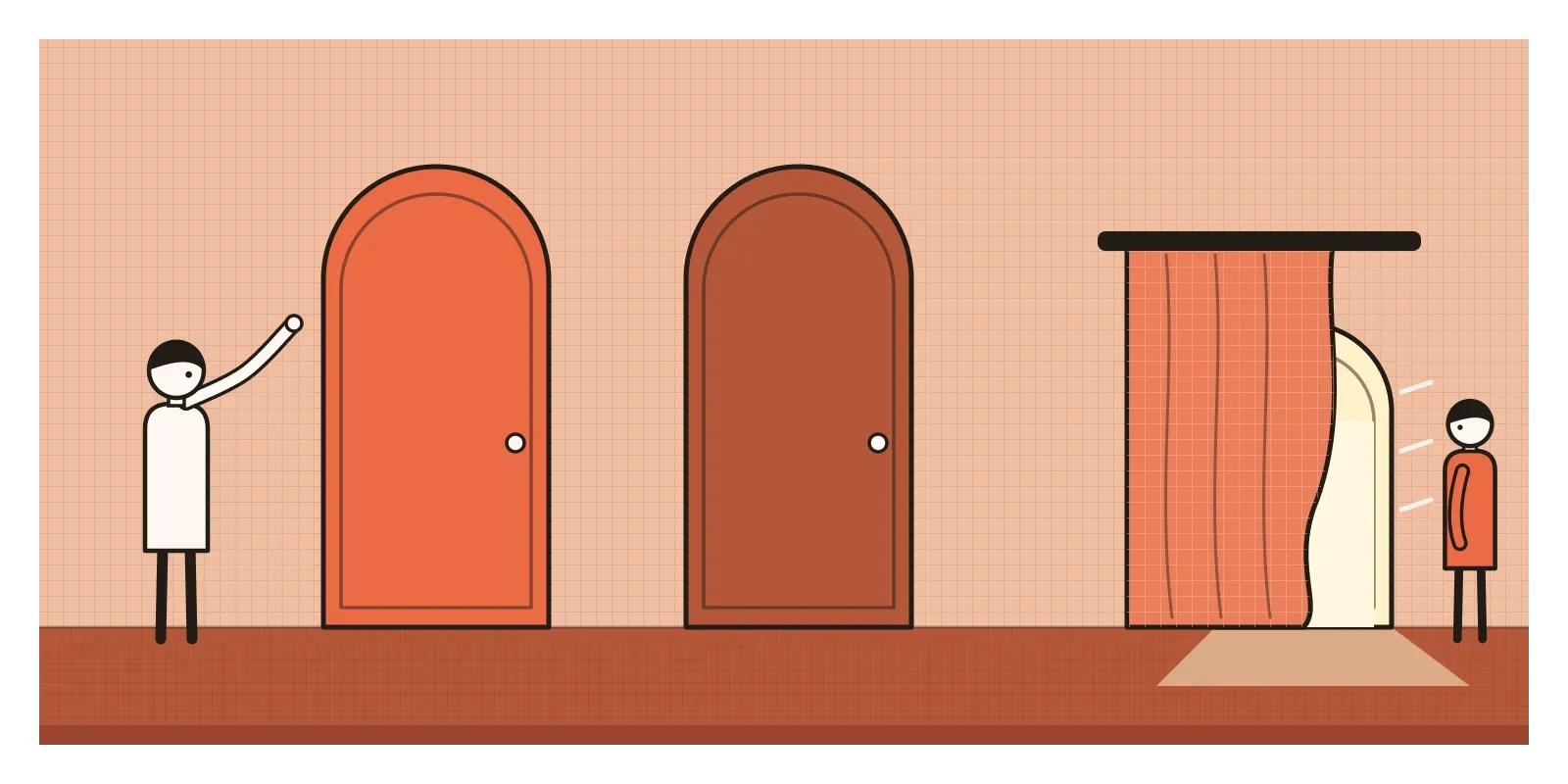
Whatever you think of the policies that followed, the shape of that sentence is a very old one. It's called the false dilemma: presenting two options as if they were the only ones, when in fact there are others. Its other names describe it well. Logic textbooks call it the false dichotomy, the either/or fallacy or bifurcation, and in everyday speech we call it black-and-white thinking.
The line wasn't new, either. A version of it appears in the Gospel of Matthew, "He that is not with me is against me", and politicians and preachers have reached for it ever since, because it turns a complicated question into a test of loyalty.
A fork with two prongs
Logicians are careful to say that a dilemma is not, in itself, bad reasoning. "Either it rained or the sprinkler was on. If it rained, the grass is wet. If the sprinkler was on, the grass is wet. So the grass is wet." That argument is perfectly valid. The trouble lies entirely in the first line. A real dilemma needs its two options to be exhaustive, so that nothing else is possible, and usually exclusive, so that both can't happen at once. A false dilemma quietly breaks one of those conditions and hopes nobody notices.
History offers some memorable traps of this kind. In his history of the reign of Henry VII of England, published in 1622, Francis Bacon told of an argument used to squeeze money out of wealthy subjects, which he attributed to the king's chancellor, John Morton. If you lived lavishly, you were obviously rich enough to pay. If you lived frugally, you must have saved a fortune, so you were rich enough to pay. Historians aren't sure Morton ever said it, but the trap is still known as Morton's fork. Both prongs led to the same place.
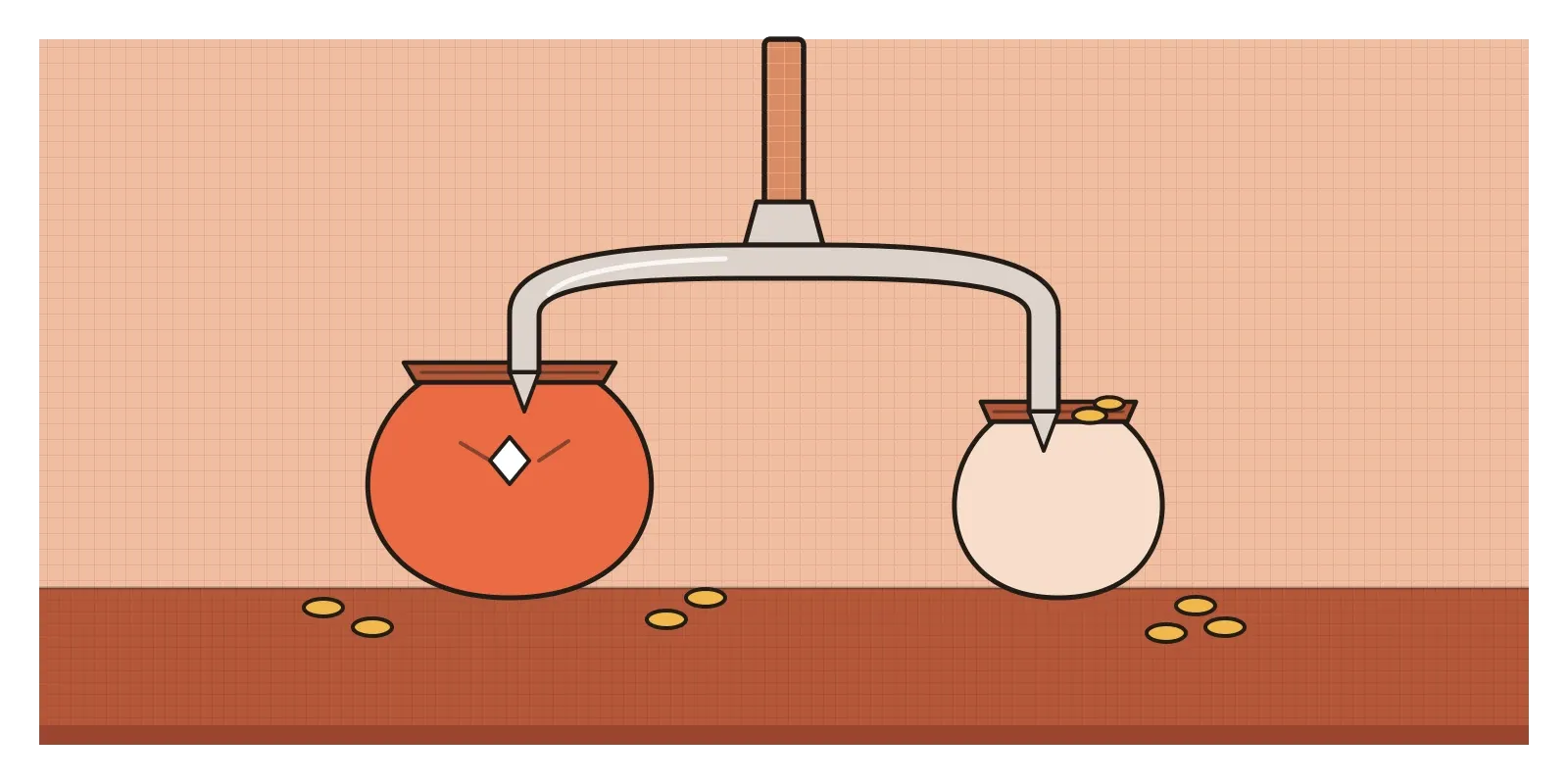
Science has its own famous false dilemma. In 1874 the scientist Francis Galton published a book called English Men of Science: Their Nature and Nurture, popularising the neat, alliterative pair that set up more than a century of argument. Was intelligence, or personality, or illness, a matter of nature or nurture? Modern genetics has largely dissolved the question. Genes and environment work together, and the effect of one often depends on the other. The question was never "which one?" but "how do they combine?"
There's a related trap worth naming: Hobson's choice. Thomas Hobson ran a stable in Cambridge in the seventeenth century and, so the story goes, made customers take the horse nearest the door or no horse at all. A Hobson's choice offers one option dressed up as a choice. A false dilemma offers two, dressed up as all of them.
Why two options feel like clarity
Two options are easy to hold in your head. They can be drawn on a whiteboard, voted on in a minute and explained to someone who missed the meeting. When we're under pressure, tired or frightened, the urge to collapse a messy situation into a clean either/or is strong, and it feels like decisiveness rather than simplification.
Psychologists have studied the personal version of this for decades. In cognitive therapy, starting with the work of Aaron Beck, black-and-white thinking is treated as a common distortion, and the psychiatrist David Burns put "all-or-nothing thinking" first in his list of distortions in his 1980 book Feeling Good. One mistake becomes "I'm a failure". A mixed review becomes "they hated it". Many Indian students grow up hearing a cultural version of the same thing, the career choice framed as doctor or engineer, as if those were the only two doors out of school.
In organisations, the cost shows up in decisions. The management researcher Paul Nutt studied hundreds of real decisions made by organisations and found that most considered only one option, a simple whether-or-not, rather than comparing alternatives. Chip and Dan Heath, summarising his work in their book Decisive (2013), report that only about 29% of the decisions he studied considered more than one alternative, and that whether-or-not decisions failed noticeably more often over the long run. A false dilemma is one step better than a single option, but it often comes from the same narrowing.
And sometimes the narrowing is deliberate. If you want people to choose your option, the easiest way is to place it next to one that nobody could accept. "Either we launch this quarter or we lose the market." "Either we adopt this framework or we keep doing things the chaotic way." The second option isn't really a choice. It's there to make the first one look inevitable.
A hospital that refused to choose
In 1976 Dr Govindappa Venkataswamy, an eye surgeon who had just retired from government service, opened an eleven-bed eye hospital in Madurai, in Tamil Nadu. India had millions of people blind from cataracts, a condition that a short operation can cure. The usual way of thinking about healthcare offered two models. You could run a high-quality private hospital that only the well-off could afford, or a free charity hospital that served the poor with whatever it could manage. Quality or reach. Pick one.
Aravind Eye Hospital, as it became, refused the choice. Patients who could pay were charged fees, and those fees helped pay for patients who couldn't. Both groups were treated by the same surgeons, using the same methods. Dr V, as he was known, was famously inspired by McDonald's, and Aravind organised its operating theatres so that surgeons could perform far more operations a day than was usual, with trained staff handling everything else. In 1992 it set up Aurolab to manufacture the lenses implanted during cataract surgery at a fraction of the price of imports. Today Aravind is one of the largest eye care providers in the world, and a large share of its patients pay little or nothing.
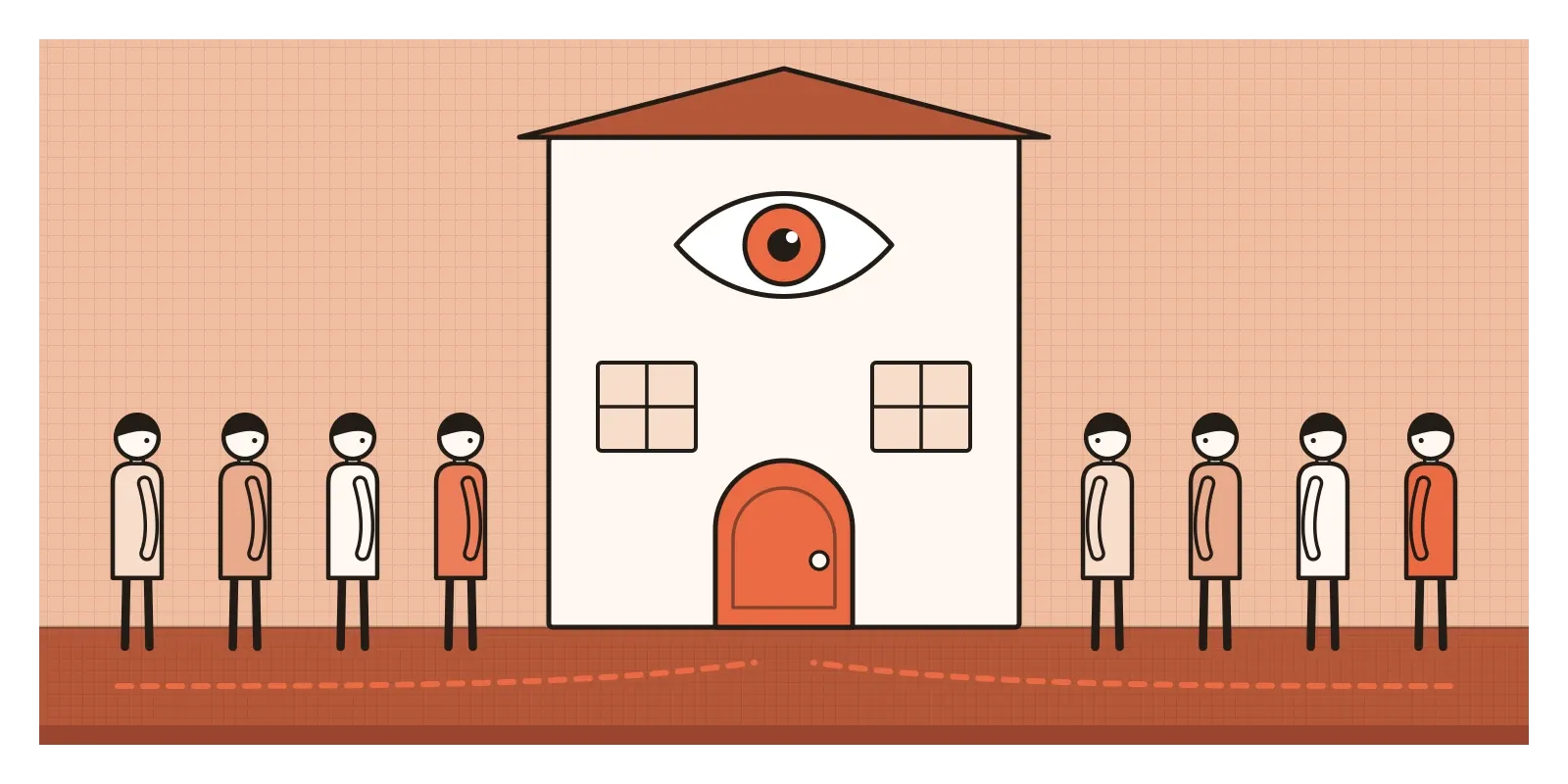
It isn't a fairy tale. Paying patients can choose more comfortable rooms, and free patients stay in simpler wards. The model also depends on very high volumes, careful discipline and a steady supply of paying patients. But on the question that mattered, the quality of the surgery, Aravind showed that the dilemma everyone accepted was false.
The strategist Roger Martin has a name for this habit of mind. In The Opposable Mind (2007) he described integrative thinking, the ability to hold two opposing models in your head and, instead of choosing one, build a new model that has the best of both. One of his examples is Isadore Sharp, the founder of Four Seasons, who was told that hotels could either be small and personal or large with full amenities, and set out to build hotels that were both.
Autopilot, or permission for everything?
Picture a team adding an AI agent to a marketing tool. The agent can write social media posts, schedule them and adjust ad budgets. In the design review, the room splits into two camps. One wants full autopilot: the whole point of an agent is that it acts without bothering you. The other wants the agent to ask for approval before every single action, because one bad post could embarrass a brand. Someone proposes an A/B test to settle it, autopilot against approve-everything.
Watch how much the test quietly assumes. It will tell the team which of two designs performs better, but nothing about the designs that were never put in it. And both camps are describing real risks, which is often a sign that the answer lies somewhere other than either camp.
The honest version starts by questioning the frame. What are the actions, and how risky is each one? Drafting a post is harmless, publishing it is public, and moving money is serious. That suggests a range of options instead of two: let the agent draft freely, act on its own for small, reversible actions, ask before anything public or expensive, and offer an undo window for everything in between. Trust could grow over time, with users choosing to give the agent more freedom as it earns it. The test, if the team still runs one, now compares several thoughtful designs, not two extremes.
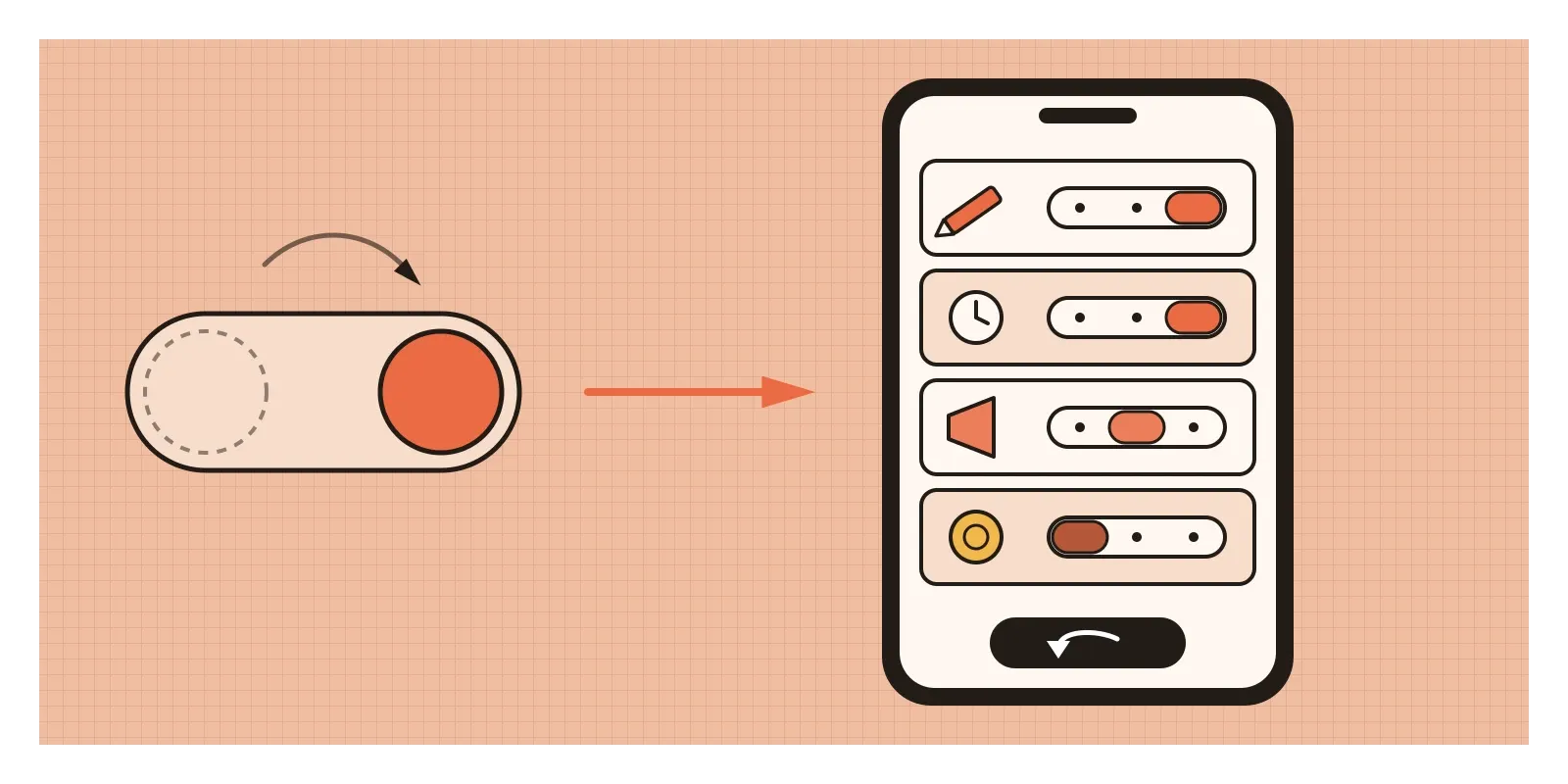
This is the same move I keep seeing in design debates that start as "simple or powerful", "for beginners or for experts", "consistent or delightful". Each pair is usually a real tension, not a real choice. Patterns like progressive disclosure, where advanced options stay tucked away until someone needs them, exist because designers kept refusing to pick a side.
When there really are only two doors
Some choices really are binary. A release either goes out tonight or it doesn't. A patient either consents to surgery or doesn't. A switch is on or off. When the options are genuinely exhaustive and exclusive, insisting that there must be a third way is its own kind of evasion.
Binary framing can also be a useful tool, used on purpose and at the right time. After a team has explored widely, a go or no-go decision forces a commitment that endless options would delay. The problem is not the two options. It's arriving at two before anyone has looked for more.
And the cure for a false dilemma isn't always a compromise. Splitting the difference between two bad options can produce something worse than either, a muddle that keeps the costs of both. Logicians have a name for assuming that the middle must be right, the argument to moderation. Aravind didn't find a midpoint between a luxury hospital and a charity ward. It found a different structure altogether.
How I try to catch it
The first thing I ask, whenever a choice arrives with exactly two options, is: what's the third option? I don't need it to be good. Just finding one breaks the spell, and the fourth and fifth often come more easily.
The second is to test the pair. Are the options really exclusive, or could we do both? Are they really exhaustive, or could we do neither? Could we do one now and the other later? Many dilemmas fall apart on one of those questions.
The third is a trick from the Heath brothers. I imagine that both options on the table have suddenly vanished, and ask what we would do instead. It's surprising how quickly a team that was stuck between A and B can come up with C when A and B are no longer allowed.
The sentence in that speech in 2001 left out most of the places where real governments and real people actually stood. That's what false dilemmas do. They don't lie about the two options they show you. They hide the rest. In the next post, on false equivalence, I'll look at the opposite problem, where two very different things are presented as if they were the same.
Further reading: Chip Heath and Dan Heath, Decisive (2013) · Roger Martin, The Opposable Mind (2007) · Pavithra K. Mehta and Suchitra Shenoy, Infinite Vision: How Aravind Became the World's Greatest Business Case for Compassion (2011) · Paul C. Nutt, Why Decisions Fail (2002) · David D. Burns, Feeling Good (1980)
The question to askWhat's the third option?