The Illusion of Control
Why pressing a button feels like making a difference, even when the button is connected to nothing.
The Illusion of Control
Soft throws for small numbers
In the mid-1960s, the sociologist James Henslin spent time among taxi drivers in St Louis, Missouri, who played craps, the dice game, together. He didn't just interview them. He joined in, playing in their games and watching closely how they bet, talked and threw. In 1967 he published what he'd seen in the American Journal of Sociology, in a paper called "Craps and Magic".
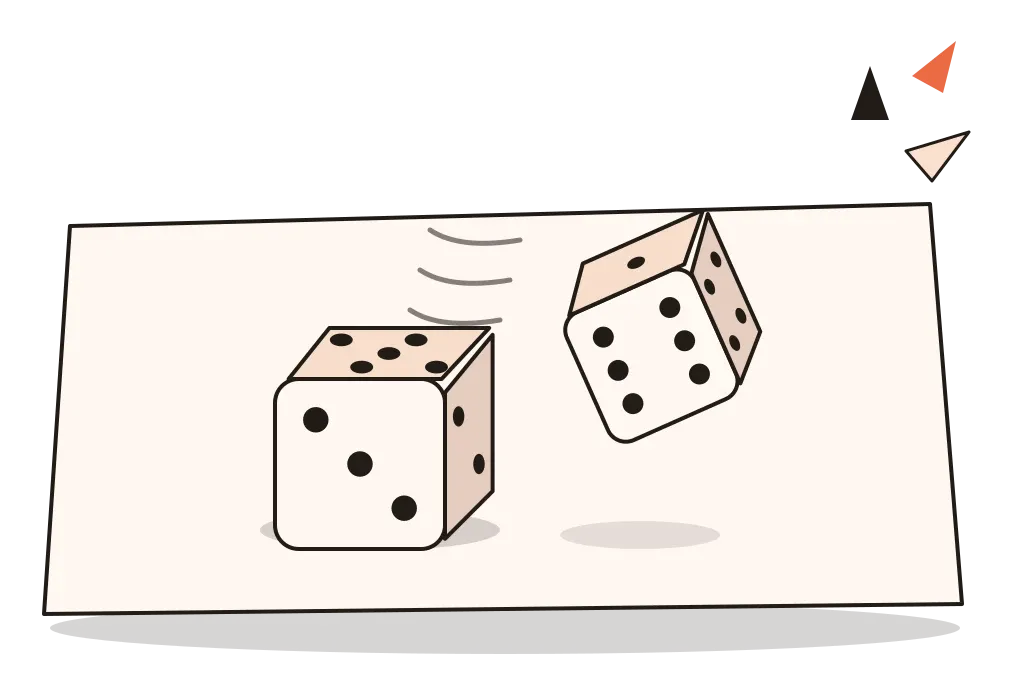
What struck him was how two kinds of thinking sat side by side. When it came to betting, the drivers were sensible. They knew the odds of different totals and bet accordingly. But when it came to throwing, they behaved as if the dice could be persuaded. Players who wanted a low number tended to throw the dice gently. Players who wanted a high number threw them hard. They snapped their fingers, talked to the dice and spoke as if concentration and effort helped. Of course, a fair die doesn't care how hard it's thrown.
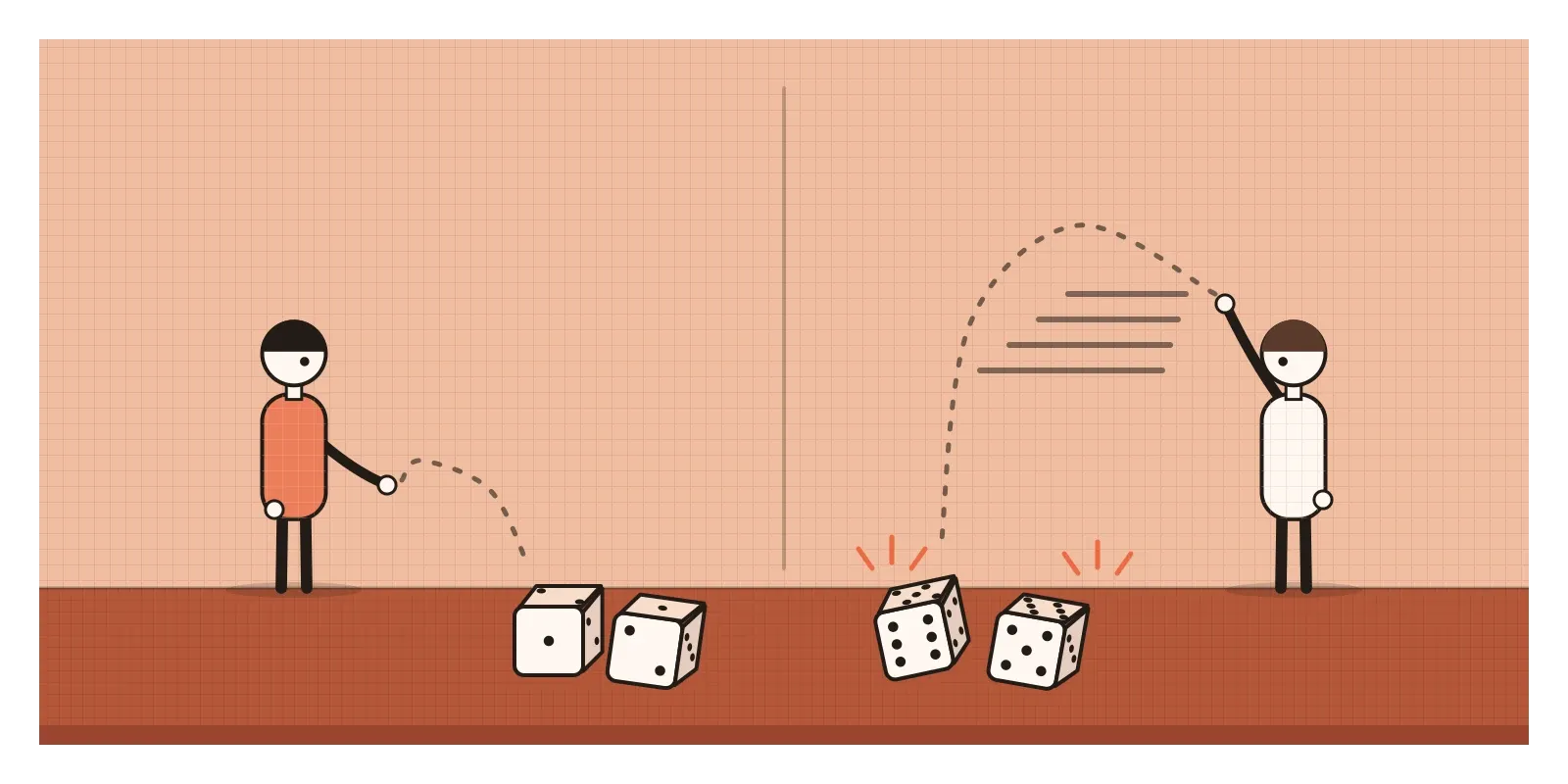
These weren't foolish men. They were behaving the way almost everyone does when an outcome matters and our hands are involved. At least one recent laboratory study has found a small version of the same habit.
That's the illusion of control: believing we have more influence over an outcome than we really do, especially when the outcome is decided mainly by chance or by forces outside our reach. It's different from overconfidence, which is about how sure we are that we're right, and from optimism, which is about expecting good things. The illusion of control is specifically about feeling that our actions are steering the result.
Picking your own lottery ticket
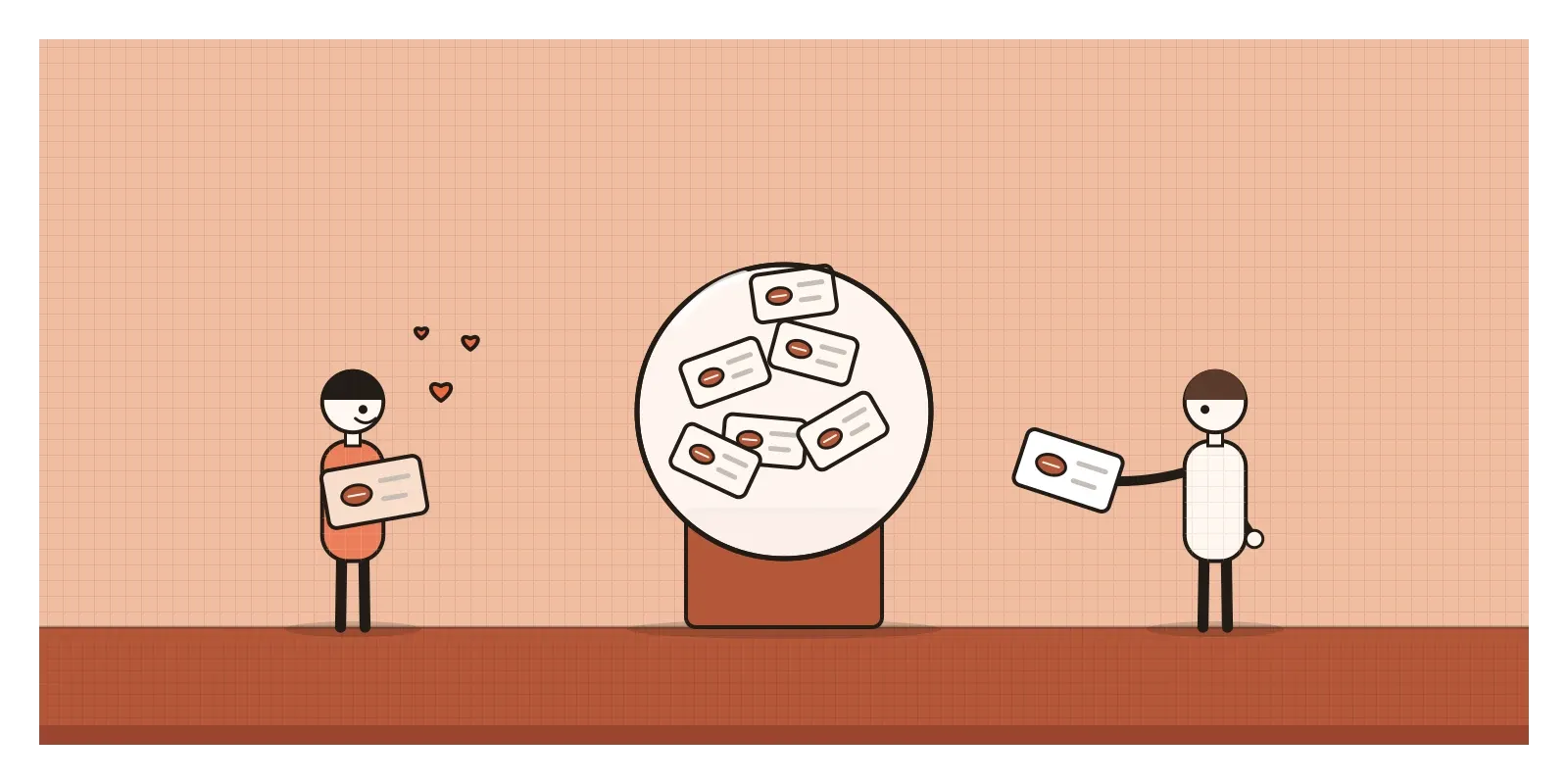
The name comes from the psychologist Ellen Langer, who published a set of experiments under the title "The Illusion of Control" in 1975. In one, office workers at two companies were offered the chance to buy a one-dollar ticket in a lottery for a cash prize. Each ticket was a card with a picture of a famous American football player on it. Some people were allowed to choose their own card. Others were simply handed one. Every ticket had exactly the same chance of winning. Before the draw, a researcher approached each person and asked how much they would want in order to sell their ticket on to someone else. People who had picked their own card asked for more than four times as much, on average, as people who had been handed one.
In another of Langer's experiments, people played a simple card-drawing game against an opponent, where the higher card won. Winning was pure chance. Yet people bet more when the opponent seemed awkward and nervous than when the opponent seemed confident, as if skill against a weak rival mattered in a game with no skill at all. Langer's argument was that when a chance situation contains features of skill situations, such as choice, competition, familiarity or active involvement, we start to treat it like one.
Earlier work had pointed in the same direction. In 1965, Herbert Jenkins and William Ward asked people to judge how much control their button presses had over whether a trial ended in success, and found that their judgements followed how often they succeeded rather than whether their actions made any difference.
How well has this held up? The general idea, that choice and involvement make people feel more in control of chance, has been found many times. The specific lottery experiment is a different matter: there are few exact repeats, and at least one careful attempt, by Anton Kühberger and colleagues, produced mixed results. An online replication of a related Langer study, about predicting coin tosses, found the effect again but smaller than the original. And one famous offshoot has weakened considerably. In 1979, Lauren Alloy and Lyn Abramson reported that mildly depressed students judged their lack of control more accurately than other students, an idea that became known as depressive realism. A 2012 meta-analysis found only a small effect, and a large replication published in 2022 didn't find it. I'd treat the broad illusion as real and the more dramatic offshoots with care.
Why feeling in charge feels so good
The shortcut behind the illusion is one we can't live without. From infancy, we learn by noticing what our actions change. A baby kicks, and the mobile above the cot moves; she kicks again. Looking for links between what we do and what happens is how we learn to operate the world, and it's much cheaper to see a few links that aren't there than to miss the ones that are.
Feeling in control is also good for us. In a series of studies published in 1972 in their book Urban Stress, David Glass and Jerome Singer exposed people to loud, unpredictable bursts of noise. Some were told they could stop the noise by pressing a button, though they were encouraged not to. Most never pressed it. Yet afterwards, they persisted longer on frustrating puzzles than people who had no button. Simply believing they could act made the stress easier to bear.
So the illusion often helps. It keeps us trying in situations where effort really does matter, and it makes uncertainty bearable. The problems start when it leads us to bet more, persist longer or ignore real risks in situations where effort makes no difference.
Buttons connected to nothing
In February 2004, The New York Times reported that most of the pedestrian crossing buttons in New York City did nothing at all. According to the city's own figures, more than 2,500 of the 3,250 walk buttons still on its streets no longer had any effect on the signals. Most had been left over from the 1970s; when computers began timing traffic lights across the city, the buttons were disconnected, but many were never removed. People kept pressing them, often several times, and kept feeling that it helped.
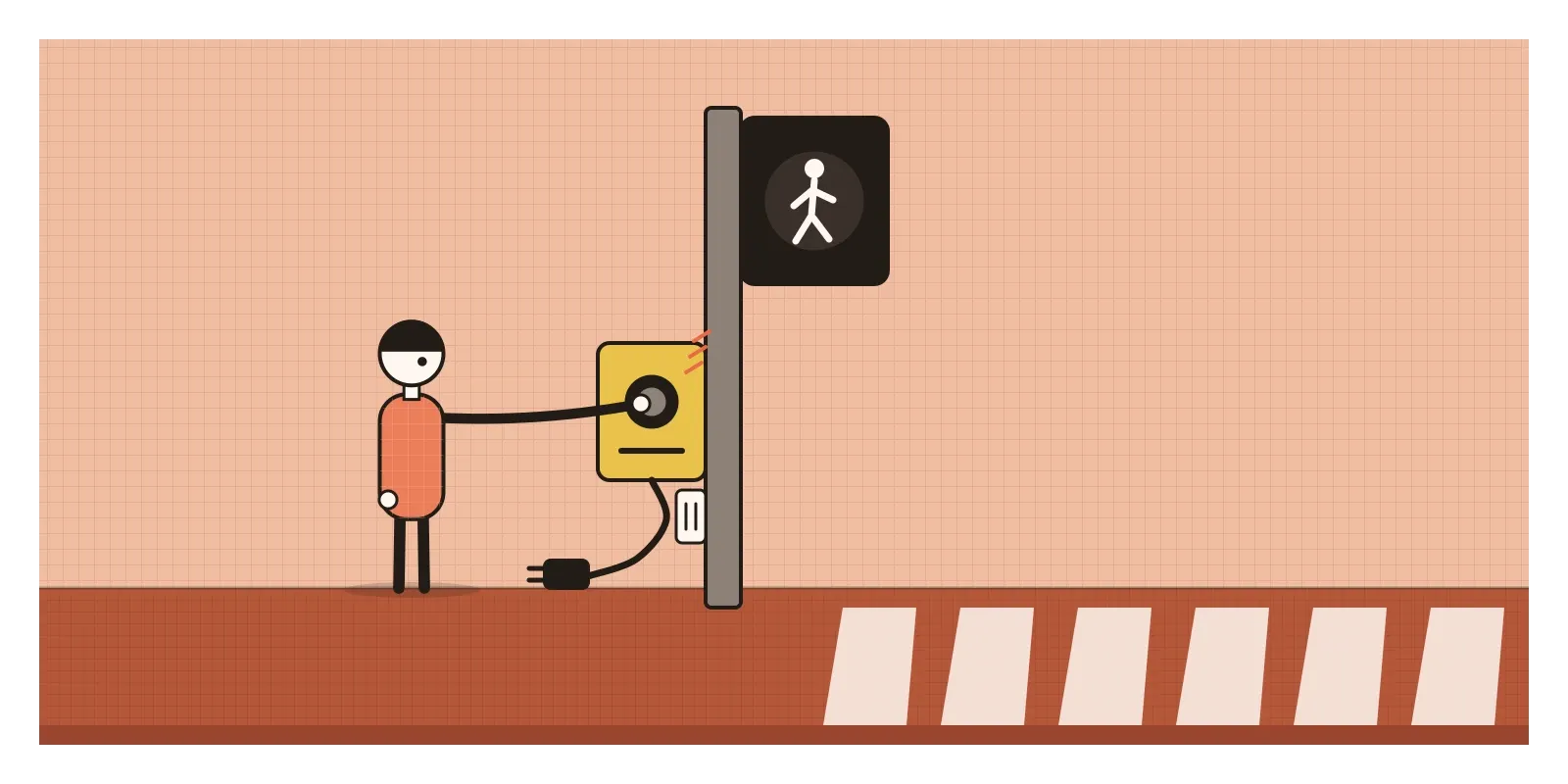
The same pattern turns up in other places. In many lifts, the door-close button does nothing in ordinary use, because the doors are timed to stay open long enough for people who move slowly; it may only work for engineers or firefighters with a key. Heating and cooling engineers have described fitting thermostats in open-plan offices that let people adjust a dial without changing anything.
Are these cruel tricks or small kindnesses? The Glass and Singer result suggests a placebo button really can make waiting feel less stressful. But many are leftovers rather than considered designs, and they teach people something false about how the world works. They also make it harder to trust the buttons that do work.
The hurry-up button
Picture a team designing the order-tracking screen for a food delivery app. The research is clear about one thing: waiting is where customers feel most helpless. They refresh the screen again and again, and a large share of support chats are some version of "where is my food?" In a planning meeting, someone suggests a "Hurry up" button on the tracking screen. It would send a polite notification to the delivery partner. Early tests suggest it cuts support chats noticeably. Customers like it.
Then an engineer asks what the notification actually does. The restaurant can't cook faster, and the rider is already on the way, riding through traffic and not looking at the phone. In practice, the button changes nothing about when the food arrives. It works because it gives customers something to do. It's a crossing button connected to nothing, and if customers ever figure that out, they'll trust the rest of the screen less too.
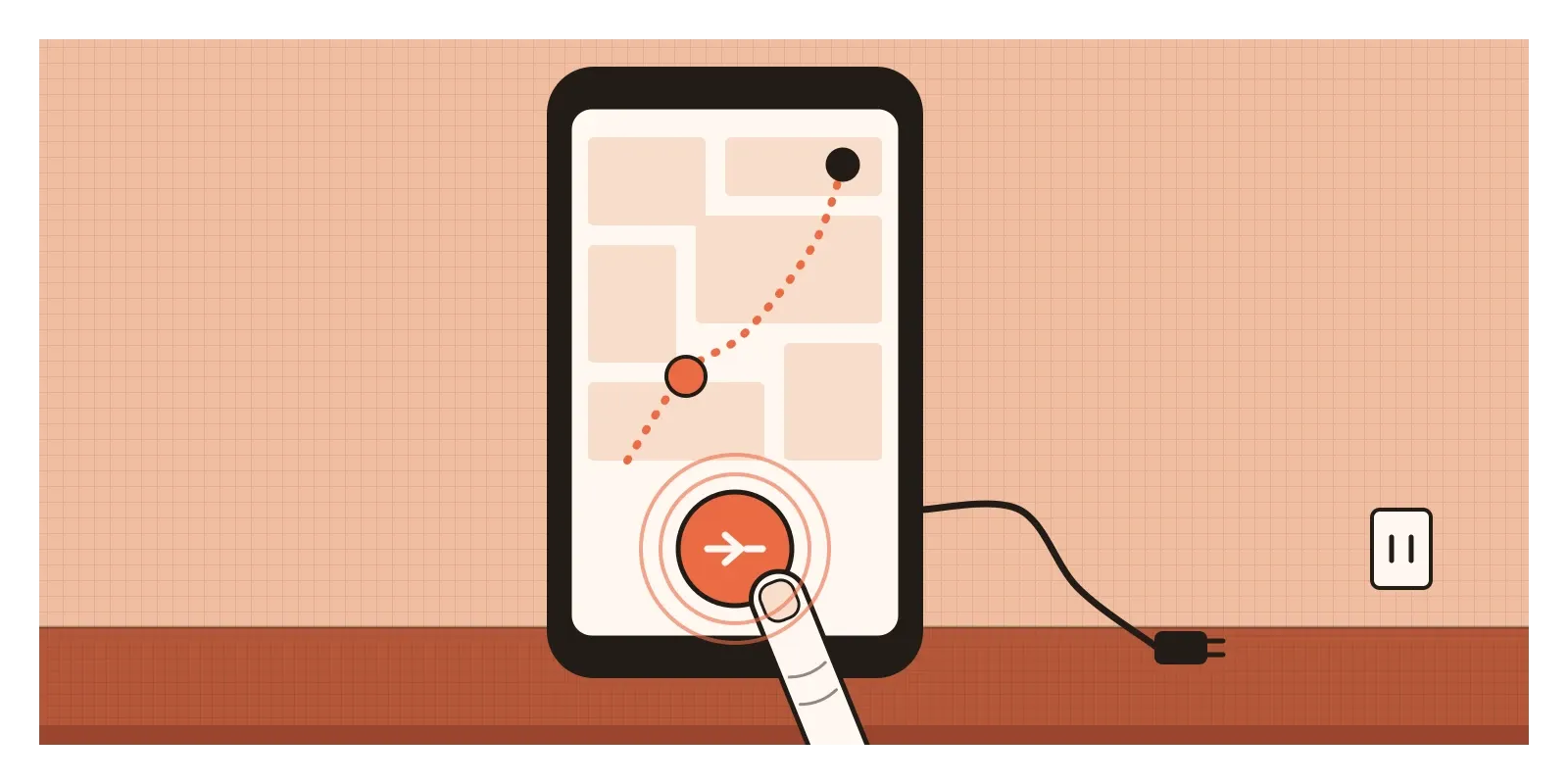
The better version gives people real control where it exists and honest information where it doesn't. Customers can change delivery instructions, call the rider, or cancel within a clear time window, because those actions do something. The map shows the rider's real position, updated often enough to see movement. The estimated arrival time is shown as a narrow range and updated honestly, including when it gets worse. And when there is genuinely nothing to do, the screen says so plainly, "Your food is being cooked. We'll tell you the moment it leaves", which lets people put the phone down. Certainty about what's happening turns out to calm people almost as well as a fake lever, without the lie.
Using it honestly, and where it becomes manipulation
Giving people a real sense of control is one of the kindest things an interface can do. An undo button, a clear progress indicator, the ability to choose a delivery slot or pause a subscription: these are genuine controls, and the feeling they give is accurate. The trouble begins when an interface makes chance feel like skill, or makes a passive outcome feel like the user's achievement, so that people risk more than they otherwise would.
Scratch cards, spin-the-wheel rewards and "pick a box" games in shopping and payment apps borrow the same features Langer found: choice, active involvement, a moment of suspense. Mostly the stakes are small. When the stakes are money, regulators have stepped in. In 2020, the Massachusetts Securities Division accused the trading app Robinhood of using game-like features, including showers of digital confetti after trades, to encourage frequent trading by inexperienced investors. Robinhood dropped the confetti in 2021, and in January 2024 settled the case for $7.5 million, agreeing not to use features that mimic games of chance for its Massachusetts customers. It didn't admit the allegations.
India has had a long argument about exactly where skill ends and chance begins. For years, real-money fantasy sports and card games online defended themselves as games of skill, and several courts accepted that for particular formats. In August 2025, Parliament passed the Promotion and Regulation of Online Gaming Act, which bans online games played for money, whether they rely on skill, chance or both, while promoting e-sports and social games. The law has been challenged in court, and reasonable people disagree about it. But the debate sits right on the illusion. Skill is real in many of these games, yet in a single short contest chance often decides, and a player who feels in control underestimates how much.
How I try to catch it
The first habit is a question I ask of every control I design: what does this actually change? If the honest answer is "nothing", the control should either be connected to something real or replaced with clear information.
The second is to separate the feeling of control from the fact of it when I read research. Users often tell us they want more control. Sometimes what they want is more certainty, and the most useful thing we can give them is a truthful account of what's happening and what they can do about it.
The third is personal. When I notice myself refreshing a dashboard on launch day, I ask whether anything I could do in the next hour depends on what I see. Usually the answer is no, and I'm throwing the dice harder for a high number.
Henslin's taxi drivers bet with their heads and threw with their hopes. I don't think that's a failing. It's what it's like to want something you can't fully control. Our job is to make sure the buttons we give people are honest about which kind of situation they're in. In the next post, on the representativeness heuristic, I'll look at a shortcut that judges how likely something is by how much it looks the part.
Further reading: Ellen Langer, "The Illusion of Control" (1975) · James Henslin, "Craps and Magic" (1967) · David Glass and Jerome Singer, Urban Stress: Experiments on Noise and Social Stressors (1972) · Suzanne Thompson, "Illusions of Control: How We Overestimate Our Personal Influence" (1999) · Lauren Alloy and Lyn Abramson, "Judgment of Contingency in Depressed and Nondepressed Students: Sadder but Wiser?" (1979)
The question to askDoes this button actually change anything?