Equivocation
How a single word can quietly change its meaning halfway through an argument, and carry us along with it.
Equivocation
Nobody on the road
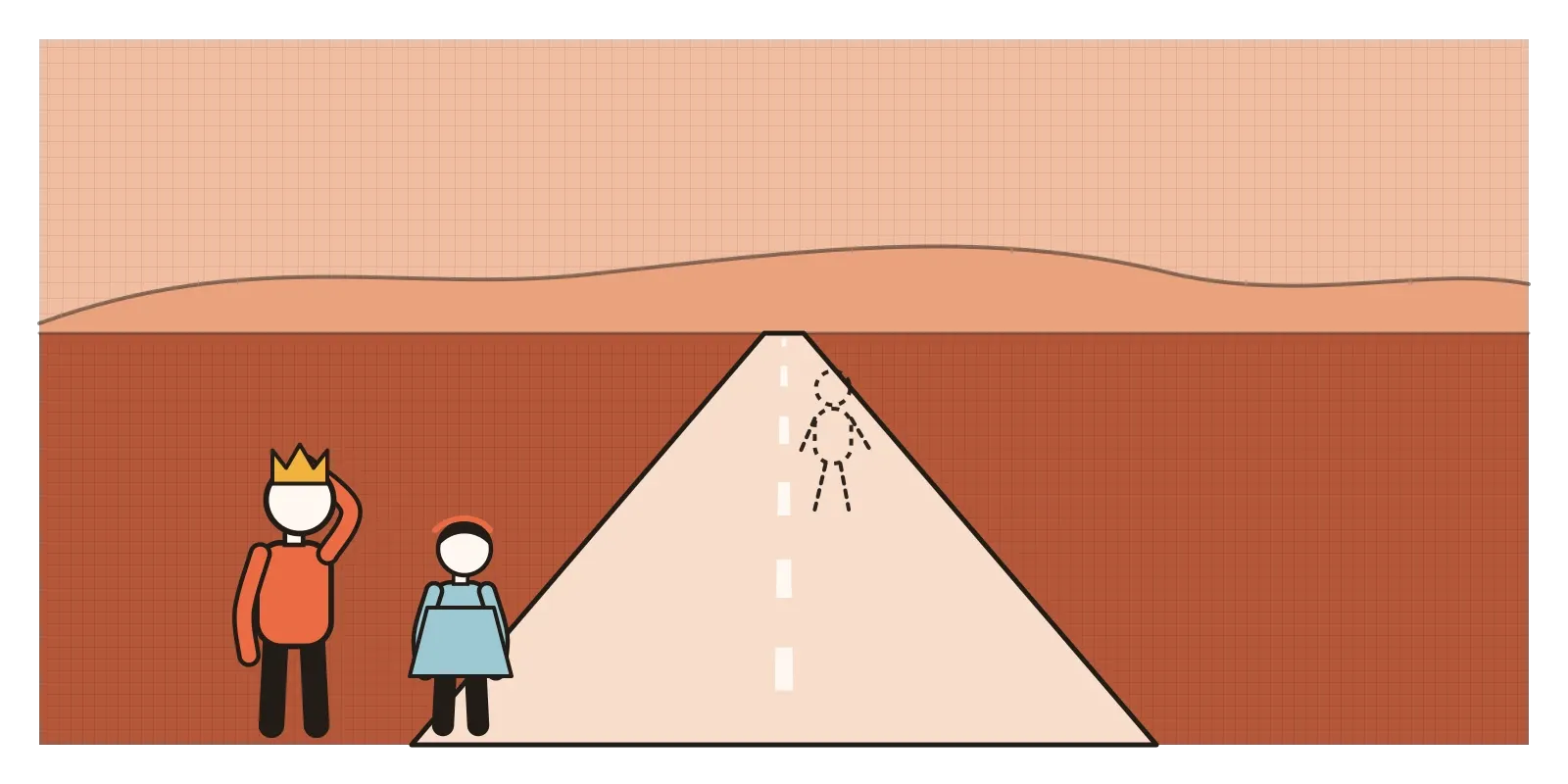
Charles Dodgson taught mathematics at Christ Church, Oxford, and wrote books on logic. Under the name Lewis Carroll, he also wrote some of the funniest arguments in English. In Through the Looking-Glass, published at the end of 1871, Alice meets the White King, who is waiting for his messengers. He asks her to look down the road and tell him whether she can see either of them. She says she sees nobody on the road. The King sighs that he wishes he had such eyes, to be able to see Nobody, and at that distance too.
When a messenger finally arrives, out of breath, the King asks whom he passed on the road. "Nobody," says the messenger. The King agrees: the young lady saw him too, so Nobody must walk slower than the messenger. The messenger protests that nobody walks much faster than he does. In that case, says the King, Nobody would have arrived first. The whole exchange works by treating "nobody", a word that means the absence of a person, as if it were the name of a person, a traveller who can be seen, overtaken and timed.
A few pages earlier, Humpty Dumpty tells Alice that when he uses a word, it means just what he chooses it to mean. Carroll was making fun of something logicians had worried about for a very long time. A word can do one job in one sentence and a different job in the next, and an argument can slide from one to the other without anyone noticing.
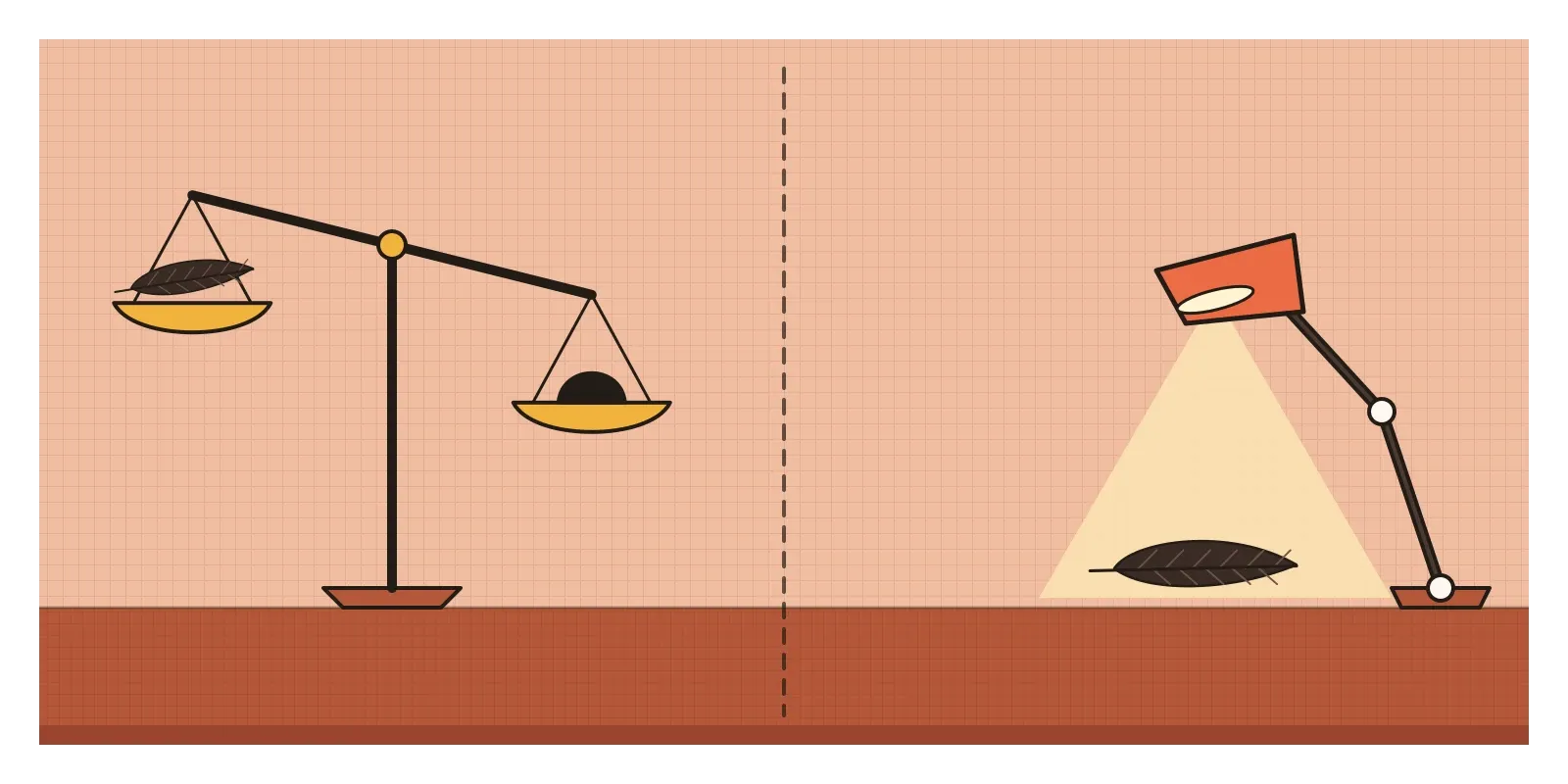
This is equivocation: using a word or phrase in two different senses within the same argument, so that the conclusion seems to follow when it doesn't. Its Greek name in logic is homonymy, from the idea of two things sharing a name. In the classic textbook example, a feather is light, what is light cannot be dark, so a feather cannot be dark. The first "light" is about weight. The second is about colour. Each premise sounds true, and the argument looks valid, but it rests on a single word wearing two hats. In real life, the hats are much harder to spot.
One word, two jobs
In Sophistical Refutations, Aristotle divides misleading arguments into two families. Some depend on the facts, others on language, and of the language ones he lists six. Equivocation is the first, where a single word carries more than one meaning. Close beside it is amphiboly, where a whole sentence can be read two ways because of its grammar rather than any one word. The most famous ambiguity in ancient history is of this kind. Herodotus tells how King Croesus of Lydia asked the oracle at Delphi whether he should attack Persia, and was told that if he did, he would destroy a great empire. He attacked, and a great empire was destroyed. It was his own.
Modern philosophers have described subtler versions. In 1938, the philosopher Charles Stevenson wrote about what he called persuasive definitions. A word like "freedom" or "democracy" carries warm feelings. If you redefine it, so that "true freedom" means something narrower or quite different, you can keep the warm feelings while swapping the meaning underneath. A more recent name for a related trick is the motte-and-bailey, coined by the philosopher Nicholas Shackel in 2005 after a kind of medieval castle. A bailey is a pleasant, open yard that's hard to defend. A motte is a small steep mound with a tower on it. Someone makes a bold claim, the bailey, and when it's challenged, retreats to a modest and obviously true claim, the motte, that happens to use the same words. Once the challenger leaves, they walk back out into the yard.
You can hear everyday equivocation in the phrase "evolution is just a theory". In ordinary speech, a theory is a hunch. In science, a theory is a well-tested explanation that ties together a large body of evidence, like the theory of gravity. The sentence borrows the respect of the scientific word and the weakness of the everyday one at the same time.
Why we don't notice the switch
Language is full of words that mean several things, and most of the time that's fine, because context sorts them out instantly. The Oxford English Dictionary lists hundreds of senses for the verb "run" alone. We cope with this so smoothly that we stop checking. Psychologists have shown how shallowly we often process meaning. In 1981, Thomas Erickson and Mark Mattson asked people questions like "How many animals of each kind did Moses take on the ark?" Most answered "two" without noticing that it was Noah, not Moses, who built the ark. If a name can slip past us like that, a word that quietly changes meaning halfway through a paragraph certainly can.
We're also poor judges of how clearly we've been understood. In a 2002 study, Boaz Keysar and Anne Henly asked people to read out sentences that could be taken two ways, while intending one particular meaning, and then to guess whether their listener had understood the meaning they intended. The speakers consistently overestimated how often they'd been understood. Inside our own heads, our meaning is obvious. That's exactly why we rarely stop to define our terms, and why a word that means one thing to me and another to you can travel through a whole meeting unexamined.
And sometimes the switch is useful to someone. A word that sounds generous in an advertisement and turns out to be narrow in the small print is not an accident of language. It's a design decision.
What "unlimited" turned out to mean
In 2014, the United States Federal Trade Commission sued AT&T over its "unlimited" mobile data plans. The FTC said that, from 2011, the company had sharply slowed the internet speeds of customers on those plans once they used a certain amount of data in a billing cycle, in some cases by nearly ninety percent, so that ordinary things like browsing and streaming became difficult. Customers who had chosen the plan precisely because it was unlimited found that it was unlimited in one sense, they were never cut off, and quite limited in another, the sense they cared about. In 2019, AT&T agreed to pay sixty million dollars to settle the case, with the money going to refunds for affected customers.
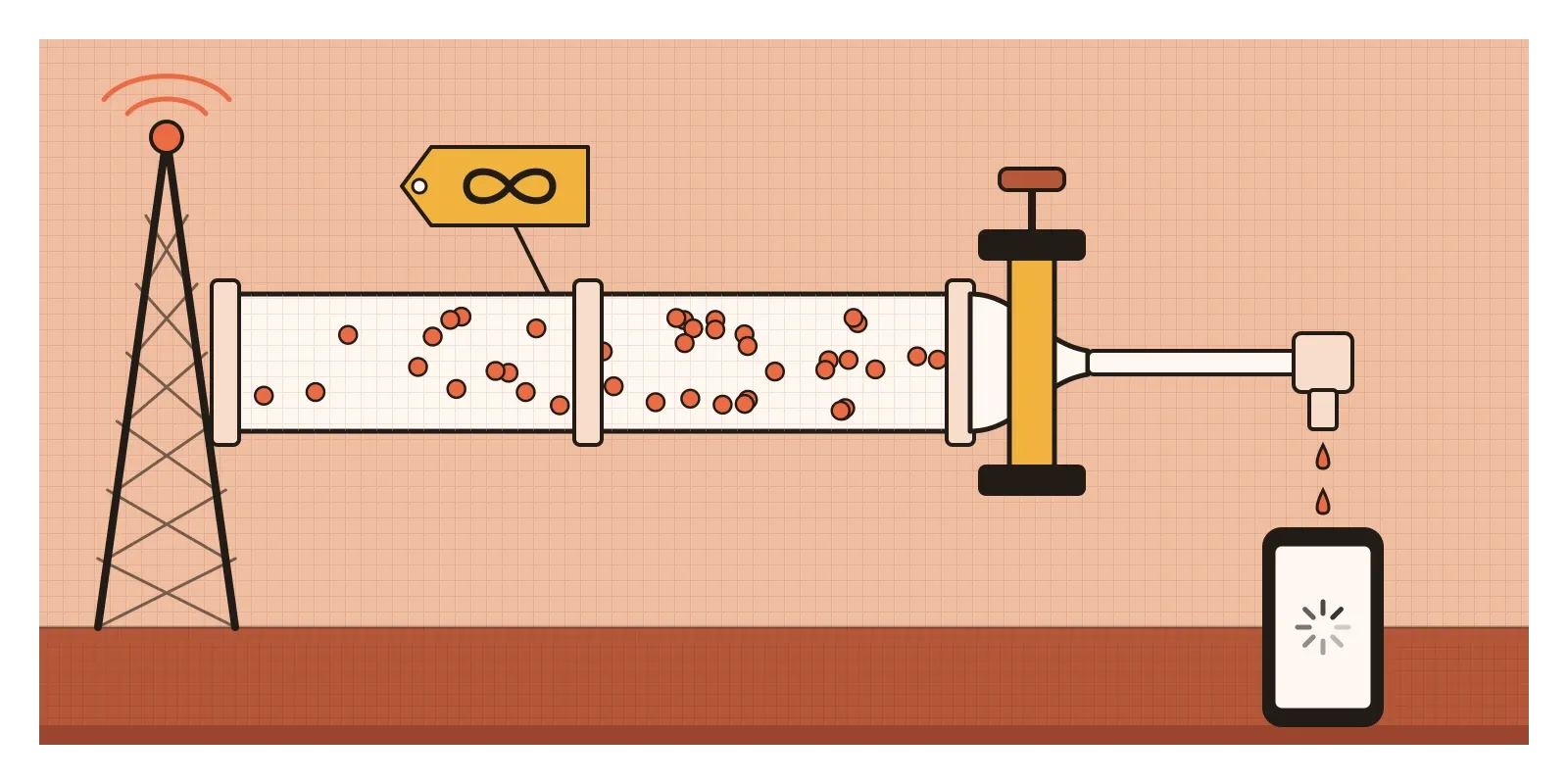
Anyone who has bought a prepaid plan in India will recognise the pattern. For years, many plans have been sold as "unlimited", with a daily allowance of high-speed data, after which the speed drops so low that most apps barely work. It's usually disclosed, often under a heading like "fair usage policy", and I don't think most of us feel cheated by it any more, because we've learned what the word means on a telecom poster. But that learning is the point. "Unlimited" has quietly become a word with two meanings, the one in the dictionary and the one in the plan, and the advertising works by letting the first one do the selling.
Product teams have their own versions of these words. "Free" can mean free for fourteen days. "Private" can mean not shown to other users, while still being used to train a model. "Instant" can mean within a working day. None of these is necessarily a lie. Each becomes an equivocation when the warm meaning is used to persuade and the narrow one is used to defend.
Picture a launch built on one word
Picture a team building an AI feature that summarises meetings. Before launch, the machine learning engineers run an evaluation on a set of recorded test meetings. They check each summary for one thing, whether it invented anything that wasn't said, and 94% of the summaries pass. In the evaluation report, this is written up, accurately, as "94% accuracy on our hallucination benchmark".
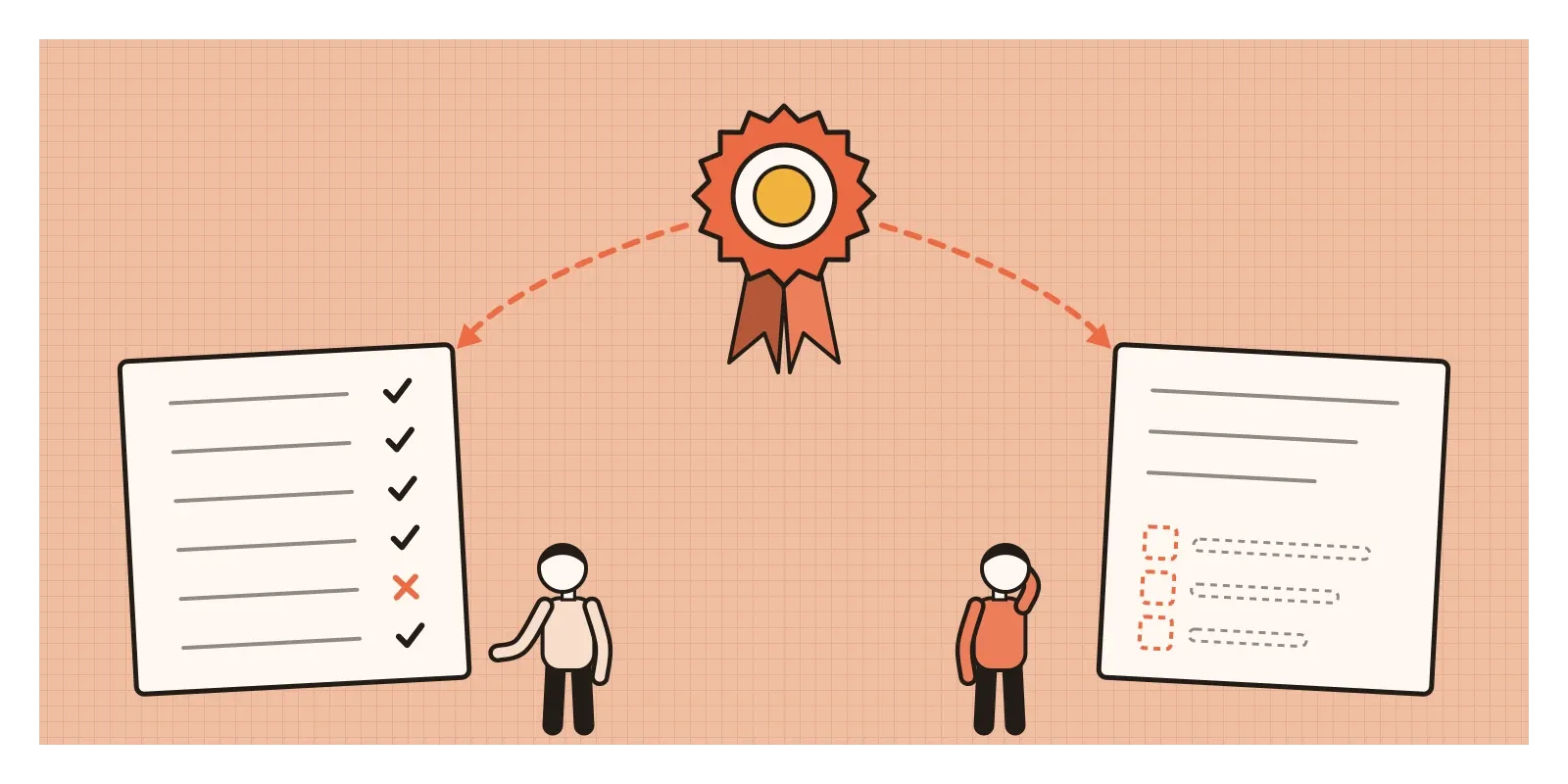
Then the word starts to travel. In the launch review, a slide says "94% accurate". On the landing page it becomes "accurate summaries of every meeting". Users read "accurate" the way anyone would: the summary captures what mattered. A month later, support tickets pile up from people whose summaries missed the decisions and action items that were the whole reason for the meeting. In the review of those tickets, someone says, "But our accuracy is 94%." Every sentence in that story was said honestly. The argument still fails, because the "accuracy" in the evaluation and the "accuracy" the users expected were never the same thing.
The honest version doesn't avoid the word. It pins it down. "In 94% of our test meetings, the summary contained nothing that wasn't said. We haven't yet measured how often it captures every decision and action item." That second sentence is uncomfortable, but it points straight at the next thing the team should measure, and it gives the designers something concrete to design for, like a clear list of action items that people can check and correct.
When a double meaning is honest
Not every double meaning is a fallacy. Puns, jokes and poetry live on words with two meanings, and Carroll's road full of Nobody is a delight precisely because we're in on the game. Words also change their meanings over time, and using a word in its newer sense isn't a trick. In research, a deliberately open question, like "tell me about the last time you managed money at home", can be more useful than a precise one, because it lets people choose which meaning matters to them.
Some ambiguity isn't an argument at all, just a misunderstanding, and it can still be costly. In September 1999, NASA lost its Mars Climate Orbiter as it arrived at Mars. One team's software reported thruster data in pound-force units while the navigation team's software expected metric units. Nobody was trying to win an argument. Two groups simply assumed a shared meaning that wasn't there. The remedy, though, is the same one that defeats equivocation: say exactly what you mean, and check that the other person means it too.
The test for the fallacy is whether the conclusion depends on the word keeping one meaning throughout. If you can replace the word with its definition at every step and the argument still works, it's sound. If the argument only works when you leave the word alone, it was riding on the ambiguity.
How I try to catch it
The first thing I do is listen for words that are doing heavy lifting. In design conversations they're usually words like "simple", "users", "engagement", "accurate", "private" and "AI". When one of them is carrying the conclusion of an argument, I ask: what exactly do we mean by that word, in this argument?
The second is the substitution test. I replace the word with its plain definition in each sentence and read the argument again. If the argument holds, good. If it suddenly sounds silly, the word was changing meaning along the way.
The third is a small team habit. For the metrics we talk about most, I like to keep a short shared glossary: what counts as an active user, what counts as a completed task, what "accuracy" measures and what it doesn't. It feels bureaucratic until the day it saves a launch.
Carroll's White King never did find out that Nobody wasn't a person. He was perfectly logical. He just never asked what the word meant. In the next post I'll look at a different trap, rejecting a good solution because it isn't perfect: the nirvana fallacy.
Further reading: Aristotle, Sophistical Refutations · Lewis Carroll, Through the Looking-Glass (1871) · C. L. Hamblin, Fallacies (1970) · Douglas Walton, Fallacies Arising from Ambiguity (1996) · Charles L. Stevenson, "Persuasive Definitions" (1938)
The question to askWhat exactly do we mean by that word?