False Analogy
When two things are alike in one way, and we assume they must be alike in the way that matters.
False Analogy
Canals on a dying planet
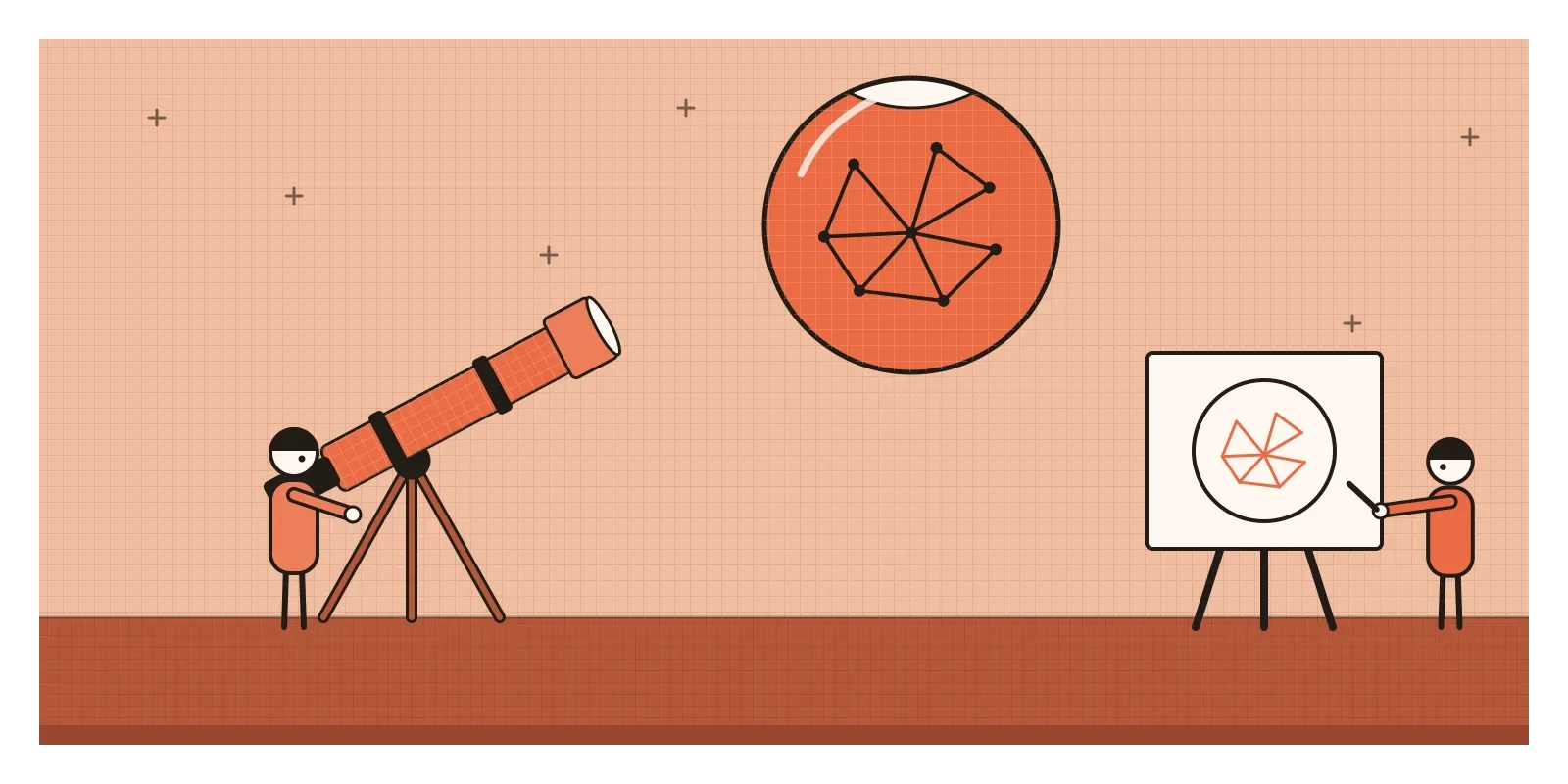
In 1894, Percival Lowell, a wealthy Bostonian with a passion for astronomy, built an observatory on a hill above Flagstaff, Arizona, where the air was clear and steady. He wanted to study Mars. Seventeen years earlier, the Italian astronomer Giovanni Schiaparelli had mapped a network of fine dark lines across the planet and called them canali, a word that can mean channels as easily as canals. Lowell spent much of the next two decades drawing hundreds of them.
His conclusion, set out in Mars (1895) and the books that followed, was dramatic. Mars, like Earth, has seasons, a day only a little longer than ours, and white polar caps that grow in winter and shrink in summer. On Earth, a planet like that has water, life and, eventually, engineers. So, Lowell argued, the lines were canals, dug by a civilisation trying to carry water from the melting poles across a drying world. The dark patches that seemed to change with the seasons were fields of crops.
In 1907, Alfred Russel Wallace, the naturalist who had worked out natural selection at the same time as Darwin, published a short book in reply called Is Mars Habitable? He didn't dispute the seasons or the polar caps. He pointed to the differences Lowell had passed over: Mars is much farther from the Sun and its air is far thinner, so by his reckoning it was far too cold for water to flow in open channels. His answer to his own title was no.
In July 1965, the American probe Mariner 4 flew past Mars and sent back the first close-up photographs. They showed a dry, cratered surface and no canals. Most of the lines had been an illusion, the eye joining faint markings at the limit of what a telescope could show.
Lowell's comparison wasn't silly. Mars and Earth really do share seasons and polar caps. But the conclusion he wanted, flowing water and living engineers, depended on warmth and air, and those were exactly where the two planets differed. This is the false analogy, also called the weak or faulty analogy. It runs like this: A and B are alike in some ways, A has a certain property, so B must have it too. The argument fails when the ways in which they're alike aren't the ones that property depends on, or when a difference that matters is quietly ignored.
It's a close cousin of false equivalence, from the last post, with one more step: because two things share some features, we assume they share another one as well.
Alike in one way, so alike in another
Mars has a long history in this argument. In 1785, the Scottish philosopher Thomas Reid, in his Essays on the Intellectual Powers of Man, observed that the planets resemble Earth in many ways. They circle the Sun, borrow their light from it, turn on their axes and obey the same law of gravity, so it isn't unreasonable, he suggested, to think they might be inhabited too. Reid called this a probable argument, not a proof, and logic textbooks have used his passage for generations as the model analogy.
Those textbooks offer a few tests of strength: how many similarities there are, whether there are important differences, and how modest the conclusion is. The test that matters most is relevance. A hundred shared features count for nothing if none of them is connected to the property you're trying to infer. Reid's list of similarities was long, but orbiting the Sun has very little to do with whether anything can live on a planet.
Philosophy's most famous analogy shows how hard relevance can be. In Natural Theology (1802), William Paley imagined finding a watch on a heath: its parts fit together so precisely that it must have had a maker, and the living world shows the same fit. Decades earlier, in Dialogues Concerning Natural Religion (1779), David Hume had given one of his characters a reply. The world resembles a machine in some ways, Philo says, but also an animal or a plant, things that grow rather than being built. Why choose the machine? Whatever you think of the conclusion, Hume's move is useful: when an analogy seems to prove something, look for a rival analogy that points the other way.
Older medicine offers a plainer warning. Many European herbalists once followed the doctrine of signatures, the belief that a plant's appearance showed what it could heal. A walnut looked like a brain in a skull, so it must be good for the head. The resemblance was real. It just had nothing to do with healing.
Why a good comparison feels like proof
Analogy isn't a defect in how we think. It's one of the main ways we think. We learn new ideas by mapping them onto old ones: the heart is a pump, electricity flows like water. A good comparison makes something strange feel familiar in a sentence.
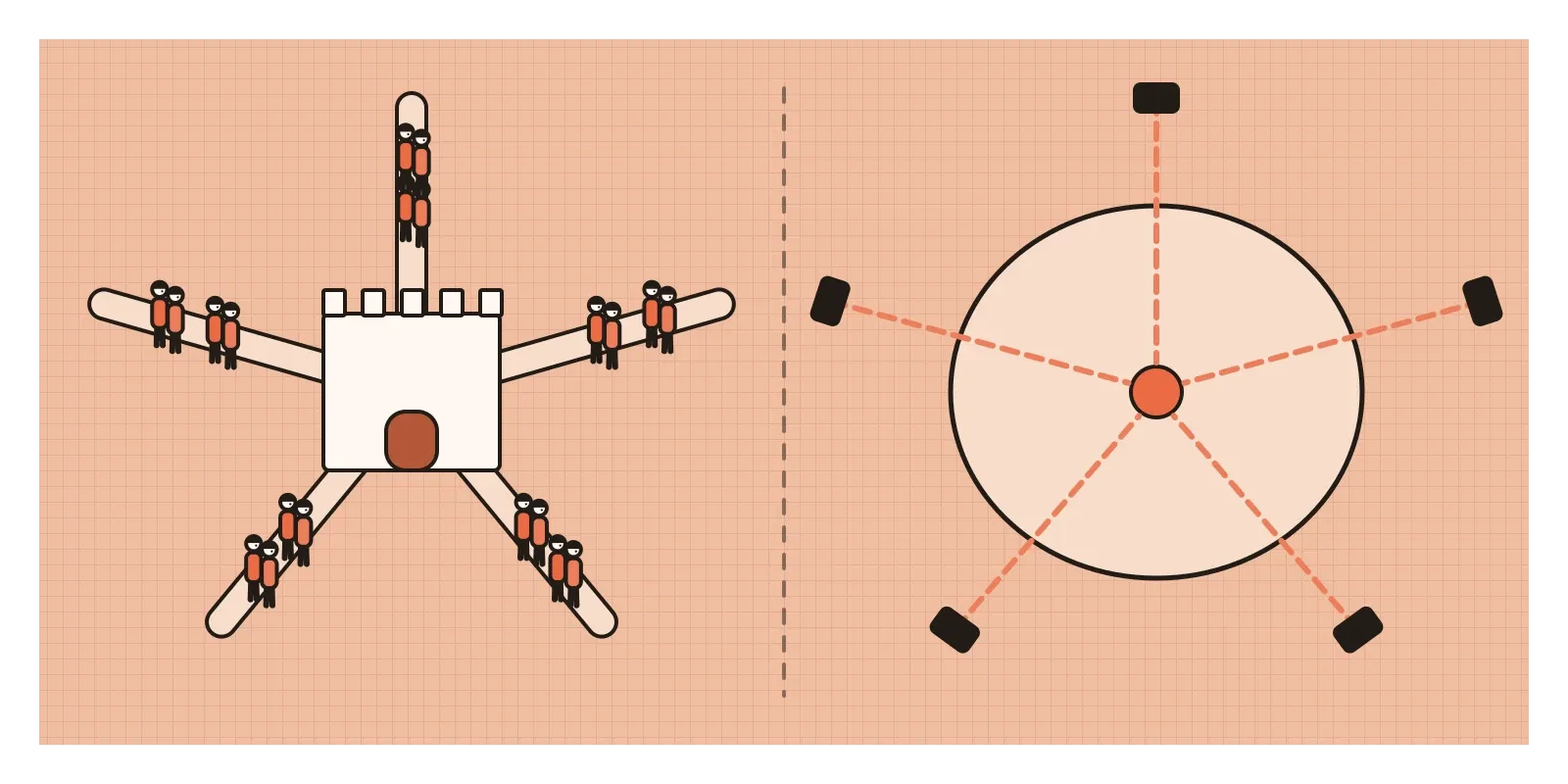
The trouble is that the comparisons that come to mind most easily are often the shallowest. In 1980, the psychologists Mary Gick and Keith Holyoak gave students a puzzle first posed by Karl Duncker. A tumour can be destroyed by rays, but rays strong enough to destroy it would also destroy the healthy tissue around it. The answer is several weak rays from different directions that meet at the tumour. Beforehand, some students read a story about a general who split his army into small groups to attack a fortress along several mined roads at once. The story contains the answer, yet few students used it on their own. When told it might help, most solved the puzzle.
The psychologist Dedre Gentner explained why. In her structure-mapping theory, a sound analogy carries over relationships, how the parts of a situation act on each other, rather than surface features. Her studies with colleagues found that people are mostly reminded of things by surface similarity, even though they judge analogies with deeper shared structure to be more sound. So the comparisons that pop into our heads in a meeting are often the surface kind, and they feel like insight because they arrive quickly.
Business makes it worse, because an analogy is the fastest pitch there is. Around 2015, Indian start-up pitches were full of "the Uber for" something: groceries, laundry, home services. The comparison captured something true, you tap your phone and someone comes to you, and skipped the economics. A taxi ride is one trip for one fare. A grocery order means stocking shelves, picking items and delivering a small, often discounted basket. Several well-funded grocery start-ups, including PepperTap, shut down or pulled out of many cities in 2016. Grocery delivery came back years later in a different form, built around small dark stores, which suggests the demand was real. It was the borrowed model that didn't fit.
Five hundred times below the safe dose
On 13 March 2006, eight healthy young men took part in the first human trial of an experimental drug called TGN1412, at a clinical research unit at Northwick Park Hospital in north-west London. The drug, made by the German company TeGenero, was an antibody designed to switch on immune cells called T cells through a molecule on their surface called CD28. Six men received the drug and two a placebo. Within a couple of hours the six were in severe pain as their immune systems went into overdrive, a reaction known as a cytokine storm, and all six ended up in intensive care. All survived, but some suffered lasting harm.
The dose they were given was about 500 times smaller than a dose that had been tested in macaque monkeys without serious effects. Behind that margin sat an ordinary argument by analogy. Macaques are close relatives with very similar immune systems, and the drug bound to their CD28 much as it did to ours. Medicine relies on reasoning like this all the time, and usually it holds.
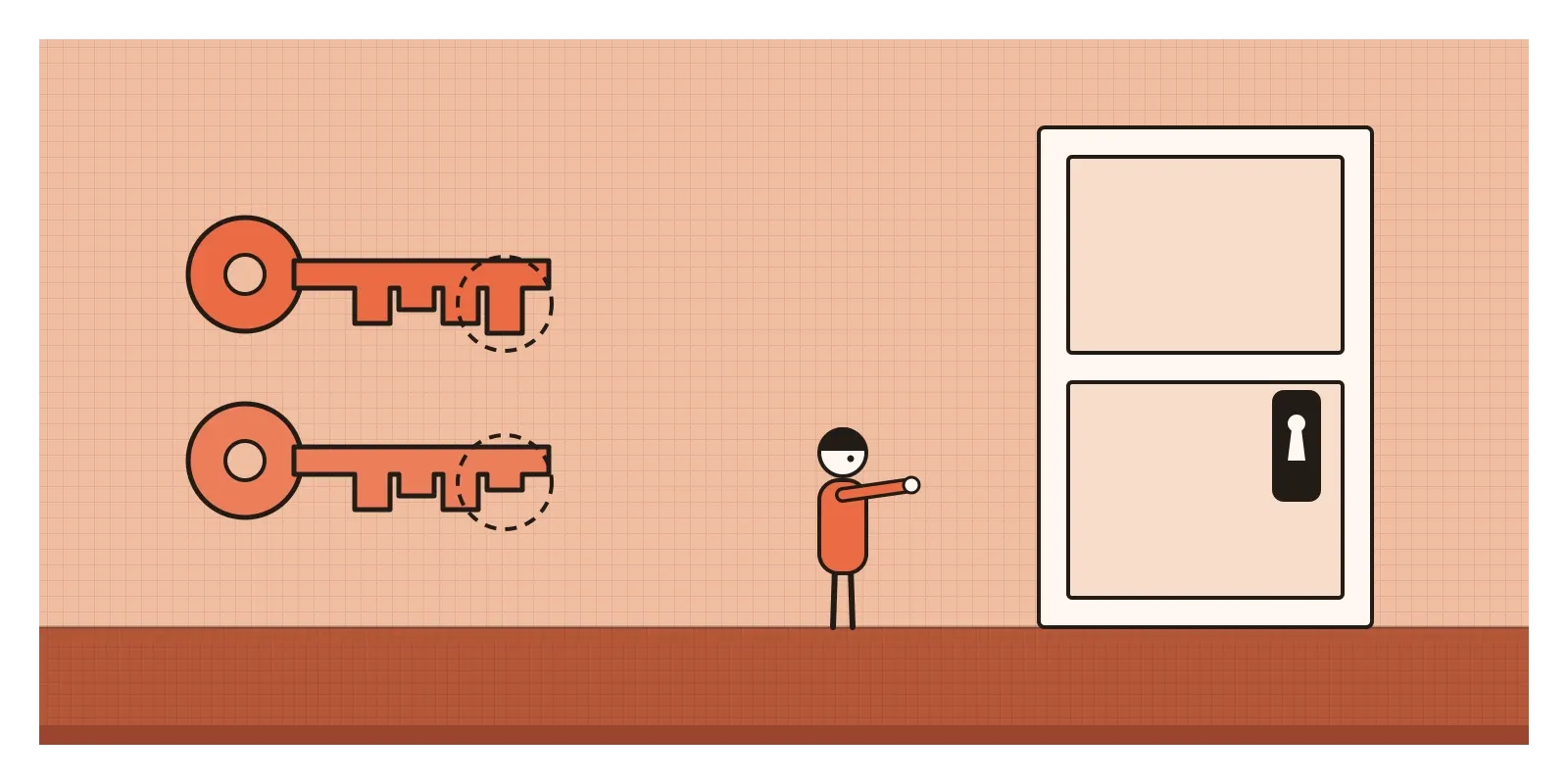
This time a single difference broke it. Later research found that in humans a group of T cells called effector memory cells carry CD28, while in these monkeys the same cells largely don't. The animals were alike in almost every way except the one that mattered for this particular drug.
An expert group chaired by Professor Gordon Duff reported later that year. It recommended that for high-risk drugs, starting doses be based on the lowest dose expected to have any effect in humans, not only on what animals tolerated, and that volunteers receive a new drug one at a time. In other words, use the analogy, but check that it holds for the mechanism you're relying on.
One tap to reorder your medicine
Picture a team building an online pharmacy app whose customers don't come back often enough. In a roadmap review, someone points out that food delivery apps grew by making repeat orders effortless: your last order waits on the home screen, and one tap places it again. "Medicines are repeat purchases too. Let's do exactly what they did." Everyone nods, because in one respect the comparison is a good one. Many customers really do buy the same things every month.
Now walk through what one-tap reordering depends on in food delivery. Ordering the same thing again is harmless, nothing has expired, and a wrong order is a disappointment, not a danger. None of that carries over to medicines. Prescriptions run out. Doses change after a check-up. A doctor may stop one medicine and start another, and many medicines in India can legally be sold only against a valid prescription. A button that silently repeats last month's basket could send someone a medicine their doctor has just stopped.
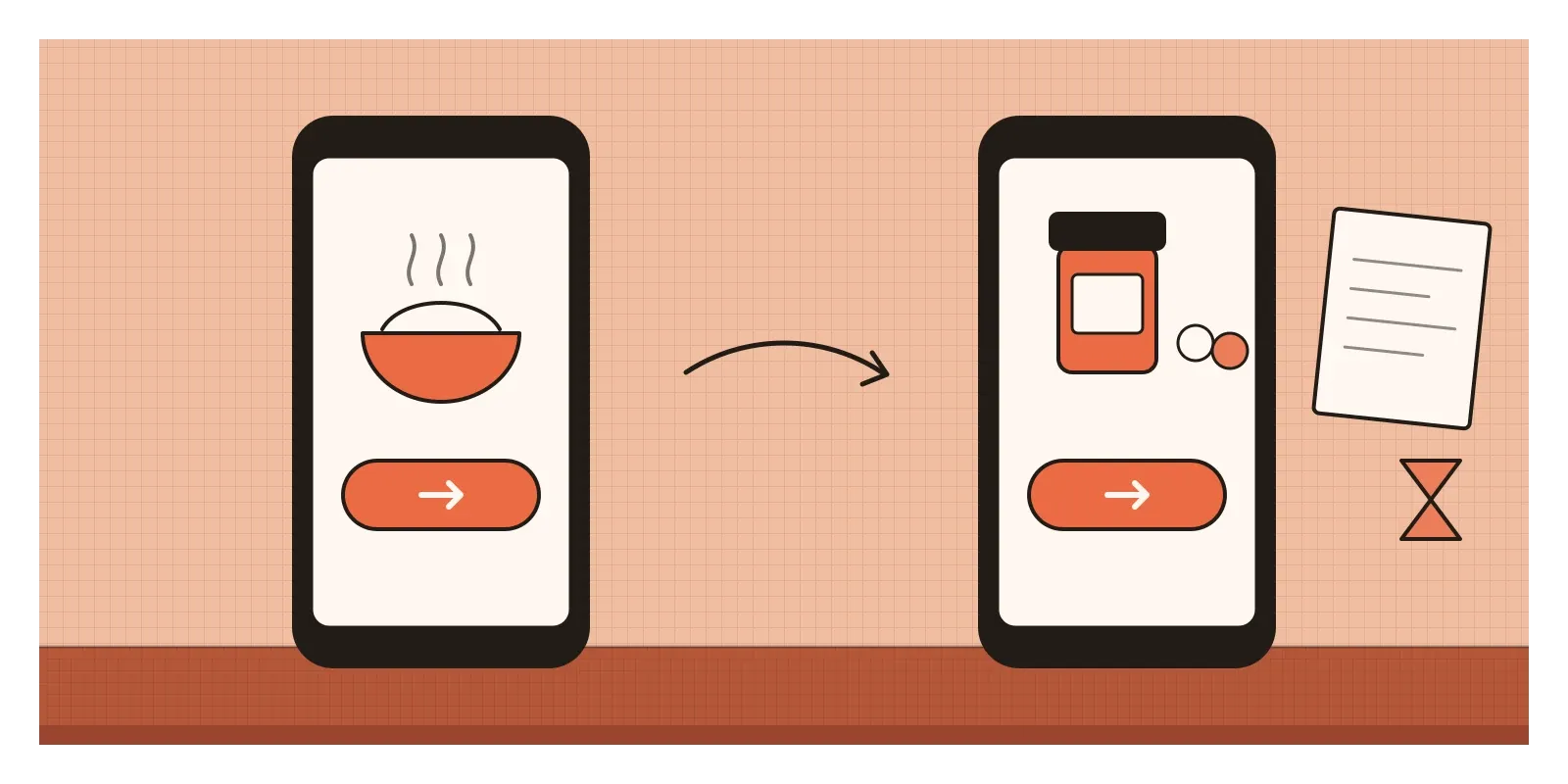
The better version keeps the analogy as a source of ideas and tests each one against the new situation. The team writes down what made reordering work for food, line by line, and asks whether each line is true for medicines. Some ideas transfer: remembering the basket, a reminder before someone runs out. Others need redesigning: checking the prescription is still valid, and asking whether the doctor has changed anything since the last order. The finished feature still owes something to food delivery. It just doesn't pretend that a strip of tablets is a plate of biryani.
When a comparison earns its keep
None of this makes analogies suspect. Courts in common-law countries, India among them, reason largely from precedent. A judge asks whether the case in front of her is like an earlier one in the ways that mattered to that decision. Lawyers win by showing the likeness, or by distinguishing the precedent: pointing to a difference that matters. That's the whole discipline of analogy in one courtroom habit.
Engineers test scale models in wind tunnels, and most new drugs still begin in animals, because these comparisons usually hold and people have learned which differences to watch for. The mathematician George Pólya, in How to Solve It (1945), advised anyone stuck on a problem to ask whether they knew a related problem that had already been solved.
The difference is in what the analogy is asked to do. It's a wonderful way to find an idea, explain it or decide what to test. It becomes a fallacy when it replaces the test, and when the shared features have nothing to do with the conclusion.
How I try to catch it
When someone, often me, says "it's just like", I draw two columns: how the two things are alike, and how they differ. Then I ask which column the conclusion depends on. The likenesses are usually real. The question is whether they're doing the work.
The second habit is Hume's. I try to find a rival analogy. If I can make an equally convincing comparison that points the other way, then neither comparison proves much, and I need evidence instead.
The third is to let the analogy choose the experiment rather than skip it. "It worked for them" is a good reason to try something small, not a reason to assume it will work for us.
Percival Lowell looked at Mars and saw Earth. The likeness was real, and it carried him a long way in the wrong direction. Wallace asked where the comparison broke, and found the answer in the cold. In the next post I'll look at an argument that doesn't try to persuade us with a comparison at all, but with a feeling: the appeal to emotion.
Further reading: Thomas Reid, Essays on the Intellectual Powers of Man (1785) · David Hume, Dialogues Concerning Natural Religion (1779) · Keith Holyoak and Paul Thagard, Mental Leaps: Analogy in Creative Thought (1995) · Douglas Hofstadter and Emmanuel Sander, Surfaces and Essences (2013) · Expert Scientific Group on Phase One Clinical Trials, Final Report (2006)
The question to askWhere does this comparison break?