The Fundamental Attribution Error
Why we blame people's character for what their situation made almost inevitable.
The Fundamental Attribution Error
A light that said the valve was closed
Just after four in the morning on 28 March 1979, a pump stopped in the second reactor at Three Mile Island, a nuclear power station on an island in the Susquehanna River in Pennsylvania. The reactor shut itself down, as it was designed to, and pressure inside the cooling system rose. A relief valve opened to let some of it out. A few seconds later it should have closed again. It didn't. It stayed stuck open, and cooling water began to escape.
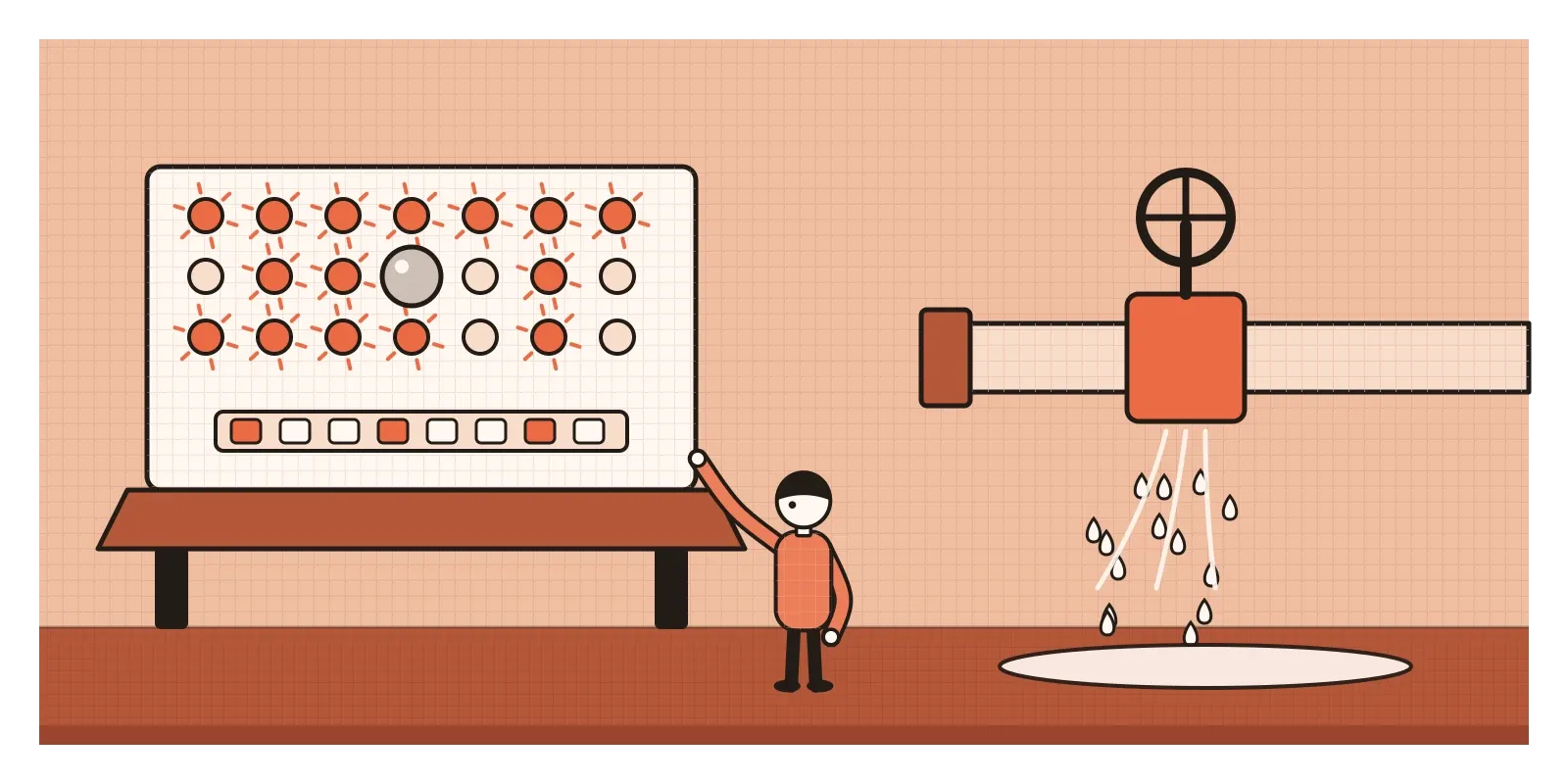
In the control room, a light on the panel went out, which the operators read as meaning the valve had closed. In fact the light only showed that the signal to close had been sent. Nothing on that panel told them where the valve actually was. Alarms were going off by the dozen. One gauge suggested the system was filling with too much water, and the operators had been trained above all to avoid that, so they cut back the emergency cooling. For more than two hours the reactor lost water while the people in charge of it believed the opposite. By the end of the morning, about half of the core had melted.
The first explanation that reached the public was operator error. The men on shift had made the wrong decisions, and in a narrow sense that was true. But the presidential commission led by John Kemeny, which reported that October, looked wider. It found operators trained for the wrong emergencies, procedures that were confusing, a regulator and a utility that hadn't passed on lessons, and a control room that made the real problem very hard to see. A similar valve had stuck open at the Davis-Besse plant in Ohio eighteen months earlier, and operators there had made a similar move. The cognitive scientist Don Norman, who was asked afterwards to look at why the operators had erred, came away convinced that the design of the control room had done much of the damage.
That gap, between "they made a mistake" and "anyone in that chair would probably have made it", is the subject of this post. The fundamental attribution error is our tendency to explain other people's behaviour by their character, ability or intentions, while underestimating the situation they were in. Psychologists also call it correspondence bias, because we assume people's actions correspond to who they are. It's a habit of looking: we see the person clearly, and the situation hardly at all.
Essays about Castro and a rigged quiz
The groundwork was laid by the Austrian-born psychologist Fritz Heider, whose 1958 book The Psychology of Interpersonal Relations described ordinary people as amateur scientists of each other. When we watch someone act, Heider said, we sort the cause into two bins: something about the person, or something about the circumstances. He noticed that the person bin tends to win, because the person is what we're looking at.
In 1967, Edward Jones and Victor Harris at Duke University tested this directly. They gave students short essays about Fidel Castro's Cuba, some in favour and some against, and asked them to guess what the writer really believed. Some students were told the writer had chosen which side to argue. Others were told the side had been assigned, by a debate coach or an instructor. You'd expect the assigned essays to tell readers nothing about the writer's views. They didn't work that way. Even when students knew the writer had no choice, they still judged the author of a pro-Castro essay to be fairly pro-Castro. The result surprised Jones himself.
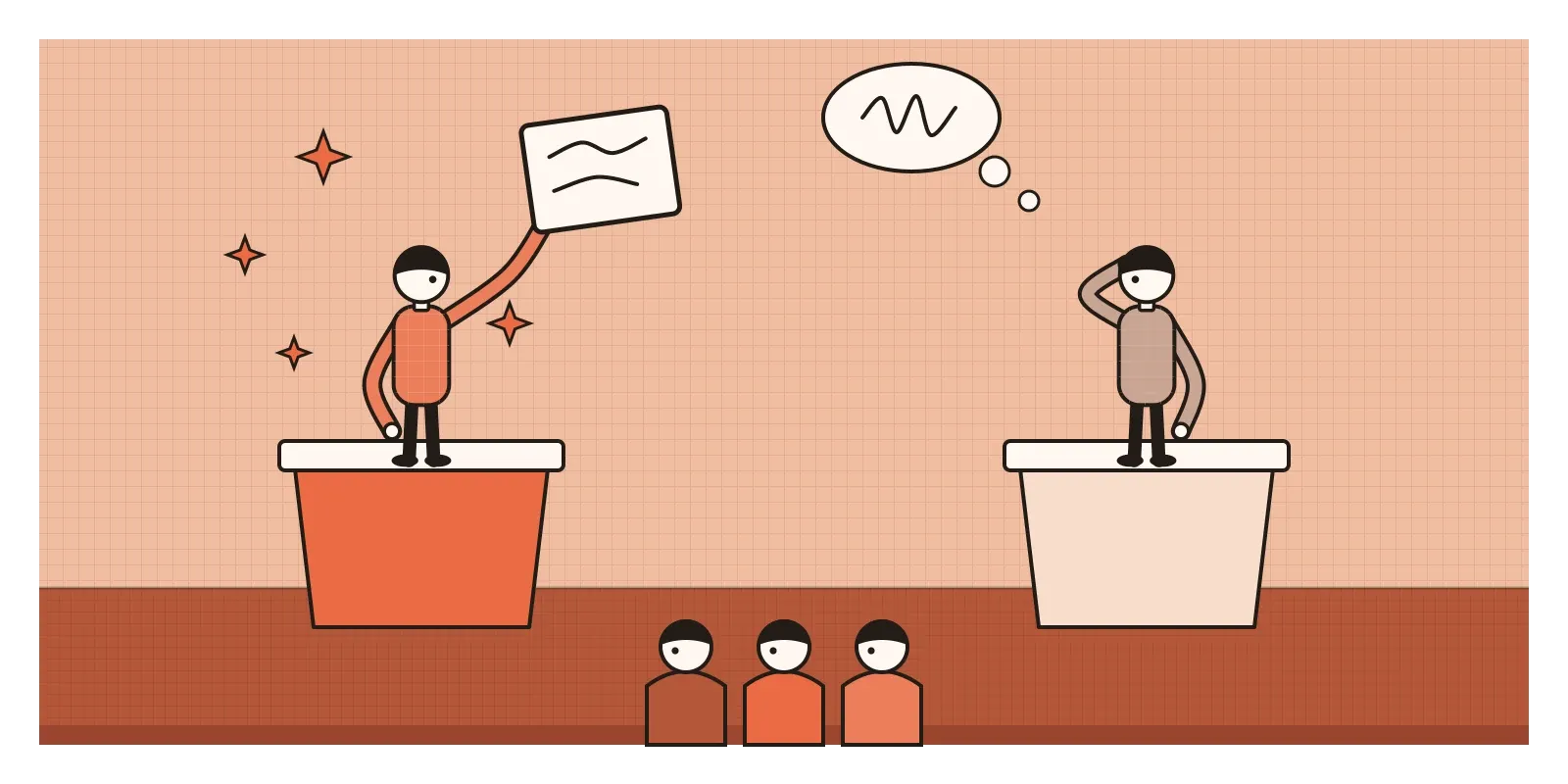
Lee Ross at Stanford gave the pattern its grand name in 1977, in an essay on the shortcomings of the "intuitive psychologist". The same year, he and his colleagues Teresa Amabile and Julia Steinmetz ran my favourite demonstration. Pairs of students were randomly made either a questioner or a contestant in a quiz. Questioners wrote ten hard questions from their own knowledge, and contestants tried to answer them. Contestants got only a few right. Afterwards, both the contestants and people who had watched rated the questioners as far more knowledgeable. Everyone knew the roles had been assigned by chance, and that anyone can stump anyone with questions from their own corner of knowledge. The advantage of the role still looked like brains.
How well has it held up? The core finding, that people under-adjust for situational pressure, has been replicated many times, and Daniel Gilbert and Patrick Malone's 1995 review treated it as one of the most dependable results in social psychology. Two related claims are shakier. The idea that we explain our own actions by situation and others' by character, the actor-observer asymmetry, came out close to zero on average in Bertram Malle's 2006 meta-analysis of 173 studies. And the word "fundamental" turned out to be a little too grand, because the size of the error varies a great deal between cultures.
Why the person fills the frame
Part of the reason is simply what's in view. The person is vivid, moving and right in front of us. The situation, a timetable, a training manual, an incentive scheme, a confusing light, is usually invisible or somewhere else. Gilbert's research added a second reason. With Brett Pelham and Douglas Krull in 1988, he showed people a silent video of a woman who looked anxious, and told them she was discussing anxious topics. Normally viewers discounted her nervousness. But if they were asked to memorise the list of topics at the same time, they judged her an anxious person. Gilbert's interpretation was that we characterise people automatically, and correct for their situation afterwards, slowly and with effort. When we're busy, tired or rushed, the correction never happens.
The shortcut makes sense. People's traits really do predict a fair amount of what they'll do, and a quick read of someone's character was useful when deciding whom to trust.
Culture shapes how strongly we lean. In 1984 the psychologist Joan Miller compared people in Mysore with people in Chicago. She asked them to describe things they had seen acquaintances do, good and bad, and to explain why. American adults reached far more often for general traits ("he's irresponsible"). Hindu Indian adults referred much more often to context, such as roles, obligations and circumstances. Young children in the two places answered much more alike, which suggested the difference was learned as people grew up in their cultures. The habit is learned, and none of us is entirely free of it.
Five thousand bad apples at one bank
In September 2016, American regulators fined Wells Fargo $185 million. Staff in its branches had opened something like a million and a half deposit accounts, and applied for hundreds of thousands of credit cards, that customers apparently hadn't asked for. Over the previous five years the bank had fired about 5,300 employees for this kind of misconduct. Its public explanation at first leaned on those individuals: people who had broken the rules and failed to live up to the bank's values.
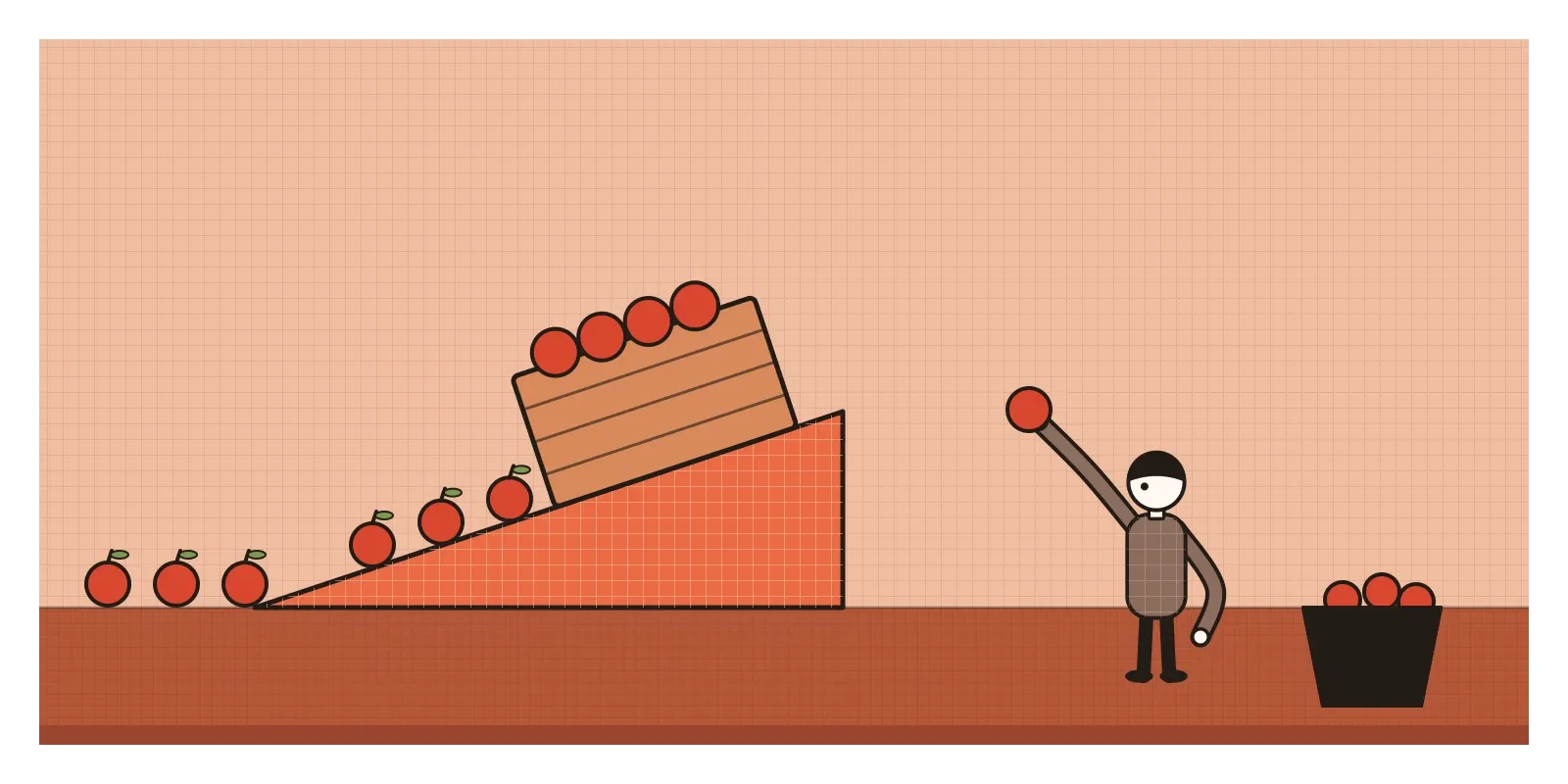
When thousands of people across many branches do the same wrong thing, though, character is a poor explanation. The bank had pushed hard on cross-selling, with a motto of "eight is great", eight products for every household, and branch staff faced daily targets and pressure from managers to meet them. An investigation commissioned by the bank's own board, published in April 2017, put much of the blame on that sales culture and the way performance was managed, and on senior leaders who had treated the problem as a matter of individual wrongdoing for years.
I don't take from this that the employees bore no responsibility. Many people under the same pressure didn't open fake accounts. But firing individuals, one at a time, while leaving the targets in place, is what the fundamental attribution error looks like when it runs an organisation. Each case is handled as a person problem, so the situation that produces the cases never gets fixed.
Picture a usability study with a "careless" user
Picture a team testing a new insurance claim flow in a mobile app. They run eight sessions. Participant six, a sixty-year-old shop owner, gets stuck at the step where a one-time password is sent by SMS. He waits, taps back, starts again, and gives up. In the synthesis afterwards, the sticky note says "not very tech-savvy, didn't read the instructions". Another note says "P3 rushed, careless". By the end of the afternoon the finding is written up as "some users have low digital literacy", and the recommendation is a tutorial.
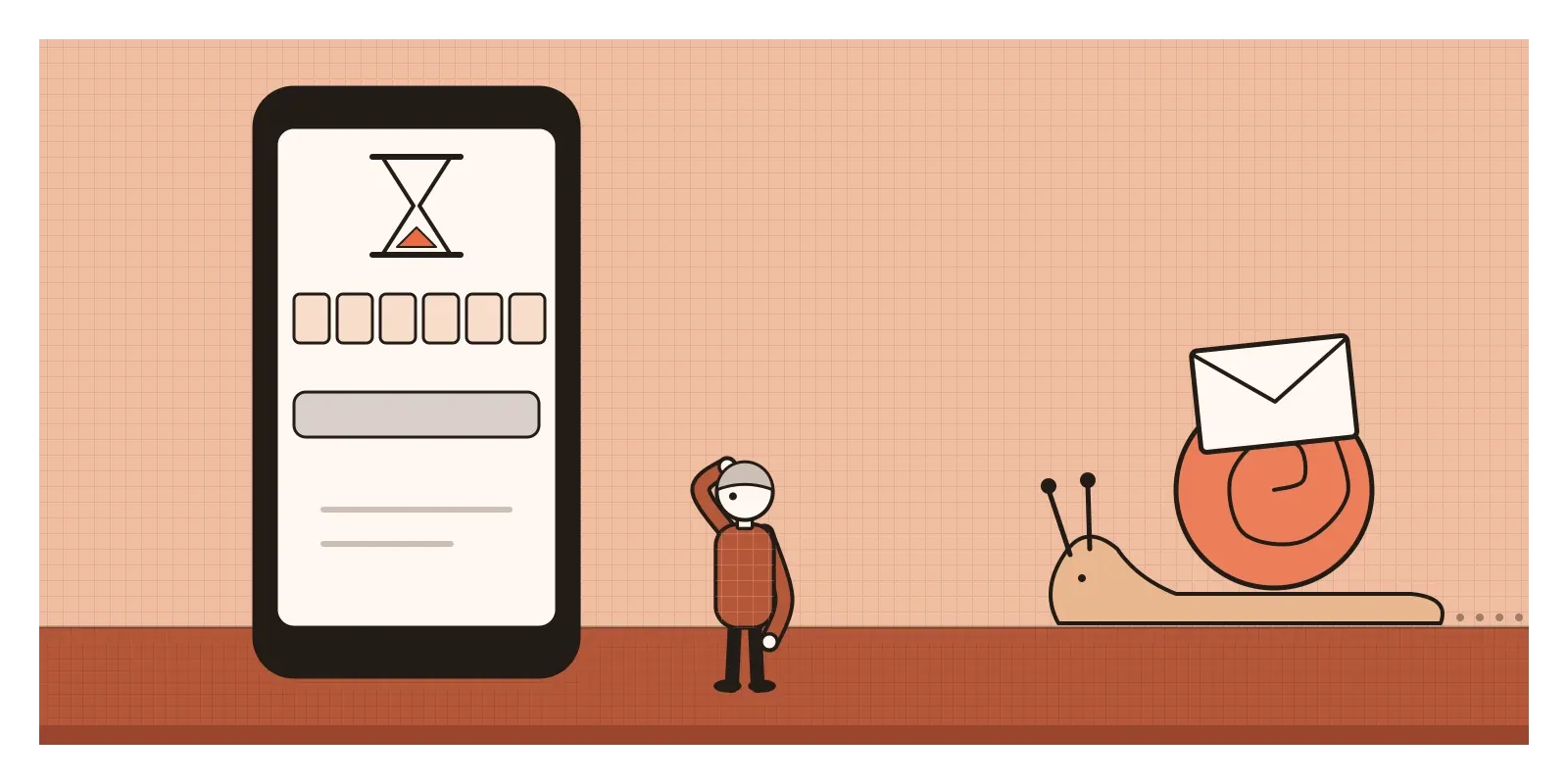
Every one of those notes describes a person. None of them describes what the person was facing. Now go back to the recordings and look at the situation instead. In five of the eight sessions, the SMS took more than thirty seconds to arrive, and the code field had quietly timed out after thirty. The "resend" link was pale grey, the same shade as the disabled button beside it. The instructions sat above the keyboard, which covered them as soon as anyone tapped the field. Participant three wasn't careless. She had done exactly what the screen invited.
The better version changes how the synthesis is written. Instead of describing participants, describe the moments where they struggled, and count them. If five people out of eight trip at the same step, that's a finding about the step. Then the recommendations change too: a longer timeout, a visible resend option, instructions that stay on screen, perhaps reading the code automatically where the phone allows it. A tutorial would have taught people to work around a problem the team could simply remove.
When it really is the person
Sometimes it is. People differ in skill, care and honesty, and pretending otherwise is its own mistake. In healthcare safety, the engineer David Marx argued in 2001 for what he called a just culture, which draws a distinction worth borrowing. An honest slip deserves support and a better system. Drifting into risky shortcuts deserves coaching, and a look at why the shortcut was tempting. Knowingly reckless behaviour deserves consequences. Blaming everything on the system can be as lazy as blaming everything on people, and it can quietly take away people's credit for the things they do well.
The psychologist James Reason made a related point about safety. He contrasted a person approach, which looks for the individual who failed, with a system approach, which asks why the defences that should have caught the failure didn't. He never said people don't matter. He said that if you only ever look at people, you'll keep replacing them and keep getting the same accidents. The test I use is repetition. One person making an unusual mistake might be about that person. Many people making the same mistake is almost always about the situation.
How I try to catch it
The first habit is to listen for trait words. When I hear myself or a teammate say "careless", "lazy", "not technical" or "difficult", I treat it as a prompt to ask a different question: what would make a sensible person do this? The answer is usually sitting in the situation, in a deadline, a missing piece of information, a confusing screen or an incentive.
The second is to put myself in their chair, literally where I can. I watch the recording from the participant's side, or sit at the support agent's desk, or open the app on a slow phone on a weak connection. Things that look like carelessness from across the room look very different from inside.
The third is to count before I conclude. If a mistake keeps recurring across people, I stop looking for the culprit and start looking for the cause.
I think often about that light at Three Mile Island. The operators believed what it told them, as almost anyone would have. The most useful question after that morning wasn't who failed. It was what they were looking at. In the next post I'll turn to a quieter bias, one that makes us like things for no better reason than that we've seen them before: the mere exposure effect.
Further reading: Fritz Heider, The Psychology of Interpersonal Relations (1958) · Edward Jones and Victor Harris, "The attribution of attitudes" (1967) · Lee Ross, "The intuitive psychologist and his shortcomings" (1977) · Daniel Gilbert and Patrick Malone, "The correspondence bias" (1995) · Don Norman, The Design of Everyday Things (revised edition, 2013)
The question to askWhat would make a sensible person do this?