Sunk Cost Bias
Why the money and months we've already spent keep voting on decisions they have no right to.
Sunk Cost Bias
A supersonic promise with no way out
In November 1962, the governments of Britain and France signed a treaty to build a supersonic passenger aircraft together. It would fly at twice the speed of sound. The aircraft became Concorde, and it's still one of the most beautiful machines anyone has built. It was also, almost from the start, a financial problem that neither government could find a way to stop.
The treaty had no break clause. When a new Labour government came to power in Britain in 1964 and tried to pull out because of the rising cost, it was warned that France could take the matter to the International Court of Justice and claim heavy damages, so Britain stayed in. Development costs, first estimated at around £150 million to £170 million, rose to well over £1 billion. Airlines had taken options on more than seventy aircraft, but after the 1973 oil crisis, and with supersonic flight over land widely banned because of the sonic boom, the rest withdrew. Only twenty Concordes were ever built, and only British Airways and Air France flew them in regular service, from 1976 until 2003.
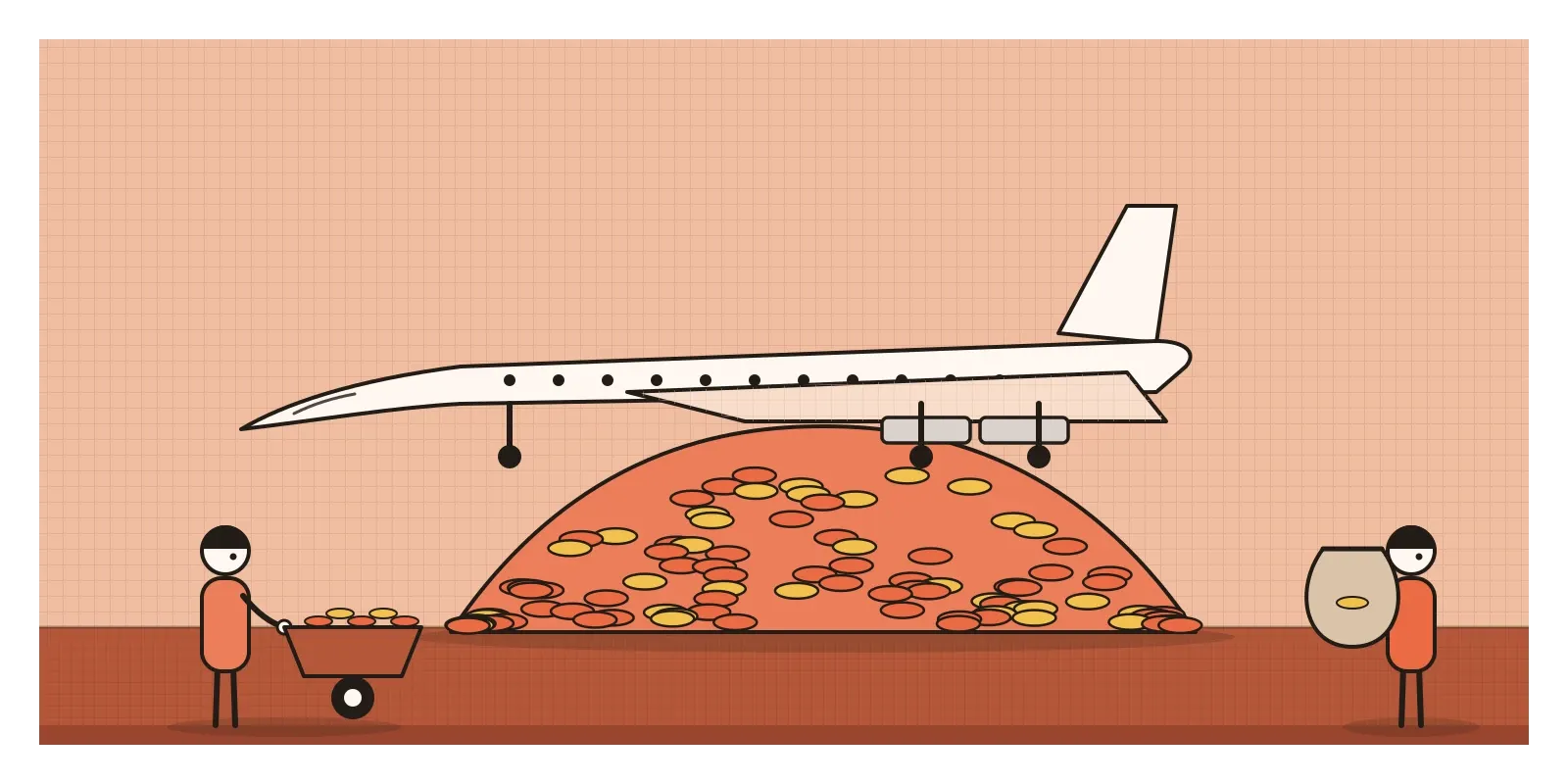
Again and again, the case for carrying on came back to the same point: so much had already been spent that stopping would waste it. In 1976, the biologists Richard Dawkins and Tamsin Carlisle borrowed the aircraft's name for a mistake they saw in theories of animal behaviour, the idea that a parent animal should keep caring for its young simply because it has already invested so much in them. They called it the Concorde fallacy. Economists had a plainer name for the money behind it: a sunk cost.
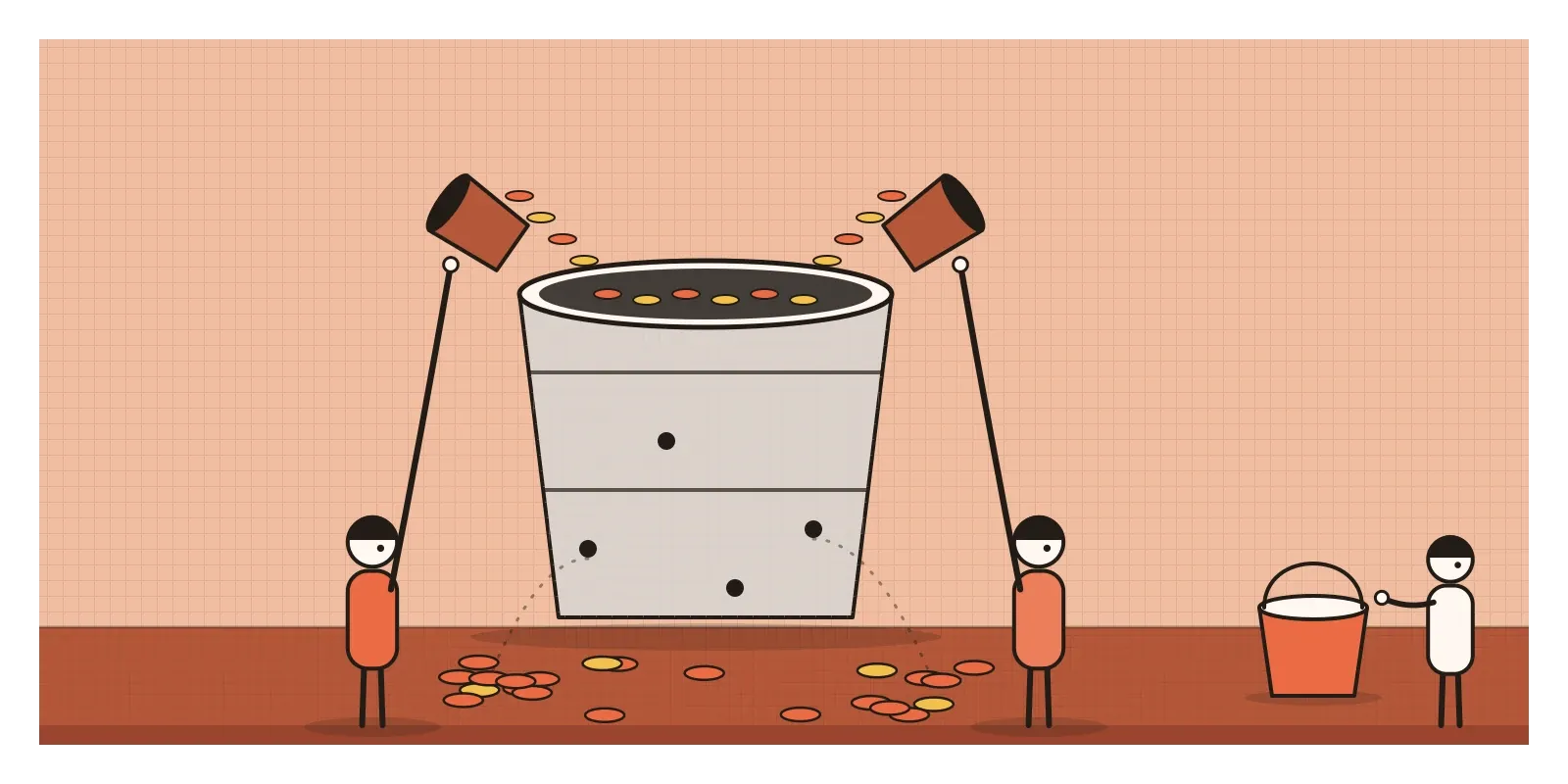
A sunk cost is anything already spent that can't be recovered, whatever you decide next: money, time, effort, reputation. Sunk cost bias is letting it steer a decision about the future. The only things that should matter in a decision are what it will cost from here and what it will bring from here. Past spending is the same whichever way you choose, so it can't tell you which way to go. That's easy to say and painful to act on.
Theatre tickets and a plane nobody needed
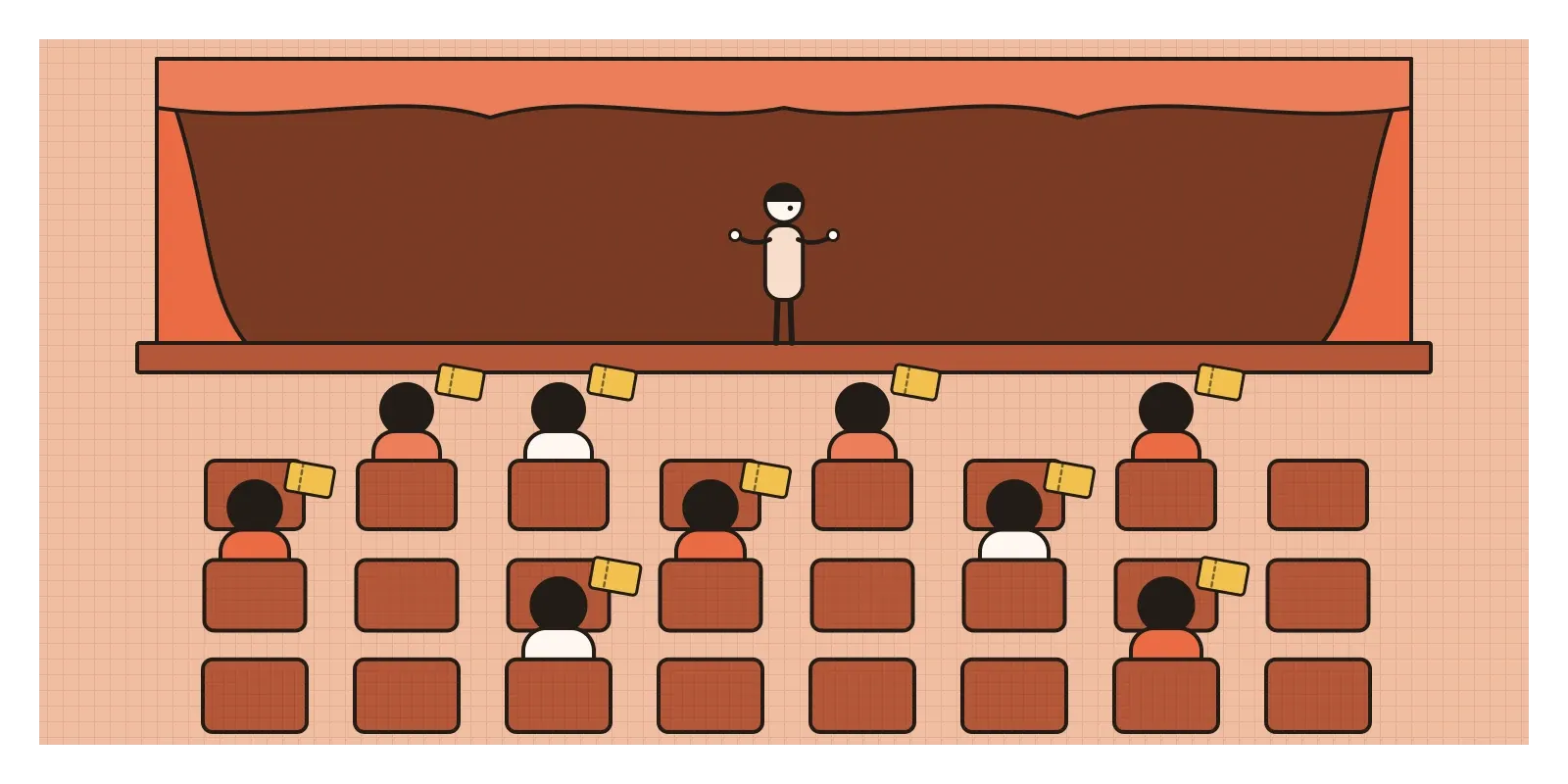
In 1985, the psychologists Hal Arkes and Catherine Blumer published a set of studies on what they called the sunk cost effect. The best known was a real-world experiment at Ohio University. People buying season tickets for the campus theatre were randomly given one of three prices: the full price, a small discount or a larger one. Nobody knew the discounts were part of a study. Over the first half of the season, those who had paid full price went to noticeably more plays than those who had been given discounts. They'd paid more, so they made sure they got their money's worth. By the second half of the season, the difference had faded.
They also asked hypothetical questions. In one, people imagined being the president of an airline company that had spent most of a $10 million research budget on a plane invisible to radar, when a competitor launched a better one. Most said they'd spend the last million to finish. When the same question was asked without the money already spent, only about one in six chose to fund it.
A few years earlier, in 1976, Barry Staw had described a related pattern, which he called escalation of commitment, in a paper with the memorable title "Knee-deep in the big muddy". Business students played managers dividing research money between two divisions of a company. When they learned that their earlier choice had done badly, those who had personally made that choice put more money into it, not less. Students who inherited the same decision from someone else were readier to change course. Being responsible for the past made people want to rescue it.
How well has all this held up? The hypothetical questions replicate reliably. Experiments with real money at stake are more mixed: in 2007, Daniel Friedman and colleagues found the effect in their lab studies smaller and less consistent than the famous examples suggest. The animal version is disputed too: in 1999, Arkes and Peter Ayton argued that animals and young children don't clearly show the bias, which suggests it's partly learned, though a 2018 study found something like it in rodents. The effect is real and common in organisations, but less universal than it's often made to sound.
Why stopping feels like losing
The deepest reason is that stopping turns a vague cost into a definite loss. While a project continues, the money spent on it is an investment that might still pay off. The moment we stop, it becomes a waste, final and ours. The economist Richard Thaler described this as mental accounting: we keep a kind of private ledger for each project or purchase, and we hate closing an account in the red. Loss aversion, which gets its own post later in this series, explains why that closing moment feels so expensive.
The second reason is pride. Staw's students weren't confused about money. They were protecting their earlier judgement. Abandoning a project can feel like admitting, in public, that I was wrong to the people who trusted me. Carrying on keeps that admission at bay for another quarter.
The third is a good habit applied in the wrong place. Most of us were raised not to waste food, money or effort, and that's sensible. Finishing what we start usually pays: half-built things are worth very little, and persistence is what gets anyone through the dull middle of a worthwhile project. The shortcut "don't throw away what you've invested in" is usually right. It just can't tell when it's wrong.
A power station that never sold a unit
In 1966, the Long Island Lighting Company in New York announced a nuclear power station at Shoreham, with an estimated cost of around $75 million. Over the next two decades the design changed, safety rules tightened after the accident at Three Mile Island in 1979, and local opposition grew, especially over whether Long Island's crowded roads could ever be evacuated in an emergency. At each stage the company faced a choice between writing off what it had spent and spending more to finish. It kept spending. By the time the plant was completed in the mid-1980s, it had cost around $5 billion.
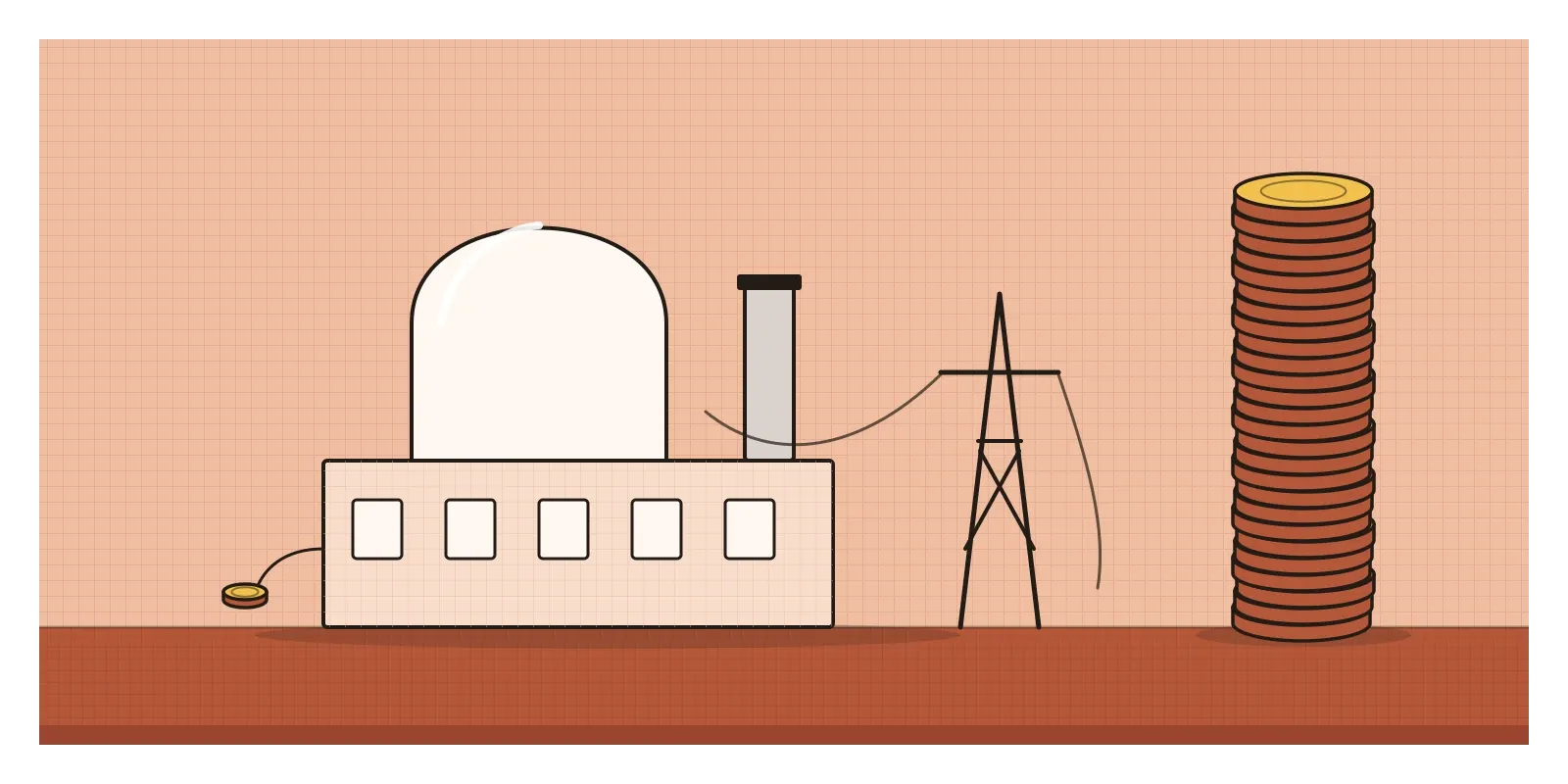
It never produced electricity commercially. Suffolk County and New York State refused to back an evacuation plan, and in 1989 the company agreed to hand the plant to a state authority for a token one dollar, to be taken apart. In 1993, Jerry Ross and Barry Staw published a detailed study of the Shoreham decisions. They concluded that escalation rarely comes from one foolish choice. It builds from many decisions, each reasonable at the time, made by people whose careers, public statements and finances were more and more tied to finishing.
An Indian version is often told about the Tata Nano, launched in 2008 as the ₹1 lakh car that would let families who rode scooters own a car. Sales never came close to early hopes. In 2016, after he was removed as chairman of Tata Sons, Cyrus Mistry wrote to the board that the Nano had consistently lost money, with losses at their peak around ₹1,000 crore, and that it had not been shut down for emotional reasons. The Tata group disputed much of his account, and there were real arguments for continuing: dealers, suppliers, owners who needed spare parts, and the promise the car stood for. But "emotional reasons" describes the pull of past investment better than any textbook. Production dwindled, and the car was quietly discontinued around 2019 and 2020.
Picture eight months on a canvas nobody wanted
Picture a team at a design tool company, eight months into building an AI "smart canvas" that arranges a user's elements into finished layouts automatically. The demo is impressive. But in the latest round of usability tests, most participants ignore the automatic layouts and go back to the old grid, which they find quicker to adjust. A much smaller prototype, built in two weeks, offers one suggested layout at a time, and testers like it far more.
The roadmap meeting goes the way these meetings usually go. "We've put eight months and four engineers into this." "The model is almost there, it just needs another quarter." "If we drop it now, all that work is wasted." The lead designer, who pitched the smart canvas in the first place, argues hardest for it. Nobody quite says the small prototype is better, because saying so would mean the eight months were a mistake. The team approves another quarter. Three months later, the test results look much the same.
Every sentence in that meeting was about the past. The eight months are gone either way. The honest version asks a different question: if we were starting today, with what we now know, and could spend the next three months on the smart canvas or on the smaller idea, which would we choose? Framed that way, the eight months stop voting. They still produced a working model, a lot of learning and probably parts the smaller idea can reuse. But they're an asset to salvage, not a debt to repay. It also helps if the decision isn't left to the person who championed the original idea, exactly as Staw's research would predict.
When the past really does matter
Not everything that looks like sunk cost bias is a bias. Sometimes what's been spent carries information: a big investment may reflect good reasons that still hold. Sometimes stopping has real costs of its own: contracts, people who rely on the product, the effort of moving users back. Those aren't sunk costs, because they haven't happened yet, and they belong in the decision.
Reputation matters too. Keeping a commitment to customers or colleagues after it has become expensive can be worth more than it costs, because people need to be able to rely on you. And many good projects look bad in the middle, when the cost is obvious and the value isn't yet visible.
Concorde itself is a complicated case. It never repaid its development cost, but it flew passengers for twenty-seven years, with one fatal crash in 2000, and became a symbol of what two countries could build together. The question is never whether past investment is relevant. It's whether it's being counted for what it tells us about the future, or simply because it hurts to let it go.
How I try to catch it
The first habit is the question from the walkthrough. When a project starts to wobble, I ask: if we hadn't started this, would we start it today, knowing what we know now? If the answer is no, the only question left is how to stop well.
The second is to write the stopping rule at the beginning. Before a team commits to something big, I like to agree what would make us stop: a usability result, an adoption number, a date. It's the same idea as deciding what success looks like before you see the results, which I wrote about in the post on moving the goalposts. A rule set calmly at the start is much easier to follow than a decision made later, with eight months staring at you.
The third is to make stopping respectable. I try to thank people who stop their own projects, and to say out loud what the stopped work taught us and what we're reusing. If stopping is treated as failure, people will keep going to protect their reputations.
Concorde's last commercial flights landed at Heathrow in October 2003. I can love it as a machine and still notice that what kept it going, so often, was what had already been poured into it. In the next post I'll look at a mistake that happens before any money is spent at all: the planning fallacy.
Further reading: Hal Arkes and Catherine Blumer, "The Psychology of Sunk Cost" (1985) · Barry Staw, "Knee-Deep in the Big Muddy" (1976) · Jerry Ross and Barry Staw, "Organizational Escalation and Exit: Lessons from the Shoreham Nuclear Power Plant" (1993) · Richard Dawkins and Tamsin Carlisle, "Parental Investment, Mate Desertion and a Fallacy" (1976) · Richard Thaler, Misbehaving (2015)
The question to askAre we deciding about the future, or paying for the past?