The Endowment Effect
Why the moment something becomes ours, it starts to seem worth more than it did a minute ago.
The Endowment Effect
A coffee mug at Cornell
In the late 1980s, the economists Daniel Kahneman, Jack Knetsch and Richard Thaler ran a series of experiments with some very ordinary objects. In a classroom at Cornell University, they put coffee mugs decorated with the university's crest on the desks of half the students. The same mugs were on sale in the campus bookshop for six dollars. The students who got a mug were now sellers. The students who didn't were buyers. Each seller wrote down the lowest price at which they would part with their mug, and each buyer wrote down the most they would pay for one.
Economic theory made a clear prediction. The mugs had been handed out at random, so the students who happened to get one should, on average, like mugs about as much as the students who didn't. Roughly half the mugs should change hands. That isn't what happened. The owners typically asked for about twice what the buyers were willing to pay, and far fewer mugs were traded than theory predicted. A few minutes of owning a mug had changed what it was worth to the person holding it.
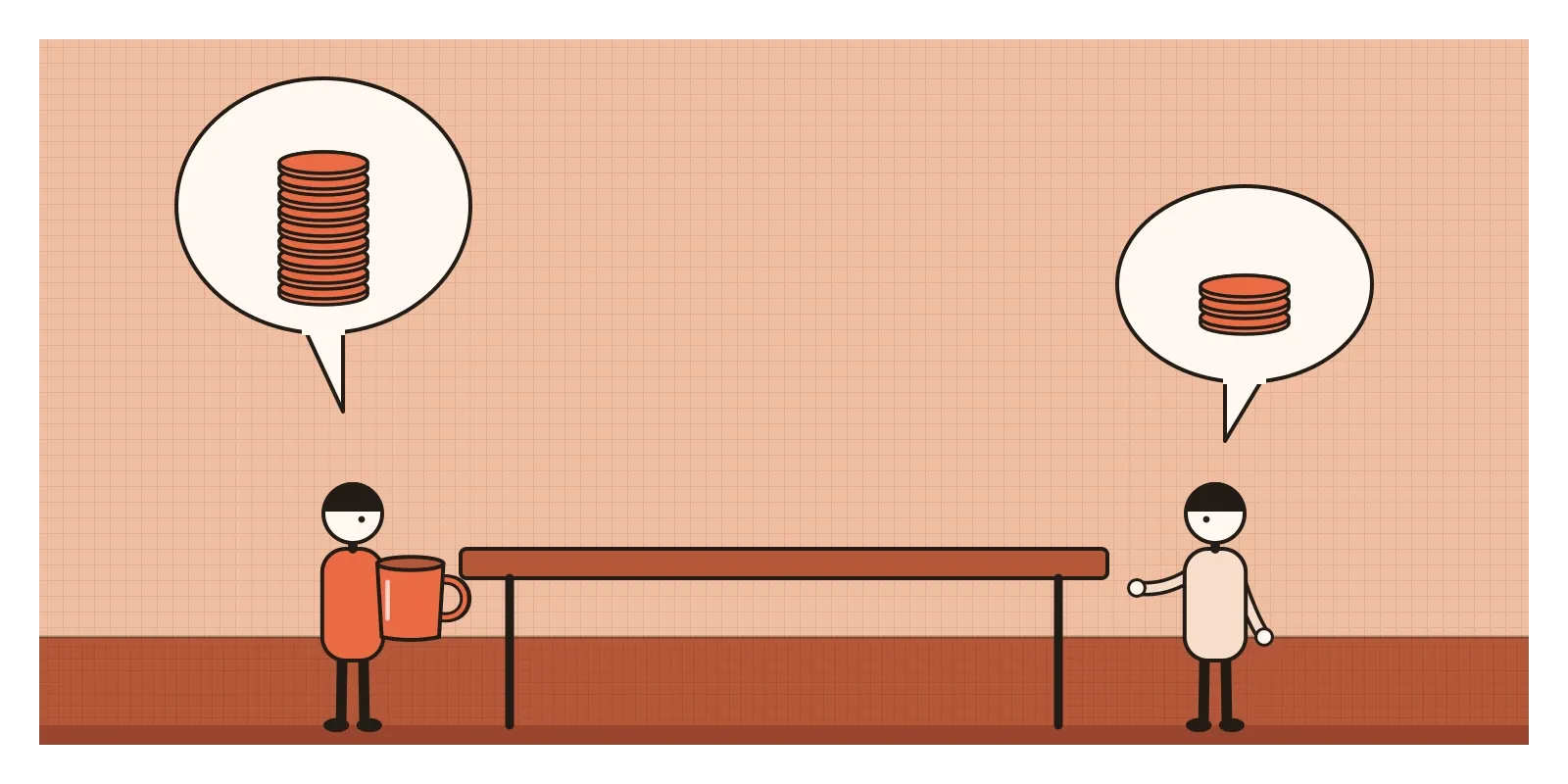
They published the results in 1990. Nobody had grown attached to those mugs over years of morning coffee. They had owned them for minutes. Yet giving them up felt like a loss, while buying one felt like an optional extra.
That's the endowment effect: we tend to value something more simply because it's ours. The usual measure is the gap between what people demand to give something up and what they'd pay to get it, which economists call willingness to accept and willingness to pay. In theory the two should be close. In practice, for many goods, they're far apart.
In the last post, on optimism bias, I wrote about how we tilt the future in our favour. This one is about how we tilt the present: the things we already have, including the things we've made.
What the mugs revealed, and what the critics found
Thaler had named the effect a decade earlier, in a 1980 paper about the ways real consumers depart from economic theory. One of his examples was an economist he knew, later identified as his colleague Richard Rosett, who had bought bottles of wine for a few dollars each. Years later they were worth far more. He wouldn't sell them at the new price, but he also wouldn't dream of paying that price to buy another bottle. Both choices made sense to him. Together they didn't fit the textbook.
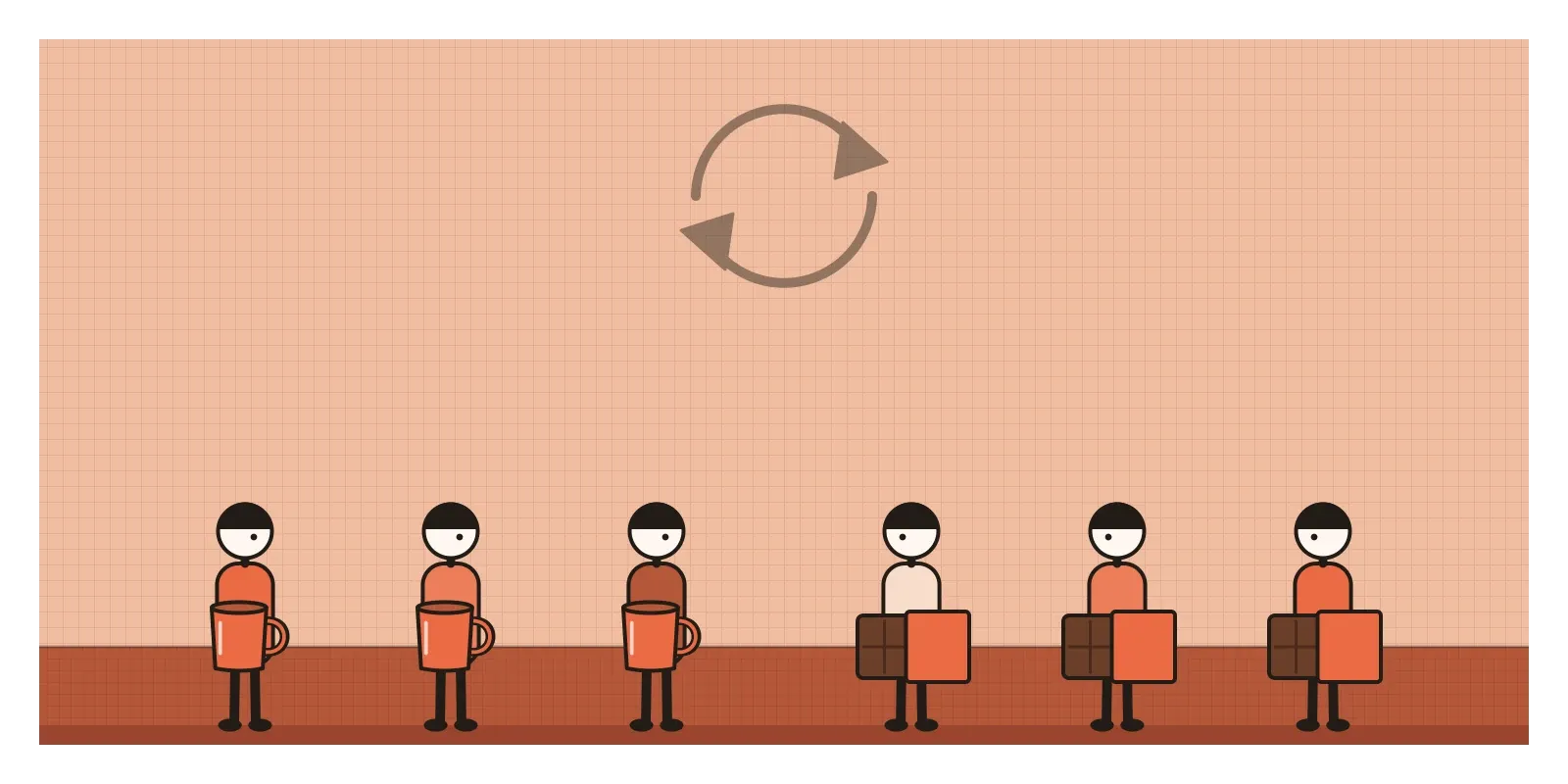
In 1989, Knetsch tried an even simpler test. He gave one group of students a mug and another group a large bar of Swiss chocolate, and then offered each student the chance to swap. If people simply preferred one item or the other, about half of each group should have swapped. Instead, the great majority of both groups kept whatever they had been given. A third group, given a straight choice between the two, split roughly evenly. The item didn't matter. Possession did.
The finding has been challenged, and the challenges are worth knowing. In 2005, the economists Charles Plott and Kathryn Zeiler argued that the gap between buying and selling prices could be produced by the way experiments were run. When they trained participants carefully in how the bidding worked, kept responses anonymous and used practice rounds, the gap for mugs largely disappeared. Other researchers replied that the gap persists for some goods even under those careful conditions, and the argument hasn't been fully settled.
Experience matters too. In 2003, John List studied traders at sports memorabilia shows in the United States and found that dealers and very experienced collectors showed little or no endowment effect, while occasional collectors showed a strong one. And in 2014, Coren Apicella and her colleagues found that among the Hadza, hunter-gatherers in Tanzania, groups with little contact with markets showed no endowment effect at all, while groups living closer to a town and its trade did. So the effect is real in many settings, but it may be learned, and it can be unlearned.
Why mine feels worth more
The most common explanation is loss aversion, the finding that losing something hurts more than gaining the same thing pleases us. Selling a mug is a loss. Buying one is a gain. If losses weigh more, sellers will want more. Loss aversion gets a post of its own later in the series, in the part about the people we design for.
But ownership seems to do something on its own as well. In a 2009 study, the psychologist Carey Morewedge and his colleagues found that buyers who already owned an identical mug valued a new one about as highly as sellers did. Owning a mug made mugs in general feel more valuable. Things that belong to us become part of how we see ourselves, and we judge them a little the way we judge ourselves: generously.
Making something strengthens this. In 2012, Michael Norton, Daniel Mochon and Dan Ariely described what they called the IKEA effect. People who assembled a plain IKEA storage box themselves were willing to pay noticeably more for it than people who were handed an identical box already built. Their own labour made it more valuable to them. Designers will recognise this immediately. The concept we sketched at midnight never looks quite as ordinary to us as it does to everyone else.
This is different from sunk cost, which I'll come to later in the series. Sunk cost is about letting past investment justify more investment. The endowment effect is about ownership itself making something seem better.
Forty-four billion dollars wasn't enough
In February 2008, Microsoft offered to buy Yahoo for 31 dollars a share, about 44.6 billion dollars, a large premium over Yahoo's share price at the time. Yahoo's board rejected the offer, saying it substantially undervalued the company. Microsoft raised its offer to 33 dollars a share, Yahoo reportedly wanted more, and in May 2008 Microsoft walked away. Yahoo's value fell over the following years. In 2017, Verizon bought Yahoo's core internet business for about 4.5 billion dollars.
I want to be careful here. The two deals aren't directly comparable, because by 2017 Yahoo's valuable stakes in Asian companies had been separated from the business Verizon bought, and nobody in 2008 could know what the next decade held. Boards also have legitimate reasons to hold out, including the duty to get the best price. But many observers have pointed to the episode as an example of owners valuing what they hold far above what any buyer would pay, and holding that line even as the market moved.
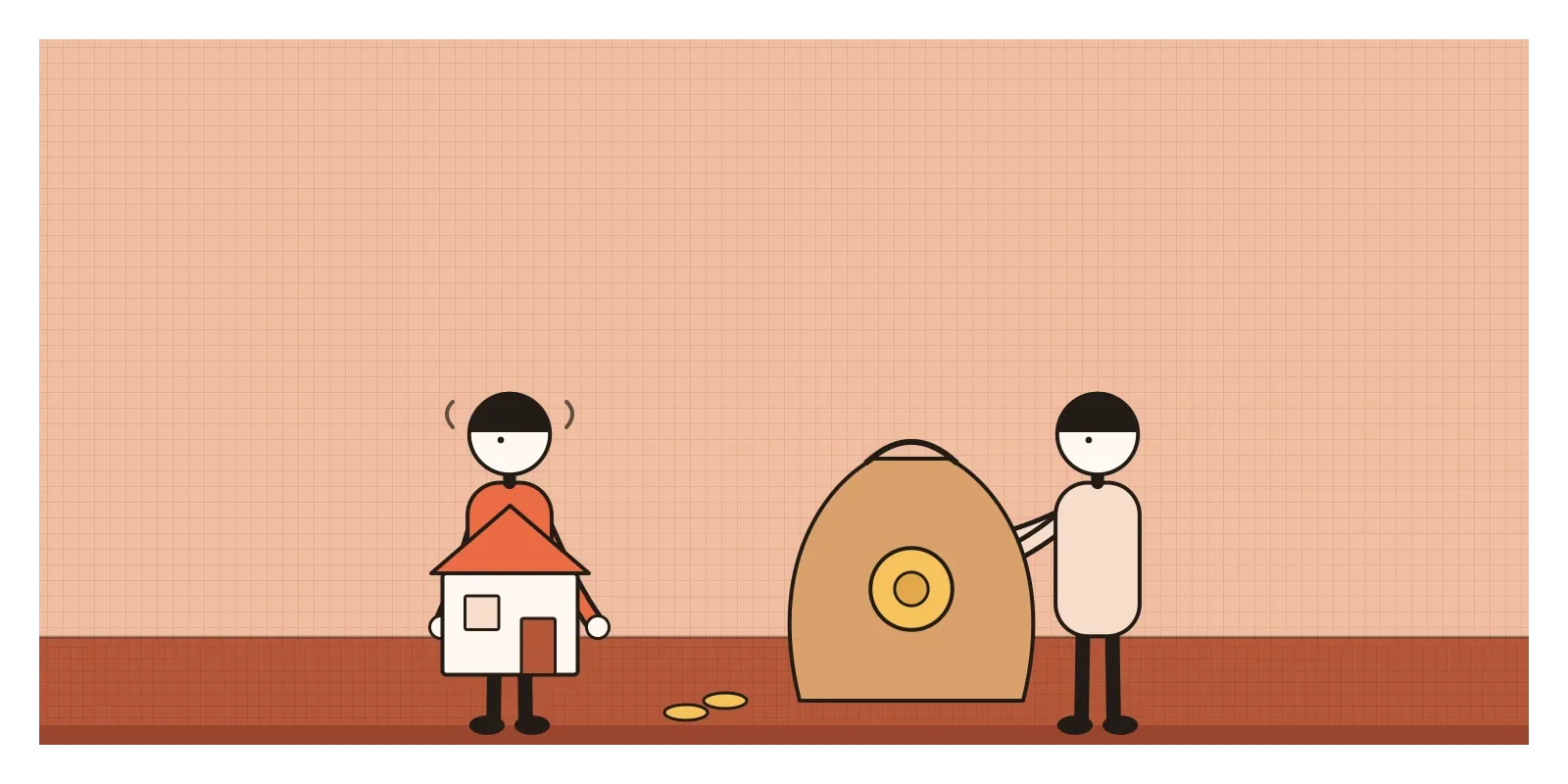
India has a quieter, much larger version of the same pull, though here I think much of it isn't a bias at all. Indian households are estimated to hold well over twenty thousand tonnes of gold, much of it as jewellery. In 2015, the government launched the Gold Monetisation Scheme, which let people deposit their idle gold with banks and earn interest on it, and help reduce India's gold imports. By late 2024, according to figures reported from official data, it had collected only about 31 tonnes, much of it from temples, trusts and institutions rather than families. In March 2025 the government discontinued the scheme's medium and long-term deposits. There were practical reasons, including that deposited jewellery is melted down. But the scheme also asked people to give up something that was theirs, for a gain that felt abstract. I'll come back to why that isn't simply a bias.
Picture a team that built its own model
Picture a design and engineering team that spent four months building its own AI model to tag customer support tickets by topic. It was hard work. They labelled thousands of tickets themselves, argued over categories late into the night and celebrated when accuracy crossed their target. Now a large provider has released an off-the-shelf model that does the same job, and a new product manager asks whether they should switch.
The meeting goes the way these meetings go. The team points out that their model understands the company's own product names. They mention edge cases it handles well. They estimate the switching effort generously. When someone asks what it would take to retire their model, the answer is "it would have to be clearly better on everything". Nobody notices that if the situation were reversed, if they already used the provider's model and someone proposed spending four months building their own, they'd ask for exactly the same overwhelming proof before agreeing.
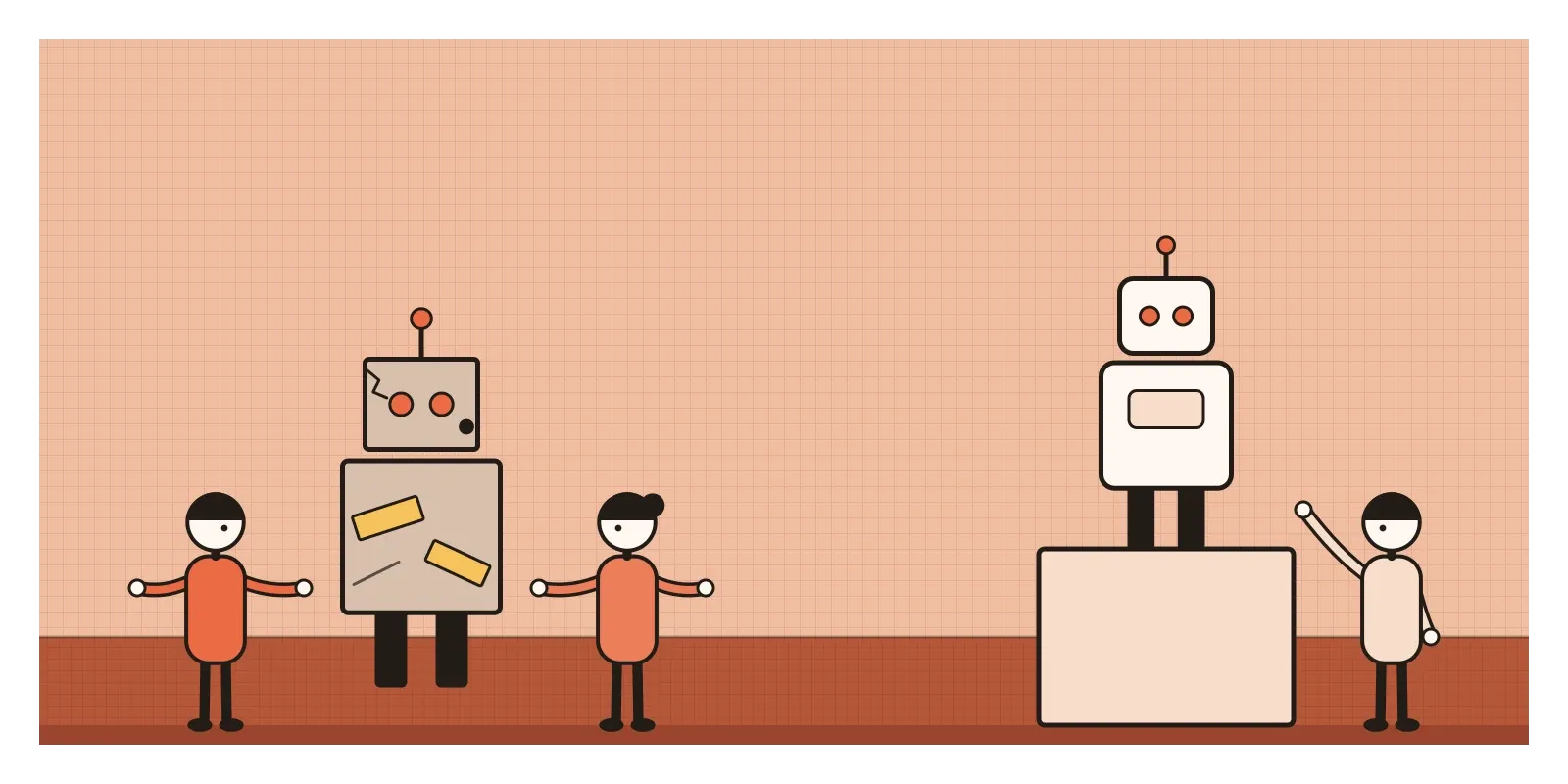
That asymmetry is the endowment effect at work. The bar for giving something up is much higher than the bar for getting it.
The better version flips the question. The product manager asks: "If we had neither, which would we choose today?" The team runs both models on the same fresh set of tickets, scored by people who don't know which model produced which tag. They list the real costs of switching, such as migration, retraining and the risk of depending on an outside provider, separately from the feeling of losing something they made. Maybe their model still wins, because it really does know the product. Maybe it doesn't. Either way, the decision is about the models, not about who built them.
When attachment is information
Not every reluctance to part with something is a bias. A grandmother's bangles carry memories that no market price includes. Family gold can also be a safety net that a household can see and touch, which matters a great deal when trust in institutions varies. Valuing it highly isn't irrational. It's valuing something real that the gram price leaves out.
Owners also often know things buyers don't. The team that built the ticket model knows its quirks, and the person selling a used car knows whether it has been well maintained. Switching has genuine costs: learning, migration, risk. And ownership has a good side. People look after what's theirs, and teams that feel they own their work tend to care about its quality.
The question is whether the extra value we place on something comes from what it actually does, or only from the fact that it's ours. The first is a reason. The second is the bias.
How I try to catch it
The first habit is the swap question. When I'm defending something I made, a flow, a component, a whole concept, I ask whether I'd choose it today if someone else had made it and it was sitting next to mine. If the honest answer is no, my attachment is doing the arguing.
The second is blind comparison. In reviews, I like putting concepts up without names on them when we can. It's surprising how differently a design reads when you don't know it's yours.
The third is to separate costs from feelings on paper. I write the real switching costs in one column and the reasons that are really about ownership in another. The second column is usually longer than I'd like.
I still think about those Cornell students, holding a mug they'd had for five minutes and asking twice its price. In the next post I'll look at what happens after the outcome is known, and why the past always looks more predictable than it was: hindsight bias.
Further reading: Daniel Kahneman, Jack Knetsch and Richard Thaler, "Experimental Tests of the Endowment Effect and the Coase Theorem" (1990) · Richard Thaler, Misbehaving: The Making of Behavioral Economics (2015) · Charles Plott and Kathryn Zeiler, "The Willingness to Pay-Willingness to Accept Gap, the 'Endowment Effect,' Subject Misconceptions, and Experimental Procedures for Eliciting Valuations" (2005) · John List, "Does Market Experience Eliminate Market Anomalies?" (2003) · Michael Norton, Daniel Mochon and Dan Ariely, "The IKEA Effect: When Labor Leads to Love" (2012)
The question to askIf we didn't already have this, would we choose it today?