Present Bias
Why the person who buys the gym membership and the person who has to go are so rarely the same person.
Present Bias
Seventeen dollars a visit
In 2006, the economists Stefano DellaVigna and Ulrike Malmendier published a paper with one of the best titles in economics: "Paying Not to Go to the Gym". They had obtained three years of records from three health clubs in the United States, covering nearly eight thousand members, with every contract they signed and every time they swiped in.
Members could pay in different ways. Many chose a flat monthly fee of more than $70, which let them come as often as they liked. They could instead have bought a pass of ten visits at $10 a visit. The people on monthly contracts came, on average, about 4.3 times a month. That worked out at more than $17 for each visit, when $10 was on offer at the front desk. Over the course of a membership, the authors estimated, the average monthly member gave up around $600 they could have saved.
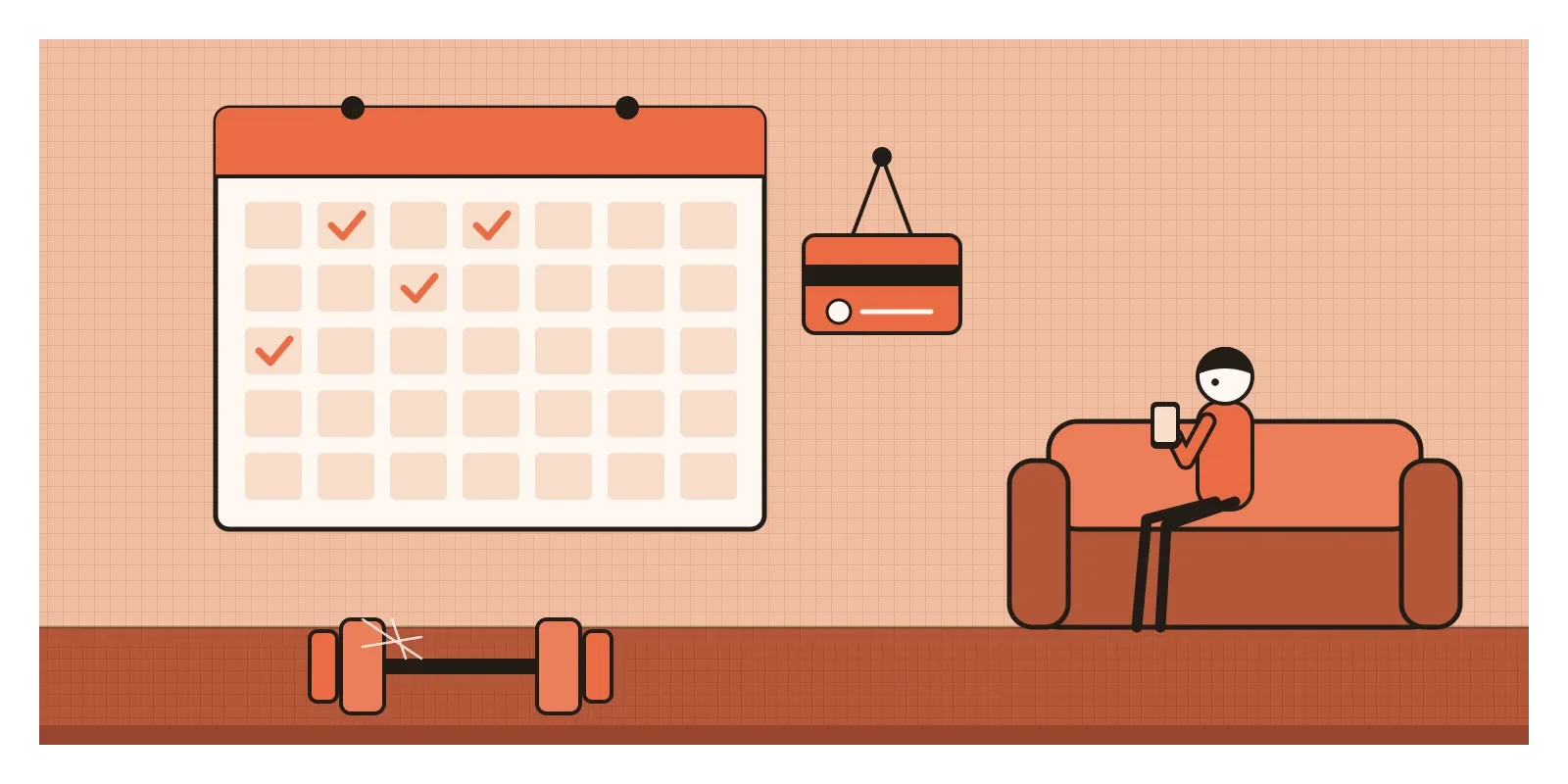
Nobody signs up for a gym planning to waste money. When people chose their contracts, they were thinking about the person they'd be next month: someone who goes four times a week. When next month arrived, the person deciding whether to go after work was tired, it was raining, and there was always tomorrow. The members also seemed to misjudge that gap. They expected to go more than they did, and those on monthly plans were slow to cancel even when they had stopped going.
That gap has a name. Present bias is the tendency to give extra weight to what happens now compared with anything later, so that our choices about the future change once the future becomes the present. Next week, we'd rather have the healthy option, the savings and the finished report. Today, we'd rather have the treat, the spending and one more episode.
Of all the biases in the people we design for, this may be the one we design around most often without naming it: every free trial, every "pay later" button and every reminder to back up your phone lives on the line between now and later.
Fruit next week, chocolate today
Economists had a tidy model of the future, called exponential discounting: a reward loses value at a steady rate for every unit of time you wait. One consequence is consistency: if you prefer a bigger reward in thirteen months to a smaller one in twelve, you should still prefer it when the twelve months have passed and the choice is between now and a month from now.
People aren't like that. In 1955, the economist Robert Strotz pointed out that our plans for the future are often overturned by our future selves, and that sensible people know this and bind themselves in advance. The psychiatrist George Ainslie, studying pigeons and people in the 1970s, showed that impatience is much steeper for delays close to now than for the same delays far away. In 1981, Richard Thaler asked people how much money they'd need in the future to be as happy as with $15 today. The typical answers were $20 in a month, $50 in a year and $100 in ten years. Waiting the first month demanded a far higher rate of return than waiting the later years.
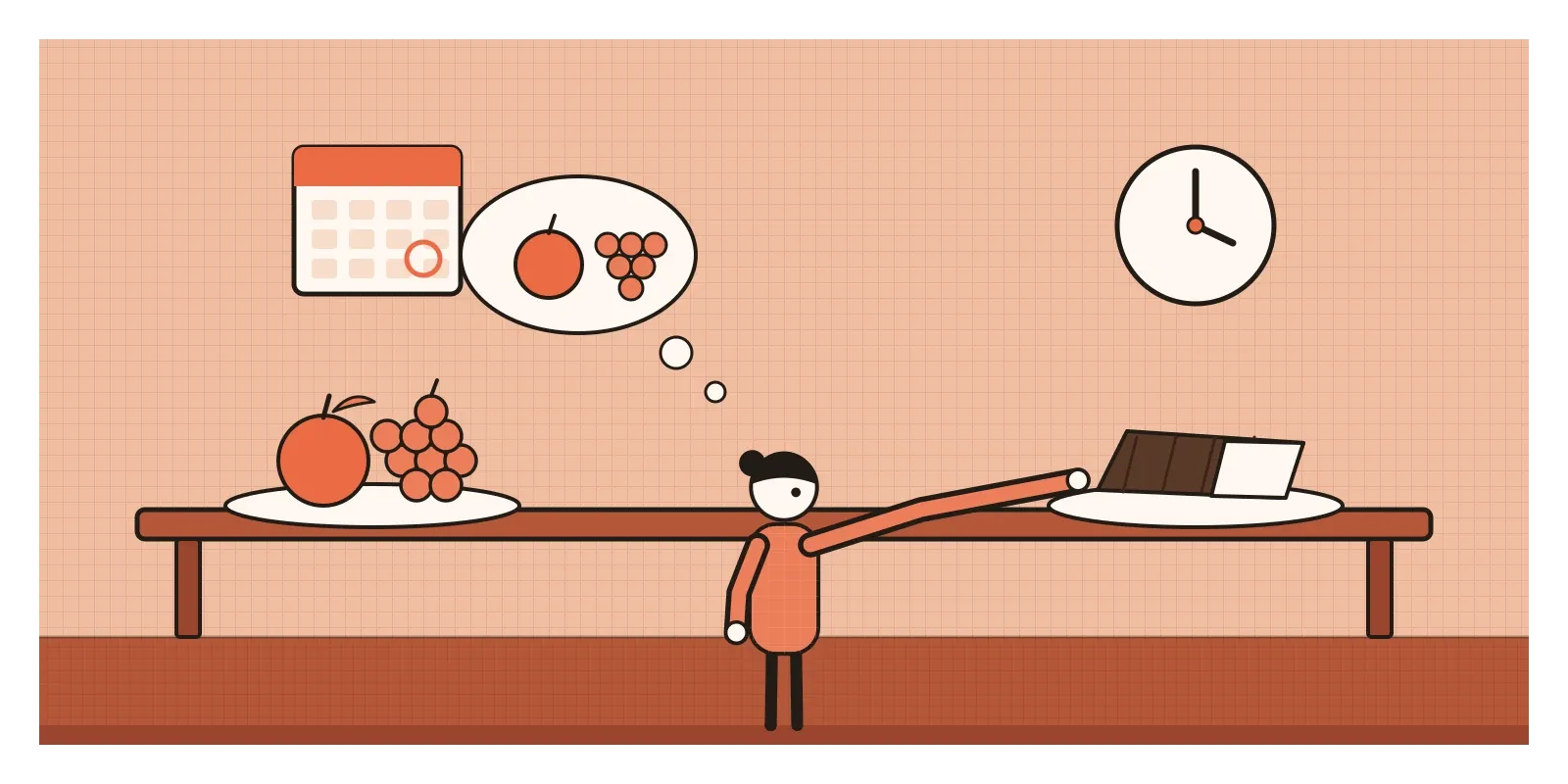
My favourite demonstration is about snacks. In 1998, Daniel Read and Barbara van Leeuwen asked people at work to choose a snack, fruit or something like chocolate, that would be delivered to them a week later. Most chose fruit. A week later, when the snack arrived, they were offered the chance to change their minds, and many switched to the unhealthy option. The future self eats fruit. The present self wants chocolate.
In 1997, the economist David Laibson gave the pattern a simple mathematical form, now often called beta-delta discounting: everything in the future gets one extra discount simply for not being now. Ted O'Donoghue and Matthew Rabin added a useful distinction in 1999. "Sophisticated" people know their future self will be impatient and plan around it. "Naive" people assume their future self will be more disciplined, which is exactly what DellaVigna and Malmendier's gym members seemed to do.
The famous marshmallow test belongs here too, with a warning. In experiments at Stanford's Bing Nursery School from the late 1960s, Walter Mischel offered young children one treat now or two if they could wait, and later follow-ups linked longer waiting to better outcomes as teenagers. But in 2018, Tyler Watts, Greg Duncan and Haonan Quan repeated the analysis with a much larger and more varied group of children and found the link about half as strong, and much smaller still once family background and early ability were taken into account. Waiting says a lot about a child's circumstances, not just their willpower.
Even present bias itself is more specific than its reputation. In 2015, Ned Augenblick, Muriel Niederle and Charles Sprenger found little present bias when people chose between amounts of money at different dates, but clear present bias when they chose when to do tedious work. We're most impatient about effort and pleasure, which is what most products ask for.
Why now always seems to win
Some preference for now is perfectly sensible. The future is uncertain. A reward promised for next year may never arrive, and I may not be around, or may not want it, when it does. For most of human history, food in the hand was safer than food promised, and a mind that grabbed what was available did reasonably well.
The economist George Loewenstein has written about what he called visceral factors: hunger, tiredness, craving, fear. These feelings are loud in the moment and almost impossible to imagine accurately from a distance. When I plan tomorrow's run tonight, I can't feel how cold and sleepy I'll be at six in the morning. So the planner and the doer disagree, and the doer has the advantage of actually being there.
The shortcut helps us grab real opportunities and stops us sacrificing everything for a future that may not come. It misleads us when the trade-off is lopsided: a small pleasure today against a large, near-certain cost later, as with saving, health, debt or the work we keep postponing.
Promises made to a future self
The most famous attempt to design around present bias began in 1998 at an American manufacturing company. Thaler and Shlomo Benartzi noticed that employees agreed they should save more for retirement but found it painful to cut today's take-home pay. So they flipped the timing. Their plan, Save More Tomorrow, asked employees to commit now to saving a larger share of their pay starting from their next pay rise, and a bit more with each rise after that. Nobody's pay packet would shrink. The extra saving came out of money they didn't have yet.
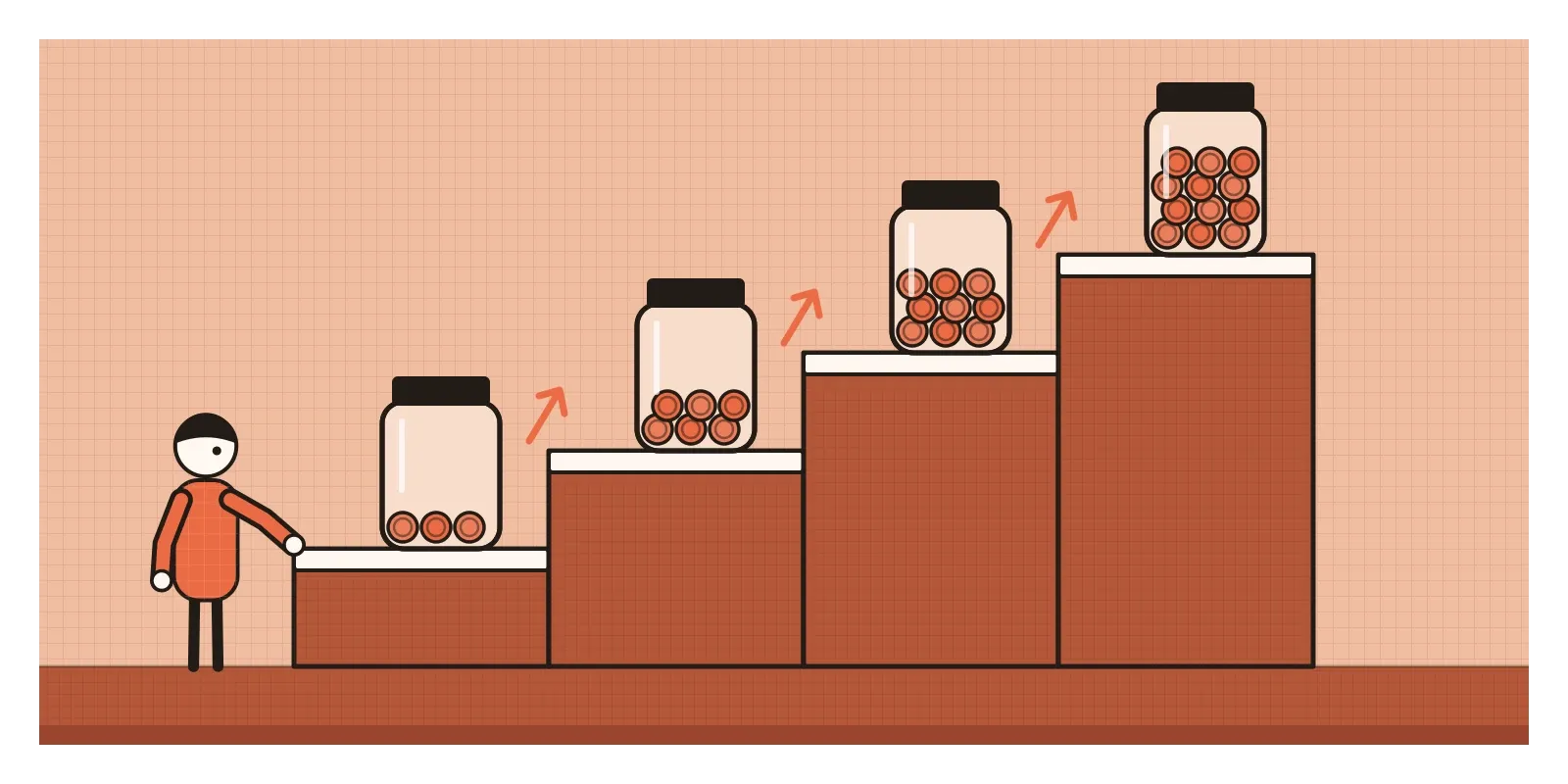
Of the employees offered the plan, 78 per cent joined, and most stayed in it through four pay rises. Their average saving rate rose from 3.5 per cent to 13.6 per cent over about forty months. People who chose to join may have differed from people who didn't, so the comparison isn't a clean experiment. But automatic escalation of this kind was later built into many American retirement plans.
There's striking evidence from India too. In a study published in 2015, Supreet Kaur, Michael Kremer and Sendhil Mullainathan worked with data-entry workers in India, paid by the accurate field, over thirteen months. Workers typed noticeably more as payday got closer, by about 8 per cent across the pay week, as if the reward felt more real when it was near. More strikingly, when offered a contract that paid them less if they missed a target they chose themselves, with no bonus for exceeding it, they picked it about 36 per cent of the time. On paper, that's a worse deal. In practice, it raised output, because it was a way to hold their future selves to account. Frank Schilbach's 2019 study of cycle-rickshaw drivers in Chennai found a related pattern: paying them to stay sober during the day increased how much they saved.
Picture a "pay later" button at checkout
Picture a team at an Indian electronics marketplace adding a pay-later option for a ₹30,000 phone: three monthly instalments through a lending partner. The first design shows "₹0 today" in large type above the price. The pay-later option is pre-selected. The first instalment falls due in forty-five days, and the late fee and interest are explained on a terms page. Conversion goes up sharply, because the cost has been moved almost entirely into the future, where it feels small.
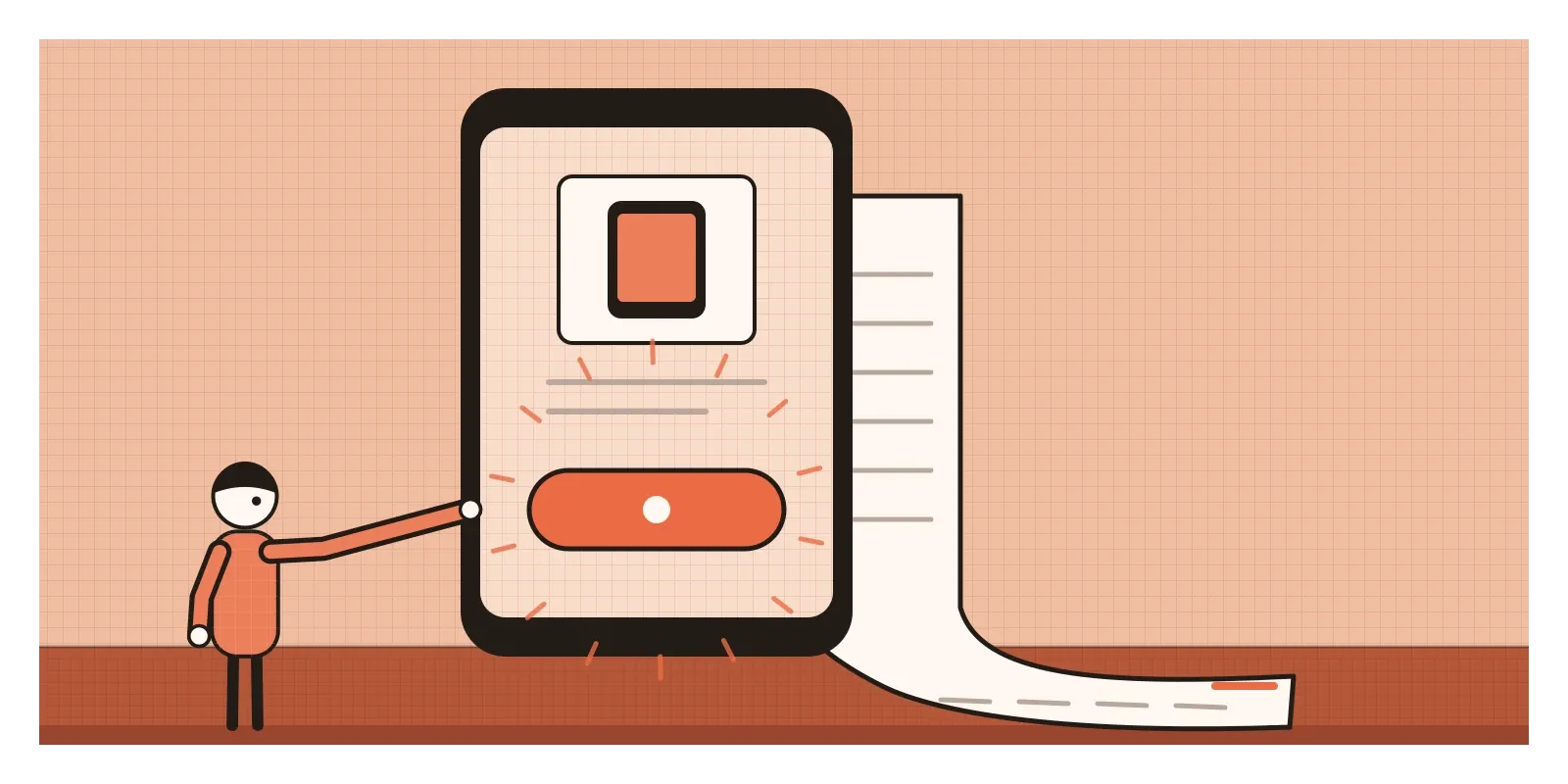
Six weeks later, the first instalments arrive, often in the same week as rent and school fees. Missed payments climb, late fees land, and the support team starts hearing from people who say they didn't understand what they'd agreed to. Some say their credit score fell. The design worked on the person at checkout, and against the person six weeks later.
The honest version still offers pay-later, because spreading a big payment can genuinely help. But it shows the full price first and the instalment plan second, with the total amount, any interest and fees in the same size of type. Nothing is pre-selected. The customer chooses an instalment date that falls after their salary arrives, and gets a reminder a few days before each payment. In India, much of this is also the law. The Reserve Bank of India's guidelines on digital lending, issued in 2022, require lenders to give borrowers a key fact statement with the all-in annual percentage rate before they sign, and a cooling-off period in which they can leave the loan by repaying the principal and the proportionate cost.
Using it honestly, and where it becomes manipulation
Present bias isn't something designers can switch off, so the question is whose side we take. Honest designs help the planner win against the doer, with the user's agreement. Save More Tomorrow does it. So does an automatic transfer to savings on payday, a reminder scheduled by the user, or a calendar that lets someone book tomorrow's workout tonight. The researcher Hal Hershfield and his colleagues found that people who saw an aged picture of themselves set aside more for retirement in a hypothetical task, which suggests that making the future self feel real can help.
Manipulation does the opposite: it takes the doer's side against the planner, and usually for the company's benefit. A free trial that quietly turns into an annual charge relies on the user not acting in time. A "buy now, pay later" screen that hides the total relies on the future feeling unreal. India's Central Consumer Protection Authority listed the "subscription trap", making cancellation hard or taking payment details for a free trial and charging automatically, among the dark patterns in its 2023 guidelines.
My test is to imagine the user a month from now looking back at the screen. Would they say it helped them do what they meant to do, or that it caught them in a weak moment?
How I try to catch it
When I notice a decision that pits a small pleasure now against a larger cost later, I try to move it into the future. Would I make the same choice if it were happening next month? If my answer changes, the present is doing the deciding.
When the planner in me has decided something, I try to lock it in, the way the data-entry workers did: an automatic transfer, a booking, a promise made to someone else. I rely less on my future willpower and more on my present arrangements.
When I'm designing, I ask what the user's future self would say about the choice we're making easy. If the future self would be grateful, it's a good default. If they'd feel tricked, it's a trap.
I think of those gym members often, paying $17 for each visit when $10 was on offer at the front desk. They weren't foolish. They were optimistic about a person who never quite arrived. In the next post I'll look at a different kind of misjudgement: the halo effect, where one good quality makes us see good qualities everywhere.
Further reading: Stefano DellaVigna and Ulrike Malmendier, "Paying Not to Go to the Gym" (2006) · Richard Thaler and Shlomo Benartzi, "Save More Tomorrow: Using Behavioral Economics to Increase Employee Saving" (2004) · Supreet Kaur, Michael Kremer and Sendhil Mullainathan, "Self-Control at Work" (2015) · Ted O'Donoghue and Matthew Rabin, "Doing It Now or Later" (1999) · Tyler Watts, Greg Duncan and Haonan Quan, "Revisiting the Marshmallow Test" (2018)
The question to askWould I make the same choice if it were happening next month?