
Anchoring Bias
The first number in the room quietly decides every number after it.
Anchoring Bias
A wheel that stopped at 10 or 65
In a well-known experiment, described in 1974, Amos Tversky and Daniel Kahneman spun a wheel of fortune in front of their participants. The wheel was marked from 0 to 100, but, as Kahneman later explained, it had been rigged to stop at only two numbers: 10 or 65. After the spin, people were asked two questions. Was the percentage of African countries in the United Nations higher or lower than the number on the wheel? And what was their best estimate of the actual percentage?
The wheel had nothing to do with the question, and everyone could see that. Still, people who had seen 10 gave a median estimate of 25 per cent. People who had seen 65 said 45 per cent. A number they knew was random had pulled their answers towards it.
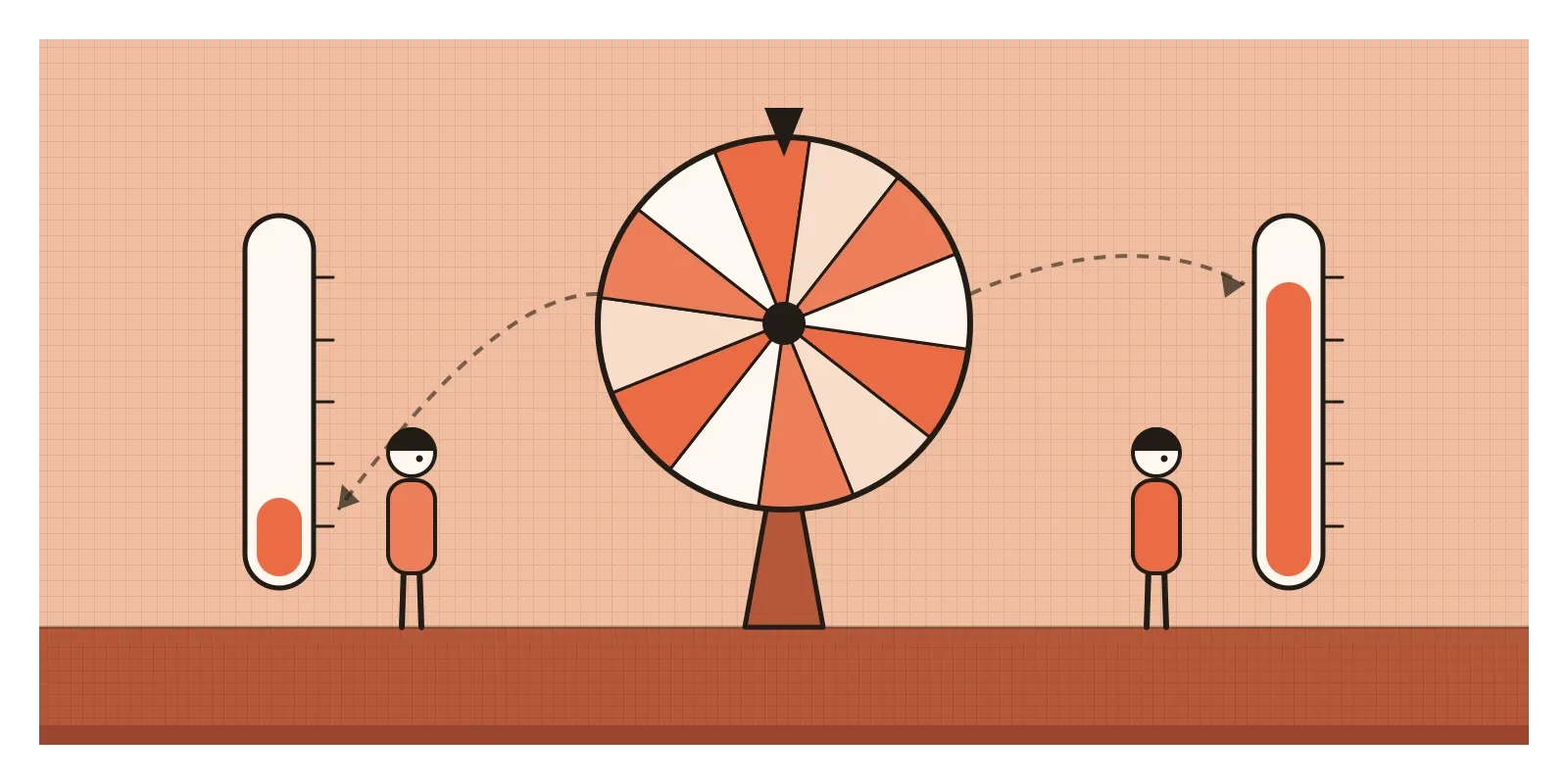
That's anchoring: the first piece of information we see becomes the reference point for the judgements that follow, even when it shouldn't matter at all. We start from the anchor and adjust, and we almost always stop adjusting too soon.
In the last post, on status quo bias, the thing that had already been chosen shaped the choice. Here it's the thing we saw first. For anyone who designs prices, forms, sliders, estimates or suggested amounts, that's an uncomfortable amount of influence over what people end up thinking is normal.
Nine years old, or a hundred and forty
Later researchers kept trying to make the effect go away, and kept failing. In 1997, Fritz Strack and Thomas Mussweiler asked German students whether Mahatma Gandhi had died before or after the age of 9, or, for a second group, before or after the age of 140. Both anchors were absurd. Nobody believed Gandhi died as a child or lived to 140. Yet the first group went on to estimate his age at death at around 50 on average, and the second at around 67. He was 78.
Experience doesn't protect us much either. In 1987, Gregory Northcraft and Margaret Neale gave estate agents in Tucson, Arizona, a tour of a real house and a thick packet of information about it, including a list price that differed from group to group. The agents' own valuations moved with the list price they had been shown, almost as much as those of students who knew nothing about property. Most of the agents said the list price hadn't influenced them. In 2006, Birte Englich, Thomas Mussweiler and Fritz Strack asked experienced German judges to read the file of a shoplifting case, then roll a pair of dice, which had been loaded to land on either 3 or 9, before deciding on a sentence. Judges who rolled 9 gave longer sentences, on average, than those who rolled 3.
How well has this held up? Better than most findings in psychology. In 2014, the Many Labs project ran a set of classic studies in dozens of laboratories around the world, and the anchoring questions produced some of the largest and most consistent effects in the whole set. The picture is less clear for anchors that are obviously irrelevant to a purchase. In 2003, Dan Ariely, George Loewenstein and Drazen Prelec reported that students who wrote down the last two digits of their social security number then bid more for items such as wine and a keyboard when those digits were high. Later attempts, including one by Zacharias Maniadis, Fabio Tufano and John List in 2014, found much smaller effects of that kind. So I'm confident that a plausible first number pulls our judgement. I'm less sure a random one moves our wallets very far.
Why we can't unsee the first number
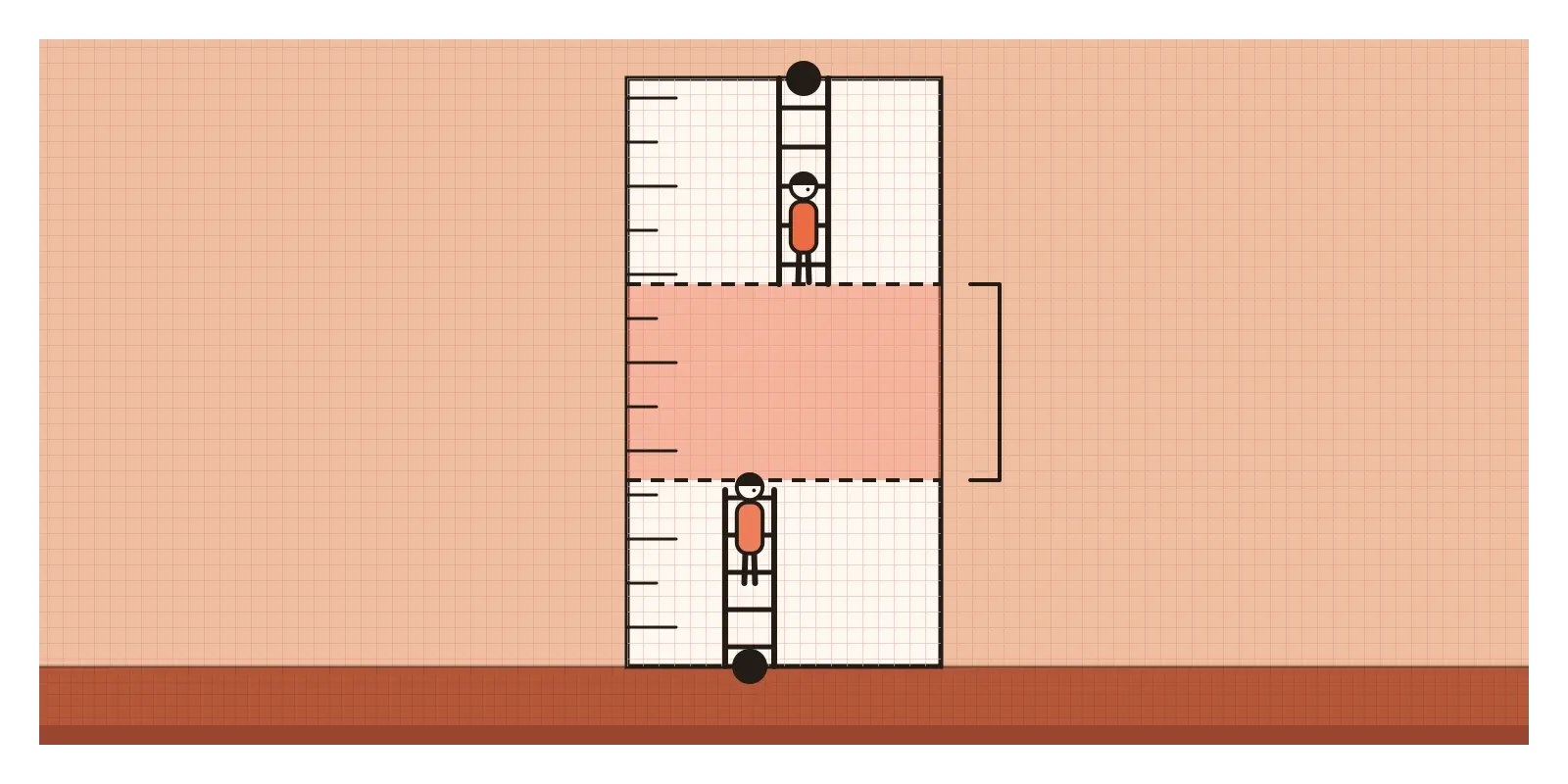
Tversky and Kahneman's explanation was adjustment. Faced with an uncertain quantity, we grab a starting point and move away from it until we reach a value that seems plausible. The problem is that "plausible" is a wide zone, and we stop at its near edge, the edge closest to where we started. Someone starting at 65 stops at the top of the plausible range. Someone starting at 10 stops at the bottom.
Strack and Mussweiler added a second explanation, which they called selective accessibility. When we consider whether the answer could be the anchor, we search our memory for reasons it might be, and those reasons stay at the front of the mind. Asked whether Gandhi could have lived to 140, you think of how old he looked in photographs, of his long life. Those thoughts then shape your actual estimate. The anchor works less like a number and more like a prompt for which evidence we gather.
The shortcut itself is usually a sensible one. When we know little, a starting point helps, and most starting points we're given in daily life carry some real information. A list price tells you something about a house. A previous year's budget is a reasonable place to begin this year's. The bias appears when the anchor is arbitrary, or chosen by someone who benefits from where we end up.
The store that took away the sales
In November 2011, J. C. Penney, an old American department store chain, hired Ron Johnson as its chief executive. Johnson had built Apple's retail stores, and he wanted to end what he saw as a dishonest game. Penney's ran hundreds of promotions a year. Prices were set high so they could be cut, and shoppers were trained to wait for a sale or bring a coupon. In February 2012, the company replaced all that with what it called "fair and square" pricing: lower everyday prices, rounded to whole dollars, with far fewer sales.
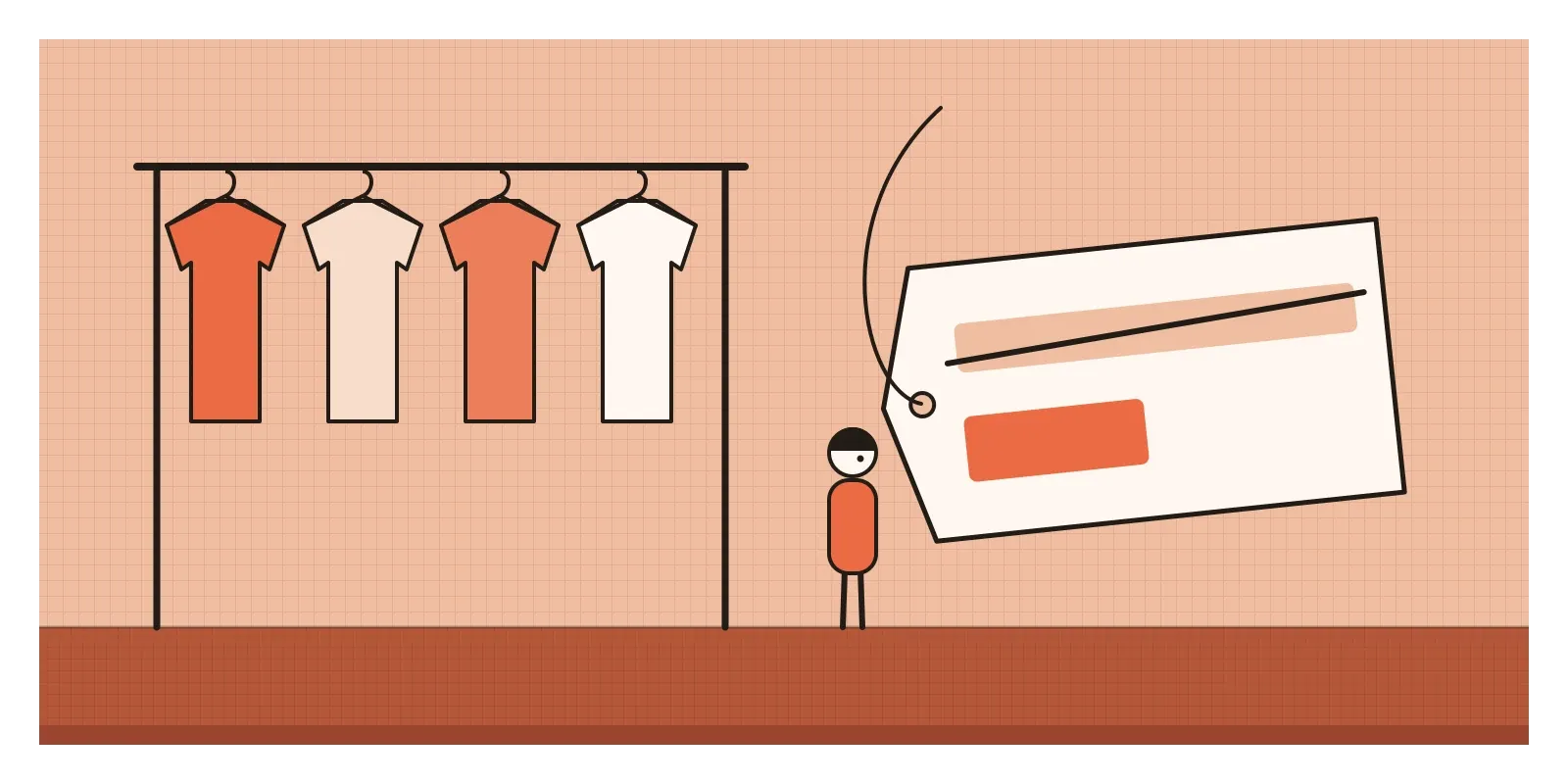
The prices were often no higher than the old sale prices. But without a higher "original" price to compare them with, they no longer felt like bargains. Sales fell by about a quarter in 2012, and in April 2013 the board removed Johnson and brought back his predecessor, who restored the coupons and the sales. A few years later, Penney's paid $50 million to settle a class action, without admitting wrongdoing, in which shoppers alleged that some of its "original" prices had rarely been charged at all.
I don't think the lesson is that Johnson was wrong to hate fake discounts. The lesson is how much of a price's meaning comes from the number shown next to it. Shoppers weren't only buying shirts. They were buying the difference between two numbers, and when one of the numbers disappeared, so did a lot of the satisfaction.
Picture a tip screen for delivery partners
Picture a team at a food delivery app designing the screen where customers can add a tip for the delivery partner. Research says customers want to tip but don't know what's normal. The first design offers three buttons, ₹20, ₹30 and ₹50, plus "Other".
Someone suggests changing the buttons to ₹50, ₹100 and ₹150. The experiment works. Average tips roughly double, because ₹50 now looks like the modest choice. The team is pleased, and so are the delivery partners. Then the support tickets arrive. Some customers feel the screen pushed them, a few stop tipping altogether, and one reviewer screenshots the screen and calls it guilt by design.
The better version accepts that any buttons will be anchors, so it chooses them on purpose. The team looks at what people actually tip when they type their own amount, and sets the buttons around that range. "No tip" and "Other" sit beside the presets at the same size. The screen says plainly that the whole tip goes to the partner. A month later, they check whether customers who chose "Other" are tipping far above or below the presets, which would mean the anchors have drifted. Tips end up higher than with the first design, and nobody feels tricked.
Using it honestly, and where it becomes manipulation
Because people anchor, there's no neutral way to show a first number. A suggested donation, a default slider position, the price of the first plan on a pricing page: each one sets the scale for what follows. A pricing page that opens with its most expensive plan makes the middle one look reasonable, which is exactly why so many pricing pages do it. That isn't automatically wrong, as long as the expensive plan is real and some people genuinely want it. The honest uses give people a relevant reference they would want anyway. A property site that shows what similar homes sold for recently is giving buyers an anchor, but a fair one. A form that pre-fills last year's figures is anchoring too, usefully.
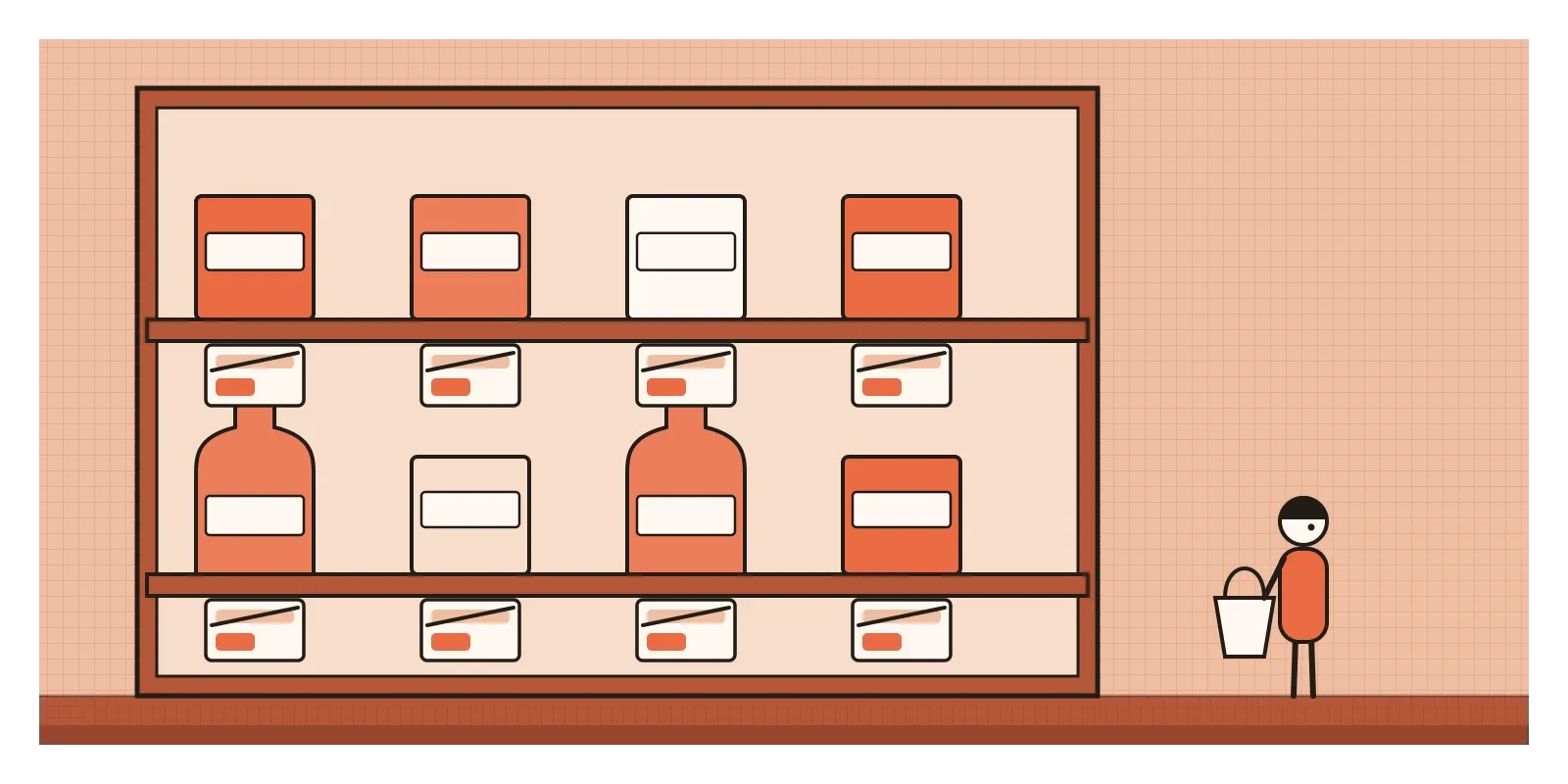
The dishonest uses invent a reference that was never real. In India, every packaged product has to carry an MRP, a maximum retail price, a rule in place since 1990 to stop shops adding their own margins on top of the printed price. It protects shoppers from being overcharged, but it has also become the anchor for almost every discount we see. "MRP ₹1,999, now ₹799" works on the strength of a number that may have been set with discounting in mind, and that few people ever paid.
Regulators have started to deal with this. Since 2022, the European Union has required shops announcing a price reduction to show the lowest price they charged in the previous thirty days, so a "was" price can't be inflated the week before a sale. In the United States, the Federal Trade Commission's Guides Against Deceptive Pricing, first issued in 1964, say a former price used in a comparison should be one the item was actually offered at, openly and in good faith, for a reasonably substantial period. Both rules aim at the same thing: an anchor is allowed, but it has to be true.
How I try to catch it
When I'm designing for other people's anchors, I ask where every first number on a screen came from, and whether I could defend it to the person seeing it. If a reference price, a preset or a starting value exists mainly to make another number look good, it goes.
I also try to catch my own anchors, which are everywhere in design work. The first estimate said aloud in sprint planning shapes everyone else's. The first design shown in a critique becomes the one every other option is measured against. So when estimates matter, everyone writes theirs down before anyone speaks. When I present directions, I show them side by side instead of one after another. And when a number feels obviously right, I ask where I first heard it.
Tversky and Kahneman's wheel still seems to me like the purest version of the problem. Everyone in the room knew it was a wheel. The number had no authority at all, and it worked anyway. If a random spin can do that, then any number I put first on a screen is doing something, whether I meant it to or not.
In the next post I'll look at a close relative of anchoring, where the numbers don't change at all but the words around them do: the framing effect.
Further reading: Amos Tversky and Daniel Kahneman, "Judgment under Uncertainty: Heuristics and Biases" (1974) · Fritz Strack and Thomas Mussweiler, "Explaining the Enigmatic Anchoring Effect" (1997) · Gregory Northcraft and Margaret Neale, "Experts, Amateurs, and Real Estate" (1987) · Birte Englich, Thomas Mussweiler and Fritz Strack, "Playing Dice with Criminal Sentences" (2006) · Daniel Kahneman, Thinking, Fast and Slow (2011)
The question to askWhat would I think if I had seen this second?