The Wiener Werkstätte
How a Viennese workshop tried to design everything in a life, from the house to the teaspoon, and signed it all.
The Wiener Werkstätte
Four marks on the bottom of a box
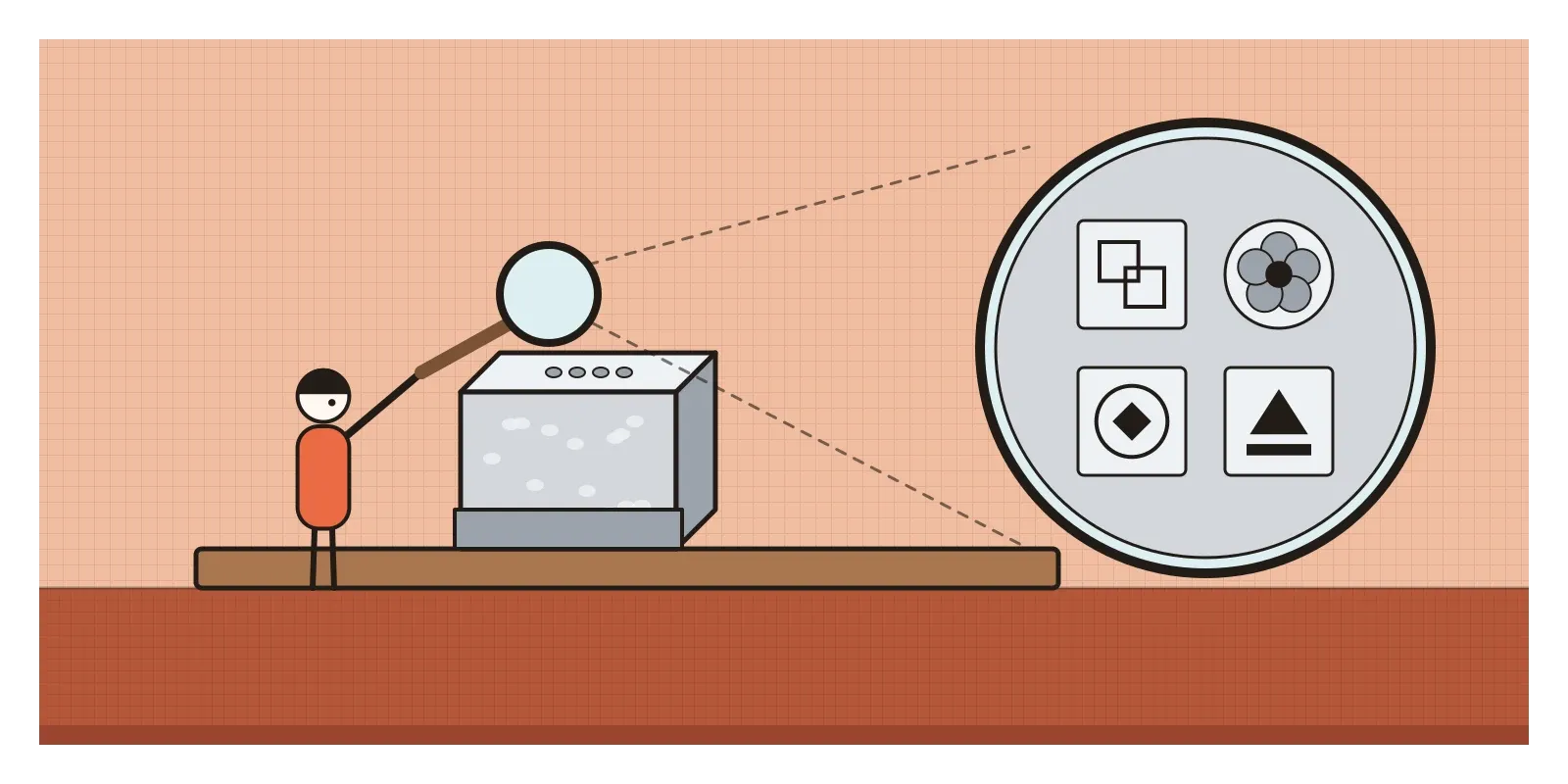
Pick up a small silver box made in Vienna around 1905 and turn it over. On the base, struck into the metal, you'll usually find a little cluster of marks. One is a monogram of two interlocked Ws. One is a tiny rose. Then come two more monograms, made of initials. The first belongs to the designer, often Josef Hoffmann or Koloman Moser. The second belongs to the silversmith who actually raised, hammered and finished the box.
That last mark was the radical one. For most of history, the people who made beautiful objects were anonymous, and in the factory age their names had disappeared completely behind the brand of the firm. Here, the person at the bench signed the work beside the famous designer. The interlocked Ws stood for the Wiener Werkstätte, the Vienna Workshops, and the rose was its registered trademark.
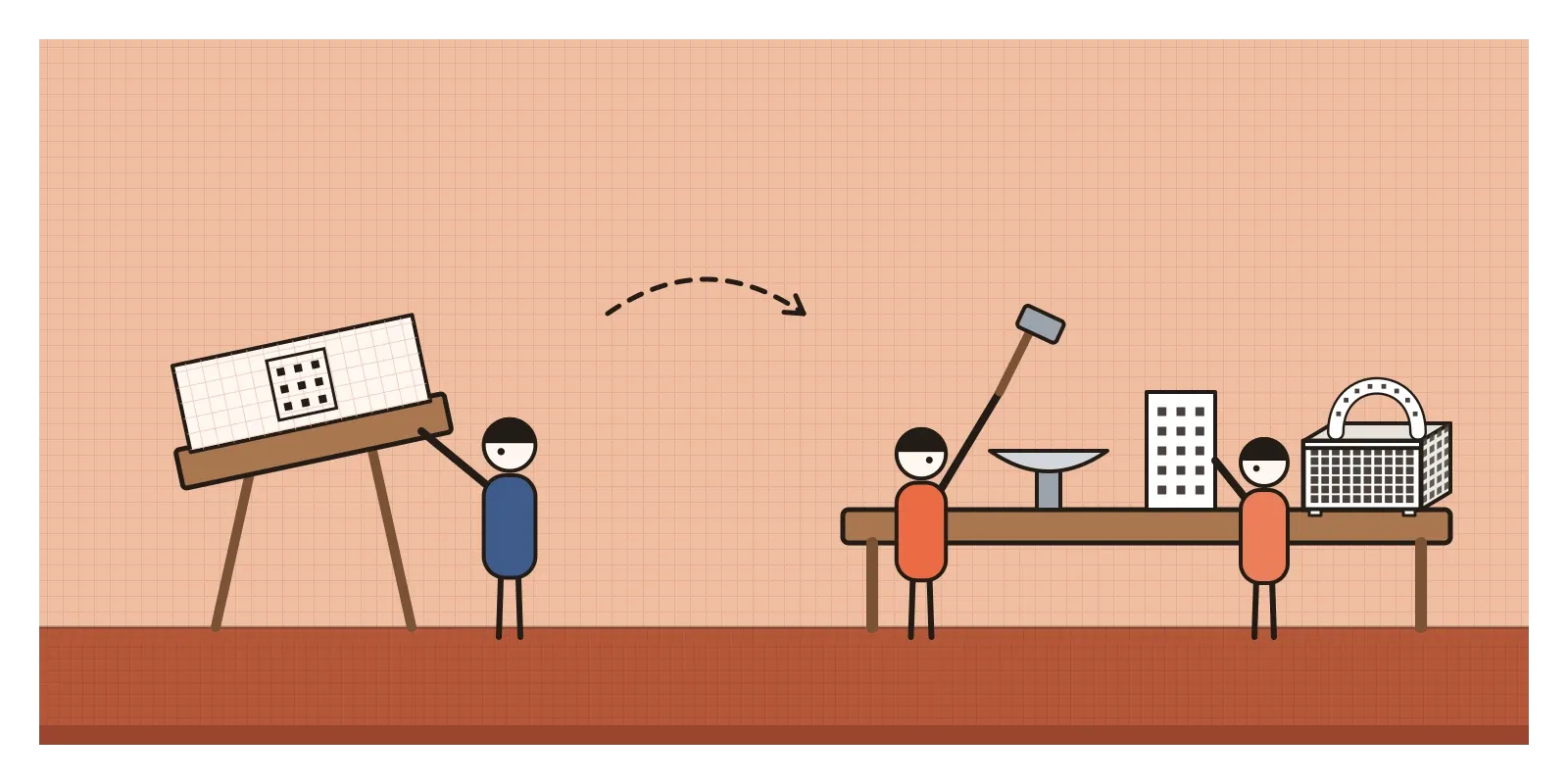
The Wiener Werkstätte was founded in Vienna in 1903 by Hoffmann, an architect, Moser, a painter and designer, and Fritz Waerndorfer, a young businessman from a wealthy textile family who put up most of the money. It lasted until 1932. Its ambition was enormous. Where the Vienna Secession, the subject of the previous post, had remade exhibitions, the Werkstätte set out to design everything a person might live with, from the building to the furniture, the cutlery, the wallpaper, the clothes and the postcards, and to make it all by hand, to the highest standard, in its own workshops.
Learning from Glasgow and London
The idea came largely from Britain. In 1900, the Secession's eighth exhibition was devoted to the applied arts, and its stars were the Glasgow designers Charles Rennie Mackintosh and Margaret Macdonald, whose room of tall, pale furniture and delicate panels caused a sensation in Vienna. By most accounts, work from C. R. Ashbee's Guild of Handicraft, the London workshop I wrote about in the post on the Arts and Crafts movement, was shown too. Hoffmann travelled to Britain, and Waerndorfer commissioned Mackintosh to design a music room for his own house.
When the three Viennese decided to start their own workshop, Mackintosh wrote to encourage them. In a letter usually dated to 1903, he advised them to insist that every object carry a clear mark of individuality, beauty and exact execution, and suggested that they would have to make things for the rich first before they could hope to reach everyone else. It turned out to be more prophecy than strategy.
The Werkstätte started small, with a handful of craftsmen, and by 1905 employed around a hundred people, including dozens of master craftsmen, in workshops for silver and metal, gold, bookbinding, leather and cabinet-making, with others for textiles, fashion, ceramics and glass added over the following years. Its working programme, published in 1905, said that the craftsman's work should be valued as highly as the painter's, that materials should be honest and that it was better to work ten days on one object than to make ten objects in a day. It also promised fair conditions for the workers, something many Arts and Crafts guilds had dreamed of and few managed.
That was the movement's reply to two things at once. It answered the factory, with its cheap machine-stamped copies of old styles. And it answered the Secession itself, whose new art lived mostly on gallery walls. Hoffmann and Moser wanted the same discipline in the spoon on the table as in the painting above it.
A sanatorium, a palace and a bar
The Werkstätte's first great total commission was a sanatorium at Purkersdorf, just outside Vienna, built in 1904 and 1905 for the industrialist Victor Zuckerkandl, a fashionable place for well-off patients to rest their nerves. Hoffmann designed the building as a plain white block with a flat roof, one of the earliest of its kind in Europe, with blue-and-white chequered bands running around its windows and edges. Inside, the Werkstätte furnished everything, from the dining chairs to the light fittings, in the same language of squares and white surfaces.
Its masterpiece was the Palais Stoclet in Brussels, built between 1905 and 1911 for the Belgian financier Adolphe Stoclet and his wife Suzanne, who had fallen for Viennese design while living in the city. Outside, the house is clad in thin slabs of pale marble, every edge outlined with a strip of gilded metal, so the whole building looks drawn rather than built. Inside, the Werkstätte designed and made everything, and the dining room carries a long mosaic frieze designed by Gustav Klimt, a tree whose branches curl into spirals, made by the workshop's craftsmen from marble, glass, enamel, gold and semi-precious stones. The house still belongs to the Stoclet family, rarely opens to visitors and became a World Heritage Site in 2009.
Closer to home, in 1907 the Werkstätte fitted out the Cabaret Fledermaus, a small theatre and bar in central Vienna, with a bar lined in thousands of small ceramic tiles in assorted colours, and printed programmes, posters and postcards to match. Postcards became a steady line of business, and several were designed by students who would become famous, among them Oskar Kokoschka and Egon Schiele.
The firm's character changed over time. Moser left in 1907 after arguments over money. After about 1915 a new designer, Dagobert Peche, brought something the founders had kept out: spiky leaves, frothy curves and fantastical ornament in silver, paper and textiles. Hoffmann admired him, and the later Werkstätte, with its fashion department, printed fabrics and painted ceramics, is far more colourful and playful than the stern white early years.
Little-square Hoffmann
The Viennese gave Hoffmann a nickname, Quadratl-Hoffmann, roughly "little-square Hoffmann", and the square is the place to start. Early Werkstätte objects are built from squares, cubes, rectangles and spheres. A table is a square slab on square legs. A chair back is a grid of square openings. A vase is a cylinder punched with rows of square holes. Chequerboard bands of black and white run along the edges of rooms, books and boxes.
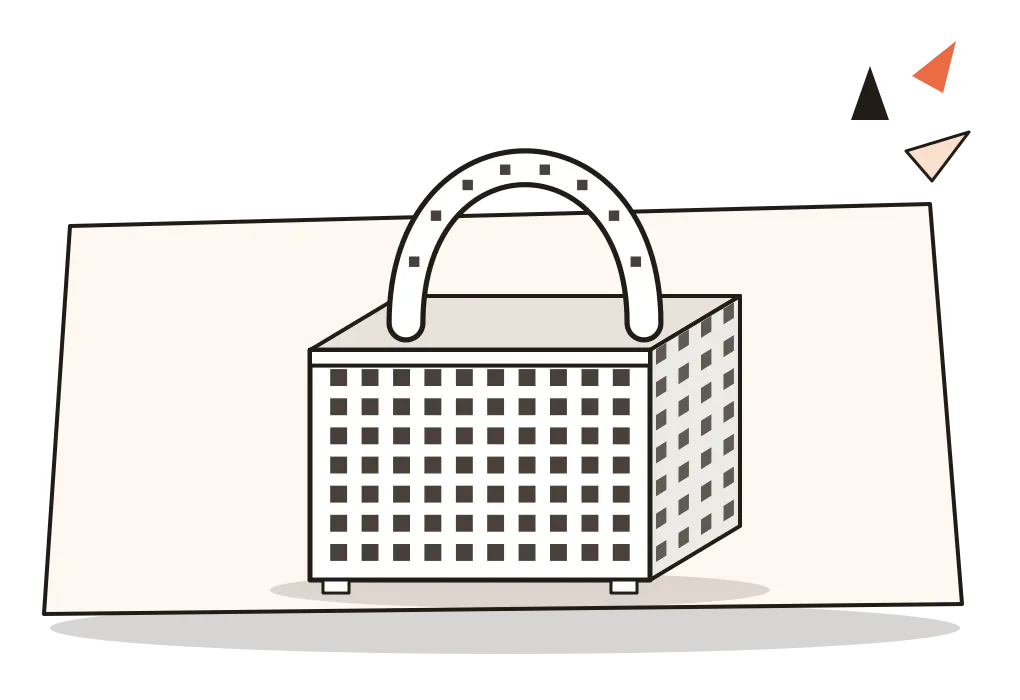
One of the most recognisable products was a family of baskets, plant stands and centrepieces made from thin sheet metal perforated with a regular grid of small square holes and painted white. They look weightless, as if drawn on graph paper and cut out. Interestingly, the perforated sheet was machine-made. The Werkstätte was less purist about hand work than its programme suggests.
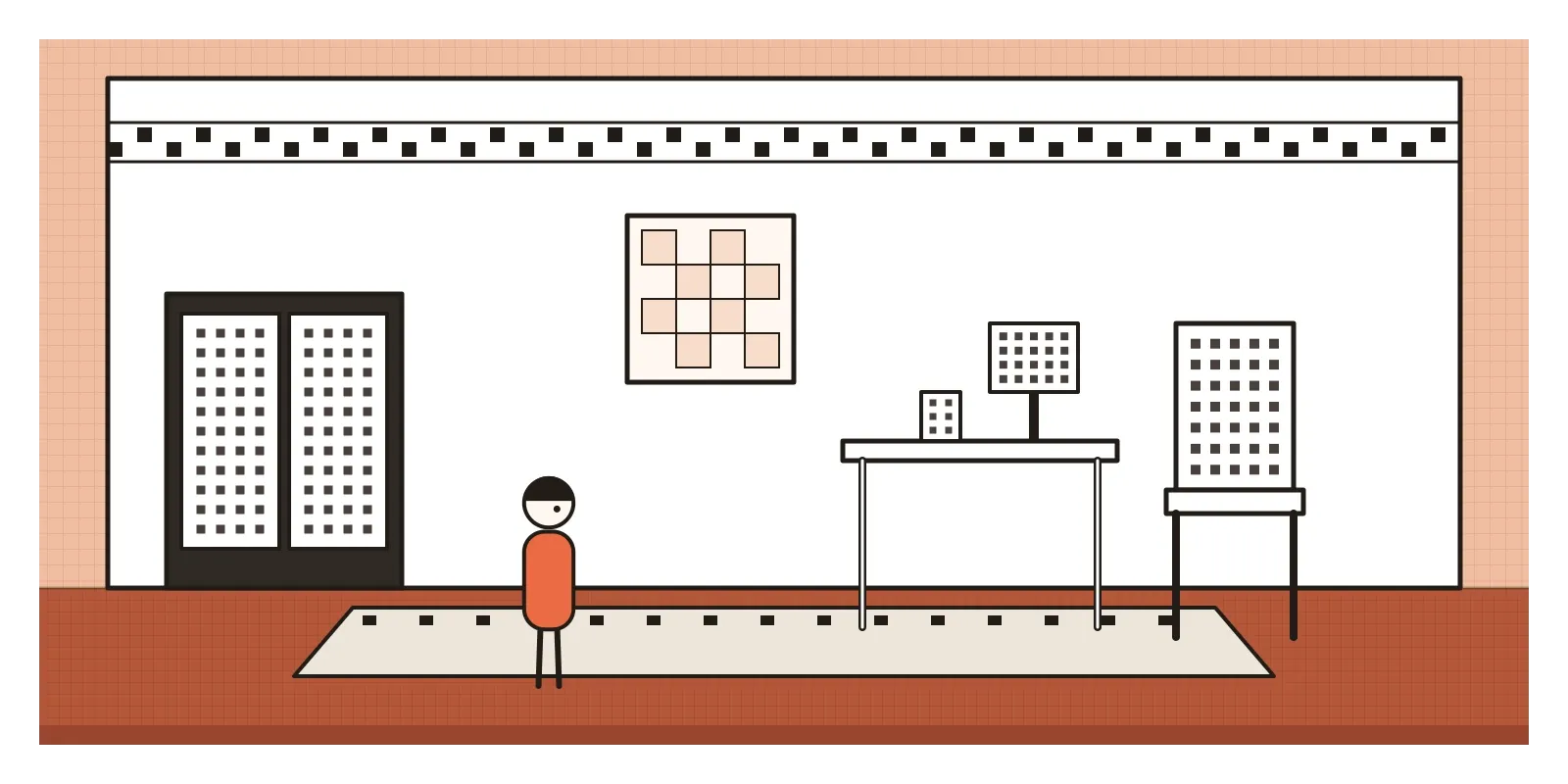
Silver was often left with the faint dimples of the hammer, a soft sheen rather than a mirror polish, and sometimes set off with a single cabochon of coloured stone. Furniture favoured dark stained or white painted wood with crisp outlines. Interiors were white, with ornament limited to thin black lines, borders and the occasional panel of pattern, so that one strong motif repeated through a room, on the chair, the lamp, the carpet and the cutlery. Textiles were printed by hand from wooden blocks in small, repeating geometric or stylised flower patterns. And everywhere, the mark of the workshop and its makers, as part of the design.
A palace in Indore, ordered from Europe
Long before Vienna, India had workshops where designers and makers worked together on everything a court needed. As I wrote in the post on Mughal painting, the margins of Akbar's own history name both the artist who designed a page and the one who coloured it, an early kind of credit. So the idea of a single workshop serving a single patron's whole world wasn't new to India. What came later, and what echoes the Palais Stoclet most closely, was a modern palace.
In the late 1920s, the young Maharaja of Indore, Yeshwant Rao Holkar II, educated in England and fascinated by modern design, asked a German architect he had befriended there, Eckart Muthesius, to build him a new residence. Manik Bagh, completed in Indore around 1933, is a long, low, white modernist building, and Muthesius designed much of its lighting and furniture himself. The rest came from the leading European modernists of the day, including chairs by Eileen Gray and a chaise longue designed by Le Corbusier and Charlotte Perriand. Like the Stoclets in Brussels, the maharaja was trying to live inside one coherent, modern design.
The difference is telling. The Palais Stoclet was made by one workshop, whose craftsmen signed their work. Manik Bagh was assembled from objects ordered from many studios in Europe, and Indian craftspeople had little to do with it. It was total design as shopping rather than making. The contents were auctioned in 1980, and the building is now used as government offices. For an Indian answer that put the maker back at the centre, the post on design, art and craft describes how Kamaladevi Chattopadhyay treated craft after Independence.
Credits, grids and the house brand
The most modern thing about the Werkstätte might be those marks on the bottom of the box. Today we expect credits everywhere: on film, on album sleeves, in the about page of an app, in the commit history of a codebase, where every line of code carries the name of whoever wrote it. Fashion and craft brands that print the name of the weaver or potter on a label are doing what the Werkstätte did in 1903. It's a small design decision with a large effect. It tells the buyer that a person made this, and it tells the person that their work counts.
The second legacy is the house style applied to everything. The Werkstätte ran its own shops, printed its own catalogues and postcards, and designed its packaging, so a customer met the same squares and the same rose whether they bought a brooch or a book. That's the logic of a lifestyle brand today, where a single visual language runs from the product to the shopping bag to the website, and of every design system that tries to make a hundred different screens feel like one product.
The third is the grid itself. Hoffmann's squares, drawn on graph paper, are close cousins of the grids designers now use to lay out pages and screens, and his perforated white metal has never gone out of production. You'll find desk organisers, shelves and plant stands in that spirit in almost any homeware shop, usually made by machine, usually unsigned.
The poor little rich man
The Werkstätte's sharpest critic was the architect Adolf Loos, whom I wrote about in the post on form follows function. In 1900, even before the workshop opened, he published a short satire about a poor little rich man who hires an architect to design every object in his home. Everything is perfect, and the man can no longer change a thing. When he dares to wear his bedroom slippers in the wrong room, the architect is outraged. It's a funny story with a serious point. Total design can turn a home into an exhibit, and its owner into a guest in his own life.
Mackintosh's warning came true as well. Hand-making everything to the highest standard was ruinously expensive, and the customers were a small circle of rich Viennese families. The Werkstätte almost never made a profit. Waerndorfer lost his fortune and left for America in 1914. Other patrons, chiefly the banking family of Otto Primavesi, kept it going. It opened branches in Berlin, Zurich and New York, survived the collapse of the empire, and was finally wound up in 1932, in the depths of the Depression.
Women designers did much of its later work, and were mocked for it. By the 1920s, many of the most inventive Werkstätte designers were women trained at Vienna's school of applied arts, among them the ceramicist Vally Wieselthier, the textile designers Maria Likarz and Mathilde Flögl, and Felice Rix, who married a Japanese architect and later moved to Kyoto, where after the war she taught design. One critic in the late 1920s dismissed their colourful pottery and prints as Viennese women's art, and meant it as an insult. Their names are only now being properly catalogued.
The replies came quickly. In Germany, the Deutscher Werkbund, founded in 1907, took the Werkstätte's standards and asked how industry, rather than a few workshops, could reach them. Later the Bauhaus took its grid and its total design and tried to make them affordable. In Vienna itself, Loos and the modernists who followed him swept away even the little squares.
To see the Werkstätte for yourself, the MAK, Vienna's Museum of Applied Arts, and the Leopold Museum have large collections, and the Neue Galerie in New York shows its silver beside Klimt. If you can't travel, look online at the MAK's collection, which includes thousands of the workshop's designs on paper. For an exercise, take one simple shape, a square or a circle, and design five objects for one room around it: a cup, a lamp, a chair back, a border and a label. Then put your name and the name of whoever would make each one on the label. And next time you pick up something handmade, turn it over and look for the marks. In the next post, on the Bengal School, I'll go back to Calcutta, where in the same years a group of painters set out to find an art that looked Indian again.
Further reading: Christian Witt-Dörring and Janis Staggs (eds.), Wiener Werkstätte 1903-1932: The Luxury of Beauty (2017) · Werner J. Schweiger, Wiener Werkstätte: Design in Vienna 1903-1932 (1984) · Jane Kallir, Viennese Design and the Wiener Werkstätte (1986) · Adolf Loos, Spoken into the Void: Collected Essays 1897-1900 (1982)
A reply toFactory copies of old styles, and a Secession whose new art stayed on the gallery walls.