The Renaissance
How Florence looked back to ancient Rome and invented a new way of measuring, picturing and printing the world.
The Renaissance
A committee meeting about a giant
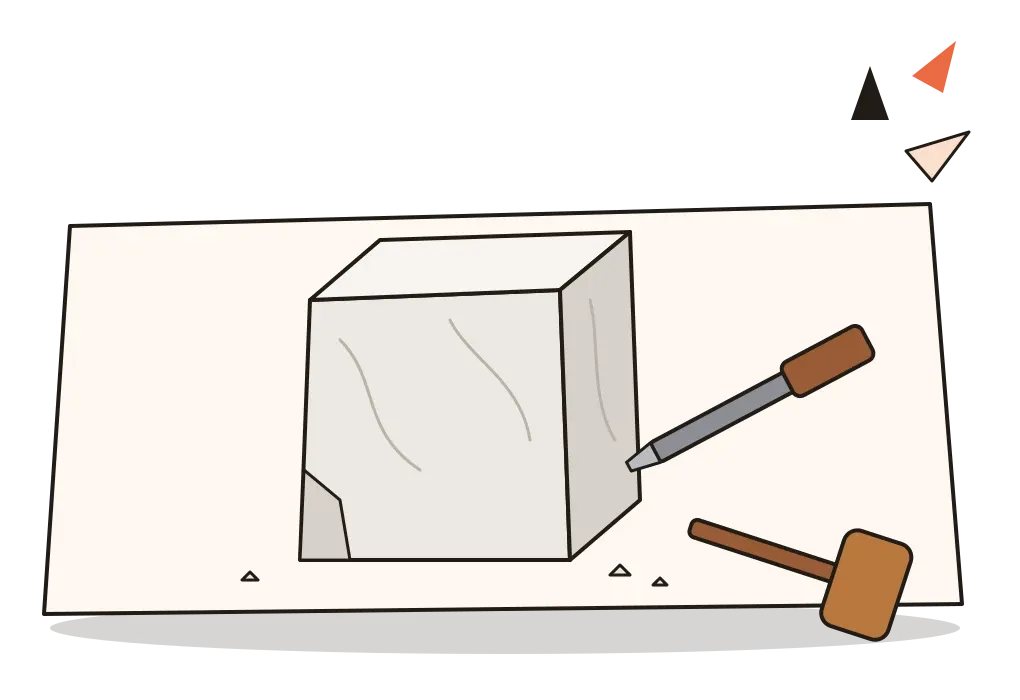
On 25 January 1504, around thirty of the most important artists and citizens of Florence met to settle an awkward question. Where do you put a marble man more than four metres tall? The statue had just been finished by Michelangelo, then twenty-eight. It was carved from a block of Carrara marble that other sculptors had started on and abandoned decades earlier, and it had lain in the cathedral works yard for so long that Florentines called it the Giant. The people round the table included Leonardo da Vinci, Sandro Botticelli, Perugino, Filippino Lippi and the architect Giuliano da Sangallo. Sangallo argued for the sheltered arches of the Loggia dei Lanzi, to protect the marble, and Leonardo seems to have agreed. Botticelli favoured a spot near the cathedral. In the end the city chose the most political place of all, the door of the town hall, the Palazzo Vecchio.
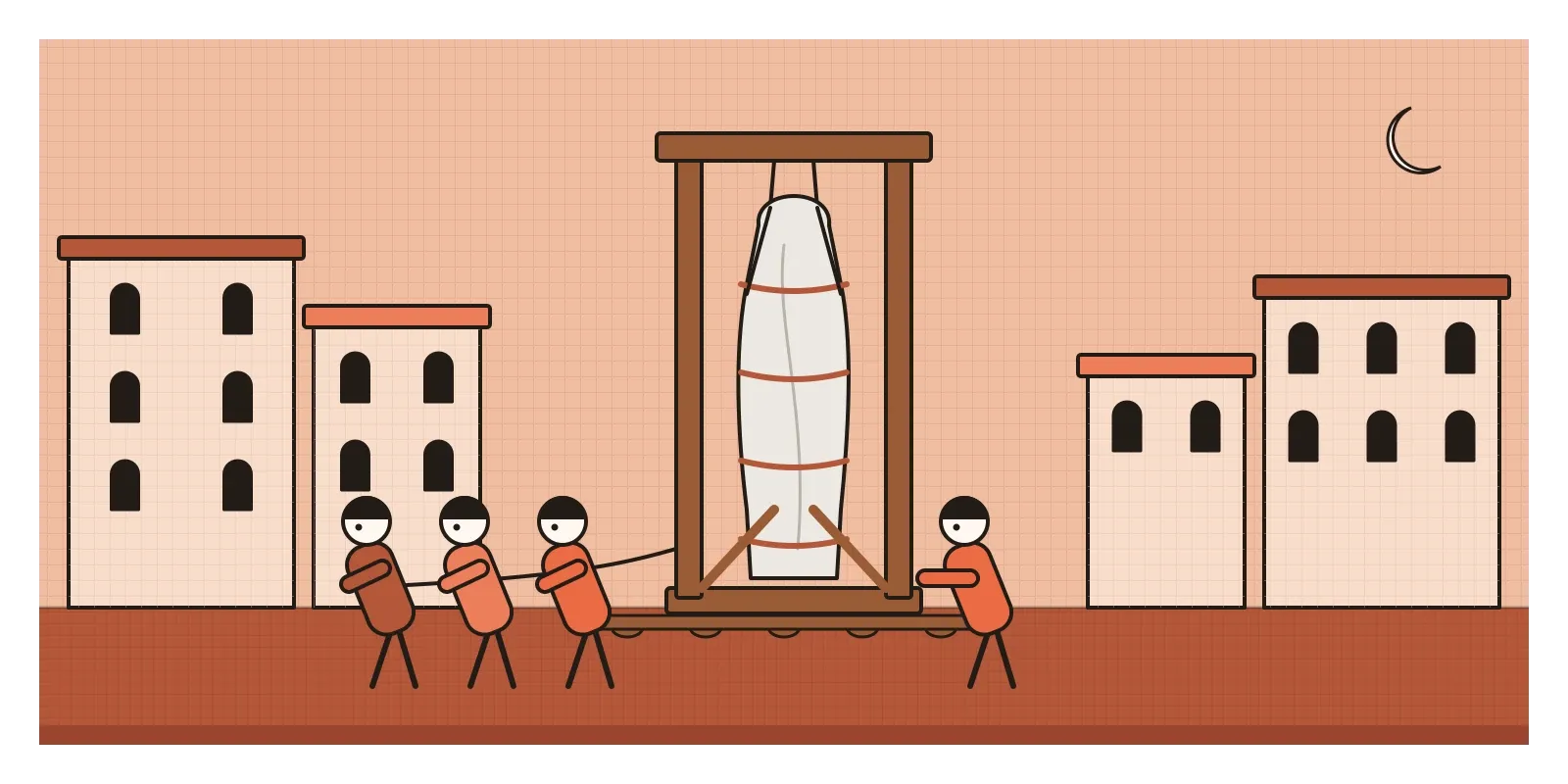
Getting it there was another matter. In mid-May the statue left Michelangelo's workshop at night, through a doorway that had to be widened, slung inside a wooden frame so it could sway without cracking, and was hauled over greased beams by dozens of men. It took about four days to cover a few hundred metres. A local diarist recorded that some people threw stones at it in the dark. By June it was in place, and in September 1504 the David was unveiled. It moved indoors to the Accademia gallery in 1873, and a copy has stood outside the Palazzo Vecchio since 1910.
That meeting is the Renaissance in miniature: a city treating art as public business, artists treated as experts whose opinions were minuted, and a naked hero from an ancient story carved with a precision about the human body that hadn't been seen since Greece and Rome. The word Renaissance is French for rebirth. Giorgio Vasari used the Italian rinascita in his Lives of the Artists in 1550, but the idea of a whole "Renaissance" period was popularised in the nineteenth century by the historians Jules Michelet and Jacob Burckhardt. Roughly, it means the period from around 1400 to around 1600 when artists and scholars, first in Italy and then across Europe, set out to revive the learning of the ancient world and measure the visible one.
Wool money, Roman ruins and a dome with no scaffold
Florence around 1400 was a republic made rich by wool and banking, with powerful guilds and families, the Medici above all, who paid for buildings and paintings partly out of devotion and partly to show off. The wool guild oversaw the building of the cathedral, and it was the cathedral's works office that commissioned the David. Scholars called humanists were hunting down ancient Latin and Greek texts and arguing that people, their reason and their achievements, deserved study alongside God. Greek teachers arrived from Byzantium, bringing texts that Western Europe had almost forgotten.
In art, the reply was aimed at what came just before. Late Gothic painting, which I wrote about in the post on Gothic, was a courtly art of gold backgrounds, slender, swaying figures and patterns, and its cathedrals reached upwards with pointed arches. Florentine artists looked instead at the round arches, columns and solid proportions of Roman ruins, and at the painter Giotto, who a century earlier had given his figures real weight. In the post on space I described Filippo Brunelleschi's famous demonstration of linear perspective. His bigger achievement was the dome of Florence cathedral, which he won the commission for in 1418 and built from 1420 to 1436. It was so wide that nobody knew how to build the timber framework normally needed to hold up a dome while the mortar set. Brunelleschi did without one, laying bricks in a herringbone pattern so each ring supported itself, building two shells, one inside the other, and inventing an ox-powered hoist to lift the stone.
North of the Alps, a parallel change was happening with different tools. In Flanders, painters such as Jan van Eyck perfected oil paint, building up thin transparent layers to capture the shine of metal, the depth of velvet and the light on a face. His great altarpiece at Ghent, finished in 1432, is often counted as the start of a Northern Renaissance.
A blue that cost four florins an ounce
Around 1427, in the church of Santa Maria Novella, Masaccio painted The Holy Trinity, one of the first large paintings to use Brunelleschi's perspective rigorously. A painted barrel vault seems to open up a real chapel in a flat wall, and below it a skeleton lies on a tomb. Visitors must have felt the wall dissolve.
The way such pictures were ordered tells us a lot. In 1485, Domenico Ghirlandaio signed a contract to paint an altarpiece for the Spedale degli Innocenti, a foundling hospital in Florence. It required him to follow a drawing the client had approved, to paint the figures with his own hand, and to use ultramarine blue worth about four florins an ounce. In his 1972 book Painting and Experience in Fifteenth-Century Italy, the art historian Michael Baxandall built a whole account of the period on documents like this. He noticed that over the century, clients stopped specifying expensive materials so much and started paying for the master's skill instead. It's the moment a brief begins to value the designer over the gold.

By 1500 Rome had become the centre. From 1508 to 1512 Michelangelo painted the ceiling of the Sistine Chapel, more than five hundred square metres of prophets, sibyls and scenes from Genesis. The popular picture of him lying on his back is a myth. He stood on a scaffold of his own design, painting with his head craned back, and wrote a comic poem complaining about the strain. Next door, between 1509 and 1511, Raphael painted The School of Athens, an imaginary gathering of ancient philosophers in a vast Roman hall, with Plato and Aristotle walking towards us at the vanishing point. It's often said that Plato has Leonardo's face. A little later, Sofonisba Anguissola, a nobleman's daughter from Cremona trained when that was almost unheard of for a woman, became a painter at the court of Philip II of Spain.
One eye, one light, one leg
The surest sign of Renaissance painting is a single, fixed point of view. Lines of floors, ceilings and buildings converge on a vanishing point, often at the most important figure, and floor tiles become a measured grid. Light comes from one consistent direction and models forms softly. Leonardo's smoky blending, called sfumato, belongs here, along with the modelling with light and dark called chiaroscuro that I described in the post on value. Distant hills turn pale and blue.
Figures stand in contrapposto, an ancient Greek pose revived: the weight rests on one leg, so the hips tilt one way and the shoulders the other, and the body seems relaxed and alive. The David is the textbook example. Groups are often arranged in a calm pyramid, especially in Raphael's paintings of the Madonna and Child. Faces are idealised but specific, and anatomy is studied, sometimes from dissection.
Buildings speak the language of Rome: round arches, columns in the classical orders, pediments, strict symmetry and simple ratios. Brunelleschi's loggia for that same foundling hospital, begun in 1419, is often called the first Renaissance building. Its bays are a row of identical squares, and the whole facade can be measured with one module, an idea any designer working with an eight-point grid will recognise.
A city that looked as large as Rome
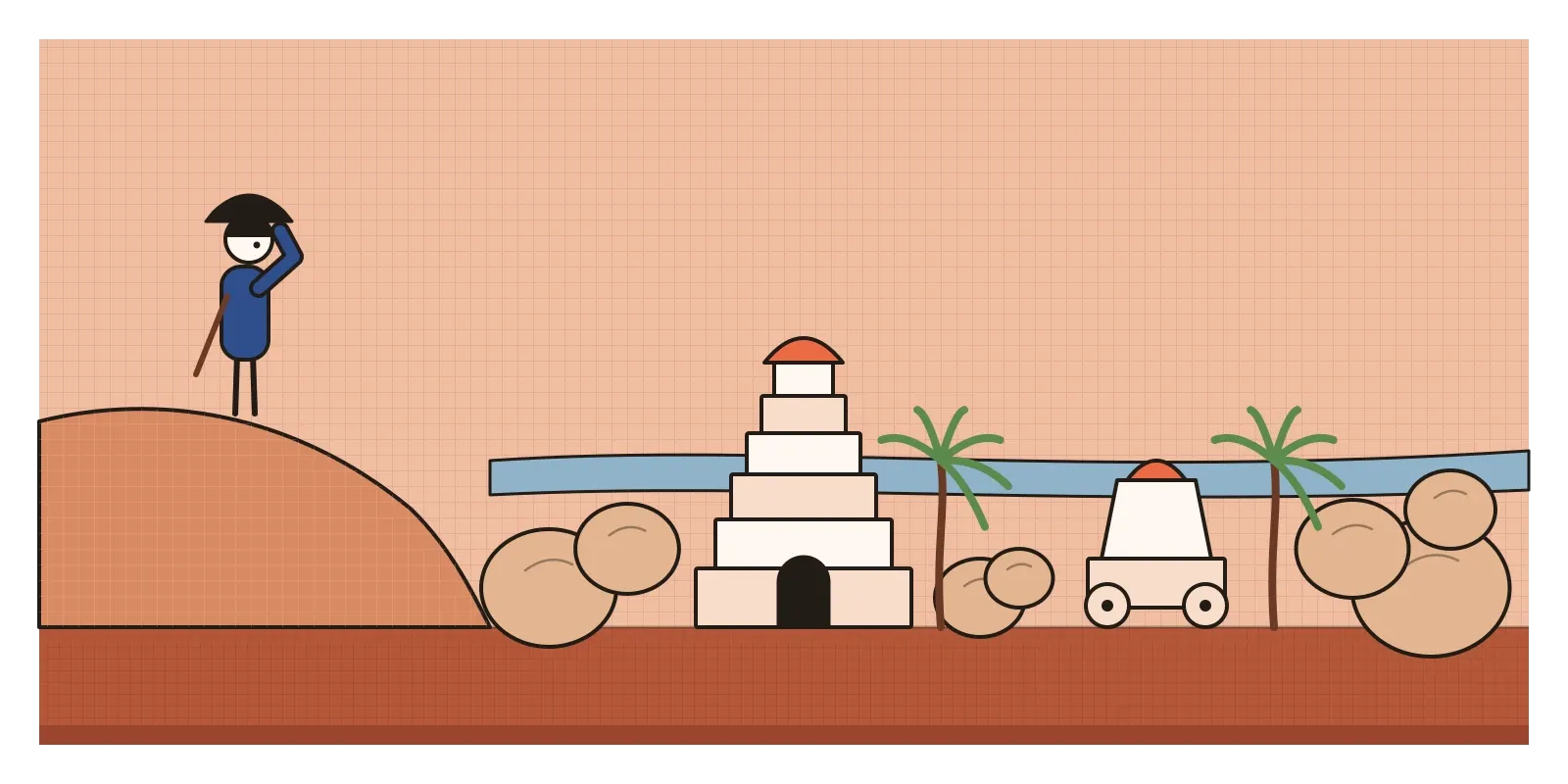
While Michelangelo was on his scaffold, south India had its own golden age. Krishnadevaraya ruled the Vijayanagara empire from 1509 to 1529, from a capital on the Tungabhadra river at what is now Hampi in Karnataka. Around 1520, a Portuguese visitor called Domingo Paes climbed a hill and looked out over the city. He wrote that what he saw seemed to him "as large as Rome", and very beautiful to look at, full of gardens, water channels and temples.
The parallel with Florence is loose but real. Here too was a rich court spending lavishly on building and art, a king who wrote poetry himself and patronised poets in the language of the people, Telugu, and builders who were consciously reviving older forms, the towering gateways and pillared halls of earlier south Indian temples, at a new scale. The Vittala temple, with its carved stone chariot and its pillars that ring when tapped, comes from this period. Paes was in India because of the voyages that had brought Vasco da Gama to Calicut in 1498, the same trade that was pouring pepper, cotton and money into Renaissance Lisbon and Venice. The city was sacked in 1565, after a defeat at the battle of Talikota, and its ruins are now a World Heritage Site.
The word itself later came to India. Nineteenth-century writers spoke of a "Bengal Renaissance" to describe the reforming energy of Calcutta, from Rammohun Roy to the Tagores. Historians still argue about the label, partly because it assumes that a culture had to be reborn and that the model for that rebirth was European.
Roman letters in your pocket
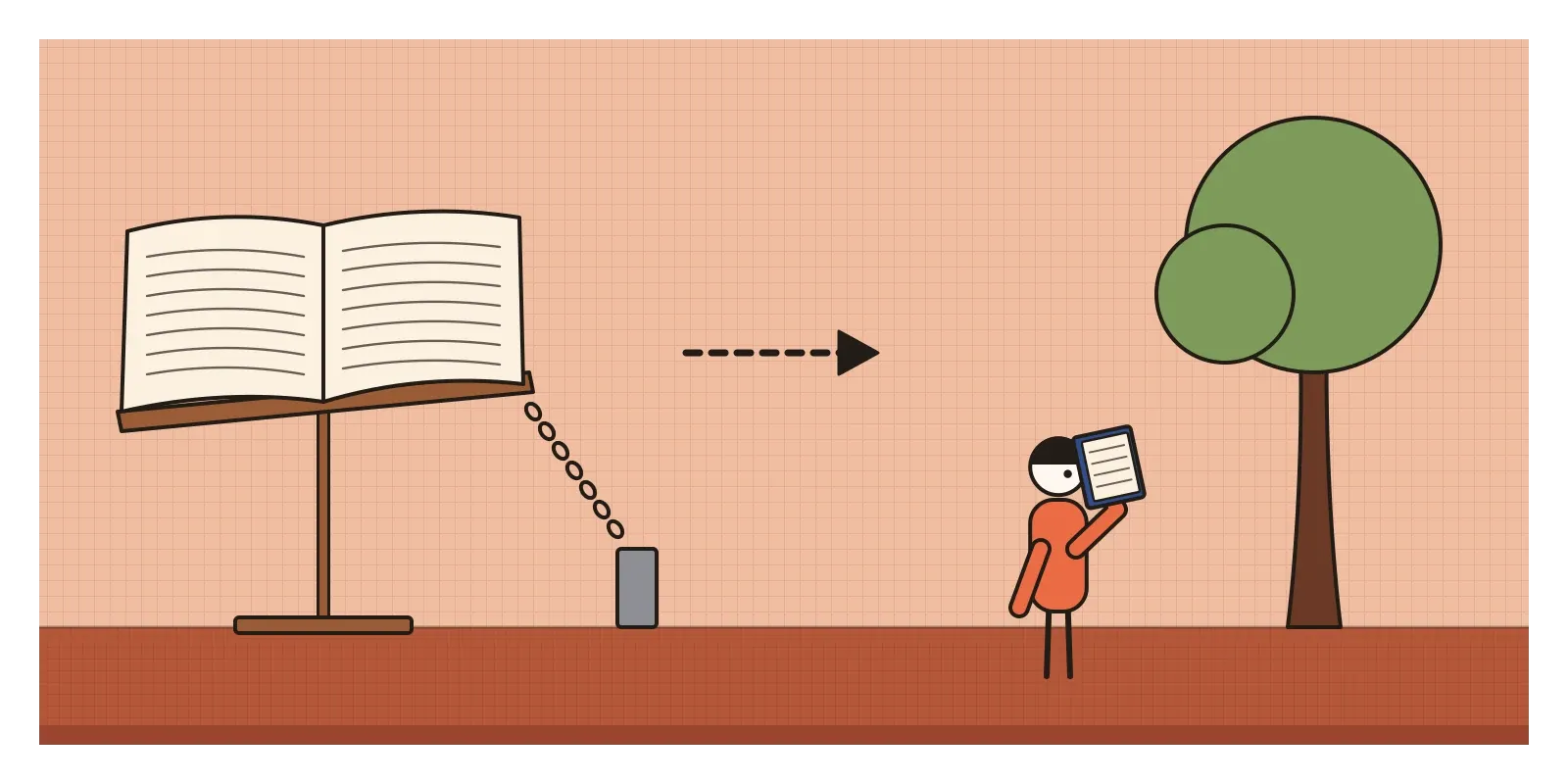
Every time you read a book set in a classic serif typeface, you're looking at the Renaissance. Humanist scholars disliked the heavy Gothic script of the previous centuries and copied texts in a rounder hand based on older manuscripts they believed were Roman. When printing reached Italy, punchcutters turned that hand into metal. In Venice in 1495, Francesco Griffo cut a roman type for the printer Aldus Manutius, used in a short book by the scholar Pietro Bembo about climbing Mount Etna. In 1929 the Monotype company revived it under the name Bembo, and Claude Garamond's French types of the following century drew on the same Aldine model. Aldus also published classics in small octavo volumes, set in a new sloping type cut by Griffo, the first italic, so that scholars could carry books instead of reading them chained to a desk. The paperback and the phone-sized reading app are both descendants.
The habits of the Renaissance workshop are just as familiar. Leonardo trained in the workshop of Andrea del Verrocchio, which turned out altarpieces, banners, painted chests and bronze, with assistants doing much of the work under the master's name. That tension between the creative lead and the team is still with us. So is the design competition. In 1401 Lorenzo Ghiberti beat Brunelleschi in a contest to design bronze doors for the Florence Baptistery, and both trial panels survive in the Bargello museum. Architects still compete the same way. And every 3D engine still builds its images on the single-viewpoint geometry I described in the post on perspective drawing.
Who wasn't reborn
The Renaissance told a flattering story about itself. To make its art a rebirth, it had to call the centuries before it dark, and medieval historians have pushed back ever since. Charles Homer Haskins wrote about a twelfth-century renaissance in 1927. Much of the ancient learning Europe "rediscovered" had been preserved, translated and extended by scholars writing in Arabic and by Byzantine teachers. The money behind the art came from banking, war and trade that soon included the conquest of the Americas, and enslaved people worked in Florentine and Venetian households. Women were almost entirely shut out of workshop training, which is why Anguissola stands out. And the ideal body the Renaissance celebrated was young, male and European.
Innovation had costs too. Leonardo painted his Last Supper in Milan with an experimental mix on dry plaster instead of true fresco, and it began to flake within his lifetime. By the time Raphael died in 1520 and imperial troops sacked Rome in 1527, many artists felt that perfection had been reached. The question for the next generation was what to do after perfection. In the next post, on Mannerism, they answer it by stretching the rules until they bend.
You don't need Florence to see this. Spend a day at Hampi, and walk from the Vittala temple to the royal enclosure, thinking of Paes on his hill. Or try contrapposto on yourself: stand in front of a mirror with your weight on one leg and sketch the opposite tilts of your hips and shoulders. It's the difference between a statue and a person. Then think back to that committee arguing in January 1504. They weren't debating whether the David was good. They were debating where it belonged and what it would mean there, which is still the hardest question in design.
Further reading: Michael Baxandall, Painting and Experience in Fifteenth-Century Italy (1972) · Ross King, Brunelleschi's Dome (2000) · Jerry Brotton, The Renaissance Bazaar: From the Silk Road to Michelangelo (2002) · Peter Burke, The Italian Renaissance: Culture and Society in Italy (1972) · Burton Stein, Vijayanagara (1989)
A reply toGothic painting's flat gold heavens and soaring arches, answered with the measured world of ancient Rome.