The Bauhaus
A small German art school that spent fourteen years teaching artists to design for the factory.
The Bauhaus
A show house on the edge of the park
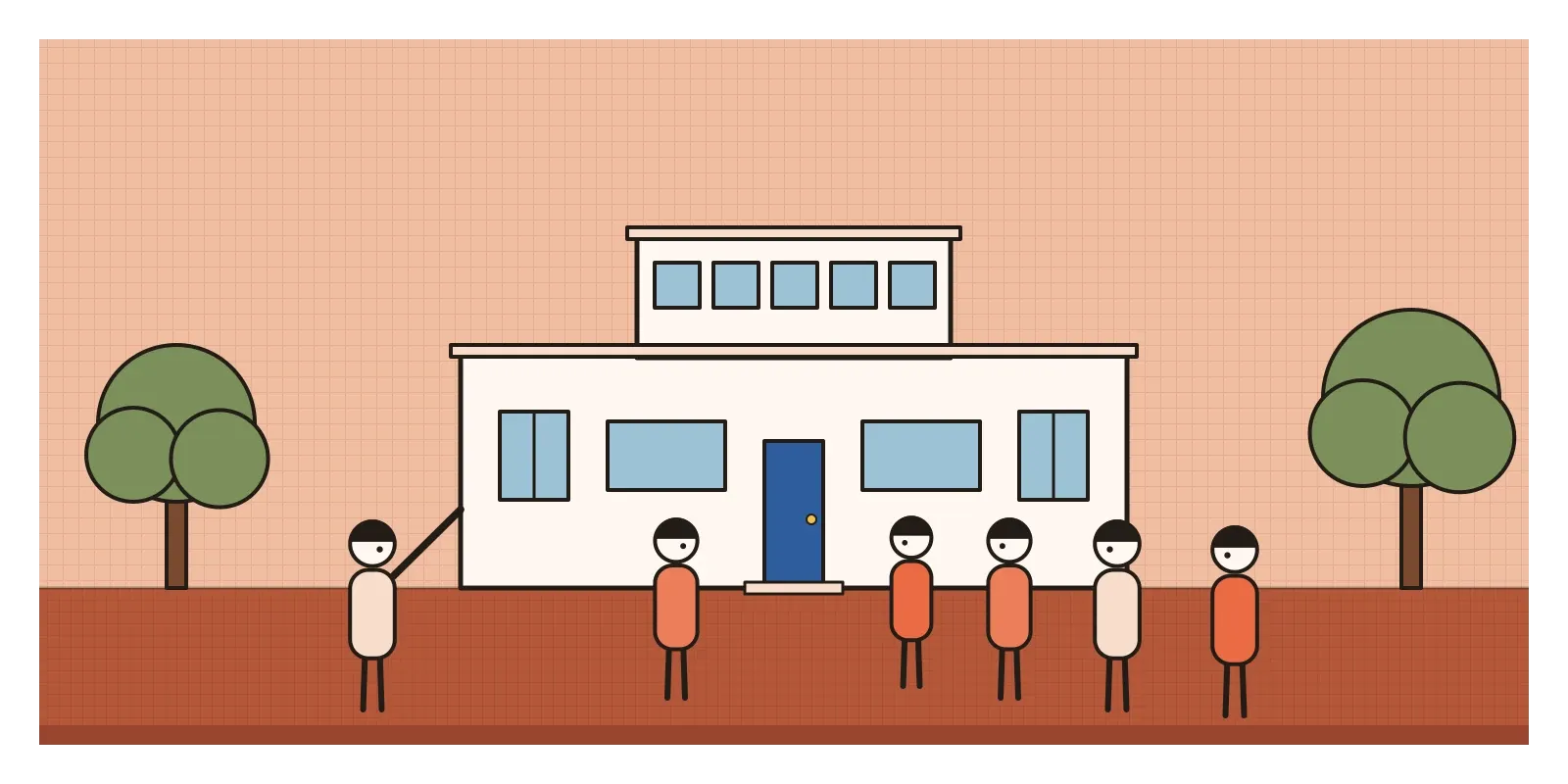
In the summer of 1923, visitors to Weimar could walk up a quiet street called Am Horn, above the park along the river Ilm, and step inside a house unlike anything else in the town. It was a plain white cube with a flat roof. In the middle rose a taller block, a living room lit by a band of high windows, and around it sat smaller rooms for sleeping, working, cooking and bathing, each sized for one job. It had been designed by Georg Muche, a painter who taught at the local art school, for that school's first big public exhibition, which opened on 15 August 1923.
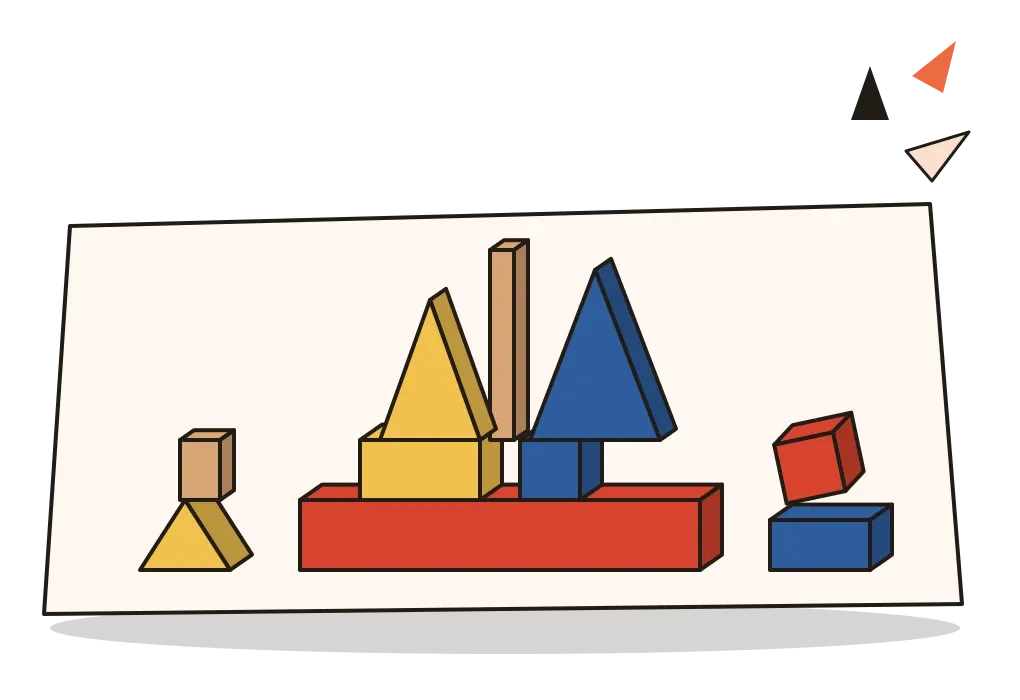
What made people stop was the furnishing. Every lamp, chair, rug and cupboard had been made in the school's own workshops. The kitchen, designed by the weaving student Benita Otte, had a long continuous counter under the window with cupboards above, so that everything a cook needed was within reach of one standing position. That was three years before the much more famous Frankfurt kitchen. In the children's room, a student named Alma Buscher had made low painted furniture and toys, including a set of simple wooden blocks in bright colours that could be built into a ship or anything else a child imagined. At a week of lectures that opened the exhibition, the school's director, Walter Gropius, spoke under a new slogan: art and technology, a new unity.
The school was the Staatliches Bauhaus, and its name is now shorthand for modern design itself. It lasted only fourteen years, from 1919 to 1933, in Weimar, Dessau and finally Berlin, and it was never large. Yet the way it trained people, starting with materials and simple forms and ending in prototypes for industry, became the template for design schools across the world, including in India.
Two old schools and a lost war
Gropius founded the Bauhaus in April 1919, a few months after Germany's defeat in the First World War, by merging Weimar's academy of fine art with its school of arts and crafts. The crafts school's previous head, the Belgian Art Nouveau designer Henry van de Velde, had recommended him. The country was broke and politically raw, and young artists swung between despair and a hunger to build something better from scratch.
The school's founding statement, which I wrote about in the post on design, art and craft, sounded a lot like William Morris. It wanted artists and craftspeople to work together, as equals, towards one great building. Students were apprentices and journeymen, as in a medieval guild, and each workshop had two teachers, a form master, usually an artist, and a craft master who knew the material. That was the Arts and Crafts movement's reply to the factory, adopted almost wholesale.
What changed over the next few years was the attitude to machines. Gropius had been a member of the Deutscher Werkbund, the alliance of designers and manufacturers that has its own post earlier in this series, and before the war he had designed the Fagus shoe-last factory with its corners of glass. The first Bauhaus years were mystical and expressionist, dominated by Johannes Itten, whose breathing exercises I described in the post on Itten's colour contrasts. By 1923, pushed by Dutch and Russian ideas about pure geometry, which have their own posts, and by a state government that wanted something useful for its money, Gropius turned the school towards industry.
A bicycle, a lamp and a length of cloth
The clearest way to see what the Bauhaus did is through its workshops. The most famous story concerns Marcel Breuer, a Hungarian student who went on to run the furniture workshop. Around 1925, as he later told it, he bought a new bicycle and became fascinated by its handlebars, a single tube of steel bent into shape, light, strong and cheap to make. If steel tube could be bent for a bicycle, why not for a chair? His tubular steel armchair, with its frame of bent chrome tube and seat, back and arms of stretched canvas, looked like a line drawing of a club chair, with all the stuffing taken away.
In the metal workshop, Wilhelm Wagenfeld and Karl Jakob Jucker made a table lamp in 1924 that is still sold today: a round glass base, a clear glass stem with the wire showing through it, and an opal glass dome. It looked like something a machine might stamp out by the thousand. The irony, as Wagenfeld later recalled, was that it was made largely by hand and was expensive, and the dealers they showed it to laughed at a lamp that looked cheap but wasn't. Marianne Brandt's teapot, which I wrote about in the post on design, art and craft, came from the same workshop and the same dilemma.
The most commercially successful workshop was weaving. It was led for years by Gunta Stölzl, who in 1927 became the first woman to hold the rank of master at the school. Under her the workshop learned to treat a loom as a machine for working out structure, experimenting with new fibres, including cellophane, and designing lengths of cloth that a mill could reproduce, with patterns built from stripes, blocks and the logic of the weave itself. Anni Albers, whose later work I mentioned in the post on Albers and the interaction of colour, trained there. In 1925 the school moved to the industrial town of Dessau, into a new building by Gropius with a workshop wing walled in glass. There, in 1929, it finally had a real bestseller: a range of quiet textured wallpapers made with the Rasch company, which sold in enormous numbers.
Circles, cubes and joints you can see
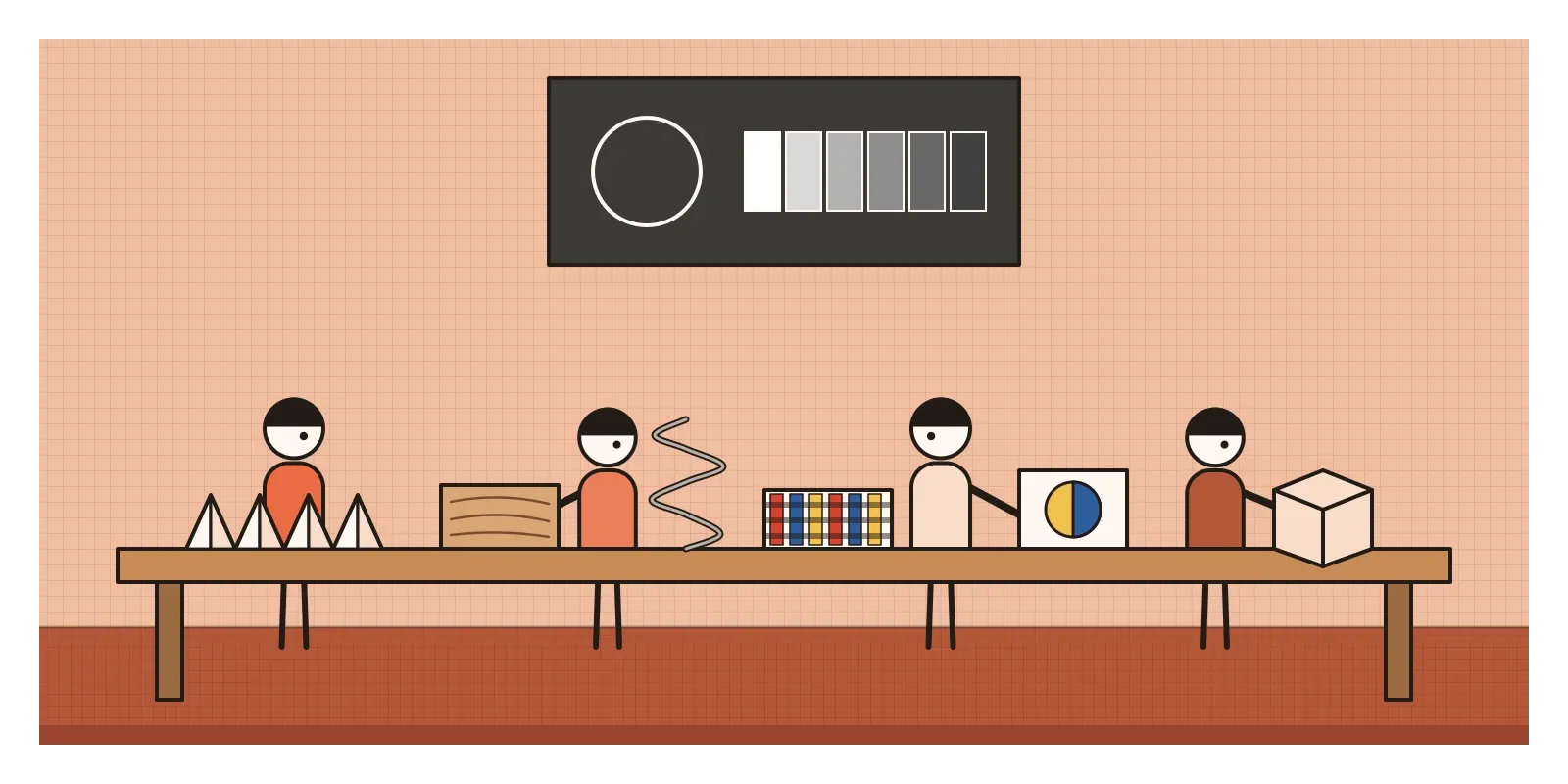
People often describe a Bauhaus look: primary colours, circles, squares and triangles, sans serif type, flat roofs and chrome. Gropius insisted there was no Bauhaus style, only a method, and the objects are more interesting than the cliché. The first thing to notice is how they are built from simple, nameable parts. Wagenfeld's lamp is a disc, a cylinder and a hemisphere. Breuer's chair is a continuous line of tube with flat planes of fabric hung on it. Buscher's toy is a handful of rectangular blocks. You can usually take a Bauhaus object apart in your head.
The second thing is honesty about material and making. The wire in the lamp shows through its glass stem. The joints in the chairs are visible. In the cloth, the pattern comes out of the weave rather than being printed on top. Decoration, where there is any, is the material showing off: the gleam of chrome, the clarity of glass. Colour is used deliberately, often in flat, saturated areas, and type, especially after the mid-1920s, is clean and sans serif, sometimes set entirely in lower case, an experiment I'll come back to in the post on the New Typography.
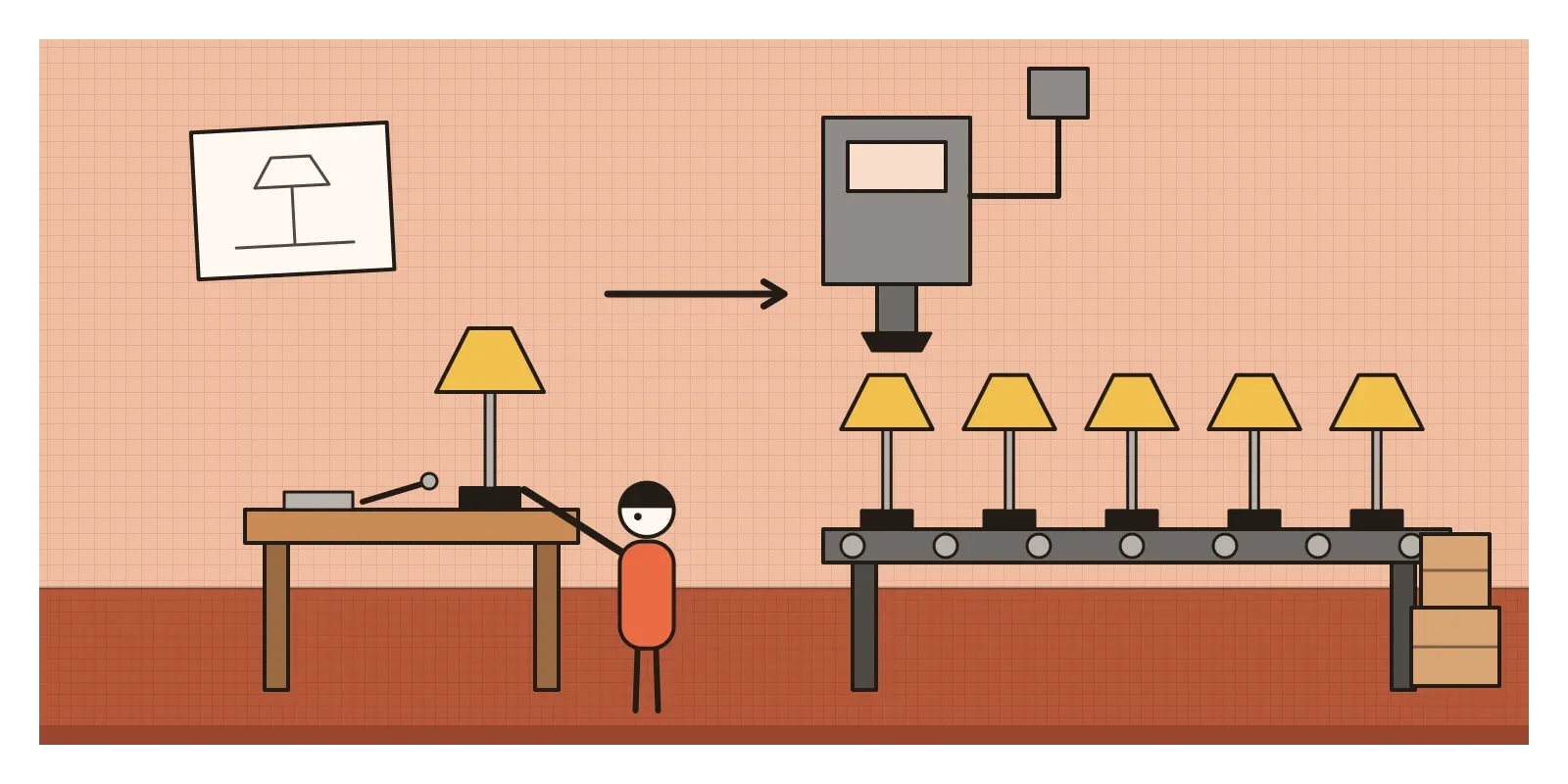
Underneath is the idea of the type, a standard model. The workshops were meant to be laboratories making prototypes that a factory could copy cheaply, which is why a Bauhaus object looks designed for a machine, even when, as with the lamp, the machine never arrived.
Kandinsky on a Calcutta wall
The Bauhaus's first exhibition outside Germany didn't open in Paris or New York. It opened in Calcutta, in December 1922, as part of the fourteenth annual exhibition of the Indian Society of Oriental Art. The Society, founded in 1907 by a circle that included the brothers Abanindranath and Gaganendranath Tagore, was the home of the Bengal School. The link was a young Austrian art historian, Stella Kramrisch. Rabindranath Tagore had heard her lecture in England and invited her to teach at his new university at Santiniketan. She knew Itten from Vienna, and in the spring of 1922 she wrote asking whether the Bauhaus would send work to India.
It did. Watercolours, drawings, etchings and woodcuts by Paul Klee, Wassily Kandinsky, Lyonel Feininger and Itten, along with work by students including Margit Téry-Adler and Sofie Korner, travelled to Calcutta and hung in the same exhibition as paintings by the Tagore brothers, Nandalal Bose and their circle. It was a selling show with modest prices, but almost nothing sold, and the works went back to Germany.
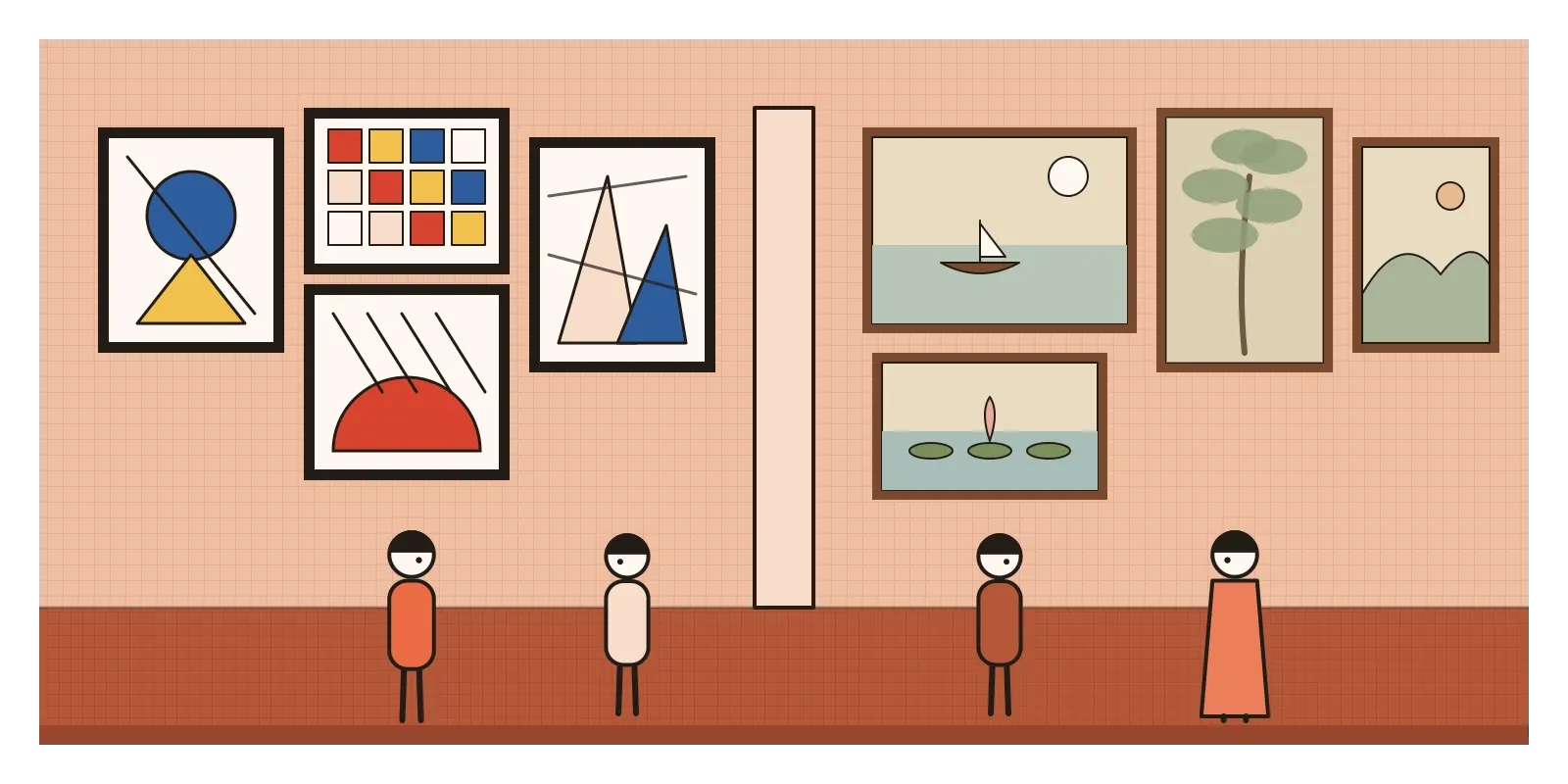
Historians argue about what the meeting meant. Some, including the curators of a 2013 exhibition and book, The Bauhaus in Calcutta, read it as an encounter between two avant-gardes each escaping academic European painting, one towards pure geometry, the other back towards Asian traditions. Others think the cosmopolitan story is overstated, noting that the European and Indian works hung in separate sections. Gaganendranath's own fractured, prism-like paintings of the 1920s show that at least one Calcutta painter was looking hard at European modernism. The deeper Indian connection came later, when a Bauhaus-style foundation course became the backbone of Indian design education after 1961, a story I'll tell in the posts on the Eames India Report and on Indian design education.
The foundation course in your pocket
The Bauhaus's biggest legacy isn't an object. It's the idea that every designer should start with the same basic training in form, colour, material and composition before specialising. Most design schools still begin this way, and many of the early posts on this blog, on point, line, shape and colour, descend from exercises first set in Weimar and Dessau.
The second legacy is the habit of designing a type rather than a single thing: a model that can be produced many times, consistently. That's what a design system is. When a team designs one button component that will be used ten thousand times, with defined states and spacing, it's doing what the Bauhaus workshops tried to do for lamps and door handles. So are flat-pack furniture, modular kitchens and the plain sans serif grids of most interfaces.
The third legacy is more of a warning. "Bauhaus" has become a style you can order. Type it into an AI image tool and you'll get primary-coloured circles and triangles, tidy grids and a geometric sans serif, the surface of the school frozen into a look. The method, starting from the material, the use and the means of production, is much harder to prompt.
The white box and its shadows
The school was less equal than its manifesto. In 1919 Gropius promised that anyone of good character could enrol, regardless of sex, and in the first year more women applied than men. The masters soon steered most of them into the weaving workshop, which was seen as suitable for women, and kept the architecture and metal workshops largely male. Stölzl, the only woman to become a master, was pushed out in 1931 amid political and antisemitic hostility after marrying a Jewish student, Arieh Sharon. And its promise of design for everyone mostly produced objects only the well-off could buy.
Its politics were tangled. Right-wing parties attacked it from the start as foreign, Bolshevik and degenerate, and cut its funding in Weimar, which is why it moved to Dessau. Hannes Meyer, who succeeded Gropius in 1928 and wanted design to serve the people's needs rather than luxury, was dismissed in 1930 for his left-wing politics. The architect Ludwig Mies van der Rohe, the last director, moved what was left to a disused factory in Berlin after the Nazis won control of Dessau. The police raided it in April 1933, and in July the teachers voted to close the school. Several former students were later murdered in the Holocaust, among them the weaver Otti Berger and the artist Friedl Dicker-Brandeis, who taught drawing to children in the Theresienstadt ghetto. And at least one Bauhaus-trained architect, Fritz Ertl, helped plan the barracks at Auschwitz, and was acquitted in a Vienna court in 1972. A method can be used for anything.
The teachers scattered. Gropius and Breuer went to Harvard, Mies to Chicago, László Moholy-Nagy founded a New Bauhaus in Chicago in 1937, and the Alberses went to Black Mountain College. Bauhaus-trained architects, Sharon among them, helped build the white city of Tel Aviv. In America its ideas became a sleek corporate style, and Tom Wolfe, in From Bauhaus to Our House (1981), mocked the glass boxes it inspired. The plain white block, built in climates it was never meant for, became the thing later designers rebelled against, from warmer Scandinavian modern to the deliberate bad taste of Memphis.
If you want to see the Bauhaus for yourself this week, start with your own kitchen. Stand in one spot and notice how much you can reach without walking, then compare it with Otte's counter of 1923. Then pick any object on your desk and ask what its simplest parts are, and whether its joints are hidden or shown. The Haus am Horn and the Dessau building are now a UNESCO World Heritage site. And think back to those white walls on Am Horn in August 1923, with a child's coloured blocks scattered on a painted floor. The Bauhaus wanted those blocks, and everything else, to be a standard that a factory could make for everyone. It mostly made beautiful prototypes. In the next post, on Surrealism, I'll turn from the workshop to the unconscious, and to a group of artists who wanted nothing to do with usefulness at all.
Further reading: Frank Whitford, Bauhaus (1984) · Magdalena Droste, Bauhaus 1919-1933 (1990) · Regina Bittner and Kathrin Rhomberg (eds.), The Bauhaus in Calcutta: An Encounter of the Cosmopolitan Avant-Garde (2013) · Elizabeth Otto and Patrick Rössler, Bauhaus Women: A Global Perspective (2019) · Nicholas Fox Weber, The Bauhaus Group: Six Masters of Modernism (2009)
A reply toThe Arts and Crafts dream of the handmade, which the Bauhaus tried to rebuild for the factory.