
Sustainable and Regenerative Design
How designers began counting the cost of what they make, and why some now want design to give back more than it takes.
Sustainable and Regenerative Design
A radio made from a juice can
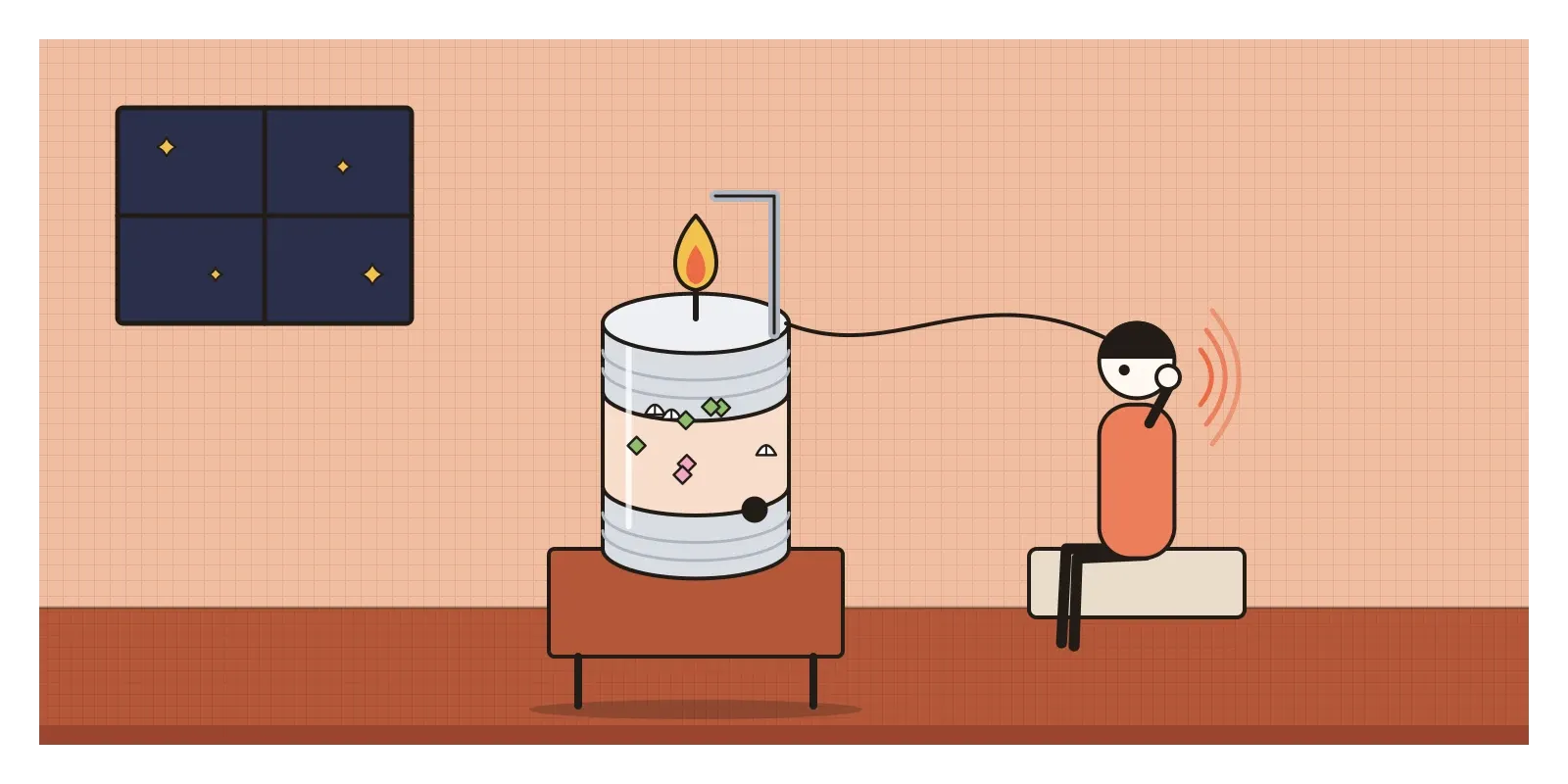
In the 1960s, the Austrian-born American designer Victor Papanek and his colleague George Seeger designed a radio out of a used juice can. Inside it was a little paraffin wax and a wick. When the wick was lit, the rising heat warmed a thermocouple, a simple device that turns heat into a small electric current, and that was enough to power a basic transistor receiver tuned to a single station. When the wax ran out, you could burn paper, wood or dried dung instead. Papanek reckoned it cost about nine cents to make, and he imagined it being made and used in villages with no electricity, so that people could hear news and warnings from a regional broadcaster.
Other designers told him it was ugly. Papanek's reply, in the book that made him famous, was to show a version that people in Indonesia had decorated themselves with scraps of coloured felt and shells, and to say that it wasn't his job to decide what their radio should look like. The book was Design for the Real World, first published in Swedish in 1970 and in English in 1971. Its first sentence is one of the most quoted in design: "There are professions more harmful than industrial design, but only a very few of them."
Papanek's argument was that industrial designers had become experts in making people want things they didn't need, and in making things that wore out or went out of fashion quickly, and that the bill was being paid by the planet and the poor. That argument is the seed of sustainable design, the effort to design things that meet people's needs without using up the resources and stability that future generations will depend on. Regenerative design is its younger, more ambitious branch, which asks whether design can go further than doing less harm, and actually repair the places and systems it touches. Neither is a style in the usual sense. They're a set of questions that can change how anything looks.
The waste makers and the limits to growth
The movement was a reply to the consumer boom that followed the Second World War. In the post on Streamline Moderne, I described how American designers learned to restyle products every year so that last year's model looked old. By the 1950s, disposable cups, packaging and appliances that couldn't be repaired were becoming normal, and in 1960 the journalist Vance Packard called the people behind them The Waste Makers. Two years later, the biologist Rachel Carson's Silent Spring described how pesticides were poisoning birds, rivers and people, and it helped start the modern environmental movement.
Through the early 1970s the warnings piled up. In 1972 a team of researchers commissioned by the Club of Rome published The Limits to Growth, which used computer models to argue that endless growth in population, industry and consumption would eventually collide with a finite planet. In 1973 the economist E. F. Schumacher published Small Is Beautiful, which argued for appropriate or intermediate technology: simple, cheap, repairable tools that local people could make and control. Papanek's juice-can radio belongs to exactly that moment.
The ideas reached governments more slowly. In 1987 a United Nations commission chaired by the former Norwegian prime minister Gro Harlem Brundtland published Our Common Future, which gave the most widely used definition of sustainable development: meeting the needs of the present without compromising the ability of future generations to meet their own. Designers have argued about that definition ever since, but it gave the movement a shared starting point.
Waste equals food
In the 1990s, the ideas turned into methods. Life cycle assessment, which measures the environmental cost of a product from the mine to the rubbish dump, became a common tool for engineers. In 1994 the American carpet manufacturer Ray Anderson read Paul Hawken's The Ecology of Commerce and later described it as a spear in his chest. He set out to make his company, Interface, take nothing from the earth that couldn't be replaced, and its modular carpet tiles, which can be replaced one at a time and taken back for recycling, became a famous business case. In 1997 the biologist Janine Benyus published Biomimicry, which encouraged designers to learn from how nature solves problems, from the self-cleaning surface of a lotus leaf to the way termite mounds keep cool.
The most influential book for product designers was Cradle to Cradle (2002) by the architect William McDonough and the chemist Michael Braungart. They argued that being less bad wasn't good enough. Instead of a straight line from cradle to grave, every material should either return safely to the soil as biological nutrients or cycle endlessly through industry as technical nutrients. Their slogan was waste equals food, and the original edition was printed on a waterproof plastic that was meant to be recycled into new books.
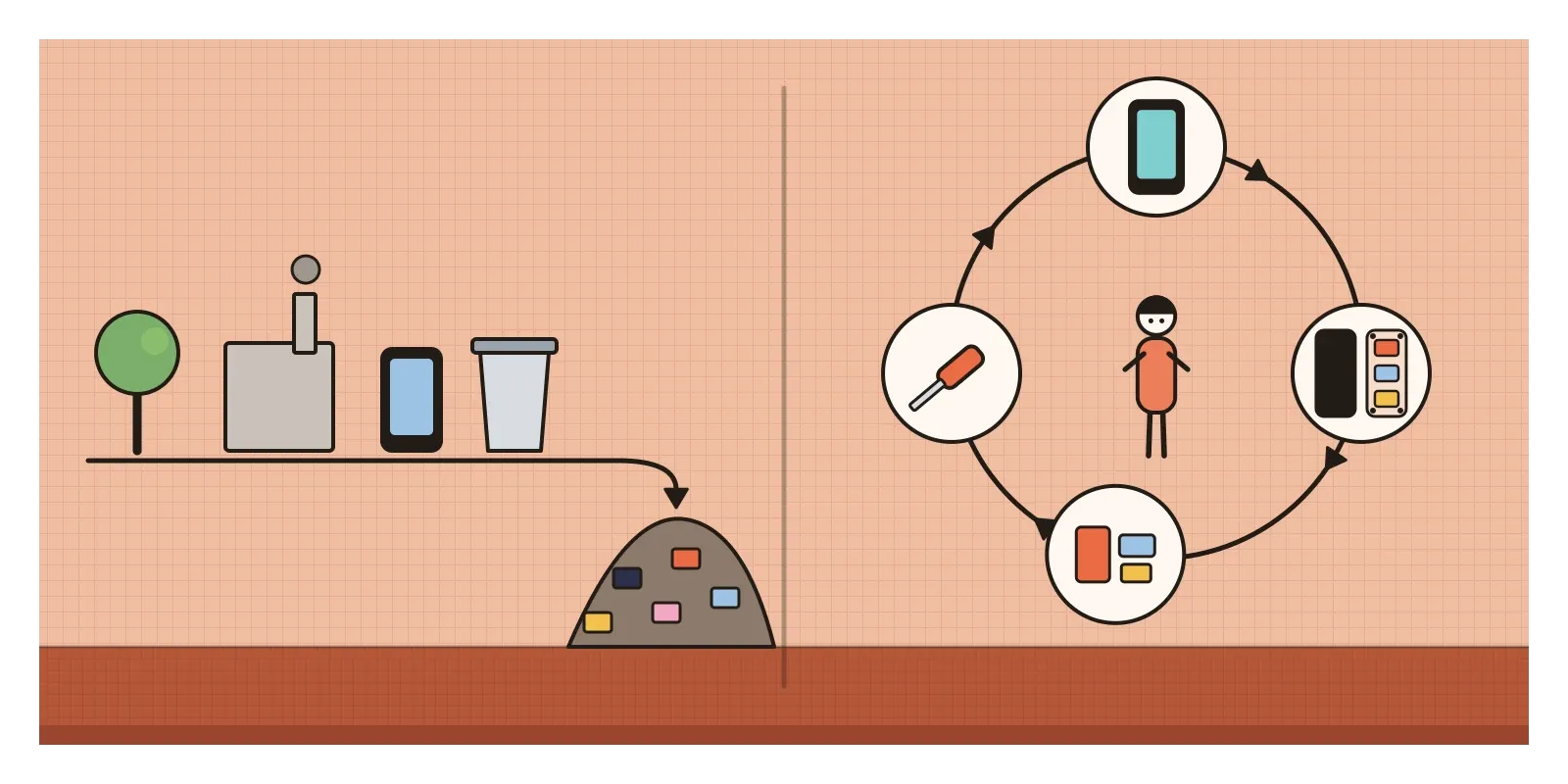
Since 2010 the Ellen MacArthur Foundation, set up by the British sailor Ellen MacArthur, has popularised this idea as the circular economy, and companies have taken it up in different ways. In 2011, on Black Friday, the outdoor clothing company Patagonia ran a full-page advertisement in The New York Times with a photograph of one of its jackets and the headline "Don't Buy This Jacket", asking customers to repair and reuse instead. In 2013 a Dutch social enterprise launched the Fairphone, and its later models were designed to be opened with an ordinary screwdriver and repaired part by part. In 2017 the economist Kate Raworth's Doughnut Economics drew a ring with a social foundation inside it and an ecological ceiling outside it, and argued that a good economy should keep everyone between the two.
Regenerative design pushes this further. The landscape architect John T. Lyle's 1994 book Regenerative Design for Sustainable Development argued for systems that renew their own energy and materials, and the idea has since spread to buildings that produce more energy than they use, farming that rebuilds soil and products that leave a place healthier than before.
Screws instead of glue, shade instead of machines
You can't always see sustainability, and that's part of the challenge. The best sustainable design is often invisible: a product that lasts twenty years, a building that needs no air conditioning, a package that isn't there. But the movement does have recognisable habits. Materials are honest and few, often a single material that can be separated and recycled, or natural materials left close to how they were found, such as timber, bamboo, cork, wool, earth and stone. Fixings are visible screws rather than glue, so things can be taken apart. Products are modular, with parts that can be swapped and upgraded. Buildings are shaped by climate, with shading, thick walls, courtyards and cross-ventilation doing the work machines would otherwise do.
In digital design, sustainability looks different again. Lighter pages need less data and energy to load. In 2018 the writer Kris De Decker rebuilt Low-tech Magazine as a website running on a small solar-powered server on a balcony in Barcelona. It uses dithered, low-resolution images to save data, and it can go offline when the weather has been cloudy for a few days, which turns the energy cost of the web into something visitors can see.
The kabadiwala knew it first
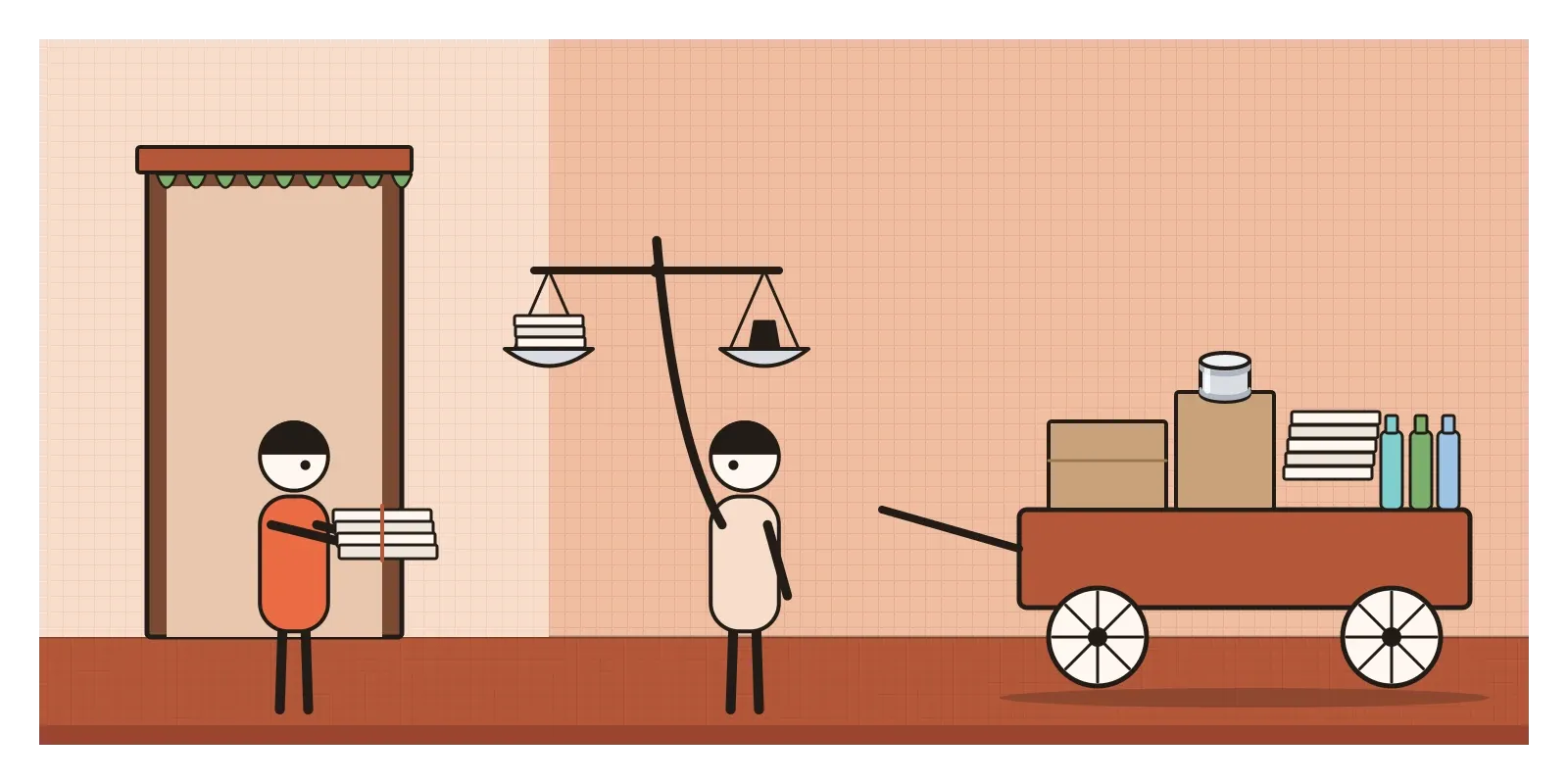
India has a strong claim to having practised the circular economy long before anyone named it. In most Indian cities, the kabadiwala or raddiwala comes round with a cart and a hanging scale to buy old newspapers, bottles, tins, cardboard and broken appliances by weight. Behind him is a long chain of sorters, traders and small workshops that strip, clean and resell almost everything. Phones and pressure cookers are repaired at roadside stalls. Steel tiffin boxes and tumblers last decades. Meals at weddings and temples were, and often still are, served on banana leaves or plates stitched from sal leaves, which go back to the soil afterwards. The designer's job here isn't to invent circularity but to recognise it, respect the people who do it and help it survive the arrival of plastic packaging and sealed electronics.
The ideas also travelled the other way. When Schumacher argued for small-scale technology, he drew openly on Gandhi, and Small Is Beautiful borrows Gandhi's idea that the world needs production by the masses rather than mass production. Indian architects carried the same spirit into building. In the post on High-Tech Architecture, I wrote about Laurie Baker's brick buildings in Kerala. In Himachal Pradesh, the American-born designer Didi Contractor, who settled in the Kangra valley and worked there until her death in 2021, built houses of mud, stone, bamboo and local slate that stay cool in summer and warm in winter. More recently, India banned a list of single-use plastic items such as plastic cutlery and straws from July 2022. Enforcement has been patchy, but the law is a reminder that much of sustainable design happens in policy, not in studios.
Green leaves on a smoking chimney
Designers today take a great deal from this movement, often without noticing. Repairability scores, which France made compulsory for many electronics from 2021, push product teams to use screws and standard parts. Packaging teams count grams of plastic. Material libraries now list mycelium, the root structure of fungi, grown into packaging and panels. Interface designers talk about lighter pages and fewer auto-playing videos. And when I've worked on AI products, the cost of computing has become a sustainability question too, because every large model call uses electricity and water in a data centre somewhere.
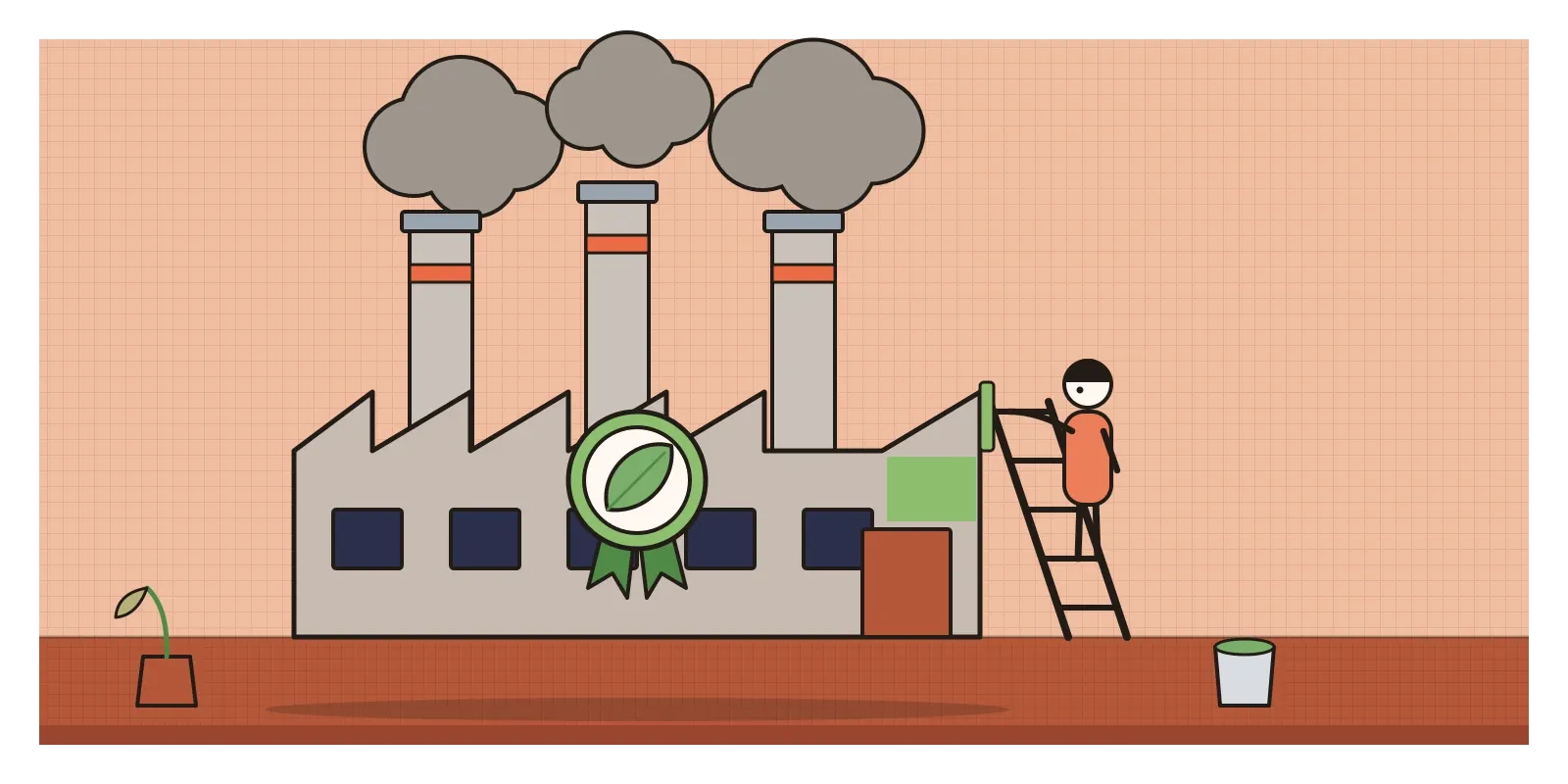
The movement's biggest problem is that sustainability became a look before it became a practice. Kraft paper, leaf icons, green colour schemes and the word natural are easy to apply to almost anything. The environmentalist Jay Westerveld is usually credited with coining the word greenwashing in 1986, after noticing hotel cards asking guests to reuse towels to save the planet. In the 2000s, an advertising campaign by the oil company BP helped popularise the idea of a personal carbon footprint, which encouraged people to think of climate change as a matter of individual shopping choices rather than of energy systems.
There are deeper criticisms too. Efficiency can backfire: in 1865 the economist William Stanley Jevons noticed that more efficient steam engines led Britain to burn more coal, not less, because coal became more useful, and the same effect haunts cheaper, more efficient products today. Carbon offsets have often turned out to be worth far less than claimed. And the burden is unequal. The average person in India is responsible for a small fraction of the emissions of the average American, yet poorer countries face the worst floods and heat, and receive much of the world's discarded electronics.
Regenerative design is partly a reply to these failures, insisting that doing less harm isn't enough. But the movement hasn't ended. If anything, its questions are getting more urgent, and they now include the energy cost of the newest tools designers use.
Follow one bundle of newspapers
To see these ideas for yourself, watch the kabadiwala next time he comes to your street, and follow a bundle of newspapers or bottles as far as you can. If you're near Auroville in Tamil Nadu, the earth architecture there, including its compressed earth blocks, is well worth a visit. Papanek's Design for the Real World is still sharp and readable, and Raworth's Doughnut Economics is the clearest recent book on the bigger picture.
For an exercise, take one product you've designed or use daily and draw its whole life on a single sheet: where its materials come from, how it's made, how long it lasts, how it's repaired and where it ends up. Then mark the one change that would make the biggest difference. It's rarely the colour of the packaging.
Papanek's juice-can radio was never a big seller, and it was easy to laugh at. But it asked the question this whole movement keeps asking: who is this for, what will it cost the world, and what happens when it's thrown away? In the next post, on AI-Generated Aesthetics, a new kind of tool raises its own questions about cost, credit and who gets to make images.
Further reading: Victor Papanek, Design for the Real World (1971) · E. F. Schumacher, Small Is Beautiful (1973) · William McDonough and Michael Braungart, Cradle to Cradle (2002) · Kate Raworth, Doughnut Economics (2017) · Janine Benyus, Biomimicry: Innovation Inspired by Nature (1997)
A reply toThe throwaway culture of postwar consumer design, from the yearly restyle to the disposable cup.