Street Art and Graffiti
How names written on New York's trains grew into a worldwide art of public walls, and its quarrels.
Street Art and Graffiti
A messenger's name in the newspaper
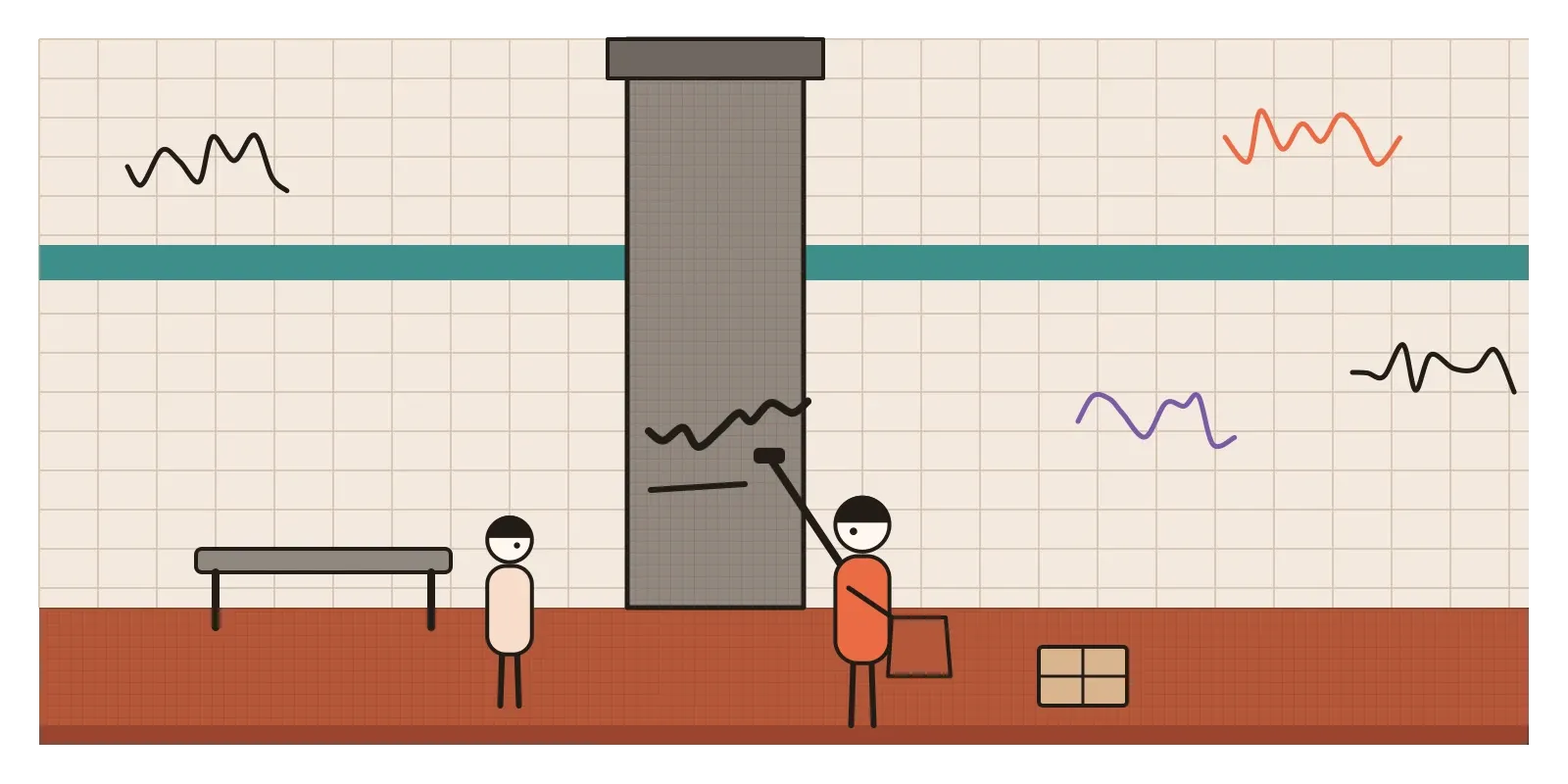
On 21 July 1971, readers of The New York Times found an odd little story on an inside page. Its headline announced that "Taki 183" had spawned pen pals. Taki 183 was not a band or a brand. It was a name that had been appearing for months on subway stations, lamp posts, doorways and the insides of trains all over Manhattan, written in marker by a teenager from 183rd Street in Washington Heights. He worked as a messenger, criss-crossing the city by subway, and wherever he went he left his name: a nickname from his Greek first name, Demetrius, and the number of his street. The reporter had tracked him down, and Taki told him, in effect, that he did it for himself.
The article made Taki famous, and that was the point that other teenagers noticed. Within months, hundreds of names with street numbers were appearing across the city, each writer competing to be seen more often, in more places, in bigger and bolder letters than the rest. Within a few years, whole subway trains were rolling through the city covered from end to end in colour.
Graffiti, in its modern sense, is writing or drawing on public surfaces without permission, and at its core it's the writing of names. Street art is a broader and later term, used from the 1990s for stencils, posters, stickers, sculptures and murals in public space, often by artists who are happy to show in galleries too. The two overlap and their makers sometimes argue about the difference. But they share one belief, that the walls of a city belong in some sense to everyone who passes them, not only to whoever owns them or pays to advertise on them.
Walls have always talked back
People have written on walls for as long as there have been walls. The streets of Pompeii, buried in 79 CE, are covered with painted election notices and scratched messages: insults, jokes, love notes, boasts and lists, a record of ordinary voices that official inscriptions never captured. Soldiers in the Second World War left a drawing of a long-nosed man peering over a wall, with the words "Kilroy was here", wherever they went. In the 1930s the photographer Brassaï began photographing the scratched faces and symbols on the walls of Paris, and in 1960 published them as a book. And as I wrote in the post on Mexican muralism, painters there had already made public walls a place for art aimed at everyone, with the backing of the state.
Modern graffiti began without anyone's backing. In Philadelphia in the late 1960s, a teenager called Darryl McCray, known as Cornbread, became famous for writing his name across the city. New York in the early 1970s gave the idea room to grow. The city was close to bankruptcy, its subway was battered and badly policed, and neighbourhoods in the Bronx were losing jobs, landlords and buildings. Hip hop was being born at block parties in the same years, and graffiti became one of its arts, alongside DJing, MCing and breaking.
What was graffiti replying to? Partly to invisibility. Young people from poor neighbourhoods had no voice in the city's newspapers, galleries or advertising, and the gallery art of the time, Minimalism and Conceptual Art, could hardly have felt further from their lives. The city's walls already carried messages, but only from those who could pay: billboards, shop signs, posters. Writers answered with the one thing that was entirely theirs, their names.
From tags to whole cars
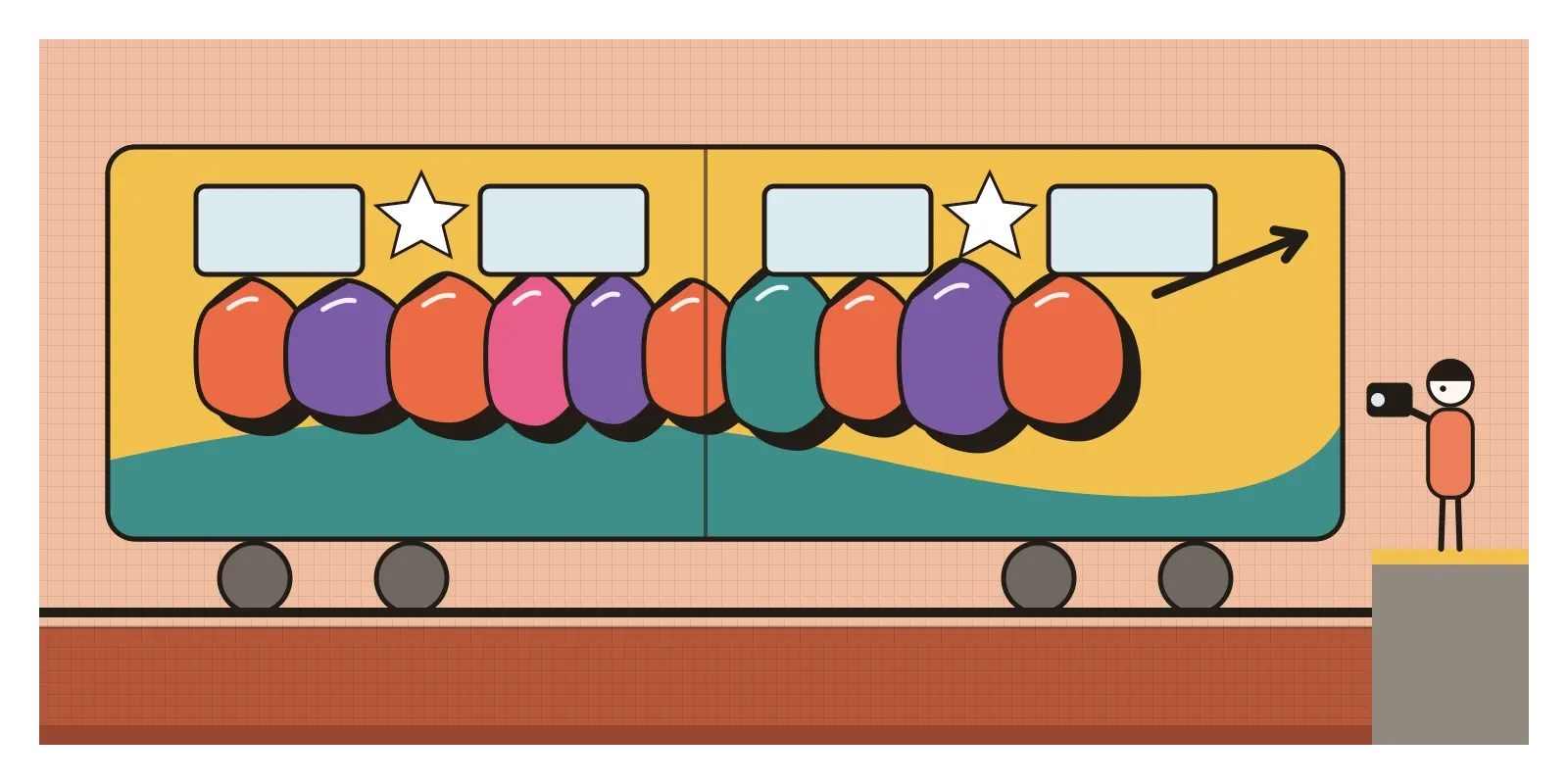
The writing grew quickly in ambition. A tag is a fast, one-colour signature. In the early 1970s writers began making bigger works called pieces, short for masterpieces, painted in the train yards at night, with fat outlined letters, colour fills and shadows. A writer called Phase 2 is widely credited with popularising soft, rounded bubble letters around 1972, and others developed wildstyle, letters so interlocked with arrows and spikes that only insiders could read them. The most ambitious crews painted top-to-bottoms and whole cars, an entire subway carriage turned into one image. Lee Quiñones painted whole cars and huge murals on handball courts in the Lower East Side. Lady Pink, one of the few women in the subway scene, began painting trains as a teenager around 1979.
Much of what we know comes from two photographers. Henry Chalfant spent years photographing trains as they pulled into stations, often stitching several frames together to capture a whole car, and Martha Cooper photographed writers at work. Their book Subway Art, published in 1984, became a manual for young writers around the world, along with the documentary Style Wars, made by Tony Silver and Chalfant and broadcast in 1983.
At the same time, a few artists from art schools were working underground in a different way. From around 1980, Keith Haring drew in white chalk on the black paper that the transit authority pasted over empty advertising panels, quick line drawings of crawling babies, barking dogs and dancing figures, made in minutes before the police could arrive. In SoHo, the cryptic phrases signed SAMO, sprayed by Jean-Michel Basquiat and his friend Al Diaz, became the start of a painting career that belongs to the next post. The city, meanwhile, fought back. From 1984 the transit authority took any newly painted car out of service until it was clean, and on 12 May 1989 it declared the subway free of graffiti.
Graffiti didn't disappear. It moved to walls, rooftops and highways, and it spread to every city in the world. In Paris, from 1981, the artist known as Blek le Rat stencilled rats onto walls, a technique that let him work quickly and repeat an image anywhere. In Bristol in the 1990s, Banksy adopted stencils for the same reason and added political jokes. In the United States, Shepard Fairey's sticker campaign of a wrestler's face, started as an art school prank in 1989, grew into the Obey brand and, in 2008, into a poster of Barack Obama that was printed in vast numbers.
Reading a wall like a type specimen
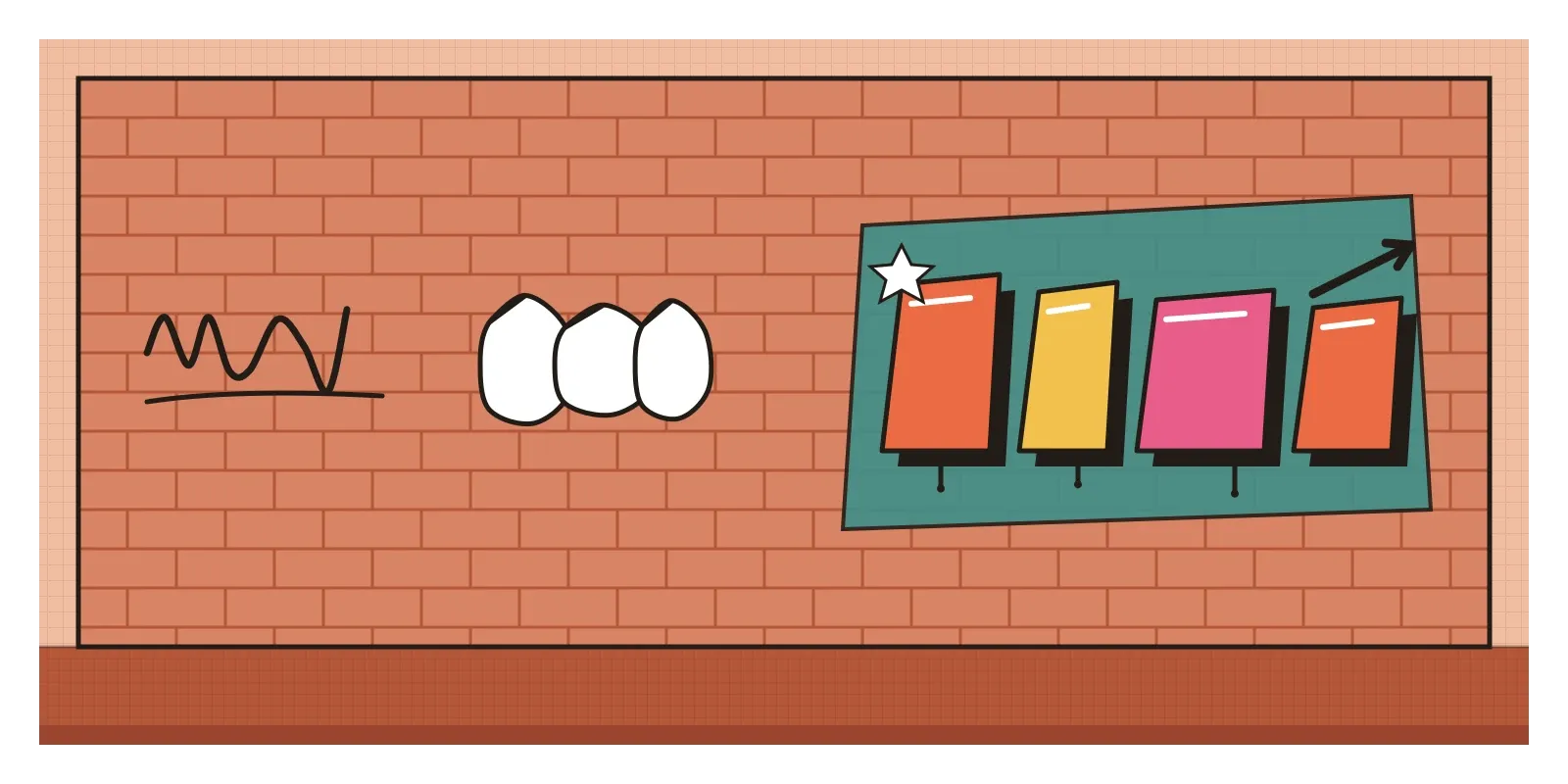
I find it useful to look at graffiti as a homemade typographic tradition, with its own styles, rules and critics. The tag is a signature, one continuous gesture, and like a signature it's practised hundreds of times until it flows. The throw-up is a quick outline of bubble letters with a fast fill, made in a minute or two. The piece is where the real design happens: letters built from outlines, colour fades, highlights called shines, three-dimensional blocks that lift the name off the wall, arrows, stars and sometimes cartoon characters. Writers judge each other on letter style above all, and copying another writer's letters, called biting, is a serious insult.
The materials leave their marks too. Spray paint produces soft overspray halos around a line and drips where paint pools, and writers learned to control line width by swapping nozzles, called caps, from other aerosol products. Stencils give crisp, repeatable edges and suit short slogans. Paste-ups and stickers can be prepared at home and put up in seconds. Placement is part of the meaning: a name in a high, dangerous spot, a heaven spot, says more about its writer than the same name at eye level. And the illegality shapes everything. Speed, repetition and boldness aren't only a style. They're what the conditions demand.
Election walls, painted havelis and a crane at ITO
India has a long tradition of painted public walls, but most of it has been made with permission, which changes its character. In the Shekhawati region of Rajasthan, merchant families in the eighteenth, nineteenth and early twentieth centuries covered their havelis inside and out with paintings of gods, legends, hunting scenes and, later, trains, cars and Europeans in hats, so that a street could be read like an illustrated book. In West Bengal and other states, election seasons still bring out party wall writing, large slogans in painted lettering beside party symbols, with walls often claimed by a party in advance and painted with the owner's consent. On the walls of small towns, hand-painted advertisements for cement, schools and soap are painted by sign painters, and at some corners, tiles with images of deities are fixed to walls to stop people using them as urinals.
Contemporary street art arrived in a recognisably global form in the 2010s, and largely through invitation rather than trespass. In January 2014, as part of the St+art Delhi festival, the German artist Hendrik Beikirch and the Delhi-based artist Anpu Varkey painted a portrait of Mahatma Gandhi, more than 150 feet tall, on the side of the Delhi Police headquarters at ITO, working from a crane over several days. The St+art India Foundation went on to turn the government housing blocks of Lodhi Colony in Delhi into an open-air gallery of murals, and to run projects in Mumbai, Bengaluru, Hyderabad and other cities. Anonymous Indian writers do work illegally too, and cities have laws against defacing property, but the most visible Indian street art is painted with a police headquarters' blessing, which is about as far from Taki 183 as you can get.
Names as brands, walls as media
Designers have taken a lot from graffiti, starting with letters. Brush-script and marker fonts, hand-lettered logos for sneakers, energy drinks and streetwear, and the bubbly, outlined lettering on youth brands all draw on writers' styles. Haring's figures have been licensed onto clothes, watches and phone cases, and Fairey's poster style, flat red, beige and blue with a heavy outline, is now an easy shorthand for political campaigning.
The deeper lesson is about identity. A tag is a logo in the purest sense: one mark, repeated everywhere, in places chosen to be seen. Taki 183 understood reach and frequency long before he could have named them. Cities have learned the lesson too. Mural festivals have become a tool of place-making, used to brand neighbourhoods, draw tourists and make bus stops and underpasses feel cared for, and walls painted for photographs have become a fixture of social media. AI image tools offer a "graffiti style" filter, which usually means drips and outlines. What they can't reproduce is the reason graffiti looked that way in the first place: speed, risk and someone insisting on being seen.
Vandalism, money and whitewash
Graffiti has always had a cost that its admirers sometimes skip. Owners pay to clean walls, and many residents experience tags as a sign of neglect and threat rather than art. In the 1980s that feeling was given a theory, the "broken windows" idea, which argued that visible disorder invites more serious crime, and it was used to justify hard crackdowns on graffiti and minor offences. Researchers still argue about how much it explains, and critics point out how unevenly such policing fell on poor and Black and Latino neighbourhoods. Graffiti culture also had its own exclusions. It was overwhelmingly male, and women like Lady Pink had to fight for their place in it.
Success brought a different problem. Murals can raise property values, and in neighbourhoods from Miami's Wynwood to parts of Europe, critics have described artist-led makeovers that helped push out the people the art claimed to speak for. Street art also became something to own. Walls painted by famous artists have been cut out and sold, and in October 2018, a Banksy painting of a girl with a balloon partly shredded itself through a device hidden in its frame seconds after being sold at Sotheby's, a joke about the market that only raised its price.
The law has started to take this art seriously. At 5Pointz, a group of warehouses in Long Island City where the owner had allowed aerosol artists to paint for years, the walls were whitewashed overnight in November 2013 before demolition. In February 2018, a federal judge awarded the artists $6.75 million under the Visual Artists Rights Act, a ruling upheld on appeal in 2020. The reply to graffiti, then, came from several directions at once: commissioned murals, the gallery and the courtroom.
To see it for yourself this week, walk through the Lodhi Art District in Delhi, or, if you're in Rajasthan, the painted havelis of Mandawa and Nawalgarh in Shekhawati. Read Subway Art and watch Style Wars. Then try a small exercise on paper, not on a wall: write your name fast, fifty times, until a signature that is really yours appears. Then turn it into a fat outlined version, with a shadow on one side. You'll learn more about letterforms in an hour than you might expect.
Taki 183 was only writing his name. Fifty-five years later that habit has its own museums, courts and festivals. In the next post, on Neo-Expressionism, one young writer from those SoHo walls takes the same urgency onto canvas.
Further reading: Martha Cooper and Henry Chalfant, Subway Art (1984) · Craig Castleman, Getting Up: Subway Graffiti in New York (1982) · Tony Silver and Henry Chalfant (directors), Style Wars (1983) · Rafael Schacter, The World Atlas of Street Art and Graffiti (2013) · Brassaï, Graffiti (1960)
A reply toA city whose walls spoke only for advertisers, landlords and officials.