Speculative and Critical Design
Designers who make objects not to sell but to ask questions about the futures technology might bring.
Speculative and Critical Design
A phone call inside a tooth
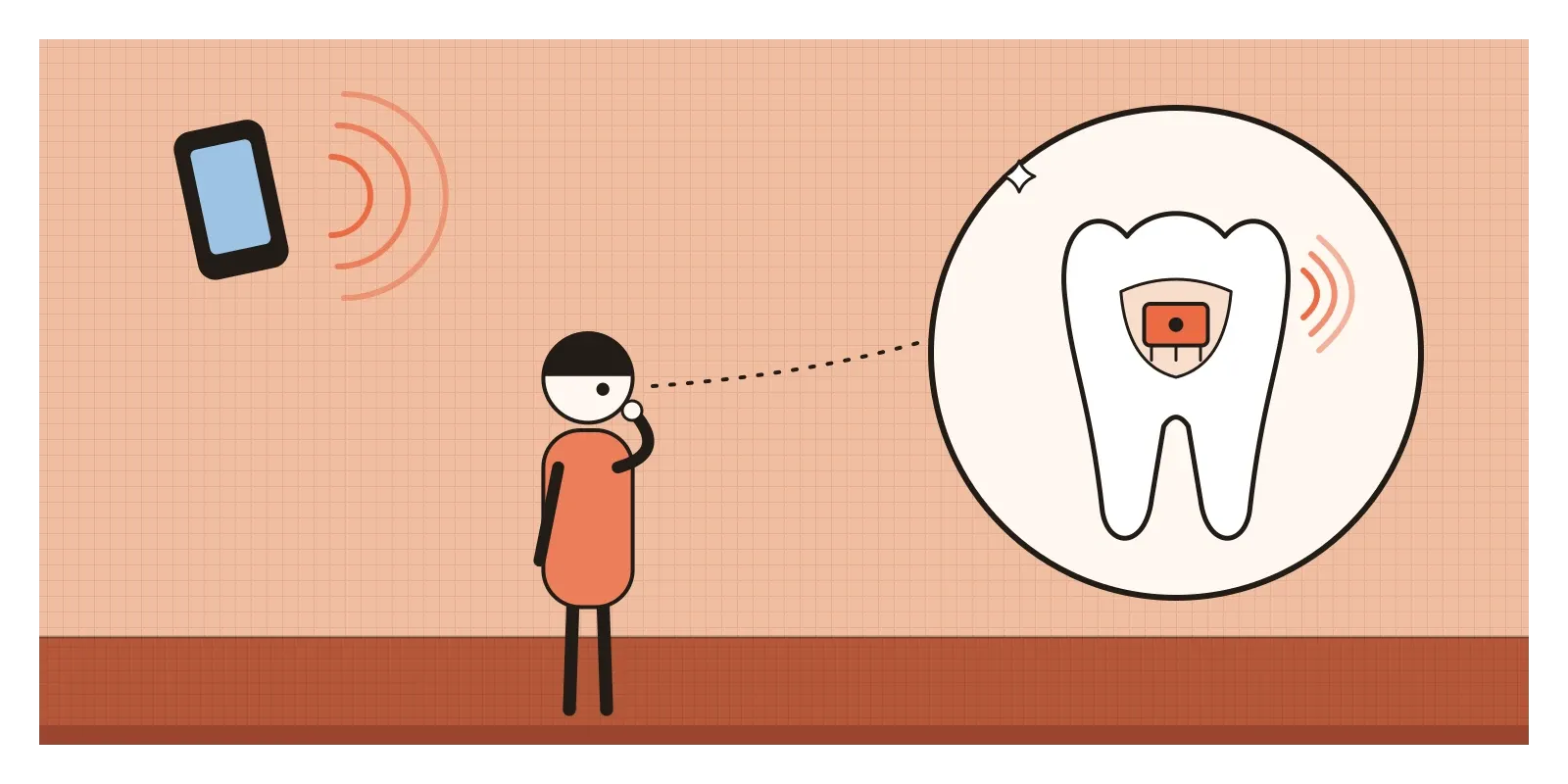
In 2001, two young designers at the Royal College of Art in London, James Auger and Jimmy Loizeau, made a proposal for a tiny device that could be fitted inside a back tooth during a routine dental visit. It would pick up signals from a mobile phone and pass sound through the jawbone to the inner ear, so you could hear a call, music or the stock prices without anyone else knowing. They called it the Audio Tooth Implant. They built a convincing model, photographed it carefully and wrote about it in the language of a product launch.
Then something strange happened. Newspapers and websites around the world picked it up, often as if it were a working product that would soon be in shops, and Time magazine included it in a list of the best inventions of 2002. People wrote in asking where they could get one. Others were horrified. Neither group was quite responding to what the designers had intended, which was not a gadget but a question: if technology can live inside our bodies, what will it do to privacy, to advertising, to the quiet inside our own heads?
The tooth is a good introduction to speculative and critical design, a way of working that took shape in London in the late 1990s and 2000s. Instead of designing products to be manufactured and sold, speculative designers make objects, images, films and imaginary scenarios set in possible futures, so that people can see those futures, argue about them and decide whether they want them. Critical design is the older and slightly narrower name for work that uses design to question the assumptions built into everyday products. The two overlap so much that they're often written together, as SCD.
Against design that only says yes
The central figures were Anthony Dunne and Fiona Raby, a designer and an architect who worked as a pair and taught at the Royal College of Art. In 1999 Dunne published Hertzian Tales, a book about electronic objects and the invisible fields of radio, mobile signals and electricity around them. In it he used the term critical design and set it against what he called affirmative design: design that simply reinforces the way things are, making whatever industry wants to sell more attractive and easier to buy.
That was the thing it was replying to. By the 1990s, industrial and interaction design had settled comfortably into the service of consumer technology. Designers made gadgets friendly, desirable and easy to use, and rarely asked whether they should exist at all. The dot-com years added a strong current of optimism, the belief that every new technology was progress. Dunne and Raby wanted to use the designer's skills, making things look real and feel familiar, to open up questions rather than close a sale.
They weren't the first to try. In the post on Radical Design, I described the Italian groups of the late 1960s, such as Superstudio, who drew endless grids across landscapes to criticise architecture's ambitions. Speculative design borrows their spirit, but its target is different. The Italians were arguing with modernist architecture and consumerism. The Londoners were arguing with technology, science and the people who design our devices.
Needy robots and an anxious chair
Dunne and Raby's Placebo project of 2001 is a gentle example. They made eight pieces of furniture about the electromagnetic fields given off by everyday electronics, including a table with dozens of small compasses set into its top, whose needles twitch when a mobile phone or laptop is placed on it, and a chair that vibrates when radiation passes through it. Then they lent the pieces to people in London who answered an advertisement and lived with them for a few weeks, and recorded what happened. Many of them became fascinated with the invisible fields in their homes rather than frightened of them.
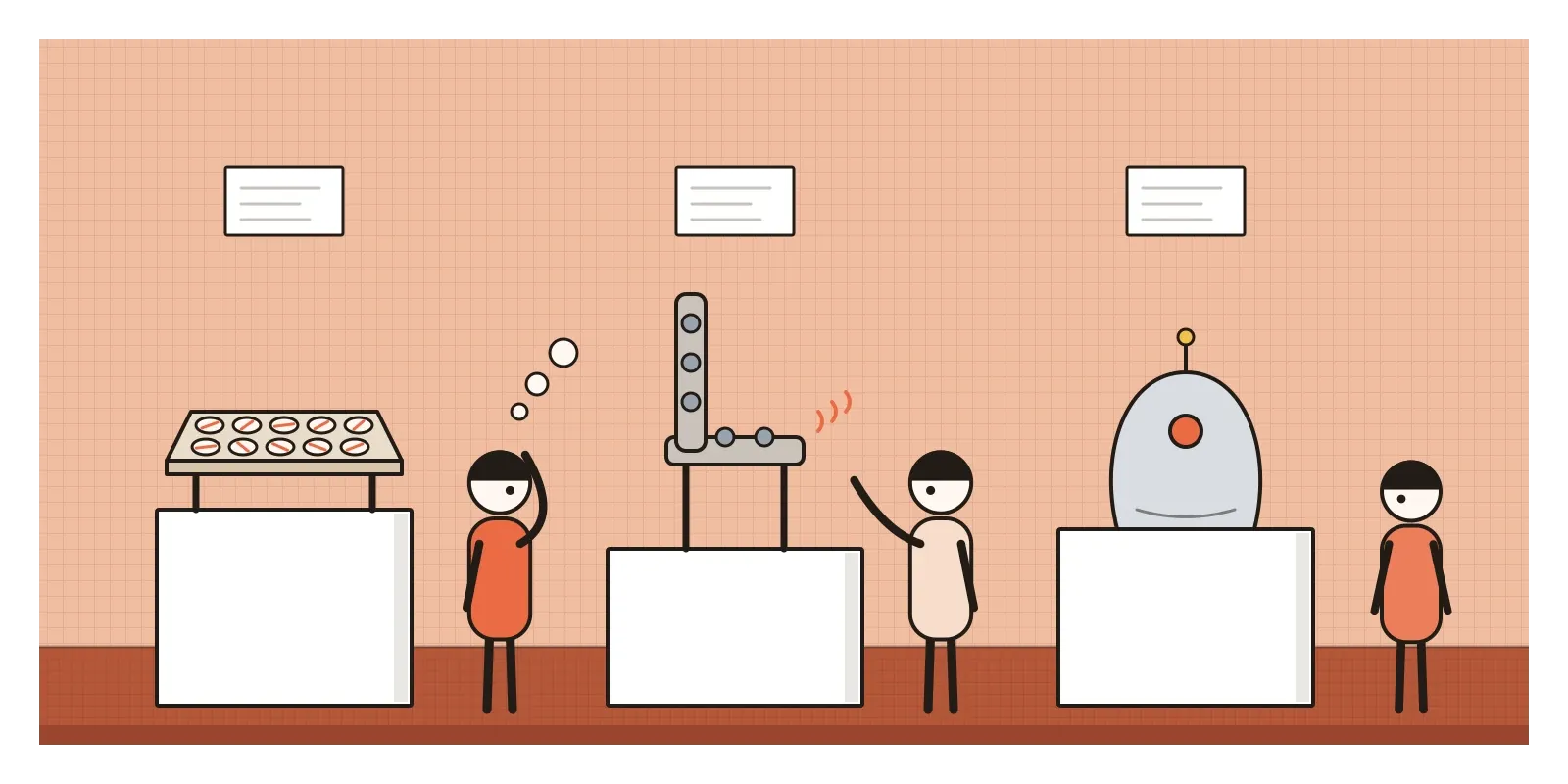
Their Technological Dreams Series: No. 1, Robots (2007) imagined household robots that weren't servants at all but odd companions with personalities of their own, one nervous, one needy, one a kind of guard. In 2013 their exhibition United Micro Kingdoms at the Design Museum in London split England into four imaginary regions, each built around a different political and technological idea, from a digital society run by algorithms to one powered by nuclear energy, each with its own vehicles.
Auger and Loizeau kept working in this direction. Their Carnivorous Domestic Entertainment Robots (2009) were pieces of household furniture that powered themselves by catching insects and mice, a clock built around a roll of flypaper, a coffee table that trapped mice, which asked whether robots that fed themselves would ever really feel at home among us. The writer Bruce Sterling coined the phrase design fiction in 2005, and the designer Julian Bleecker developed it in a 2009 essay. With his colleagues at the Near Future Laboratory, Bleecker later produced TBD Catalog (2014), a fake mail-order catalogue full of products from an ordinary, slightly disappointing near future. A few years earlier, in 2010, the science communicator David Kirby had given a name, the diegetic prototype, to the imaginary technologies in films that make audiences feel a future product already exists.
In 2013 Dunne and Raby published Speculative Everything, the movement's main textbook. It includes their A/B manifesto, a list setting the usual concerns of design beside the speculative alternative: problem solving beside problem finding, design for production beside design for debate, answers beside questions. It also popularised a diagram called the futures cone, borrowed from foresight researchers, which spreads out from the present into possible, plausible, probable and preferable futures. Speculative design, they argued, should be about the preferable one, and about who gets to decide what that is.
Real enough to believe, strange enough to question
Speculative design has a recognisable look, and it's surprisingly quiet. Objects are usually made to the standard of real prototypes, often in plain materials, grey or white plastic, pale wood, brushed metal, so they look as if they could come off a production line. That realism is the point. A sketch is easy to dismiss. A believable object makes you imagine using it.
Then something is slightly wrong. The product works, but for an odd purpose, or for the wrong user, or in a world that has changed in some important way. Dunne and Raby talked about aiming for the uncanny, a little strange and a little familiar, and avoiding both science fiction spectacle and simple satire. Humour is common, but it's dry and unsettling rather than slapstick.
The objects rarely appear alone. They're shown in gallery vitrines with careful captions, in calm, evenly lit photographs, in short films that show them being used, and in invented documents like catalogues, manuals and news reports. A good piece of speculative design is really a whole small world, and the object is the way in. Its question, almost always, takes the form of what if.
Ladyland, a flat of the future and bottles of tomorrow's air
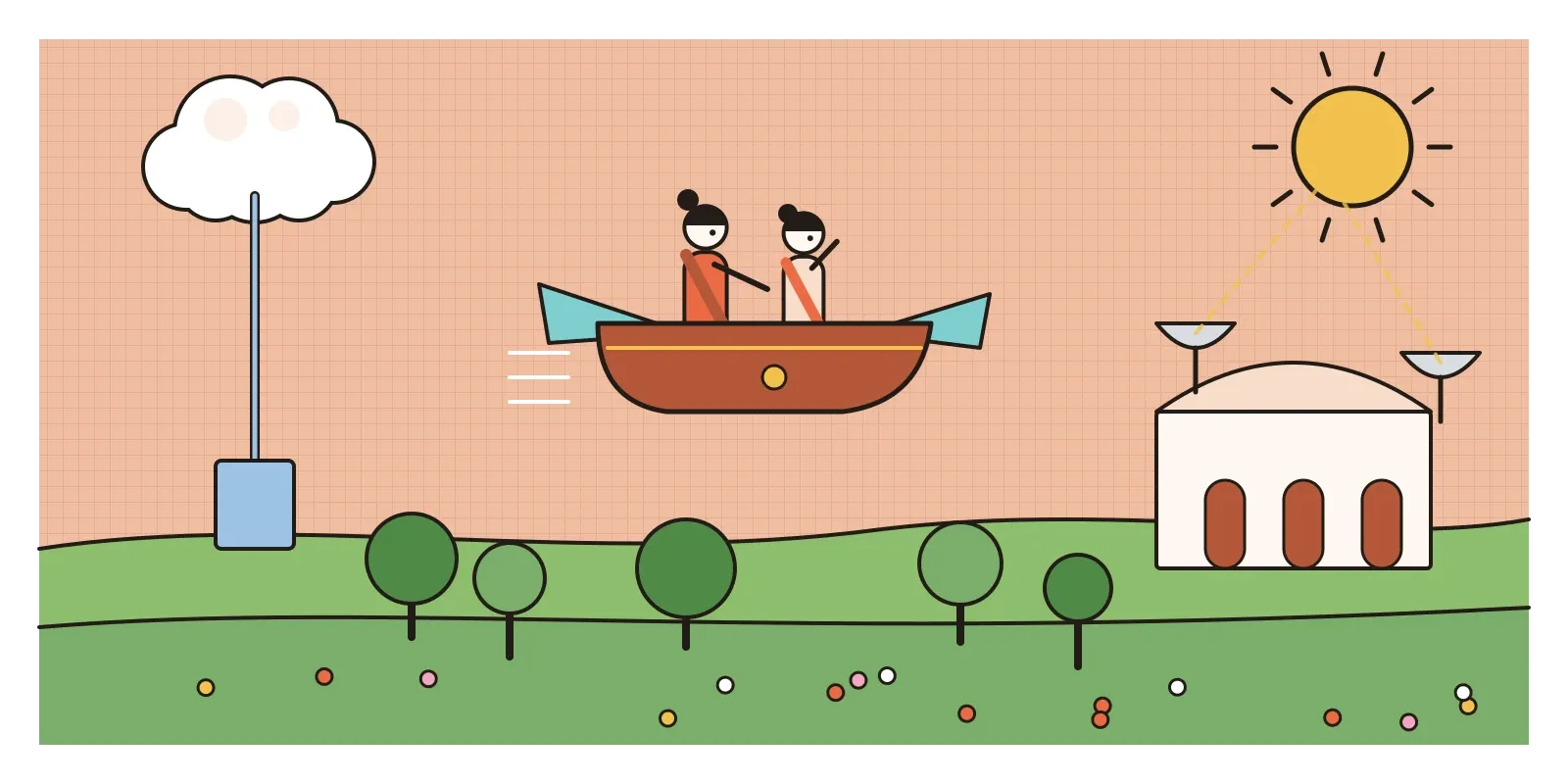
India had a speculative designer long before the term existed. In 1905, Rokeya Sakhawat Hossain, a Bengali writer and campaigner for women's education, published a short story in English called "Sultana's Dream" in The Indian Ladies' Magazine in Madras. Its narrator wakes into Ladyland, a country where the women run everything and the men are kept indoors in seclusion, the reverse of purdah. Women scientists collect heat from the sun to cook, draw water directly from clouds, and travel in flying air-cars. When an army invades, they drive it back with concentrated sunlight instead of soldiers. It's a story, not a design project, but it does exactly what speculative design tries to do. It invents believable technologies in order to make readers see their own society differently.
Bengal produced another, more playful version decades later in Satyajit Ray's stories about Professor Shonku, an eccentric scientist whose diaries describe pills, guns and machines with grand made-up names. They're closer to science fiction than critique, but they belong to the same family of imagined inventions.
The most direct Indian link runs through one of the field's best-known studios. Anab Jain, who trained at the National Institute of Design in Ahmedabad and then studied in the Royal College of Art's Design Interactions programme, co-founded the studio Superflux in London in 2009 with Jon Ardern. Their installation Mitigation of Shock (2017) built a London flat of the future, adapted to climate breakdown and food shortages, with computers turned into hydroponic gardens and recipes for an age of scarcity. As Jain has described in talks, the studio once worked with the government of the United Arab Emirates on future energy policy and mixed bottles of air to match the pollution levels forecast for the coming decades, so that officials could smell the future rather than read about it. It's the method at its most direct: a statistic turned into something you can smell.
Whose dystopia is it?
Speculative design's methods have spread well beyond galleries. Design schools teach futures workshops and the futures cone. Researchers build provocative prototypes, sometimes called provotypes, to start conversations in interviews. Policy teams and companies commission design fictions to explore what a new law or technology might mean before it arrives. Technology firms make their own glossy concept films about the future of work or the home, which are really affirmative design's version of the same tool: speculation that always ends with a product.
For product designers, especially those of us working on AI, the most useful habit is the one the tooth taught. Before building something, make a believable version of it and live with the questions. What happens when it works perfectly? Who is left out? What would its advertising look like in five years? A single realistic mock-up of a future notification can do more in a planning meeting than a page of risks.
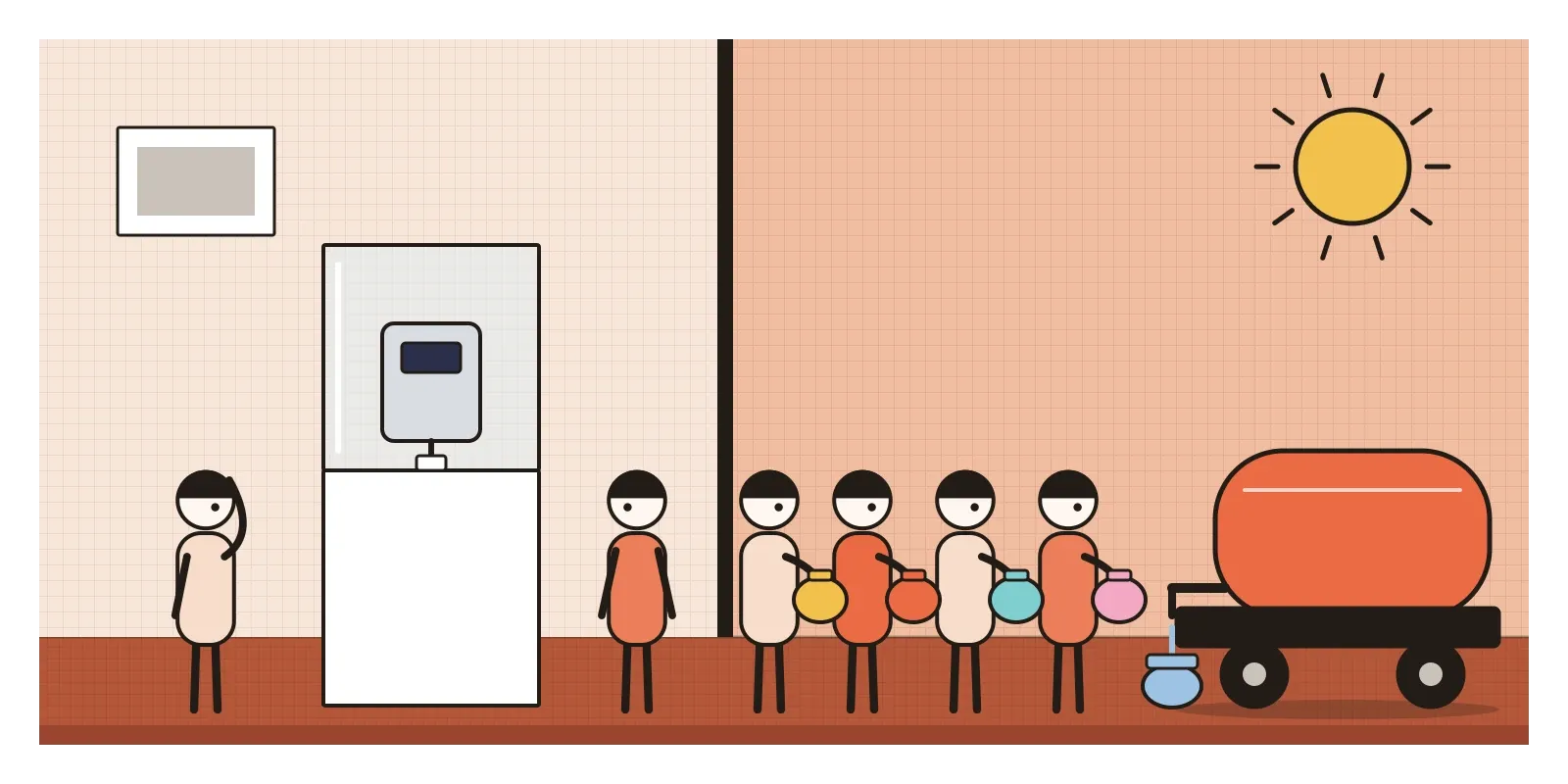
Its critics have been sharp. In 2014, two Brazilian designers, Luiza Prado de O. Martins and Pedro Vieira de Oliveira, published a widely read critique of a project shown online by the Museum of Modern Art in New York. It imagined a future where food is rationed by the state according to the work people do. Their point was that this dystopia is simply the present for many people in poor countries, and that speculative design, made mostly by well-off designers in European art schools, often presents other people's daily lives as frightening futures for its own audience. Others complained that the work talks mostly to museums and other designers, and that asking questions can become a way of never taking a position.
Those criticisms have shaped what came next. Newer work in the field is more often made with communities rather than about them, and more attentive to whose future is being imagined. The Design Interactions programme at the Royal College of Art closed in 2015, and Dunne and Raby moved to New York to teach. The questions moved outward too, especially towards the climate. In the next post, on Sustainable and Regenerative Design, designers stop asking what if and start asking how long the planet can afford what we already make.
Make one object from next year
To see speculative design for yourself, look up the Design Museum in London's collection, or the online archives of Superflux and Dunne and Raby, which document many projects with photographs and films. Read "Sultana's Dream", which is short and free to find, with this post in mind. If you want the theory, Speculative Everything is the place to start, and the critique by Prado de O. Martins and Vieira de Oliveira is the best companion to it.
For an exercise, pick a technology you're working on or using every day and imagine it ten years on, working perfectly and used by everyone. Then design one ordinary object from that world, a receipt, a notification, a warning label, a child's toy, and make it as realistic as you can. Show it to someone without explaining. Their first question is usually the one worth asking.
The Audio Tooth Implant never existed, and nobody can buy one. But for a while, thousands of people believed in it enough to want it or fear it, and that's exactly what made it useful. It put a possible future in front of people early enough to argue about.
Further reading: Anthony Dunne, Hertzian Tales (1999) · Anthony Dunne and Fiona Raby, Design Noir: The Secret Life of Electronic Objects (2001) · Anthony Dunne and Fiona Raby, Speculative Everything: Design, Fiction, and Social Dreaming (2013) · Rokeya Sakhawat Hossain, "Sultana's Dream" (1905) · Julian Bleecker, "Design Fiction: A Short Essay on Design, Science, Fact and Fiction" (2009)
A reply toAffirmative design that only makes whatever industry sells next more desirable.