Scandinavian Design
How designers in the Nordic countries kept modernism's honesty but swapped chrome for birch, cord and comfort.
Scandinavian Design
Cutlery that looked like the future
In the summer of 1960, Scandinavian Airlines opened a new hotel in the centre of Copenhagen, the SAS Royal, a slim tower of grey-green glass across the road from the main railway station and the Tivoli Gardens. It is usually described as Denmark's first skyscraper. Almost everything in it, from the building itself to the door handles, lamps, curtains, chairs and the cutlery in the restaurant, was designed by one man, the architect Arne Jacobsen.
The cutlery, which he had drawn in 1957, was the strangest thing in the building. Each piece was a single flat blade of brushed stainless steel, with no separate handle and not a scrap of decoration. The spoons were shallow ovals that seemed to flow straight out of their stems, and the fork had short, stubby tines. The usual story is that diners found it odd to eat with, and it didn't sell well at first. A few years later, though, the film director Stanley Kubrick needed cutlery that would look believable in the year 2001, and he chose Jacobsen's for 2001: A Space Odyssey (1968). It is still made today. The hotel has been refurbished since, but room 606 has been kept much as Jacobsen furnished it, a whole building designed down to the spoon.

Scandinavian design is the name given to the furniture, glass, ceramics, textiles, lighting and homeware made in Denmark, Sweden, Finland and Norway, and to a lesser extent Iceland, from around the 1930s to the late 1960s. It's known for pale wood, soft edges, careful craftsmanship and a conviction that well-made everyday things should belong to ordinary people, not only the rich. Historians point out the problems with the label: Finland isn't strictly Scandinavian, the countries had different traditions, and the idea of one unified style was partly a story told to American shoppers in the 1950s. But the shared approach was real, and it's one of the clearest replies in this series. It took the honesty and social purpose of the modernism in the last post and made it warm.
Beauty for all, through a long winter
The Nordic countries industrialised late and stayed rural for longer than Britain or Germany, so their craft traditions, in wood, textiles, glass and ceramics, were still alive when modern design arrived. Long, dark winters meant people spent a great deal of time indoors, and the home, its light, warmth and the things in it, mattered enormously. And from the 1930s, social democratic governments, especially in Sweden, set out to build a welfare state that the Swedish prime minister Per Albin Hansson described as a folkhem, a "people's home", in which society would look after its members like a good family.
The ideas came before the furniture. In 1899 the Swedish writer Ellen Key published an essay called Beauty for All, arguing that working families deserved homes that were light, simple and beautiful, not dark rooms crammed with cheap imitations of upper-class furniture. Twenty years later the art historian Gregor Paulsson wrote a pamphlet for the Swedish Society of Crafts and Design whose title is usually translated as More Beautiful Everyday Things (1919), urging artists to work with factories rather than against them. In 1930 Paulsson organised the Stockholm Exhibition, with pavilions of steel and glass by the architect Gunnar Asplund, which brought functionalist modernism to Sweden in a single summer.
What these designers replied to was double. They rejected the heavy, dark, imported revival furniture of the nineteenth-century home, just as the modernists of the last post did. But many of them also found the steel-tube modernism of Germany and France cold, clinical and expensive. They kept its principles, simple forms, honest materials, things designed for use and for many people, and swapped the chrome for wood.
Birch scrolls, cord seats and a televised debate
In Copenhagen, Kaare Klint, who set up the furniture school at the Royal Danish Academy of Fine Arts in 1924, taught his students to measure before they drew. They measured the human body sitting and lying down, and they measured the things people actually keep, plates, cutlery, shirts and linen, so that a cupboard could be sized to hold them exactly. He also believed many good furniture types already existed, in English, Shaker and Chinese chairs, and that a designer's job was often to refine an old type rather than invent a new one.
In Finland, Alvar Aalto had already begun to replace steel with birch. For the Paimio Sanatorium, a hospital for tuberculosis patients that he designed from 1929 to 1933 with his wife Aino Aalto, he made an armchair whose seat and back are a single scroll of bent birch plywood hung in a frame of laminated birch. The usual explanation is that its angle helped patients breathe more easily as they rested. In 1935 the Aaltos and two partners founded Artek to sell the furniture, and Aalto's simple stool, its legs bent into an L to meet the seat, is still made in the thousands.
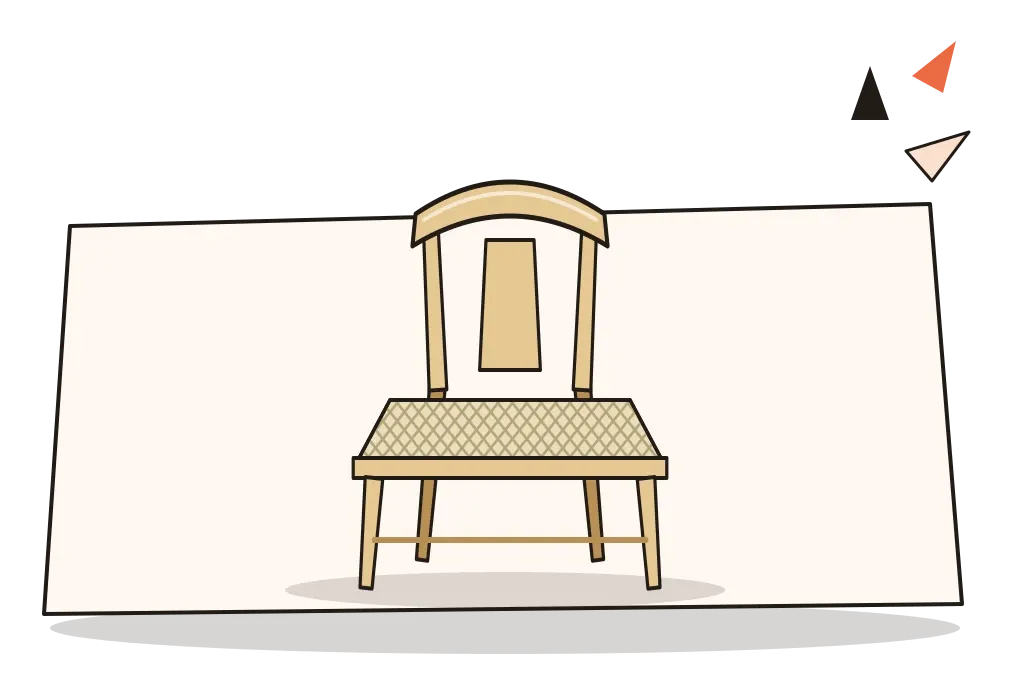
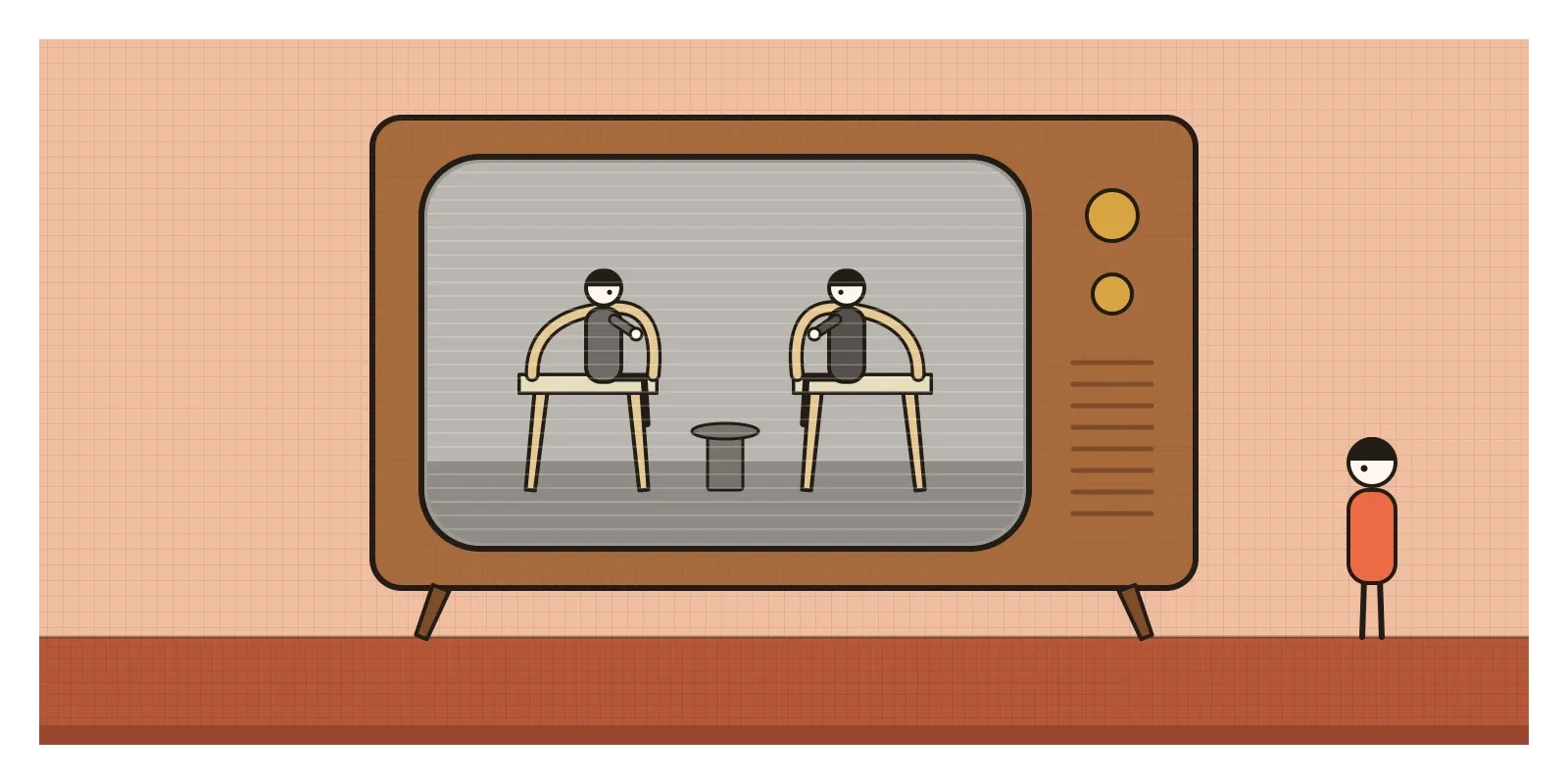
Hans Wegner, a shoemaker's son from southern Denmark who trained as a cabinetmaker, designed hundreds of chairs. Two from 1949 became famous. One, known simply as the Round Chair, was praised by the American magazine Interiors as one of the most beautiful chairs in the world, and on 26 September 1960 John F. Kennedy and Richard Nixon sat in a pair of them for the first televised presidential debate in the United States. The other, the Wishbone Chair, has a seat woven by hand from more than a hundred metres of paper cord.
The Finns brought the same thinking to the table and to fabric. Kaj Franck's Kilta tableware, launched by the Arabia factory in 1953, came in a few simple shapes and a few plain colours, sold piece by piece rather than as a matching dinner service, so a family could buy what it needed and mix colours freely. Franck disliked dishes as status symbols, and a revised version of Kilta, called Teema, is still sold. In 1951 Armi Ratia founded Marimekko in Helsinki, whose huge, flat, cheerful printed cottons made Finnish design famous.
Pale wood, soft corners, nothing shouting
You can usually recognise Scandinavian design by touch before you get to sight. Woods are light, birch, beech, ash, pine and oak, and in Danish furniture of the 1950s also imported teak, finished with oil or soap rather than thick lacquer so they still feel like wood. Edges are rounded and legs taper. Joints are often left visible, as a sign of good workmanship rather than something to hide. Seats are woven from paper cord, cane or rush, or upholstered in wool and leather. Shapes are calm and slightly organic, never as sculptural as the American work in the post on Organic Design, and chairs are light enough to lift.
Colour is mostly white, grey and natural wood, with clear accents in glass, enamel and textiles, and in Finland, a taste for bold, flat pattern. Light gets special attention in countries where the winter sun barely rises. The Danish designer Poul Henningsen spent much of his career on lamps whose layered shades hide the bulb completely and spread a soft, glare-free light. And things come in families of simple parts that can be combined, like Franck's tableware or Klint's measured cupboards, rather than as fixed sets.

Underneath the look is a way of working. Klint measured bodies and belongings, Aalto designed a hospital from the point of view of a patient lying in bed, and Franck stripped tableware down until it was cheap enough for a young couple. The aim was never minimalism for its own sake, but the most comfort for the least fuss and money.
Flat packs in Hyderabad
The company that took this idea furthest is IKEA, which Ingvar Kamprad started in rural Sweden in 1943 as a small mail-order business. According to IKEA's own account, in 1956 one of its designers, Gillis Lundgren, couldn't fit a table into a car after a photo shoot, so he took the legs off, and the flat pack was born. Flat boxes that customers carried home and assembled cut transport and storage costs dramatically, and turned beauty for all into a global business.
IKEA's first store in India opened in Hyderabad in August 2018. Before it opened, the company's researchers visited around a thousand Indian homes, and the reports from that time describe what they learned: Indian families store a great deal, often sit on the floor, cook with pressure cookers and large steel vessels, and have relatives to stay. So the range was adjusted, with more kitchen goods for Indian cooking and more storage, and because many Indian households expect a carpenter to put furniture together, assembly was offered as a service. The restaurant served biryani alongside vegetarian and chicken versions of the Swedish meatballs.
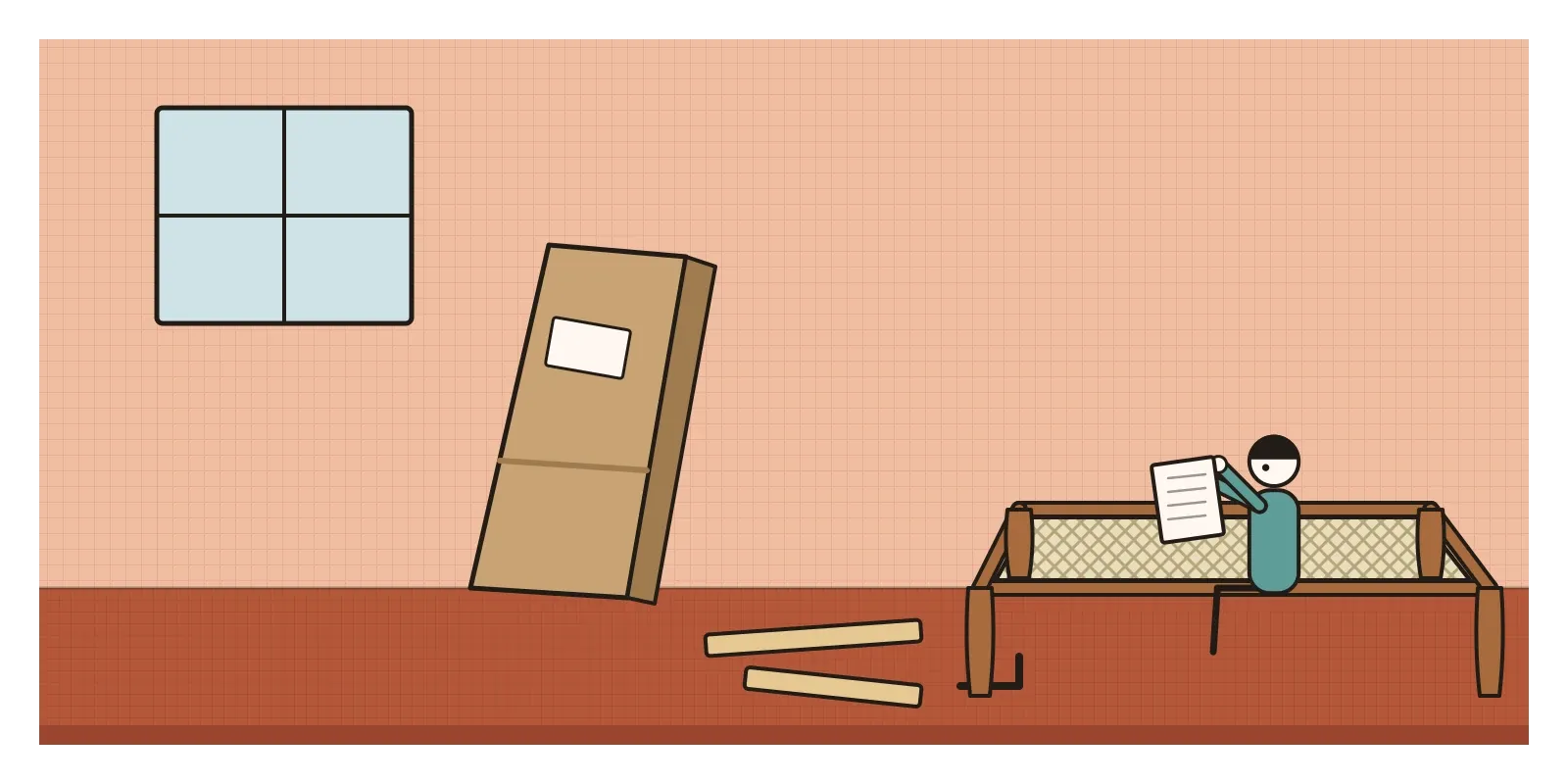
There is an older, looser parallel. In the same decades that Nordic craft societies were linking craftspeople with modern industry, Kamaladevi Chattopadhyay was arguing that India's living crafts were its design tradition, and after independence she led the All India Handicrafts Board from 1952, building shops, cooperatives and markets so that weavers and potters could sell to modern homes. The two programmes were very different in scale and politics, and I don't want to push the comparison, but both treated craft as something to modernise, not something to put in a museum. There's even a cousin of Wegner's cord seat in most Indian homes: the charpai, a wooden frame strung with woven rope, light, repairable and made for daily use. Some of the early teachers at India's National Institute of Design studied in Copenhagen, a thread I'll follow in the post on Indian design education.
Hygge, design systems and calm screens
Scandinavian design has never really gone out of fashion. Its classics, Aalto's stool, Wegner's chairs and Jacobsen's cutlery, are still in production, and the pale-wood "Scandi" interior has been one of the most copied looks of the last twenty years, helped along by the craze for the Danish word hygge, a cosy, candlelit togetherness, around 2016. IKEA describes its own approach as "democratic design", which it defines through five qualities: form, function, quality, sustainability and low price.
The habits transfer to screens as well. Many interfaces use the same off-white backgrounds, soft greys, single warm accent, rounded corners and preference for calm over decoration. Kilta's logic, a few simple parts that combine freely and can be bought one at a time, is close to how a modern design system works. And "Scandinavian" is one of the commonest style words people type into AI image tools, which tends to produce the same pale room again and again. The better lesson from the Nordic designers is not the look but the method: measure the body and the belongings, think about the light, and design for the person who will actually use the thing, every day, for years.
A beautiful story, sent on tour
The neat picture has cracks. From 1954 to 1957, an exhibition called Design in Scandinavia toured more than twenty museums in the United States and Canada, presenting four countries as one gentle, democratic, nature-loving culture. Historians have since shown how much of the "Scandinavian" identity was built for export, and how it suited Cold War politics to present the Nordic countries as a peaceful middle way between capitalism and communism. The story left people out, too: the Indigenous Sámi, whose crafts were rarely counted as design, and many women, such as Aino Aalto, whose share of the work was long credited to their husbands.
The beauty for all also drifted upmarket. A handmade Wegner chair is now a luxury object, far from Ellen Key's working families, while cheap flat-pack furniture has made good design affordable but also disposable, adding to mountains of waste and pressure on forests. In 2020 the campaign group Earthsight reported that timber from illegally logged forests in Ukraine had reached IKEA's supply chain, and the company said it was tightening its checks. And in 1994 Swedish newspapers revealed Kamprad's youthful involvement with a fascist movement, which he later called the greatest mistake of his life. By the mid-1960s, younger designers were already replying to all that tasteful wood with moulded plastic, bright colour and Pop.
To see it for yourself, Designmuseum Danmark in Copenhagen has one of the best collections of Danish chairs, the Nationalmuseum in Stockholm has Swedish design from Key's time onwards, and the Paimio Sanatorium offers tours. In India, any IKEA store, in Hyderabad, Navi Mumbai or Bengaluru, is a living showroom of the idea. Then try this: pick up a spoon, a mug or a chair you use every day and find three things about it that are there for your hand, not your eye. That's what Jacobsen did with his cutlery, a piece of steel so plain it looked like the future and still does. In the next post, on Mid-Century Modern, the conversation crosses the Atlantic to California, where wartime plywood and fibreglass were turned into cheerful furniture for the suburbs.
Further reading: Lucy Creagh, Helena Kåberg and Barbara Miller Lane (eds.), Modern Swedish Design: Three Founding Texts (2008) · Widar Halén and Kerstin Wickman (eds.), Scandinavian Design Beyond the Myth (2003) · Kjetil Fallan (ed.), Scandinavian Design: Alternative Histories (2012) · Charlotte and Peter Fiell, Scandinavian Design (2002)
A reply toThe cold chrome and steel tubes of continental modernism, and the dark, heavy furniture of the nineteenth-century home.