
Raja Ravi Varma and Indian Academic Realism
How Indian painters took up oil paint, perspective and shadow, and gave India's epics a new face.
Raja Ravi Varma and Indian Academic Realism
A painter on a research trip
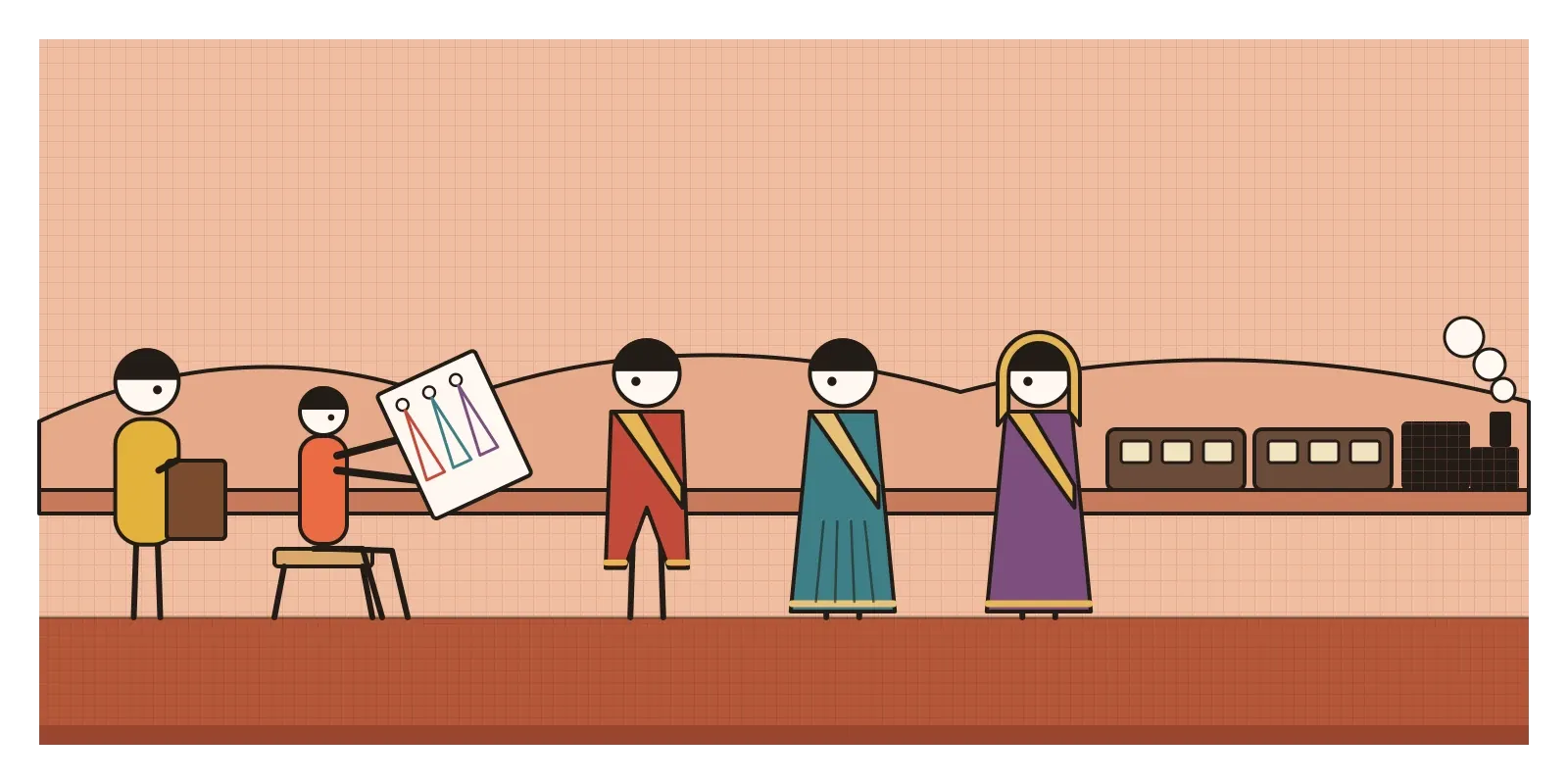
In the late 1880s, Sayajirao Gaekwad III, the Maharaja of Baroda, was finishing an enormous new palace, the Lakshmi Vilas, and wanted paintings worthy of it. He turned to Raja Ravi Varma, by then the most celebrated painter in India, and asked for a series of scenes from the Hindu epics and Puranas. Before he painted any of them, Ravi Varma did something few Indian painters before him would have thought necessary. Around 1888, he set off with his younger brother, C. Raja Raja Varma, himself a gifted landscape painter, on a long journey across northern India. They looked at how people dressed and draped their clothes in different regions, studied temples, rivers and landscapes, sketched, and looked for faces and figures that could stand in for heroes and heroines.
The set of more than a dozen large oil paintings that came out of the commission, delivered around 1890, are still in Vadodara. They show stories from the epics and Puranas, but they show them in a way that was new. The figures stand in believable space, with shadows under their feet, light sliding across their skin and silk falling in heavy, convincing folds. The trip itself is the point I want to start from. Ravi Varma was treating mythology the way a European history painter treated ancient Rome, as something to be researched and reconstructed, so that viewers would feel they were looking through a window at a real event.
This is Indian academic realism, the style of oil painting, built on European art school methods of drawing, anatomy, perspective and modelling with light and shade, that Indian artists took up in the second half of the nineteenth century. Ravi Varma is its most famous name, but he was one painter in a wider shift. In the post on light, shade and rendering, I wrote about his printing press and how his gods reached millions of homes. This post is about the paintings themselves, the schools and painters around him, and why they became the thing that the next generation of Indian artists most wanted to reject.
Oil paint arrives at court
Ravi Varma was born in 1848 in Kilimanoor, a small estate in the princely state of Travancore, in present-day Kerala, into a family related to the royal house. The painting he saw first at the Travancore court was mostly in the South Indian tradition, related to Thanjavur painting, with flat areas of strong colour, gilded details and figures set out frontally against plain grounds. Oil painting on canvas was a European import, and a prestigious one. Indian princes commissioned European portraitists to paint them in oils, and owning such portraits was part of showing that a ruler belonged in the modern world of the British Empire.
The stories of how Ravi Varma learned oils are told in many slightly different versions. A common one says the palace painter, Ramaswamy Naidu, refused to share his methods, and that when the European portraitist Theodore Jensen visited the court around 1868, Ravi Varma was allowed to watch him work but not taught. Whether or not those details are exact, it's clear he was largely self-taught, working out the medium by watching, copying and practising. By 1873 a painting of a Nair woman dressing her hair had won a prize at an exhibition in Madras, and his reputation spread from there.
The medium mattered as much as the teacher. Indian court painters mostly worked in water-based pigments bound with gum, laid down in thin layers that dry quickly and suit crisp outlines and flat areas of colour. Oil paint dries slowly, so a painter can blend one tone into the next on the canvas itself, building the soft gradations of skin and the gleam on silk that realism depends on. In India, the new style and the new medium arrived together.
At the same time, the British were building a system of colonial art schools. The Madras School of Art opened in 1850, the Calcutta school in 1854 and the Sir J. J. School of Art in Bombay in 1857. They were set up partly to improve Indian craft industries, but in practice they trained students in European academic drawing: copying plaster casts of Greek sculpture, drawing from life, mastering perspective. Exhibitions such as those of the Bombay Art Society, founded in 1888, awarded medals for work in that style. Academic realism was not just a taste. It was an institution, with schools, prizes, patrons and a ladder to climb.
Gods and goddesses with weight
Ravi Varma's best-known paintings mix portraits, scenes of contemporary life and mythology. His Shakuntala shows Kalidasa's heroine walking away through the forest while glancing back over her shoulder, pretending to pick a thorn from her foot so she can look at the king once more. There Comes Papa, from 1893, shows a woman in the cream and gold cloth of Kerala holding a small child, both looking out of the picture towards someone arriving, with a dog at their feet. It was one of the paintings he sent to the World's Columbian Exposition in Chicago that year, where his work won awards.
Perhaps the most revealing is Galaxy of Musicians, painted around 1889 and now in the Jaganmohan Palace in Mysuru. It shows eleven women, each dressed in the clothing of a different region or community of India, each holding a musical instrument, grouped together like a choir. It's a portrait of India's variety and also an argument that all of it could be gathered into one picture, painted in one modern style.
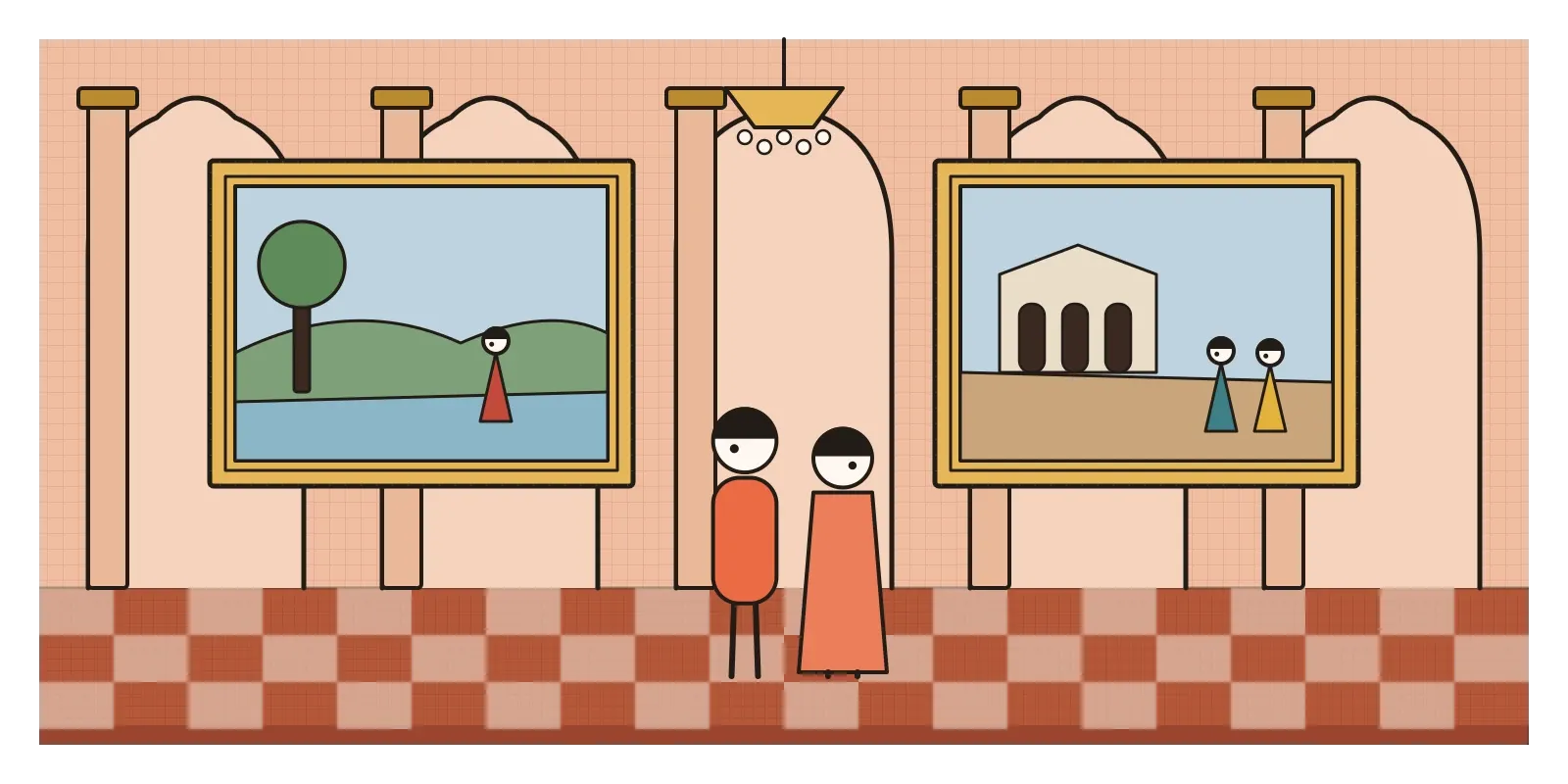
Other painters worked in the same language. Pestonji Bomanji, trained at the J. J. School, spent years in the 1870s and 1880s helping to copy the Ajanta murals and became a skilled portrait painter. M. V. Dhurandhar, who studied and taught at the J. J. School for decades, painted and illustrated a great many scenes of Maharashtrian life and mythology. The tradition carried on well into the twentieth century. S. L. Haldankar's Glow of Hope, painted in the 1940s and also in Mysuru, shows a woman shielding an oil lamp with her hand, the flame lighting her face and fingers from below, and it remains one of the best-loved paintings in the country.
Light, drapery and a stage set
You can recognise Indian academic realism quickly once you know what to look for. Bodies are modelled with light and shade, usually from a single soft light source, so faces and arms look round and solid. Figures are seen in three-quarter view, often posed as if on a stage, with gestures that make the story legible at a glance: a hand raised in surprise, a head turned away in sorrow. Backgrounds recede in proper perspective, with misty hills and dramatic skies that owe a lot to European landscape painting. The surface is smooth oil paint, with no visible outlines.
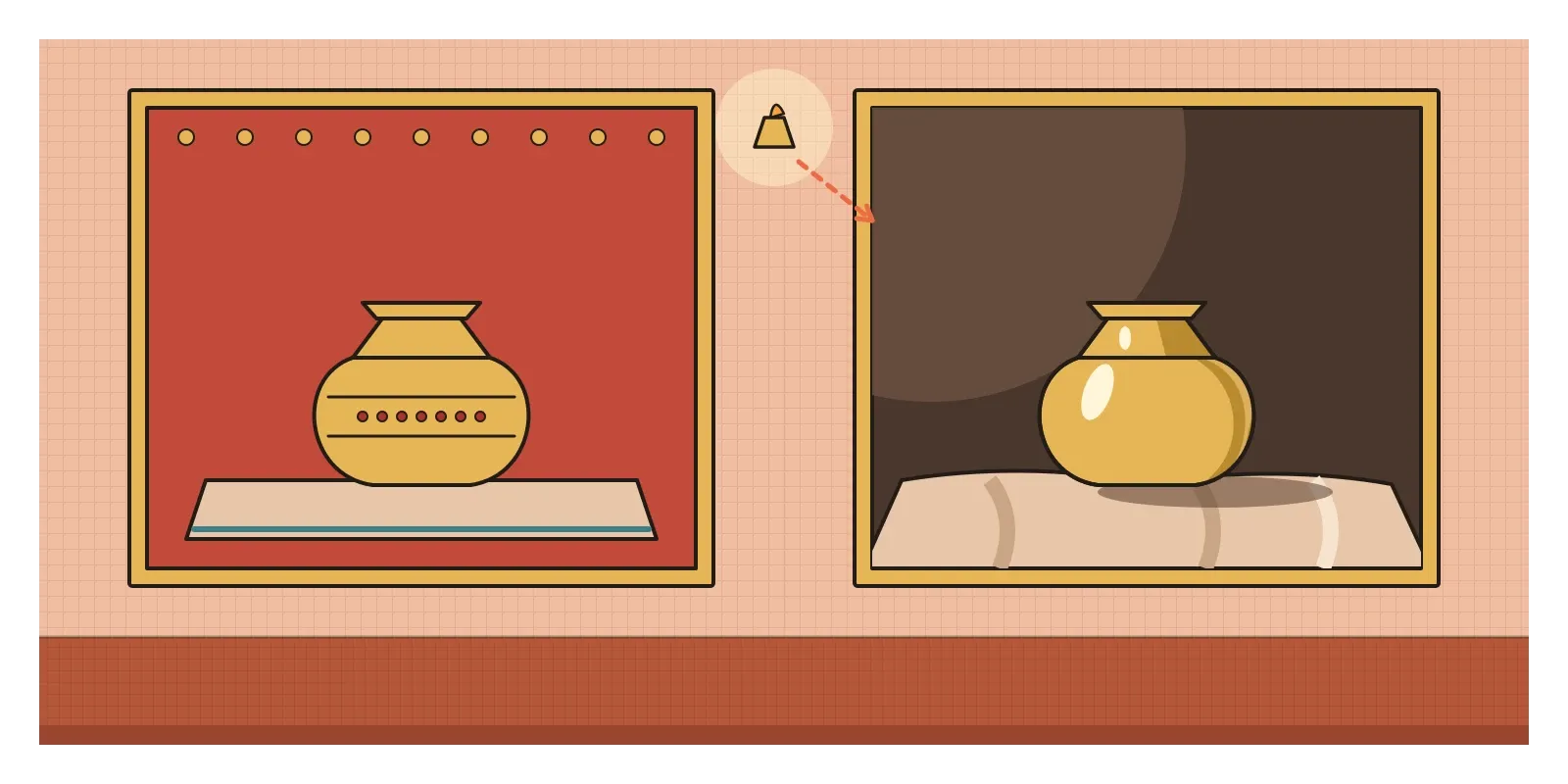
Cloth is where the style shows off. Silk saris catch the light in long highlights, their gold borders twist through the folds, and you can almost feel their weight. Ravi Varma often dressed his heroines, whatever region their story came from, in a draped sari style associated with western India, and that choice spread through his prints until it became, for many people, simply what an Indian heroine looked like. Compare all this with the court painting he grew up with, where the same goddess would be flat, frontal and outlined, decorated with gold and set against a plain colour, and you can see what a dramatic change it was.
The comparison outward is striking. In Victorian Britain, painters such as Frederic Leighton and Lawrence Alma-Tadema were painting scenes from ancient Greece and Rome with the same mix of archaeological research, costume, marble, silk and theatrical lighting. In France, Jean-Léon Gérôme painted the Middle East and North Africa in this style, often as an outsider's fantasy. Ravi Varma used the same tools on his own culture's stories, which is part of what made him so powerful and part of what made his critics so uneasy. And while Paris, as I described in the post on Japonisme, was busy learning from flat, outlined Japanese prints, Indian painters were moving the opposite way, towards the shading and perspective that European avant-gardes were starting to abandon.
The face of every calendar
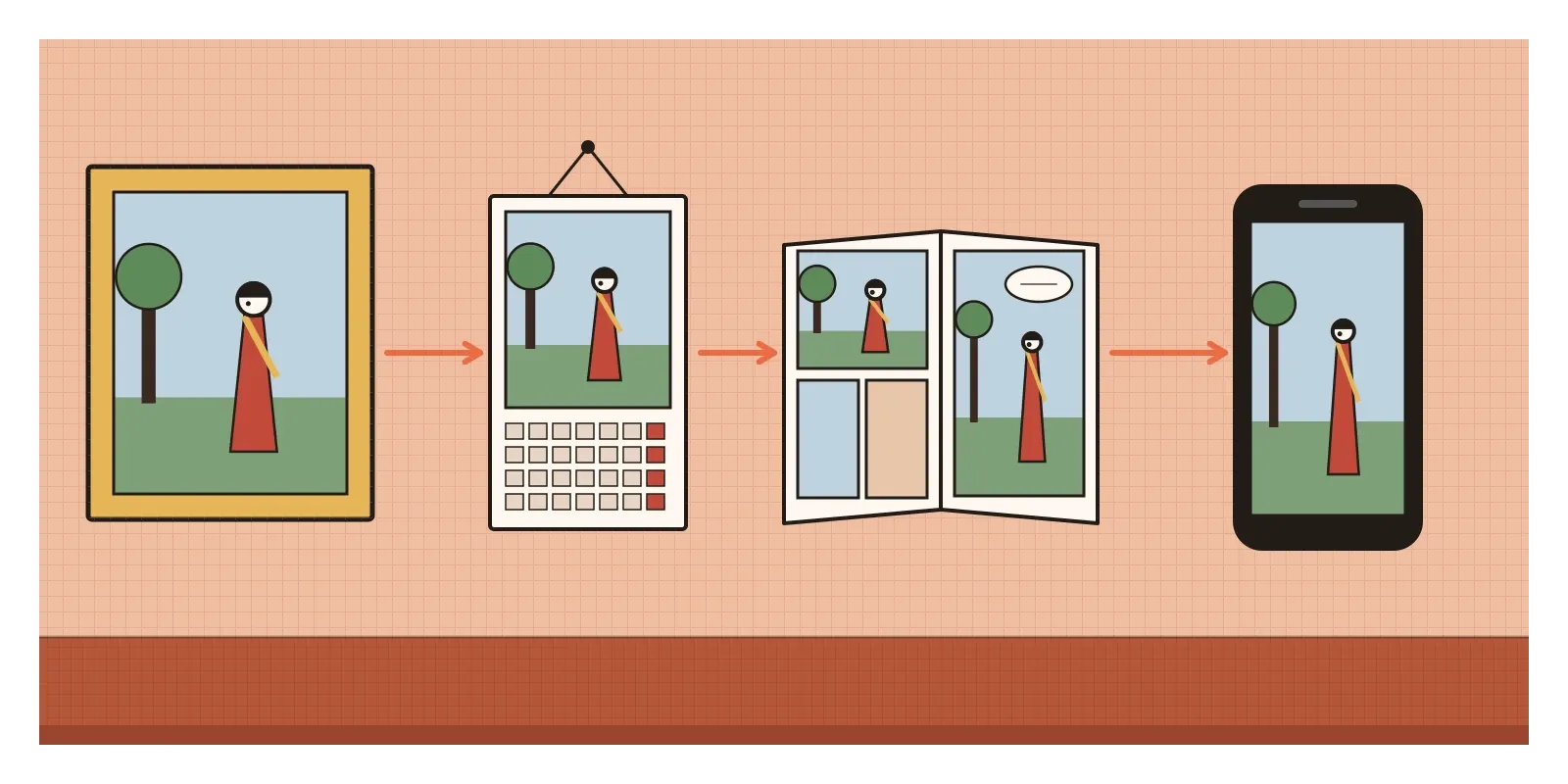
No style in Indian history has had a longer afterlife. Through the oleographs I wrote about earlier, Ravi Varma's way of picturing gods and heroines passed into the calendar art printed in places like Sivakasi, into film posters and painted cinema hoardings, and into comics such as Amar Chitra Katha, which began in 1967 and taught generations of Indian children the epics through solid, shaded, brightly lit figures. Television versions of the epics in the late 1980s, with their silks, crowns and painted backdrops, drew on the same visual memory.
For designers, that lineage matters most when we meet a "default" look and assume it's natural. Ask an AI image generator for a Hindu goddess and you're likely to get something that looks like a glossier descendant of a Ravi Varma print, because that's what millions of the images it learned from look like. It's worth knowing that this default is about a hundred and thirty years old, came out of one painter's choices about models, drapery and light, and replaced much older ways of picturing the same figures.
The Baroda trip carries a second lesson. Ravi Varma did his research before he rendered anything, looking at real people, places and clothes. That habit, observing first and then designing, is the core of good design research, even if what he did with it was idealise rather than document.
Too Western, too perfect, too narrow
As I described in the post on light, shade and rendering, the strongest reply came from Calcutta in the early twentieth century, where Abanindranath Tagore and the painters around him rejected oil, shadow and European realism as foreign, and looked instead to Mughal and Rajput painting, Ajanta and Japanese art. Critics such as Ananda Coomaraswamy found Ravi Varma's mythologies theatrical, more like scenes from a stage play than images with spiritual depth. For decades after his death in 1906, serious critics treated him as an example of what Indian art should not be, even as his images hung in almost every home.
There are other limits. His ideal of beauty was narrow: fair-skinned, rounded, upper-caste and drawn largely from the communities he knew, then spread across a huge and varied country as if it were universal. His heroines were often painted to be looked at, posed for the pleasure of mostly male, mostly elite patrons. His career depended on princes whose power existed under British paramountcy, and on art schools set up to serve colonial industry. Later historians, among them Geeta Kapur, Tapati Guha-Thakurta and Partha Mitter, have taken him far more seriously, as a painter who solved a genuinely hard problem, making a modern Indian image, even if his solution excluded a great deal.
To see this style for yourself, go to the Sree Chitra Art Gallery in Thiruvananthapuram, which has one of the largest collections of his work, the Maharaja Fateh Singh Museum in Vadodara, which holds paintings from the Baroda commission, or the Jaganmohan Palace in Mysuru, where Galaxy of Musicians and Glow of Hope hang. Closer to home, take any printed image of a god or goddess from a calendar, a shop or a phone wallpaper and ask three questions: where is the light coming from, what is the cloth doing, and who decided this is what they look like? Then remember Ravi Varma and his brother crossing northern India around 1888, sketching how strangers wore their clothes, so that a painting of a myth would feel like a window. In the next post, on Kalighat painting, I'll step back a few decades to the lanes around a Calcutta temple, where bazaar painters were selling gods by the thousand in a completely different style.
Further reading: Rupika Chawla, Raja Ravi Varma: Painter of Colonial India (2010) · Tapati Guha-Thakurta, The Making of a New 'Indian' Art: Artists, Aesthetics and Nationalism in Bengal (1992) · Partha Mitter, Art and Nationalism in Colonial India, 1850-1922 (1994) · Geeta Kapur, "Ravi Varma: Representational Dilemmas of a Nineteenth-Century Indian Painter" (1989) · Kajri Jain, Gods in the Bazaar: The Economies of Indian Calendar Art (2007)
A reply toThe flat, gilded conventions of South Indian court painting, answered with European oils and shadows.