Kalighat Painting
How village scroll painters in Calcutta invented a fast, bold, cheap picture for pilgrims, gossip and satire.
Kalighat Painting
The scandal that sold a thousand pictures
In 1873, Bengal was gripped by a scandal from the temple town of Tarakeswar, less than sixty kilometres from Calcutta. The mahant, the head priest of its famous Shiva temple, was accused of having seduced Elokeshi, the teenage wife of a young man called Nobin Chandra Banerjee who worked in Calcutta. In May that year, Nobin killed his wife with a fish knife. The trials that followed were reported in every newspaper. Nobin was convicted, and after a public campaign on his behalf was released a couple of years later. The mahant was sent to prison too. Playwrights put the story on stage within months, and cheap printed booklets retold it for anyone who could read.
The painters working in the lanes around the Kali temple at Kalighat in south Calcutta saw a market and moved fast. They produced a whole series of pictures: Elokeshi and the mahant together, Nobin confronting them, and, perhaps the most popular, the once-powerful mahant in prison, sweating as he turned an oil press. The pictures sold in large numbers and survive today in museum collections in several countries. It's an uncomfortable starting point, a young woman's death turned into a bestseller, and I'll come back to that. But it shows exactly what Kalighat painting was: fast, cheap, topical and made for a crowd.
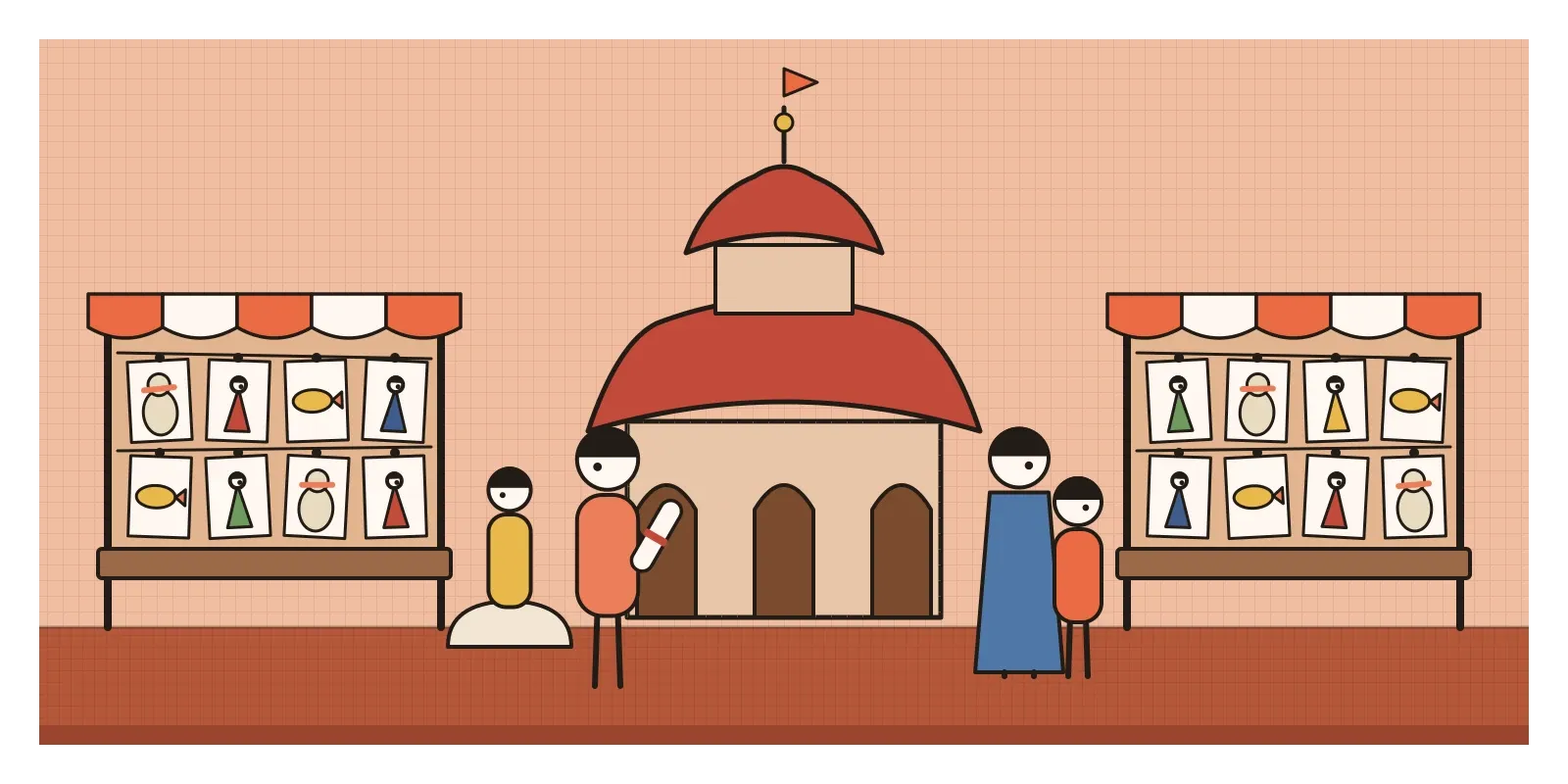
Kalighat painting is the name for the watercolours on paper that painters sold from small shops and stalls around the Kalighat temple, from roughly the 1830s until the 1930s. They began as souvenirs for pilgrims, pictures of Kali, Durga, Shiva, Krishna and the heroes of the epics, and grew into a commentary on city life, full of dandies, courtesans, quarrelling couples, policemen and cats. They are drawn with a bold, sweeping brush line and filled with flat colour, usually on a plain background, and they were among the first truly urban, mass-market images made in India.
From a village scroll to a city sheet
The painters came from a much older tradition. Across rural Bengal, families of painters called patuas or chitrakars made long scrolls, called pats, painted with scenes from myths and local stories. A patua would travel from village to village, unroll the scroll frame by frame and sing the story as each picture appeared, much like a storyteller with a slideshow. Many of these families were Muslim by faith and painted Hindu stories as well as Muslim ones, a mixing that the tradition took for granted.
In the early nineteenth century, Calcutta was growing fast as the capital of British India, and the Kalighat temple, rebuilt in its present form around 1809, drew pilgrims from all over Bengal. Some patua families moved to the city and settled near the temple. A long scroll that took weeks to paint and needed a singer to perform it made no sense in a busy temple lane. What sold was a single sheet a pilgrim could buy for very little, roll up and carry home. The format changed, and the style changed with it.
Two new things made this possible. One was cheap machine-made paper, which was easier to find in the colonial city than in the village. The other was the example of the Company painters, the artists working for British patrons whom I wrote about in the post on observational drawing, whose watercolours used a little European shading to give figures volume. The Kalighat painters took that idea and simplified it into something they could do quickly, hundreds of times over.
One stroke, one flat wash, one band of shade
The most recognisable thing about a Kalighat painting is its line. The outline of a figure, a belly, an arm, the curve of a back, is drawn with a loaded brush in one long, confident stroke, swelling and thinning as the painter's hand speeds up and slows down. Writers have often compared that line to the drawings of modern European artists, but it came out of practice and speed, not theory. Painters who had made the same goddess thousands of times didn't need to hesitate.
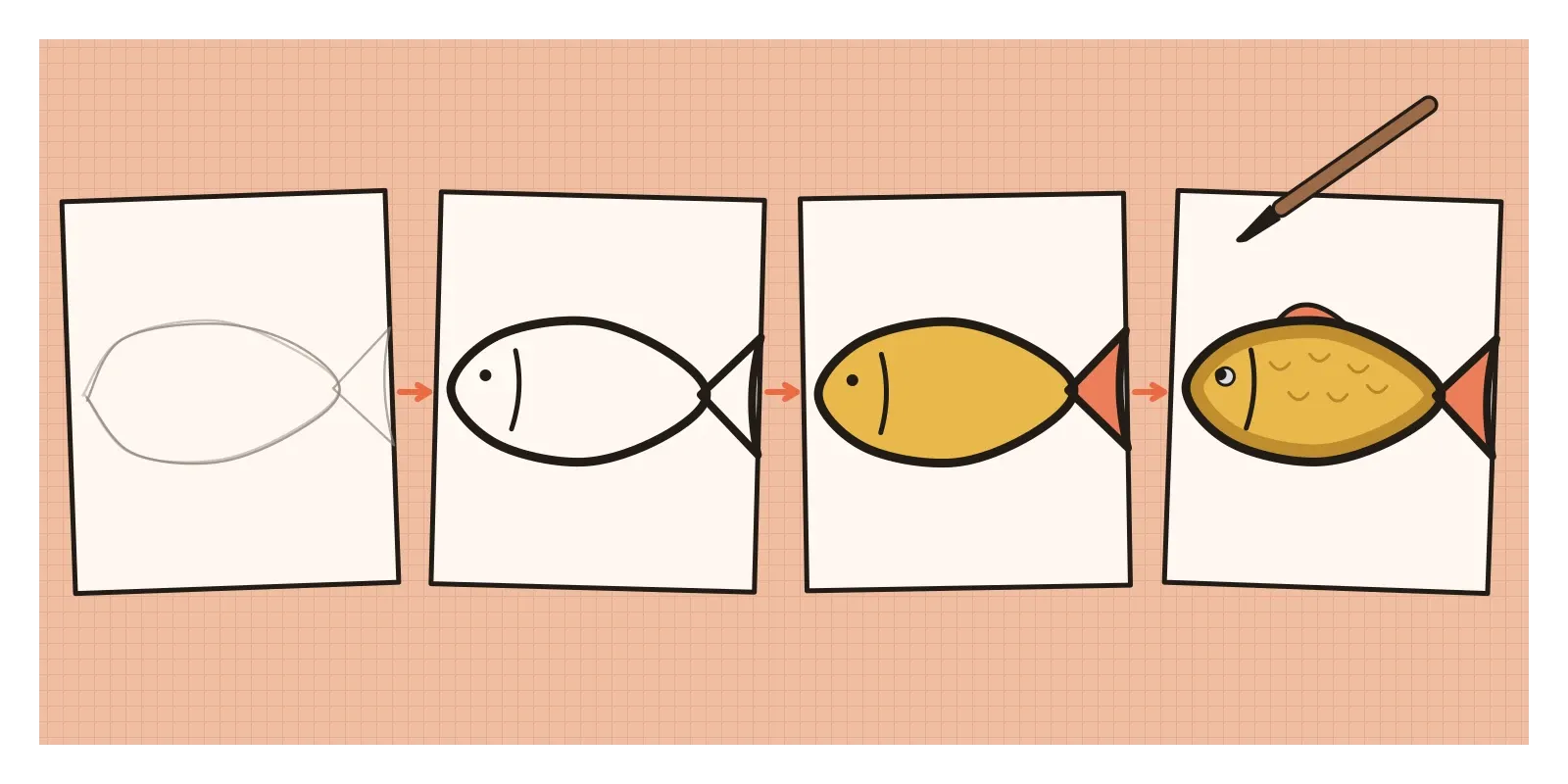
Colour went on in flat areas, often bright yellows, blues, reds and greens, with black used generously for hair and outlines. Then came the clever part. Instead of modelling a whole limb from light to dark, the painters ran a soft band of darker tone along the inside of the outline, so a plain yellow arm suddenly looked round. It's the quickest possible version of the shading I described in the post on light, shade and rendering, volume suggested by the edge alone. Jewellery and ornaments were often picked out in a shiny metallic paint. Backgrounds were usually left as plain paper, with no landscape or room, so the figure sat on the page like a sticker.
The work was organised for speed. Within a family workshop, one person might sketch the outlines, another fill in the colours and another add details, so a single shop could turn out a steady supply. Many pictures followed set templates: the same Kali, the same Shiva carrying the body of Sati, the same pair of lovers, repeated with small variations. Nobody signed them, and almost none of the painters' names were recorded.
Dandies, courtesans and a cat with a prawn
Gods were the staple, and even they were brought close to home. Shiva and Parvati appear like a Bengali couple, Parvati with the infant Ganesh on her lap, and Krishna and Balarama look like plump, well-fed local boys. That domestic warmth is part of why pilgrims wanted the pictures on their walls. But the city kept creeping in too. A favourite target was the babu, the Western-educated Bengali gentleman who worked for the British, wore his hair carefully parted, carried a cane and smoked in a fashionable way, and was shown in Kalighat pictures as vain, foolish and easily led astray. His partner in satire was the bibi, the fashionable wife or courtesan, who in some of the best-known pictures is shown leading her husband on a string like a pet animal or beating him with a broom.
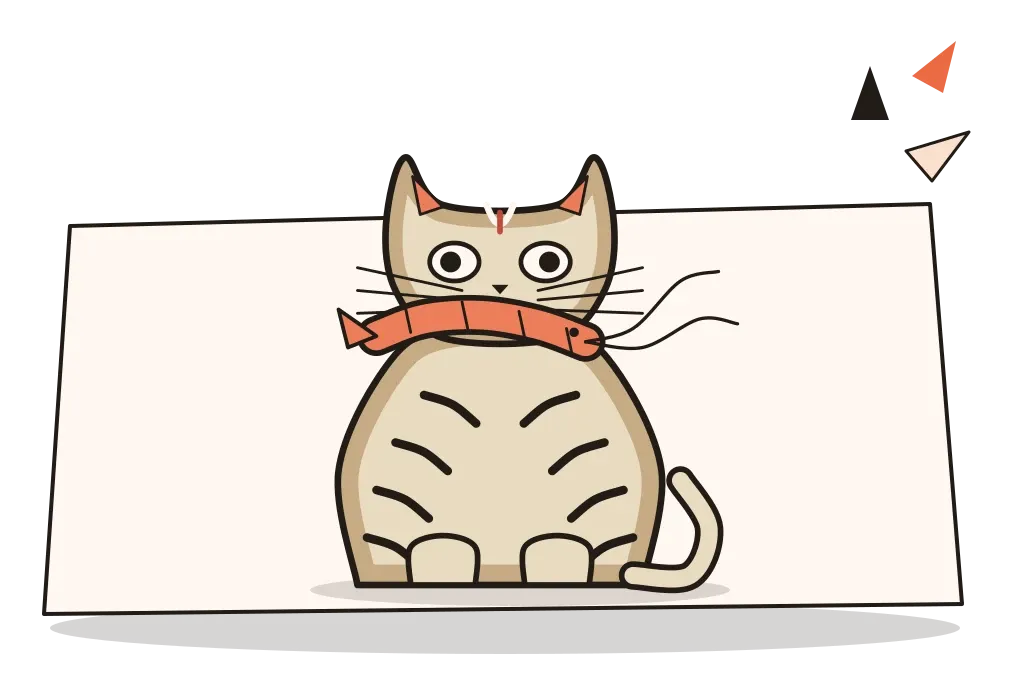
My favourite is the cat. In many Kalighat paintings a big, round cat sits upright with a prawn or a fish held in its mouth, sometimes with the sandalwood marks of a devout Vaishnava on its forehead. The joke depends on a Bengali saying about a cat that pretends to be an ascetic, a holy man who has given up meat, while quietly catching fish. It's a picture of hypocrisy, aimed at the pious men who preached one thing and did another, and the Tarakeswar pictures carried the same message about a far more serious case.
Looking outward, Kalighat belongs to a worldwide family of cheap popular pictures that flourished in the nineteenth century. In the post on ukiyo-e, I wrote about the woodblock prints of Edo, sold cheaply to townspeople and full of actors, courtesans and city fashions. In eastern France, printers in Épinal produced bright, stencil-coloured prints of saints, soldiers and news stories that pedlars carried from village to village. In Victorian London, printers sold sheets describing sensational murders by the hundred thousand. Calcutta had its own printed equivalents too, the woodcuts and books from the Battala neighbourhood. What sets Kalighat apart is that every sheet was still painted by hand, and that its painters had both a sacred market and a satirical one, often in the same shop.
The original meme template
What I take from Kalighat as a designer is mostly about economy. Every element of a picture earned its place. One stroke for a body, one flat colour, one band of shade, no background. If you're designing icons, stickers, illustrations for a product, or anything that has to be read on a small screen in a second, that's a very good discipline. Try removing the background and the detail and see whether the outline alone still tells the story. If it doesn't, more rendering won't save it. Kalighat painters also worked to a price, and the price shaped the style. Designers do the same every time a budget, a deadline or a file size decides how much detail a thing can carry, and the best constraint-driven work, like theirs, turns the limit into a look.
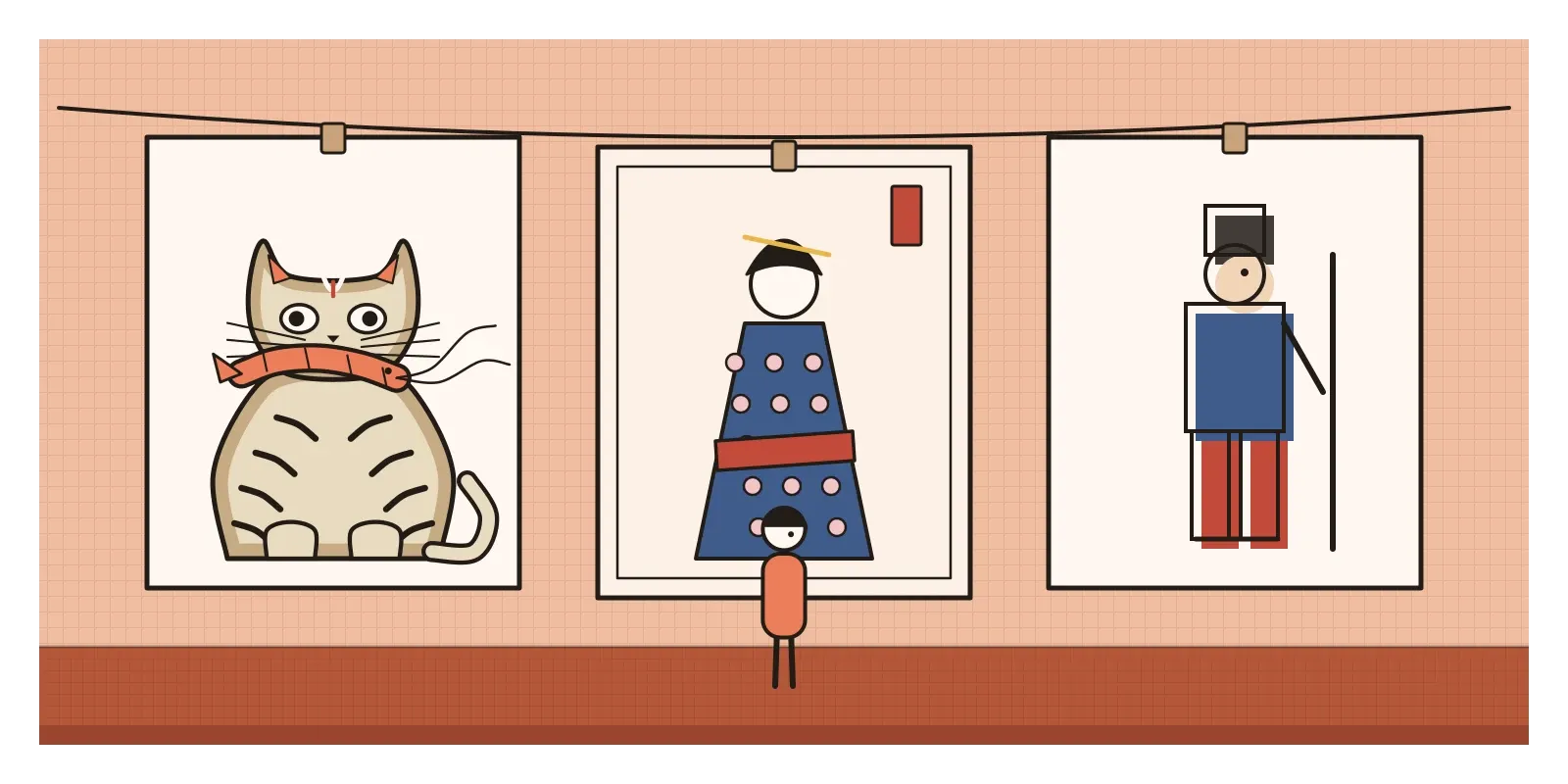
The second lesson is about templates. The Kalighat cat and the babu were recognisable types that could be reused and varied to comment on whatever was happening that week, which is exactly how meme templates and sticker packs work today. A strong, simple template, a fast production system and a topical subject turned out to be a powerful combination in 1873, and it still is. Kalighat-style cats and fish now turn up on tote bags, café walls and festival packaging around Kolkata, and the bold outline and flat colour of the style sit comfortably beside the flat illustration styles common in apps and brands.
Modern Indian art took the same lessons more seriously. In the 1920s, the painter Jamini Roy, who had trained in the academic style at the Government School of Art in Calcutta, turned away from oils and realism and began painting with bold outlines, flat colours and homemade pigments, drawing on Kalighat and on the village pats. He sold his work cheaply to ordinary middle-class buyers and ran his studio almost like a workshop, with family members helping. In his hands the bazaar style became a deliberate modern choice.
Laughing at whom?
Kalighat painting has real limits. Much of its satire was aimed at people with less power, and especially at women. The bibi beating her husband, the courtesan ruining a young man, the wife who wanted new clothes and education were jokes about a changing city told from a worried, conservative point of view. The Tarakeswar pictures sold a murdered teenager's story as entertainment, and while some of them blamed the mahant, they still made Elokeshi a figure in someone else's moral tale. The painters, too, were poorly paid, anonymous and treated by later collectors as quaint folk artists rather than skilled professionals.
The tradition was eventually overtaken by the same technology it had partly anticipated. From the late 1870s, the Calcutta Art Studio, founded by former students of the city's art school, printed colour lithographs of gods and goddesses, and soon the Ravi Varma oleographs I described in the last post were arriving from Bombay. Printed pictures were cheaper, glossier and more "modern", and by the 1930s the Kalighat shops had largely disappeared.
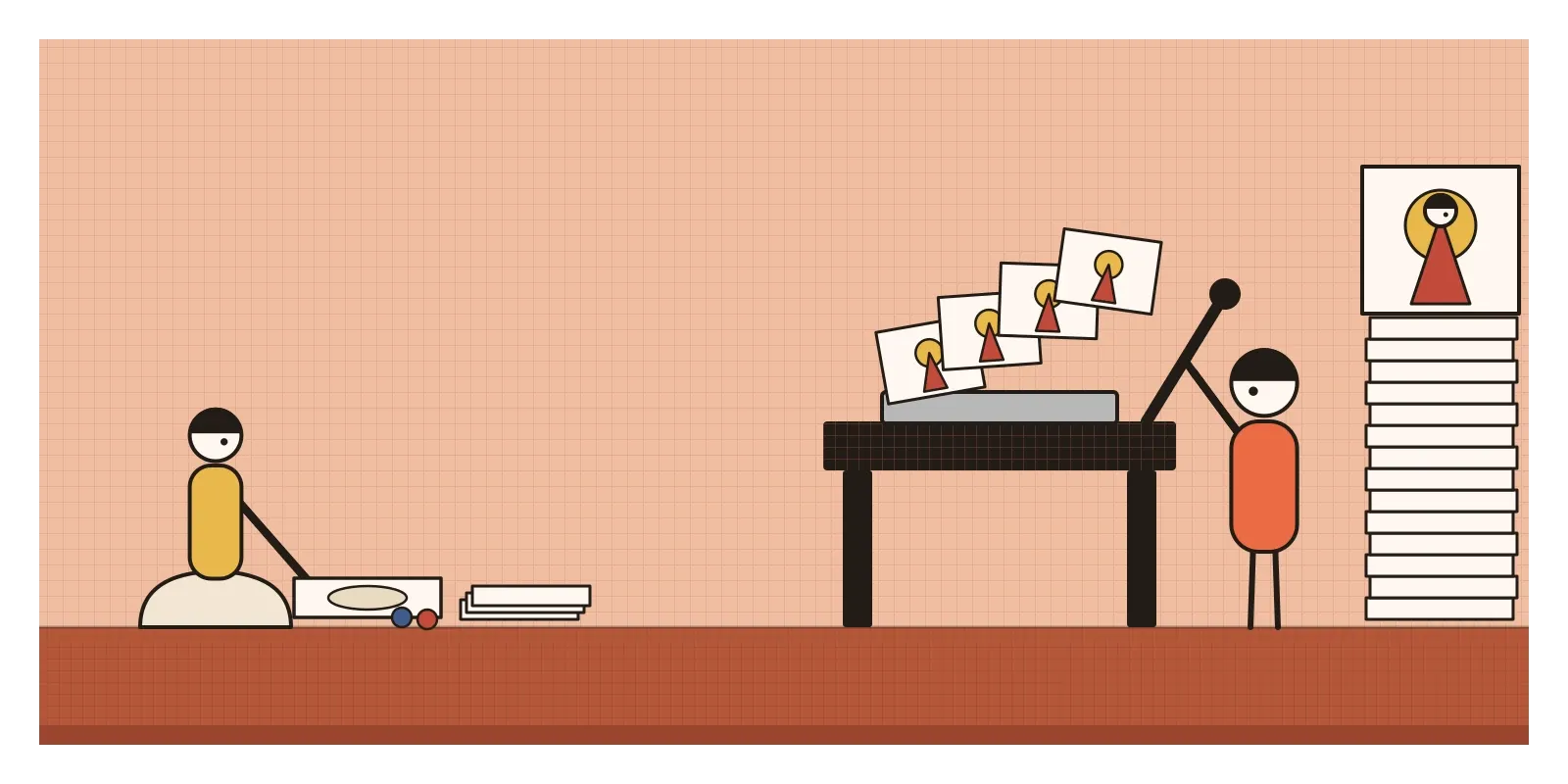
The patua families, though, never stopped. In Naya, a village in Paschim Medinipur, chitrakar families still paint and sing scrolls, and hold an annual festival called Pot Maya, usually in November, where visitors can meet them.
To see Kalighat painting for yourself, look through the large collections online at the Victoria and Albert Museum in London, whose holdings were catalogued by the curator W. G. Archer, or visit the Indian Museum and the Gurusaday Museum in Kolkata. Then try the exercise the painters practised every day. Draw a cat, a fish or a person in one continuous brush or marker stroke, fill it with one flat colour, and add a single band of darker tone along the inside of the outline. Do it ten times, fast. By the tenth, you'll understand why the Kalighat line looks so sure of itself. And remember the painters of 1873, turning that same line on the news of the day within weeks. In the next post, on the Vienna Secession, we go to a very different city, where a group of young artists walked out of their academy to build their own house for modern art.
Further reading: W. G. Archer, Bazaar Paintings of Calcutta (1953) · W. G. Archer, Kalighat Paintings (1971) · Jyotindra Jain, Kalighat Painting: Images from a Changing World (1999) · Frank J. Korom, Village of Painters: Narrative Scrolls from West Bengal (2006) · Tanika Sarkar, Hindu Wife, Hindu Nation: Community, Religion and Cultural Nationalism (2001)
A reply toThe long village scrolls, cut down to single sheets for a fast city market.