
The Progressive Artists' Group
How six young Bombay painters, just after independence, set out to make art that was both modern and Indian.
The Progressive Artists' Group
Colour without a building
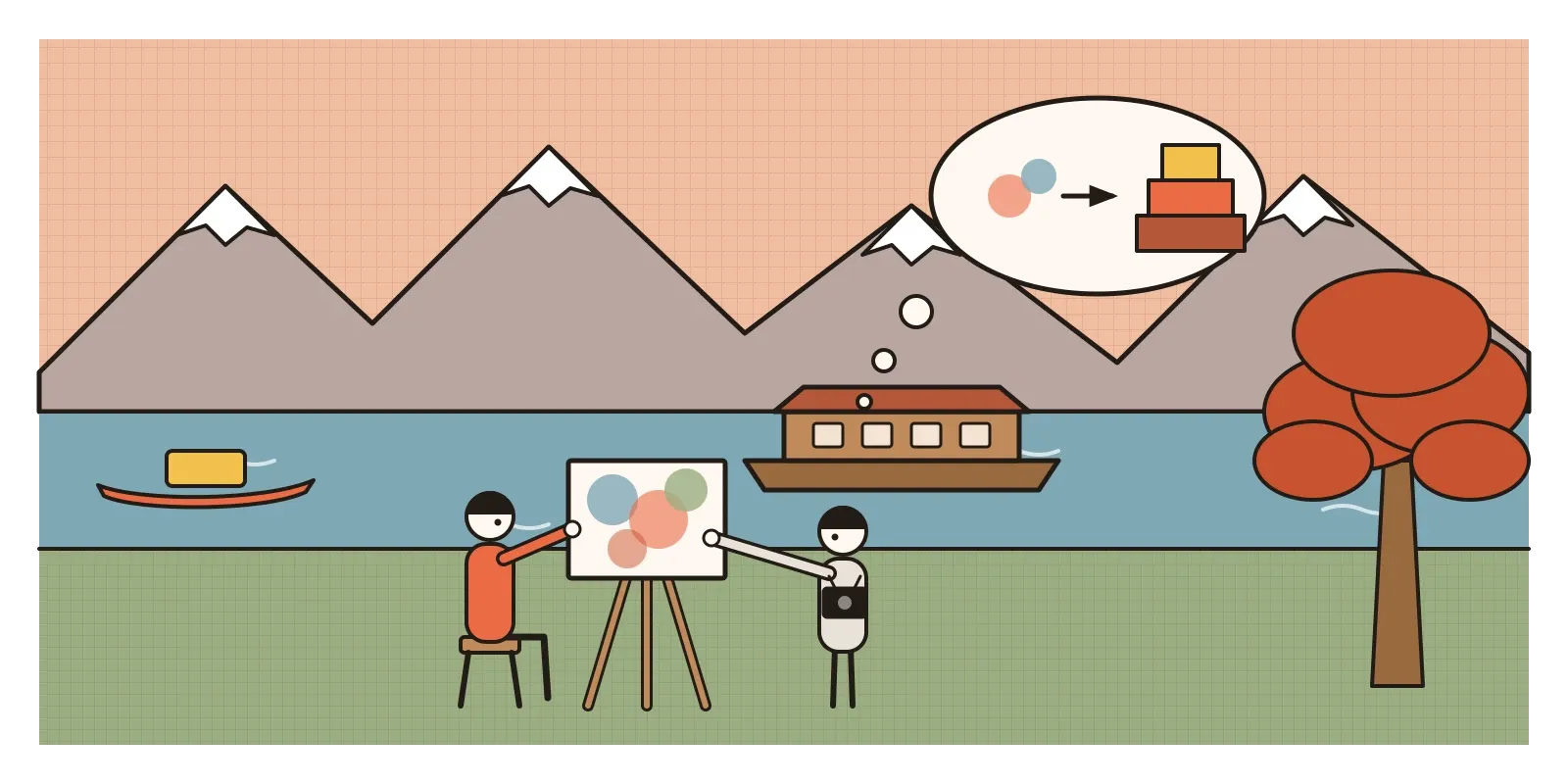
In 1948, a young painter from Bombay called Sayed Haider Raza was in Srinagar, painting the lakes, boats and hills of Kashmir in quick, wet watercolours. India had been independent for less than a year, and Kashmir was already a war zone. Also in the valley that year was the French photographer Henri Cartier-Bresson, who had arrived in India in time to photograph Gandhi's last days and his funeral. The two men met, and Cartier-Bresson looked through Raza's paintings.
Raza told the story for the rest of his life. The photographer said, more or less, that the pictures had colour and feeling but no construction. A painting, he explained, is built like a building, with foundations and walls, and Raza should go and study Cézanne. For a photographer who composed every frame in a split second, it was an odd lesson to give a painter, and an exact one. Two years later Raza was in Paris, standing in front of Cézanne's canvases, learning how to build.
Raza was one of six young painters who, in Bombay in December 1947, had formed the Progressive Artists' Group. In the few years it lasted, the group set out to make art for a newly free country that was neither a copy of the British academy nor a revival of India's past. It's usually seen as the start of modern Indian painting after independence, and its members became the most famous Indian artists of the century.
Plaster casts on one side, wash paintings on the other
Bombay in 1947 was a port city of mills, film studios, newspapers and migrants, and the most cosmopolitan place in India. It was also a city living through the violence of Partition. Its main art school, the Sir J. J. School of Art, founded in 1857, still taught in the British academic way. Students drew plaster casts of Greek statues, painted realistic portraits and still lifes, and competed for medals at the annual show of the Bombay Art Society, which rewarded polished, conservative work.
The other answer on offer came from Calcutta. The Bengal School, which has its own post earlier in this series, had replied to Western academic painting by looking back to Ajanta and Mughal miniatures, with soft wash techniques and gentle, nostalgic subjects. By the late 1940s it seemed to many young artists to belong to the freedom struggle rather than to the free country. Amrita Sher-Gil, who appears in the post on Post-Impressionism, had already shown that a modern Indian painting was possible, but she had died in 1941.
The young Bombay painters wanted neither plaster casts nor wash. The driving force was Francis Newton Souza, a Goan Catholic who had been expelled from the J. J. School after supporting the Quit India movement. The group's name echoed the Progressive Writers' Association of the 1930s, and its members were deliberately mixed. Raza, a Muslim, was the son of a forest officer in central India. Maqbool Fida Husain, also Muslim, had come to Bombay from Indore and earned his living painting giant cinema hoardings. Krishnaji Howlaji Ara had worked as a domestic servant and car cleaner and taught himself to paint. Hari Ambadas Gade painted landscapes, and Sadanand Bakre was a sculptor. A Hindu, a Muslim, a Catholic: the group looked like the secular nation it hoped for.
Six painters and three refugees
They had unlikely allies. Three Europeans who had fled Nazism, the Austrian painter Walter Langhammer, art director of The Times of India, the German critic Rudolf von Leyden and the collector Emmanuel Schlesinger, opened their homes, their libraries of art books and their wallets. Through them the young painters saw reproductions of Picasso, Matisse, Klee and the German Expressionists, and sold their first pictures.
The group's first big exhibition was held at the Bombay Art Society's salon in July 1949, opened by the writer Mulk Raj Anand, although some accounts date its first shows to 1948. Souza wrote the catalogue essay. He said, roughly, that they would paint with almost anarchic freedom of subject and technique, held together only by a few basic laws of order, form and colour. It was a declaration of independence from the art school and the medal.
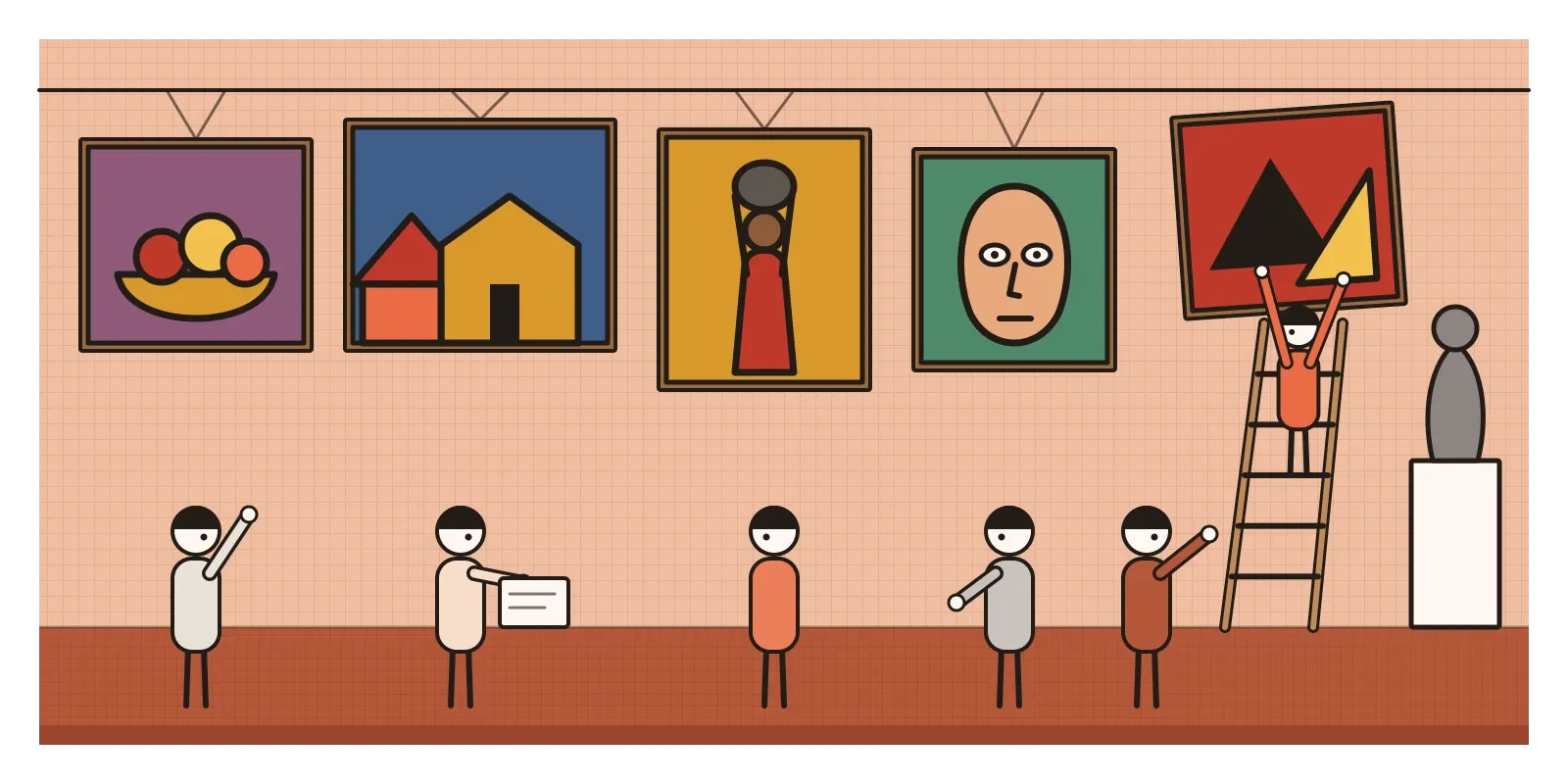
Souza's paintings were the most violent. He drew heads and bodies with thick black outlines, twisted faces and staring eyes, and painted crucifixions, Goan churches and nudes. His nudes drew complaints of obscenity to the Bombay police, and in July 1949 he sailed for London. He struggled there for years, until in 1955 Stephen Spender's magazine Encounter published his autobiographical essay "Nirvana of a Maggot" and a London gallery sold out his show.
Raza went to Paris in 1950 on a French government scholarship and studied at the École des Beaux-Arts. He took Cartier-Bresson's advice literally, painting French villages and landscapes as solid blocks of colour, houses stacked like masonry under dark skies. In 1956 he won the Prix de la Critique, the first artist from outside France to receive it. Much later, he turned to the bindu, the black dot at the centre of his late paintings, a story that belongs to the post on Neo-Tantra.
Husain stayed in India. As I wrote in the post on gesture and contour drawing, he became famous for his horses, but his breakthrough was Zameen (1955), a mural-sized canvas divided into panels of village life: farmers, bullocks, a potter, women with water pots, painted in earth colours with the chunky forms of folk toys and old temple sculpture. It won the Lalit Kala Akademi's first national award and now hangs in the National Gallery of Modern Art in New Delhi. Ara painted still lifes of fruit and flowers and frank female nudes in thick, glowing paint. Gade broke landscapes into planes of colour, and Bakre carved and modelled heads before he too left for London in 1951. As the founders scattered, others joined or showed with them, among them Akbar Padamsee, Krishen Khanna, Ram Kumar and V. S. Gaitonde, whom I wrote about in the post on Abstract Expressionism. By the mid-1950s the group had quietly dissolved, though accounts disagree about the year.
Thick paint and a black line
You can usually spot a Progressive painting from across a room. The paint is thick, often laid on with a palette knife so it stands up in ridges. Figures and objects are held in strong black outlines, a habit that owes something to the French painter Georges Rouault, whose figures look like stained glass. Space is flattened and broken into planes, the lesson of Cézanne and Cubism: a village or a face looks assembled from blocks rather than seen through a window.
The colours are hot and earthy. Raza's reds, ochres, deep blues and blacks, Husain's browns and terracottas and Souza's acid greens and bruised purples are a long way from the misty wash of the Bengal School. The subjects are Indian, but not picturesque: village women, musicians, horses, temples, Goan churches, the crowded street. Bodies are bent and stretched for expression rather than accuracy. In short, it's a European modernist grammar used to say Indian things, and the tension between the two is what makes these paintings interesting.
Bombay, Paris, London and a group in Calcutta
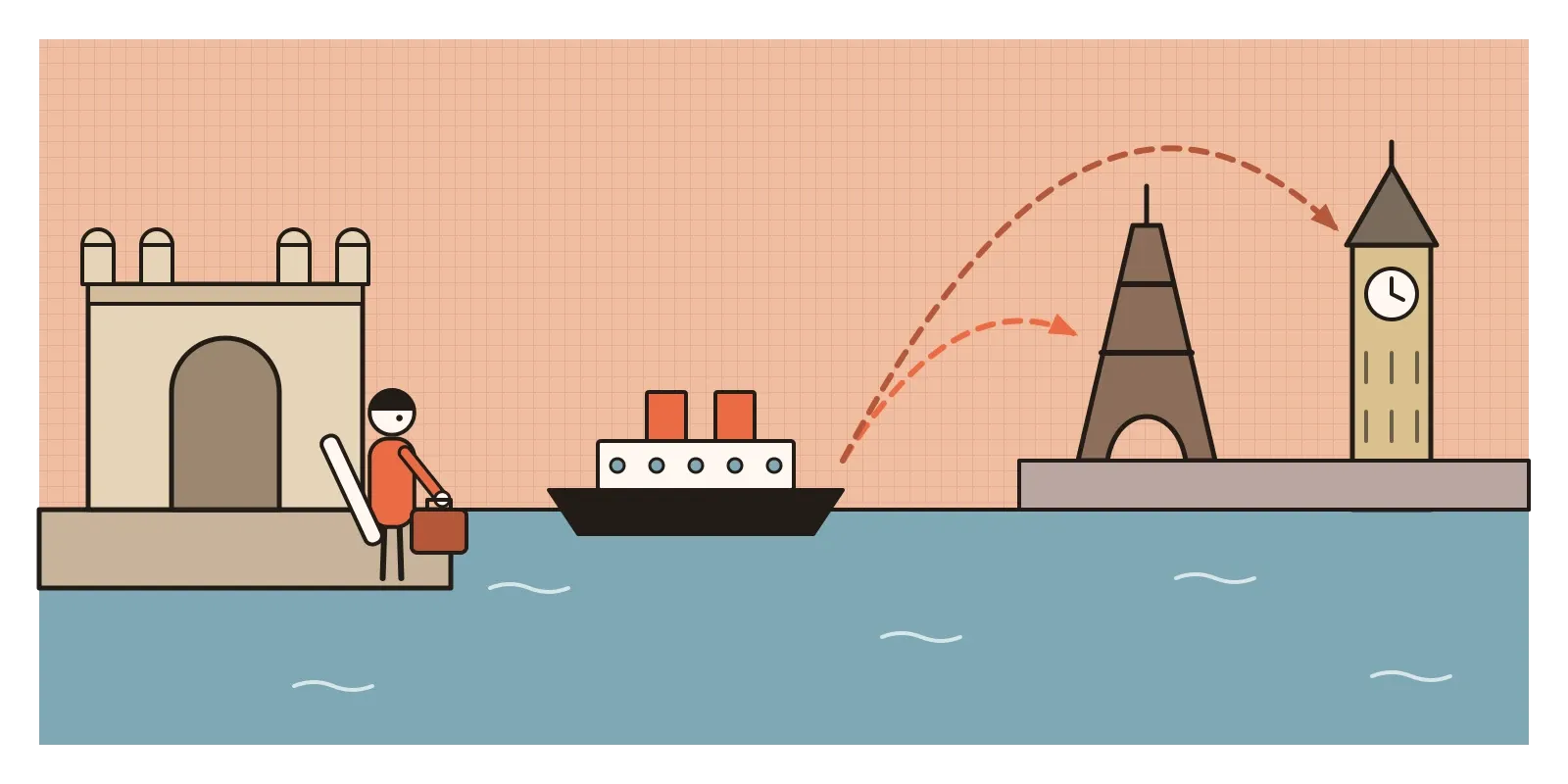
Because this is an Indian movement, the useful question is how it connected to the rest of the world. The answer is, mostly, through Paris and London. The group wanted to free Indian art from the British art school, yet to do that several of its members had to leave India. Souza and Bakre went to London, Raza and later Padamsee to Paris. In Bombay they had learned modern art from books and from refugee patrons. Abroad they met it in museums and found themselves treated as exotic visitors to a story Europeans thought they owned.
It's worth comparing them with the New York painters in the last post, working in exactly the same years. Both groups wanted to stop being pupils of Europe. The Americans had a rich state, a booming market and powerful museums behind them, and within a decade the world was coming to New York. The Indians had a few devoted patrons, almost no galleries and a government more interested in steel mills. Their modernism had to be built on a much thinner foundation.
They weren't alone in India either. In 1943, in the shadow of the Bengal famine, a group of Calcutta artists including Paritosh Sen, Nirode Mazumdar and Gopal Ghosh had formed the Calcutta Group with a similar aim: an Indian art that was modern and international. Bombay simply had the louder voices, the stronger market and, in Souza, a gift for scandal.
Hoardings, galleries and the Indian-but-modern brief
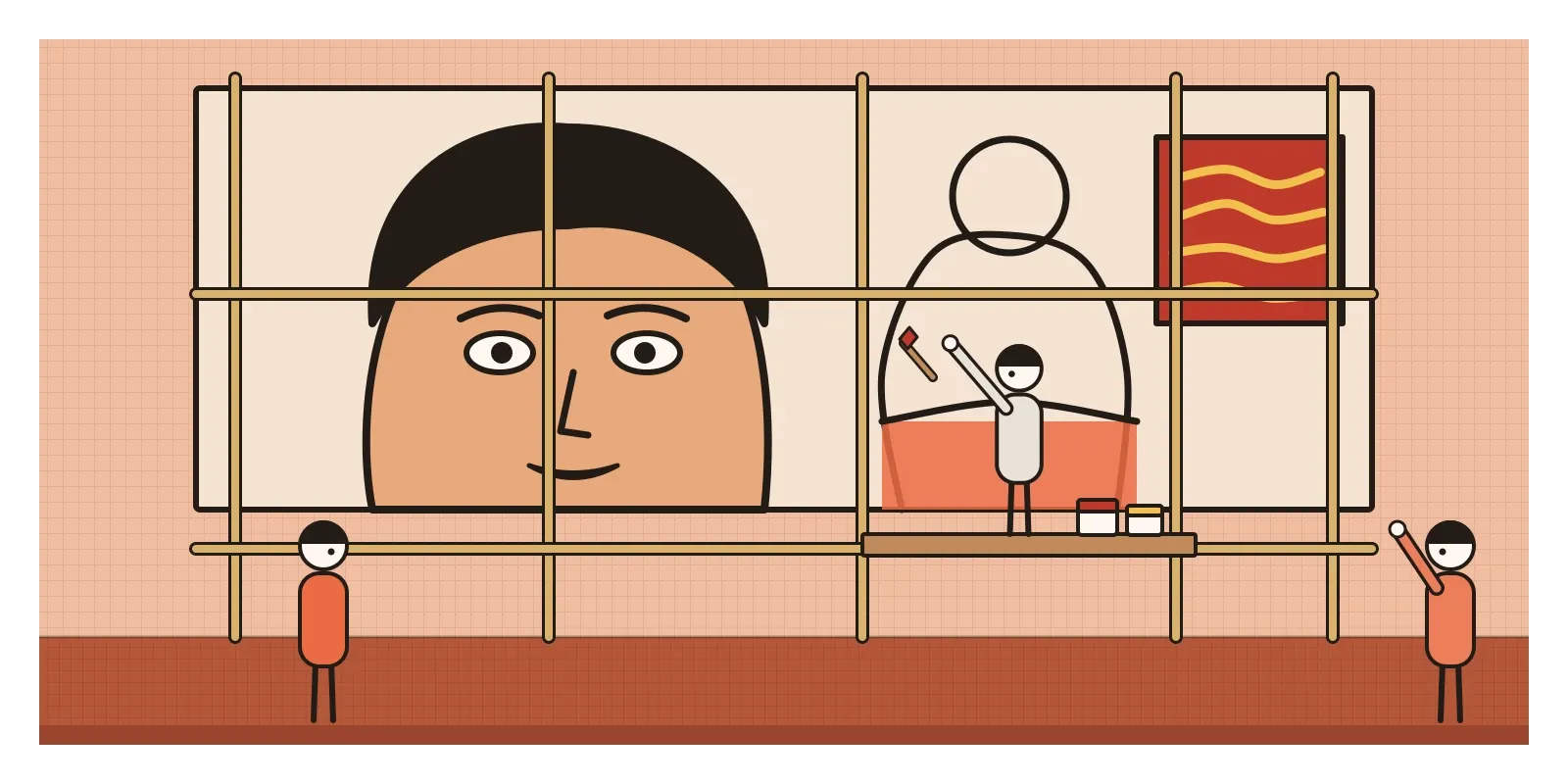
Husain's first trade left a trace you can still see. Hand-painted cinema hoardings, with their giant faces, bold outlines and saturated colour, were a school in working fast and big for a crowd. The style faded from the streets when digital printing took over, but it has come back as a favourite reference for Indian illustrators, packaging designers and film posters that want to look handmade. Husain himself crossed between fine art and mass media all his life, and his short film Through the Eyes of a Painter won a Golden Bear at the Berlin Film Festival in 1967.
The group also built the art world that Indian designers still work around. The Jehangir Art Gallery in Bombay's Kala Ghoda opened in 1952, partly in response to artists' need for a place to show, and the commercial galleries, auctions and online auction houses that now sell Progressive paintings for crores of rupees grew from that small beginning.
The deepest trace is a question. Every Indian designer has been handed the brief "make it feel Indian, but modern". The Progressives gave one answer: use a modern, international grammar and fill it with Indian subjects, colours and textures. It's the same answer you see in a brand identity that pairs a clean sans-serif with a palette of turmeric, indigo and terracotta, or an app that uses kolam-like patterns behind a standard interface. It works, but it's worth remembering the Progressives' own unease with it, which is why their best paintings feel restless rather than decorative.
A boys' club, a quarrel and an exile
The Progressives were a group of men, and for a long time the story was told as if modern Indian art had only men in it. The costume designer Bhanu Athaiya, who later won an Oscar for Gandhi, showed paintings with the group in the early 1950s, and she is often the only woman mentioned at all. Souza's paintings of women can be brutal, and his writing about them more so. The group was also small, urban and English-speaking. Folk and Adivasi painters, whose work they borrowed from, weren't counted as modern artists for decades.
Its unity was brief. The members quarrelled, scattered and developed in different directions within a few years. And the secular dream the group embodied was later tested by one of its own founders' lives. From the late 1990s, Hindu nationalist groups attacked Husain over paintings of Hindu goddesses, vandalised his work and filed hundreds of court cases against him. He left India in 2006, became a citizen of Qatar in 2010 and died in London in 2011, aged ninety-five.
The next generation replied in their own way. At the Faculty of Fine Arts in Baroda, founded in 1950, painters like Bhupen Khakhar and Gulammohammed Sheikh turned away from the Progressives' heroic modernism towards storytelling, popular culture and everyday life, a movement that has its own post later in this series.
To see it for yourself, go to the National Gallery of Modern Art in New Delhi, where Zameen hangs, or walk through the Jehangir Art Gallery and the galleries around Kala Ghoda in Mumbai, where the group first showed. For a small exercise, take a photograph of a street near you and paint or draw it twice. First, quickly, as colour and feeling. Then again, rebuilt as Cartier-Bresson told Raza: blocks of colour stacked like walls, with a black line holding each one. The second version is harder, and usually better. In the next post, on the Swiss Style, I'll leave paint for type, and for designers in Zurich and Basel who in the same decade were trying to make communication as clear and objective as possible.
Further reading: Yashodhara Dalmia, The Making of Modern Indian Art: The Progressives (2001) · Geeta Kapur, When Was Modernism: Essays on Contemporary Cultural Practice in India (2000) · Partha Mitter, The Triumph of Modernism: India's Artists and the Avant-Garde, 1922-1947 (2007) · Zehra Jumabhoy and Boon Hui Tan (eds.), The Progressive Revolution: Modern Art for a New India (2018)
A reply toThe British academic realism of the art schools, and the nostalgic revivalism of the Bengal School.