
The Pre-Raphaelite Brotherhood
Young painters in 1848 London who rejected their teachers and painted every leaf in jewel-bright colour.
The Pre-Raphaelite Brotherhood
Five months on a riverbank
In July 1851, a twenty-two-year-old painter called John Everett Millais set up his easel on the bank of the Hogsmill River near Ewell, in Surrey, and started painting the water's edge. Not a view of it, but the thing itself, almost leaf by leaf: the dark willow leaning over the stream, the nettles and meadowsweet, the reeds, the moss, the weeds trailing under the surface. He stayed until November, working long days in all weathers, by his own account up to eleven hours a day, six days a week. His letters grumble about savage Surrey flies, about the wind threatening to blow him into the river and about a farmer who wanted him summoned for trampling a hayfield.
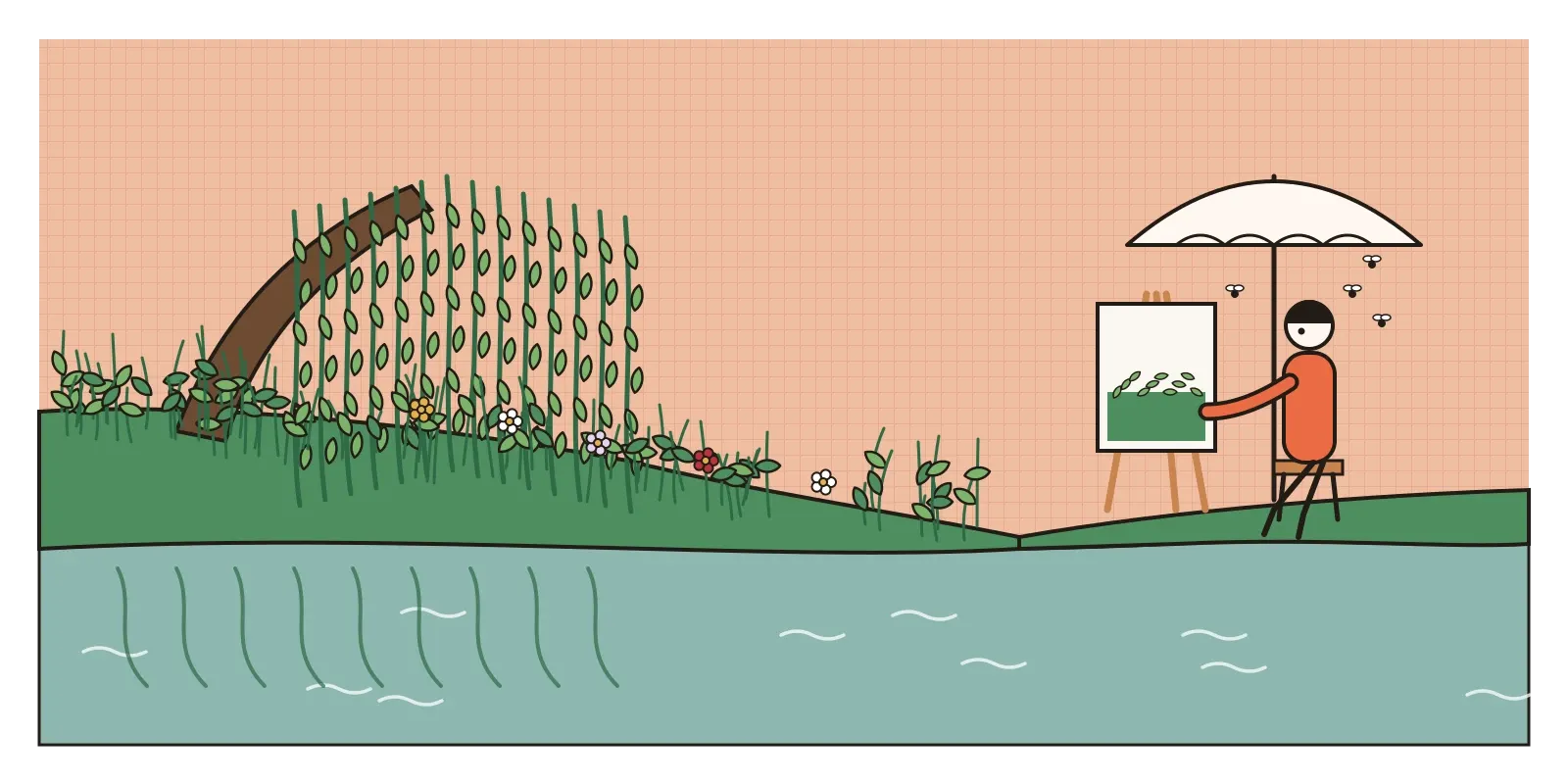
The riverbank was the background for Ophelia, the drowning heroine from Hamlet, now one of the most visited paintings in Tate Britain. The figure came later, that winter, in his London studio. His model, Elizabeth Siddal, lay fully dressed in a bath of water, kept warm by lamps placed underneath. According to a story told decades later in a biography by Millais's son, the lamps went out one day without the absorbed painter noticing, Siddal caught a severe cold and her father threatened to sue until Millais paid the doctor's bill. The details may have grown in the telling, but the obsession behind them is real.

Millais was one of the founders of the Pre-Raphaelite Brotherhood, a small, secret society of young artists formed in London in 1848. They wanted to paint with the sincerity, clear colour and close observation they saw in art made before Raphael, and they filled their pictures with detail observed directly from nature, usually in the service of religious, literary or medieval subjects. In the last post, on Realism, I wrote about painters in France who wanted truth in what they chose to look at. The Pre-Raphaelites, in the same years, wanted truth in how closely they looked.
Seven young men against Sir Sloshua
The Brotherhood was formed in September 1848, at the Millais family's house on Gower Street in London, by three students of the Royal Academy schools: Millais, William Holman Hunt and Dante Gabriel Rossetti. They soon added four more, Rossetti's brother William Michael, the sculptor Thomas Woolner, and the painters James Collinson and Frederic George Stephens. Looking through a book of engravings of early Italian frescoes from the Campo Santo in Pisa, they decided that painting had taken a wrong turn with Raphael, or rather with the generations of teachers who had turned his style into rules.
Those rules came from the Royal Academy, and especially from its first president, Sir Joshua Reynolds, whose lectures taught students to generalise and idealise nature rather than copy its particulars. Academy painting in the 1840s tended towards brownish, varnished colour, dramatic light and dark, and tidy compositions with the main figures arranged in a pyramid. The young men mocked Reynolds as "Sir Sloshua", for what they saw as sloppy, slapdash painting. They were also replying to the critic John Ruskin, whose book Modern Painters, published from 1843, urged young artists to go to nature, "rejecting nothing, selecting nothing". And in an age of factories, they shared the growing longing for the medieval world that the Gothic revival had stirred up, as I mentioned in the post on Gothic.
At first they signed their paintings with the initials PRB and kept the meaning a secret. When it leaked in 1850, the critics turned on them.
A carpenter's shop and a scandal
The worst storm broke over Millais's Christ in the House of His Parents, shown at the Royal Academy in 1850. It shows the Holy Family as what they were in the Gospels, a working carpenter's household. Wood shavings cover the floor, tools hang on the wall, and the boy Jesus has cut his hand on a nail, a drop of blood falling on his foot, a sign of the crucifixion to come. Joseph's arms are sinewy, his fingernails dirty, and Mary kneels with an ordinary, worried face. Charles Dickens attacked it furiously in his magazine Household Words, describing the holy figures as ugly and the whole thing as mean and repulsive. To Victorian eyes, painting sacred people with real bodies in a real workshop was close to blasphemy.
Rossetti's Ecce Ancilla Domini!, the Annunciation, painted in the same years, is almost entirely white: a white room, a white bed, Mary in a white gown pressed nervously against the wall as a wingless angel holds out a lily. Holman Hunt's The Light of the World, painted between 1851 and 1853, shows Christ at night knocking at a door overgrown with weeds, a lantern in his hand. Hunt painted much of it by moonlight, in a makeshift shelter, to get the light right. It became one of the most reproduced religious images of the century, and a later version toured the world in the early 1900s.
Ruskin turned the tide. In May 1851, he wrote two letters to The Times defending the group's honesty and detail, and the hostility began to ease. The Brotherhood had also launched a small magazine, The Germ, in 1850. It lasted only four issues, but it printed some of Christina Rossetti's early poems, and it's an ancestor of every small, opinionated publication a group of young makers has started since. Elizabeth Siddal, meanwhile, wasn't only a model. She drew, painted and wrote poetry, and from 1855 Ruskin paid her a yearly allowance in exchange for her work.
Every leaf in focus
Pre-Raphaelite paintings are unmistakable once you've seen a few. The first thing you notice is that everything is in focus. In most paintings, the eye is guided by softening the edges and details of less important areas, as in real vision. Pre-Raphaelites refused. A flower at the edge of Ophelia is painted as sharply as her face, and botanists have identified many of the plants on its bank. The result is beautiful and slightly strange, like looking through a perfect lens that has no centre.
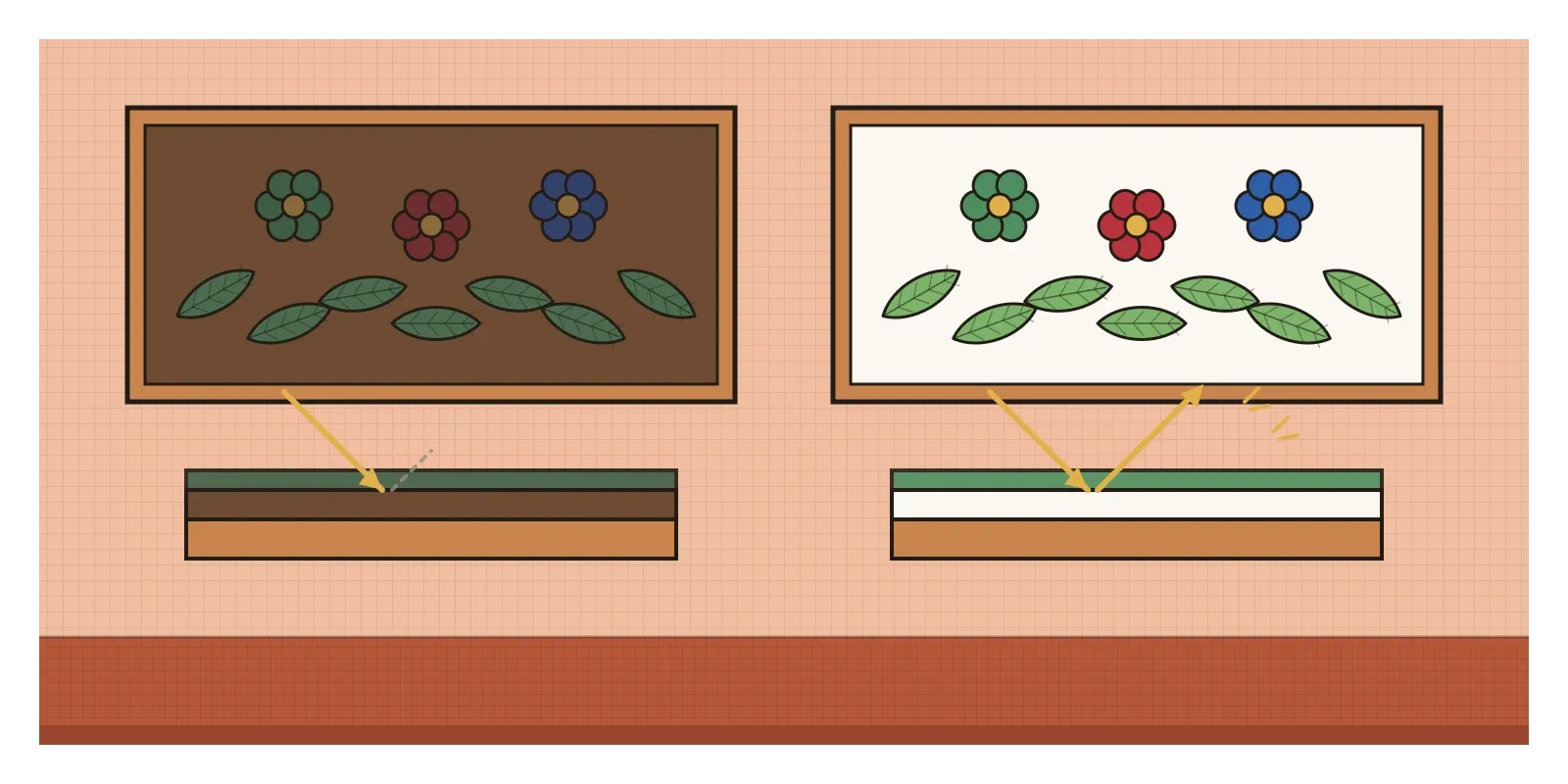
The second is the colour. Instead of building up a painting over a dark, brownish base, they often painted thin layers of colour onto a fresh coat of white, sometimes while it was still wet. Light passing through the colour bounced off the white beneath, so greens, blues and reds glowed like stained glass. Compositions are crowded and shallow rather than deep, and figures are often angular and awkward, posed by friends and family rather than idealised models. Details carry symbolic meanings, such as flowers that stand for death, innocence or faithfulness. And the subjects come from the Bible, Shakespeare, Keats, Dante and Tennyson, or from medieval legend, though a few, such as Ford Madox Brown's The Last of England, about emigrants leaving Britain, were modern.
A Calcutta childhood and a window for a viceroy
The strongest Indian thread in this story runs through photography. Julia Margaret Cameron was born in Calcutta in 1815, into a family of East India Company officials, and lived in India until the late 1840s. In 1863, at the age of forty-eight and by then living on the Isle of Wight, she was given a camera by her daughter. Within a few years she had become one of the most original photographers of the century. Her soft-focus portraits and staged scenes from legend and poetry, including a series of illustrations for Tennyson's Idylls of the King, share the Pre-Raphaelites' subjects and mood, even if her blurred, close-up style was almost the opposite of their crisp detail. She knew several painters in their circle, and later moved to Ceylon, now Sri Lanka, where she died in 1879.
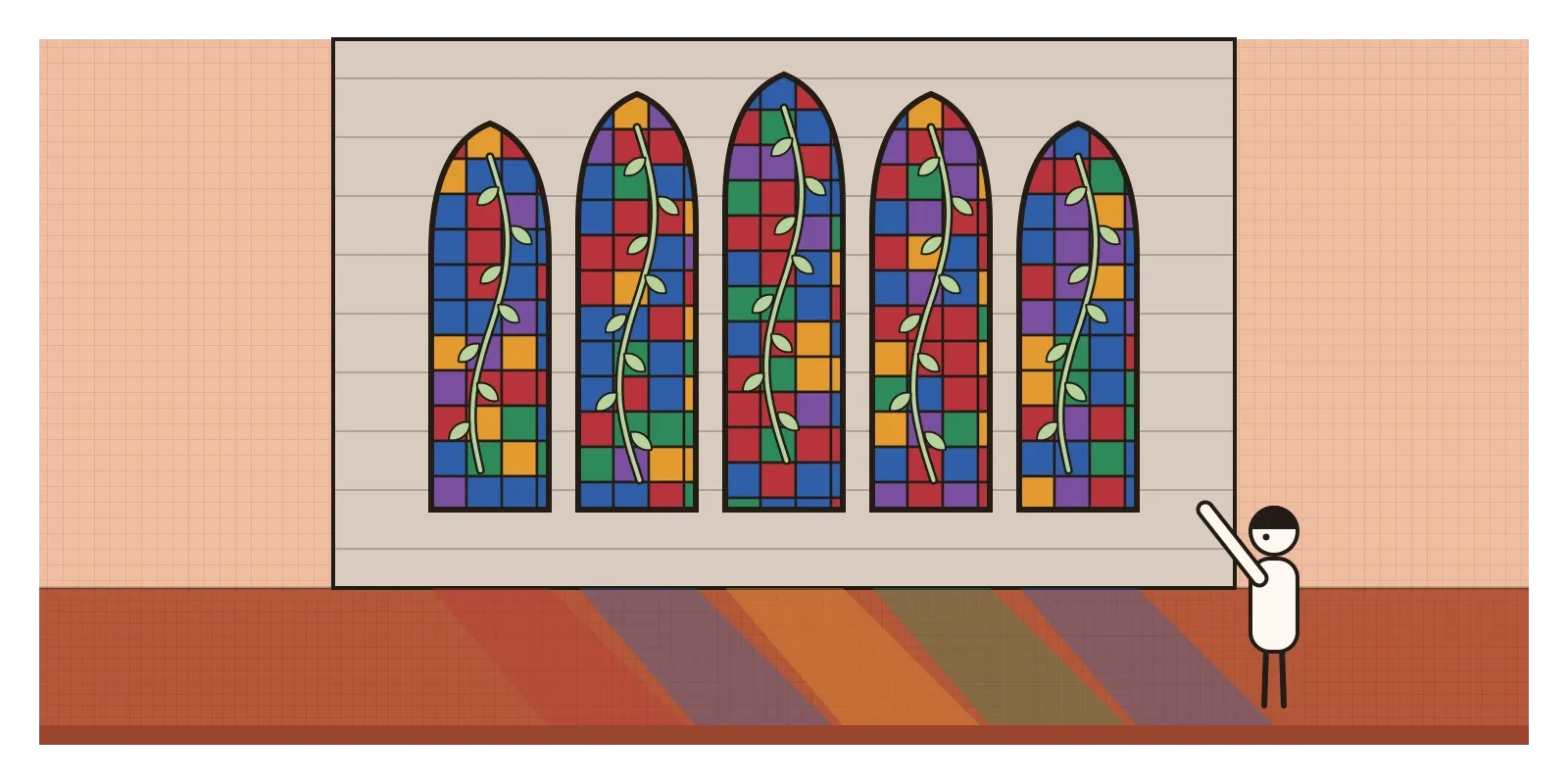
There's also a piece of Pre-Raphaelite art you can stand in front of in India. After the Viceroy, Lord Mayo, was assassinated at Port Blair in 1872, the Bishop of Calcutta commissioned Morris & Co. to make a great west window for St Paul's Cathedral in Calcutta as his memorial. It was designed by Edward Burne-Jones, a younger artist drawn into the Pre-Raphaelite circle, and was installed in the mid-1870s. Its tall figures in deep reds, blues and greens are still there.
A looser parallel is worth mentioning too. Half a century later, painters of the Bengal School, the subject of a later post, rejected the European academic style that Indian art schools had taught and looked back to Ajanta, Mughal and Rajput painting. It wasn't influenced by the Pre-Raphaelites, and its politics were anti-colonial in a way theirs never were. But the move was similar: deciding that a tradition had gone wrong at some point, and going back to the moment before.
Detail without a centre
Designers still take two things from the Pre-Raphaelites, one useful and one a warning. The useful one is Ruskin's advice to go and look. Millais on his riverbank was doing what good design research does: going to the real place, studying the real thing for a long time and refusing to rely on stock ideas of what a willow or a carpenter's shop looks like. The same habit leads designers to watch how people actually hold a phone on a crowded bus, or how a shopkeeper really keeps accounts.
The warning is about hierarchy. A Pre-Raphaelite painting gives every leaf the same attention, which is part of its fascination and also why it can feel exhausting. As I wrote in the post on emphasis and focal point, people need to know where to look first. An interface where every element is equally detailed, equally sharp and equally loud is a Pre-Raphaelite painting, and users will spend their time searching rather than doing. Their look, meanwhile, never went away. Long flowing hair, flower crowns, rich jewel colours and medieval dresses run through fantasy book covers, music videos and fashion. Lars von Trier's film Melancholia (2011) restages Ophelia floating among flowers, and AI image tools turn out endless "ethereal" portraits that owe almost everything to Millais and Rossetti.
Muses, money and a repainted massacre
The movement's limits are easy to see now. It was a brotherhood, and the women around it were mostly treated as muses and models. Siddal, an artist in her own right, became Rossetti's wife and died of a laudanum overdose in 1862. He buried a notebook of his poems with her and, in 1869, had her grave opened to retrieve them. Ruskin's wife, Effie Gray, left him, had their marriage annulled and married Millais in 1855. The painters' honesty had blind spots too. Hunt travelled to the Middle East to paint Bible scenes with what he believed was authentic detail, using living people and places as costumes for an imagined past.
The empire appears as well. In 1858, the Scottish painter Joseph Noel Paton, a friend of Millais who painted in a similar style, showed In Memoriam at the Royal Academy, a picture of British women and children in India during the uprising of 1857, with Indian soldiers bursting in behind them. After protests that it was too distressing, he repainted the attackers as Scottish soldiers arriving to rescue them. Either way, Indians appeared only as a threat, and the picture became part of a story about the uprising told entirely from the British side.
The Brotherhood itself didn't last. By 1853 Millais had been elected an associate of the Royal Academy, the institution they'd rebelled against, and he ended his life as its president and one of the richest painters in Britain. But Rossetti's young admirers at Oxford, William Morris and Edward Burne-Jones, took the Pre-Raphaelite love of medieval colour and making into furniture, textiles and books, and in the next post, on the Arts and Crafts movement, that becomes the reply to the factory and the Great Exhibition.
To see it for yourself, visit St Paul's Cathedral in Kolkata and stand under the west window in the afternoon, when the light comes through it. Or find Ophelia in Tate Britain's online collection and zoom in on the bank. Then try Millais's exercise on a small scale. Mark out a square of ground about thirty centimetres across, a patch of grass, a pot plant, a crack in a pavement, and draw everything in it for an hour without leaving anything out. You'll learn a lot about looking, and even more about how hard it is to decide what matters.
Millais got his riverbank exactly right, down to the weeds under the water. It's still worth asking what he had to give up to do it.
Further reading: Tim Barringer, Reading the Pre-Raphaelites (1998) · Jan Marsh, The Pre-Raphaelite Sisterhood (1985) · John Ruskin, Pre-Raphaelitism (1851) · Colin Ford, Julia Margaret Cameron: A Critical Biography (2003)
A reply toThe Royal Academy's rules, brown varnish and idealised poses, handed down from Raphael by way of Reynolds.