
The Harlem Renaissance
How Black American writers, artists and designers in 1920s Harlem set out to redraw their own image.
The Harlem Renaissance
A dinner downtown that started something uptown
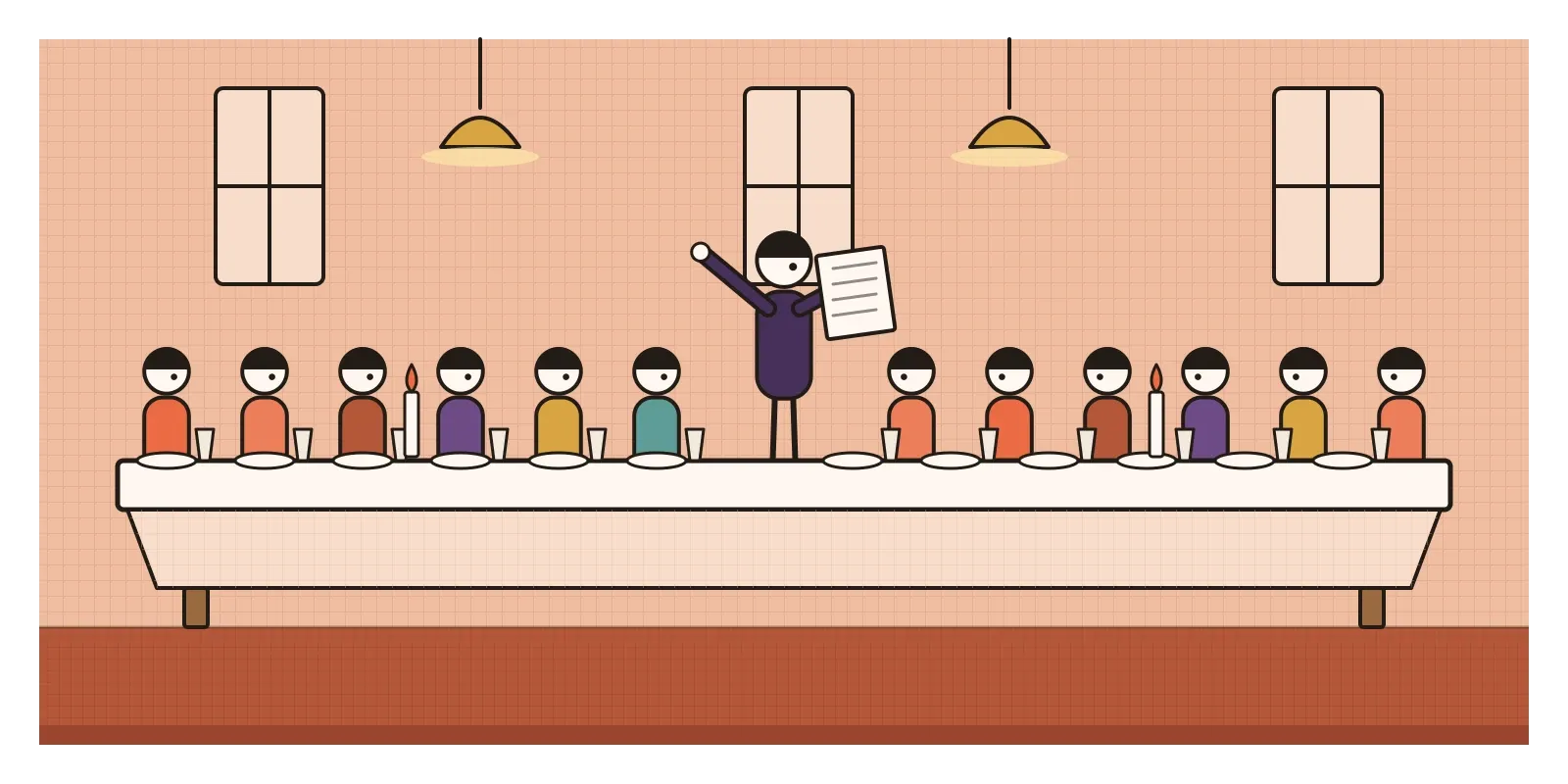
On the evening of 21 March 1924, more than a hundred people sat down to dinner at the Civic Club in lower Manhattan, one of the few smart clubs in New York that admitted Black and white members alike. The host was Charles S. Johnson, the editor of Opportunity, the magazine of the National Urban League. Officially, the evening celebrated There Is Confusion, the first novel by Jessie Fauset, the literary editor of the NAACP's magazine The Crisis. In practice it was a planned introduction: Johnson had invited white editors and publishers to meet a generation of young Black writers, with the Howard University philosopher Alain Locke as master of ceremonies and poems read by Countee Cullen and Gwendolyn Bennett.
One guest, Paul Kellogg, editor of a magazine called Survey Graphic, was impressed enough to offer a whole issue on Harlem. Edited by Locke, it appeared in March 1925 under the title "Harlem: Mecca of the New Negro" and sold far beyond the magazine's usual numbers, going into a second printing. By the end of the year Locke had expanded it into a book, The New Negro, with pastel portraits by the German-born artist Winold Reiss and bold black-and-white decorations by a young painter from Kansas called Aaron Douglas.
The Harlem Renaissance is the name now given to the flowering of Black American writing, music, theatre, painting, sculpture, photography and graphic design centred on Harlem, in northern Manhattan, from around the end of the First World War to the mid-1930s. People at the time mostly called it the New Negro movement, and the "renaissance" label settled in later. Historians still argue about its edges. Some start it in 1919, some at that dinner in 1924. Some end it with the stock market crash of 1929, others with the Harlem riot of 1935, and many point out that Chicago, Washington and Paris had their own versions. For a design blog, what matters is that it was, among other things, a deliberate campaign to change how Black people were pictured, by the people being pictured.
A migration, a neighbourhood and a mask to take off
Harlem filled up because of a migration. From around 1916, hundreds of thousands of Black Americans left the rural South, escaping segregation laws, lynching and poor wages, for factory jobs in northern cities that the First World War had opened up. Harlem had been built for white tenants along the new subway lines, and when its housing boom went bust in the early 1900s, a Black estate agent, Philip A. Payton Jr., began letting the empty buildings to Black families. Within twenty years it was the best-known Black neighbourhood in the country. In February 1919, the 369th Infantry, a Black regiment that had fought under French command in the war, marched up Fifth Avenue and into Harlem to enormous crowds.
What it replied to was a picture. For decades, white America's most common images of Black people came from the minstrel show, where performers in burnt-cork blackface played lazy, foolish characters, and from advertising, where smiling servant figures sold pancake mix, rice and breakfast cereal. D. W. Griffith's film The Birth of a Nation (1915) had turned the Ku Klux Klan into heroes. In his opening essay for The New Negro, Locke argued that the old figure was more a formula than a human being, a stock type that had to be retired. The movement's answer was to make its own pictures: magazines edited by Black editors, book jackets drawn by Black artists, portraits of named, dignified individuals, and a visual language that looked modern, African and American all at once.
Silhouettes, a sculptor's studio and a magazine that burned
Aaron Douglas, born in Topeka in 1899, arrived in Harlem in 1925 and became the movement's chief image-maker. Reiss encouraged him to study African sculpture, and Douglas fused it with what he knew of Egyptian reliefs, Cubism and the new geometric style of the decade. He drew covers for The Crisis and Opportunity, illustrations for James Weldon Johnson's book of verse sermons, God's Trombones (1927), and later a set of four murals, Aspects of Negro Life (1934), for the 135th Street branch of the New York Public Library, paid for by one of the first government art programmes of the Depression. They move from Africa through slavery and emancipation to the factories and jazz clubs of the northern city, told in silhouettes and rings of light.
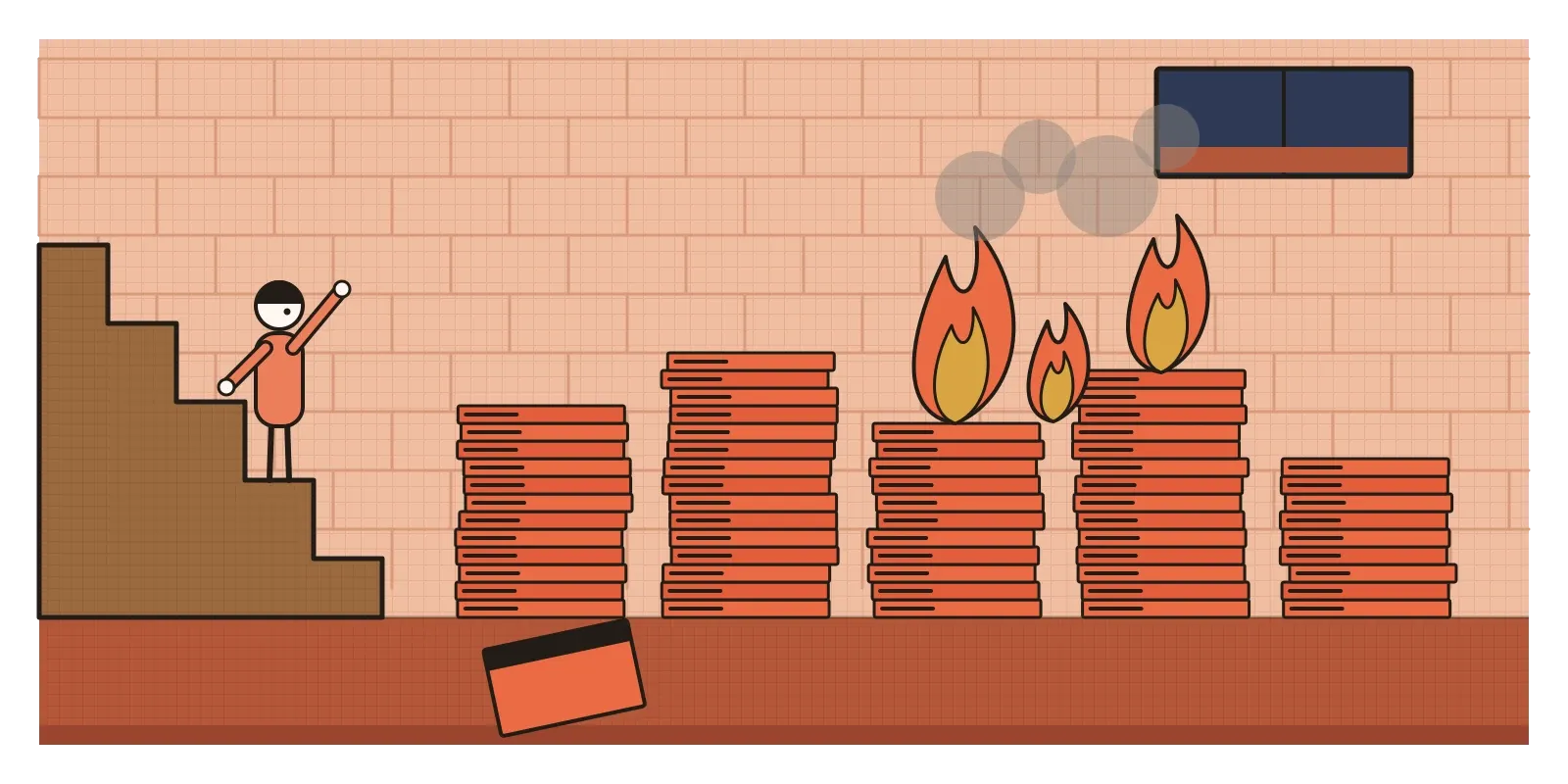
In 1926, a group of the younger writers, led by Wallace Thurman with Langston Hughes, Zora Neale Hurston, Gwendolyn Bennett and the artist and writer Richard Bruce Nugent, launched a magazine of their own, Fire!!, with a striking cover and drawings by Douglas. It was meant to be a quarterly. It printed stories about sex work and desire between men that horrified older readers, and it never managed a second issue. According to the usual account, many of the unsold copies were later destroyed in a fire in the basement where they were stored, and Thurman spent years paying off the printer.
The sculptor Augusta Savage, born in Florida in 1892, became famous in 1923 when a summer art school for Americans at Fontainebleau in France turned her down because of her race and she made the rejection public. Her bust of a Harlem boy in a cap, known as Gamin (around 1929), helped win her a fellowship to study in Paris. Back in Harlem she ran a studio school and became the first director of the Harlem Community Art Center in 1937, where a generation of younger artists trained. Her large sculpture for the 1939 New York World's Fair, inspired by James Weldon Johnson's song "Lift Every Voice and Sing", existed only in painted plaster, and it was destroyed after the fair because there was no money to cast it.
The photographer James Van Der Zee posed his Lenox Avenue sitters in their best clothes against painted backdrops, so that his portraits still look like a neighbourhood presenting itself at its finest. And the designer Lois Mailou Jones, who later taught at Howard for decades, began in the late 1920s by drawing patterns for textile firms in Boston and New York. Her designs were printed and sold, but without her name. As she later told it, that anonymity was one reason she turned to painting.
Reading a Douglas page
The easiest way to recognise the visual side of the Harlem Renaissance is to look at a page by Douglas. Figures are flat silhouettes, usually in profile, with the head turned sideways and the shoulders square to you, a pose borrowed from Egyptian relief carving. Faces have few details, often just a narrow, almond-shaped eye. That choice mattered. Minstrel caricature had worked by exaggerating features, and a silhouette refused to play that game. It gave the figure dignity through shape and gesture rather than through a face drawn to be laughed at.
Colour usually stays within one family, violet, ochre or green, in a few flat steps from dark to light. Across the figures run transparent concentric rings, like ripples, beams of light or sound waves, and wherever a ring crosses a figure the tone shifts by one step. Rays, stars and stepped geometric shapes fill the background, close cousins of the Art Deco ornament of the same years. In black-and-white print the drawings rely on woodcut-like contrast, which suited cheap magazine paper. Reiss's detailed pastel portraits of named people worked the other way, and the movement used both: the stylised figure for ideas and history, the realistic portrait for real individuals.

The mix was deliberate. In an essay in The New Negro, "The Legacy of the Ancestral Arts", Locke urged Black artists to claim African sculpture, which Picasso's circle had already borrowed in Paris, as an inheritance rather than a curiosity. Douglas's work is what that looked like when it met jazz, magazines and the city.
Letters between Harlem and India
The Indian connection runs through politics and letters more than pictures, but it is real. The nationalist leader Lala Lajpat Rai spent the years of the First World War in exile in the United States, where he met Black American leaders, including W. E. B. Du Bois, the editor of The Crisis. In his book The United States of America: A Hindu's Impression and a Study (1916), he compared American racial segregation with caste in India. Du Bois, in turn, wrote a novel, Dark Princess (1928), whose hero, a young Black American, joins an Indian princess in an alliance of the world's coloured peoples against empire. In 1929 Du Bois asked Gandhi for a message to Black Americans, and The Crisis printed his short reply that July. Gandhi told them there was no dishonour in being the descendants of slaves, only in owning them.

The conversation went on long after the 1920s. In 1972, young Dalit writers in Bombay named their movement the Dalit Panthers after the Black Panther Party, and Dalit literature has drawn on Black American writing ever since. The visual parallel is looser, and I don't want to force it. In the same decades, the Bengal School painters I wrote about in an earlier post were turning to Ajanta and Mughal painting to find an Indian language that owed nothing to the colonial art school, much as Locke urged Black artists to claim African sculpture. Both were searching for a usable past to answer a picture someone else had drawn of them. The difference is telling: Indian artists could visit their own monuments, while Locke's Africa was mostly known through Western collections, such as Albert Barnes's near Philadelphia.
Who gets to draw whom
The most lasting thing designers can take from the Harlem Renaissance is that representation is a design decision. Every illustration, stock photo, mascot and avatar shows someone in a particular way, and someone chose that way. The servant figures the movement argued against lasted astonishingly long. It was only in 2020 that the owners of Aunt Jemima, Uncle Ben's and Cream of Wheat announced they would change or remove the Black figures on their packaging, and Aunt Jemima became the Pearl Milling Company in 2021. That's nearly a century after Locke's essay.
The visual language survives too. The flat, tonal silhouette Douglas developed, a figure built from a few steps of one colour, is everywhere in today's editorial and interface illustration, though few people who use it know where it came from. And the question the movement asked has come back with AI image tools. Several analyses of image generators in 2023 found them reproducing old racial and gender stereotypes when asked for doctors, criminals or cleaners. Anyone designing with these tools now has the job Douglas had: look at who the picture shows, and how, and decide whether that's the picture you mean.
Patrons, primitivism and a renaissance with limits
Much of the Harlem Renaissance depended on white money, and the money came with expectations. The wealthy patron Charlotte Osgood Mason, who asked her protégés to call her Godmother, paid allowances to Hughes, Hurston and others while pressing them to produce "primitive" work that matched her romantic idea of African spirit. At the Cotton Club, Black musicians, including Duke Ellington's orchestra from 1927, played to audiences that were white only.
The movement argued openly about all this. In 1926, Du Bois declared in "Criteria of Negro Art" that all art is propaganda and should serve the struggle. Hughes, in "The Negro Artist and the Racial Mountain", insisted that Black artists should be free to show everything, beautiful or ugly, without worrying about white or Black approval. Women were often pushed to the side. The 1924 dinner was nominally Fauset's, and Locke made it about the young men. Hurston died poor in Florida in 1960 and was rescued from obscurity only after Alice Walker went looking for her unmarked grave in the 1970s. Several central figures, including Locke and Nugent, were gay, which histories long left out.
The Depression ended the boom. Patrons and publishers lost interest, and in March 1935 Harlem erupted in a riot over poverty and policing. Yet the work moved into the government art projects of the 1930s, where Savage's art centre trained painters such as Jacob Lawrence, whose Migration Series (1940 to 1941) told the story of the journey north in sixty panels. A generation later, the Black Arts Movement of the mid-1960s replied to the Renaissance itself, rejecting its reliance on white patrons and its wish to impress them.
To see it for yourself, the Schomburg Center for Research in Black Culture in Harlem, the descendant of that 135th Street library, still has Douglas's murals and holds a vast archive, much of it online. Then try drawing someone you know as a silhouette in three tones of one colour, with a few transparent rings passing across them, and notice how much character survives without a detailed feature. And think of that dinner in 1924, where a roomful of writers set out, quite deliberately, to replace a caricature with a self-portrait. In the next post, on Organic Design, the conversation turns from who is pictured to how things are shaped, as furniture designers took their curves from bodies, bones and leaves.
Further reading: Alain Locke (ed.), The New Negro (1925) · David Levering Lewis, When Harlem Was in Vogue (1981) · Amy Helene Kirschke, Aaron Douglas: Art, Race, and the Harlem Renaissance (1995) · Richard J. Powell, Black Art: A Cultural History (2002) · Nathan Irvin Huggins, Harlem Renaissance (1971)
A reply toThe blackface minstrel show and the grinning servant caricatures of American advertising.