Fauvism
How a few painters in Paris set colour free from nature, and were called wild beasts for it.
Fauvism
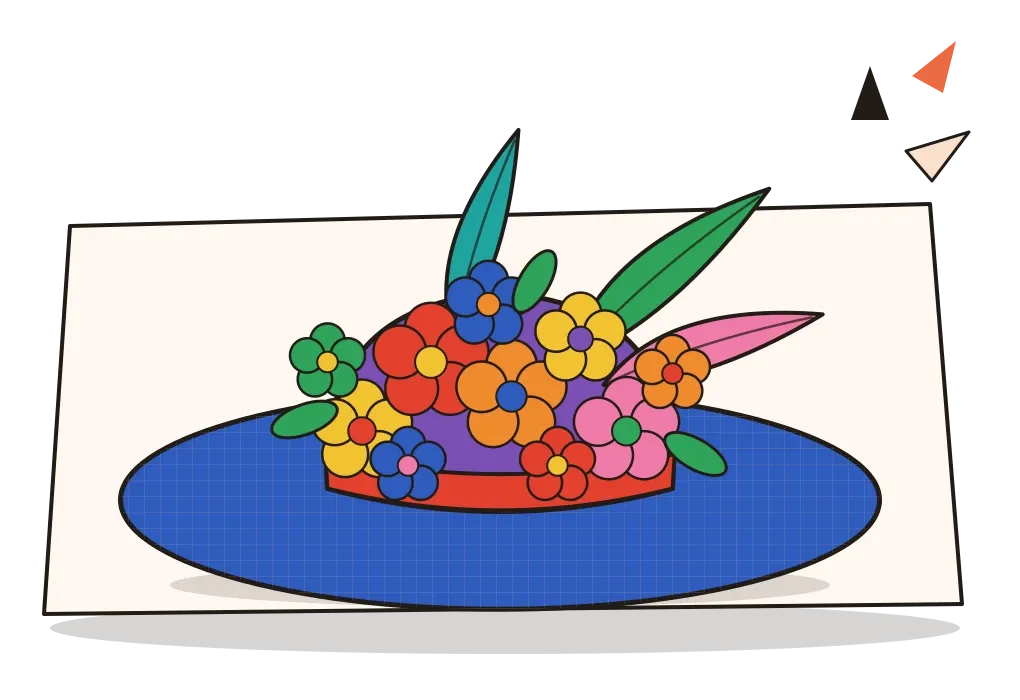
A hat in Room Seven
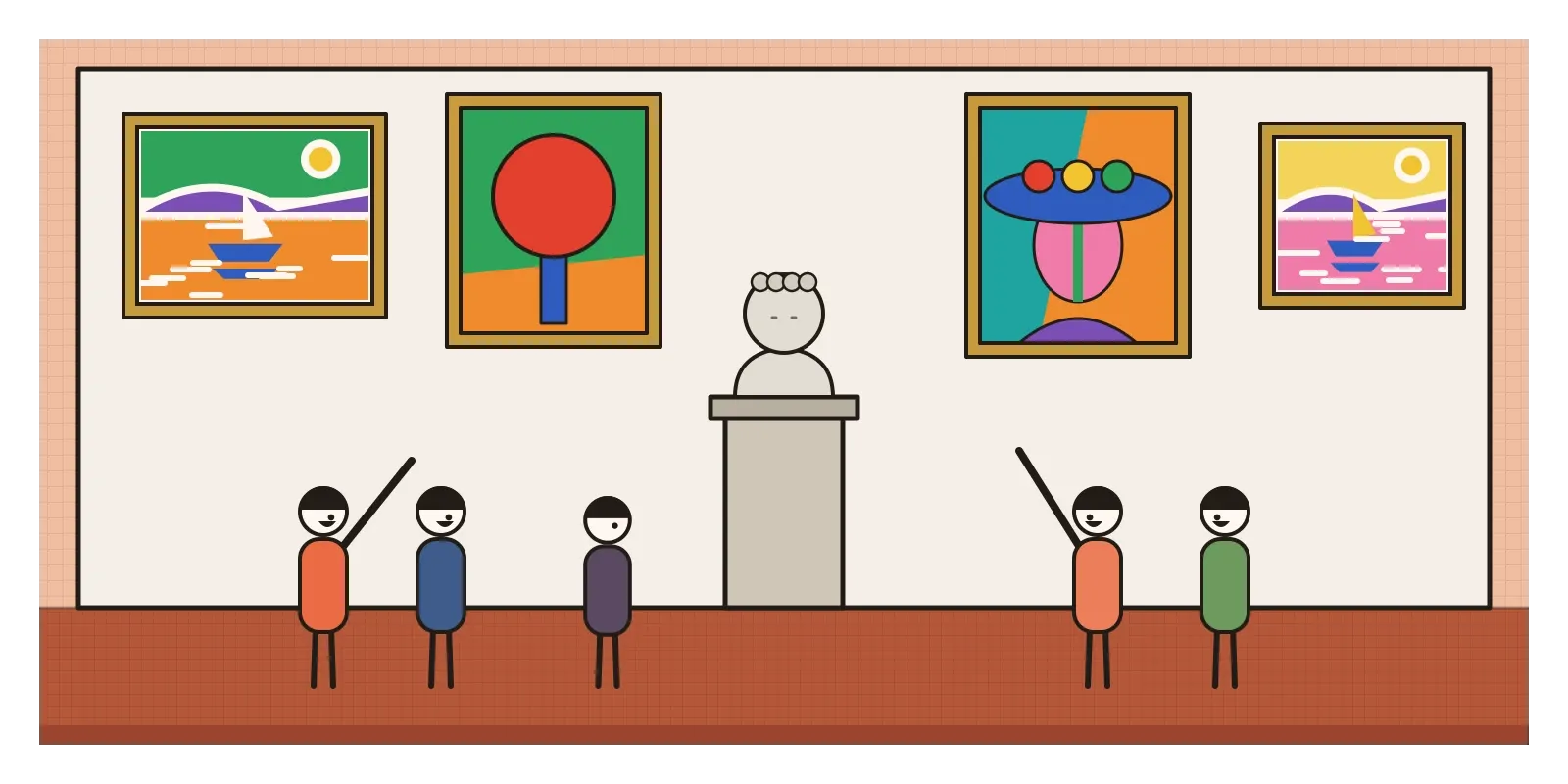
In October 1905, visitors to the Salon d'Automne, the new autumn exhibition held in the Grand Palais in Paris, kept drifting towards one room, Room VII, and laughing. On its walls hung paintings by Henri Matisse, André Derain, Maurice de Vlaminck, Albert Marquet and a few friends, and the colour in them looked like an accident in a paint shop. Harbours were orange and violet. Trees were scarlet. Shadows were bright blue.
The picture people crowded around was Matisse's portrait of his wife, Amélie, in an enormous hat. Her face is built from patches of green, mauve and pink, the hat is a heap of red, blue and yellow brushstrokes, and the background is a scrubbed mess of unrelated colours. Visitors jeered at it. The American writer Leo Stein, who lived in Paris, later recalled finding it the nastiest smear of paint he had ever seen, and then bought it with his sister Gertrude.
In the middle of the room stood a small, gentle bust of a child in the manner of the Italian Renaissance, by the sculptor Albert Marque. The critic Louis Vauxcelles, writing in the newspaper Gil Blas, called it Donatello among the wild beasts, les fauves. Some accounts say he said it aloud in the room first. Either way, the joke stuck.
Fauvism was less a movement than a short, hot burst, from around 1905 to 1908, when a group of painters in France used pure, unmixed colour to express what they felt in front of a scene rather than to describe it. It had no manifesto, no membership list and no journal. Historians still argue about who counts, and the painters mostly disliked the label. But for three summers they made colour louder than it had ever been in European painting.
Dots, a fishing port and a light without shadows
Paris around 1905 was full of young painters who had grown up on Impressionism and found it too polite. As I wrote in the post on Post-Impressionism, Van Gogh, Gauguin and Cézanne had shown that colour could carry feeling and structure, not just light, and their work was finally being seen: a Van Gogh exhibition at the Bernheim-Jeune gallery in 1901, Gauguin's paintings at Vollard's gallery, and the new Salon d'Automne, founded in 1903 as a livelier alternative to the official Salon.
Matisse had come to painting late. He trained as a lawyer's clerk in northern France and started painting at about twenty, when his mother gave him a box of paints while he recovered from an illness. In Paris he studied with Gustave Moreau, whom I wrote about in the post on Symbolism. By 1905 he was in his mid-thirties, poor and still searching.
In the summer of 1904 he stayed in Saint-Tropez near Paul Signac, the leader of the Neo-Impressionists, who built pictures from small, separate dabs of pure colour. Matisse tried the method and painted Luxe, calme et volupté, a beach picnic made of glowing mosaic-like dots, named after a line by Baudelaire. Signac bought it.
The next summer Matisse went to Collioure, a fishing port on the Mediterranean close to the Spanish border, and Derain, about ten years younger, joined him. Under the harsh southern light, both men found the patient dots too slow and fussy. They began laying colour down in broad, flat strokes, leaving bare canvas between them. Derain wrote to Vlaminck that the light there seemed to cancel out shadows altogether. Nearby, Gauguin's friend Daniel de Monfreid kept a collection of his late paintings, and the two went to see them. When they came back to Paris that autumn, they brought Room VII with them.
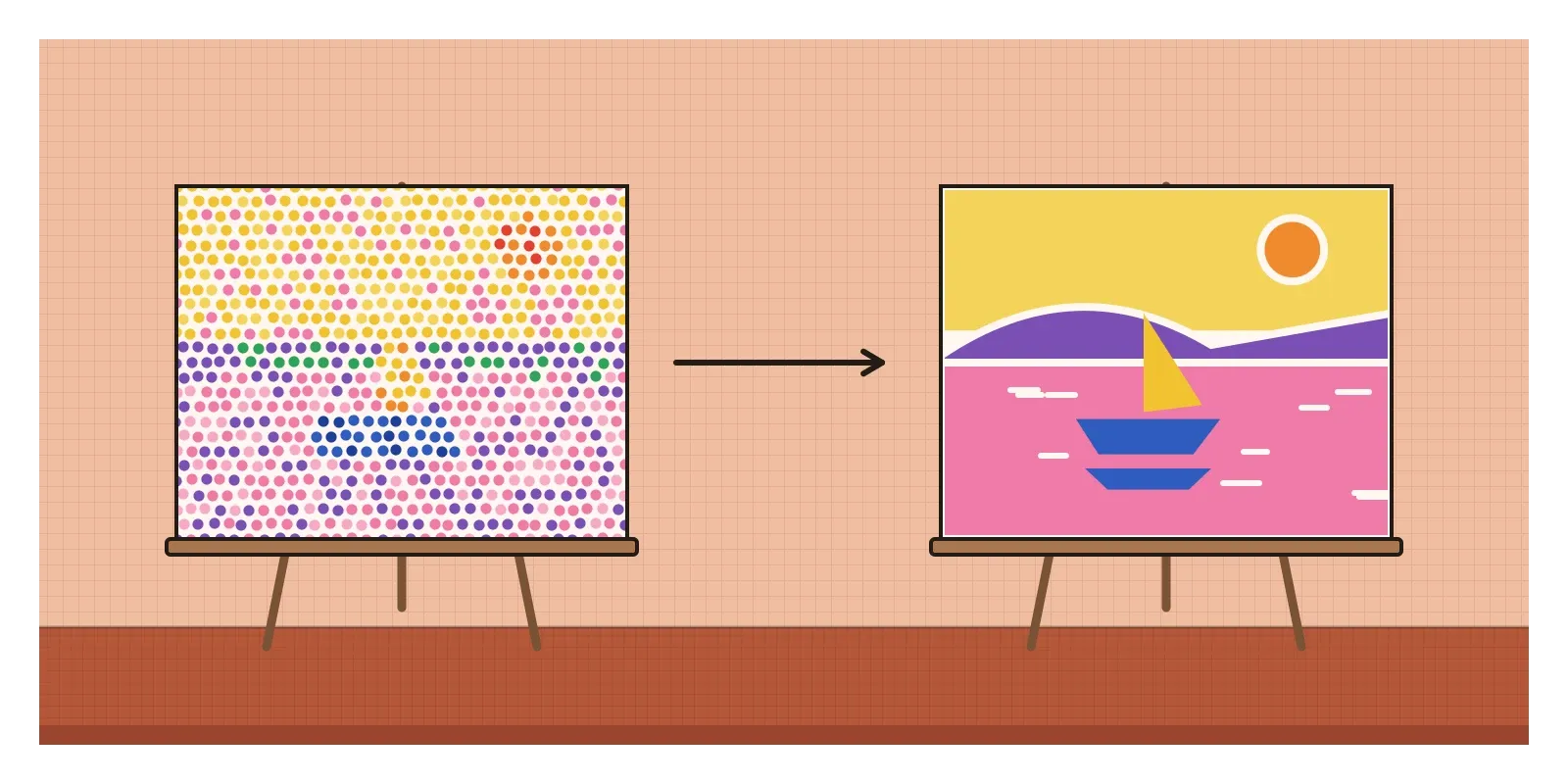
So Fauvism replied to two things. It answered academic painting, with its careful modelling in browns and greys, by throwing out shading almost entirely. And it answered Impressionism and Neo-Impressionism, its own parents, by refusing to be faithful to the eye. The Impressionists painted the colour they saw. The Fauves painted the colour they wanted.
The professor and the Chatou pair
Matisse was the group's centre, though with his glasses, neat beard and serious manner he looked more like a professor than a wild beast. His Open Window, Collioure of 1905 shows boats on pink and blue water framed by a window, with walls of green and violet on either side, like stained glass lit from behind. In 1906 he showed Le Bonheur de vivre, The Joy of Life, a large pastoral scene of nudes dancing and resting under curving trees, in flat zones of yellow, pink, orange and green. Signac, who had bought the dotted picture, was reportedly appalled.
Derain and Vlaminck came from Chatou, a riverside town west of Paris, where they shared a studio in an old restaurant. The story goes that they met in 1900 when their suburban train derailed, which sounds a little too good but is usually told as fact. Vlaminck was largely self-taught, a former racing cyclist who played the violin in dance bands and liked to boast that he had never been inside the Louvre. Derain introduced him to Matisse at the 1901 Van Gogh exhibition. His river scenes are the wildest Fauve paintings of all, with reds and blues squeezed on thickly, sometimes straight from the tube.
Derain was the most curious of the three. In 1906 the dealer Ambroise Vollard sent him to London, hoping to repeat the success of Monet's London views. Derain painted the Thames in yellow and green, the Houses of Parliament against an orange sky and Charing Cross Bridge in hot blue, a grey northern city that refused to be grey.
Others passed through. Albert Marquet painted calmer harbours. Kees van Dongen made portraits of Parisian women with green shadows and acid-red lips. Raoul Dufy saw Luxe, calme et volupté in 1905 and later said it changed his idea of painting. Georges Braque had a short Fauve period before he met Picasso and turned towards Cubism.
Colour that no longer has to tell the truth
The first sign of a Fauve painting is colour at full strength: reds, oranges, cobalt and ultramarine blues, emerald greens, often with very little mixing. Colours are set against their complementaries, red against green, orange against blue, violet against yellow, so that the edges seem to vibrate. As I wrote in the post on Itten's colour contrasts, that is one of the strongest relationships colour has.
The second sign is that colour no longer belongs to the object. A face can be green on one side and pink on the other. In another portrait of Amélie from the same year, a stripe of green runs straight down the middle of her face, dividing a warm side from a cool one. Colour is building the structure and mood of the picture rather than recording what a face looks like.
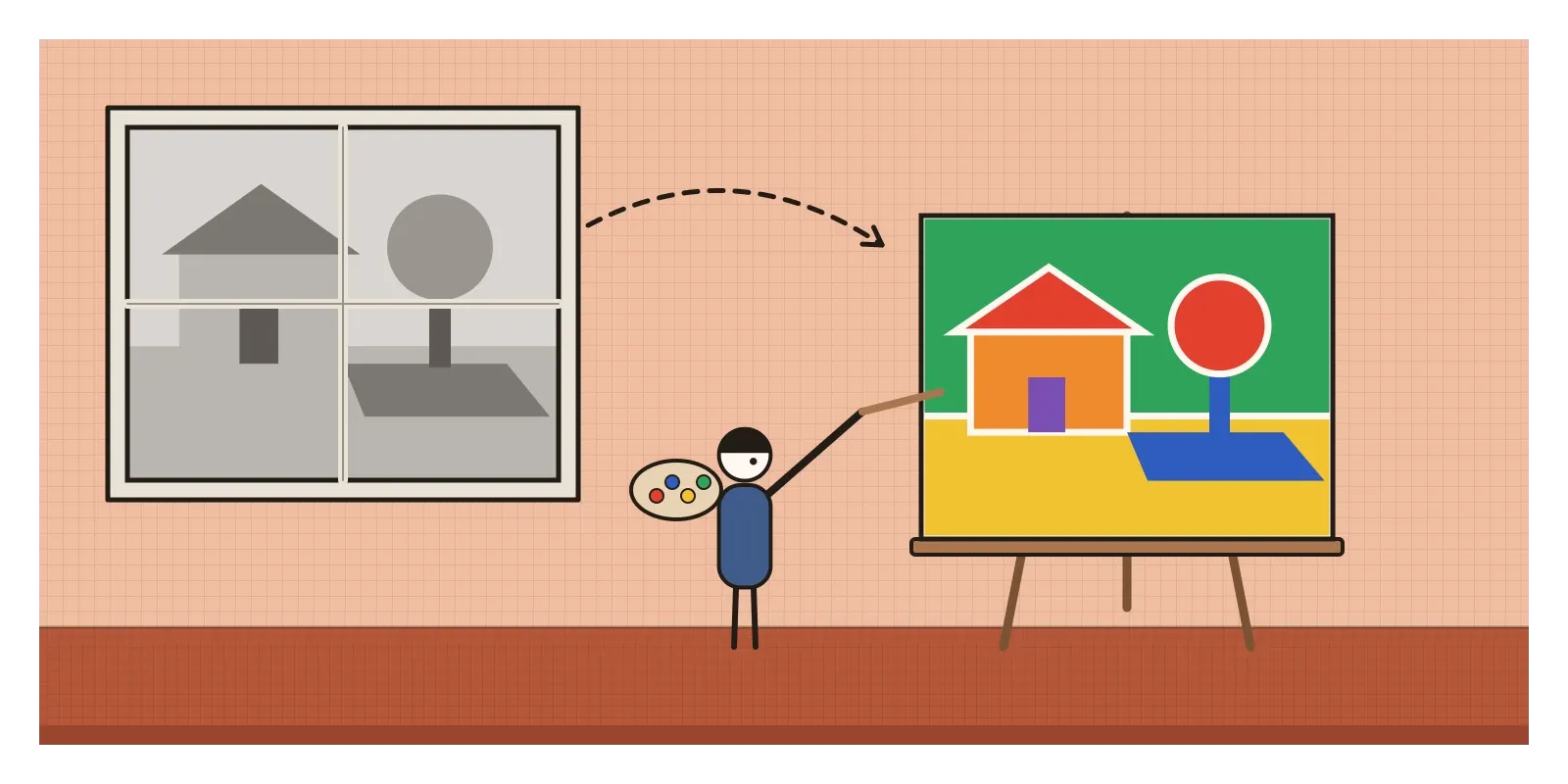
Third, there's almost no modelling. Shadows aren't made by adding black or brown. They're a different hue, usually blue or violet. Forms flatten into patches, outlines are loose and often coloured, and bits of bare canvas show through, keeping the colours apart and letting the picture breathe. The brushwork is quick and visible.
The subjects are ordinary and cheerful: harbours, boats, bridges, a woman in a hat, friends in a room. There's no history and no moral lesson. In 1908 Matisse published "Notes of a Painter", where he said he wanted an art of balance, purity and serenity, something like a good armchair for anyone tired out by mental work. The wildness was in the colour, not the mood.
Hot grounds in the hills
Fauvism never had an Indian branch, and I won't pretend it did. But there are two connections worth making, one a contrast and one a parallel.
The contrast is timing. As I wrote in the post on the Bengal School, the Salon d'Automne opened two days after the partition of Bengal took effect, in October 1905. In Calcutta, Abanindranath Tagore's circle was also rejecting the academy, but by making colour quieter, washing it until it glowed softly, while in Paris Matisse was making it louder. Two answers to the same question, in the same month.
The parallel is older. As I wrote in the post on Rajput and Pahari painting, the Basohli painters of the late seventeenth century set their figures against flat grounds of mustard yellow, hot red or deep green, with no attempt at sky or distance. A mustard background isn't telling you the weather. It sets the emotional temperature of the scene, the very freedom the Fauves claimed as their discovery. I'd treat this as a loose parallel, not an influence: the Fauves knew little or nothing of Pahari painting, and the Basohli painters were working inside a courtly tradition, not rebelling against one.
The real crossing came later, when Indian painters went to Paris after Independence, a story for the post on the Progressive Artists' Group. S. H. Raza, for one, later said that his years in France sent him back to Indian art with fresh eyes.
Owning a colour
The Fauves' biggest gift to design is permission. Once colour could express a feeling instead of describing an object, it could work as a signal, which is how brands use it. A food delivery app isn't orange because food is orange. It's orange because orange feels warm, fast and hungry. Apple's iPod advertisements from 2003, black silhouettes dancing against flat acid green, pink and blue, were pure Fauve logic, and so is Spotify's habit, since around 2015, of turning photographs into duotones in hot, unnatural pairs.
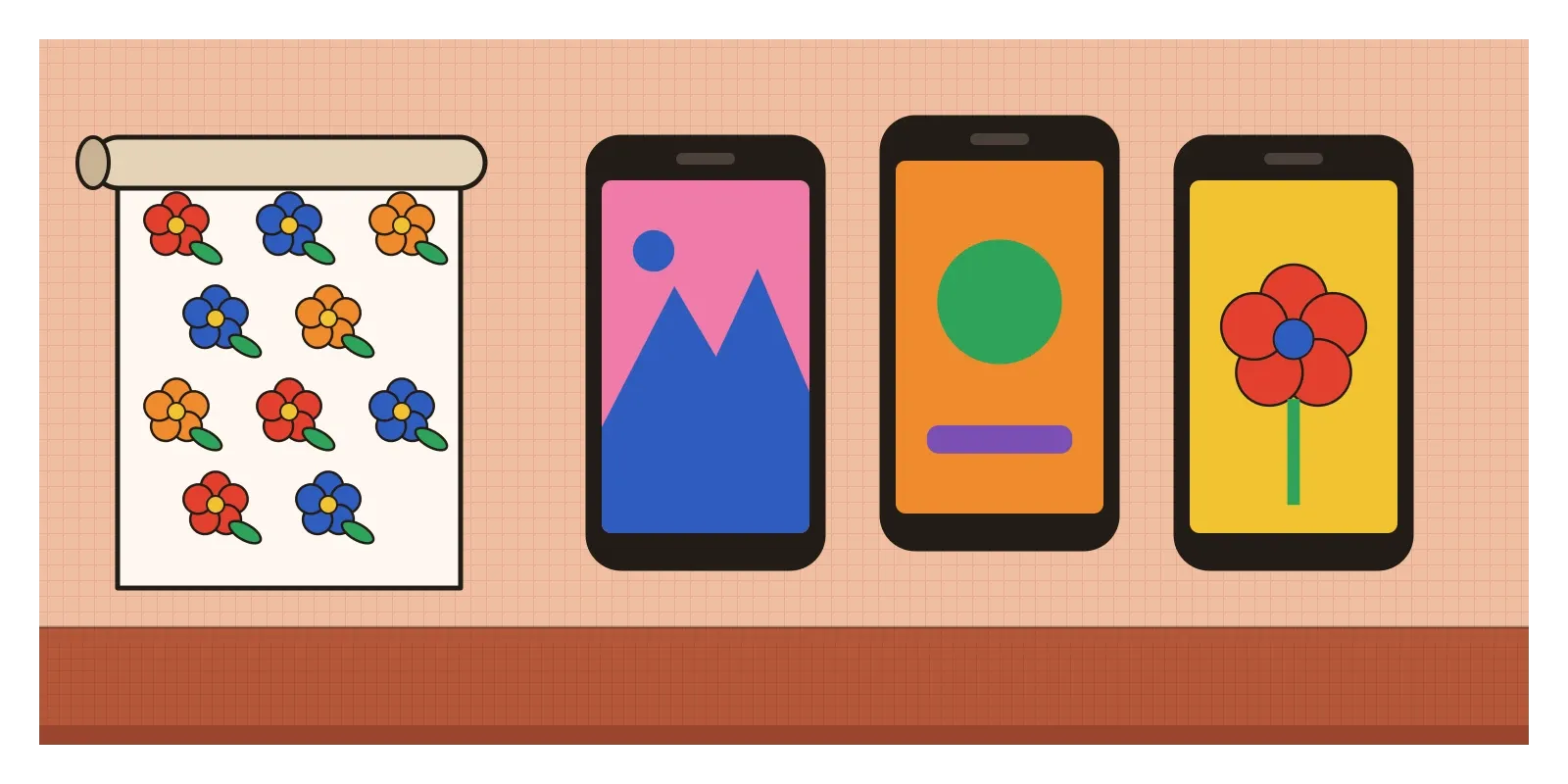
Some Fauves walked into design themselves. Dufy designed printed fabrics, first for the couturier Paul Poiret around 1911 and then for many years for the Lyon silk firm Bianchini-Férier, bold flowers in flat colour that would look at home on a cushion today. Matisse ended his life cutting shapes from painted paper, as I told in the post on shape, and designing a whole chapel in Vence, down to its windows, vestments and tiles.
There's also a warning in the Fauves for anyone building interfaces. Their pure reds and greens fight in hue but are often close in lightness. Turn a Fauve landscape to greyscale and much of it melts into one mid-tone. On a screen, red text on a green button can look vivid and still fail contrast checks, and for people with red-green colour blindness it may barely show. Use Fauve colour for emotion, then check the values underneath, and let white space, the bare canvas, help separate colours.
Wild for three summers
Fauvism burned out quickly. In 1907 the Salon d'Automne held a memorial exhibition of Cézanne, who had died the year before, and several Fauves turned from colour to structure. Braque and Derain moved towards the geometry of Cubism, and Vlaminck drifted into darker landscapes. By 1908 the group had dissolved, and Matisse went on alone, painting the flat red interiors and the dancers that the Russian collector Sergei Shchukin bought and commissioned for his house in Moscow.
The wildness was partly an image. Vollard bought up their studios, and the Steins and Shchukin bought their pictures, so the beasts were quickly collected and tamed. Their hunger for the primitive borrowed from cultures they barely understood: Vlaminck and Derain were among the first in Paris to collect African masks, which reached Europe through colonial conquest, and the Tahiti of Gauguin they admired was a colonised island imagined as a paradise of available women.
Women appear in Fauve paintings mostly as models, wives or nudes. Amélie Matisse, who had run a hat shop that helped keep the family afloat, is still often remembered only as the woman in the hat. Émilie Charmy, who painted in the same bright colours and exhibited alongside the Fauves, was left out of most histories for decades. And one of their earliest backers was a woman, the dealer Berthe Weill, who showed Matisse from the early 1900s and is far less known than Vollard. Some of the beasts also aged badly: in 1941, during the German occupation, Derain, Vlaminck and Van Dongen joined an officially organised tour of Germany that the Nazis used as propaganda.
The reply came almost at once. In Germany, painters who had seen the same Van Goghs and Gauguins twisted Fauve colour into anxiety, the subject of the next post, on Expressionism.
To see Fauvism for yourself, go to Collioure if you can, where frames along a walking route mark the spots Matisse and Derain painted, or to the Centre Pompidou in Paris. In India, spend an hour with the Pahari paintings at the National Museum in New Delhi and notice what those flat yellow and red grounds are doing. For an exercise, take a photo of your street and paint it using only unmixed colours, no black and no brown, with every shadow in blue or violet. Then photograph your painting in black and white and see what's left. And think of that room in 1905, the crowd laughing at a woman in a hat, and one small Renaissance child in the middle, surrounded by beasts.
Further reading: John Elderfield, The "Wild Beasts": Fauvism and Its Affinities (1976) · Sarah Whitfield, Fauvism (1991) · Judi Freeman (ed.), The Fauve Landscape (1990) · Hilary Spurling, The Unknown Matisse (1998) · Henri Matisse, "Notes of a Painter" (1908)
A reply toThe polite, faithful colour of Impressionism, and the patient dots of Neo-Impressionism.