Expressionism
How German artists bent colour, line and even shadows out of shape to show what the world felt like.
Expressionism
Shadows painted on the walls
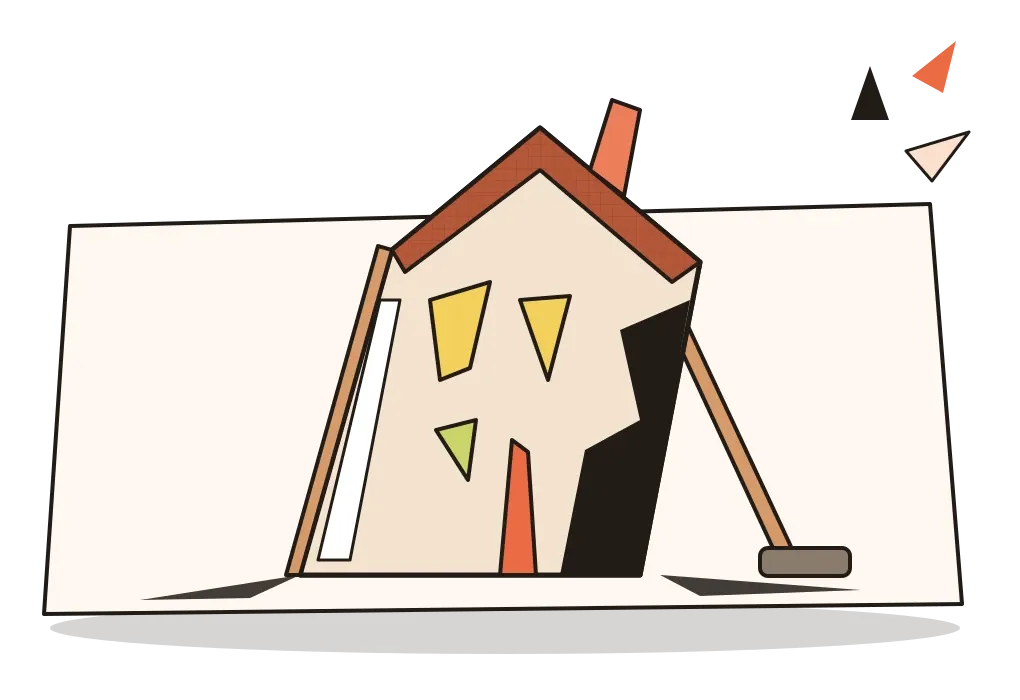
On 26 February 1920, audiences at the Marmorhaus, a cinema on the Kurfürstendamm in Berlin, sat down to watch a new silent film, Das Cabinet des Dr. Caligari, The Cabinet of Dr Caligari. In it, a sinister showman arrives at a small-town fair with a sleepwalker who kills at night on his orders. What people remembered, though, was the town itself. Its streets lean and narrow to points. Houses have windows like broken shards of glass, chimneys sprout at odd angles, and staircases zigzag up walls that seem to be falling inwards.
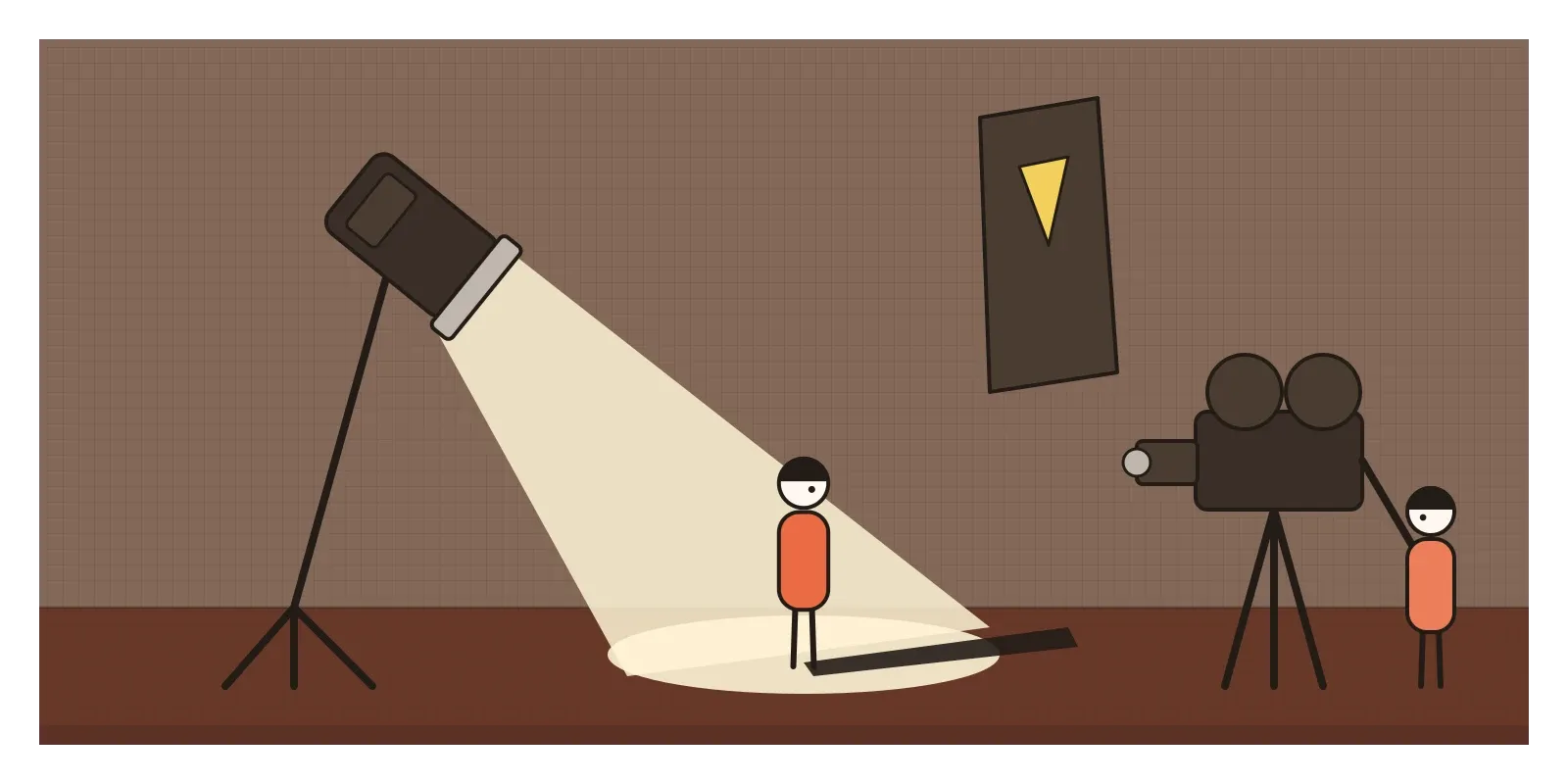
Strangest of all was the light. The film's three designers, Hermann Warm, Walter Reimann and Walter Röhrig, painted it straight onto the canvas sets: jagged white streaks across the pavements, black shadows on the walls, light spilling where no lamp could have put it. The effect was that nothing in the film looked real, and everything looked the way a frightened mind might see it.
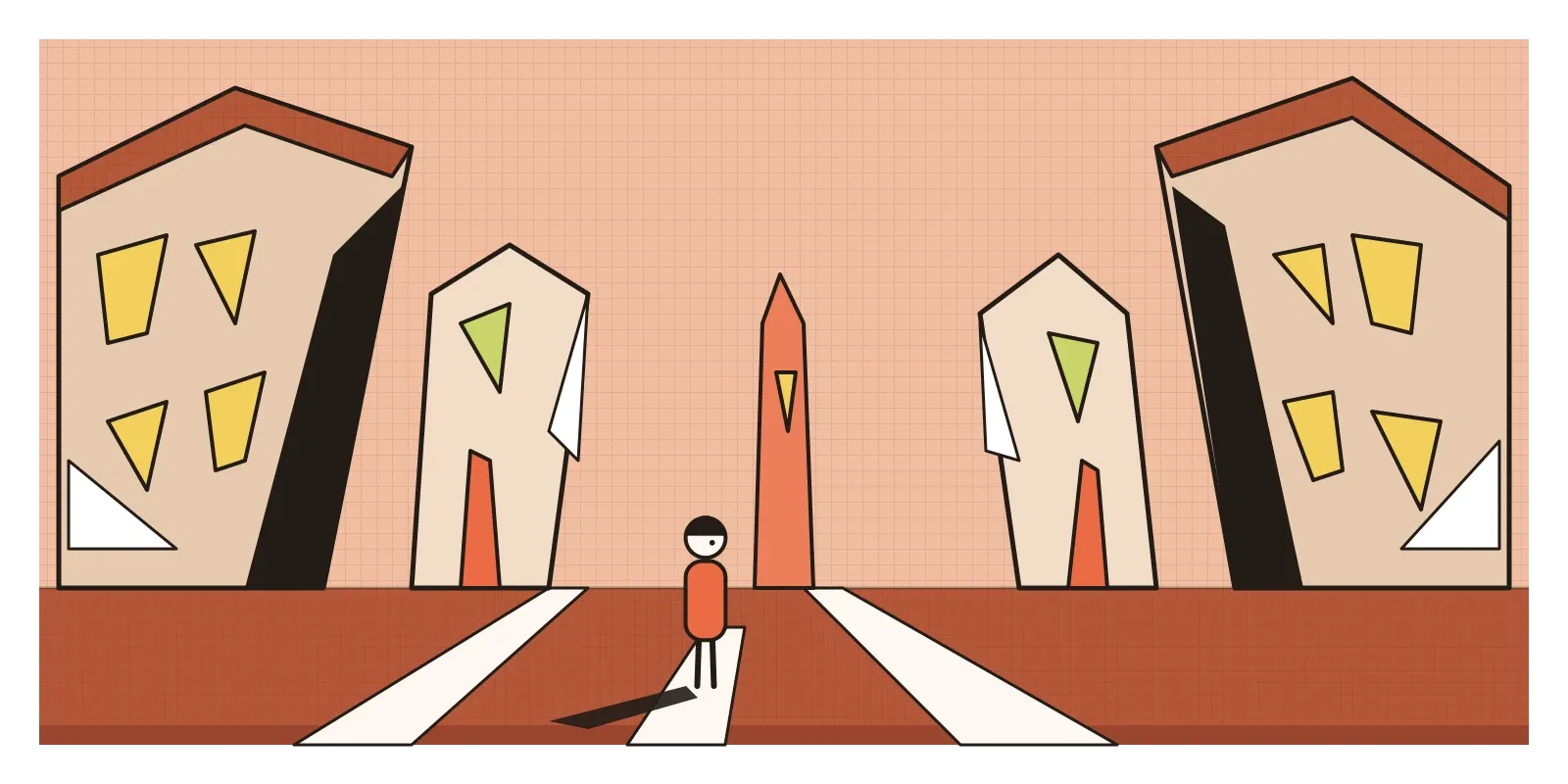
Caligari arrived near the end of a movement that had been building in Germany for fifteen years. Expressionism is the name we give to art, mostly German and Austrian, made from around 1905 into the early 1920s, that set out to show how the world felt rather than how it looked. Its artists distorted shapes, used colours no eye had seen, and left their marks raw and rough, because they believed inner experience was more truthful than surface appearance. The word was used loosely from around 1911, and many of the artists we now call Expressionists disliked it. Historians still argue about whether it was a movement at all, or a mood that ran through painting, poetry, theatre, architecture and film.
Against the polite picture
Germany in 1905 was rich, powerful and changing at a dizzying speed. Unified only in 1871, within a generation it was one of Europe's great industrial powers, with Berlin swelling into a city of factories, tenements and nightlife. Officially, its art was meant to reassure. Academies trained painters to produce history scenes, portraits and patriotic monuments, and Kaiser Wilhelm II, who took a personal interest in art, dismissed modern work in a 1901 speech as art of the gutter. Even the progressive painters of the Berlin Secession worked in a refined, Impressionist manner that sold well.
The young artists who became Expressionists wanted something rawer. They found it partly in painters I've written about earlier in this series: Van Gogh's swirling, agitated brushwork, Gauguin's flat colour and his woodcuts, and Edvard Munch, whose work drew on Symbolist ideas and who had caused a scandal in Berlin in 1892, when an exhibition of his paintings was closed after a week. They also read Nietzsche, who urged his readers to tear down inherited values. Impressionism had tried to record what the eye sees in a passing moment. Expressionism replied that the eye wasn't the point. In Paris at almost exactly the same time, the Fauves, the subject of the previous post, were also using wild, unmixed colour, but where Matisse wanted harmony and calm, the Germans were after tension, anxiety and longing.
Woodcuts, blue horses and a city at night
The first group gathered in Dresden. On 7 June 1905, four architecture students, Ernst Ludwig Kirchner, Erich Heckel, Karl Schmidt-Rottluff and Fritz Bleyl, founded an artists' group they called Die Brücke, the Bridge, an image of crossing into the future that is often linked to a passage in Nietzsche. In 1906 Kirchner cut a short programme for the group into a woodblock, calling on the young to claim their freedom. They worked in shared studios in a working-class district and painted with thick, unblended colour.
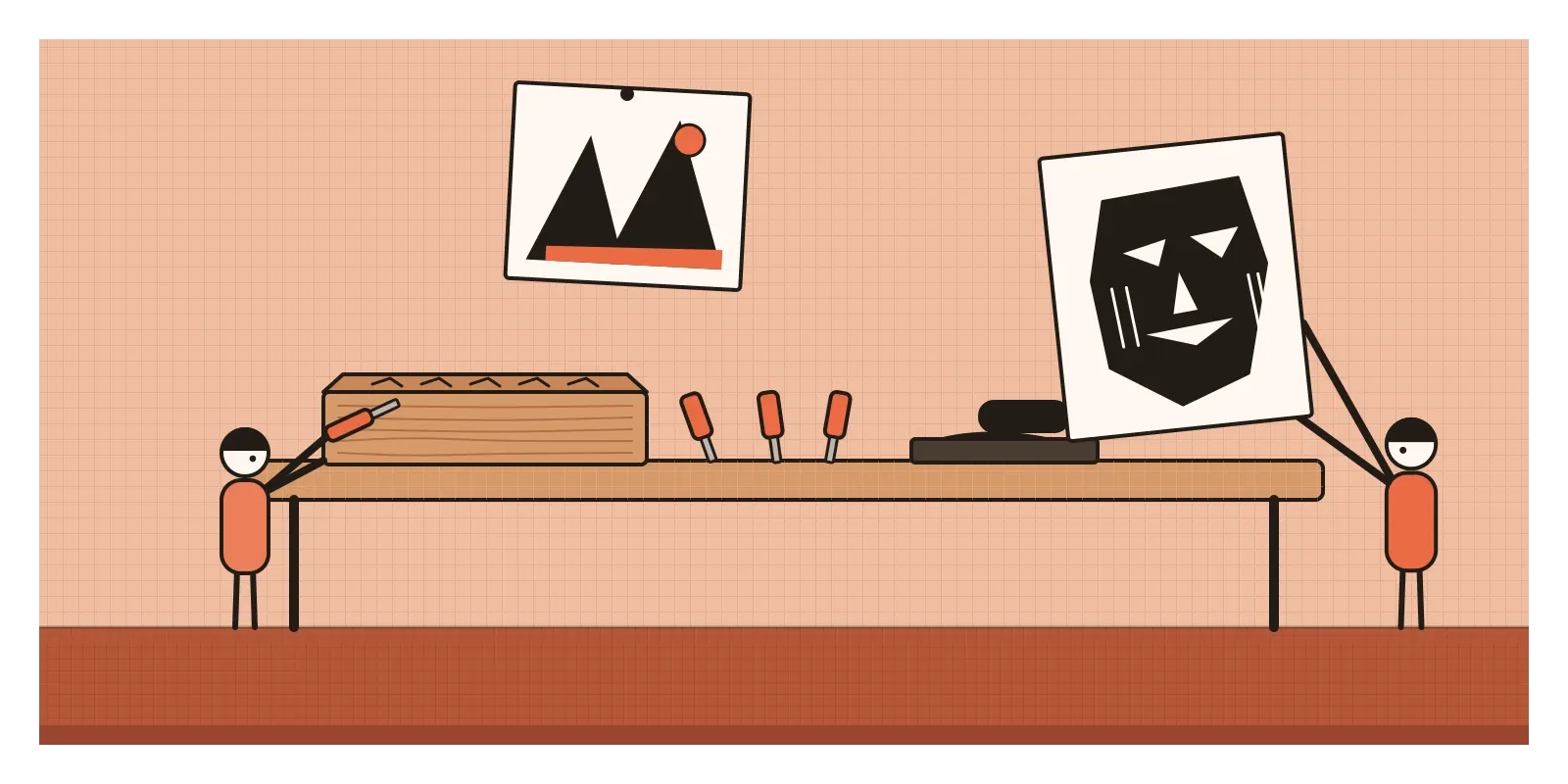
Their great medium was the woodcut. They gouged pictures into planks with knives and chisels, leaving the splinters, the grain and the knife's bite visible, and printed them in harsh black and white or a few blunt colours. The group even had a kind of subscription model: "passive members" paid a yearly fee and received an annual portfolio of original prints. In 1911 the artists moved to Berlin, and Kirchner began the paintings of city streets that many people now think of first: tall, mask-faced women in feathered hats and men in dark coats, crowded together on pavements that tip upwards, painted in sharp pinks, greens and blues under artificial light. The group broke up in 1913.
In Munich, a second circle formed around Wassily Kandinsky and Franz Marc. When a Munich artists' association rejected one of Kandinsky's large paintings in 1911, he and Marc organised their own exhibition at the Thannhauser gallery that December under the name Der Blaue Reiter, the Blue Rider, and the following year published an almanac that placed children's drawings and Bavarian folk paintings on glass beside new art. Marc painted animals, above all horses, in pure colour, deep blue horses curled together on a hillside, because he believed animals saw the world more innocently than people did. Gabriele Münter, Kandinsky's partner for many years, painted the village of Murnau in strong, simplified colours, and later hid many of the group's works in her house through the Nazi years, giving them to Munich's Lenbachhaus in 1957.
Others never joined a group at all. In Berlin, Käthe Kollwitz, whose younger son Peter was killed in Flanders in October 1914, spent years on a series of woodcuts about the war, made in the early 1920s, in which mothers and widows huddle together in great black shapes. After the war the mood even reached buildings: Erich Mendelsohn's Einstein Tower in Potsdam, an observatory completed around 1921, looks as if it had been squeezed out of soft clay.
Feeling bent into form
Expressionism is easiest to spot by what it refuses. It won't keep perspective straight, so streets and floors tilt towards you and rooms seem to slide. It won't keep proportions natural, so faces stretch into masks, hands grow too big and bodies become long and angular. It won't keep colour local, so a face can be green and a horse blue, chosen for what it does to the viewer.
Look closely and the marks themselves carry the feeling. Brushstrokes are thick and quick, edges are hard, outlines are heavy and black, and in the woodcuts every cut shows. Diagonals and zigzags dominate, because they feel unstable, the opposite of the calm horizontals in a classical landscape. Space is flattened and crowded. Lettering on Expressionist posters and book covers is often cut or drawn by hand, uneven and angular, like the pictures. In film, the same vocabulary became a way of lighting: deep shadows, single harsh light sources, distorted sets and a camera tilted off the horizontal.
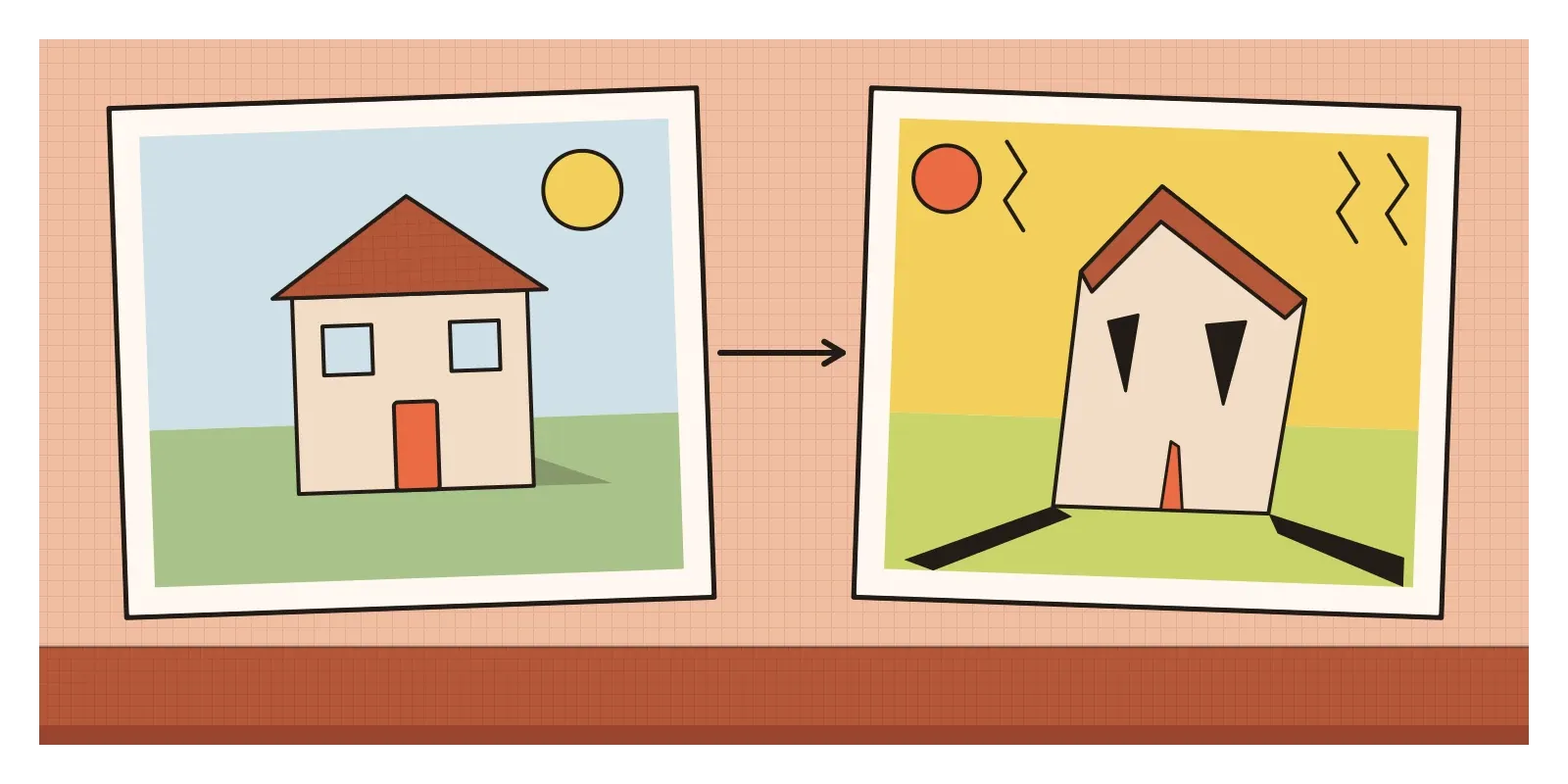
The quickest way to understand the method is to draw the same thing twice. A calm house has level windows, a straight roof, believable colours and a gentle light. An anxious house has a roof that leans, windows that narrow into slits, a door too small for anyone to enter, a sky of acid yellow and shadows that don't match the sun. In the post on rasa theory I wrote about how a made thing produces a feeling in the person meeting it. Expressionism is what happens when an artist decides that the feeling is the whole job.
From Berlin's studios to Bombay's
Expressionism's clearest road to India runs through the cinema. In the 1920s, the Bengali producer Himansu Rai worked with the German director Franz Osten, who had come from the Munich film industry, on silent films shot in India with German money and crews, beginning with Prem Sanyas, The Light of Asia, in 1925, a life of the Buddha. In 1934 Rai and the actor Devika Rani, who had spent time at the UFA studios near Berlin, founded Bombay Talkies, and they brought German technicians with them: Osten as director and a young cameraman from Munich, Josef Wirsching, among others. They came from the same film culture that had produced Caligari.
I should be honest about the limits of this link. Bombay Talkies made social dramas and romances, not nightmares, and Osten's films look far more realist than Expressionist. What travelled was craft rather than style. When war broke out in 1939, the British interned the German staff as enemy aliens. Osten went home, but Wirsching stayed, and in 1949 he shot Kamal Amrohi's Mahal, a ghost story full of a haunted mansion's shadows and swinging lamps. A decade later, the cameraman V. K. Murthy lit Guru Dutt's Pyaasa and Kaagaz Ke Phool with deep blacks and single sharp beams of light, and critics have often compared their look to German Expressionist film and the Hollywood film noir it fed.
In Indian art, the closest parallel is often found at Santiniketan in the sculptor Ramkinkar Baij. His Santhal Family of 1938, a striding group of a man, a woman, a child carried in a basket and a dog, modelled in cement mixed with gravel over an iron frame and set outdoors on the campus, has the rough surface, exaggerated movement and strong feeling that people describe as expressionist. He wasn't copying a German school. Like Kirchner, he wanted form to carry feeling, and he found it in the lives of the Santhal people around him.
Every horror poster owes it something
The most direct inheritance is in film and everything that borrows from film. Many German directors, cameramen and designers left for Hollywood in the 1920s and 1930s, many of them fleeing the Nazis, and their hard shadows and tilted angles fed the American crime films of the 1940s that French critics called film noir. From there the look runs through comic books, the gothic cities of Tim Burton's films, horror posters and video games that light a corridor with a single bare bulb. Filmmakers even call a tilted camera a Dutch angle, a name that may be a garbling of Deutsch, German, though nobody is quite sure.
The woodcut look is just as durable. Rough-cut lino and woodcut images still turn up on protest posters, zines and book covers whenever a designer wants something to feel urgent and handmade. Hand-cut, uneven lettering does the same work in type. AI image tools are full of prompts asking for German Expressionist woodcuts, though some of these artists, such as Schmidt-Rottluff, lived until the 1970s, so their work is still protected in many countries.
The deeper lesson is about where a designer starts. Expressionism asks "what should this feel like?" before "what does this look like?", and then allows itself to bend reality to get there. That freedom is useful in illustration, branding and games, and dangerous in charts and maps, where bending proportions to create a feeling is simply misleading.
Raw, but not innocent
Expressionism liked to think of itself as honest and untamed, and that self-image hides a lot. Its artists borrowed heavily from art they called primitive. Kirchner and Heckel copied the carved and painted house beams from Palau in Dresden's ethnographic museum, objects collected under German colonial rule, and Emil Nolde travelled in 1913 and 1914 with an official expedition to German New Guinea, painting the people he met as children of nature. The Brücke artists' summer bathing pictures at the Moritzburg lakes near Dresden include nude studies of young girls, among them a child of about ten known as Fränzi, and museums now discuss these works openly rather than presenting them as innocent celebrations of freedom.
Then there is politics. Nolde joined the Nazi party and held antisemitic views, yet the regime still condemned his art. In 1937 the Nazis opened the Degenerate Art exhibition in Munich, hanging Expressionist works crookedly beside mocking slogans, and it drew more than two million visitors. Thousands of works were seized from German museums, and Kirchner, ill and in despair in Switzerland, died in 1938. After the war Nolde presented himself as a persecuted artist, a story that was taken apart by a major exhibition in Berlin in 2019. By then the movement had long since faded on its own. In the mid-1920s, the painters of the New Objectivity replied to its emotional excess with cool, sharp, unsentimental realism, and the Dadaists mocked its earnest soul-searching.
To see it for yourself this week, watch Caligari. It's silent, about seventy-five minutes long and widely available in restored versions. Then watch the opening of Kaagaz Ke Phool and look at what V. K. Murthy does with a single beam. If you're near Santiniketan, walk around the Santhal Family. And try the two-house exercise: draw your street once as it looks, then once as it felt on your worst day, with one colour that doesn't belong. The painters who made Caligari's town didn't need to light their sets realistically. They painted the shadows where fear would put them. In the next post, on Cubism, I'll go to Paris, where two painters were breaking the world apart for a very different reason.
Further reading: Shulamith Behr, Expressionism (1999) · Lotte H. Eisner, The Haunted Screen: Expressionism in the German Cinema (1952) · Siegfried Kracauer, From Caligari to Hitler (1947) · Jill Lloyd, German Expressionism: Primitivism and Modernity (1991) · Debashree Mukherjee, Bombay Hustle: Making Movies in a Colonial City (2020)
A reply toImpressionism's calm record of the eye, and the polished official art of imperial Germany.