Dutch Design
How young Dutch designers in the 1990s made furniture from old drawers, rags and dry jokes.
Dutch Design
A chest of drawers tied up like luggage
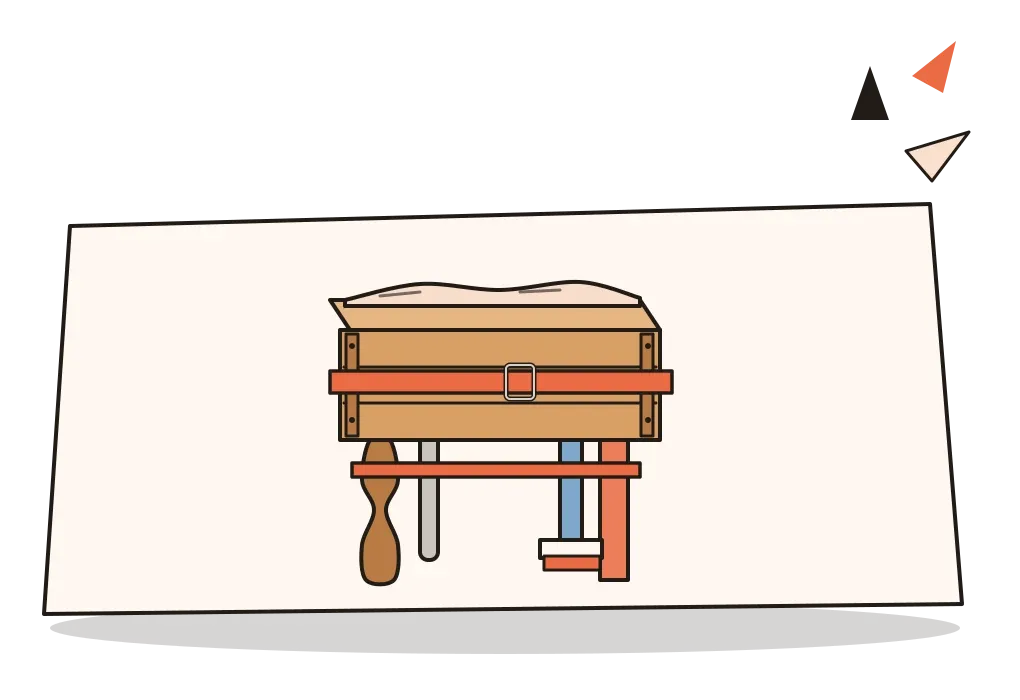
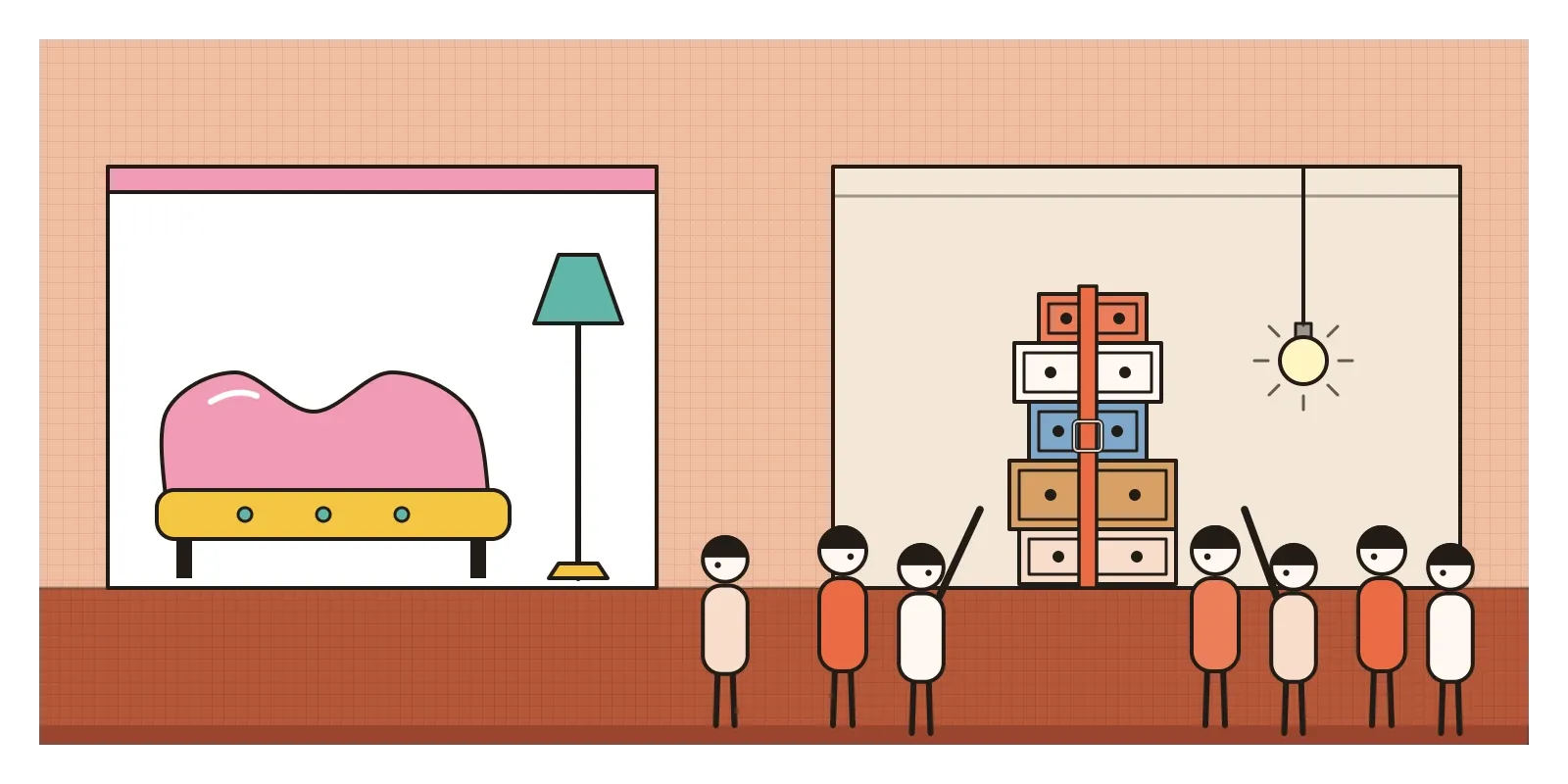
In April 1993, at the furniture fair in Milan, the biggest week in the design calendar, visitors used to glossy Italian sofas and sculptural lamps came across a small presentation by young Dutch designers that looked almost like a prank. There was a chest made of old drawers of every size and colour, each one found secondhand and fitted into a new wooden case, the whole pile held together with a strap, like a bundle of luggage. Its designer, Tejo Remy, had made it as a student and given it a sentimental title, You Can't Lay Down Your Memory. Nearby were his chair made from layers of old clothes and rags bound with metal strips, and a lamp made of a dozen ordinary milk bottles, each with a bare bulb inside.
The people behind the presentation were Renny Ramakers, a Dutch design historian and critic, and Gijs Bakker, a designer who had been making radical jewellery since the 1960s. They had picked out pieces by young designers whose work they felt shared an attitude, and they called the collection Droog Design. Droog is the Dutch word for dry, as in dry humour, and it also hinted at what the objects lacked: no gloss, no styling, no fuss. The presentation was small and cheaply made, but it was talked about far more than many grand stands that year.
Within a few years critics were writing about "Dutch Design" as if it were a movement. It's the name now used for the conceptual, witty, often low-tech design that came out of the Netherlands in the 1990s and early 2000s, objects that start from one clear idea, often use found or ordinary materials, and explain themselves with a story. Historians still argue about whether it was a movement, a generation or a successful piece of national marketing. The honest answer is probably a little of each, and most of the designers involved never signed up to anything.
After the gloss, a country that pays for experiments
Droog was a reply, first of all, to the design of the 1980s. As I wrote in the post on the Memphis Group, Sottsass and his friends had made furniture loud, colourful and funny, and by the end of the decade their attitude had been absorbed into a market for expensive "designer" objects: sculptural kettles, chairs in limited editions, lemon squeezers that were really ornaments. Design had become a word for style and status. The young Dutch designers answered with almost nothing: secondhand drawers, old rags, milk bottles, bare bulbs. Instead of a new shape, they offered a new thought.
They also drew on a longer Dutch habit of plainness. The Netherlands is a small, flat, crowded country that has built much of its land by hand and tends to admire things that are practical and unpretentious. People often link this to its Calvinist past, though that can be overstated. As I wrote in the post on De Stijl, Gerrit Rietveld built chairs from standard planks of wood eighty years earlier, and his plain, clear way of thinking had stayed in Dutch design schools ever since.
Then there was money. For much of the twentieth century the Dutch state was an unusually generous patron of design. The national postal and telephone service, the PTT, commissioned stamps, phone books and offices from the best designers of each generation, and government funds gave grants to young artists and designers so they could experiment without a client. The design school in Eindhoven, the industrial city where Philips is based, later renamed Design Academy Eindhoven, turned out graduates who were trained to start from an idea rather than a brief. Under the trend forecaster Li Edelkoort, who chaired it from 1999 to 2008, its graduation shows became famous in their own right. A designer who didn't need to sell anything straight away could afford to be dry.
Rope that sets, plates that sag and a chair set on fire
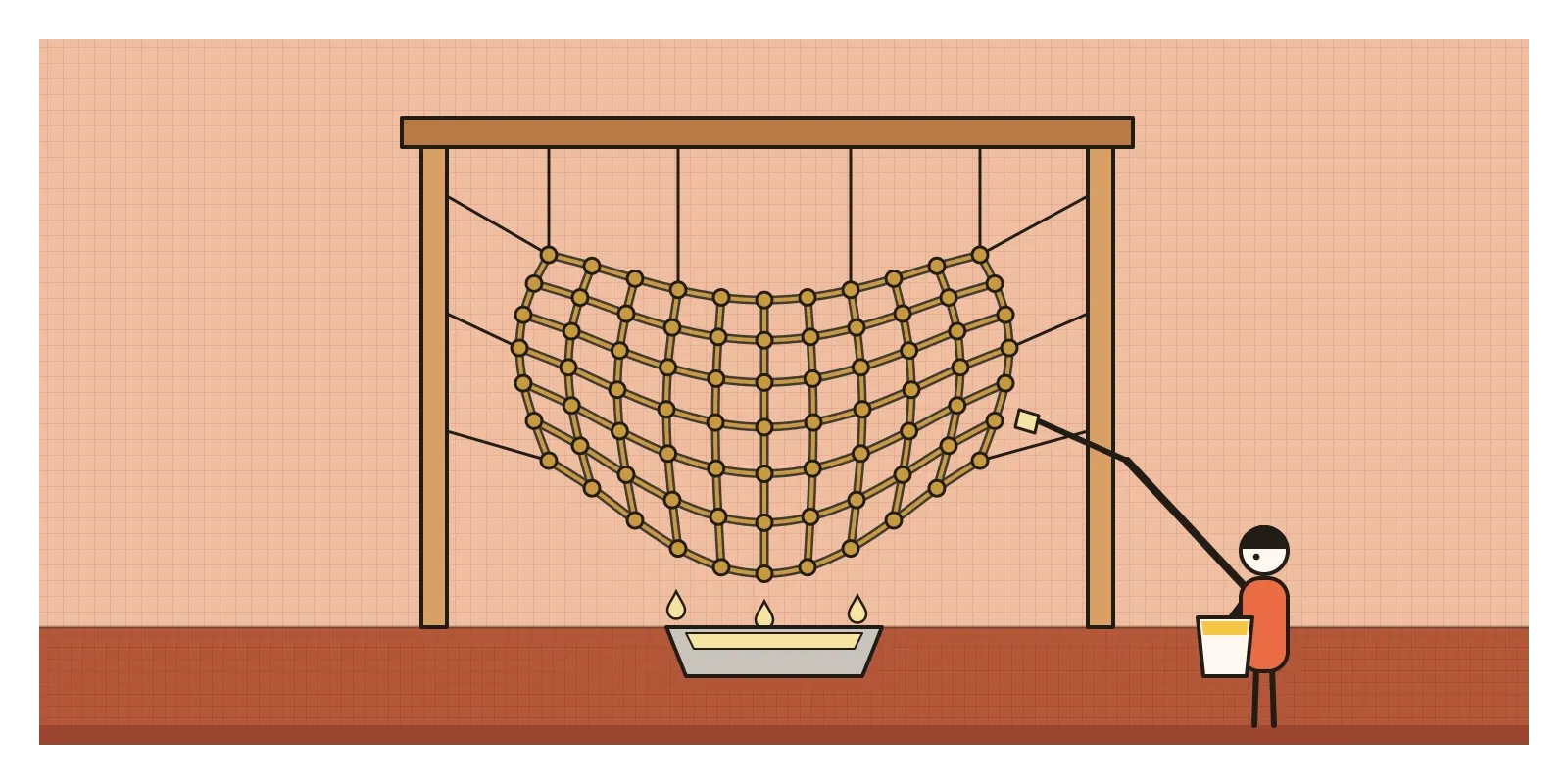
Marcel Wanders made the object that showed Dutch Design could be high-tech as well as homemade. His Knotted Chair of 1996, developed with researchers at Delft University of Technology, began as a length of rope made from aramid fibre around a carbon core, a material used in aircraft. He knotted it by hand into a loose macramé net, soaked it in epoxy resin and hung it in a frame, so that gravity pulled it into the shape of a seat while the resin hardened. The result looks like a hammock that froze, and it is light enough to lift with one finger. Wanders went on, in 2001, to co-found the brand Moooi, which took Dutch wit in a much more theatrical and glamorous direction.
Hella Jongerius was interested in the gap between craft and the factory. Her Soft Urn of 1994 took the shape of a classical vase and cast it in soft rubber, so it slumps slightly and shows the marks of its mould. Her B-set tableware of 1997 was porcelain fired at a temperature high enough for each plate and bowl to sag in its own way, so that an industrial process produced a set in which no two pieces were alike. She has spent her career since asking why mass-produced things must all be identical.
Jurgen Bey's Tree-trunk Bench of 1999 is a fallen tree trunk turned into a long seat by fixing bronze casts of the backs of classic chairs along its length, as if the furniture had grown out of the wood. Maarten Baas made his name with his graduation project from Eindhoven in 2002, a series called Smoke: he took existing furniture, including copies of famous design classics, burned it with a blowtorch until it was black and blistered, then sealed it in clear epoxy so it could still be used. It was a joke about reverence for design icons, and it became a product, later made by Moooi.
One idea, told with a straight face
The surest sign of Dutch Design is that you can describe the object in a single sentence, and the sentence is the point. Old drawers held together with a strap. A chandelier that is just a bunch of bare bulbs. A vase that is soft. A chair that has been burned. The form follows the idea, not a style, so the objects don't look much like each other. What they share is a way of thinking.
Look next at the materials. They are often ordinary, found or cheap: rags, rope, felt, rubber, cardboard, standard bulbs and cables, secondhand furniture. They are used plainly, without being dressed up, and the process is left visible. You can see the strap, the knot, the seam of the mould, the scorch marks. Colour is usually the colour of the material itself, which gives much of the work a quiet, muted look after the bright pinks and yellows of Memphis.
Then notice the tone. The humour is dry rather than loud. The objects don't wink at you; they keep a straight face and let you get the joke. Many also play with the tension between handwork and the factory: a mass-produced plate that looks handmade, a handmade chair that uses aerospace materials. As a designer, I find this the most useful part. A good Droog object has one idea and commits to it completely, which is harder than it sounds, because every extra detail weakens the sentence.
Bell metal, from Indian foundries to Amsterdam
The clearest Indian thread in this story runs through one designer. Satyendra Pakhalé was born in Maharashtra in 1967, studied industrial design at the Industrial Design Centre at IIT Bombay, then studied further in Switzerland and worked for Philips Design in Eindhoven in the 1990s, in the same city and the same years that produced many of the Droog designers. In 1998 he set up his own studio in Amsterdam, and he has worked from the Netherlands ever since.
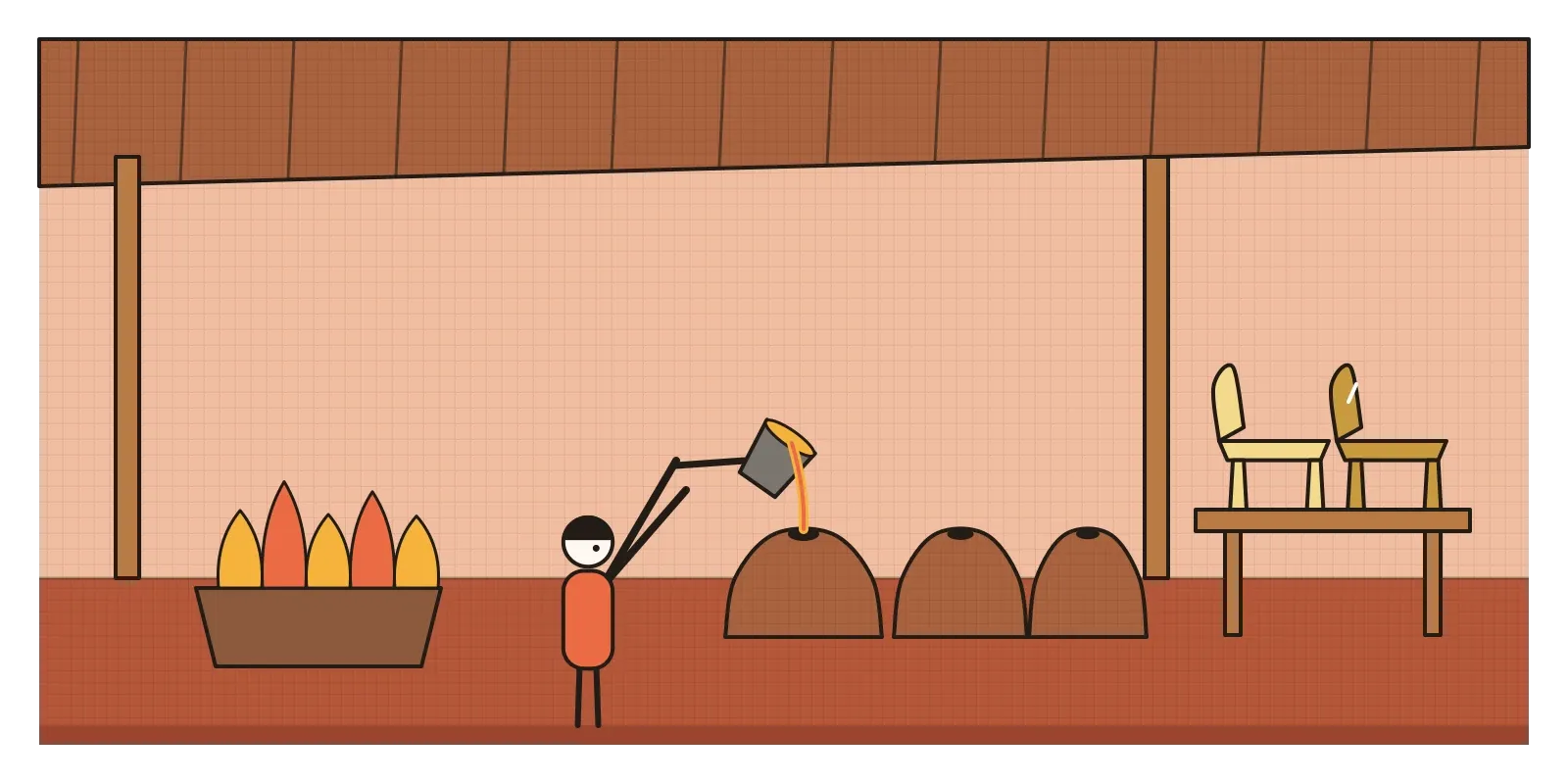
Pakhalé's work joins the Dutch habit of starting from an idea with Indian ways of making. His best-known early piece, a seat called the Bell Metal Horse Chair, from around 2000, was cast by craftspeople in India using lost-wax casting, the ancient technique behind dhokra metalwork. A model is made in wax and covered in clay, the clay is heated so the wax melts and runs out, and molten metal is poured into the hollow it leaves. Each casting is slightly different, which is exactly the quality that Jongerius was trying to coax out of a Dutch porcelain factory.
There's a looser parallel too, and I want to be careful with it. Reuse was a statement for Droog, made in one of the richest countries in the world. In India it is ordinary life. Old saris are stitched into quilts, newspapers and bottles are sold to the kabadiwala and find their way back into use, and broken things are mended with whatever is at hand, the improvised fix I wrote about as jugaad in the post on ideation techniques. Remy's drawers and an Indian kantha quilt both give old things a second life, but one is a design idea and the other is thrift, care and necessity. It's worth noticing that what looked radical in Milan was everyday common sense in most Indian homes.
Upcycled tables, crooked plates and the trouble with one-liners
Dutch Design's legacy is all around us, often without the name. Furniture made from reclaimed wood, lamps made of bare bulbs on long cables, tables built from old doors and scaffolding boards: the upcycled look that fills cafés and co-working spaces owes a lot to those drawers and milk bottles. Design schools across the world now teach students to start from a concept and to explain it in a sentence, and graduation shows have become a way of launching careers.
The idea that mass production can make each piece a little different has also come of age. Digital fabrication and generative software can now give every chair, vase or pattern its own variation at no extra cost, and AI tools can produce endless versions of an object from a single prompt. Jongerius's sagging plates asked whether we want that, and why. In interfaces, the Dutch dry wit survives in the best empty states and error messages, which make you smile without trying too hard, and in a willingness to show how something works instead of hiding it behind polish.
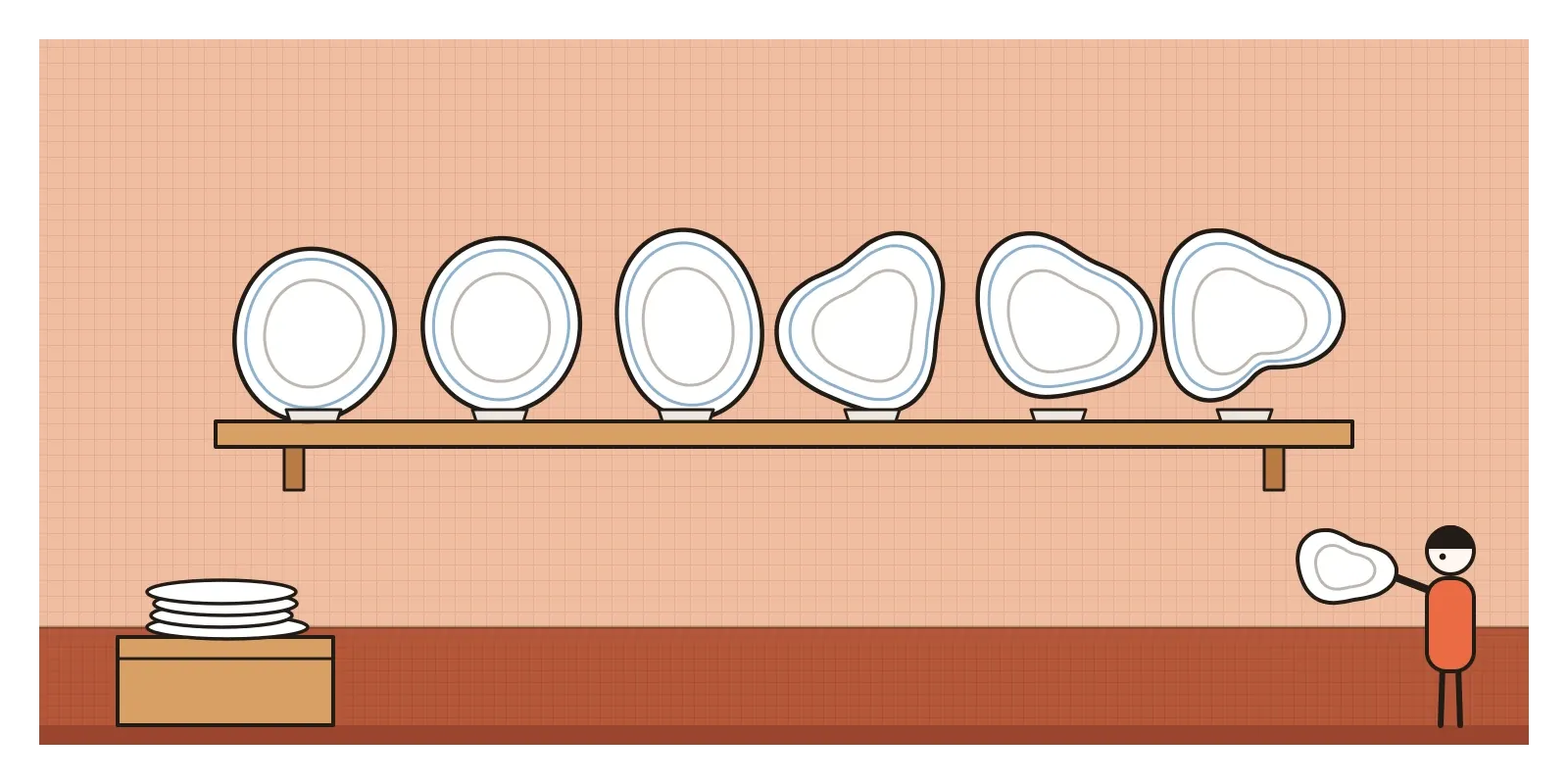
The criticism started early and has never quite gone away. The most common charge is that Dutch Design produced one-liners: clever jokes that work once, in a gallery or a magazine photograph, and are not much use in a home. A rag chair is hard to clean. A chest of found drawers, each fitted into a new case by hand, is far more expensive than the cheap furniture it seems to mock, and the reuse was often more symbolic than practical. Many of the best-known pieces were sold in small editions to museums and collectors, feeding a market for "design art" that had little to do with how most people live.
There were questions about who it was for and who paid. Dutch Design became a national brand, promoted abroad as proof of a creative country, and much of it depended on public money. When the Dutch government cut culture funding sharply in 2011, many small studios lost the support that had let them experiment. Droog itself grew into a brand with shops and products, and Moooi turned the dry joke into luxury. The questioning went on in other forms: speculative and critical design, which has its own post later in this section, pushed the idea further and stopped making products at all.
Look for the strap
To see the work for yourself, the Stedelijk Museum in Amsterdam has Droog pieces in its design collection, and Dutch Design Week in Eindhoven each October is the easiest way to see what the latest graduates are thinking. Closer to home, visit the National Crafts Museum in Delhi or a crafts fair and look closely at dhokra figures, then imagine the same lost-wax process making a chair. For reading, Renny Ramakers and Gijs Bakker's Droog Design: Spirit of the Nineties shows the early objects with their stories.
For an exercise, pick three things at home that are about to be thrown away. Make one new object from them, with one idea, and fasten it with something visible: a strap, string, tape or a knot. Then give it a title and try to describe it in a single sentence. If the sentence is boring, the object probably is too.
In Milan in 1993, a pile of old drawers held together with a strap made a room full of expensive furniture look tired. It didn't solve any problems, and it was never meant to. It asked a question about what design is for, with a straight face. In the next post, on Early Web Design, the questions move from objects to a brand new medium, where designers had almost no tools at all.
Further reading: Renny Ramakers and Gijs Bakker (eds), Droog Design: Spirit of the Nineties (1998) · Renny Ramakers, Less + More: Droog Design in Context (2002) · Aaron Betsky, False Flat: Why Dutch Design Is So Good (2004) · Louise Schouwenberg, Hella Jongerius (2003)
A reply toThe glossy, expensive designer objects of the 1980s, Memphis included.