Contemporary Indian Design
How Indian designers since the 1990s have turned craft, bazaars and many scripts into a modern design language.
Contemporary Indian Design
Trees printed by hand, one colour at a time
In 2008, at the Bologna Children's Book Fair, the most important gathering in children's publishing, a prize went to a book that had been made almost entirely by hand in Chennai. The Night Life of Trees, published two years earlier by Tara Books, is a large book of black handmade paper on which trees glow in orange, green, yellow and white: trees with spirits living in them, trees crowded with birds, trees that come alive after dark. The pictures were made by three Gond artists from Madhya Pradesh, Bhajju Shyam, Durga Bai and Ram Singh Urveti, each telling the tree stories of their community in the dense dots and patterned lines of their painting. Tara's workshop in Chennai printed them by screen printing, pulling one colour at a time through a fine mesh onto each sheet, then binding and numbering every copy by hand. The book has since been reprinted many times and translated into several languages.
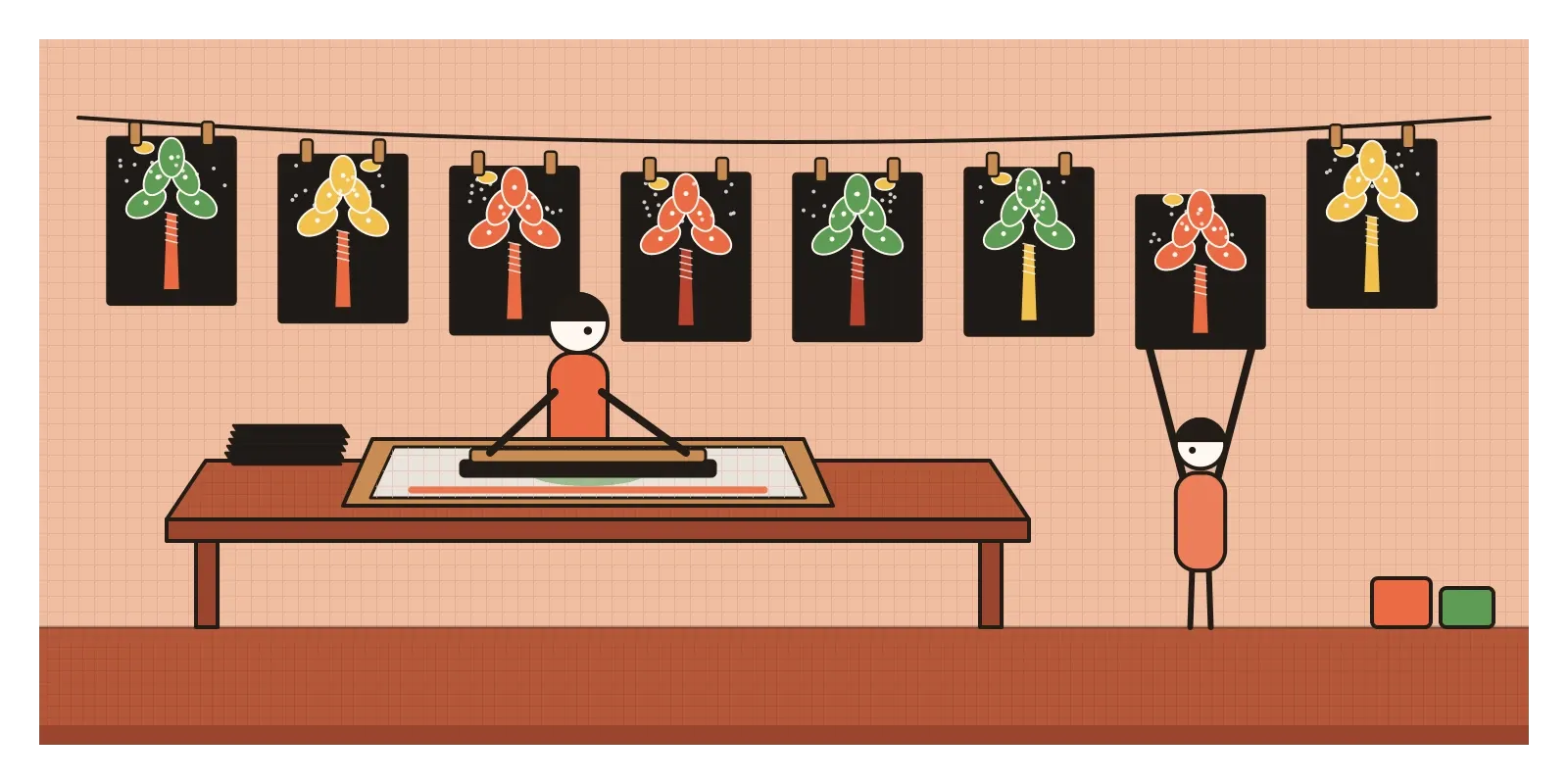
Everything I want to say about contemporary Indian design is in that object. It is modern, made for a global market and celebrated abroad. It's built on a living tradition, it names its artists on the cover, and it comes from a small independent studio rather than a ministry. Contemporary Indian design is my name here for the studios, brands, workshops and designers who, since the early 1990s, have tried to answer an old question in new ways: what should modern design look like in a country where millions of people still make things by hand? It's the last post in this section, and like every movement before it, it is a reply.
After 1991, a flood and a question
The posts on the Eames India Report and Indian design education told the story of how India built a design profession after Independence, through NID in Ahmedabad and IDC in Bombay. That project was largely led by the state, closely tied to planning and development, and shaped by a country whose economy was protected from imports. In July 1991, facing a foreign exchange crisis, the government began dismantling that system. Import controls were loosened, licences were scrapped, and foreign companies were welcomed in. Satellite television arrived the same year. Within a decade, Indian homes had global soft drinks, foreign cars, cable channels and, in the cities, the first shopping malls.
For designers, this created both work and a crisis of identity. Advertising and retail boomed, and for a while the easiest way to look modern was to look foreign. At the same time, the older ways of presenting Indian craft were running out of steam. Since the 1950s, as I wrote in the post on design, art and craft, Kamaladevi Chattopadhyay and the handicrafts boards had kept craft alive through cooperatives, state emporiums and exhibitions. In the 1980s the Festival of India, a series of large cultural shows in Britain, America, France and elsewhere, presented Indian crafts to the world, but mostly as heritage, timeless and traditional, something to admire rather than something to use. Contemporary Indian design replied to both: to the flood of imported brands, and to the habit of treating craft as the past.
A bazaar, a label and a hundred craftsmen
The new answers came from many directions at once. In 1994 Dilli Haat opened in south Delhi, an open-air market of brick and stone stalls designed by the architect Pradeep Sachdeva, where artisans from different states take turns to sell directly to the public. It was the idea of the activist Jaya Jaitly, and its premise, that the maker should meet the buyer, has been copied across the country. In fashion, two NID graduates, David Abraham and Rakesh Thakore, founded Abraham & Thakore in 1992. Their early scarves, made by Indian weavers and printers but with a cool, almost Scandinavian restraint, sold at the Conran Shop in London. A generation later Rahul Mishra, another NID graduate, became the first Indian designer to win the International Woolmark Prize in 2014 and, in 2020, the first to show on the official haute couture calendar in Paris, with clothes whose flowers and birds are embroidered by hand in workshops across India.
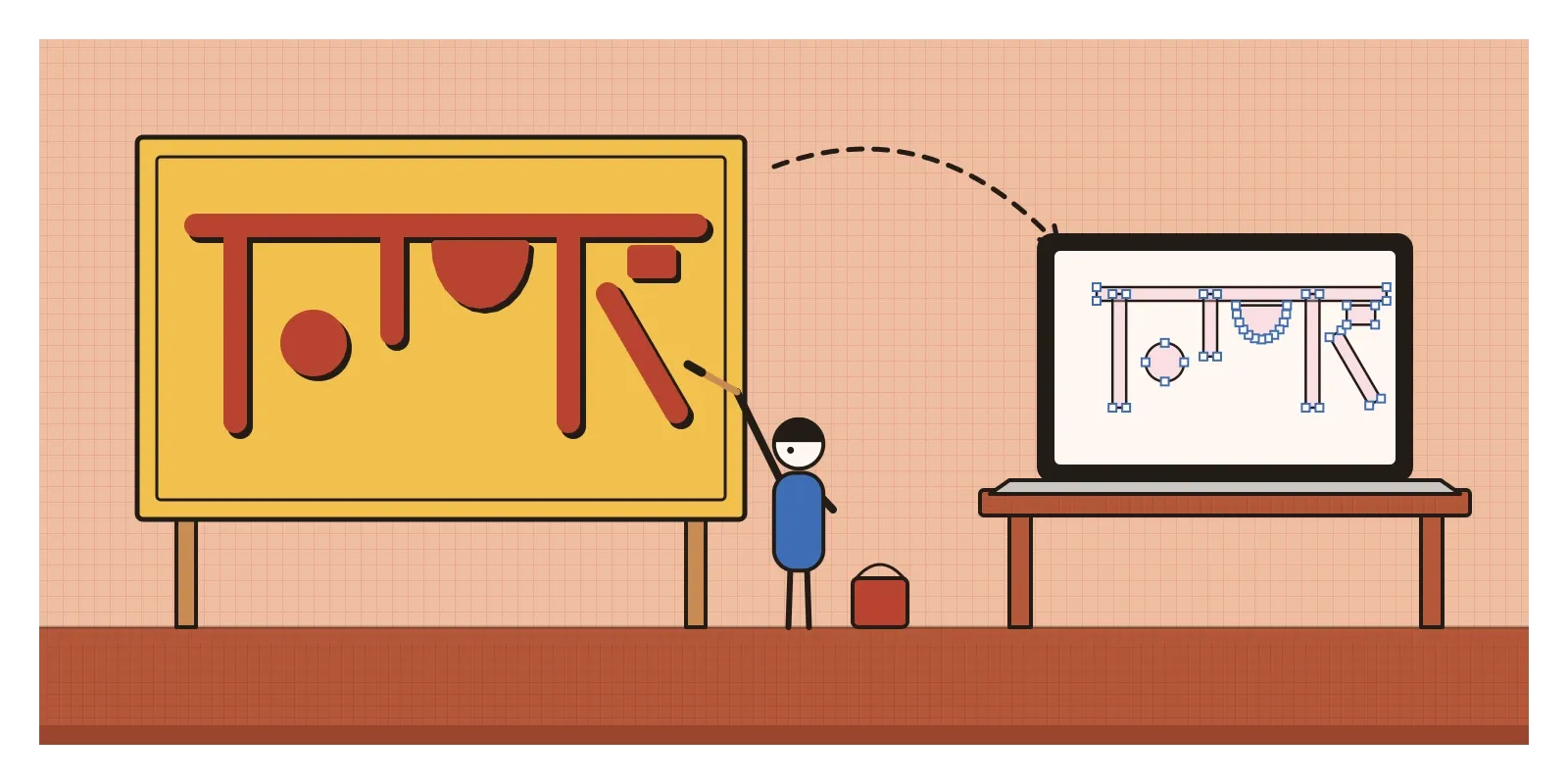
Graphic designers looked to the street. In the early 2010s, the designer Hanif Kureshi started a project called HandpaintedType, documenting the lettering of India's sign painters, whose hand-painted shop boards were being replaced by cheap digital vinyl prints. He turned their alphabets into digital fonts, named each one after its painter, and shared the income from sales with them. In 2014 he co-founded St+art India, which brought large murals to neighbourhoods such as Delhi's Lodhi Colony. In the post on the New Typography I mentioned the Indian type foundries that design fonts for Devanagari, Tamil and other scripts; together, these projects made Indian scripts and Indian streets into a design resource rather than an embarrassment.
Architecture had its own version. The architect Bijoy Jain returned to India from Los Angeles and London in 1995 and founded Studio Mumbai, a practice that is as much a workshop as an office, with a few architects and around a hundred carpenters, masons and stonecutters who build what they design, testing ideas at full size. Houses like the Palmyra House near Alibag, screened with slats of palm wood, made the firm famous. At the Venice Architecture Biennale in 2010, Studio Mumbai recreated its own workshop, with models, mock-ups and material samples, and received a special mention. The post on Indian modern architecture covers the earlier generation of Doshi and Correa; Jain's work replied to them by trusting the hand even more than they did.
Indigo, cane and a QR code on a cart
Contemporary Indian design doesn't have one look, but you can learn to spot its moves. The first is visible handwork. A block print's slightly misaligned repeat, the ridge of a hand-loomed stripe or the uneven edge of a screen print is kept as a sign of the maker rather than smoothed away. The second is a palette that comes from natural dyes and materials: indigo, madder red, turmeric yellow, iron black, the warm colours of brass, terracotta, cane and lime plaster. The third is the bazaar, reclaimed. Truck art, film posters, matchbox labels and hand-painted signs, once seen as kitsch, turn up in shop interiors, packaging and gift brands, sometimes with real affection and sometimes as a joke for city buyers.
The fourth move is multilingual. A well-designed Indian product now has to work in several scripts at once, with Devanagari, Bengali, Tamil or Gujarati sitting beside Latin letters at the same size and weight, and that has made Indian type designers some of the most skilled in the world at balancing very different shapes. The fifth is design for scale and scarcity. The clearest example is the Unified Payments Interface, launched in 2016, which lets anyone pay anyone from a phone. Its most visible design object is humble: a printed QR code, a square of black and white pixels, taped to a vegetable cart, a temple donation box or a tea stall. Behind it is an enormous amount of interface work, by designers trained in the schools of the earlier posts, to make payments understandable to people using cheap phones, in many languages, sometimes for the first time.
Indian hands, foreign labels
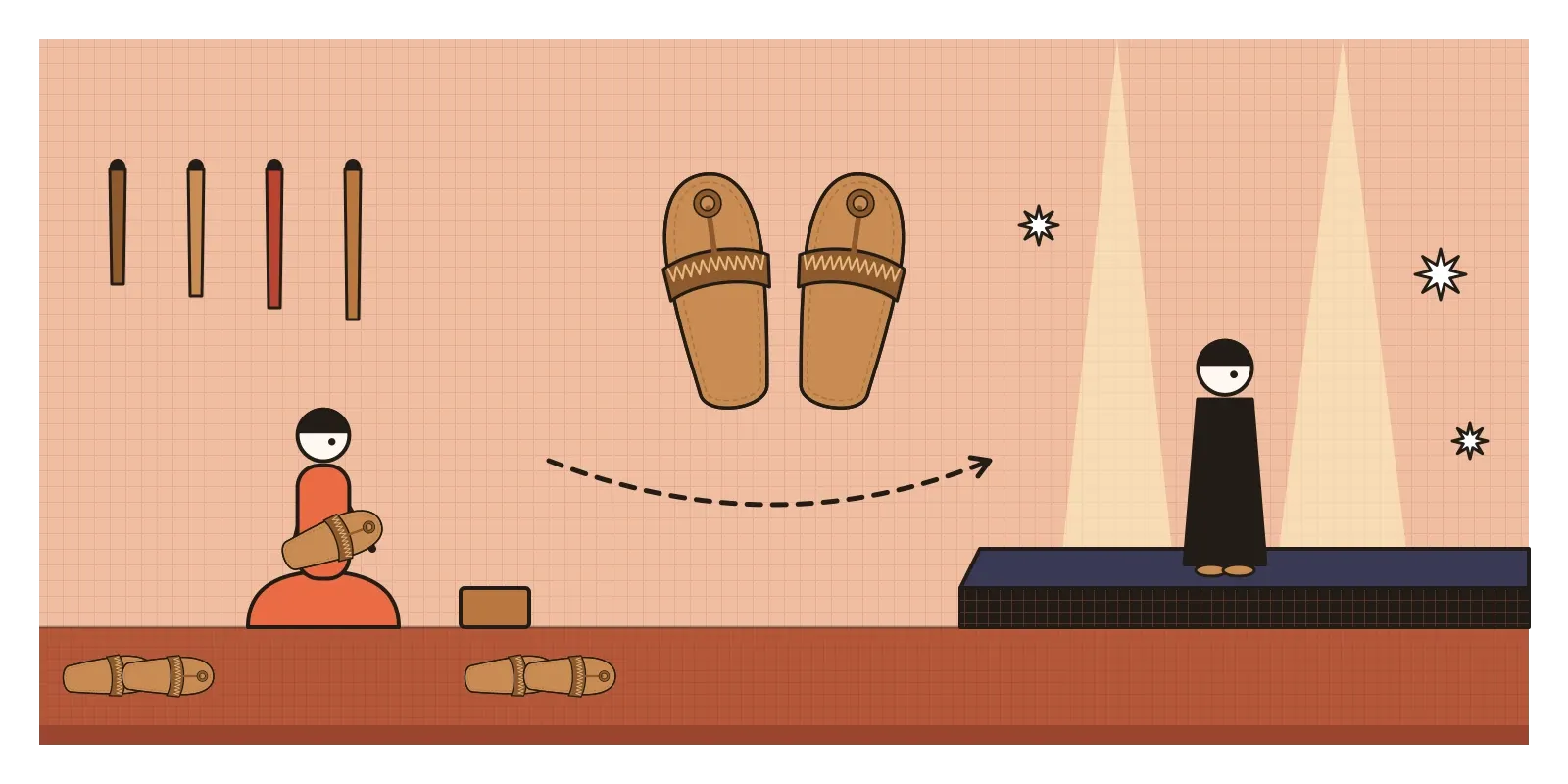
Seen from outside, contemporary Indian design is part of a wider story about craft in a global economy, and it isn't always a happy one. For decades, much of the finest embroidery on European luxury clothes has been done in Indian workshops, often with little public credit. In March 2023 Dior held a fashion show at the Gateway of India in Mumbai and openly named the Mumbai embroidery atelier it had worked with for years. Two years later the opposite happened. In June 2025 Prada sent models down a runway in Milan wearing open-toed, braided leather sandals that looked unmistakably like Kolhapuri chappals, the footwear made for centuries by leather-working communities in Maharashtra and Karnataka. Prada first described them simply as leather footwear. After protests in India, it acknowledged their roots, and in December 2025 it signed an agreement with two state-run leather corporations to make a limited edition with Kolhapuri artisans and train more of them.
Other countries have had the same argument. Japan's folk craft movement, which I wrote about in the post on Mingei and Japanese aesthetics, and the Scandinavian craft-modern of the post on Scandinavian design both tried to bring handmade traditions into modern life, and both were accused of romanticising the rural maker. India's version differs in scale. With millions of people still earning a living from craft, contemporary Indian design isn't really about preserving an old way of life. It's about whether those makers will be treated as designers, suppliers or scenery.
Who gets the credit, and who gets the money
What designers everywhere can take from this period is a set of habits. Treat craft as research and development, not decoration: a block printer or a basket maker knows things about materials that no software does. Name the maker, as Tara Books does on its covers and HandpaintedType does in its font names. Design for many scripts from the start, not as a translation at the end. And design for the person with the cheapest phone, not the most expensive one. These lessons matter more now that AI image tools can produce a convincing imitation of Gond painting or Madhubani in seconds, usually trained on artists' work without their consent or any payment. The question Prada faced will be asked of software too.
The critics of contemporary Indian design have plenty to say. Much of what is celebrated as Indian design is expensive, made for the urban rich and the export market, while artisans earn a small fraction of the final price. As I wrote in the post on Indian design education, the line between designer and artisan often follows old lines of class and caste. The state, meanwhile, has learned to use design for national branding. The Make in India campaign, launched in September 2014, has a lion made of cogs, and critics pointed out the irony that it was designed by the Indian office of an American agency, Wieden+Kennedy. And most of the design ordinary Indians use every day, plastic chairs, steel tiffins, auto-rickshaw interiors, the hand-built displays of street vendors, is still made by people nobody calls designers. The next reply to contemporary Indian design is already being drafted, by a generation who want the makers themselves to hold the pen.
The long conversation, and what comes next
To see contemporary Indian design for yourself, spend an afternoon at Dilli Haat in Delhi and talk to whoever is selling, or visit the Anokhi Museum of Hand Printing near Amber Fort in Jaipur, where you can watch block printers at work. Walk through the murals of Lodhi Colony. Find a copy of The Night Life of Trees and run your fingers over the ink, which sits slightly raised on the page. For an exercise, put one handmade object and one digital product you use daily side by side, and write down who made each one. You will probably be able to name neither, which is the problem this whole movement has been trying to solve.
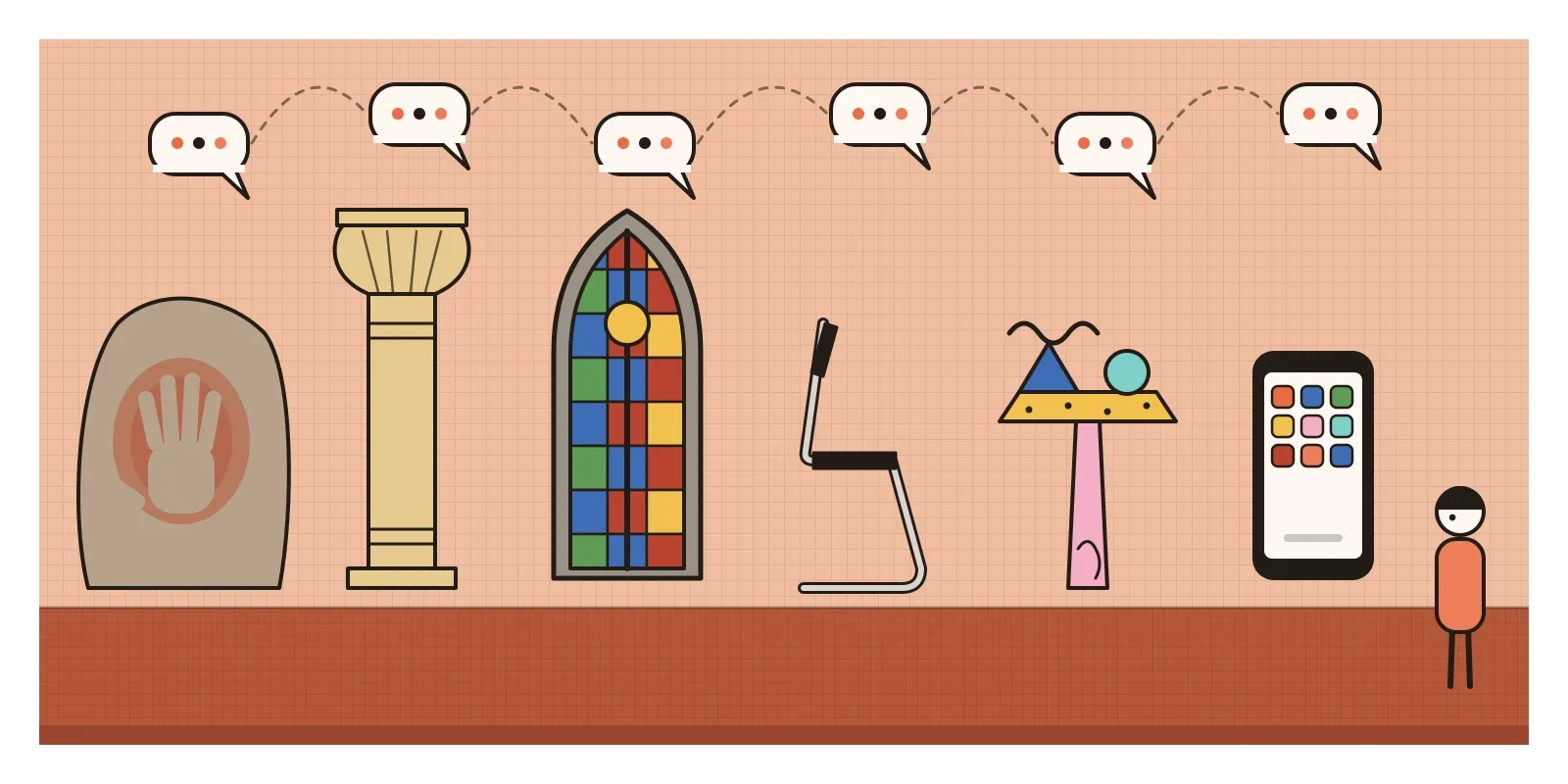
This is the last of a hundred and ten posts, and it's worth looking back at how far the conversation has come. It started on cave walls, with hands pressed against rock and animals painted by firelight, made by people whose names we'll never know. Egyptian painters drew pharaohs bigger than servants, and Gothic builders turned stone into light. In India, Ravi Varma gave the gods shadows and the Bengal School took them away again. The Arts and Crafts movement protested against the machine, the Bauhaus tried to make peace with it, and modernism stripped ornament from everything until Memphis put it back as a joke. Skeuomorphism made screens look like leather and paper, flat design wiped them clean, and vaporwave slowed the 1980s down until they sounded like a ghost. Each style was a reply to the one before it, and none of them was the last word. A Gond painter in Bhopal, a screen printer in Chennai and a designer laying out a payment screen are still answering.
If there's one lesson from all of this, it's that styles are arguments, and arguments can be good or bad. Designers spend their working lives making judgements: this layout is clearer, this colour feels calmer, this user will understand. They go wrong in predictable ways, and the next section of this site, Thinking About Thinking: A Designer's Guide to Fallacies and Biases, is about exactly that: the mental shortcuts and faulty arguments that bend how we see, decide and critique. The trees in Tara's book glow because someone pulled each colour through the mesh by hand. Good thinking, like good printing, is done one careful layer at a time.
Further reading: Bhajju Shyam, Durga Bai and Ram Singh Urveti, The Night Life of Trees (2006) · Bhajju Shyam with Sirish Rao and Gita Wolf, The London Jungle Book (2004) · Rahul Mehrotra, Architecture in India since 1990 (2011) · Jaya Jaitly, Crafts Atlas of India (2012) · Kamaladevi Chattopadhyay, Indian Handicrafts (1963)
A reply toThe flood of global brands after 1991, and the older habit of treating Indian craft as heritage to preserve rather than a living design language.