Ancient Indian Art
How Mauryan polish, Buddhist gateways and Gupta calm turned timber and clay ideas into lasting stone.
Ancient Indian Art
A stone woman on the bank of the Ganga
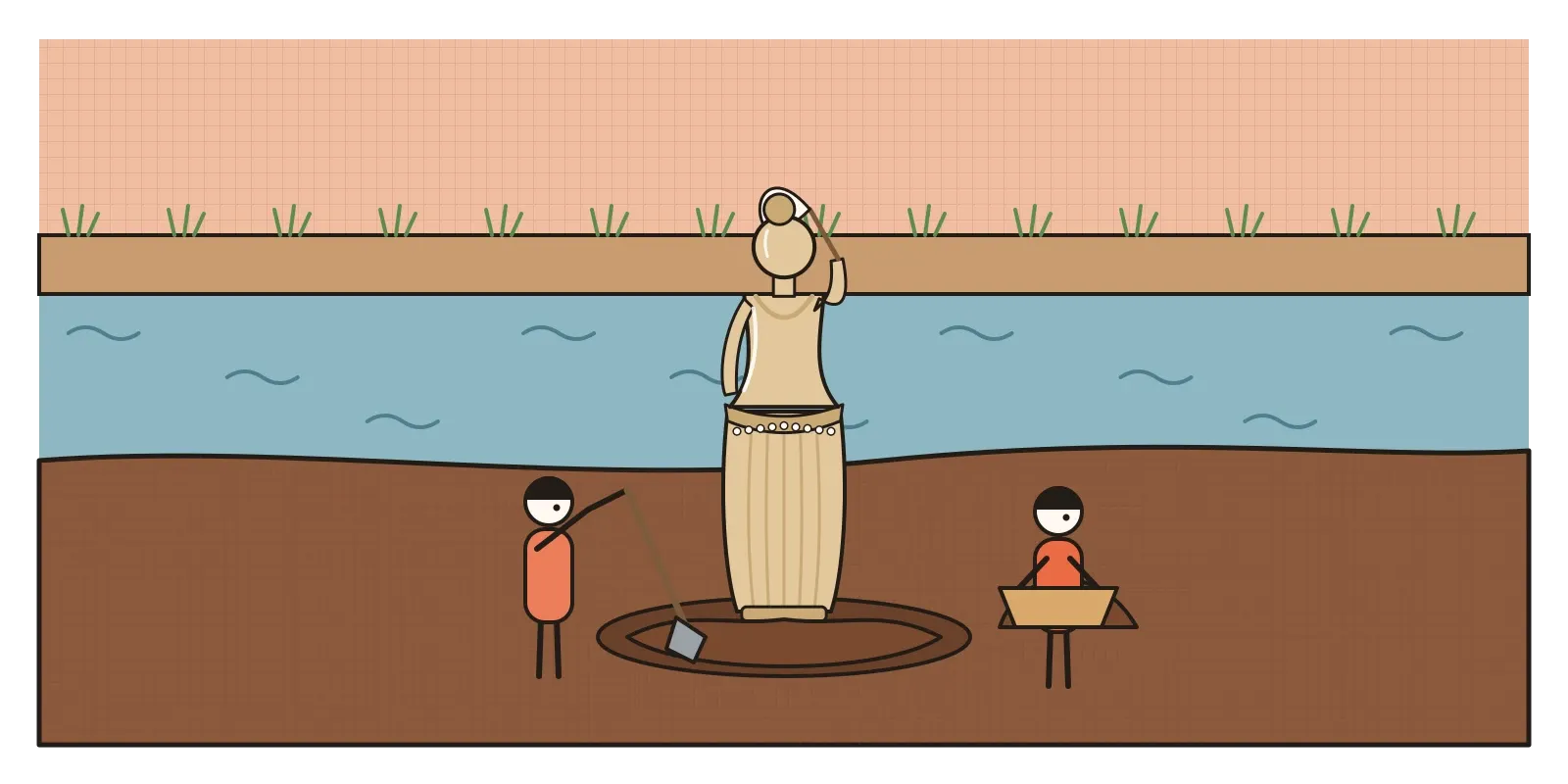
On 18 October 1917, near the village of Didarganj on the edge of Patna, a stone figure was spotted half buried in the mud of the Ganga's bank. When it was dug out, it turned out to be a life-sized woman carved from a single block of buff sandstone, a little over one and a half metres tall, standing calmly with a fly-whisk, a chauri, resting over her right shoulder. She wears heavy anklets, a beaded girdle and a lower garment that falls in crisp folds, and her surface is polished so smoothly that it still shines like glazed ceramic. The story usually told is that local people had already begun to worship her, and were not keen to let her go to the museum in Patna. She's now known as the Didarganj Yakshi, a yakshi being a female nature spirit linked with trees, water and abundance, and since 2017 she has stood in the Bihar Museum.
Nobody agrees on when she was made. That glossy finish is a hallmark of sculpture from the Mauryan empire in the third century BCE, so many scholars have placed her there. Others, looking at her jewellery and the style of her body, argue for the first or second century CE. The argument itself tells you something about the period. We're dealing with a world where some of the most famous objects arrive without labels, and where the story has to be pieced together from stone.
Ancient Indian art, in this post, means the art made across the subcontinent from the Mauryan empire, around 322 BCE, to the end of the Gupta period, around 550 CE: polished pillars, Buddhist stupas and gateways, rock-cut halls, the first images of the Buddha, the paintings at Ajanta and the calm sculpture of the Gupta age. Historians divide these centuries by dynasty, Mauryan, Shunga, Satavahana, Kushan and Gupta, but the boundaries are blurry, and much of the best work was paid for by merchants, monks, nuns and guilds rather than kings.
When India started building in stone
After the cities of the Indus Valley, the subject of the post on Indus Valley art and design, faded around 1900 BCE, there's a long stretch from which almost no monumental art survives. People certainly built, carved and painted, but mostly in wood, bamboo, thatch, clay and cloth, which rot. That changed under the Mauryas. Their capital, Pataliputra, under modern Patna, was described by the Greek envoy Megasthenes around 300 BCE as a vast city with wooden walls. Within a couple of generations, the emperor Ashoka, who ruled from around 268 to 232 BCE and turned to Buddhism after his bloody war in Kalinga, was putting up polished sandstone pillars across his empire and having his edicts carved on rocks and columns.
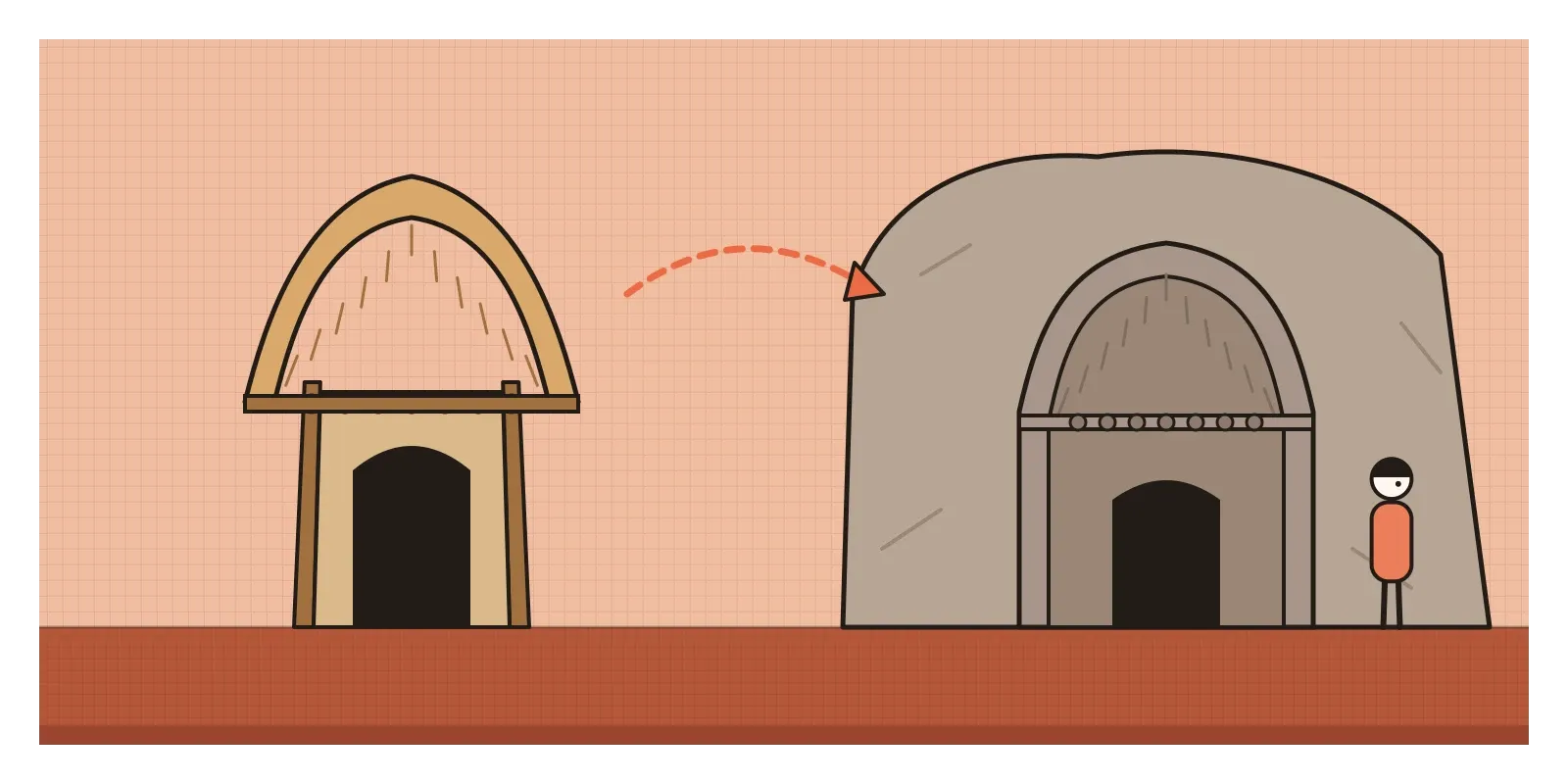
The move into stone was, in a sense, a reply to building in wood. You can see it most clearly in the rock-cut caves. In the Barabar hills of Bihar, the Lomas Rishi cave, carved around the third century BCE, has a doorway that copies in granite the curved eaves, bent rafters and posts of a thatched timber hut. Two or three centuries later, the great prayer hall at Karla, near Lonavala in Maharashtra, was carved out of the hillside with a vaulted ceiling, and its builders fitted actual teak ribs under the stone, imitating a wooden roof that didn't need to be there. Stone was the new material, but timber was still the idea.
Lions, gateways and a Buddha who isn't there
The most famous Mauryan object is the Lion Capital found at Sarnath, near Varanasi, during excavations in 1905. Four lions sit back to back on a round drum carved with wheels alternating with an elephant, a bull, a horse and a lion, above a bell shaped like an upturned lotus. It once crowned a pillar marking the place where the Buddha is said to have given his first sermon. In 1950 it became the emblem of the Republic of India, which is why its lions are on every rupee note, and its wheel, as I wrote in the post on balance, sits at the centre of the flag.
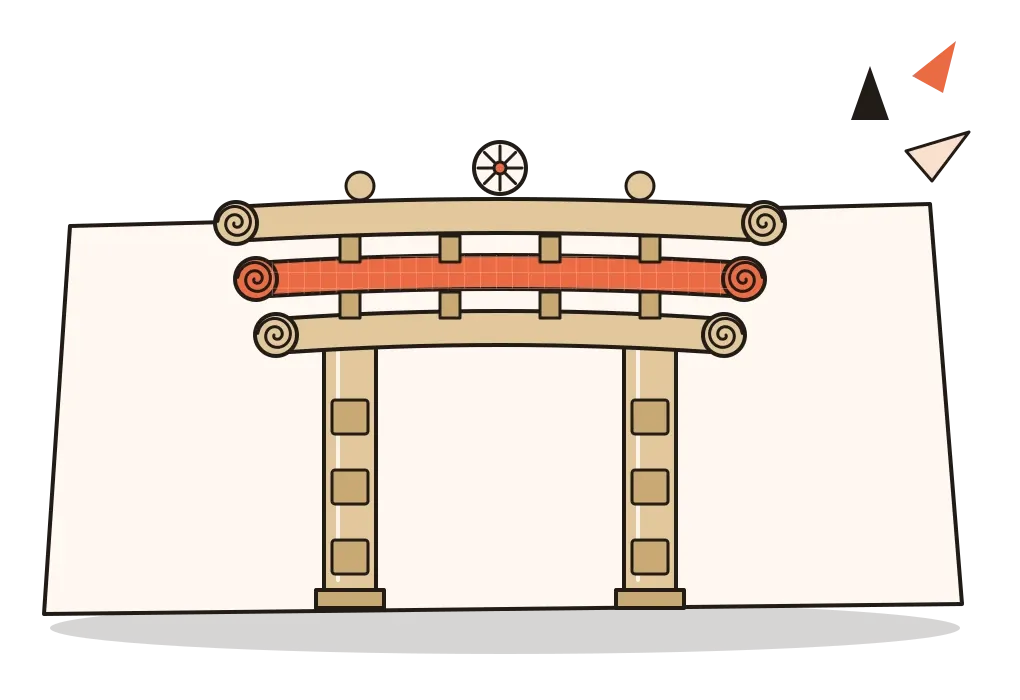
A few centuries later came the gateways at Sanchi, in Madhya Pradesh. I wrote about the stupa itself in the post on form, but the four stone gateways, or toranas, added around the first century BCE and the first century CE, are where the storytelling happens. Each has two square posts and three curved crossbars, and every surface is crowded with carvings of the Buddha's past lives, his life and the cities of his time, alongside elephants, peacocks and yakshis swinging from tree branches as brackets. One inscription records that a section was a gift of the ivory carvers of nearby Vidisha, which may explain the gateways' delicate, almost jewel-like detail.
Look closely at those panels and you'll notice something missing. The Buddha himself never appears in human form. He's shown by signs: a footprint, an empty seat under a tree, a wheel, a parasol held over nobody. The first images of the Buddha as a man appear only around the first century CE, under the Kushan kings, at Mathura and in Gandhara. By the Gupta period, around the fifth century, sculptors at Sarnath were making the image many people now picture first: a seated Buddha with downcast eyes, hands raised in the gesture of teaching, his robe so thin it's almost invisible, against a halo carved like a flowering plate. Around the same time, painters were working in the caves at Ajanta, including the bodhisattva Padmapani that I wrote about in the post on emphasis.
Bodies that seem full of breath
The first thing to look for is volume. Indian sculptors of this period didn't build bodies from visible muscles and bones the way Greek sculptors did. They made them swell outwards, smooth and full, as if filled with breath from the inside. The art historian Stella Kramrisch, who taught in Calcutta for decades, described this as form shaped by inner breath, prana. Waists are narrow, shoulders and hips round, faces calm, and poses often bend gently at the neck, waist and knee, a stance later called tribhanga, three bends.
Next, look at how stories are told. A single panel at Sanchi or Bharhut may show several moments of the same story side by side, so the same character appears two or three times, and you read the scene by moving around it. Space is packed, with very little left empty. Ornament comes from living things: lotus flowers, creepers, trees, animals, pots overflowing with leaves, all symbols of growth and plenty.
Finally, watch for architectural motifs that started life as timber. The horseshoe-shaped window at the front of a rock-cut prayer hall, called a chaitya arch or gavaksha, copied the end of a curved wooden roof. Over the centuries it shrank and multiplied until it became one of the most common ornaments on Indian temples, a building turned into a pattern.
Persian pillars and Greek folds
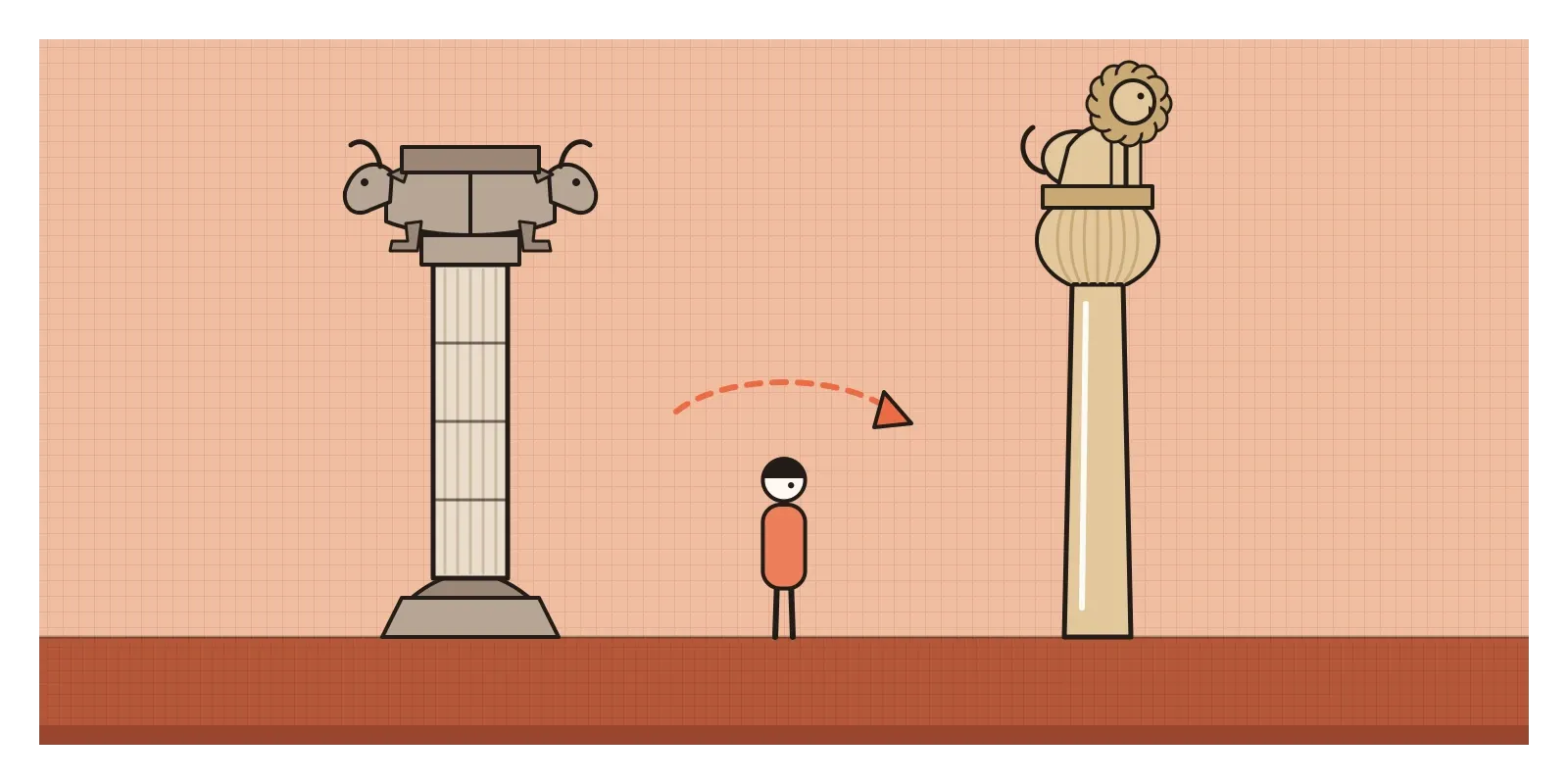
Since this is an Indian movement, the outward look matters more here. Mauryan art didn't grow in isolation. The Achaemenid Persian empire had reached the Indus in the sixth century BCE, and its palaces at Persepolis had tall stone columns topped by animal capitals and finished with a high polish. Many historians think the Mauryan court borrowed the idea of polished stone pillars, and perhaps the habit of carving royal proclamations on rock, from the Persian example, possibly through craftsmen who moved east after Alexander destroyed the Persian empire. Others stress how different the results are. Ashoka's pillars are single, unjointed shafts with no base, and their message is moral advice rather than a list of conquests. In the far northwest, at Kandahar, one of his edicts was even carved in Greek and Aramaic, for the people who read those languages.
The bigger argument is about the Buddha image itself. In Gandhara, in present-day Pakistan and Afghanistan, Kushan-era sculptors carved Buddhas with wavy hair and heavy, deeply folded robes that look strikingly like Greek and Roman statues, the Roman connection I mentioned in the post on ancient Roman art. Early in the twentieth century, the French scholar Alfred Foucher argued that the Buddha image was invented there, under Greek influence. In 1927 Ananda Coomaraswamy answered with an essay, "The Origin of the Buddha Image", arguing that Mathura sculptors had developed it independently out of Indian traditions of yaksha figures. The debate was never fully settled, and most scholars now think the two centres developed side by side. From both, Buddhist images travelled along the trade routes into Central Asia and China, to cave temples such as Dunhuang, where this story begins to touch that of Chinese ink painting.
Ashoka's letters on your keyboard
For designers, the quietest legacy is the most widespread. Ashoka's edicts were written mostly in a script we call Brahmi, which had been forgotten for so long that nobody could read it until the British scholar James Prinsep deciphered it in 1837. Brahmi is the ancestor of almost every script in South and Southeast Asia, including Devanagari, Bengali, Tamil, Kannada, Telugu, Tibetan, Thai and Khmer. Anyone designing an Indic typeface or localising an interface for India is working with its descendants. Ashoka also gave us one of the earliest examples of a consistent public messaging system, the same ideas carved in different languages and scripts across a subcontinent, adapted to local readers. I find that a surprisingly modern brief.
The visual vocabulary lives on too. The Lion Capital's lions sit on currency, passports and government letterheads. The torana gateway turns up in Buddhist architecture across Asia and in the gates of Japanese shrines, though historians argue over how direct that link is. The lotus, the full curved body and the chaitya arch are still the basic grammar of a great deal of Indian decorative design, from temple-inspired furniture to the motifs on festive packaging.
Stone survives, and so do our stories about it
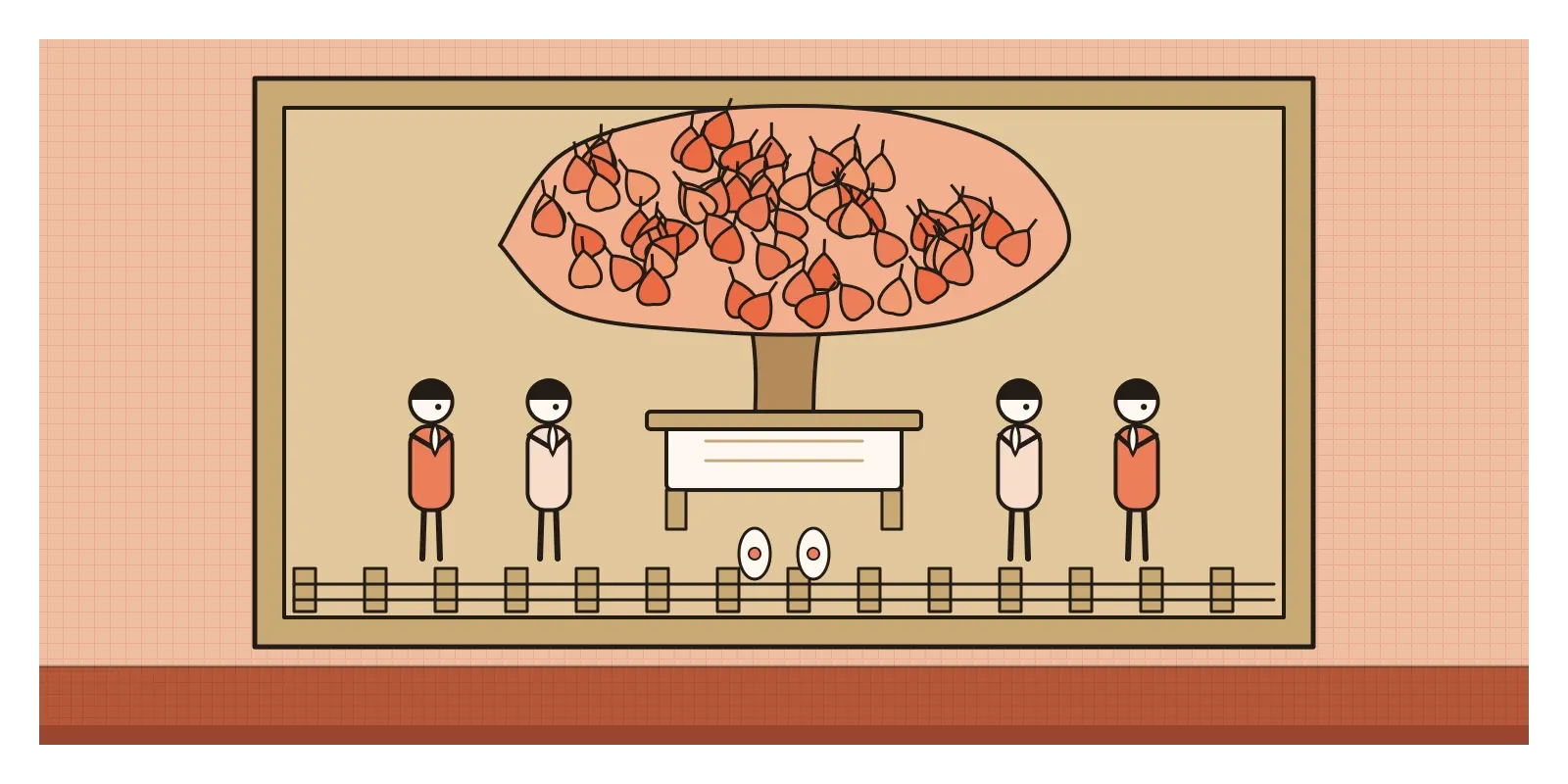
Our picture of ancient Indian art is badly lopsided. Almost everything that survives is stone, because wood, cloth, palm leaf and most painting have perished, so we know far more about religious monuments than about homes, clothes or everyday objects. The idea of a Gupta "golden age", popular with nationalist historians in the early twentieth century, also flattened a far more varied picture, in which Satavahana, Kushan and many local workshops did extraordinary work. The donors, though, were more varied than the kings. Hundreds of inscriptions at Sanchi name the people who paid for railings and carvings, and many of them were women, nuns and ordinary householders.
For a long time, European critics didn't value any of it. In 1910, at a meeting in London, the colonial official George Birdwood remarked that a boiled suet pudding would serve as well as a seated Buddha image as a symbol of serenity. The outrage helped found the India Society that year, and artists and writers such as Coomaraswamy spent decades arguing that Indian sculpture had its own aims. Meanwhile many works left India altogether, including much of the carved stone from the stupa at Amaravati, now in the British Museum. This art doesn't end so much as transform. From the fifth century onwards, the rock-cut hall and the stupa gave way to the free-standing Hindu temple, the reply I'll trace in a later post on Indian temple architecture.
To see it this week, visit the Bihar Museum in Patna for the Didarganj Yakshi, the Sarnath Museum for the Lion Capital and the teaching Buddha, or the Bharhut gallery at the Indian Museum in Kolkata. If you can get to Sanchi, walk around one gateway slowly and try to find the Buddha by his signs alone. For a small exercise, tell a short story, a journey to work for instance, in a single drawing, showing the same person several times in one continuous scene. In the next post, on Chinese ink painting and calligraphy, I'll follow a very different idea of what a picture should be.
Further reading: Vidya Dehejia, Indian Art (1997) · Stella Kramrisch, Indian Sculpture (1933) · Ananda K. Coomaraswamy, "The Origin of the Buddha Image" (1927) · Partha Mitter, Indian Art (2001) · Upinder Singh, A History of Ancient and Early Medieval India (2008)
A reply toShrines of timber, thatch and clay, now remade to last in stone.