Observational Drawing
Why drawing what's in front of you is really a way of training your eyes.
Observational Drawing
The drawing that got better when it was turned upside down
In 1979, an American art teacher named Betty Edwards published a book called Drawing on the Right Side of the Brain, and one of its exercises has become famous. She asks readers to copy a line drawing of a man sitting in a chair, Pablo Picasso's portrait of the composer Igor Stravinsky, but with a twist: the drawing is printed upside down, and you're not allowed to turn it the right way up until you've finished. People who are convinced they can't draw often find that their upside-down copy is far better than anything they've drawn before. Turned the right way up, it actually looks like a person.
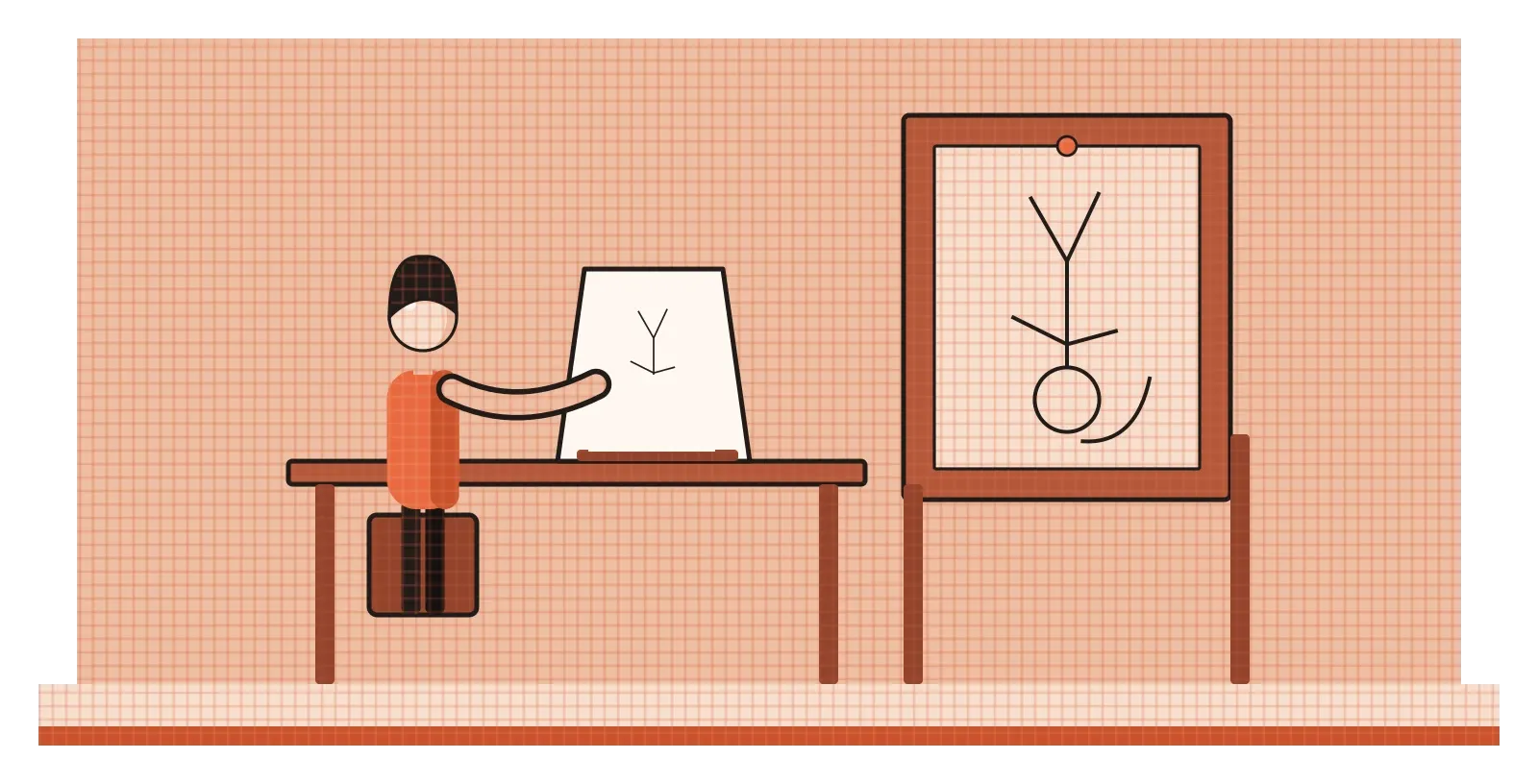
Edwards explained the result using the idea that the left and right halves of the brain have very different jobs, an explanation that neuroscientists now consider far too simple. But the exercise works anyway, and the real reason is more interesting. When the drawing is upside down, you can't easily recognise the hands, the face or the chair, so you stop drawing what you think those things should look like. Instead, you start copying exactly what's on the page: this line curves this much, this angle is this steep, this shape fits into that space. You draw what you see, not what you know. That small shift is the heart of observational drawing, and it's one of the most useful skills a designer can build, not because designers need to draw beautifully, but because it trains you to really look.
Symbols get in the way of seeing
Ask a young child to draw a house and you'll almost always get the same picture: a square with a triangle on top, a door in the middle, a window on each side and perhaps a sun in the corner. Ask them to draw a face and you'll get a circle with two dots, a line for a nose and a curve for a smile. These drawings are charming, and they're not really attempts to show what a house or a face looks like. They're symbols. Children learn a simple visual vocabulary for things, and once they have it, they draw the symbol rather than the object.
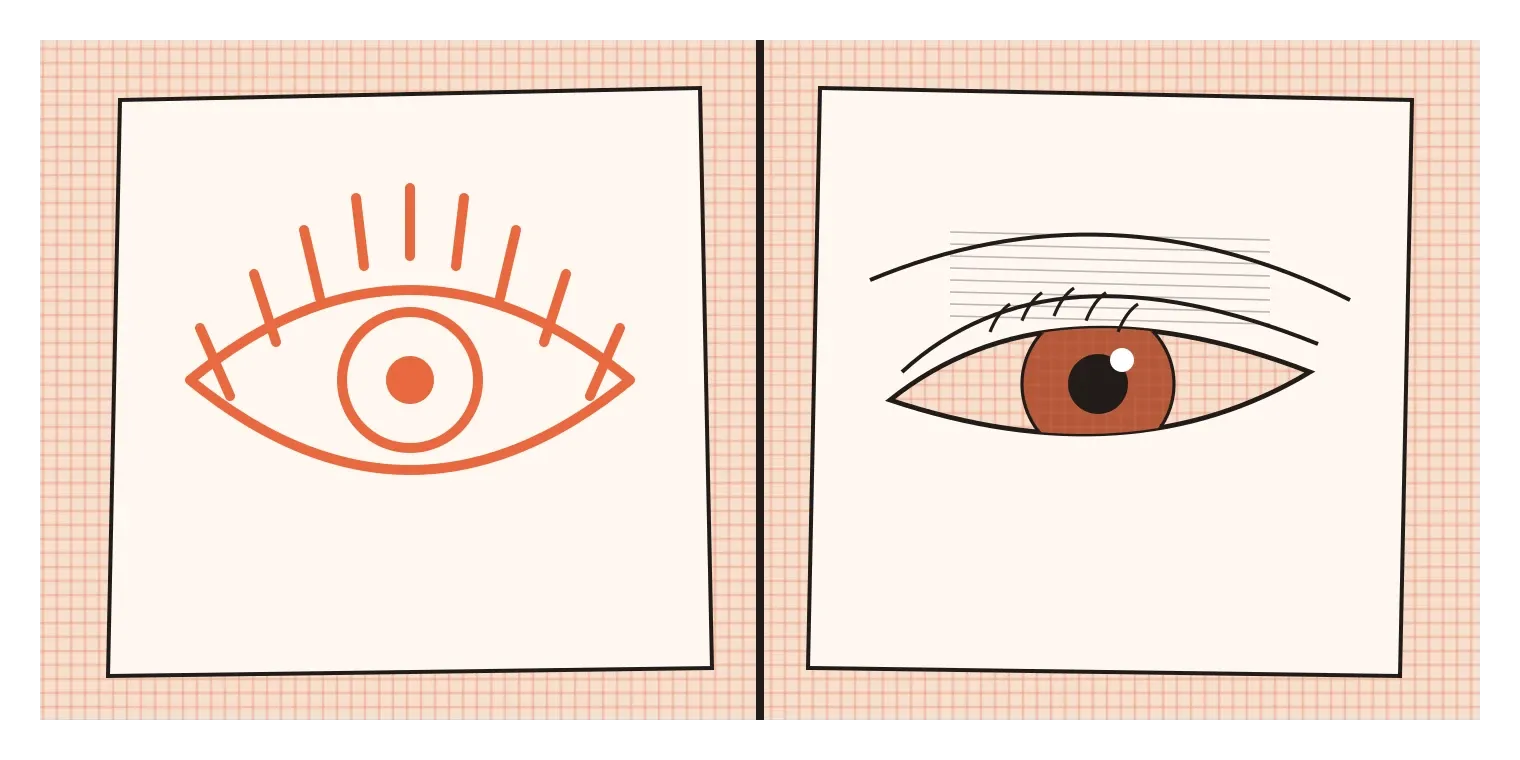
Most adults never fully leave this stage. If you ask someone who doesn't draw regularly to sketch a person's eye, they'll usually draw an almond shape with a circle in the middle and lashes sticking out like a fence, because that's the symbol for "eye" they learned years ago. Look at a real eye, though, and it's very different. The upper lid casts a shadow, the iris is partly hidden, the lashes are barely visible as separate lines and the shape changes completely when the head turns. Our brains are so good at recognising things that they jump straight to the label, "eye", and stop paying attention to the details.
Observational drawing is the practice of pushing past those labels. It means drawing from a real object, person or place in front of you, and constantly comparing your marks with what you actually see, rather than with what you expect. It's slow and sometimes frustrating, especially at first, because it means admitting how little we usually notice. But that's exactly the point. Every time you look up from the paper and see something you'd missed, a shadow, a strange angle, a gap you didn't expect, you're training your eyes to see the world as it is, not as you assume it to be.
Drawing as a way of thinking about the world
Leonardo da Vinci is probably history's best-known example of someone who used drawing to understand things. Thousands of pages of his notebooks survive, and they're full of observational studies: water swirling around obstacles, the folds of fabric, the muscles of a shoulder, plants, rock formations and the wings of birds. Around 1505, he filled a small notebook, now known as the Codex on the Flight of Birds, with drawings and notes on how birds use their wings and the wind. For Leonardo, drawing wasn't mainly about making finished art. It was a research tool. He drew things in order to work out how they behaved, and many of his ideas about engineering and anatomy came straight out of that close looking.
In 1857, the English critic John Ruskin published The Elements of Drawing, a book of lessons for beginners, and in it he described something he called "the innocence of the eye". He meant the ability to see the world as patches of light, shade and colour, before your mind rushes in to label them. He suggested that a good artist should try to look at things the way a person blind from birth might see them if their sight were suddenly restored, noticing shapes and colours without knowing what they are. You don't need to take that literally to recognise the goal. Ruskin, like Edwards more than a century later, was trying to help people stop seeing symbols and start seeing what was actually there.
What both of them understood is that drawing and seeing improve together. You can't draw something accurately without looking at it carefully, and the act of trying to draw it forces you to look more carefully than you otherwise would. Many artists say that they've only truly seen an object, a tree, a building or a person's hands, once they've tried to draw it. That's a big claim, but if you've ever spent half an hour drawing something ordinary, you'll probably agree. Afterwards, you know it in a completely different way.
Painters who looked very closely at birds
Some of the most remarkable observational drawings ever made in India came out of a strange meeting of two traditions in the late eighteenth century. As the British East India Company expanded its power, many British officials became fascinated by Indian plants and animals and wanted accurate records of them. They turned to Indian painters, many of whom had trained in the Mughal miniature tradition, with its extraordinary skill in fine detail. The resulting style, which blended Indian technique with European natural-history conventions, is now usually called Company painting.
One of the best-known collections is the Impey Album. In the 1770s and 1780s in Calcutta, Lady Mary Impey, the wife of the Chief Justice Sir Elijah Impey, kept a menagerie of birds and animals at her home. She commissioned three painters originally from Patna, Shaikh Zain al-Din, Bhawani Das and Ram Das, to paint them, often life-size and directly from the living creatures. The results are astonishing. Every feather, the texture of a beak, the shine in an eye and the way a bird grips a branch are recorded with care. These weren't symbols of birds. They were portraits of particular birds, made by artists looking hard at what was in front of them. Similar work was done for botanists, including the Scottish surgeon William Roxburgh, whose project to document the plants of India relied on hundreds of drawings by Indian artists.
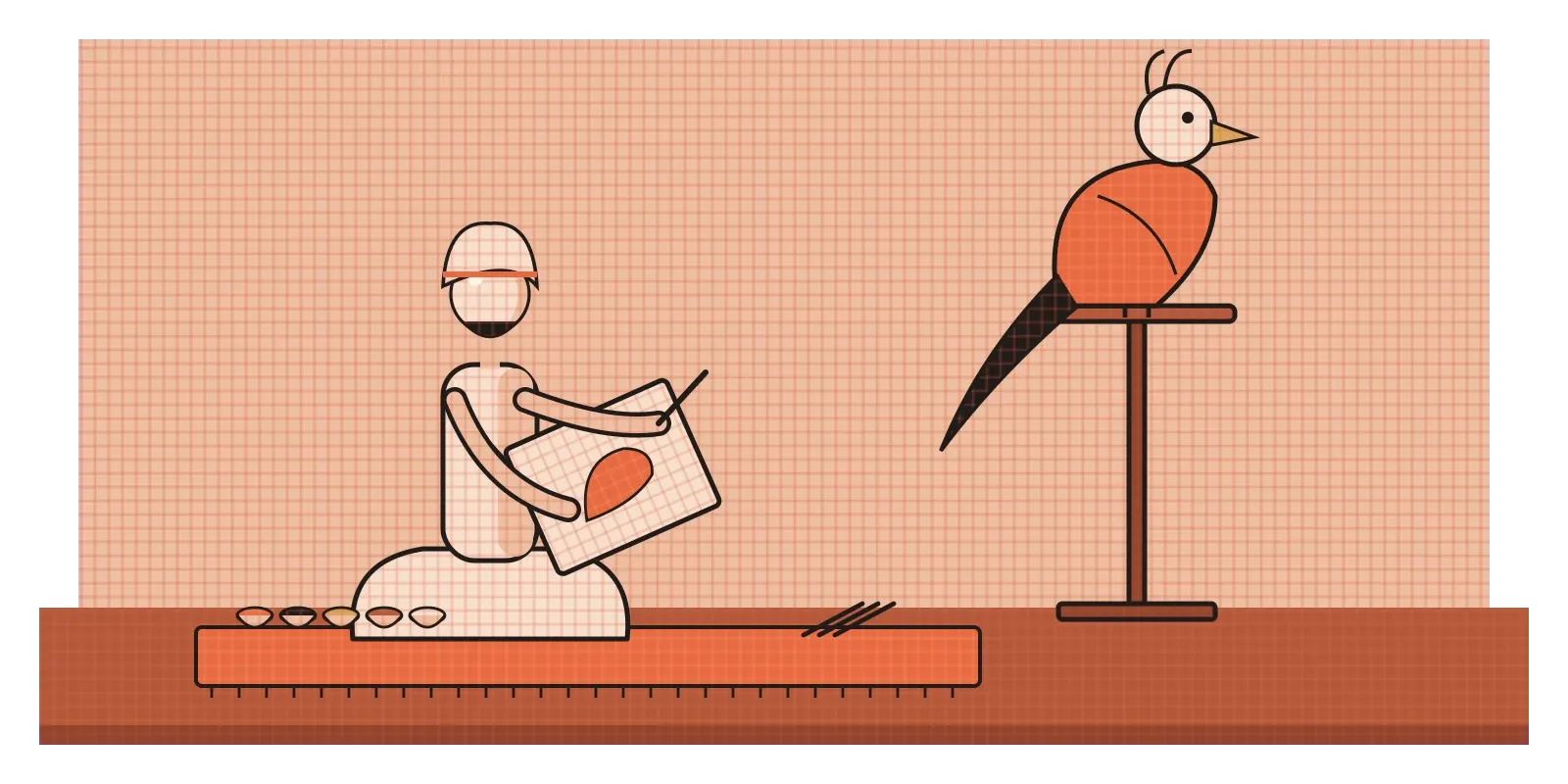
These paintings are a useful reminder that observational skill isn't tied to one culture or one style. The Patna painters brought a lifetime of training in Mughal techniques to a new kind of subject, and produced work that scientists could rely on. Their names were often left off the records of the time, which is an injustice historians have only recently started to correct. Their eyes, though, are still visible in every page.
A few tricks that help the eye do its job
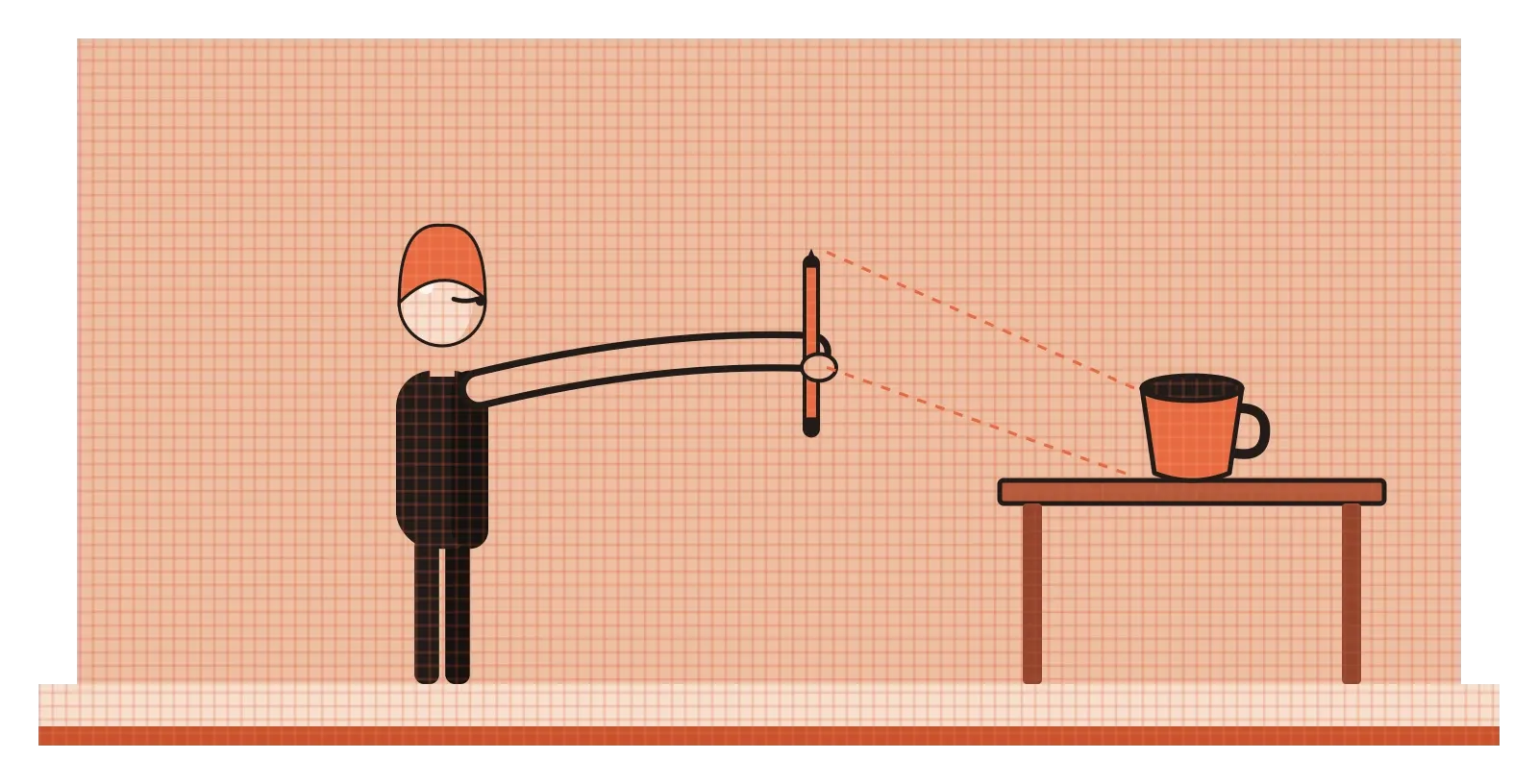
Observational drawing gets easier with a handful of simple techniques, most of which are about tricking your brain out of its shortcuts. The first is measuring with your pencil. Hold a pencil at arm's length, with your arm straight and one eye closed, and line its tip up with one edge of the object. Slide your thumb down the pencil to mark another point. You can now compare sizes, for example noticing that a cup is actually only one and a half times as tall as it is wide, not twice as tall as you assumed. You can also tilt the pencil to match an angle, then carry that angle down to your paper.
The second technique is drawing the negative spaces, the shapes of the gaps between and around things, which I wrote about in the posts on shape and space. If you're drawing a chair, try drawing the shapes of the spaces between its legs instead of the legs themselves. Because your brain doesn't have a ready-made symbol for "the gap between chair legs", you're forced to look at it properly, and the chair often comes out more accurately as a result.
The third is squinting, which I mentioned in the post on value. Narrowing your eyes blurs the details and makes the big shapes of light and dark much easier to see, so you can get the overall structure right before worrying about small things. The fourth is to keep your eyes on the subject more than on the paper. Many beginners look at the object for a second and then draw from memory for a long time. Try the opposite, looking up constantly and drawing in short bursts. And finally, draw often and draw ordinary things. A shoe, a kettle, your own hand or the view from a bus window teach as much as any grand subject, and keeping a small sketchbook makes the habit much easier, which is the subject of a later post on visual journaling.
Designers draw in order to see
It's fair to ask why designers, especially those who work mostly on screens, should bother with observational drawing at all. Few product designers will ever need to draw a realistic bird or a portrait. But the skill behind observational drawing isn't really about the drawing. It's about attention. The artist Frederick Franck, in his 1973 book The Zen of Seeing, summed it up in one line: "What I have not drawn, I have never really seen." Drawing slows you down enough to notice what's actually in front of you, instead of what you expect to find.
That habit carries straight into design work. Good design research depends on noticing what people really do, not what we assume they do or what they say they do. When I worked on an agentic AI system at Rocketium, one of the most useful things I did was spend several days simply sitting with the design team and watching how they worked, every switch between tools and every workaround. It wasn't drawing, but it relied on the same muscle: resisting the urge to jump to conclusions and paying attention to the small, surprising details, like a team exporting data to a spreadsheet and back just to make a simple change. Observational drawing trains that muscle in a quiet, low-stakes way, one cup or shoe or hand at a time.
You don't need talent to start, and you don't need to show anyone your drawings. Pick something ordinary, sit with it for ten minutes, and try to draw only what you see, measuring, checking and looking up again and again. The first drawings might look awkward. That's fine. The real result isn't on the paper. It's in how differently you notice the world afterwards.
Further reading: Betty Edwards, Drawing on the Right Side of the Brain (1979) · John Ruskin, The Elements of Drawing (1857) · Frederick Franck, The Zen of Seeing (1973) · Kimon Nicolaides, The Natural Way to Draw (1941)