
Critique
How to give and take feedback on creative work so that the work gets better, not just judged.
Critique
An exhibition of everything the jury turned down
In the spring of 1863, the jury of the Paris Salon, the official exhibition that could make or break an artist's career in France, rejected an unusually large share of the thousands of paintings submitted to it. So many artists complained that the emperor, Napoleon III, made an unusual decision. The rejected works would get an exhibition of their own, in another part of the same huge exhibition hall, so that the public could judge for itself. It became known as the Salon des Refusés, the exhibition of the rejected.
The public came in large numbers, and many of them came to laugh. The painting that drew the most mockery was a large canvas by Édouard Manet, which he exhibited as Le Bain and which is now known as Le Déjeuner sur l'herbe. It shows two fully dressed young men picnicking in a wood with a naked woman who looks straight out at the viewer, while another woman bathes behind them. Critics called it indecent and badly painted. James McNeill Whistler's Symphony in White, No. 1, a painting of a young woman in a white dress, was also ridiculed. Today Manet's picnic hangs in the Musée d'Orsay in Paris and is taught as one of the paintings that opened the way to modern art.
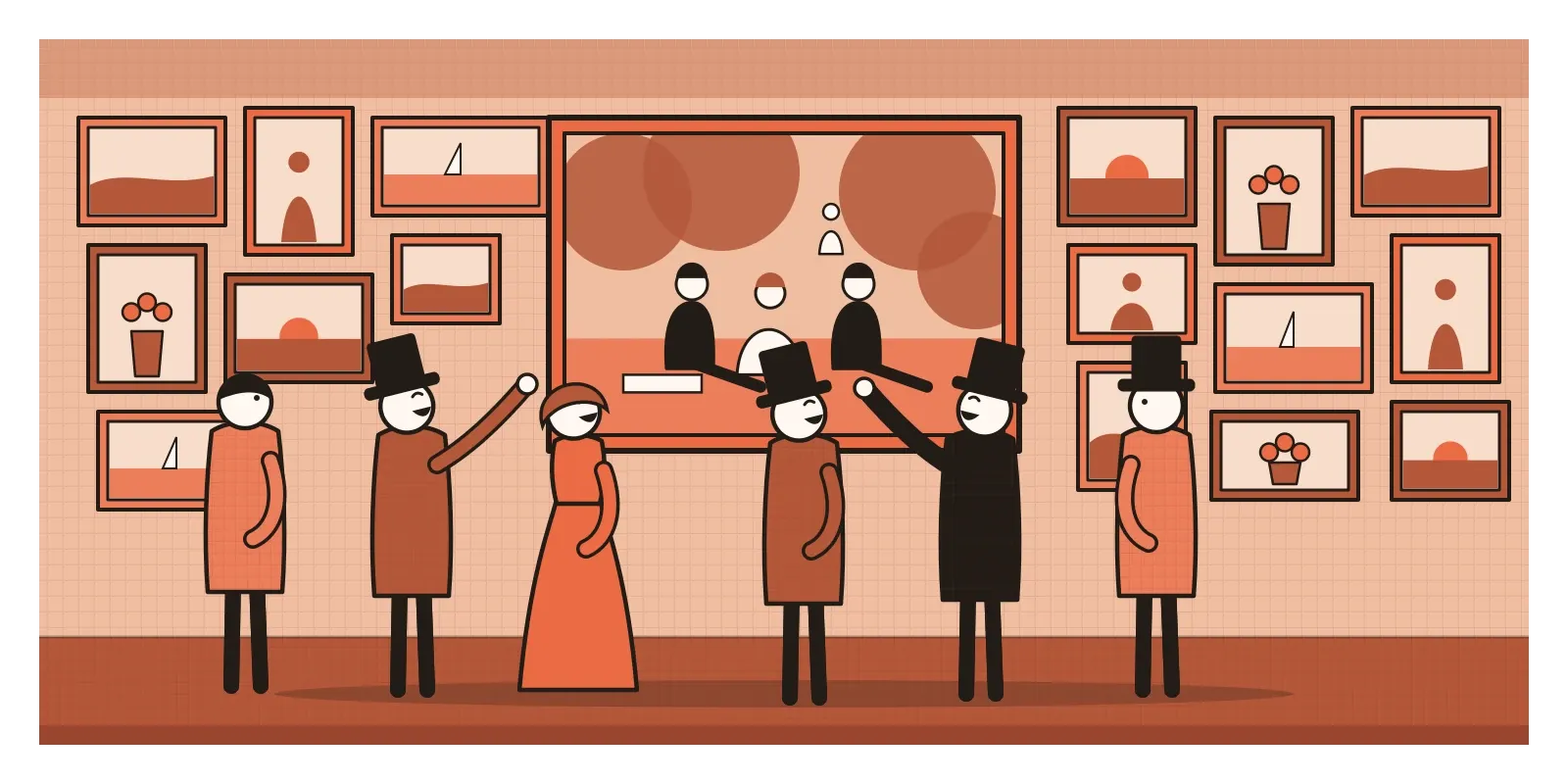
It's tempting to tell this as a simple story about stuffy judges who couldn't recognise genius, but that's not quite the lesson. Plenty of the rejected paintings were rejected for good reasons, and history has forgotten them. The real problem with the Salon wasn't that its judgements were sometimes wrong. It was that a judgement was all it offered. A painter learned whether the jury liked the work, but nothing about what was working, what wasn't, or what to try next. The laughing crowd was the same. It reacted, loudly, and taught Manet nothing.
That's the difference between a verdict and a critique. A verdict decides whether something is good. A critique tries to understand what a piece of work is trying to do, and how well it's doing it, so that the next version can be better. It's the natural partner to the last post, on iteration. Every loop of making and testing needs a moment where someone looks hard at the work and says something useful about it. That moment is critique.
A verdict ends the work, a critique continues it
Design and art schools have built critique into their teaching for a long time. The story usually told is that students at the École des Beaux-Arts in Paris, in the nineteenth century, would rush to finish their architectural drawings as a cart, a charrette, came round to collect them for judging, which is why architects still call an all-night push before a deadline a charrette. Those judgements were made by a jury of teachers and practising architects, and the jury system spread to architecture schools around the world. Many art and design schools today hold "crits", sessions where students pin their work on a wall and talk about it with teachers and classmates.
Crits can be wonderful, and they can be brutal. In her 1991 book Design Juries on Trial, the architecture researcher Kathryn Anthony surveyed students and teachers and found that many students experienced juries as intimidating and humiliating, with teachers performing for each other while the student stood silently beside their work. She argued that a lot of what happened in juries wasn't teaching at all. It was judgement delivered in public.
Research on feedback in general backs up her worry. In 1996, the psychologists Avraham Kluger and Angelo DeNisi reviewed more than a hundred studies of feedback at work and in education. In more than a third of the cases, feedback actually made performance worse. The pattern they found was roughly this. Feedback that kept people's attention on the task, on what to change and how, tended to help. Feedback that drew attention to the person, to their ability or their worth, tended to hurt, even when it was meant kindly. Critique works when it is about the work.
Giving critique that someone can use
Several people have tried to turn good critique into a repeatable method. One of the most respected comes from the choreographer Liz Lerman, who developed what she called the Critical Response Process with dancers and other artists from around 1990 onwards. It has three roles, the artist, the responders and a facilitator, and four steps that always come in the same order. First, responders say what was meaningful, striking or memorable about the work. Second, the artist asks the responders questions about whatever they want to know. Third, the responders ask neutral questions, ones that don't hide an opinion, so "what were you aiming for with the ending?" rather than "why is the ending so long?". Only in the fourth step can responders offer opinions, and even then they first ask the artist whether they'd like to hear one.

What I like about Lerman's process is how much it slows everyone down. By the time anyone gives an opinion, the room knows what the maker was trying to do, which makes the opinion far more likely to be useful. In their 2015 book Discussing Design, Adam Connor and Aaron Irizarry describe something similar for product teams. They suggest that useful critique always connects to an objective. You identify what the design is meant to achieve, point to the parts of it that relate to that objective, say whether those parts are working, and explain why. "I don't like the green" is a reaction. "The green button is the same colour as the warning banner, so people might read it as a warning, which works against getting them to sign up" is a critique.
Pixar is often held up as an example of critique inside a company. In his 2014 book Creativity, Inc., the studio's co-founder Ed Catmull describes the Braintrust, a group of experienced directors and storytellers who watch early versions of each film and give the director candid notes. He's frank that the early versions of Pixar films are usually bad. The important rule is that the Braintrust has no authority. The director doesn't have to follow any of its notes. That removes the sense of a verdict, and lets people say difficult things about the film without anyone feeling they're being overruled.
For everyday use, there's a simple format taught at Stanford's d.school that I return to often. Responders start their comments with "I like", "I wish" or "What if". It's simple, but the last one, "what if", has a way of turning a criticism into an idea.
Wah, irshad, mukarrar
Some of the liveliest critique I know happens in Indian music and poetry, and it happens in real time. At a mushaira, a traditional gathering where Urdu poets recite their verses, the audience doesn't wait politely until the end. When a couplet lands, people call out "wah, wah!". When a poet pauses before a line, they say "irshad", please go on. When a couplet is especially good, the cry is "mukarrar", again, and the poet repeats it. In a Hindustani music concert, the same kind of response comes as a murmured "kya baat hai" or a raised hand at the exact moment a singer resolves a difficult phrase.
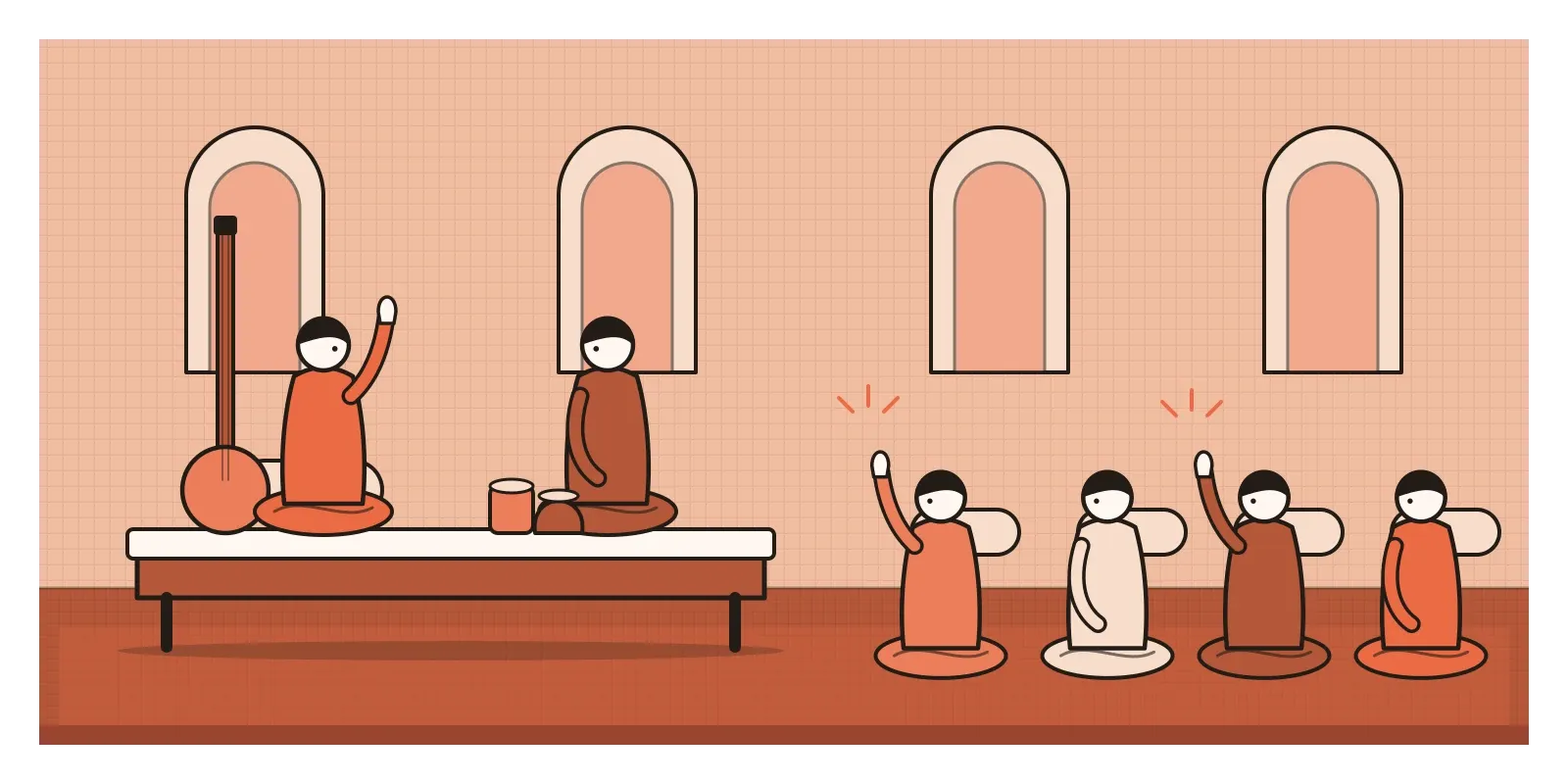
What I find remarkable about this is how specific it is. Listeners don't applaud the whole evening at the end. They respond to a particular phrase, a turn in a line or a single bold note, which tells the performer precisely what is working, while the performance is still happening. It depends on an audience that knows the form well, people often called rasikas, those who can taste the flavour of a work. That idea comes from rasa theory, which I'll write about in the next post.
It's worth adding some nuance. Public appreciation at a mushaira can also be social performance, praise offered out of politeness, friendship or habit, and a hall full of "wah" can drown out more careful judgement. The tougher kind of critique in these traditions usually happened in private. Young Urdu poets traditionally sent their verses to an ustad, a master poet, for islah, correction, and students of classical music spend years having a guru stop them mid-phrase to sing it again, differently. Real communities of practice seem to need both kinds: generous, specific praise in public, and patient, demanding correction in private.
Critique on screens, in comments and in review meetings
In product teams, critique often gets mixed up with approval. A design review is usually a decision point: should this ship, yes or no? A design critique is meant to be something different, a session where the aim is to improve the work, and where nobody is expected to say yes or no at the end. When the two get confused, designers start defending their work instead of exploring it, and colleagues give notes that are really vetoes. Saying clearly which kind of session it is, and what kind of feedback would help, solves a surprising number of problems.

A lot of critique now happens asynchronously, through comments pinned directly onto designs in tools like Figma. That has real advantages. People can look carefully in their own time, and quieter colleagues get a voice they might not have in a crowded meeting. It also has traps. A screen covered in thirty comment pins looks like a list of thirty problems, even if most of them are small. Comments arrive without tone, so a quick "why is this here?" can read as hostile when it was meant as a genuine question. And comments tend to focus on details that are easy to point at, a colour or an icon, rather than on whether the whole flow makes sense. A useful habit is to leave one overall comment first, saying what you think the design is trying to do and how well it's doing it, before adding any pins.
AI tools add a new kind of critic to the room. You can now ask a model to review a screen for accessibility, consistency or clarity, and it will usually find some genuine issues quickly. But it doesn't know your users, your constraints or what you were trying to achieve unless you tell it, and it will happily produce confident feedback either way. It's best treated like a sharp-eyed colleague who has just walked in, useful for catching things, but not someone whose notes you follow without thinking.
Learning to take it, and a crit to try this week
Giving critique is a skill, but receiving it is often the harder one. In their 2014 book Thanks for the Feedback, Douglas Stone and Sheila Heen describe three things that make people reject useful feedback. Sometimes we think the feedback is simply wrong. Sometimes we're reacting to the person giving it rather than what they've said. And sometimes the feedback threatens our sense of who we are, so it feels like an attack on us rather than on the work. Recognising which of these is happening makes it much easier to hear what's actually being said. A good rule when receiving critique is to ask questions before you explain anything. Explaining feels natural, but it usually means defending, and a design that needs explaining is already telling you something.
If you want to practise, try a small version of Lerman's process this week. Choose a piece of work you're in the middle of, a screen, a poster or a drawing from your sketchbook, and show it to one or two friends. Ask them first only to tell you what stood out to them. Then ask them your own questions. Then let them ask you neutral questions, and only at the end invite their opinions, starting with "I like", "I wish" and "What if". Throughout, don't defend the work. Just write down what they say. Afterwards, read your notes and choose one thing to change in the next version.
In 1863, Manet got a verdict and a crowd that laughed. What he didn't get, from either, was a critique, someone who asked what he was trying to do and told him honestly where it worked. He went on painting anyway. Most of us need more help than that, and the good news is that we can give it to each other.
Further reading: Liz Lerman and John Borstel, Critique Is Creative (2022) · Adam Connor and Aaron Irizarry, Discussing Design (2015) · Ed Catmull with Amy Wallace, Creativity, Inc. (2014) · Douglas Stone and Sheila Heen, Thanks for the Feedback (2014) · Kathryn H. Anthony, Design Juries on Trial (1991)