It took the team longer to get a single creative approved than to make it.
September 14, 2025
I designed a shared canvas that took reviews from a week of logins and folders to a single link, and turned half a day of exporting into three to five minutes.
- Role
- Product Designer, end to end
- Timeline
- 2 months
- Team
- PMs, Engineers and Visual designers
- Impact
- 100% adoption, half a day to 3-5 minutes to export
Context
The work ends. The waiting begins.
A designer finishes a campaign. 5,000 creatives, sometimes past 12,000, all sized, varied, and ready.
Then the real work starts, and none of it is design. Every creative gets exported by hand, organized into folders, and sent out to whoever needs to sign off: store managers, PMs, executives, stakeholders, most of whom had no login and no reason to have one.
Feedback came back however it could. A comment on a doc. A marked-up screenshot. A message on WhatsApp, matched back to the right file by hand. Design sat in India. Reviewers sat everywhere else, with almost no overlap in working hours.
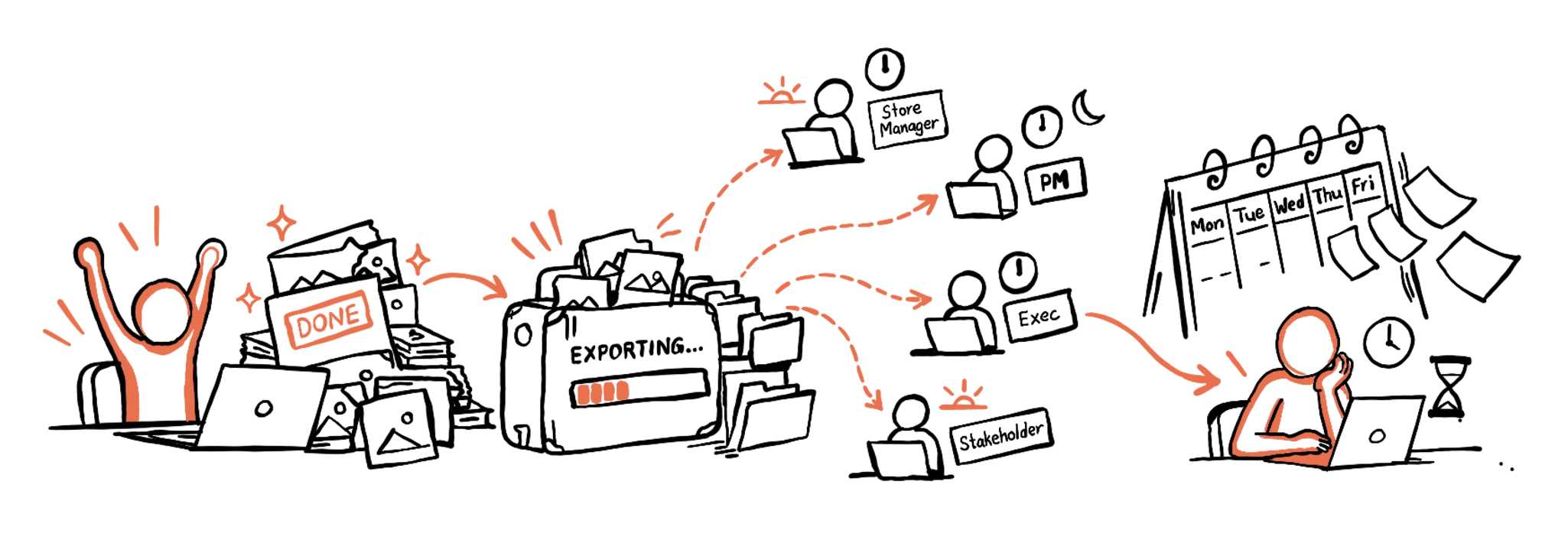
A single review cycle took almost a week. Exporting alone cost designers half a working day.
The creative was ready on day one. It just took the rest of the week to be seen.
Problem statement
Nobody could see it. Nobody could hold it. Nobody could ship it.
Rocketium built an AI Studio that could take on execution. The review process was the obvious next target. It wasn't one problem. It was three, stacked on top of each other.
1.No login, no review.
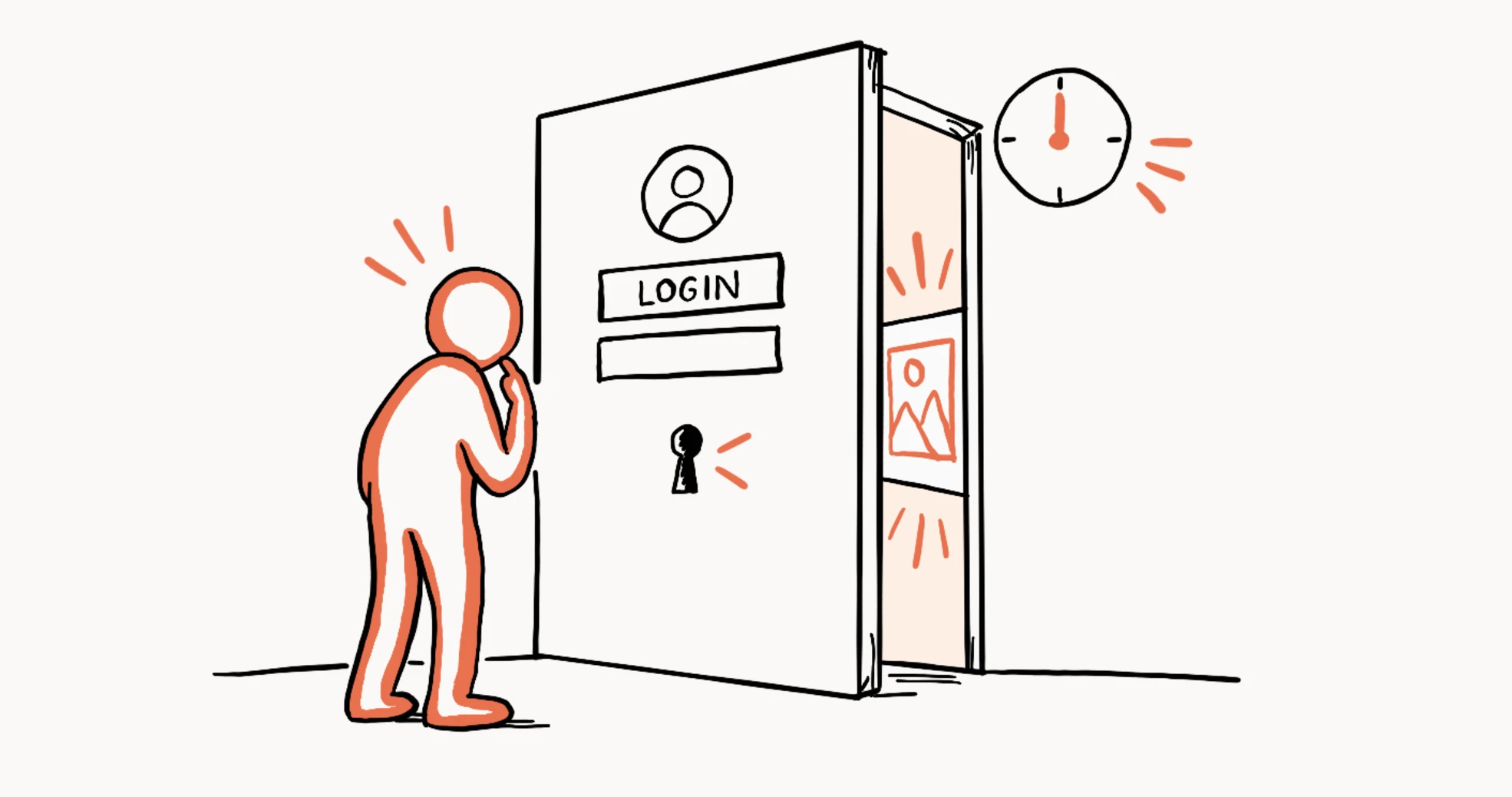
Reviewers weren't Rocketium users. Sending them a project link meant asking them to sign up just to leave a comment, so most feedback happened outside the product entirely, and someone had to bring it back in by hand.
2.No laptop, no access.
Rocketium was built for the web. Store managers, the largest group of reviewers, mostly didn't have one. A tool that only opened on a desktop was a tool most of them could never use.
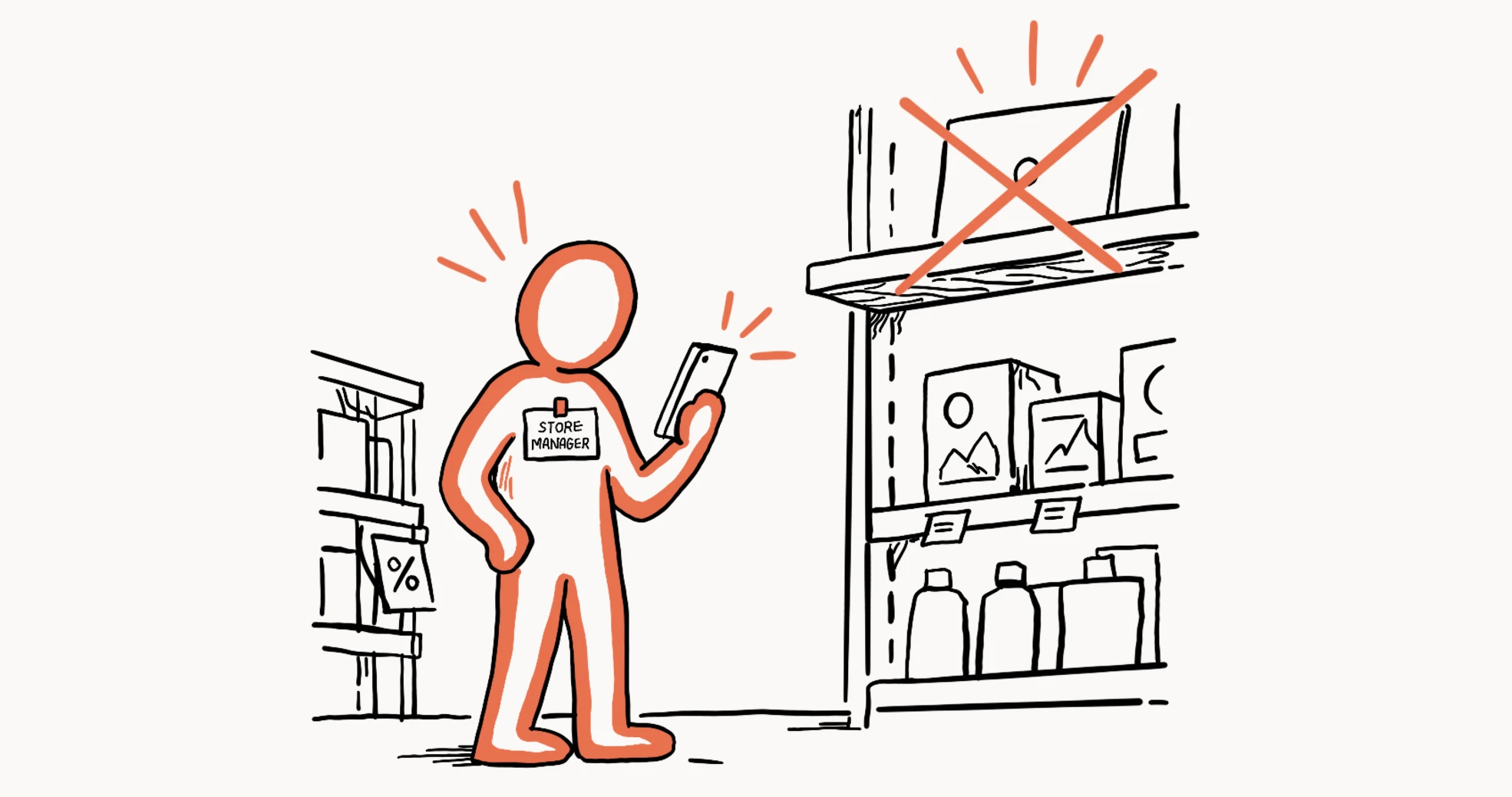
3.No structure, no speed.
Once feedback closed, the work wasn't done. Every approved creative still had to be exported and organized into folders by hand, in the right order, for the right market. That alone cost designers half a working day.
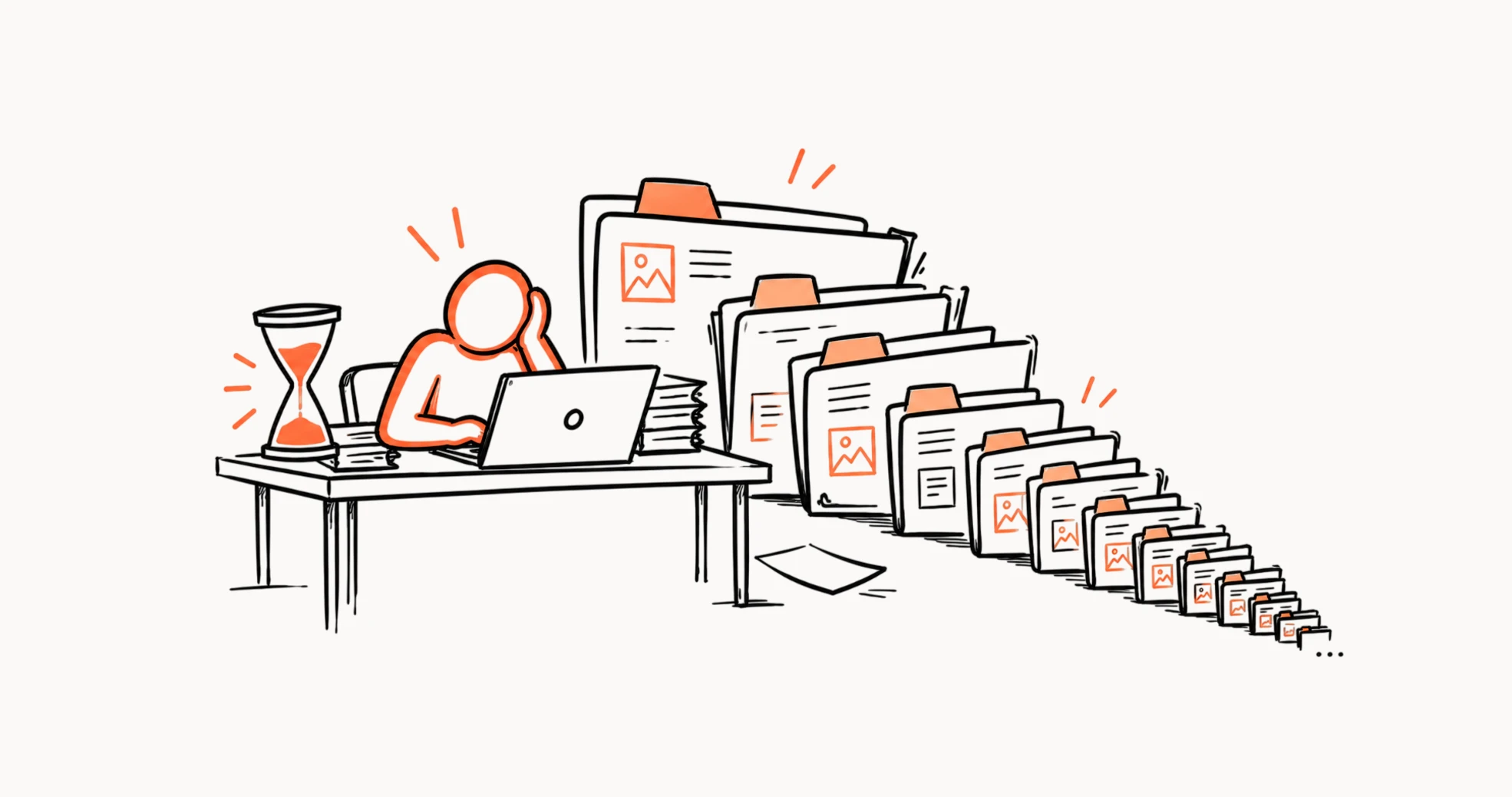
Three different people, three different constraints, one export pipeline. Fixing one wouldn't have moved anything. It needed one answer for all three.
Role and scope
One designer. Two months. Three teams to align.
Two months is not long to solve three unrelated problems with one idea, especially when the idea has to survive contact with designers, PMs, and engineers, each with a different definition of "done."
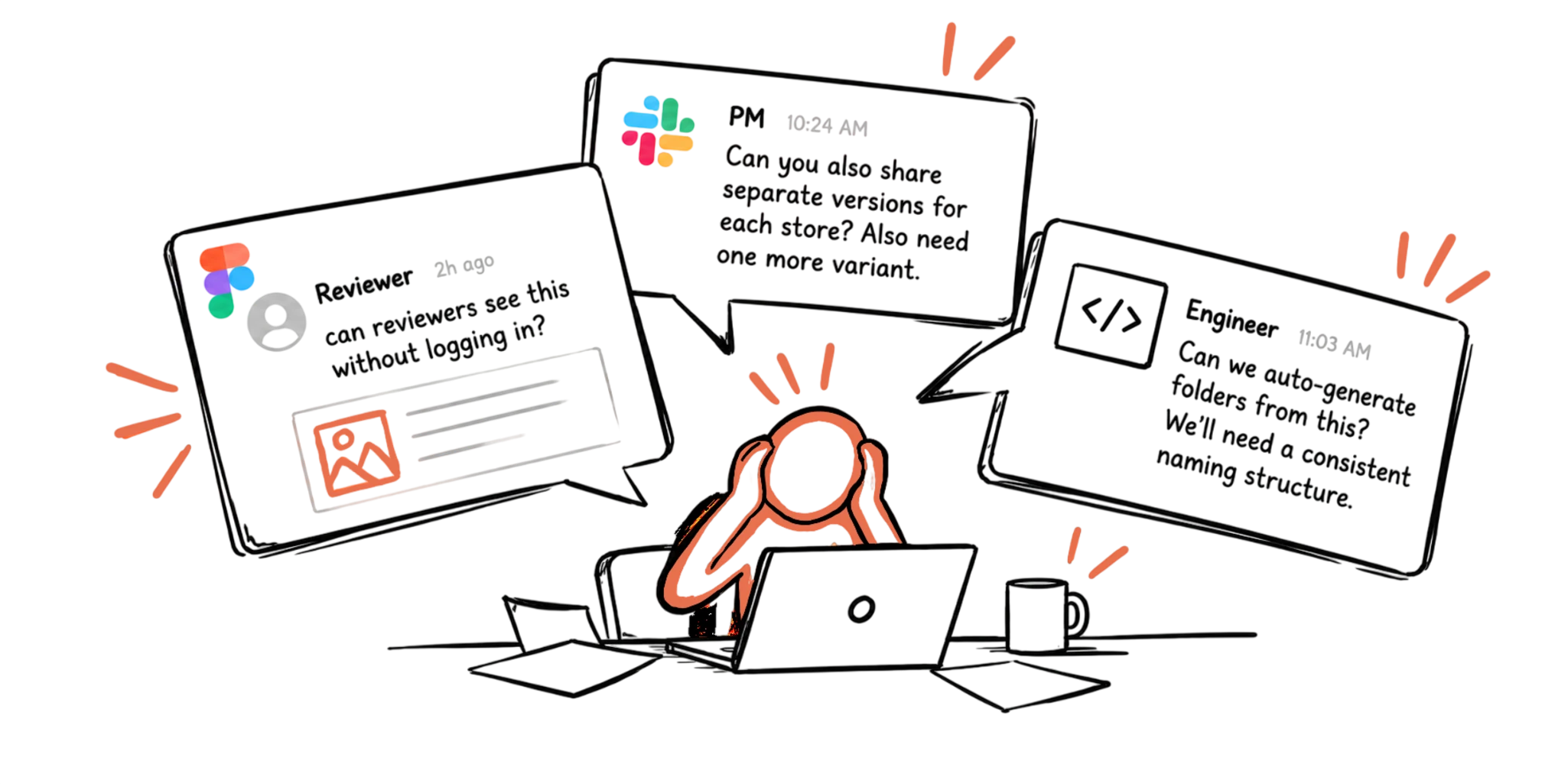
I owned it end to end: research, the idea, and the design of the canvas, the guest view, the mobile view, and the export logic. But none of that happened in a room by myself. I sat with designers to find where review actually broke. I worked with PMs to understand what a reviewer needed that a designer never would. I worked with engineers to find out what the canvas could hold, and whether exporting by folder structure was something that could actually ship.
Three very different conversations. One answer had to survive all of them.
Research and discovery
Before designing anything, I asked to see where the conversations actually happened.
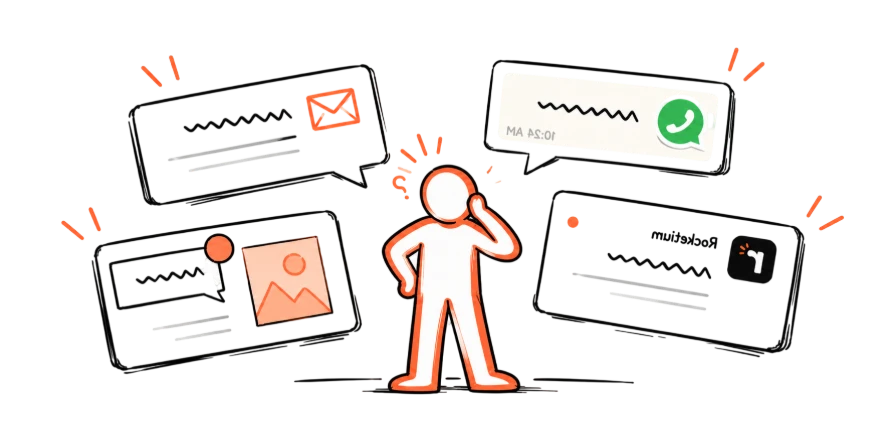
Designers showed me first. Not one channel, four running in parallel: a WhatsApp group per campaign, the Rocketium inbox, email threads, and comments left inside the file itself. The same feedback could exist in all four places at once, and nobody could say for certain which version was current.
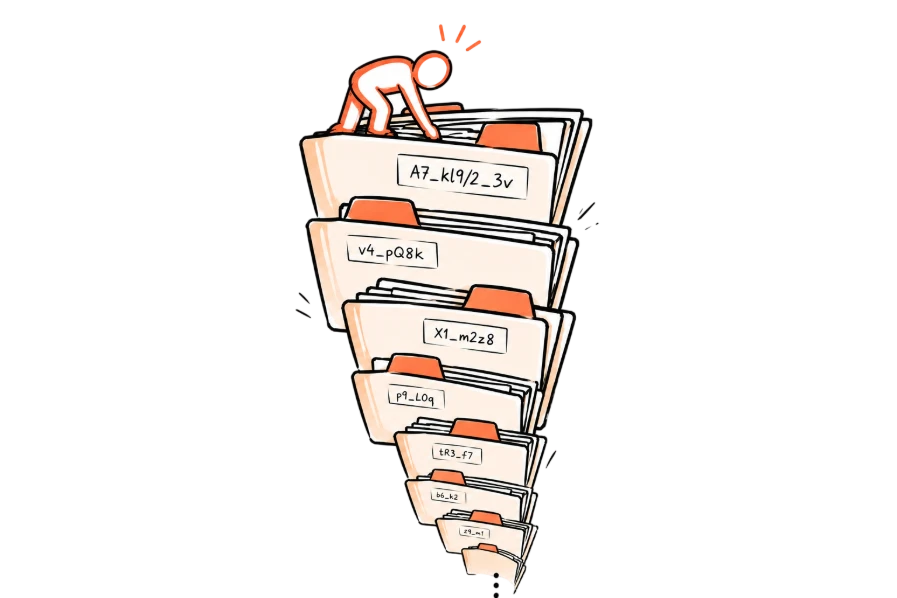
Then they showed me what happened after review closed. A finished campaign, exported, lived seven or eight folders deep, named and sorted by tag values that made sense to the system and almost no one else. Finding one creative meant knowing the naming convention by heart, or opening folders one at a time until it turned up.
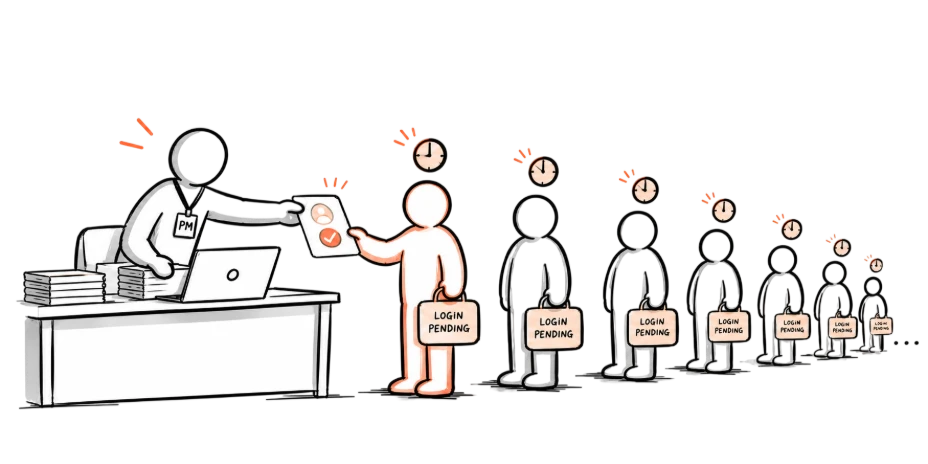
PMs showed me the other side of it. Every time a new reviewer needed to comment, someone on the Rocketium team had to create them a login. That alone took two days, before any actual feedback could start. Reviewers who needed to comment more than once just relearned to live with the wait.
None of this was one broken step. It was four channels holding the same conversation, a folder structure built for a machine, and a login process standing between a reviewer and a single comment. The time it cost never showed up as a failure. Nothing broke, nothing missed a deadline. It just quietly ate hours that should have gone into the next campaign.
Finding the idea
Three problems. I started by trying to solve them one at a time.
My first instinct was three fixes for three problems. A lighter login for reviewers. A stripped-down mobile page for store managers. A better naming script for exports. Three small projects, three small wins.
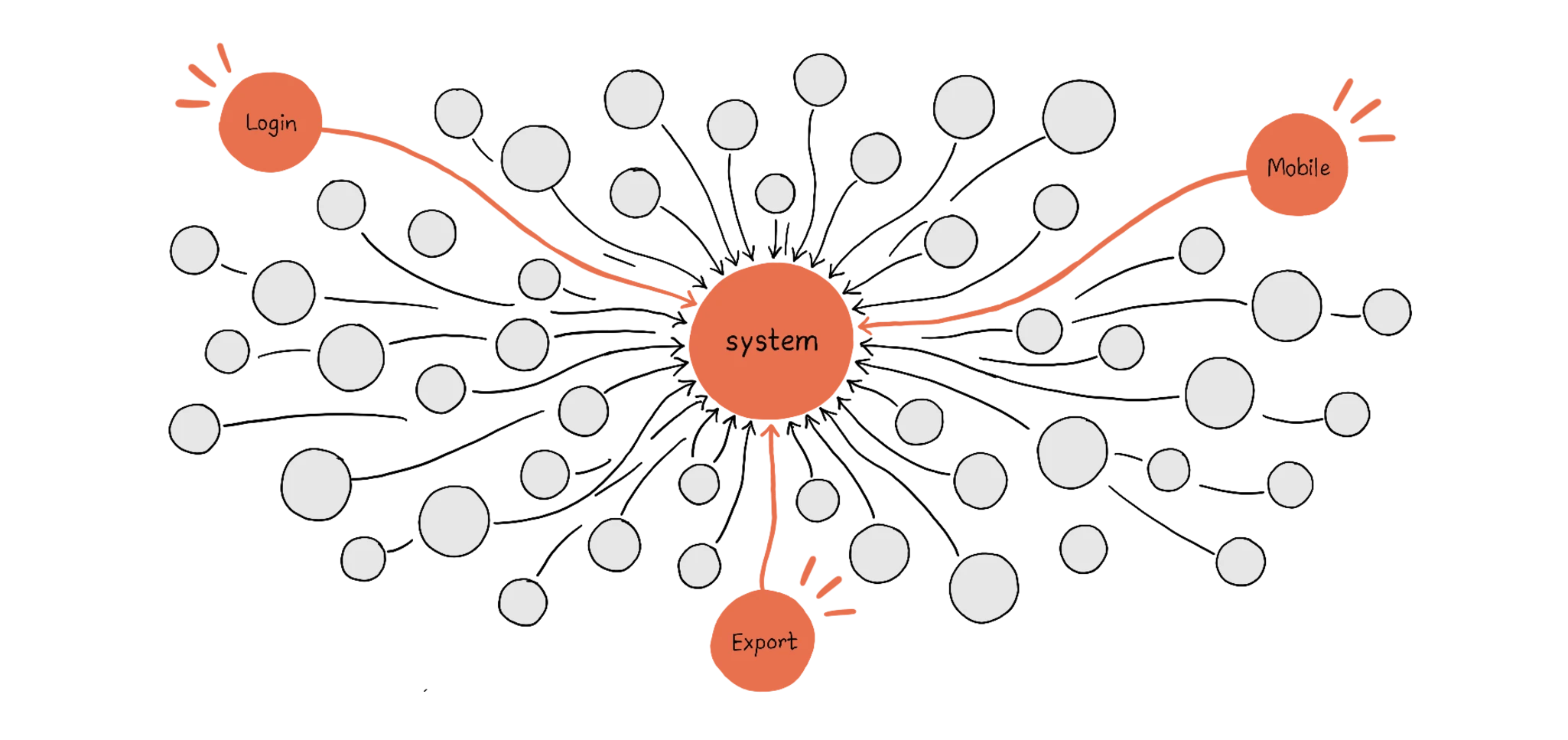
Then I mapped all three side by side, and noticed they weren't three problems. They were the same problem, wearing three costumes. Every version of it came down to one thing: the work lived in a place only a designer could enter, in a shape only a designer could read.
There's a moment in the Harry Potter books that kept coming back to me. Dumbledore has a Pensieve, a basin that holds memories. Anyone can lean into it and see what's inside, no wand required, no training, no spell. You don't need to be a wizard to view what's in the bowl. You just need to look.
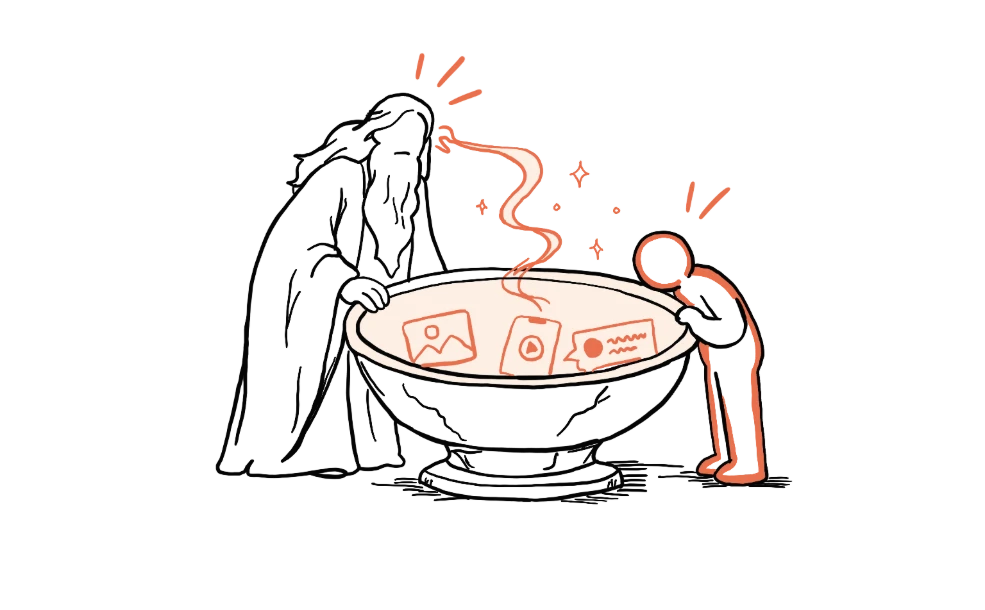
That was the shift. Rocketium didn't need a lighter login. It needed something reviewers could lean into without needing to be a Rocketium user at all.
So the question changed, from "how do we fix login, fix mobile, fix export" to: what if the work lived somewhere that didn't require anyone to enter Rocketium in the first place?
That's what led to the canvas. One basin, not three separate rooms. Every creative sits inside it, grouped however the designer chooses. Anyone with a link can lean in and see exactly their slice of it: a canvas for the designer, a guest view for the reviewer, a scoped-down mobile view for the store manager. Solve the basin once, and all three problems stop being three problems.

Inside the canvas
One canvas. Everything on it, findable, commentable, from anywhere.
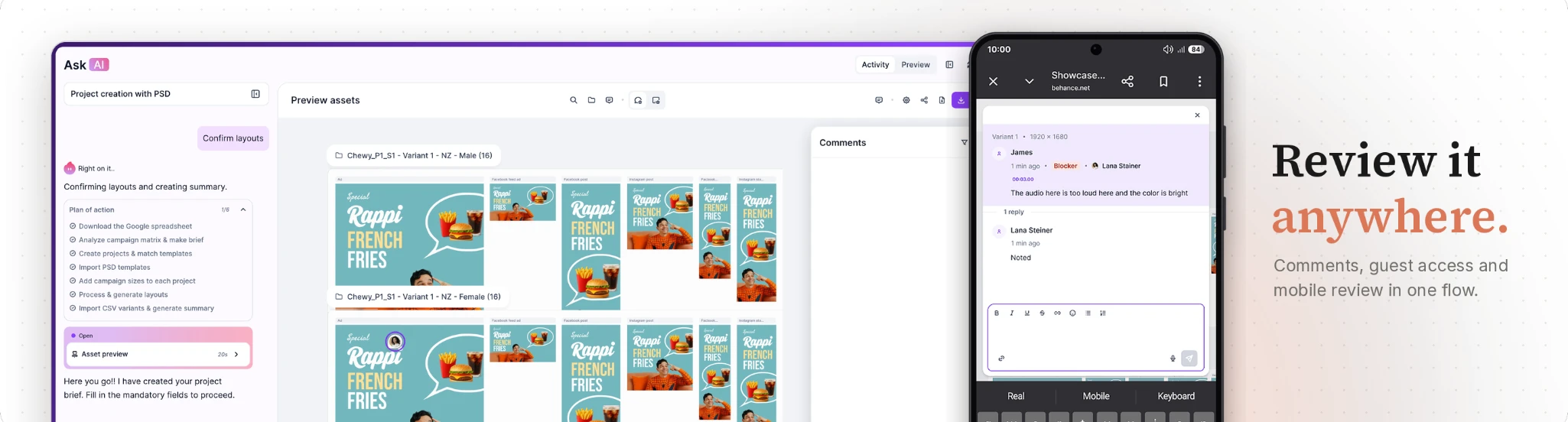
Every creative from the campaign lives on one canvas. Zoom out, and the whole campaign is visible at once. Zoom in, and it's one size, one market, one variant.
Search or filter, and the canvas narrows to exactly that group, the same grouping it will later export as. Nothing is buried in a folder, because nothing was ever sorted into one until export.
A reviewer never needed a Rocketium account. Just a link, opening straight into their slice of the canvas, ready to comment.
Comments happen right on the creative, not in a separate email, doc, or chat. Whoever's reviewing sees the work and leaves the note in the same place.
And it all works the same way on a phone. Group, search, comment, pan, zoom. A store manager never needed a laptop to begin with.
Impact
The numbers. And what they actually meant.
- 100%adoption in the whole product
- 3-5minto export from half a day
- 100% accessibleand mobile friendly
PMs said reviewing finally felt easy for reviewers, and far less time-consuming. They thanked the team, specifically for how much easier it made communicating with their customers.
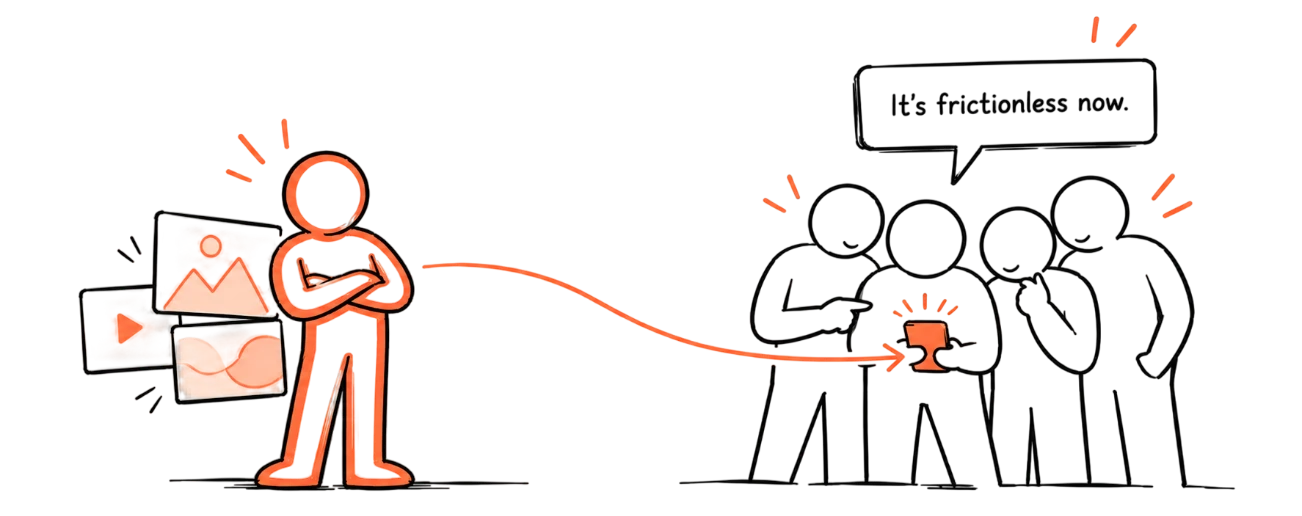
The work was always ready on day one. Now, so was everyone else
Learnings
What this taught me about looking for the whole problem, not three of them.
The easiest mistake to make here would have been fixing each wall as it came. A lighter login for reviewers. A mobile page for store managers. A script to clean up exports. Three tickets, three small wins, and three separate systems to maintain forever after.
None of them would have been wrong. All of them would have missed the point.
The real work wasn't solving three problems. It was noticing they were never three to begin with. Every constraint, the login, the laptop, the folder structure, was the same wall wearing a different face. Systems thinking isn't a framework you apply. It's the discipline of refusing to solve the version of the problem that's easiest to see, and looking instead for the one underneath it that explains all the others.
That's the difference between a fix and a system. A fix removes a symptom. A system removes the reason symptoms kept showing up.
I'd rather spend longer finding the one true shape of a problem than ship three fast answers to the wrong three questions.